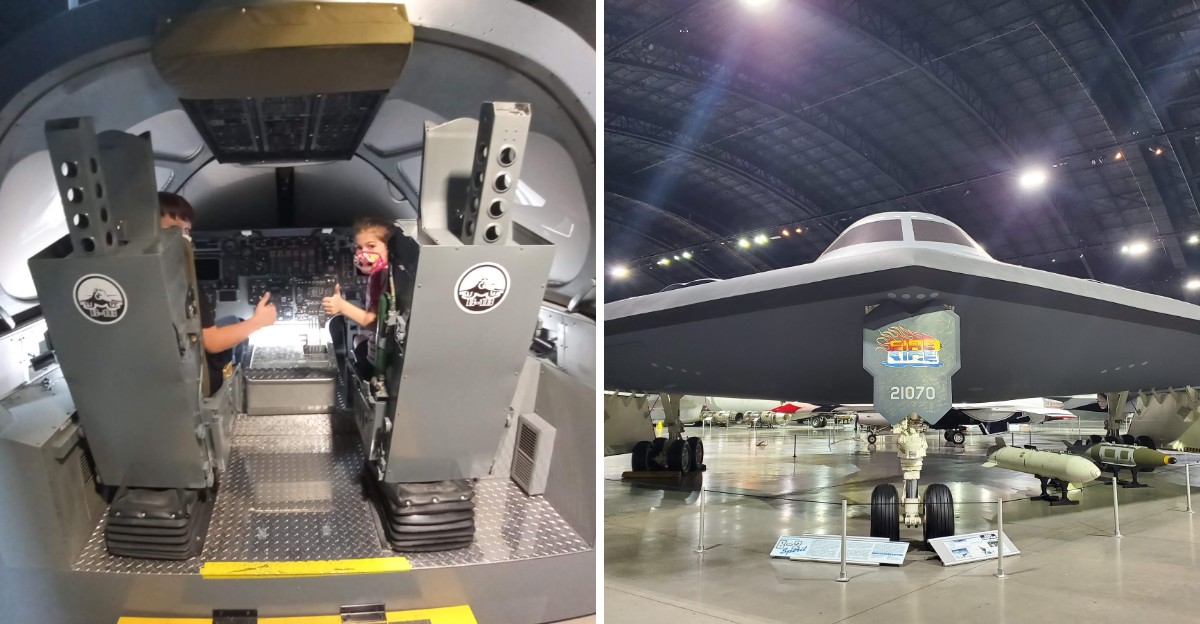
You can stand beneath a stealth bomber, stare up at massive aircraft, and get nose-to-nose with spacecraft that actually traveled beyond Earth—all without spending a dime.
Dayton’s National Museum of the U.S. Air Force turns aviation history into an unforgettable walk through the skies.
More than 350 aircraft and missiles fill enormous galleries, ranging from early military planes to Cold War bombers and experimental aircraft.
Then things get even wilder. Step inside presidential aircraft, admire the B-2 Spirit, and see Apollo 15 up close.
Every gallery brings another jaw-dropping machine, making it easy to lose track of time as you move from one era to the next.
Give yourself a full day. With so much to see under one roof, rushing through this museum would mean missing some of its biggest surprises.
Walk Beneath the B-2 Spirit in the Cold War Gallery
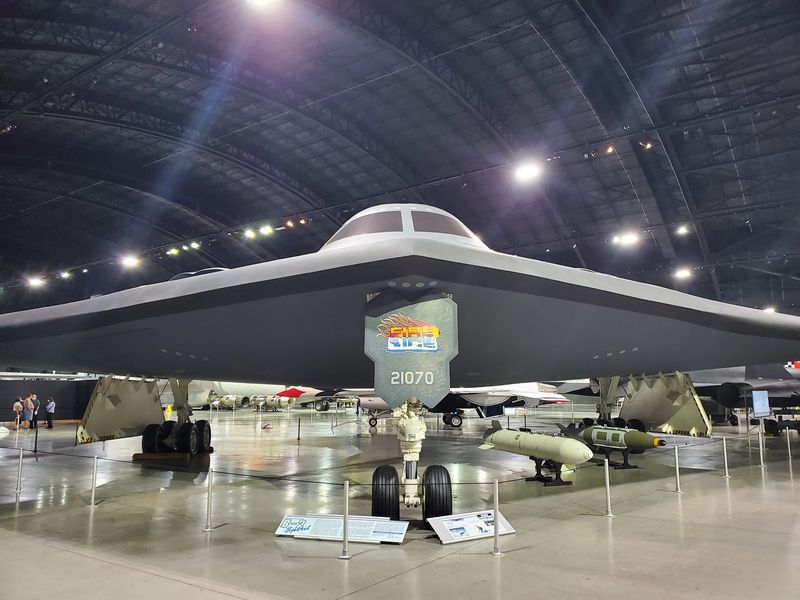
Few aircraft create such a dramatic first impression as the B-2 Spirit stealth bomber suspended above your head in the Cold War Gallery. Its unusual flying wing design looks like something from a futuristic movie, yet this actual military aircraft once flew secret missions around the world.
Walking through this gallery feels like stepping into a giant airplane warehouse where history floats right above you. The B-36 Peacemaker stretches impossibly long across the space, while the B-1 Lancer’s sleek profile catches your eye from across the room.
The A-10 Thunderbolt II sits nearby, showing off its distinctive twin engines and tough design built specifically for ground support missions.
Each aircraft tells part of the Cold War story, from massive nuclear bombers to nimble fighters designed for different types of combat. The sheer size of these machines becomes obvious when you stand directly underneath them.
Bring a camera because the dramatic angles and lighting create unforgettable photo opportunities throughout this gallery.
See Apollo 15 and Other Spacecraft Up Close
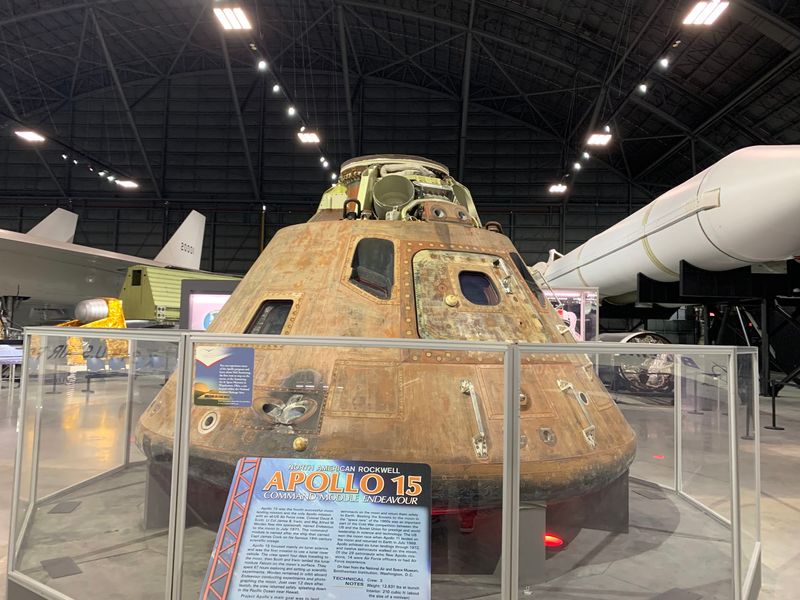
Standing face-to-face with Apollo 15 creates an emotional connection that photos and videos simply cannot match. This actual spacecraft carried astronauts to the moon and back, and now you can examine every scorched mark and heat shield detail from just a few feet away.
The Space Gallery transforms aviation history into space exploration history right before your eyes. The massive Titan IVB booster rises dramatically through the gallery space, dwarfing visitors who walk beneath it.
Formerly classified reconnaissance satellites sit nearby, showing off the incredible technology used during the Cold War to gather intelligence from orbit.
Launch hardware, space suits, and equipment fill the exhibits with authentic artifacts from America’s journey into space. Everything sits at ground level where you can really study the details and imagine what it must have felt like to ride these machines beyond Earth’s atmosphere.
Kids especially love this gallery because space exploration feels so much more real when you’re standing next to the actual hardware that made it happen.
Step Inside Historic Presidential Aircraft
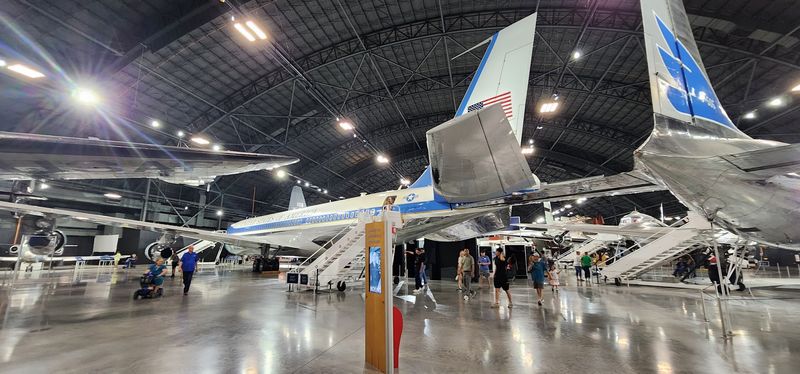
Climbing aboard the same aircraft that carried presidents through history creates a powerful sense of stepping back in time. The Boeing VC-137C SAM 26000 holds particularly emotional significance as the plane that brought President Kennedy to Dallas and later carried his body back to Washington after his assassination.
The Presidential Gallery opens up several aircraft for visitors to explore from the inside, not just view through windows. You can walk through the cabin where presidents held meetings, made critical decisions, and traveled to important events around the world.
The vintage interior design reflects different eras of American history, from Roosevelt’s propeller aircraft to more modern presidential jets.
Aircraft associated with Truman and Eisenhower round out the collection, each showing how presidential air travel evolved over the decades. The experience feels surprisingly personal because you’re literally sitting in the same seats and standing in the same aisles these leaders once used.
This gallery proves especially fascinating for history buffs who want to connect with American leadership in a tangible way.
Get Close to the X-15 and Other Experimental Aircraft
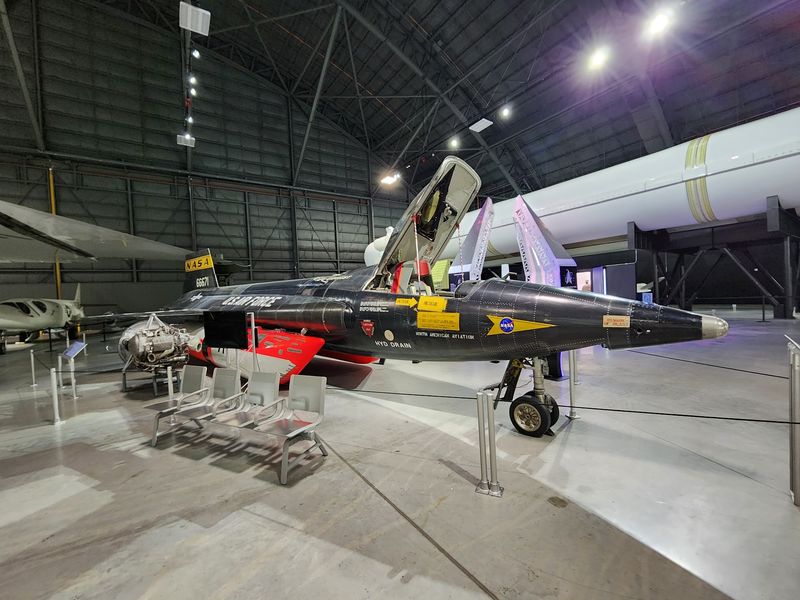
Experimental aircraft look absolutely wild compared to regular planes, and the X-15 rocket plane stands out as one of the strangest and most accomplished research aircraft ever built. This black rocket-powered machine flew to the edge of space and set speed records that still impress aviation experts today.
The Research and Development Gallery celebrates the brave test pilots and engineers who pushed boundaries most people thought impossible. The massive XB-70 Valkyrie dominates one section with its incredible size and distinctive design featuring wingtips that folded downward during flight.
These experimental machines tested new technologies that later appeared in military and civilian aircraft around the world.
Each aircraft here represents someone’s bold idea about how to fly faster, higher, or more efficiently than ever before. Some designs worked brilliantly while others taught expensive lessons about what not to try.
The unusual shapes and configurations make this gallery particularly interesting for anyone curious about how aviation technology advanced through trial, error, and occasional spectacular success.
Enter the World War II and Early Aviation Galleries
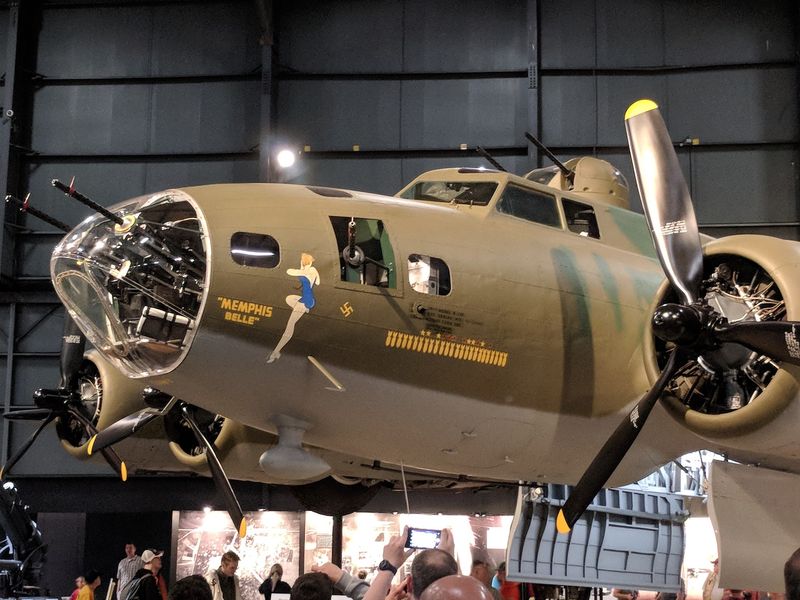
Aviation history begins with brave pioneers flying fragile machines that barely stayed airborne, and these galleries trace that incredible journey from the earliest military aircraft through World War II. The Early Years gallery shows how quickly aviation technology advanced from simple biplanes to sophisticated military aircraft.
World War II aircraft fill another gallery with fighters, bombers, and support aircraft that fought in every theater of that massive global conflict. Seeing these vintage planes up close reveals details you never notice in photos, from the artwork painted on fuselages to the cramped cockpits where young pilots faced enemy fire.
The collection includes both American aircraft and captured enemy planes, giving a complete picture of aviation technology during the war.
Starting your museum visit in these historical galleries creates a natural timeline that makes later exhibits more meaningful. You can trace how propeller designs evolved, how engines became more powerful, and how military aviation transformed from a experimental idea into a decisive factor in modern warfare.
These galleries provide essential context for understanding everything else in the museum.
See Aircraft From the Korean and Southeast Asia Wars
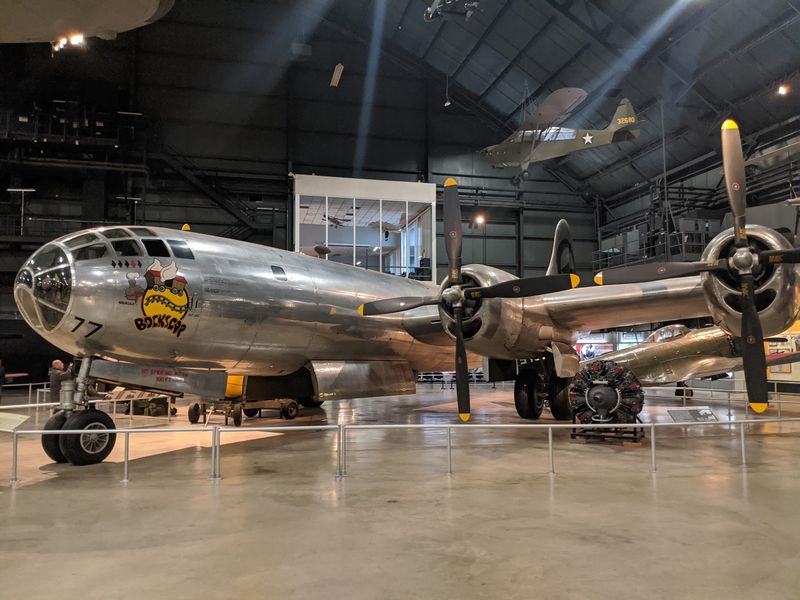
Jet technology transformed military aviation during the Korean War, and these galleries showcase that dramatic shift from propeller fighters to supersonic jets. The Korean War gallery displays aircraft that fought in the first major jet-versus-jet combat, changing aerial warfare forever.
The Southeast Asia War gallery continues the story through the Vietnam era, showing how aircraft technology and military tactics evolved during that controversial conflict. Fighter jets, helicopters, and support aircraft fill the exhibits with machines that served in actual combat missions.
Historical displays provide context about the missions these aircraft flew and the challenges pilots faced in combat zones.
Comparing aircraft from these two wars reveals how quickly aviation technology advanced during the Cold War decades. Early jets from Korea look primitive compared to the sophisticated fighters used over Vietnam just twenty years later.
Equipment displays, uniforms, and personal stories from pilots and crew members add human elements to the technical exhibits.
These galleries bridge the gap between World War II propeller aircraft and the advanced jets displayed in the Cold War gallery.
Look Up at Rockets, Missiles and Reconnaissance Satellites
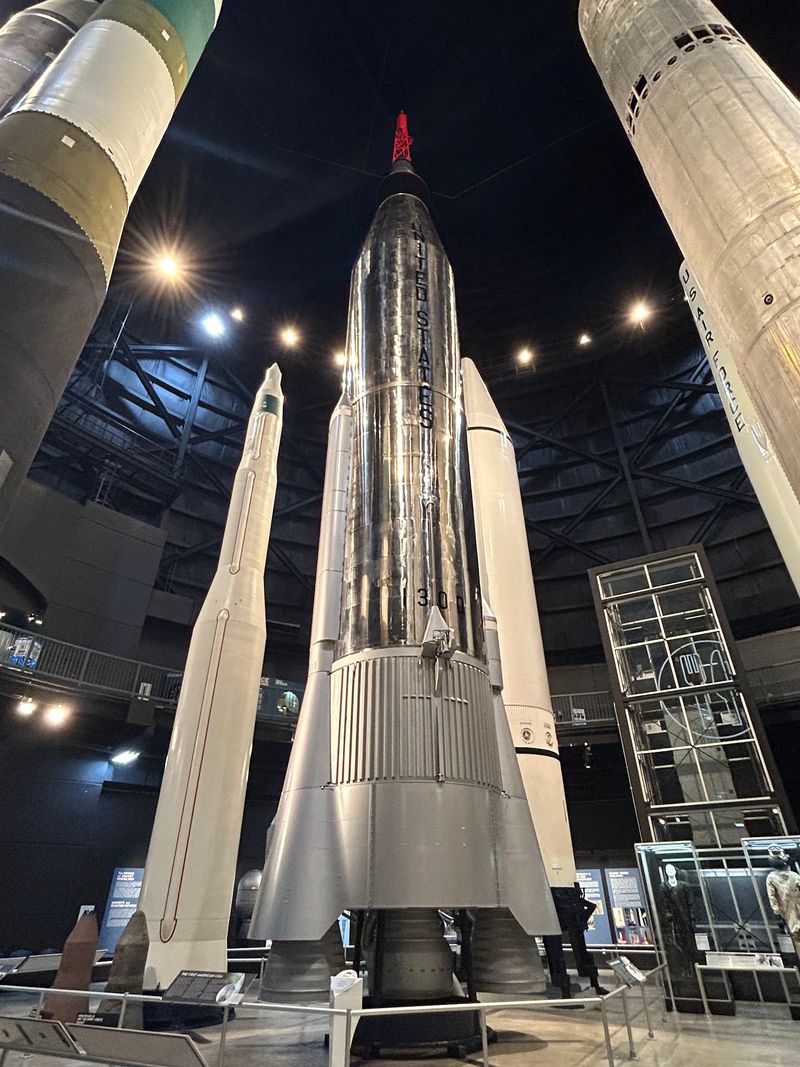
Missiles rising through tall gallery spaces create a completely different visual experience from the horizontal aircraft displays throughout the rest of the museum. The Missile Gallery uses vertical space dramatically, with large missile systems pointing upward and showing off their impressive size and engineering.
Formerly classified reconnaissance satellites add intrigue to the space-related exhibits near the missile displays. The GAMBIT systems once orbited Earth secretly, capturing detailed photographs for intelligence purposes during the Cold War.
Seeing these satellites in person reveals the sophisticated technology that existed decades ago, long before modern satellite capabilities became public knowledge.
The connection between military aviation, missile technology, and space exploration becomes clear as you move through these exhibits. Rocket engines that powered missiles also launched satellites and spacecraft into orbit.
The same organizations that developed fighter jets also created the technology that put humans on the moon.
Standing beneath these massive systems helps visitors understand how aerospace technology advanced from simple aircraft to machines capable of reaching beyond Earth’s atmosphere and achieving incredible speed and altitude.
Add the Simulators and Giant-Screen Experiences
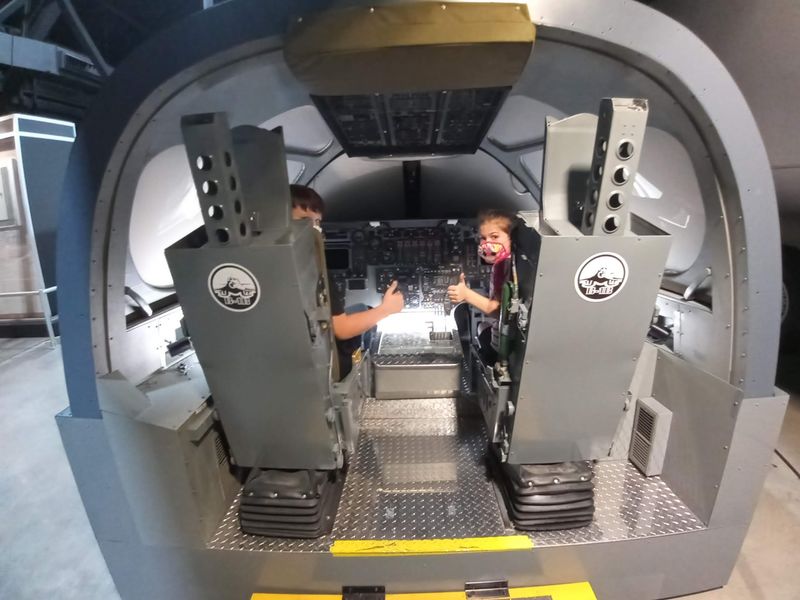
After exploring the aircraft galleries, visitors can add extra excitement with interactive simulators and immersive movie experiences. The Movie Ride combines motion seats with giant-screen visuals, creating a thrilling flight experience without leaving the ground.
The I-360 flight simulator lets you take virtual control of military aircraft, experiencing the sensation of aerial maneuvers and missions. The VR Transporter adds cutting-edge virtual reality technology, putting you inside completely immersive scenarios.
These attractions require separate tickets currently priced at ten dollars each, and height requirements apply to certain rides for safety reasons.
Families with younger children should check height restrictions before planning to purchase simulator tickets, as some kids might not meet the minimum requirements. The attractions add modern entertainment value to the historical exhibits, appealing especially to visitors who want hands-on experiences beyond viewing aircraft.
These experiences work well as a break from walking through galleries or as a finale after touring the museum.
Check the official museum website for current attraction schedules and ticket availability before your visit.
Plan Your Visit
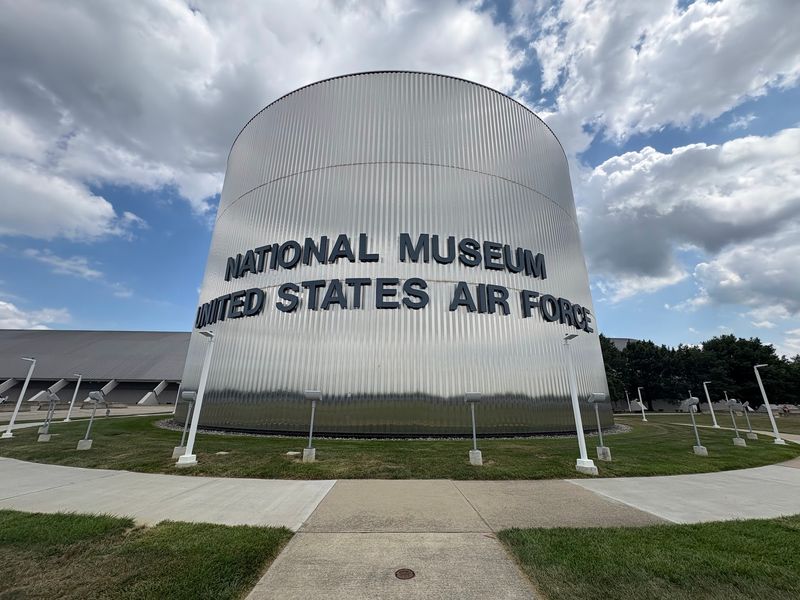
The museum strongly recommends dedicating an entire day to your visit, and some enthusiastic visitors even return for a second day to catch everything they missed initially. With four massive hangars filled with aircraft and multiple galleries covering different eras of aviation history, rushing through in a few hours means missing incredible exhibits and details.
Admission remains completely free, and parking costs nothing either, making this an exceptional value for families and aviation enthusiasts on any budget. Regular hours run from nine in the morning until five in the afternoon every day, though the museum closes on Thanksgiving, Christmas Day, and New Year’s Day.
The physical address is 1100 Spaatz Street, Wright-Patterson Air Force Base, Ohio, zip code 45433.
Before heading to the museum, check the official website for current information about exhibit closures, attraction schedules, accessibility accommodations, and detailed driving directions. Calling ahead at 937-255-3286 can answer specific questions about your visit.
Bring comfortable walking shoes because you will cover serious distance exploring all the galleries and exhibits throughout this enormous museum complex.