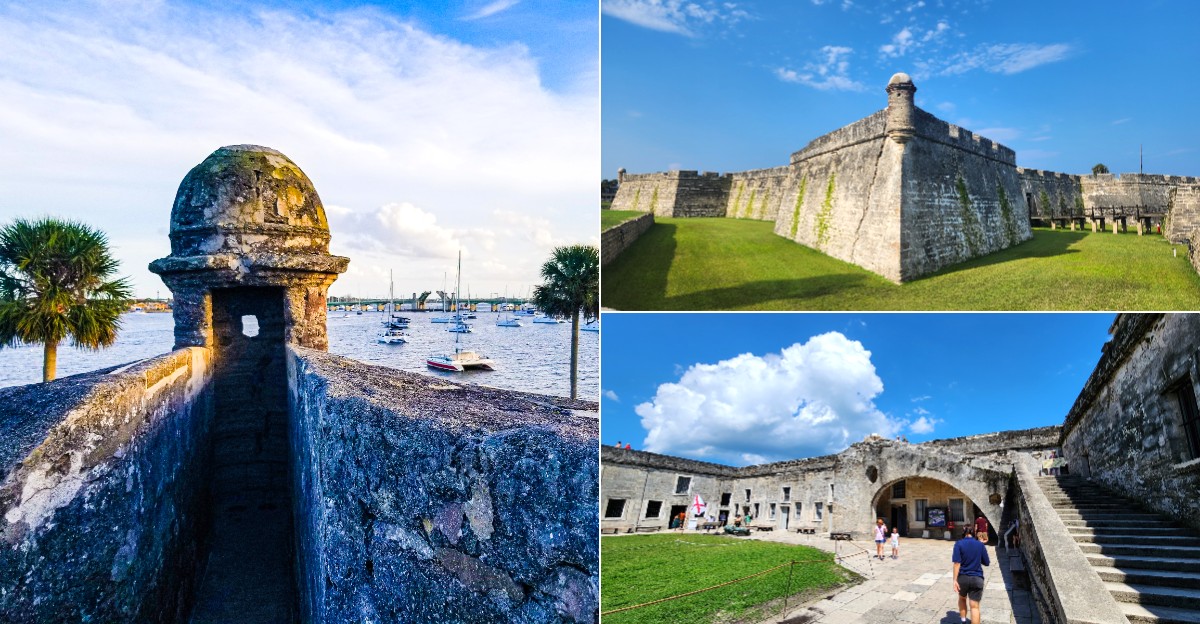
Long before Florida became a tourist destination, this coquina stone fortress was already standing guard over the coast.
Its thick walls have weathered hurricanes, cannon fire, and centuries of changing flags overhead.
Walking across the drawbridge feels like stepping straight into the colonial era.
Inside, cool stone corridors and open courtyards reveal how soldiers once lived, worked, and defended this outpost.
Rangers and reenactors bring the history to life with demonstrations that echo across the fort’s ancient walls.
The Castillo de San Marcos in St. Augustine remains one of the best-preserved fortifications in the country.
Coquina Walls That Refused To Fall
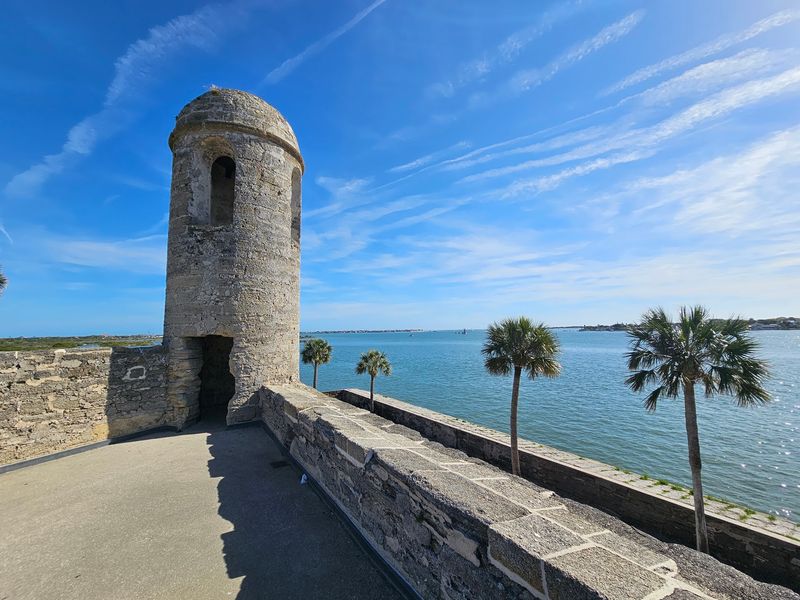
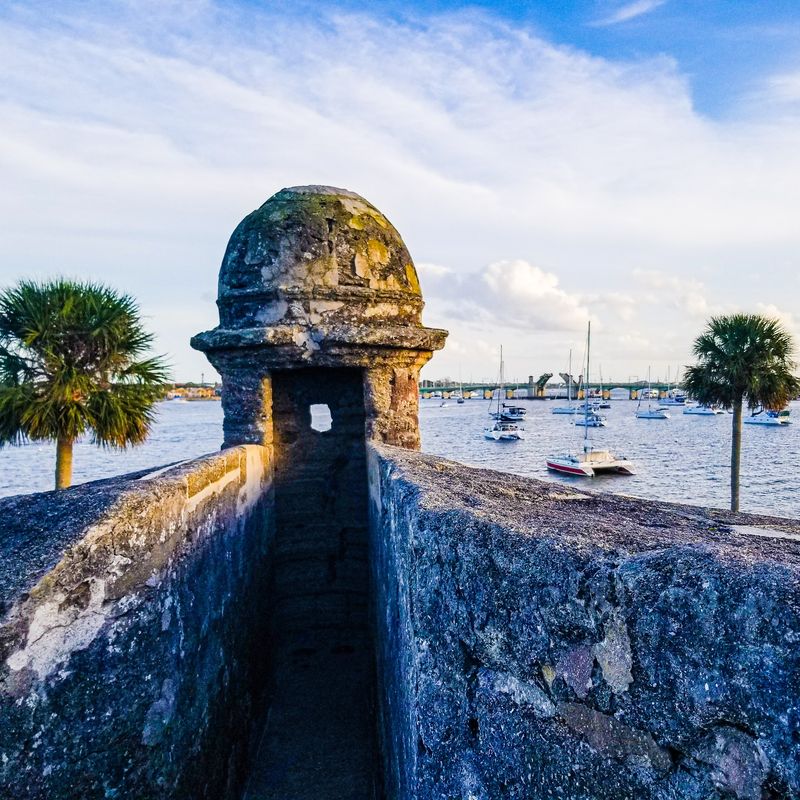
Shells, sand, and time are packed into the walls, almost like Florida made its own armor. The fort was built from coquina, a local stone made of tiny shell pieces pressed together over many years. At Castillo de San Marcos National Monument, 11 S Castillo Dr, St. Augustine, FL 32084, that unusual material is a big reason the fortress still fascinates visitors.
Instead of shattering when cannonballs hit, coquina often absorbed the blow. Imagine throwing a ball into a firm sponge rather than a glass window. That surprising strength helped the fort survive attacks, storms, and centuries of salty air.
When you walk beside the walls, look closely for small shells in the stone. Kids and adults can spot them without special tools, which makes the science easy to understand. The best photos often come from standing near the moat and aiming upward, where the thick walls look especially powerful.
Bring curiosity, because the stone tells a story before any sign does. For a simple activity, compare smooth modern concrete with the rough coquina blocks. That small detail helps explain why this 1600s fort remains one of Florida’s most memorable landmarks today.
A Drawbridge Entrance With Real Drama
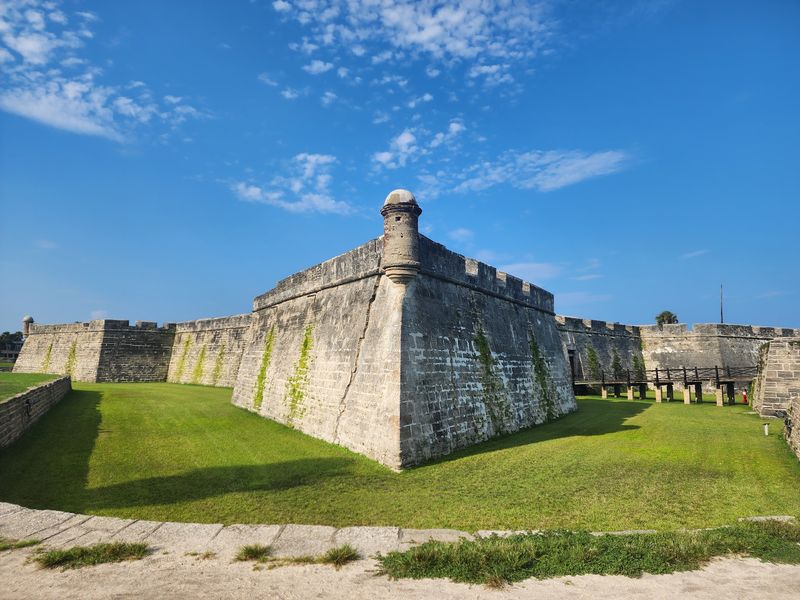
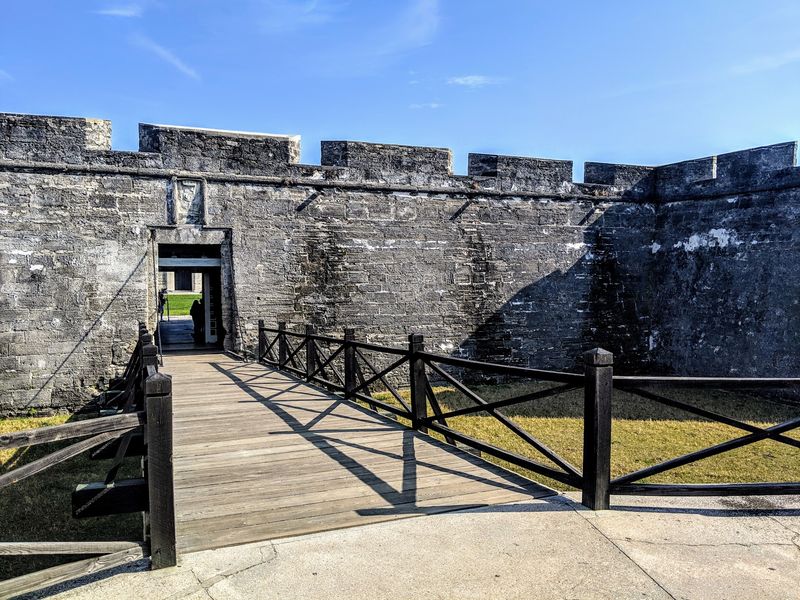
A wooden bridge can make a visit feel like the start of an adventure. Before you even enter the fort, the drawbridge hints that this place was built for danger, control, and careful watching. Long ago, soldiers could raise or defend entrances to slow enemies and protect the people inside.
Today, crossing the bridge is easy, but it still adds excitement to the experience. Pause for a moment before walking through the gate, because the view shows how the fort used layers of defense. The moat, walls, gate, and open space all worked together.
Families can turn this area into a quick history game. Ask kids where they would stand guard, where attackers might try to enter, and why a narrow entrance was helpful. Simple questions like these make the site feel less like a museum and more like a puzzle.
Photos near the bridge usually capture the fort’s strong shape and old-world mood. Visit early if you want fewer people in your shot. The entrance also helps visitors slow down, switch from busy city streets to history mode, and understand that every step inside leads deeper into centuries of Spanish colonial life.
Cannons Above The Bay
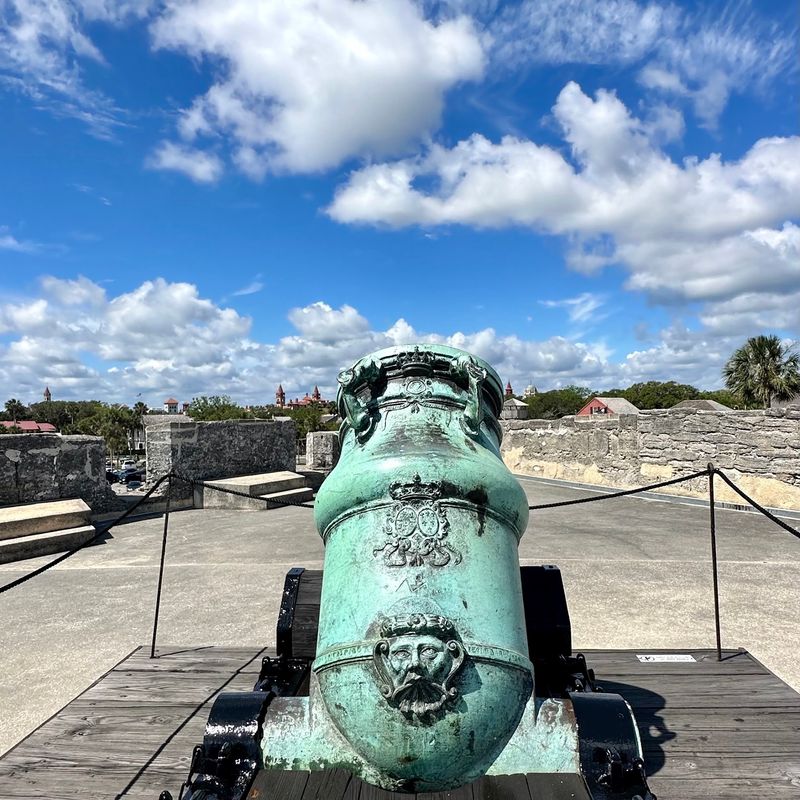
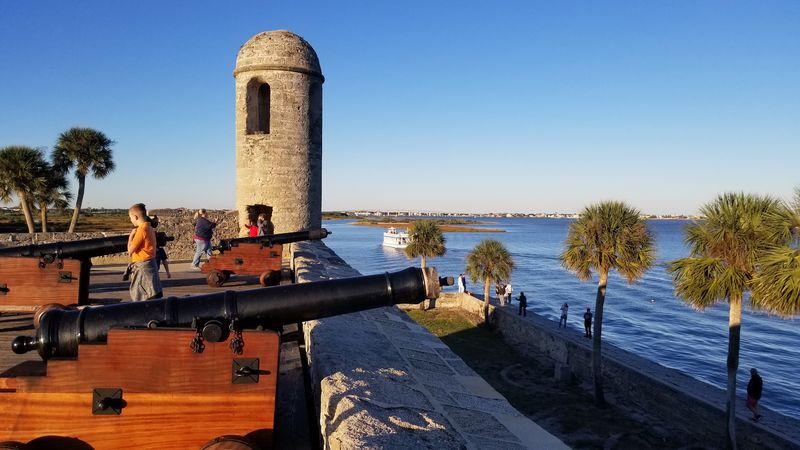
Breezes from the bay meet rows of old cannons on the upper deck, giving the fort one of its most exciting views. The weapons point toward Matanzas Bay, where ships once mattered to trade, travel, and defense. Standing there helps visitors understand why this spot was chosen so carefully.
Cannons were not just for show in the 1600s and 1700s. They guarded the waterway and warned enemies that St. Augustine was protected. Park displays explain how crews loaded, aimed, and fired these heavy guns with teamwork and practice.
If a demonstration is offered during your visit, try to watch it. The sound, steps, and uniforms help history feel active rather than frozen behind glass. You may want ear protection for young children, because cannon programs can be loud.
The gun deck is also sunny and open, so plan ahead. Wear a hat, use sunscreen, and bring water, especially in warm months. Benches give you a place to rest while enjoying the wide water view.
For thoughtful travelers, the cannons tell two stories at once. They show impressive engineering, but they also remind us that fear, power, and conflict shaped early Florida history.
Rooms Where Fort Life Feels Close
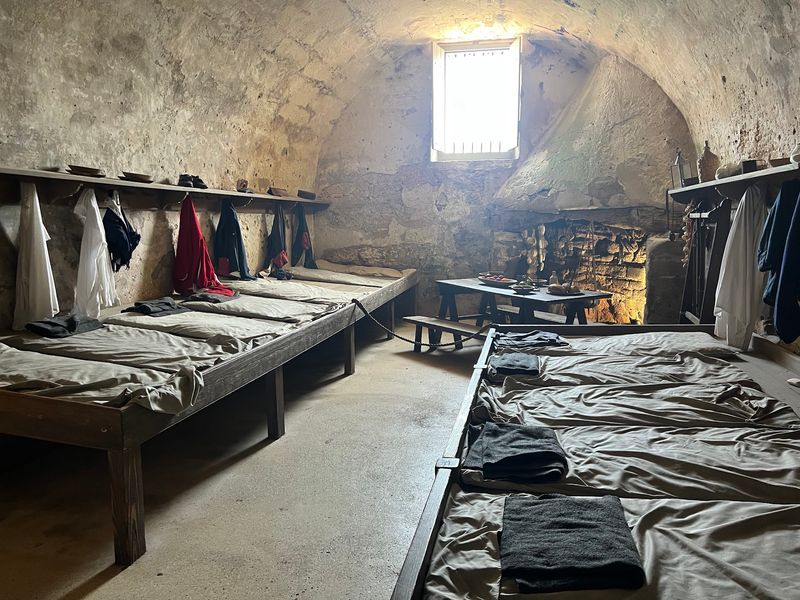
Cool stone rooms offer a quiet break from the bright Florida sun. Inside the lower level, visitors find spaces that once supported daily life, storage, worship, work, and defense. The rooms are simple, but that plainness helps you imagine how hard life could be inside a military fort.
Exhibits often explain who lived and worked there, including soldiers and people connected to Spanish colonial St. Augustine. Look for displays about barracks, food, tools, and the original gates. Reading a few signs in each room gives the visit more meaning than rushing straight to the top.
Children may enjoy comparing those old spaces with rooms at home. Ask what seems missing, such as soft beds, bright lights, air conditioning, or easy cooking tools. That quick comparison makes the past feel real.
The lower rooms can also be helpful on hot days because they feel cooler than the upper deck. Still, comfortable shoes are smart because the floors are hard and uneven in places. Move slowly through doorways, and give other visitors space.
For anyone who loves small details, carvings, stone textures, and shadowed corners make these rooms worth a second look before leaving.
Ranger Stories And Living History Moments
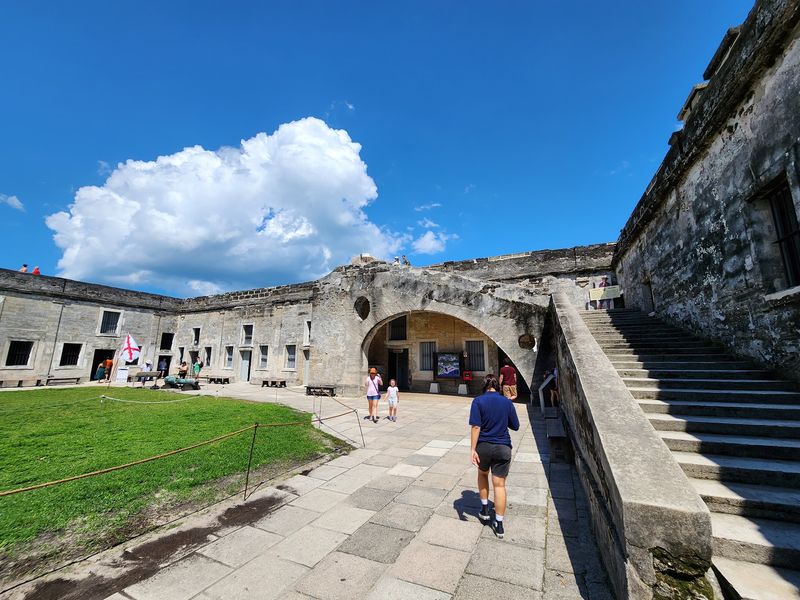
A good storyteller can turn old stone into a living scene. Park rangers, volunteers, and costumed interpreters often help visitors understand the fort through talks, demonstrations, and friendly answers. Their knowledge can make a short stop feel rich and memorable.
Living history programs are especially useful because they show how tasks were done. Instead of only reading about a cannon crew, you may see people explain the steps, tools, and commands. That kind of learning works well for visitors who remember sights and sounds better than dates.
Check the National Park Service website or ask at the entrance about the day’s schedule. Programs can change because of staffing, weather, heat, or safety needs. Arriving earlier gives you more chances to catch a talk before crowds build.
Do not be shy about asking questions. Rangers can explain why the walls are shaped the way they are, how the fort changed hands, and what life was like for people inside. Many visitors say these conversations are a highlight.
If you are visiting with kids, ask about the Junior Ranger program. It gives young travelers a mission, keeps them looking closely, and turns the fort into a hands-on classroom.
Matanzas Bay Views From The Ramparts
Wide water views reward anyone who climbs to the top level. From the ramparts, Matanzas Bay spreads out beside the fort, and St. Augustine feels both old and lively at the same time. It is one of the best places to understand the fort’s location.
Spanish builders wanted to watch the water because ships brought supplies, news, people, and possible threats. From above, you can see why a fortress here mattered. The view connects geography with history in a way a textbook rarely can.
Bring your camera, but also take a minute without it. Listen to the wind, watch boats move, and notice how open the sky feels. Small pauses like that help you remember the visit later.
The upper area can get hot, especially on clear afternoons. Sunscreen, water, sunglasses, and a hat can make the difference between enjoying the view and hurrying back down. If storms are nearby, the upper deck may close for safety.
People with mobility concerns should know that stairs are part of reaching this level. Even if you stay below, the grounds still offer strong views of the walls, moat, and waterfront setting.
Smart Tips For Tickets, Parking, And Timing
Planning ahead can save time, sunburn, and parking stress. The fort is popular, and many visitors mention that parking near the entrance fills quickly. If the closest lot is packed, the nearby downtown parking garage can be a practical backup.
Hours are generally 9 am to 5 pm, but checking the official National Park Service page before going is wise. Weather, holidays, special events, or maintenance can affect details. Admission fees may apply, while certain national park passes can help some visitors save money.
Most people can see the main areas in about one to two hours. History fans may want longer for exhibits, photos, ranger talks, and quiet time on the upper deck. Arriving early often means cooler weather and lighter crowds.
Wear comfortable shoes because you will walk on hard surfaces and climb stairs if you visit the top. Bring water, especially in summer, since Florida heat can feel stronger inside open stone areas. Restrooms are inside the paid area, so plan before gathering everyone on the grounds.
A simple plan works best. Park, enter, explore the rooms first, climb for the views, visit the gift shop, and leave time for nearby historic streets afterward.
Why The Oldest Masonry Fort Still Matters
Old forts can teach more than battles and dates. This fortress shows how people used local materials, careful design, and hard labor to protect a growing colonial town. Completed in 1695, it stands as the oldest masonry fort in the continental United States.
The star-like shape, corner bastions, thick walls, and dry moat were all part of a smart defense plan. Attackers had fewer easy places to hide, while defenders could watch many angles. Even today, the design is clear enough for visitors to understand by walking around the outside.
The fort also asks us to think about complicated history. Spanish soldiers, British rivals, Native peoples, prisoners, settlers, and later American forces are all connected to its story. A visit is more meaningful when we remember that real people, not just names on signs, lived through these events.
For students, families, and curious travelers, the site makes early American history easier to picture. Stone walls, cannon platforms, rooms, and bay views turn lessons into something you can see and feel. That is why preservation matters.
When the day ends, the fort remains more than a photo stop. It is a rare survivor, still standing, still teaching, and still watching the water.