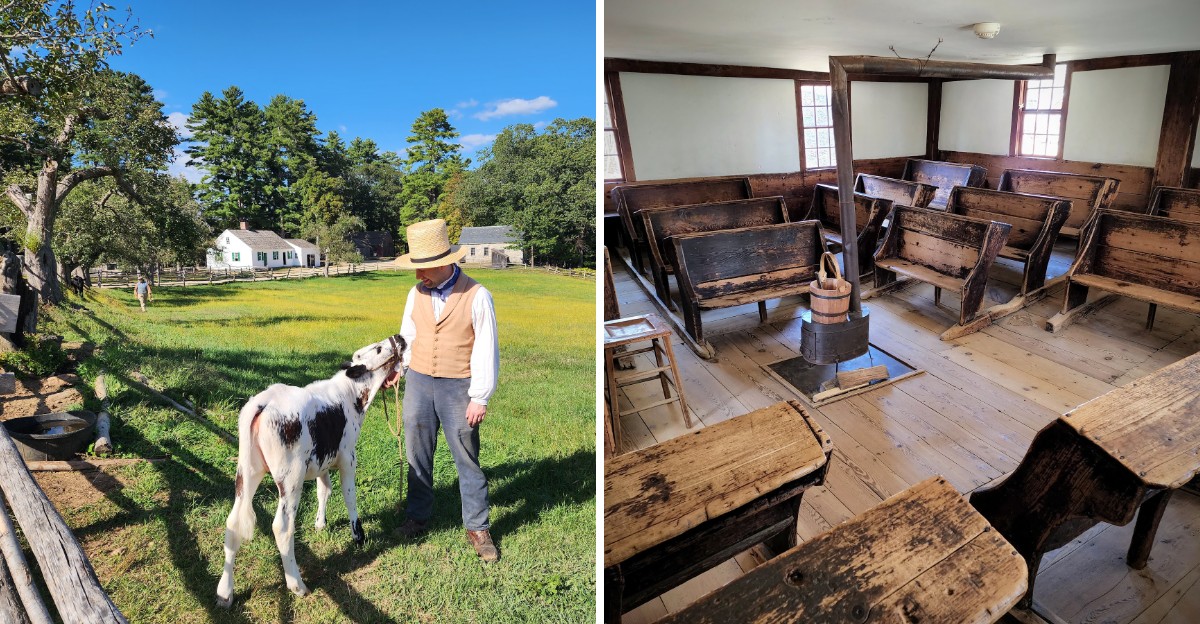
Forget the time machine—you can walk straight into 1830s New England in Massachusetts.
At Old Sturbridge Village, dirt roads, historic homes, working farms, and costumed historians create a living snapshot of nearly 200 years ago.
You’re not peering through glass at the past; you’re stepping right into it.
Spread across more than 200 acres, the village features over 40 historic buildings that reveal how New England families lived, worked, cooked, farmed, and made a living.
Craftspeople demonstrate old trades while animals roam working farms, adding plenty of movement to the experience.
Give yourself a few hours or spend the whole day wandering from one corner to the next.
By the time you leave, the 1830s may feel surprisingly close.
Walk Into A Recreated 1830s New England Village
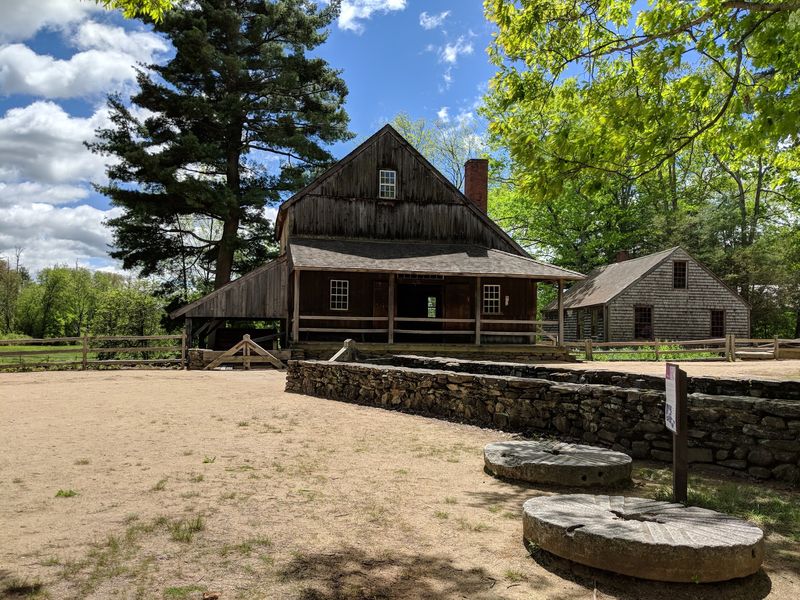
Old Sturbridge Village isn’t a traditional museum where you read signs and move on. Instead, you’re stepping into an entire recreated community that shows what rural New England looked like during the 1830s.
More than 40 original buildings were carefully moved here from locations throughout the region and arranged to form a complete village.
The layout includes three main areas that each tell different parts of the story. The Center Village holds the meetinghouse, bank, store, and other buildings where community life happened.
The Mills Area shows the water-powered industries that processed wool and grain.
The Countryside section spreads out with farms, barns, and homes that reveal how most families actually lived. You can wander between these areas on dirt paths and roads, experiencing the scale and setting of a real 1830s community.
The village covers 200 acres, so comfortable walking shoes make a big difference when you’re exploring for several hours.
Step Inside Homes That Show Everyday 19th-Century Life
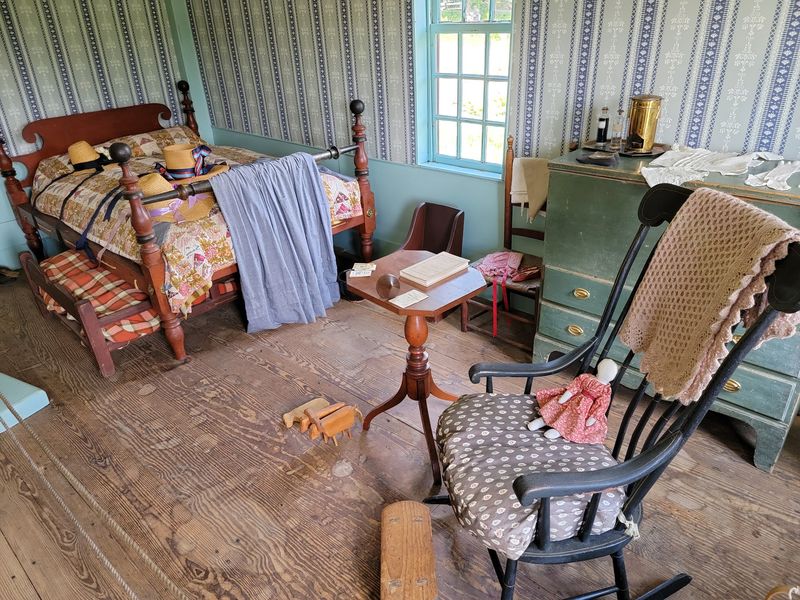
Walking through the historic houses gives you the most personal view of how families managed their daily routines. These aren’t empty shells.
Each home contains period furnishings, cooking equipment, bedding, and personal items arranged just as they would have been used.
The Fitch House, Salem Towne House, and other residences show different levels of wealth and lifestyle, from modest farmhouses to more prosperous merchant homes. You’ll notice details like small windows that made winters dark, low doorways that required ducking, and narrow staircases that climbed to tiny upstairs rooms.
Costumed interpreters often work inside these spaces, cooking at the hearth, mending clothes, or demonstrating other household tasks. You can ask questions about everything from sleeping arrangements to food storage.
The experience helps you appreciate both the ingenuity people used to solve everyday problems and the sheer amount of physical labor that filled each day before modern conveniences existed.
Watch Blacksmiths And Other Craftspeople At Work
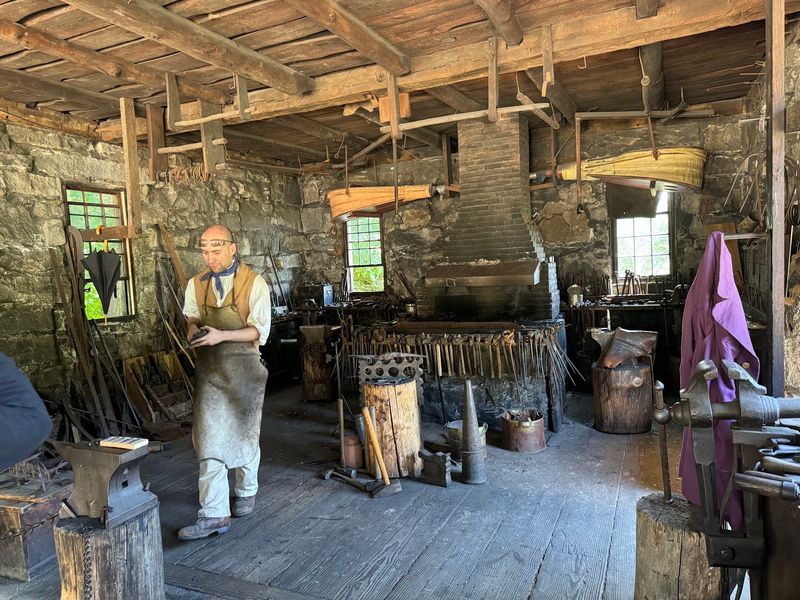
Few things bring the 1830s to life quite like watching a blacksmith shape hot iron with hammer and anvil. The ring of metal on metal and the glow of the forge create an atmosphere you won’t forget.
Blacksmiths here don’t just perform for visitors; they produce actual tools, hardware, and items the village uses.
Beyond the blacksmith shop, you’ll find other craftspeople demonstrating essential trades. The pottery shop shows how everyday dishes, jugs, and crocks were thrown and fired.
Cabinet makers shape wood into furniture using hand tools and techniques from the period.
The print shop operates an actual working press where you might see broadsides or newspapers being produced. Watching skilled hands work with traditional methods helps you understand why quality items were treasured and repaired rather than replaced.
These demonstrations happen throughout the day, so you can stop by whenever your schedule allows and often strike up conversations about the processes, materials, and challenges each craft presented.
See How A New England Farm Worked
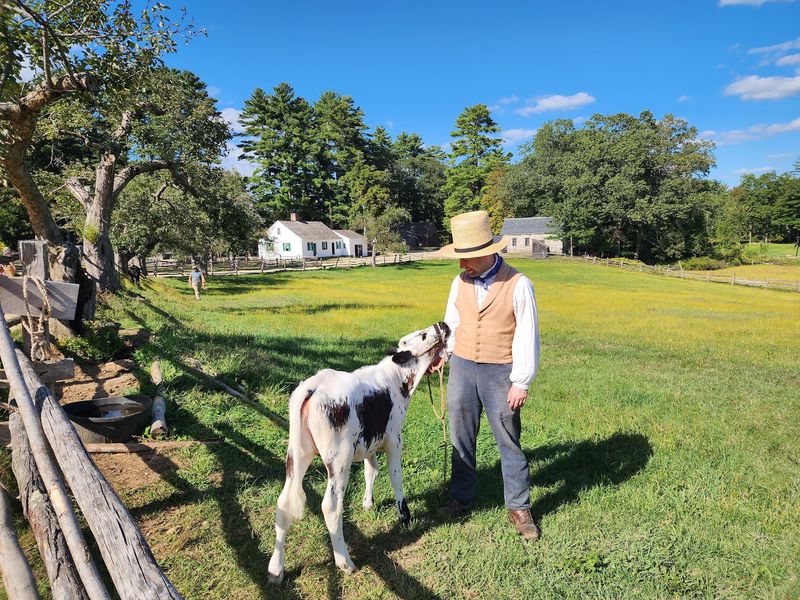
Farming wasn’t a hobby in the 1830s; it was how most families survived. Old Sturbridge Village maintains working farms complete with heritage breed animals that resemble the livestock people would have raised during the period.
You’ll encounter oxen, cows, sheep, pigs, and chickens as you explore the farm areas.
These animals weren’t just for show. They provided meat, milk, eggs, wool, and the muscle power needed to plow fields and haul loads.
The barns and outbuildings demonstrate how farmers stored hay, sheltered animals through harsh winters, and organized their equipment and tools.
Depending on the season, you might see plowing, planting, harvesting, or other farm tasks being demonstrated. The interpreters can explain crop rotation, the importance of different grains, and how families balanced raising food for themselves with growing cash crops to sell.
Experiencing farm life helps visitors understand that most 1830s New Englanders spent their days doing hard physical labor just to keep their households fed and functioning.
Discover The Gardens And Plants Of The Period
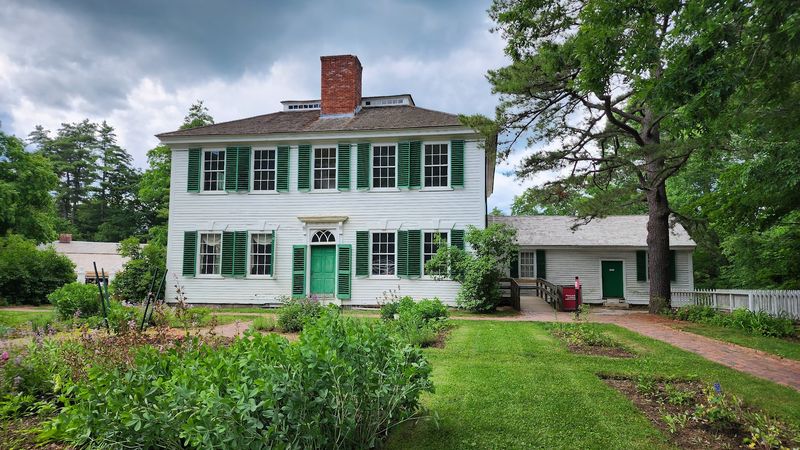
Gardens in the 1830s served purposes far beyond decoration. Old Sturbridge Village cultivates more than 400 varieties of heirloom plants, showing exactly what people grew and why they needed these specific crops.
Kitchen gardens provided vegetables that families ate fresh, preserved, or stored in root cellars for winter.
Herb gardens supplied medicines, flavorings, dyes, and cleaning materials that couldn’t be purchased at any store. You’ll see plants used for everything from treating common ailments to scenting linens and repelling insects.
The gardens change dramatically with the seasons, offering early greens in spring, abundant vegetables in summer, and harvest displays in fall.
Some plants might surprise you. Many vegetables we consider ordinary today were still relatively new to American gardens during this period.
Others that were common staples have nearly disappeared from modern use. Reading the plant labels and talking with gardeners helps you understand how much knowledge people needed just to feed and care for their families using what they could grow themselves.
See How People Cooked, Made Clothes, And Handled Daily Chores
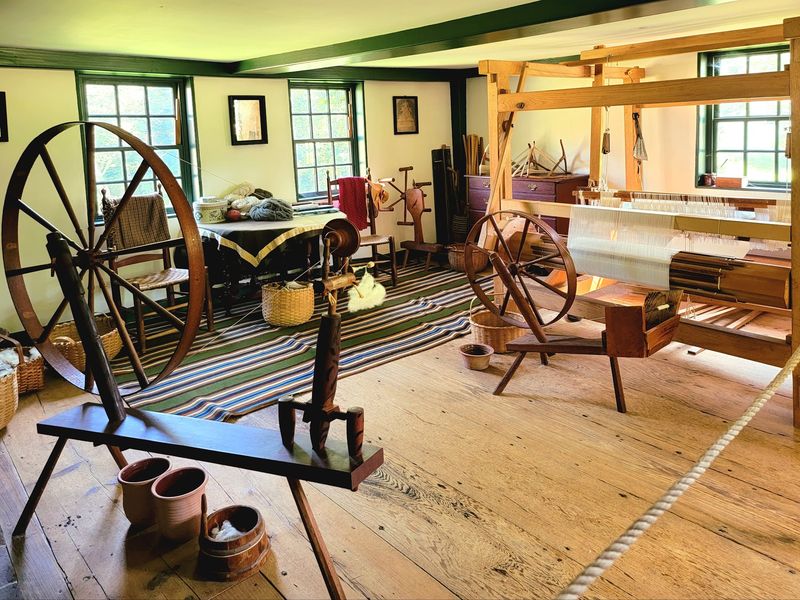
Modern appliances make us forget how much time basic household tasks once required. At Old Sturbridge Village, demonstrations throughout the day show the reality of keeping a home running in the 1830s.
Hearth cooking is one of the most fascinating skills to watch, as interpreters manage fires, adjust pot heights, and regulate temperatures without thermostats or timers.
Making a single meal could take hours of preparation, tending, and cleanup. Textile work fills another large portion of the interpretation, from carding and spinning wool to weaving fabric and sewing garments by hand.
You might see candles being dipped, butter being churned, or laundry being scrubbed and hung.
These weren’t occasional chores but daily or weekly necessities that consumed enormous amounts of time and energy. Children often helped with tasks scaled to their abilities.
The demonstrations really drive home how much has changed in just under 200 years and why families needed many hands to accomplish all the work required to maintain even a modest household.
Visit The School, Meetinghouse, And Community Buildings
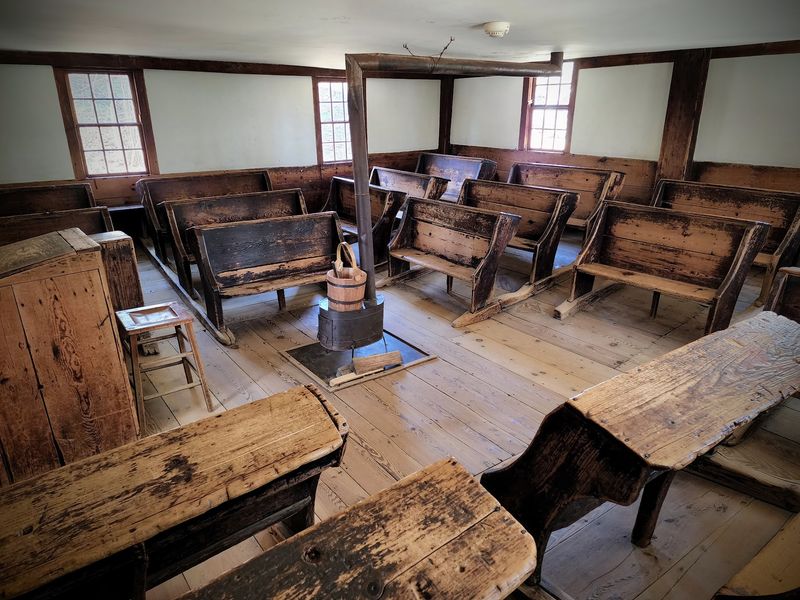
Community buildings reveal the social side of village life that went beyond individual households. The District School recreates a one-room schoolhouse where children of all ages learned together.
You can sit at the wooden benches, see the slates they wrote on, and hear about the strict rules and limited supplies that shaped education during this era.
The Center Meetinghouse served both religious and civic purposes, hosting everything from Sunday services to town meetings where important decisions were made. The building’s simple but dignified design reflects New England values of the period.
Other public spaces include the bank, general store, and law office.
Special programs often take place in these buildings, from historical music performances to demonstrations of 19th-century social customs and etiquette. You might encounter a spelling bee, a town meeting reenactment, or a presentation about how communities organized themselves before modern government services existed.
These experiences help you understand that the 1830s village was a genuine community where people gathered, cooperated, and sometimes disagreed about important issues.
Ride A Horse-Drawn Carryall Around The Mill Pond
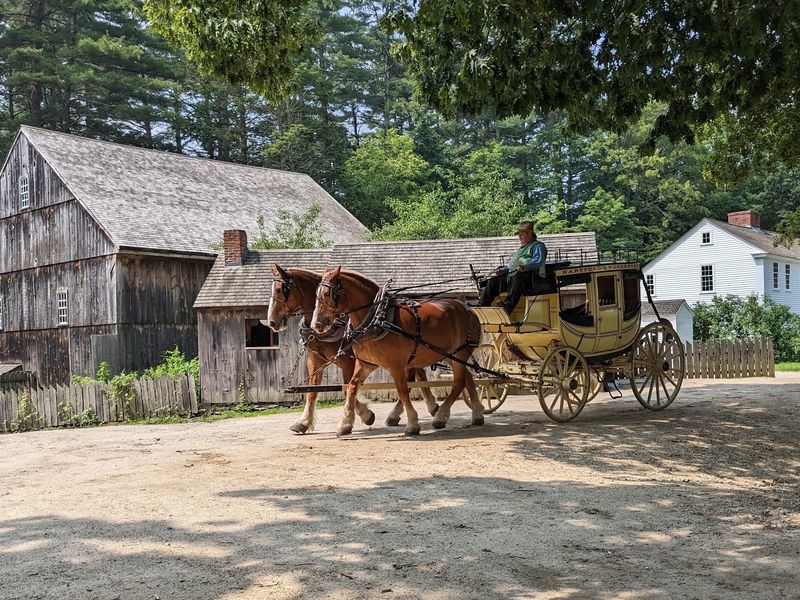
One of the most memorable experiences at Old Sturbridge Village is the horse-drawn carryall ride that travels around the scenic Mill Pond. When operating, this ride is included with your admission price, making it an accessible addition to your visit.
The carryall is a large wagon that can accommodate multiple passengers at once.
The ride itself moves at a slow, steady pace that matches how people traveled in the 1830s, when speed wasn’t the priority and you had time to observe the landscape around you. As the horses clip-clop along the route, you’ll pass historic buildings, farms, and natural areas while seeing the village from a different perspective.
The Mill Pond provides a peaceful backdrop, and the driver often shares information about the horses, the carriage, and what transportation was like during the period. This experience is particularly popular with children and anyone who wants to rest their feet while still exploring.
Check when you arrive to find out the ride schedule for the day, as it operates seasonally and weather conditions can affect availability.
Hear The Stories Behind The People And Trades
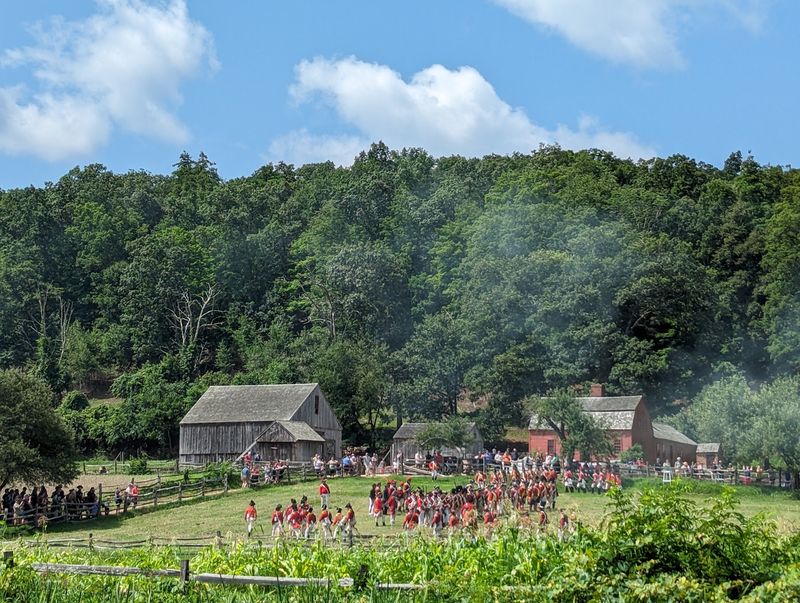
What sets Old Sturbridge Village apart from static museums is the presence of costumed historians who bring the past to life through first-person interpretation and storytelling. These aren’t just people in period clothing.
Many portray specific historical figures or represent types of people who lived in 1830s New England, from farmers and merchants to craftspeople and children.
You can have actual conversations with them, asking questions about their work, families, beliefs, and daily routines. They stay in character and answer from the perspective of someone living in that era.
Special programs throughout the day offer deeper explorations of particular topics, whether it’s the role of women, the experience of African Americans, religious practices, or political debates of the time.
The schedule changes seasonally and even daily, so checking the program board when you arrive helps you plan which demonstrations and presentations you want to catch. This interactive approach makes history feel personal and immediate rather than distant and abstract, especially for younger visitors who respond well to storytelling and hands-on engagement.
Plan Your Visit To Old Sturbridge Village
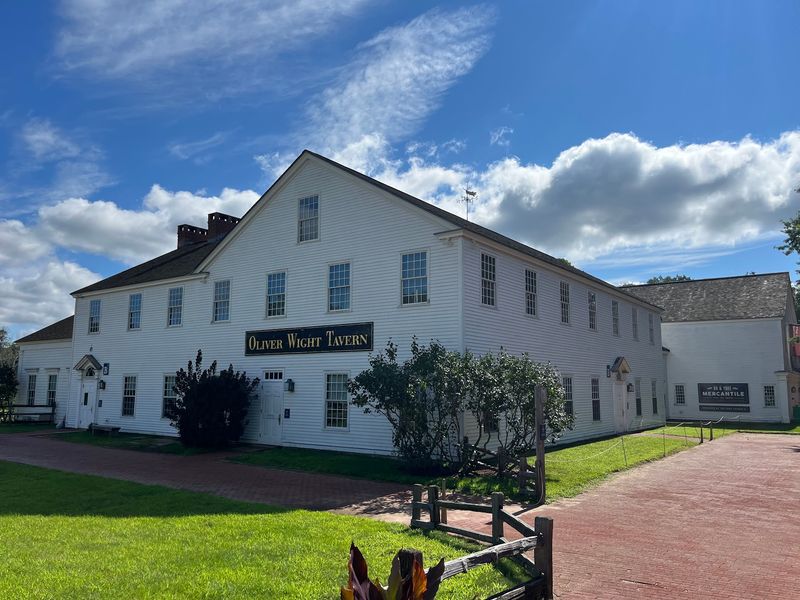
Old Sturbridge Village is located at 1 Old Sturbridge Village Road, Sturbridge, MA 01566. You can call them at 800-733-1830 with questions about programs, accessibility, or special events.
Current standard hours are Wednesday through Sunday, 9:30 a.m. to 5 p.m., though you should verify hours before your trip since they can vary seasonally.
Admission is currently $27 for adults, $25 for seniors, and $12 for youth ages 4 to 17. Children 3 and under enter free.
The village recommends allowing at least 2 to 3 hours for your visit, though many people spend an entire day exploring everything the site offers.
Free parking is available, including spaces for larger vehicles like RVs. The village operates rain or shine, so dress appropriately for weather and walking outdoors.
The Bullard Tavern Café serves lunch if you want to eat on-site, or you can bring a picnic to enjoy in designated outdoor areas. Check the official website calendar before visiting because daily programs, seasonal events, hours, and admission prices can all change throughout the year.