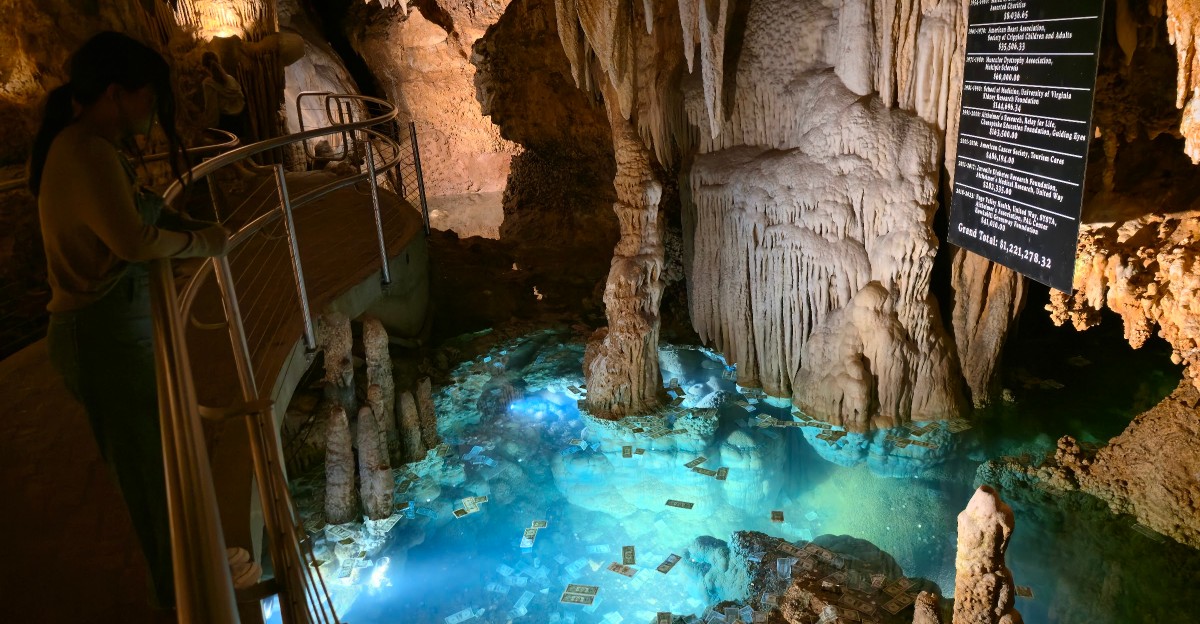
A few steps underground can make the familiar world above feel impossibly far away. Inside Luray Caverns in Virginia, towering formations rise from the floor, delicate deposits hang overhead, and still pools catch the glow of the cavern lights.
Located at 101 Cave Hill Rd in Luray, this underground attraction reveals a landscape shaped slowly by water, minerals, and time.
As you walk through the caverns, each chamber brings a different texture and shape into view. Stalactites stretch downward like stone curtains, stalagmites build upward from the cave floor, and narrow passages open into larger rooms where the scale can be surprising.
The steady cool air and muted sounds add to the feeling of leaving the surface behind.
Luray Caverns offers more than a dramatic underground walk; it gives visitors a chance to see geology unfolding in front of them. Here’s what you can expect as you explore its remarkable chambers and formations.
The First Steps Below Ground
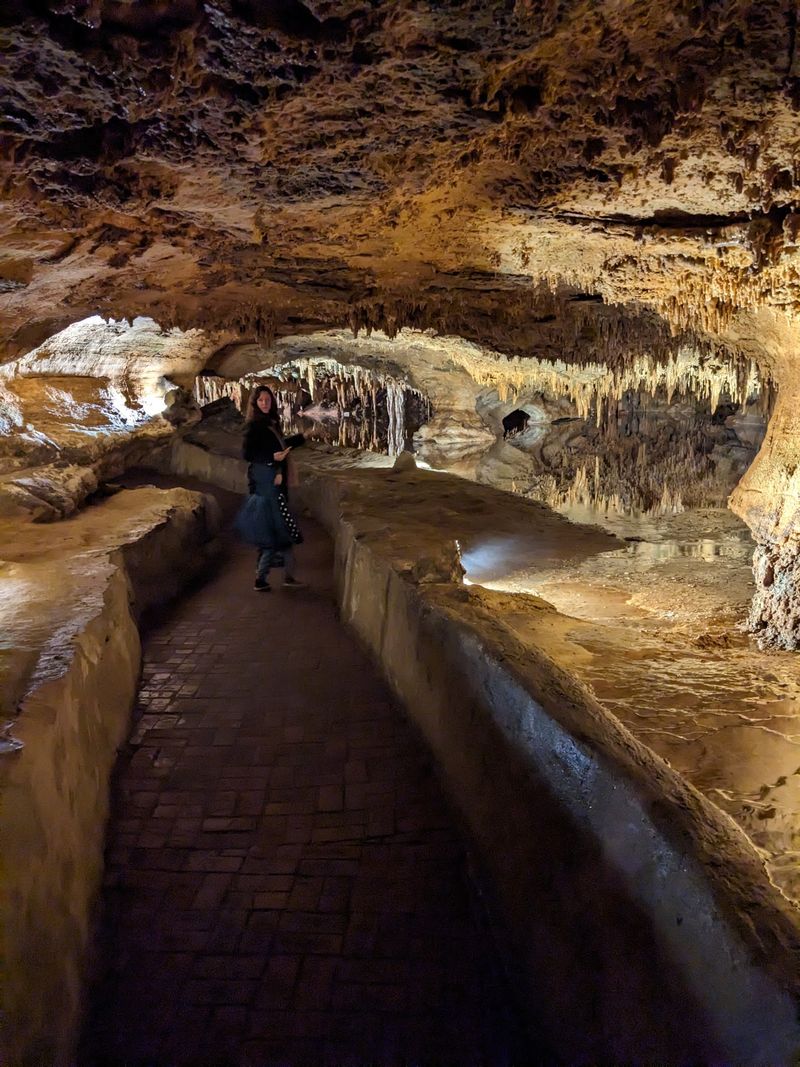
The outside world seems to fall quiet as the path leads underground. At Luray Caverns, the change comes quickly: daylight fades, the air feels cool, and shapes begin to appear beyond the next bend.
It is an exciting start without a difficult hike. The route is paved and lit, so you can spend more time looking around than searching for your footing.
The cavern stays near 54 degrees Fahrenheit throughout the year, although the damp air can make it feel warmer. A light layer is handy if you get cold easily.
Wear shoes with good grip, too, since moisture may leave parts of the walkway slick. Keep a hand free for railings and pause where the path allows instead of trying to see everything while moving.
That first stretch is also a good time to let your eyes adjust. Look up, then across the chamber, then down toward the rock beside the trail.
Each view offers a different clue about the place ahead. What begins as a walk soon feels like a trip into a hidden landscape, far from the familiar hills above.
Stone That Grows Drop by Drop
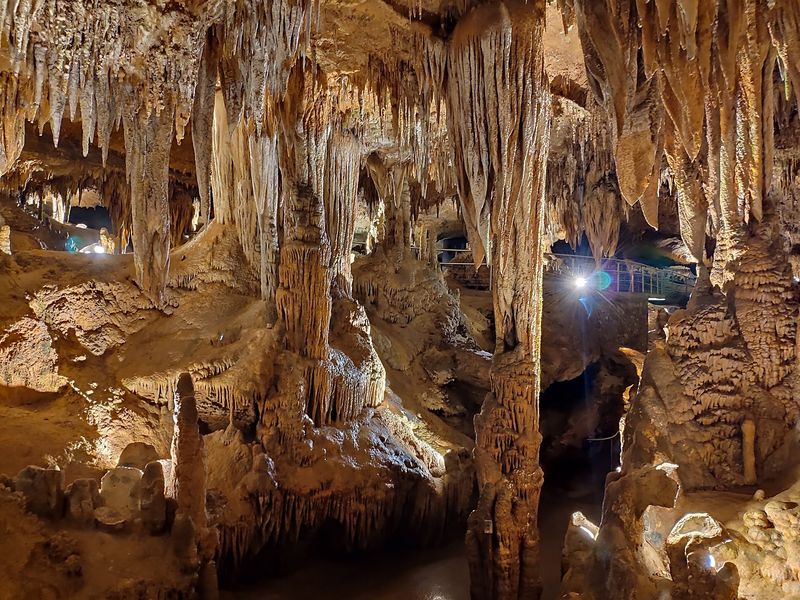
A ceiling crowded with stone points can make you stop in your tracks. Inside Luray Caverns, stalactites hang overhead while stalagmites rise from the floor.
Some are thin and sharp; others look like thick candles that have been melting for ages. Where an upper and lower formation meet, they become a column, joining two parts of the cave.
Water is the quiet builder behind these shapes. As it passes through rock, it picks up minerals and leaves tiny deposits behind when it drips into an open space.
That slow process helps explain why nearby formations can look so different. Try finding one small detail, such as a narrow tip or a rippled edge, before taking in the whole room.
Photos are tempting, but give yourself a moment without a screen. The best view may be just off to one side, where several shapes overlap like a stone forest.
Stay on the marked path and resist touching the formations, even when they seem close enough to reach. The slow work that made them deserves a careful audience.
Music Played on the Cave Itself
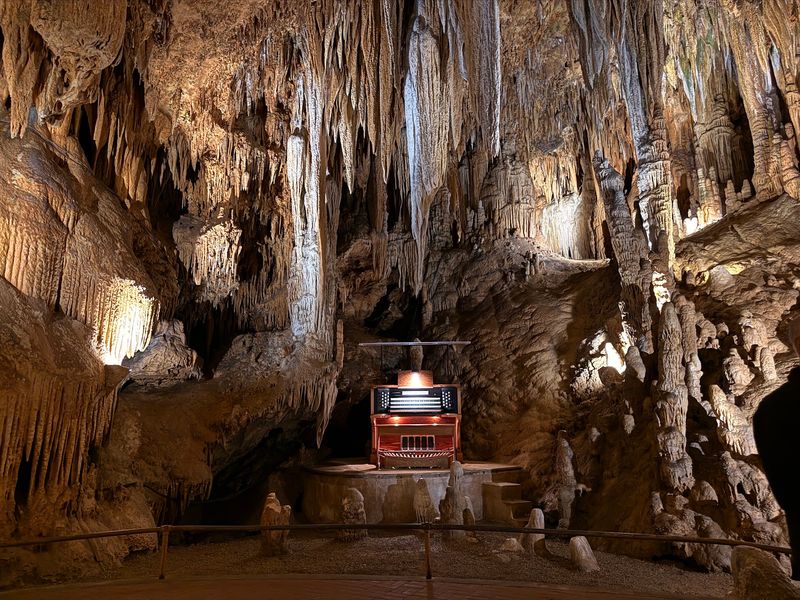
Then the cave has a surprise for your ears. The Great Stalacpipe Organ uses carefully chosen stalactites to produce musical notes, sending sound through the chambers of Luray Caverns.
It is an odd and wonderful idea: instead of pipes carrying the tune, parts of the cave become the instrument. Listen for the way each note seems to linger in the air.
Leland W. Sprinkle developed the organ in the 1950s.
Its mechanism gently taps formations selected for their pitches. The organ is often described as the world’s largest musical instrument because its sounding stalactites are spread across a wide area.
You do not need to know anything about music to enjoy it. Just stand still for a moment and notice how different the sound is from a piano in an ordinary room.
If the organ is playing during your visit, put your conversation on hold and let others hear it too. Afterward, look toward the formations around you and imagine the patience it took to find notes among them.
Few travel memories come with a soundtrack made by stone, which makes this stop especially hard to forget.
The Trick Beneath Dream Lake
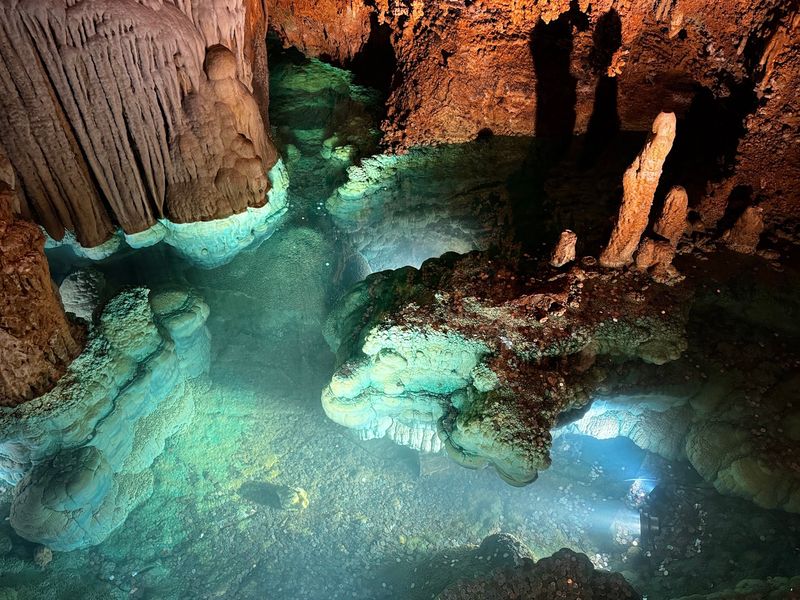
For a moment, it looks as if another cave opens beneath your feet. Dream Lake reflects the formations overhead so clearly that their upside down shapes seem to continue deep into the ground.
At Luray Caverns, this is one of those views that makes people lean closer, then look again. The surprise is that the water is quite shallow despite its deep appearance.
Still water does most of the work. With little movement on the surface, it acts like a mirror, turning hanging stalactites into what look like formations growing upward below the lake.
Stand back long enough to find the line where real stone ends and its reflection begins. A photo can capture the effect, but seeing the false depth with your own eyes is more fun.
Give other visitors space at the viewing area so everyone can have a clear look. Keep your hands and belongings away from the water, since even small ripples can change the scene.
Dream Lake is a gentle reminder that an underground wonder does not have to be huge to make you feel wonderfully unsure of what you are seeing.
Curtains Made of Rock
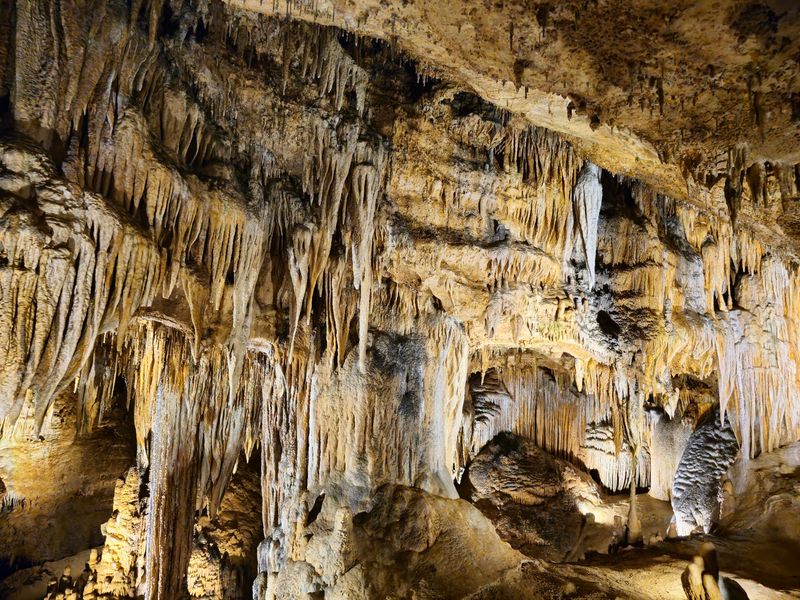
Some rock seems too delicate to be rock at all. Along the route through Luray Caverns, folded formations resemble curtains left hanging in an empty theater.
Saracen’s Tent is known for its sweeping drapery shape, while Titania’s Veil draws attention with pale, graceful stone. Their names invite a little imagination, but the folds themselves are the real attraction.
These formations grow when mineral carrying water runs along a surface and leaves thin layers behind. Over a long time, those layers form ridges that look surprisingly soft.
Move your gaze along the edges rather than looking only at the center. You may notice changes in thickness, color, and the way light passes across each fold.
It can help to slow down here, especially if larger chambers have drawn most of your attention. The fine details reward a quiet minute and offer a different kind of scale from towering columns.
Take pictures from the designated walkway rather than stepping toward the stone for a closer angle. Seeing something so fragile looking survive underground makes this part of the walk feel like discovering a carefully kept secret.
A Room Built on a Giant Scale
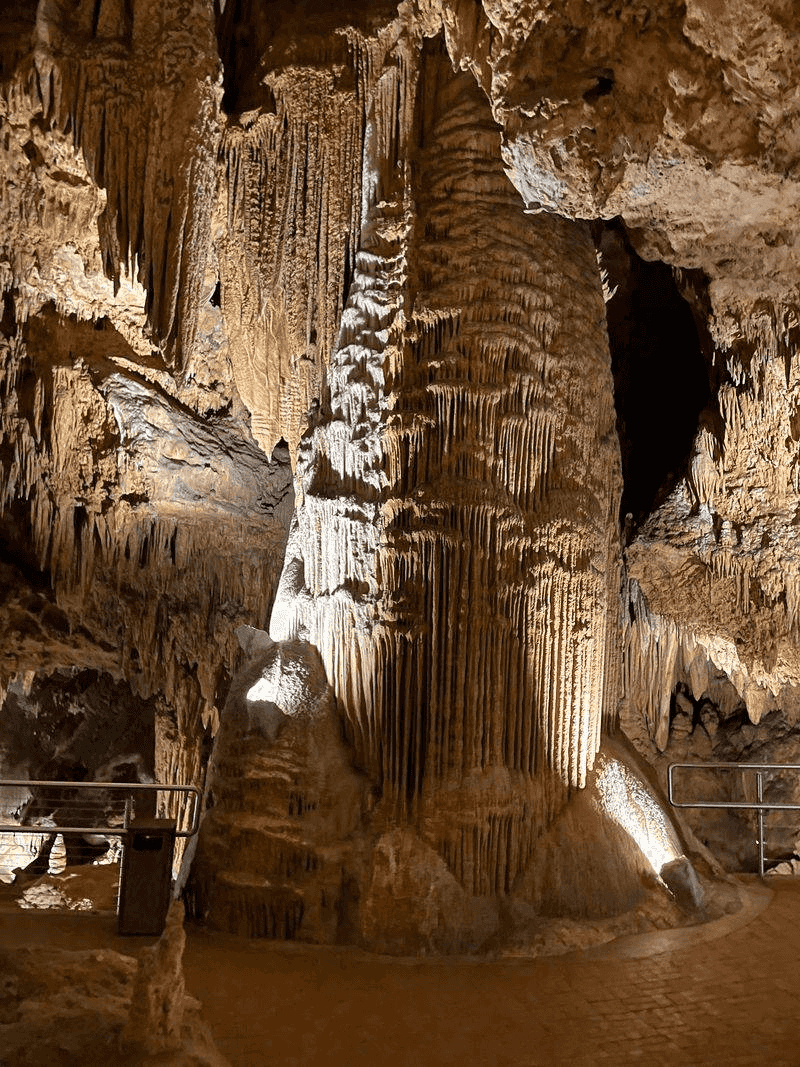
Suddenly, the ceiling feels very far away. Giant’s Hall gives Luray Caverns a grand sense of space, with massive formations rising through the chamber.
The Double Column is a standout sight, reaching about 47 feet high. Standing near it, you can understand the size better than you can from a picture.
A familiar person on the walkway may look tiny beside the rock.
The column formed as mineral deposits grew downward from the ceiling and upward from the floor until they joined. Its height makes that slow meeting hard to imagine.
Give yourself time to look from the base toward the top, following its shape all the way up. If you are visiting with family, ask everyone which formation in the room looks tallest before reading any signs.
Large spaces can make people rush for a wide photo. Try putting the camera away after one shot and noticing how the room feels instead.
The lighting helps reveal its depth, but your eyes can pick out shadows and curves a phone may miss. Giant’s Hall is a good place to feel small in the most enjoyable way.
A Wish in the Underground Water
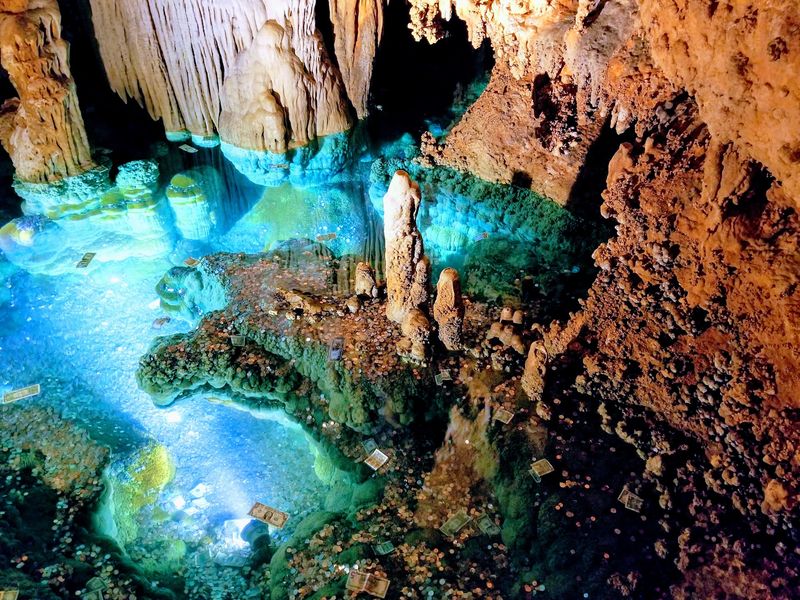
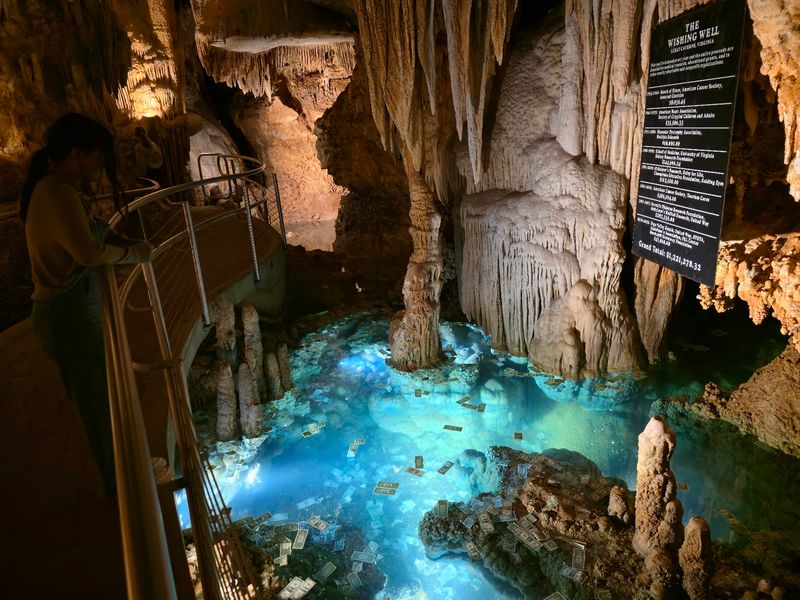
A flash of blue water brings a playful pause to a walk filled with ancient stone. The Wishing Well at Luray Caverns holds coins left by visitors who stopped to make a wish.
Look closely and you will see how many people have taken part in this small tradition. The pool turns a quiet corner of the cave into a place for hopes both silly and serious.
Money collected from the well has been donated to charitable causes over the years. That gives a simple coin a purpose beyond the moment it lands.
If you choose to take part, check the posted guidance first and keep other objects out of the water. You can also enjoy the sight without adding anything at all.
Pause for a look at the pool itself before focusing on the coins. Its color and the surrounding rock offer a contrast to the warmer tones elsewhere on the route.
For children, the stop can lead to a conversation about wishes and helping others. For adults, it offers a brief, cheerful break before the next chamber calls for your attention.
The Cave’s Hidden Colors
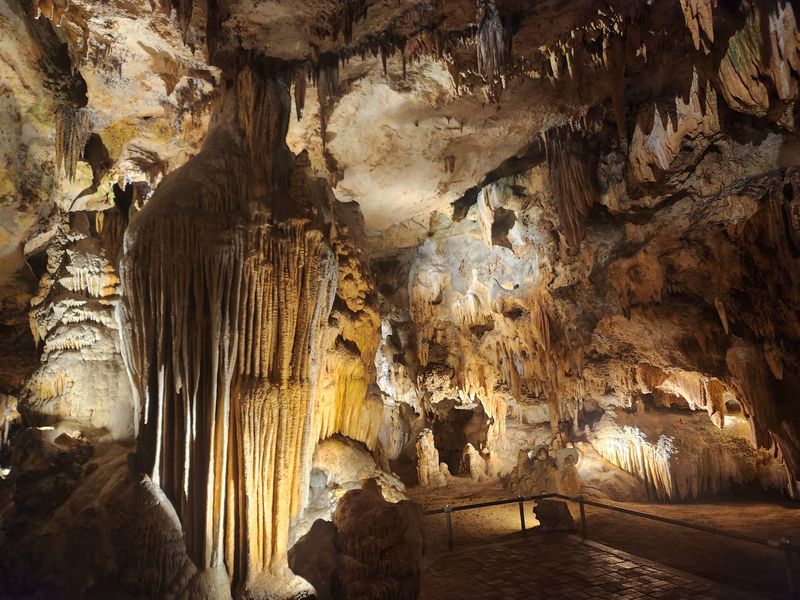
Not every underground view is gray. As you walk through Luray Caverns, pale stone gives way to patches of red, orange, yellow, and darker shades.
The colors can be easy to miss when your eyes are drawn to the biggest formations. Once you begin looking for them, though, a single wall can feel like a map of the minerals within it.
Pure calcite is generally light in color, while other materials can tint the deposits. Iron helps create warm rusty tones, and manganese can add darker shades.
Cave lighting makes the shapes easier to see, so look closely at the rock rather than assuming every glow comes from the light itself. Compare a white formation with a nearby colored one and notice how different their surfaces appear.
This is a good stop for a small observation game. Pick a color, then see where it appears again as you continue along the path.
There is no need to touch a wall to examine it; your eyes have plenty to explore. The changing shades make each bend feel distinct, even when the same patient process shaped the stone.
The Long Story Behind Every Drip
One small drip can make an enormous amount of time feel real. Water has shaped Luray Caverns by passing through rock, carrying dissolved minerals, and leaving deposits behind.
It is a process too slow to watch from start to finish, yet its results surround you. A hanging point or a raised mound is evidence that tiny changes can add up.
People first discovered the caverns in 1878. Long before that day, the chambers and formations had already been developing underground.
As you follow the path, imagine finding an opening without knowing what lay beneath it. The thought adds a sense of adventure to the walk without needing any made up story.
The rock provides a remarkable account of its own.
If you hear a drop land nearby, listen for a second before moving on. Notice where water gathers and where a formation appears to be growing, but remain behind the marked boundaries.
Learning the basic science makes the sights more impressive, not less mysterious. You leave with a clearer picture of how the Earth can build something beautiful one drop at a time.
The Walk Back into Daylight
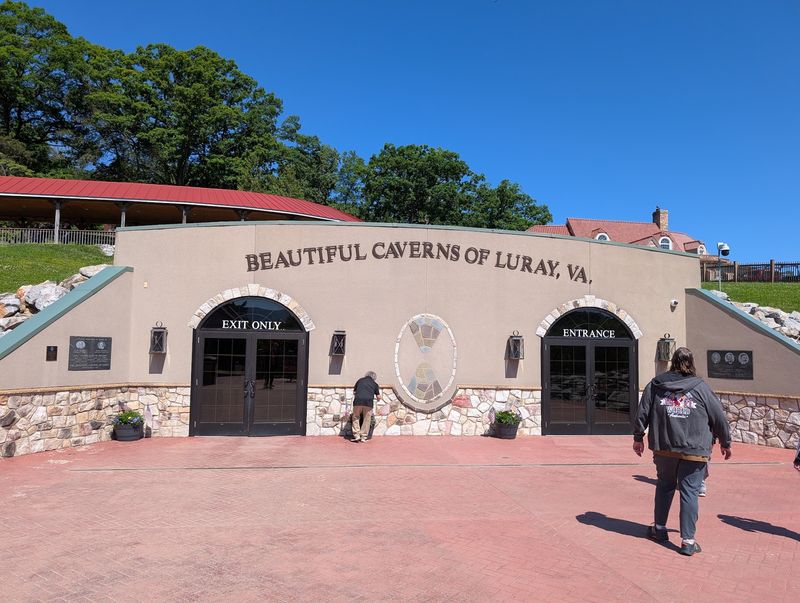
Daylight feels surprisingly bright after so much time among lit stone. By the end of the Luray Caverns walk, you may find yourself thinking back to a reflection, a musical note, or a formation you almost passed without seeing.
That is part of the pleasure here. The route brings you through several kinds of underground scenery without requiring a rugged cave expedition.
Plan enough time to move at a comfortable pace. Visitors commonly spend about an hour or more on the cavern route, especially when they pause for pictures and signs.
The walk is roughly a mile long, so supportive shoes and a drink of water afterward are sensible choices. Check current hours and visitor details before heading to 101 Cave Hill Road in Luray, since schedules and tour options can change.
Before leaving the last chamber, take one more look behind you. The shapes may seem different now that you know how water makes them and how much of the experience depends on looking slowly.
Back above ground, ordinary sunlight has its own appeal. Still, it is hard not to wonder what other stories might be waiting beneath the surface.