A rushing river, a weathered bridge, and a trail disappearing into the trees can turn a simple family outing into something children remember. At Hidden Valley Preserve in Washington Depot, Connecticut, these details come together in a peaceful landscape where bright white rocks line the water and wooded paths lead toward broad overlooks.
Located at 120 Bee Brook Rd, the preserve offers plenty of ways to explore at your own pace. Families can follow an easy riverside path, pause beside the rushing water, or take on a longer trail that climbs toward expansive views.
Along the way, there are small discoveries that invite curious eyes, from unusual stones to quiet stretches of forest. The setting feels removed from everyday routines without requiring a complicated adventure.
Whether you have an hour or a whole afternoon, Hidden Valley Preserve leaves plenty of room for exploration and unexpected moments around the next bend.
Words Above the Water: The Thoreau Bridge
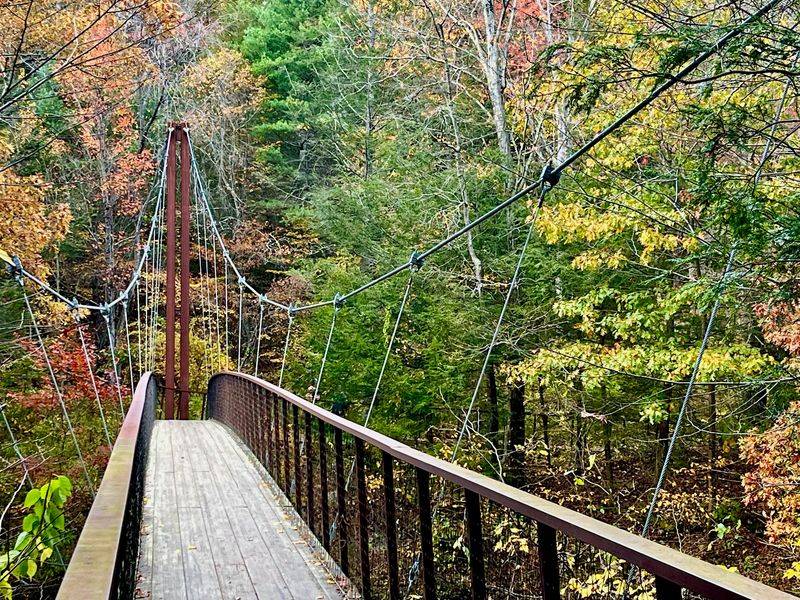
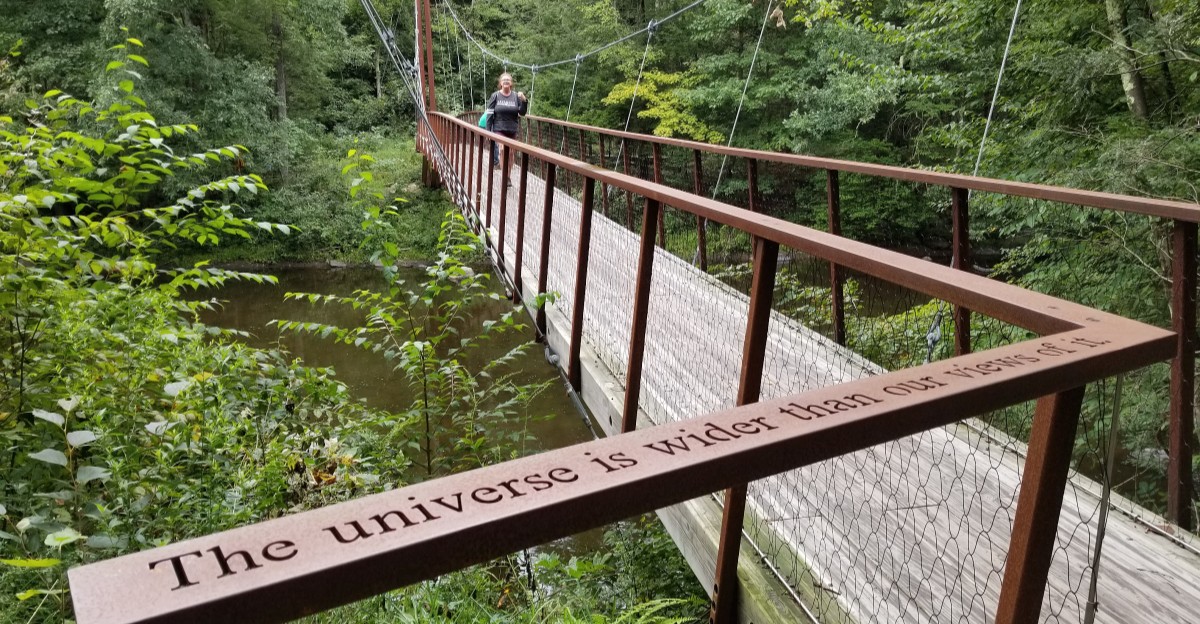
A bridge can turn a simple walk into the part of the day everyone remembers. At Hidden Valley Preserve, the Thoreau Bridge stretches across the Shepaug River, with timber beams above the water and woods rising on both sides.
Even children who claim they are tired may find fresh energy when they spot it ahead.
Take your time crossing rather than treating it as a shortcut. Quotes from Henry David Thoreau appear on the handrails, giving older kids something to read while younger ones watch the river below.
The bridge is close to the main parking area, so families can enjoy it without committing to a long hike. For a quieter photo, step aside and let other walkers pass before gathering everyone together.
Afterward, follow a marked trail farther into the preserve or turn back with a satisfying little adventure already complete. Keep children close on the crossing, especially when other visitors or leashed dogs are coming through.
The mix of moving water, thoughtful words, and striking design gives this short stop a sense of occasion that is hard to find on an ordinary afternoon walk outdoors.
Following the Shepaug River
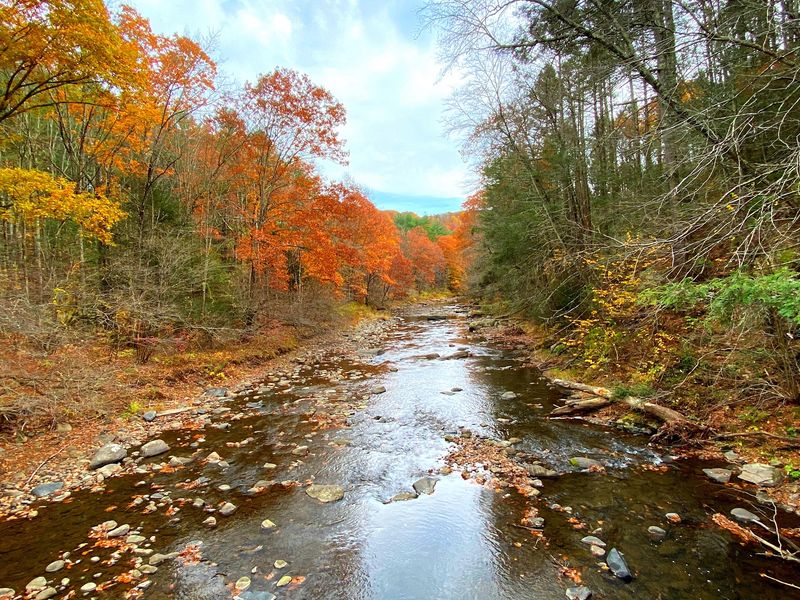
Sometimes the best trail guide is a sound you can follow. Along the Shepaug River at Hidden Valley Preserve, moving water stays close enough to make a family walk feel calm, even when everyone has a different pace.
Stop for a moment and see who can hear the water before spotting it through the trees.
Parts of the eastern riverside route follow an old railroad bed once used by trains. It is an easy piece of history to share with children: where walkers now listen for birds, travelers once heard engines.
Bring a small snack and choose a safe place away from the trail for a break. On warm days, the river may look inviting, but wet rocks can be slick and the current can change, so supervise children closely near the banks.
For families who want time outdoors without a demanding climb, the river gives the walk a clear destination and plenty to notice along the way. Look for patterns in the water and leaves caught against fallen branches.
A slow return can feel entirely different from the walk out, especially when the light shifts across the water.
A Climb to the Pinnacle
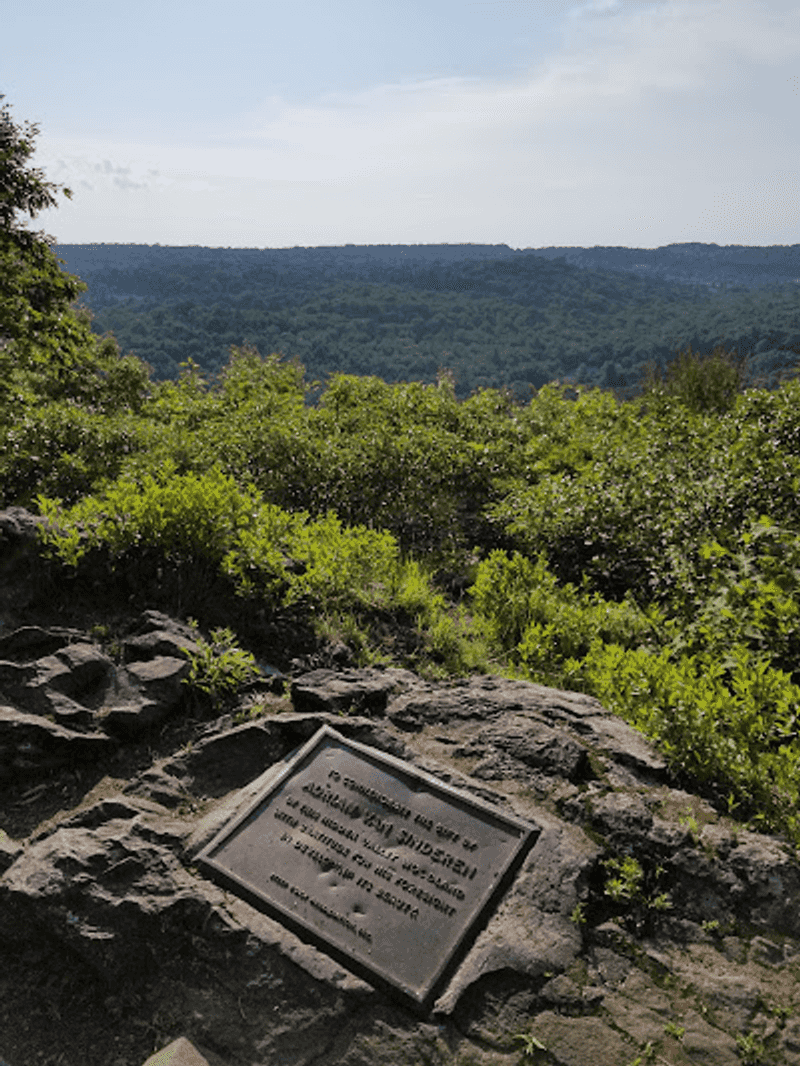
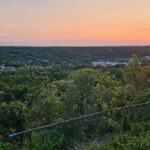
The view does not arrive all at once. First come the wooded uphill stretches, then small glimpses between branches, and finally the broad scene from the Pinnacle at Hidden Valley Preserve.
For a family with older children ready for a climb, that slow reveal makes reaching the top feel earned.
The Pinnacle rises to about 820 feet and offers a wide view over the valley. Look for the plaque honoring Adrian Van Sinderen, whose family helped protect the land, before turning your attention to the hills.
Pack water and a snack, and allow more time than you would for a riverside stroll. Some sections are steep, so sturdy shoes matter more here than they do near the main parking area.
At the top, give everyone a few minutes to choose a favorite part of the view rather than rushing straight into pictures. A child might notice a patch of bright trees that an adult missed.
Check the trail map before leaving the lot and save enough energy for the descent. The reward is both a lovely lookout and the proud feeling of having reached it together.
A Pause at the Stone Lookout
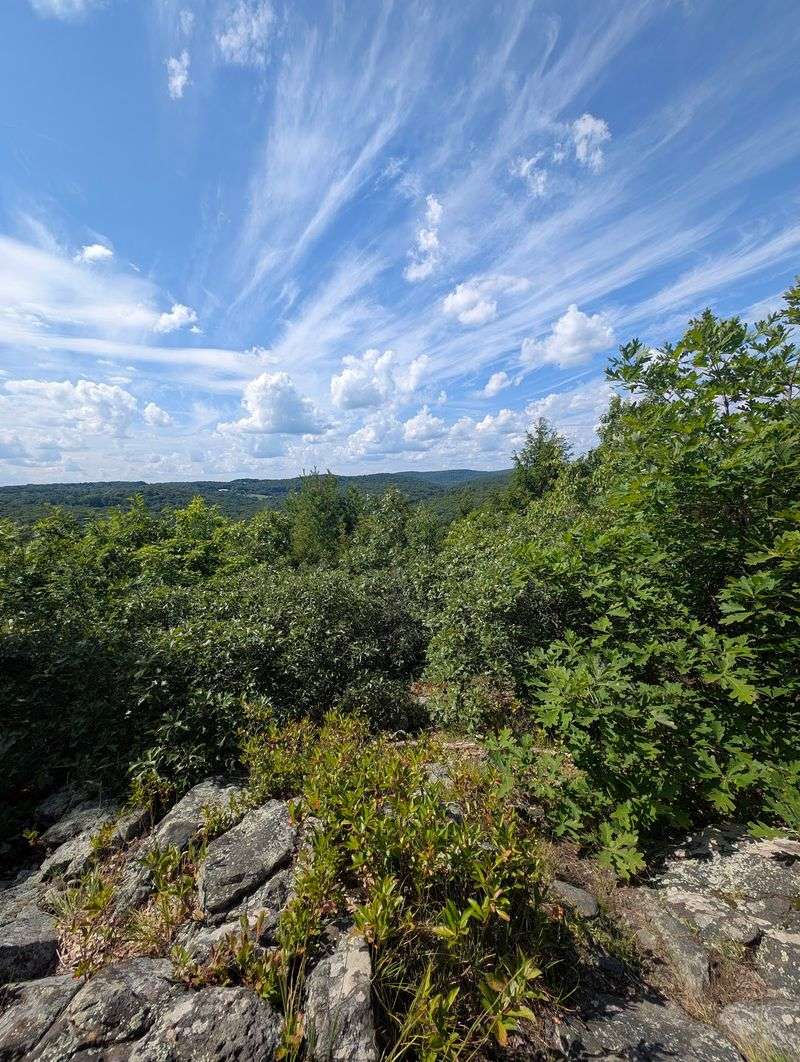
Not every memorable view asks you to stand at the edge of a summit. The Lookout at Hidden Valley Preserve is a semicircular stone terrace where a family can settle down and take in the valley to the west.
Its shape feels like someone made room for visitors to stop, talk, and stay awhile.
That was much the idea behind it. The terrace began as a rest spot along carriage roads associated with Adrian Van Sinderen, whose family played an important part in the preserve’s history.
Today, trees offer shade in places, making the Lookout a pleasant choice for a packed lunch. Bring food you can carry easily, and take every wrapper back to the car.
Children can imagine the old carriage journeys while adults enjoy a chance to rest their legs.
Before heading out, study the current trail map and choose a route that fits your group’s energy. Conditions and distances may feel different from a quick walk by the river.
Once you arrive, resist the urge to leave after one photo. Watching clouds move across the hills can be the quietest and most welcome part of a busy day.
White Stones at the Quartz Mine
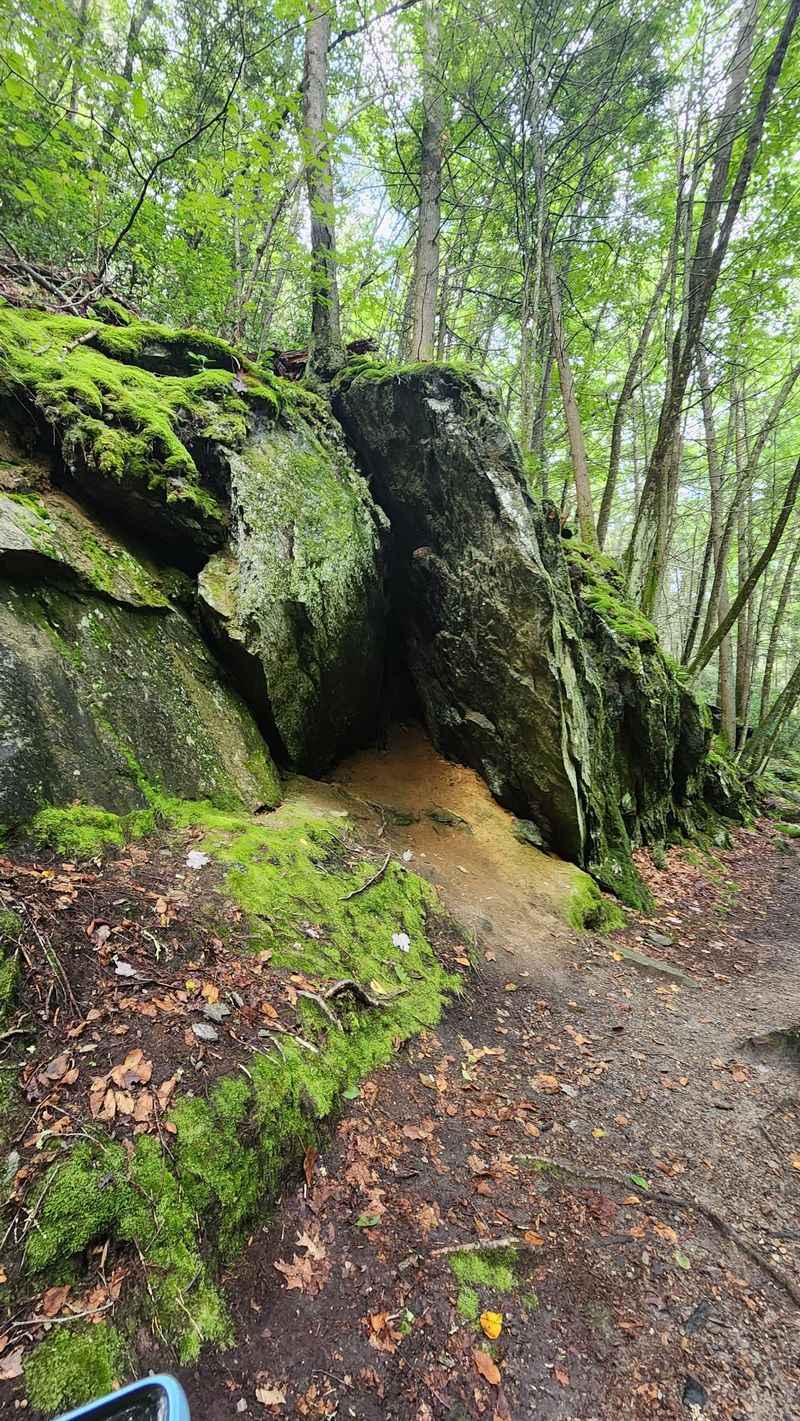
Imagine finding a streak of bright white rock where you expected only brown leaves and tree roots. The old quartz mine at Hidden Valley Preserve adds that small surprise to a woodland hike.
It is a place where children can see evidence of the past right under their feet.
Quartz was taken from this area during the 1800s and into the early 1900s. The pale vein and scattered stones make a useful starting point for talking about how people once used materials from the land, including in paint and as an abrasive.
A route along the Van Sinderen Loop can take you toward the site, but check the preserve map for the current trail layout before you set off. Uneven ground and loose stones call for shoes with grip.
Encourage young explorers to look closely without collecting rocks or climbing on unstable surfaces. Photos and sketches make better keepsakes and leave the scene for the next family to discover.
If the mine is your main goal, plan enough time for the return walk rather than guessing from the first easy stretch. The white quartz feels especially striking after the darker colors of the surrounding forest.
A Trail for Every Kind of Day
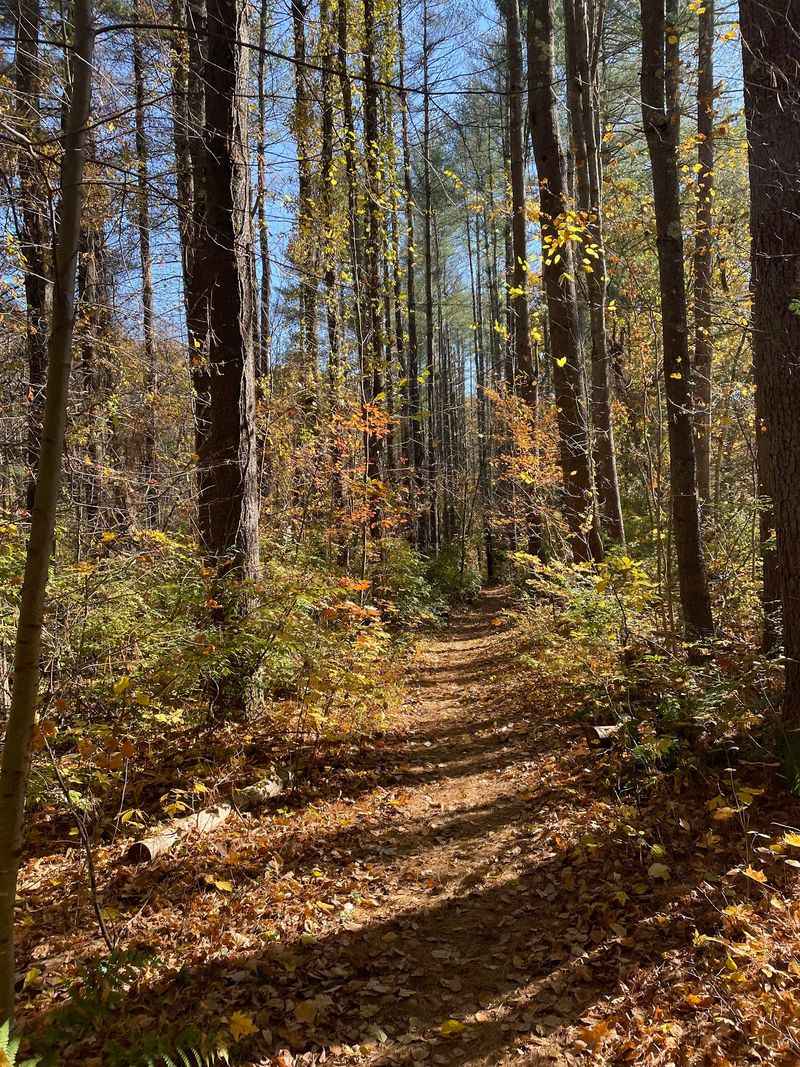
One visit might call for a short stroll; another might begin with children asking how far the trail goes. Hidden Valley Preserve makes room for both moods, with routes beside the river and others climbing into the wooded hills.
That variety is part of its appeal for families who do not want every outing to feel the same.
Expect a mix of wide paths, narrower stretches, and changing ground underfoot. Marked intersections help, but a trail map still belongs in your pocket or on your phone.
Take a photo of the map at the entrance before walking, since cell service may be unreliable in the woods. Let younger hikers help spot blazes, then have an adult confirm each turn.
After rain, muddy areas can slow everyone down, so choose shoes that can handle dirt.
A simple plan is to pick one main goal, such as the bridge, and treat anything beyond it as a bonus. Agree on a turnaround time before excitement carries the group too far.
Returning by a different marked route, when it fits your plan, can make familiar woods feel new without turning a pleasant family outing into a race.
Fall Color Around Every Bend
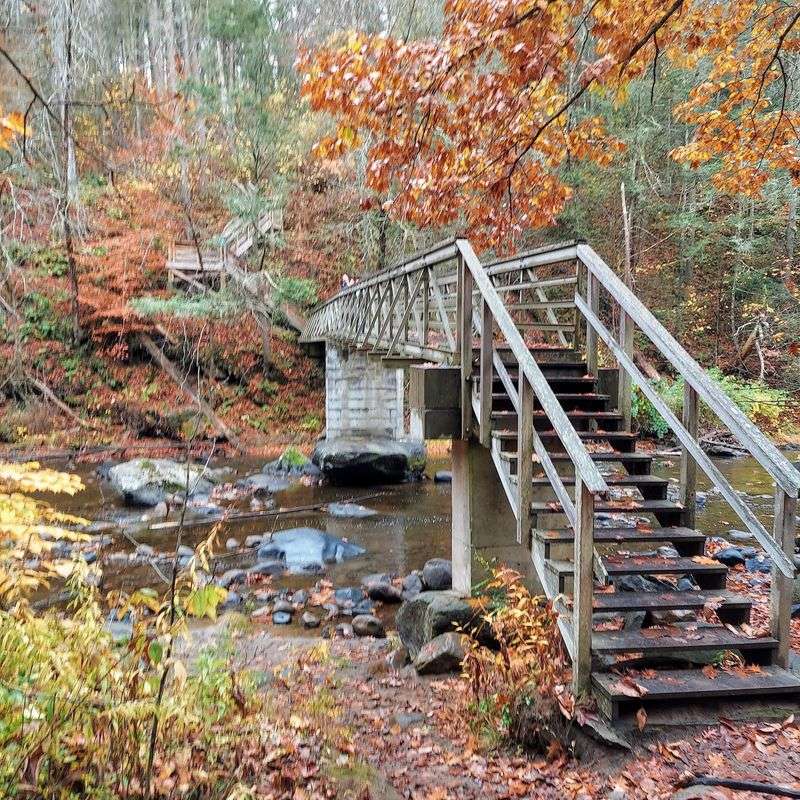
A cool morning can make the whole valley look newly painted. In fall, the woods of Hidden Valley Preserve shift through yellow, orange, and red, while the Shepaug River adds moving reflections beneath the trees.
Children may be more interested in a leaf at their feet than the grand view ahead, and that is part of the fun.
The Thoreau Bridge is especially striking when bright leaves frame its timber structure. For a different angle, consider a longer hike toward a lookout, where the hills show more of the season at once.
Peak color changes from year to year, so plan for a pleasant walk rather than betting everything on one perfect weekend. Dress in layers: a shaded riverside trail may feel cooler than the sunny parking area.
Give each person a color to spot along the way, or pause to compare the shapes of leaves that have already fallen. Stay on marked paths when taking pictures, even if a tree farther off looks tempting.
Autumn draws other walkers too, so an early start can help a family enjoy a quieter pace. The season’s best souvenir is often a shared moment, not a perfect photograph.
The Story Behind Hidden Valley
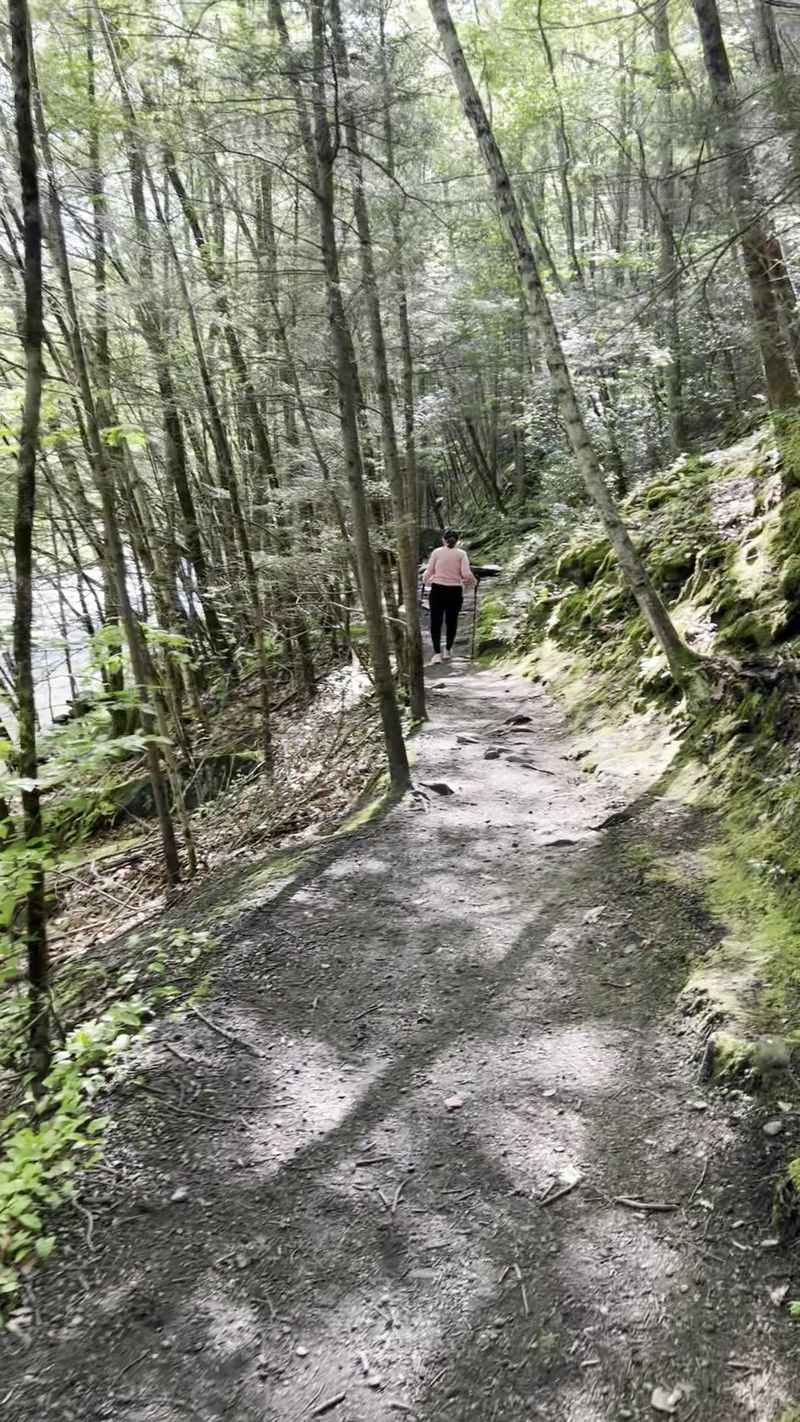
Some paths hold stories as well as footprints. At Hidden Valley Preserve, old carriage roads hint at earlier trips through these same woods, long before families arrived with trail shoes and water bottles.
Knowing a little of that history can make an ordinary bend in the path feel more interesting.
Adrian Van Sinderen gave the area its Hidden Valley name in 1928, and his family’s connection helped shape the land visitors enjoy today. The family donated the preserve to the Steep Rock Association in 1963.
Some present-day routes follow roads once used for carriage rides and other travel across the property. As you walk, invite children to imagine what someone traveling here decades ago might have heard or seen without modern traffic nearby.
The Van Sinderen Loop offers a way to connect an outing with that past. Bring a trail map and choose a distance that suits your group rather than trying to cover every historic path in one visit.
Stay on the marked route and leave stones and plants where they are. A family walk gains another layer when children realize the woods have a human history, too, and that people chose to protect them.
An Easygoing Walk from Bee Brook Road
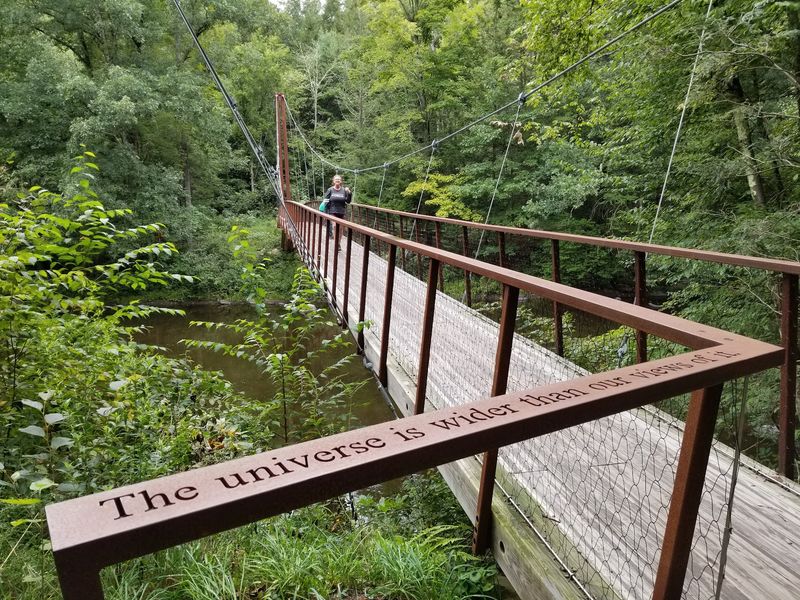
Big adventures sometimes begin with a small promise: just one pleasant walk before lunch. From the Bee Brook Road side of Hidden Valley Preserve, families can choose riverside paths and reach the Thoreau Bridge without a major climb.
For young walkers, a clear goal close to the start can make getting outdoors much easier.
Look at the posted map before choosing a loop, since nearby trails connect in several ways and not every route has the same distance or terrain. A walk along the river offers plenty of natural stopping points for children who like to inspect rocks, leaves, and flowing water.
Dogs can join on a leash, but keep them close when passing other hikers. Pack your own drinking water and plan a bathroom stop before arriving, as visitors have reported no restroom facilities at the trailhead.
Instead of promising to finish a whole loop, set a comfortable turnaround time and see how the group feels at each junction. Footing can be muddy or slippery after wet weather, even on easier paths.
A short walk with time to watch the river often makes a better family memory than a longer route completed in a rush.