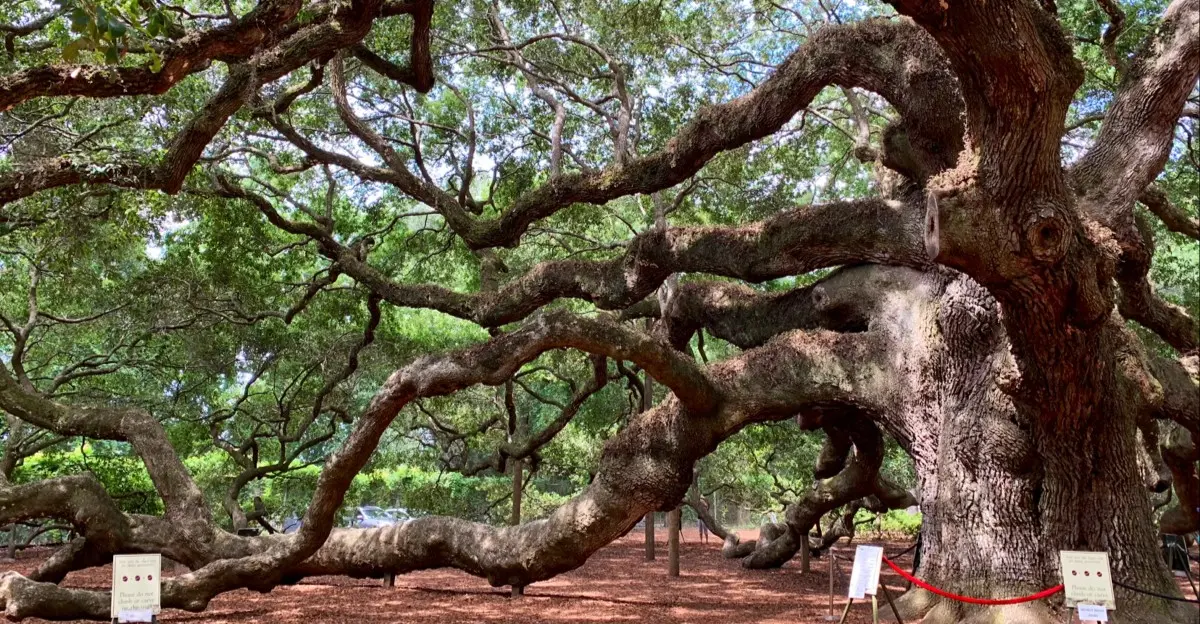
Imagine walking toward a tree and seeing its branches spread across the ground like giant arms reaching out to greet you.
That is the surprise waiting at Angel Oak Tree, a live oak on Johns Island, South Carolina, where some limbs dip so low that you can study their bends without looking up, while the broad canopy makes the tree feel much bigger than a photo suggests.
People come to admire its unusual shape, take pictures, and spend a quiet moment beside a living landmark that has grown for centuries, but a good visit also means giving its roots and branches the space they need to stay healthy.
Whether you have a few minutes or want to linger, the most memorable part may be noticing how each long limb twists in its own direction, turning one old tree into a scene you can explore slowly from many different angles.
Branches That Meet the Earth
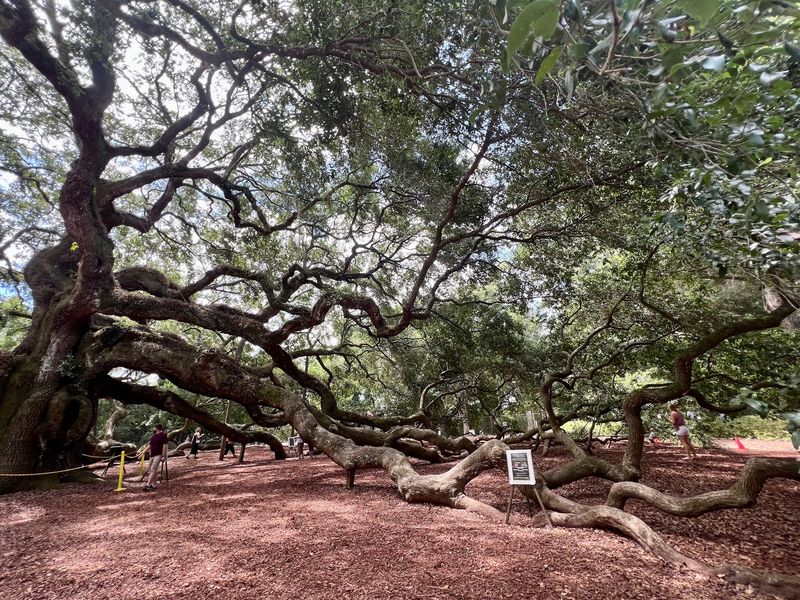
From a distance, Angel Oak looks as if it has lowered its arms to rest. Several enormous limbs sweep outward, bend downward, and reach the ground before rising again. That shape is what makes the tree so striking in person.
Walk slowly around the viewing area and follow one limb with your eyes. Its path may turn, dip, and stretch farther than you expected. A photograph can show the shape, but standing nearby makes its scale easier to grasp.
Ground level branches are not invitations to climb. They are living parts of the tree, and extra weight can damage them. Keep children close enough to enjoy the sight without grabbing bark or stepping onto wood.
Try looking at the limbs from more than one side. A branch that seems short from the front can appear remarkably long from another angle. That simple change in viewpoint makes a short visit more rewarding.
Notice the open spaces beneath the canopy, too. They help you see how the branches frame the light and ground around them. Angel Oak does not need tricks or props to hold your attention; its natural shape does the work.
A Canopy That Changes Your Sense of Size
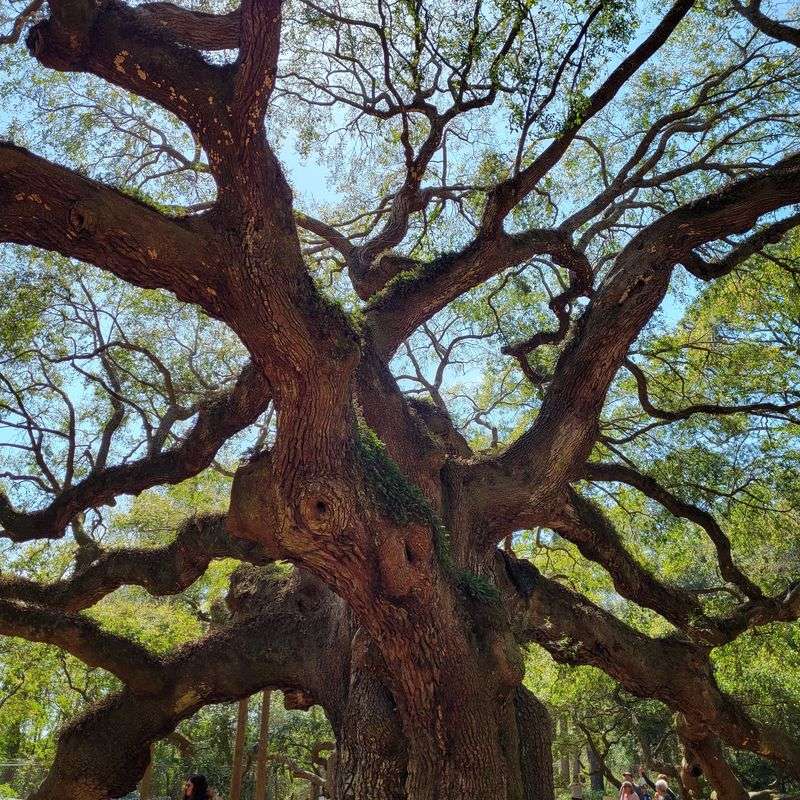
Look up, and the sky seems to break into little pieces. Angel Oak’s broad canopy spreads above visitors, with leaves and branches filling much of the view. The tree stands more than 60 feet tall, yet its width often feels even more surprising.
That wide cover can make a sunny day feel different beneath the leaves. Light slips through gaps, leaving moving patches on the ground. Take a moment to watch those patterns instead of rushing to the next photograph.
A single snapshot rarely captures the whole canopy. Try taking one picture from farther back, then another aimed toward the branches overhead. Together, the images tell a better story about the tree’s size.
Clouds and sunlight can change what you notice. On a bright day, look for the sharp outlines of twisting wood against green leaves. Under softer light, pay attention to the many shades and textures in the bark.
Give other visitors room to pause beneath the spread. You can share the view without crowding the trunk or crossing protected areas. The reward is a calmer look at a tree that seems to stretch in every direction.
Centuries Written in Wood
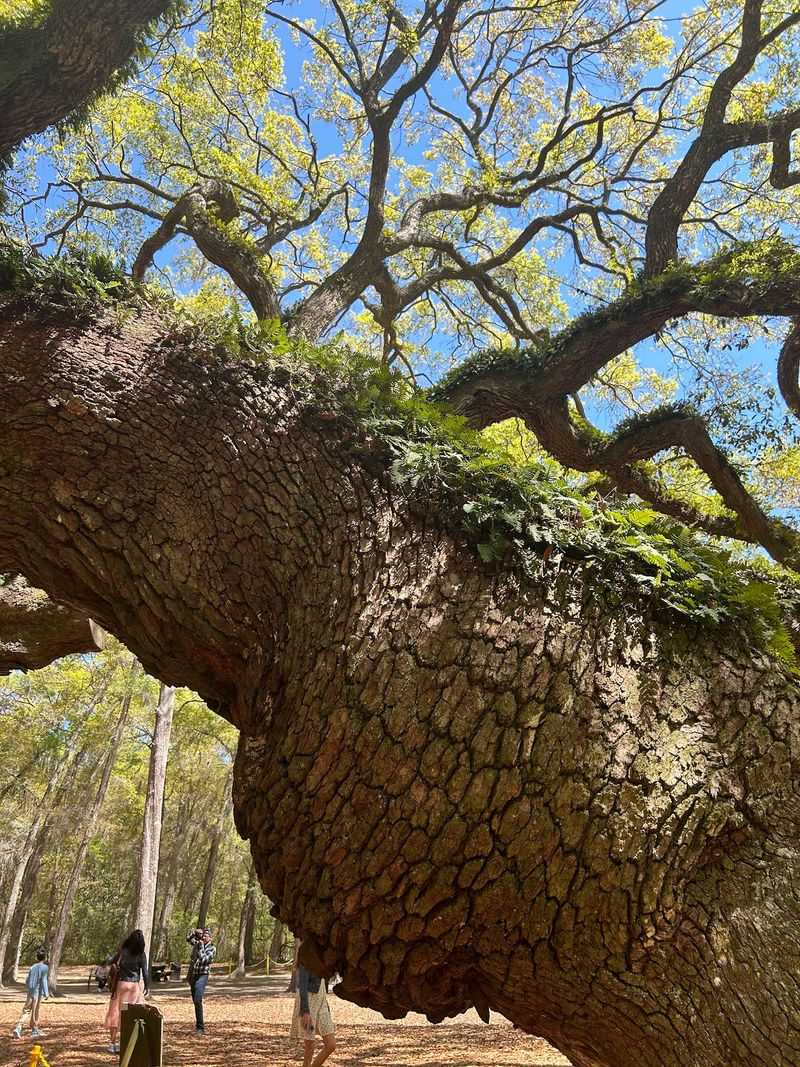
Imagine how many seasons have passed while Angel Oak kept growing. The tree is commonly described as more than 400 years old, although its exact age is uncertain. That uncertainty is part of the story, not a reason to invent a birthday.
Instead of counting years, study what you can actually see. The thick trunk, rough bark, and heavy limbs show how much living wood the oak has built. Each turn gives your eyes another detail to follow.
A centuries old tree can feel like a history lesson without a classroom. It was already growing long before today’s visitors arrived. Thinking about that long span can make an ordinary afternoon feel a little bigger.
Keep your curiosity gentle when you get close. Avoid carving initials, peeling bark, or pulling at leaves. Those actions leave damage, while a careful look leaves the tree as you found it.
Children may enjoy choosing one branch and imagining its slow growth over time. Ask them what might change nearby while a tree remains in place. The answer does not require a perfect age estimate, only attention and a little wonder.
A Photo Worth Stepping Back For
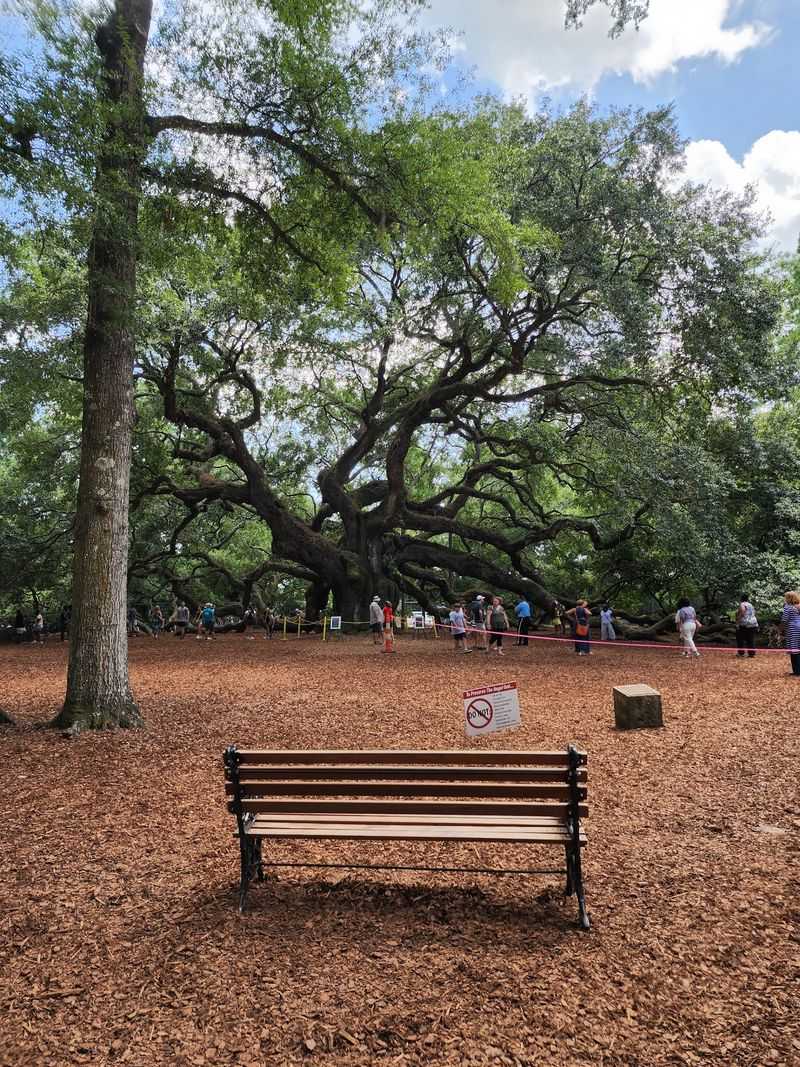
Your first instinct may be to stand right beside the trunk with your camera. For Angel Oak, stepping back often makes a stronger picture. A wider view gives the long, low limbs space to show where they begin and end.
Choose an angle that includes both the trunk and the surrounding ground. That helps viewers understand how the branches dip toward the earth. If you photograph only the leaves, the tree’s most unusual feature can disappear.
People can provide a sense of scale, but ask before photographing strangers. A friend standing on an allowed path can show just how large the oak appears. No one needs to touch or climb a limb for an interesting image.
Try a quiet minute without your phone after taking a few shots. Notice which branch catches your eye, then photograph that detail if you wish. The pause may help you find a more personal view.
Follow posted photography rules while you work. Visitors have reported restrictions on tripods, so check signs before setting up equipment. A handheld camera or phone is enough to capture the remarkable reach of this tree.
Why the Roots Need Breathing Room
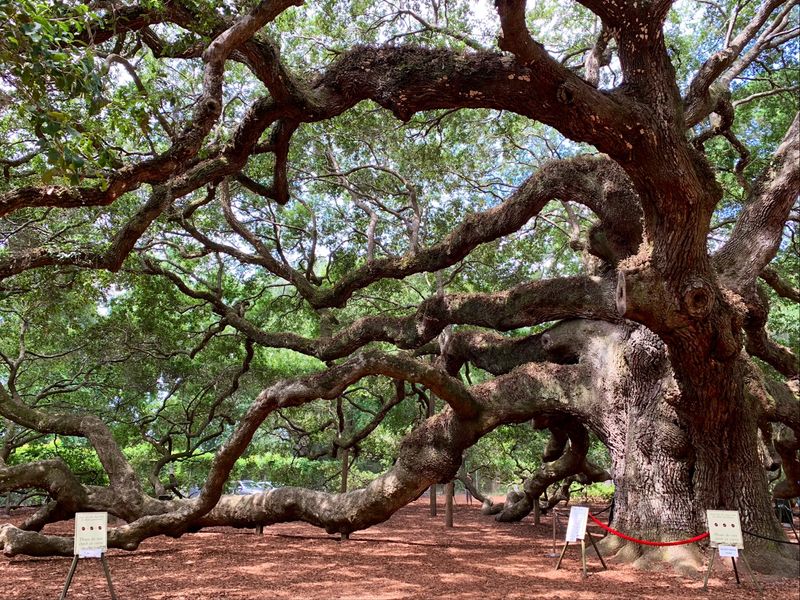
A branch resting near the ground might look sturdy enough to sit on. At Angel Oak, the better choice is to admire it without adding your weight. The low limbs are part of a living tree, not benches or playground equipment.
Its roots need care as well. Repeated footsteps can pack down soil, making it harder for air and water to move through. Protected spaces and posted rules help limit that pressure around the oak.
Explain the rules to children before they spot a climbable looking branch. Give them a different challenge, such as finding the most interesting bend from the viewing area. That turns careful behavior into part of the visit.
If you notice a boundary, leave it in place. A closer picture is not worth putting fragile ground or wood at risk. There are plenty of striking views from places where visitors are welcome.
Respect also means leaving bark, leaves, and nearby plants alone. Take home photographs and memories instead of pieces of the site. Small choices by many visitors can help keep those extraordinary limbs healthy for people who come later.
A Short Stop With Plenty to Notice
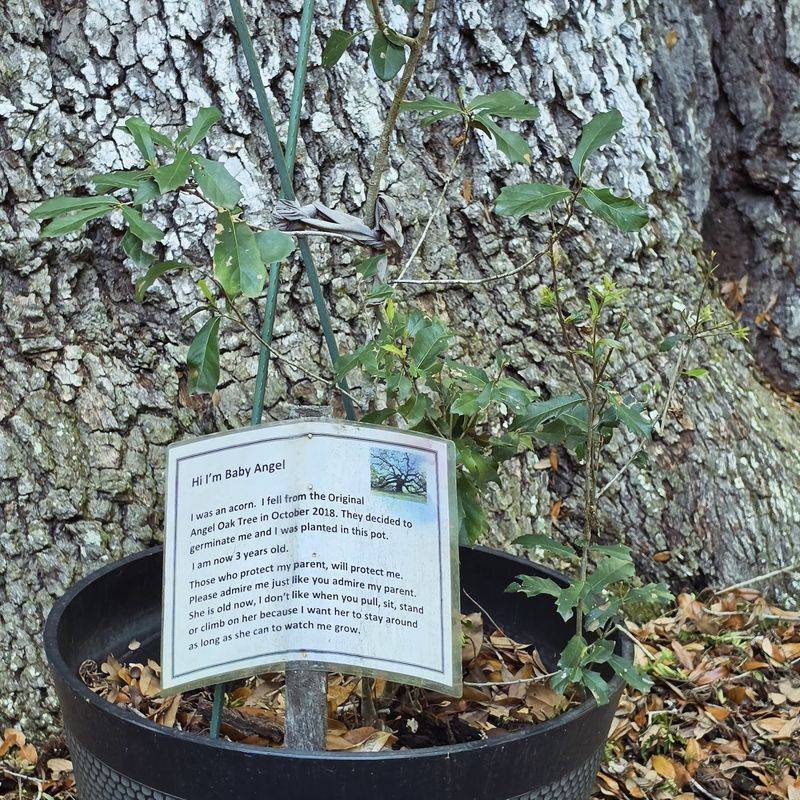
Not every memorable outing needs a packed schedule. At Angel Oak, the main activity is simple: walk, look, and let the tree surprise you. Many visitors spend only a short time there, yet still leave talking about its size.
Start with one slow circle around the permitted viewing space. Notice how the trunk appears to change as overlapping branches come into view. Then pick a place to stand still and take in the full shape.
A brief visit works well when your day is busy. If you have more time, look for the smaller details that a quick glance misses. Bark texture, leaf shadows, and unusual bends all reward patient eyes.
The grounds are not a large adventure park. Set expectations before bringing children who need room to run or climb. A quiet observation game can make the stop enjoyable without disturbing the tree.
Visitors also mention a small gift shop, but availability can vary. Treat it as an extra rather than the reason to come. The main attraction is the living oak and the remarkable way its limbs fill the space.
Plan Your Visit Around the Tree
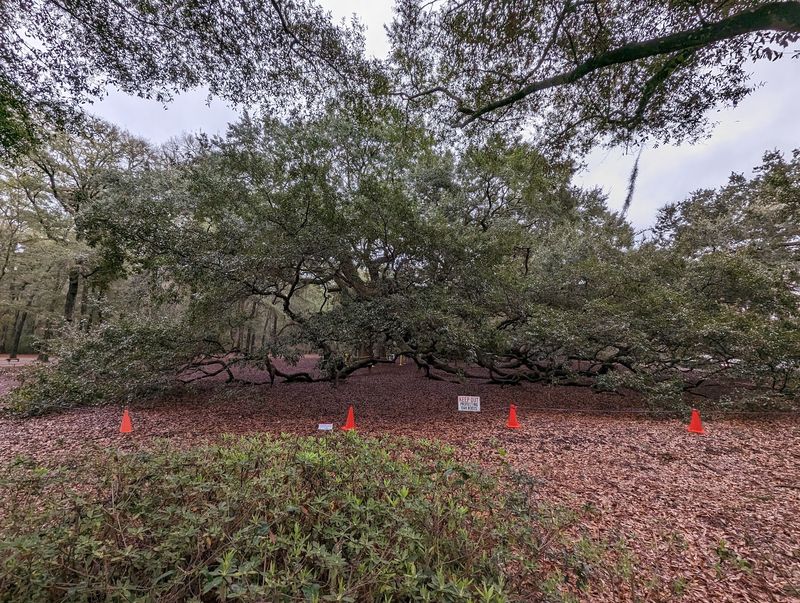
A little planning can save a disappointing trip. Angel Oak Tree is at 3688 Angel Oak Rd, Johns Island, SC 29455. Check the City of Charleston’s Angel Oak page before leaving, especially if weather or a holiday could affect access.
Listed hours are 9 am to 4:50 pm Monday through Saturday. Sunday hours are listed as 1 pm to 4:50 pm. Hours can change, so confirm them rather than relying on an old photo or review.
Admission is generally free, and visitors report free parking. A donation may be welcome, but you do not need a ticket for a normal visit. Arriving earlier can help if you prefer cooler weather and fewer people.
Bring water on a warm day and wear comfortable shoes. The visit centers on viewing the tree, so pack lightly and leave time to look around. Keep any food or belongings away from protected areas.
If the grounds are closed, respect the boundary. You may still be able to see the oak from outside, but access is not guaranteed. Checking ahead gives you the best chance to enjoy those ground-reaching limbs up close.
The View That Stays With You
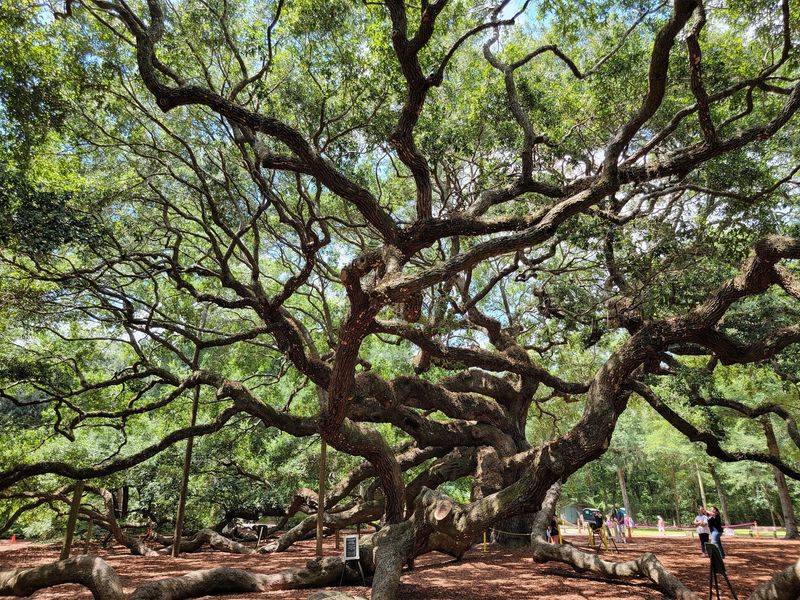
Some sights make you stop talking for a moment. Angel Oak can do that with nothing more than a trunk, leaves, and limbs stretching outward. Its ground-reaching branches create a scene that feels different from an ordinary walk past a tree.
Give yourself permission to enjoy the view without measuring every detail. You do not have to know its exact age or name every branch. Following the shape with your eyes is interesting enough.
A return visit might show you something new. Different light can reveal a curve you missed or bring out another patch of bark. Even a change in where you stand can reshape the whole view.
Share the experience with someone who likes nature, photography, or quiet places. Point out your favorite limb and ask which one catches their attention. Two people can look at the same oak and notice completely different things.
Before leaving, take one last look from farther away. The wide canopy and low branches make more sense together than apart. That final view may be the one you remember when you think of Angel Oak.