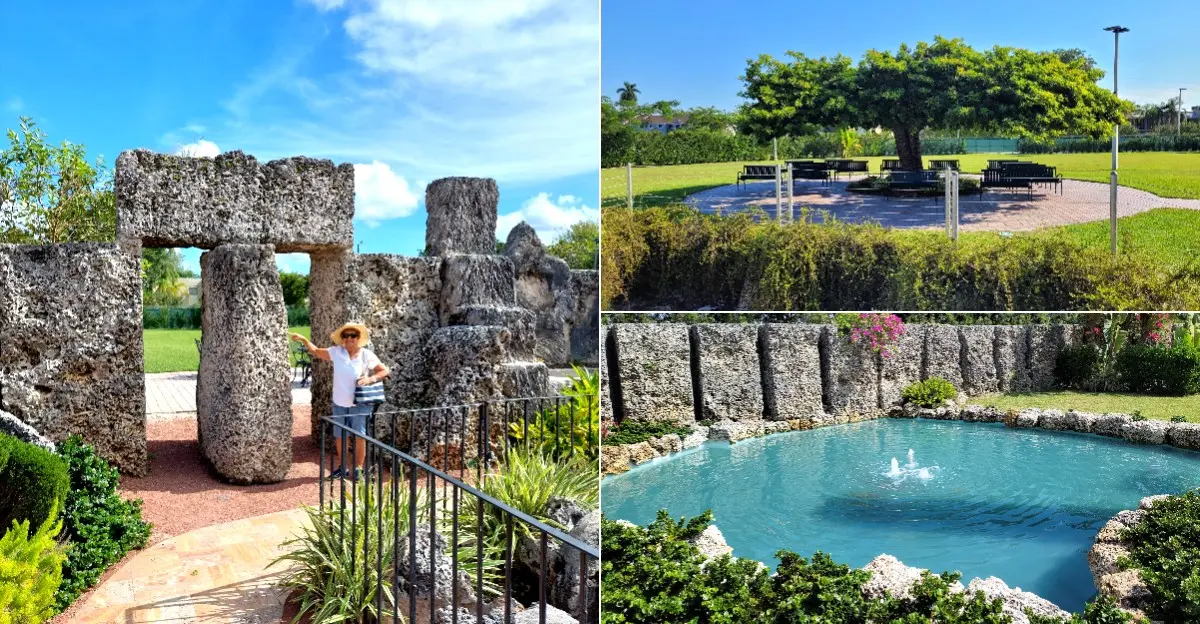
Massive carved stones, a heart-shaped table, and a gate that once swung open with a gentle push make this place feel like a riddle written in rock.
Coral Castle, along South Dixie Highway in Homestead, Florida, is one of the state’s most fascinating roadside wonders.
It was built almost entirely by one man, Edward Leedskalnin, who quarried and shaped enormous blocks of limestone over several decades.
Nobody knows exactly how he moved the heaviest stones on his own, and that mystery still sparks lively debate today.
Guided tours share his story and point out clever details like the stone furniture, the tower, and the celestial carvings.
Bring your curiosity and a camera, because this unusual landmark is unlike anything else in South Florida.
A Castle Hidden Beside the Highway
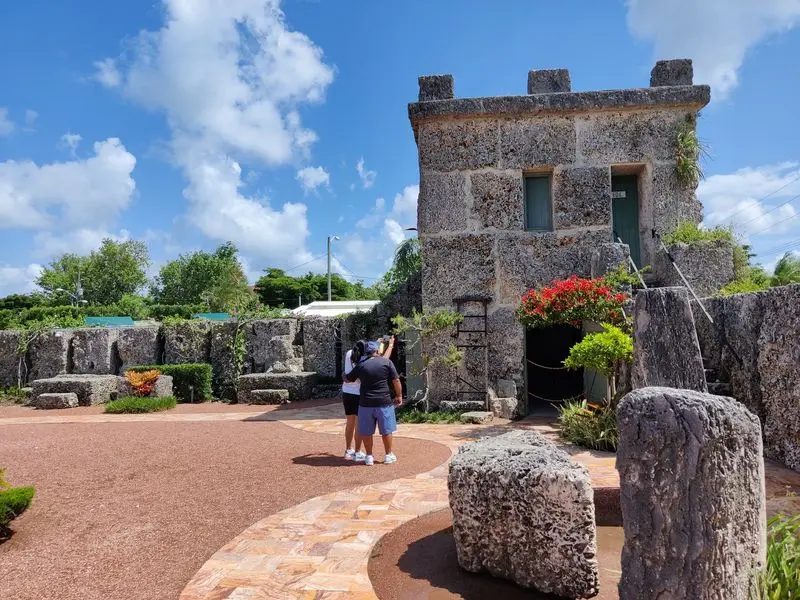
Cars pass along a busy road while pale stone walls hide a scene that feels from another time. At Coral Castle, 28655 S Dixie Hwy, Homestead, FL 33033, visitors step into an outdoor museum filled with carved shapes and heavy blocks. The word castle may make you picture towers, knights, and a royal hall, but none of those are here.
Instead, the site feels like a stone garden built with the imagination of one person. Walls give it a castlelike look, while sculptures, seats, and other features make it unlike any ordinary fortress. That difference is part of the fun, especially if you arrive knowing what to expect.
Take a moment at the entrance to notice the size of the blocks before focusing on the smaller details. A photograph can flatten their weight and shape, but standing nearby makes both easier to understand. Because the museum is outdoors, comfortable shoes, water, and sun protection can make your visit easier.
Plan for a guided experience rather than a long walk through a giant castle. The grounds are fairly compact, so slow down and look closely instead of racing toward the next feature. The surprise is not how much land the place covers. It is how much one builder managed to put inside it.
Meet the Man Behind the Stones
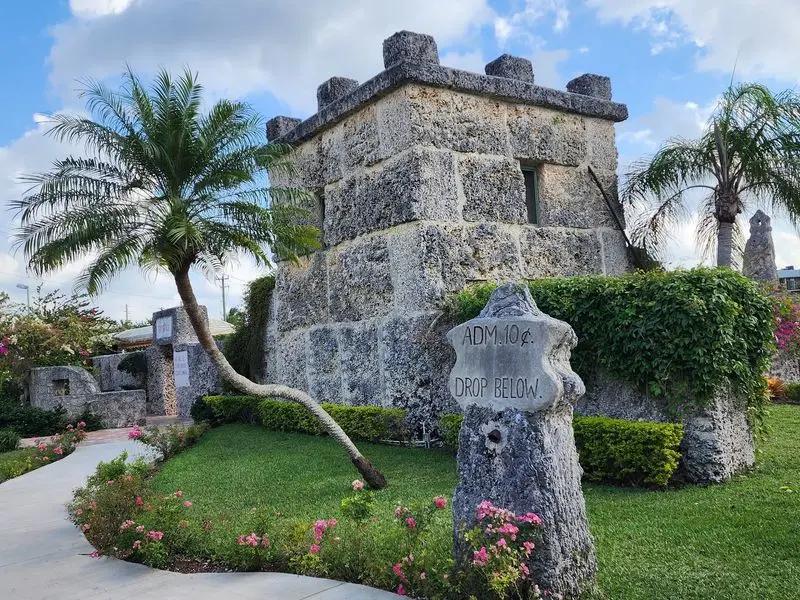
Imagine deciding to build something enormous, then returning to the job day after day for years. Edward Leedskalnin was the man behind the stone structures that visitors see today. He was born in Latvia and later came to the United States, where his unusual project became his life’s work.
Stories often describe him as small in build, which makes the huge stones even more surprising. Yet his size alone does not tell us what he could do. Patience, planning, and repeated effort matter when someone works on a difficult task for a long time.
Leedskalnin did not leave a complete, step-by-step account of every move he made. That gap has helped turn a real builder into the center of many strange stories. When you hear one, separate what is known from what is only a guess.
Look for signs of his choices as you tour, not just signs of strength. Why place a seat here or shape a wall that way? A guide can help connect those decisions to the man who made them. Children may enjoy picking one feature and imagining the time needed to finish it. The strongest part of the story is simple enough without a wild explanation: one determined person kept working until an extraordinary group of stone structures stood together.
Stone That Came From the Ground
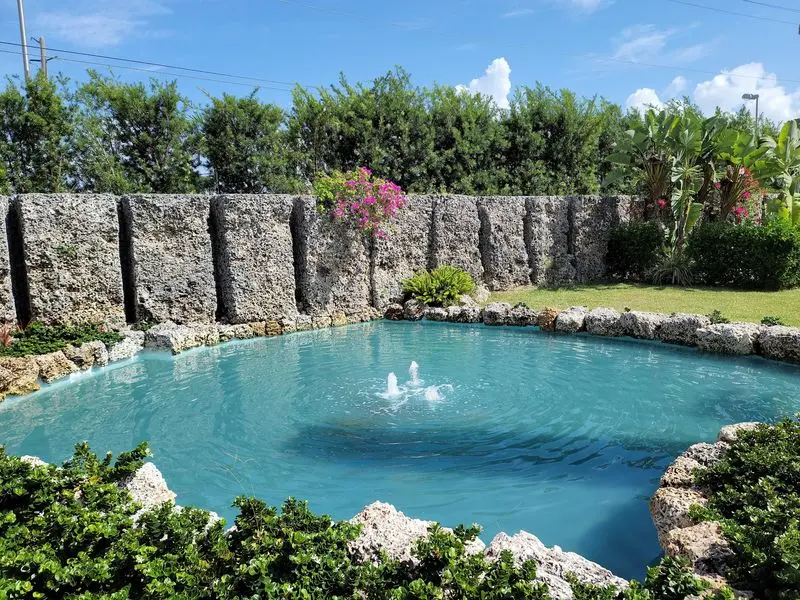
At first glance, the pale blocks look like pieces of a giant puzzle. Their rough surfaces tell a story about the material beneath your feet. Although the attraction is called Coral Castle, its structures are made from local oolitic limestone, a rock often called coral rock.
That name can be confusing if you picture bright reefs beneath the sea. Look closely and you will see small holes and uneven patches rather than polished marble. The surface shows that stone does not need to be smooth to become art.
Leedskalnin cut and shaped large pieces of this rock into walls and many different objects. More than 1,000 tons of stone are associated with the site, an amount that is hard to picture from a road. A guided visit puts that number beside blocks you can actually see.
Try comparing an unfinished-looking edge with a carefully shaped feature. Both started as rock, but each shows a different choice by the builder. Avoid touching the carvings unless staff say it is allowed, since repeated handling can wear down surfaces over time. A useful question for your guide is how the local stone shaped the design. Its color, texture, and weight are not background details. They are central to understanding why this place looks and feels so unusual.
The Puzzle of Moving Huge Blocks
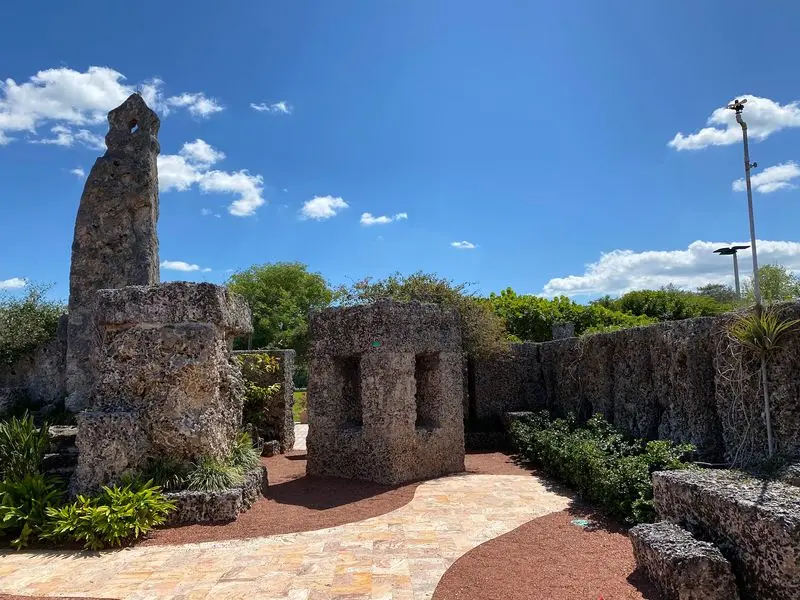
Some stones here are so large that moving one sounds like a job for a whole crew. That is why visitors keep asking how Leedskalnin handled his materials. The question is fair, but it is easy for an interesting mystery to grow into an unsupported claim.
He worked with simple tools rather than the kind of heavy machines we see on construction sites today. Accounts of his work often mention methods such as leverage, careful balance, and mechanical lifting. The exact steps he used for every block, however, are not fully recorded.
Think about a seesaw when you hear the word leverage. A person can use a long bar and a steady support to make a heavy object easier to shift. That does not mean moving a giant stone would be quick or safe.
During a tour, ask which tools or methods are supported by evidence and which are educated guesses. You might notice that carving, raising, and placing a block are three separate problems. Each takes planning, and a small improvement repeated many times can make a big difference. The mystery is more rewarding when you leave room for human skill. Rather than looking for a magical answer, picture the hours spent testing an idea, correcting a mistake, and trying again.
A Famous Gate With a Clever Balance
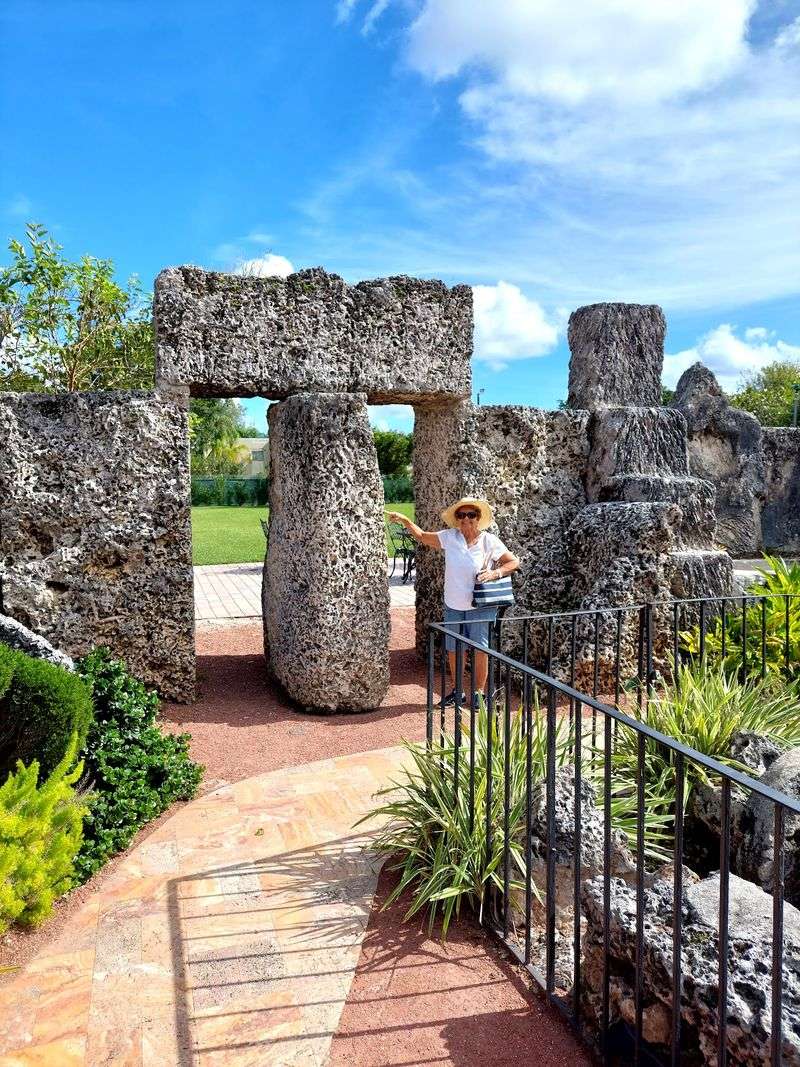
A doorway may not sound exciting until the door itself weighs several tons. The site’s famous rotating stone gate became one of its best-known features because it once turned with surprising ease. Its movement pointed to careful balance, not a stone made mysteriously light.
A heavy object can rotate when its weight rests on a suitable pivot and the parts are lined up well. If you have ever spun a bicycle wheel, you have seen a much smaller example of smooth motion. Making that idea work with stone demands far more care and precision.
The gate has undergone repairs over the years, so avoid assuming that every part you see is unchanged from Leedskalnin’s time. Ask your guide about its history and whether visitors can watch it move during your visit. Do not try to push it yourself unless staff clearly invite you to do so.
Stand back far enough to see how the gate fits its opening. Then look closer at the narrow spaces around its edges. Those views show why measuring and fitting matter as much as lifting. For young visitors, the gate offers a lesson: a smart design can make a difficult task easier. It also reminds adults that the most impressive part of a structure may be the thought behind it.
An Unusual Garden of Stone
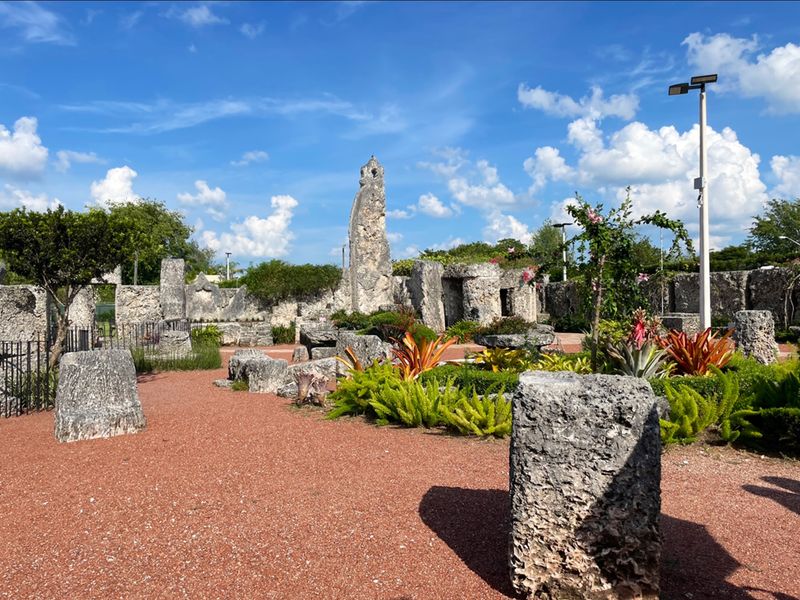
After the huge walls catch your eye, the smaller shapes begin to steal the show. Stone seats, tables, and decorative pieces make the grounds feel like a garden designed for someone’s imagination. They also show that Leedskalnin was interested in more than stacking heavy blocks.
Different features invite different kinds of looking. A seat suggests how a person might use the space, while a carefully cut shape invites you to study its edges. Some pieces connect to stories about the sky and the passing of time.
Rather than trying to remember every name, choose two or three carvings that stand out to you. Notice how each one fits among the walls and nearby pieces. If you visit with a child, ask them to sketch a favorite shape afterward from memory.
Photography can help, but a quick picture may miss what makes a carving clever. Walk around a feature when the tour route allows it and look at how its outline changes. Keep to permitted areas and follow staff directions about touching the stone. Those rules help protect details that many visitors have come to see. By the end, the place can feel less like a puzzle about weight and more like a record of one person’s ideas.
The Love Story Behind the Legend
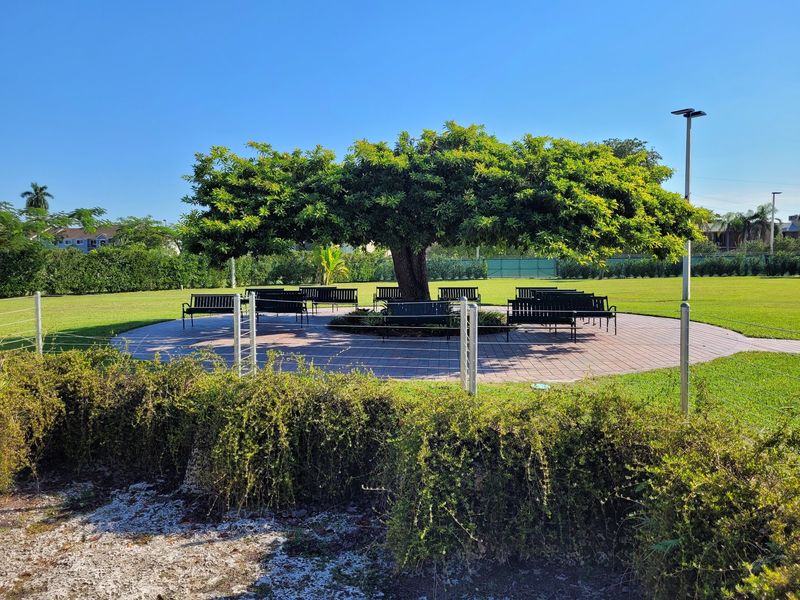
Many visitors arrive expecting a story about a broken heart as well as a story about stone. Leedskalnin’s lost engagement is often presented as a reason he began his long project. The tale gives the site a human side, but private feelings are harder to prove than carved blocks.
It is reasonable to say that the romantic story helped shape the castle’s legend. It is less certain to claim that every stone was placed for one person. People can have many reasons to keep creating, and those reasons may change over time.
Listen to the story on a tour, then notice which details come from records and which come from later retellings. That habit does not spoil the experience. It lets you enjoy the tale without mistaking a guess for a fact.
The idea can also open a conversation about art. Have you ever made something because you missed someone, wanted to prove yourself, or simply liked the challenge? Leedskalnin left behind objects that people still discuss, even when they disagree about his motives. That lasting interest may be the most moving part of the legend. The stones cannot tell us everything he felt, but they show how much care he put into making something that others could see.
How to Make the Most of a Visit
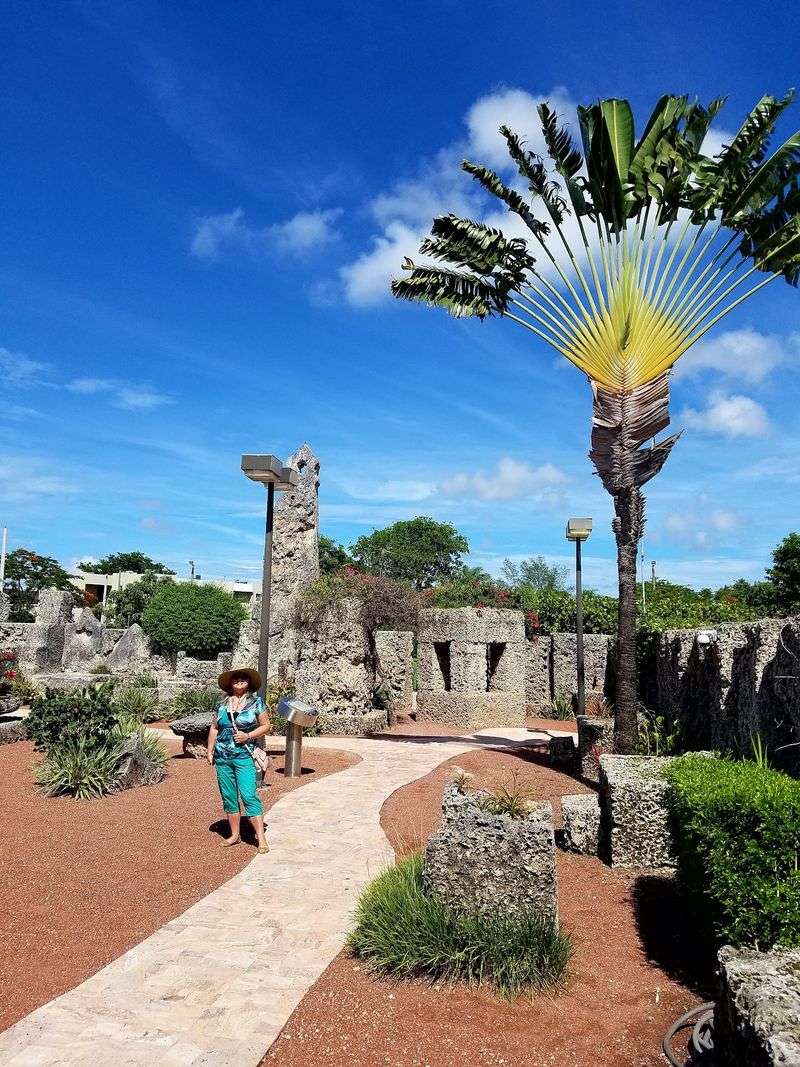
A little planning helps when the main attraction is outside under the Florida sun. Check the museum’s current website or call before leaving home for admission prices, hours, and tour details. Schedules and visitor rules can change, so an old review may not match your visit.
Guided tours add the builder’s story to the stones in front of you. Arriving near the start of the day may make the heat easier to handle, though conditions vary. Bring water, wear comfortable shoes, and consider a hat or umbrella for shade.
Do not expect a full-size medieval fortress with rooms to explore. The attraction is a compact outdoor collection, and visitors may need to stay with a guide in some areas. Allow time to listen, take photos where permitted, and ask a few questions.
One good question is which stories have clear evidence behind them. Another is which feature took the most careful work to shape or balance. If you are visiting with children, let each person choose a favorite carving and explain why. That simple game keeps everyone looking, even during a short tour. Follow the rules about touching the stones, since protecting them helps future visitors enjoy the same details. Come ready for an unusual history lesson, not a giant theme park, and the experience will make more sense.