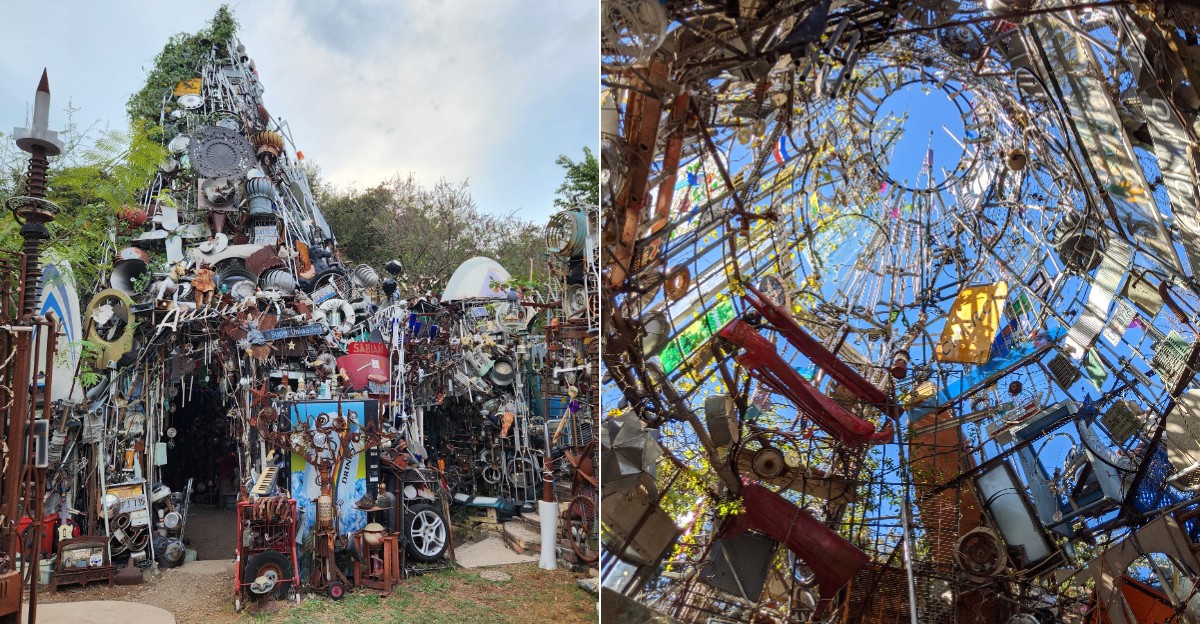
A pile of discarded bicycle wheels might not sound like the start of an attraction, but in South Austin, it rises into something you can actually walk through. The Cathedral of Junk transforms old toys, metal scraps, household objects, and forgotten treasures into a towering maze that feels part sculpture, part backyard adventure.
Tucked away on a residential street, this wonderfully unusual Austin attraction reflects the imagination of its creator, who has spent years turning castoffs into an ever-changing structure. Look closely and you may spot familiar objects woven into the walls, overhead arches, and curious corners, making the experience feel like a giant scavenger hunt.
Because the Cathedral of Junk sits on private property, visitors should be mindful that this quirky destination is also someone’s home and backyard. With that in mind, a visit can reveal just how much character can emerge from things others left behind—and there is plenty to discover once you step inside.
The Surprise Behind a Backyard Fence
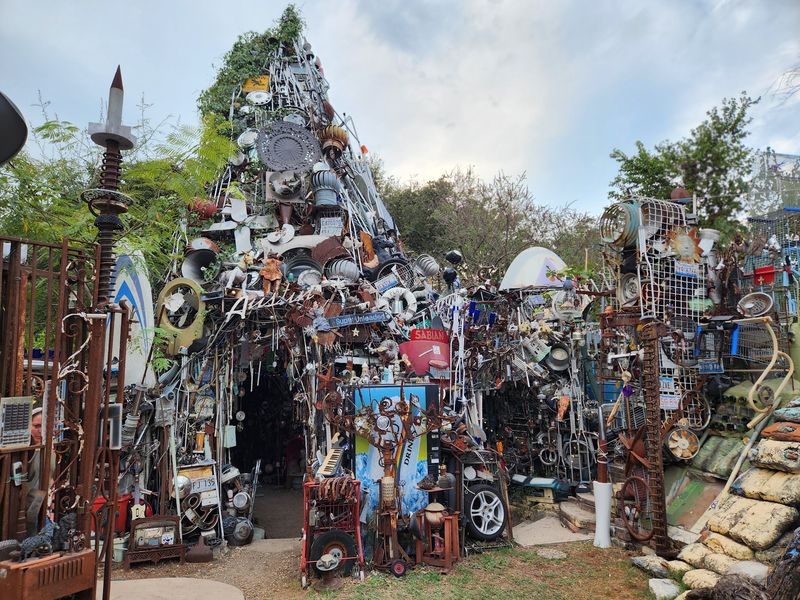
Nothing about the quiet street prepares you for what waits behind the fence. Houses and driveways look familiar, but hints of stacked metal and bright color suggest that one backyard has a very different story.
That slow reveal is part of the fun, especially if you have driven across Austin expecting a strange landmark.
At 4422 Lareina Drive, the Cathedral of Junk stands on the private property of its creator, Vince Hannemann. Its setting makes the structure feel less like a planned attraction and more like a secret someone trusted you to find.
Pause when you enter and let your eyes adjust to the layers of objects before trying to take in everything at once.
Remember that the street is home to other people, too. Park where it is legal, leave driveways clear, and keep your voice down while you wait for your arranged visit.
A little care for the neighborhood helps preserve the welcome that makes this unusual stop possible. The contrast between an ordinary block and an extraordinary backyard may stay with you longer than any single object inside it.
One Man’s Long-Running Idea
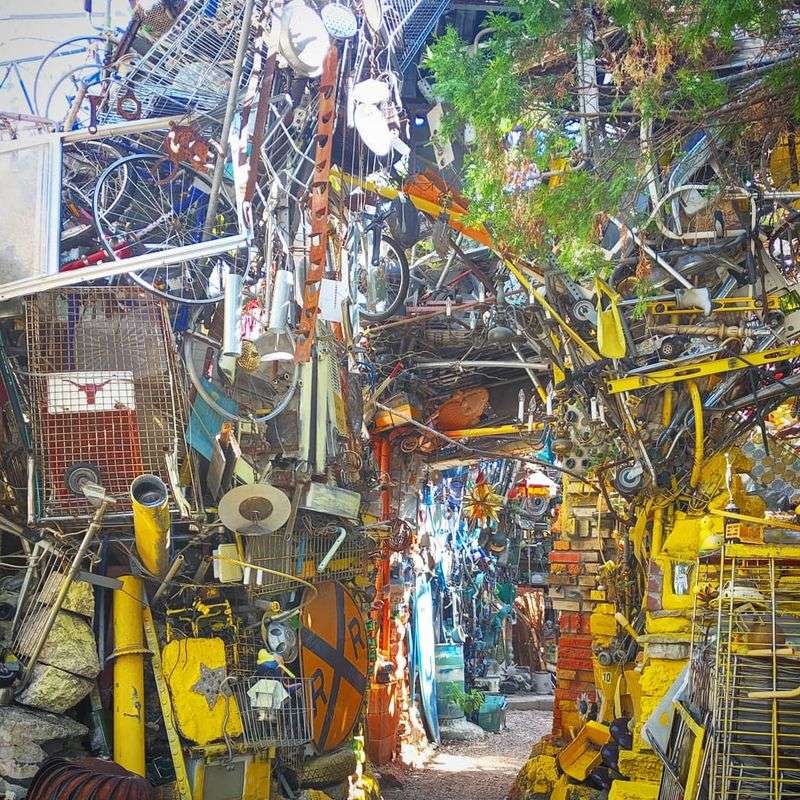
A few found objects can become a hobby; decades of them can become a place people travel to see. The Cathedral of Junk grew from Vince Hannemann’s decision to keep building with materials others no longer wanted.
He began the project in the late 1980s, adding pieces over time rather than following a finished plan.
Knowing there is one person behind the sprawling work changes how you look at it. A bicycle wheel is not simply stuck to a wall; someone chose its spot, secured it, and decided it belonged beside hundreds of other things.
At the Cathedral of Junk, those choices add up to a structure that feels personal even at its largest points.
If Vince is available to speak during your visit, listen respectfully and let him set the pace of the conversation. He lives on the property, and a busy day may not leave room for a long chat.
Even without a conversation, you can see the years of effort in every connection. It is a reminder that curiosity, followed patiently, can grow much bigger than anyone first expects.
Walls Made of Forgotten Things
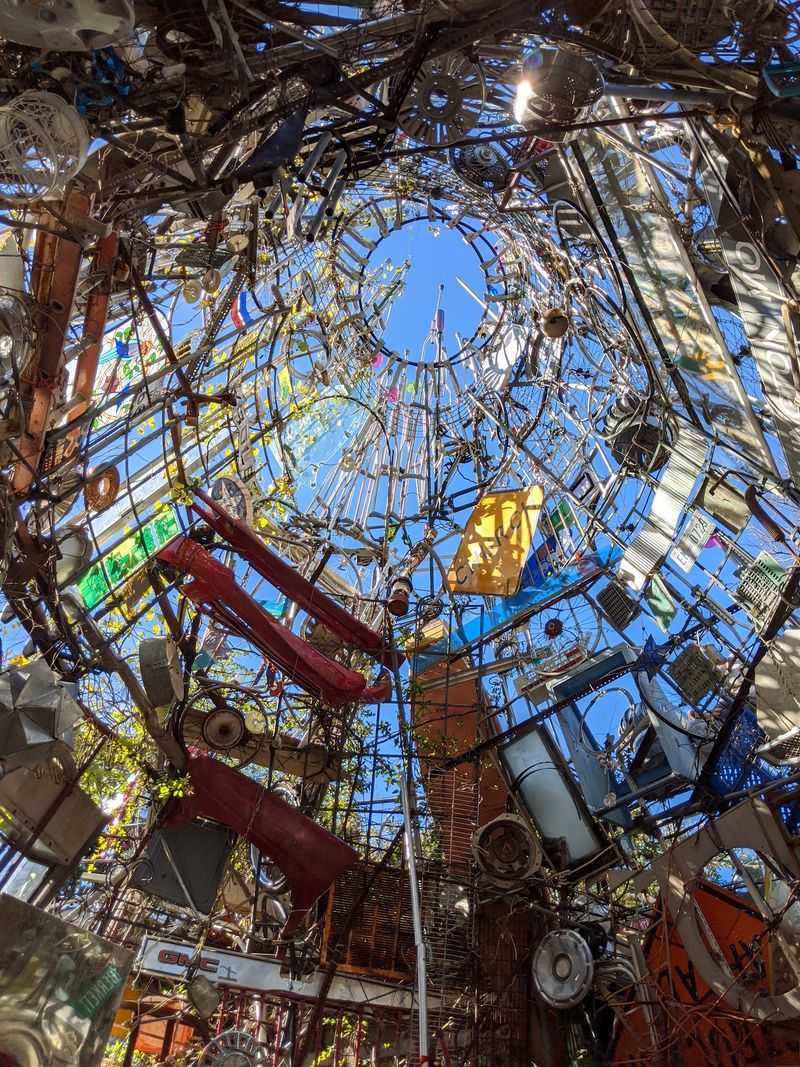
Try naming everything you see on one wall, and you may give up before reaching the top. Bicycle parts, signs, toys, tools, and household pieces crowd together at the Cathedral of Junk, yet many still keep their old shapes.
Seeing familiar objects in such unfamiliar places can be funny, puzzling, and oddly moving.
The structure has been described as containing more than 60 tons of reused material. That number sounds huge, but the small discoveries make it real: a wheel tucked above your head or a faded object you remember from childhood.
Instead of racing through, choose one stretch of wall and see how many different uses its pieces once had.
Keep your hands to yourself unless Vince clearly says an object may be touched. Some pieces may be sharp, fragile, or important to the structure, even when they look like loose odds and ends.
Bring a friend and compare what each of you notices first. You might leave talking about entirely different finds, which is part of the pleasure of a place with so much to see.
A Climb With a New View
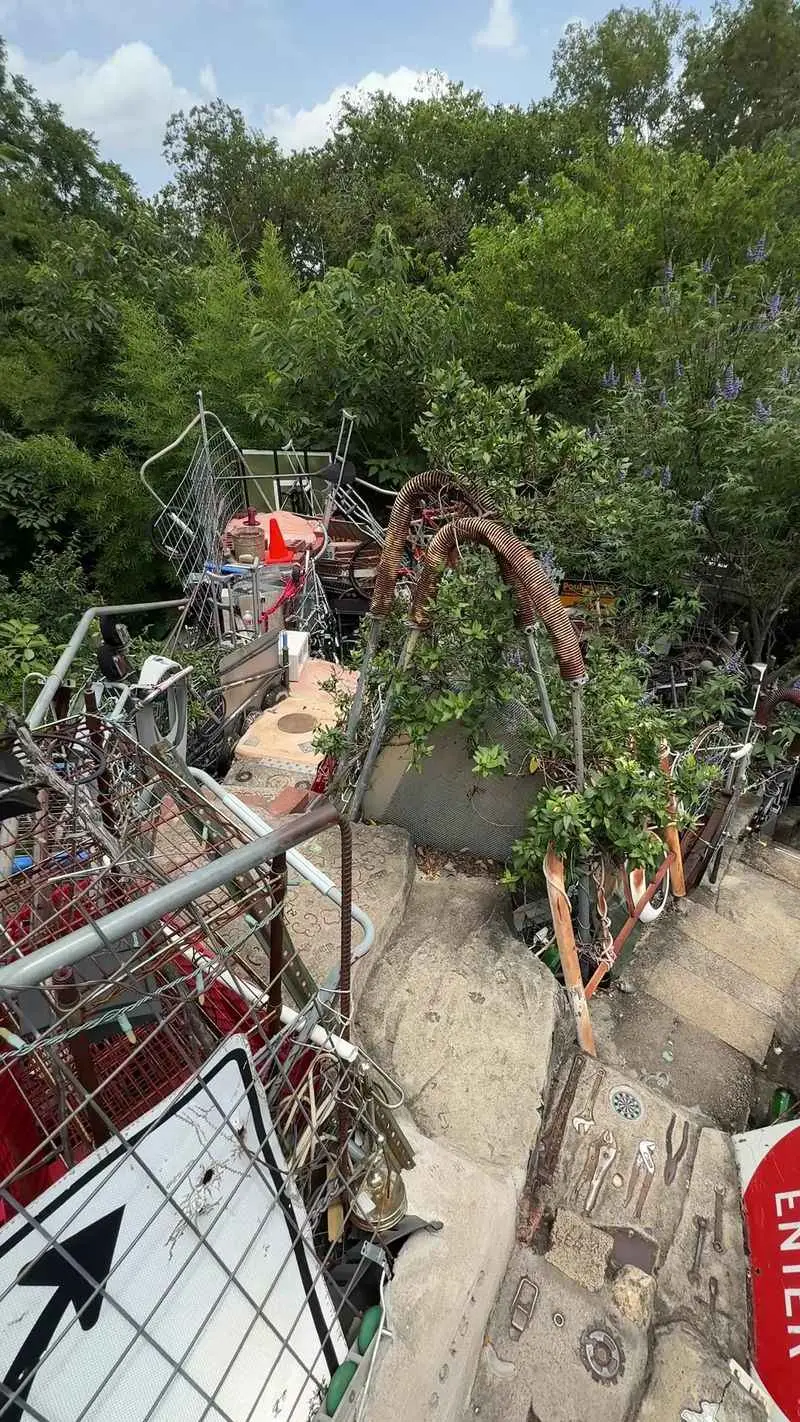
From below, the jumble seems too tangled to hold a path. Then you notice an opening, a turn, and another level rising above you.
Exploring the Cathedral of Junk feels less like viewing a sculpture from a distance and more like finding your way through one.
Its multilevel design offers changing views of the same objects. A sign that looked tiny from the ground may sit near your shoulder higher up, while gaps in the structure frame bits of the surrounding neighborhood.
Take your time on stairs and in tight spaces; the reward is in seeing how the pieces fit together, not in reaching the top first.
Closed-toe shoes with good grip are a sensible choice, and visitors should follow any limits Vince sets on where they can walk. Keep children close, especially around steps and narrow passages.
If a route looks crowded or uncomfortable, wait or choose another spot to explore. Even a short, careful wander gives you a strong sense of how much thought went into turning a backyard collection into a place with rooms and viewpoints.
The Smallest Finds Steal the Show
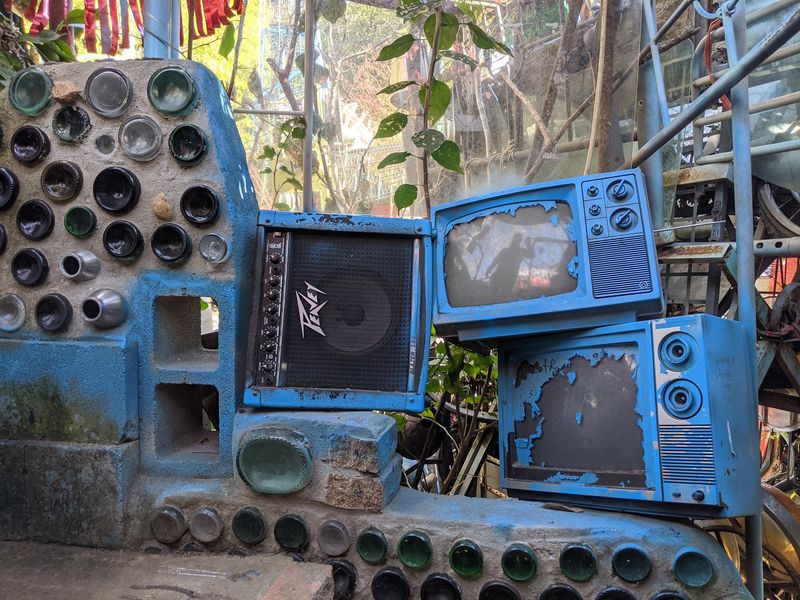
A tiny toy can stop you in your tracks when it appears between two pieces of rusted metal. At the Cathedral of Junk, the biggest surprise is often not the tower itself but something small you nearly walked past.
Old phones, tools, and keepsakes invite visitors to look twice and remember where they have seen similar things before.
Turn your visit into a gentle scavenger hunt. Pick a color, a kind of object, or something from your childhood, then see what you can find without moving any pieces.
Younger visitors can join in by spotting shapes or counting wheels, while adults may enjoy trading stories about objects they once used at home.
The arrangement can change as Vince adds or shifts materials, so a detail someone photographed before may not be exactly where you expect it. That makes wandering more satisfying than following a strict checklist.
Give yourself time to look upward, downward, and into corners, while staying on permitted paths. You may come away with one favorite find that no guide could have chosen for you.
Pictures With Something to Discover
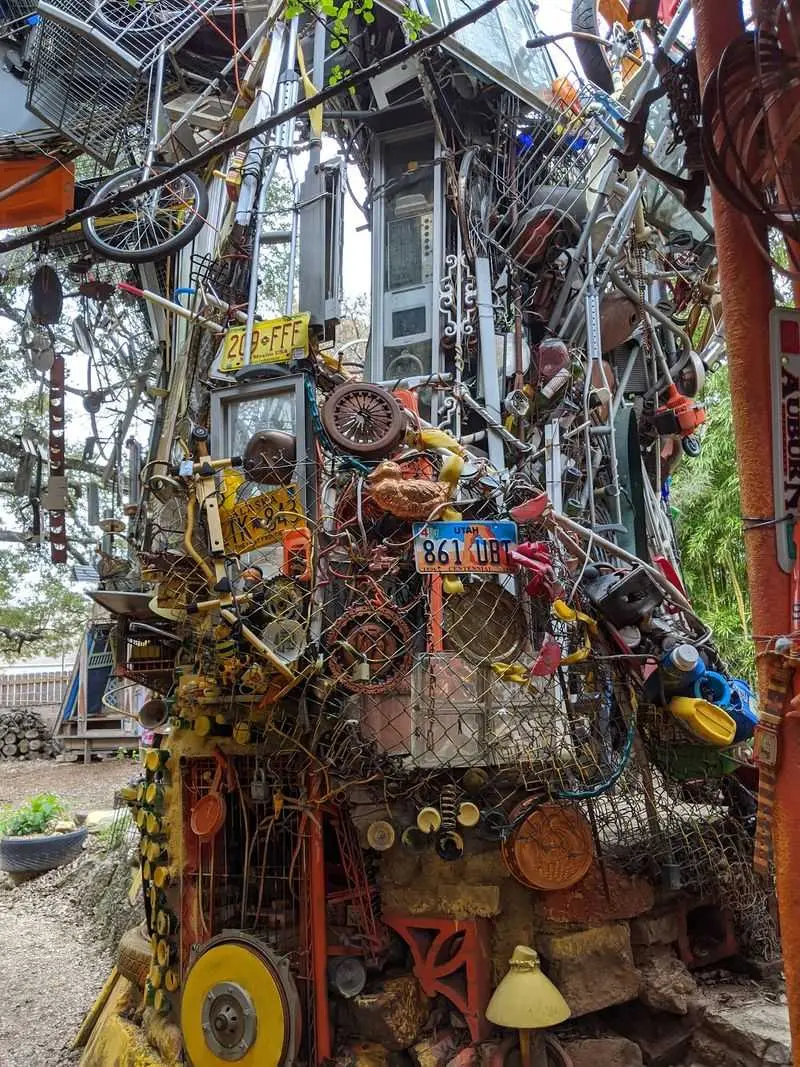
Every few steps, the background changes from bright clutter to a surprising patch of shadow. Photographers love the Cathedral of Junk because wide views show its scale, while close views reveal playful combinations that could be missed in person.
One bicycle wheel can frame a whole different scene if you shift your position slightly.
Start with a photograph that shows how the structure rises from its South Austin backyard. Then try smaller compositions: a weathered sign beside a toy, sunlight crossing a metal edge, or a view through a gap toward the sky.
If your phone struggles with dark areas, tap the screen to set the light for the part you most want to show.
Be considerate while you photograph. Do not climb somewhere off limits, move objects to improve a shot, or block a narrow route for other visitors.
Ask permission before making Vince or anyone else the subject of a portrait. Finally, put the camera away for a few minutes.
Seeing the work without a screen may help you notice the sound, space, and scale that no picture quite captures.
Austin’s Independent Spirit on Display
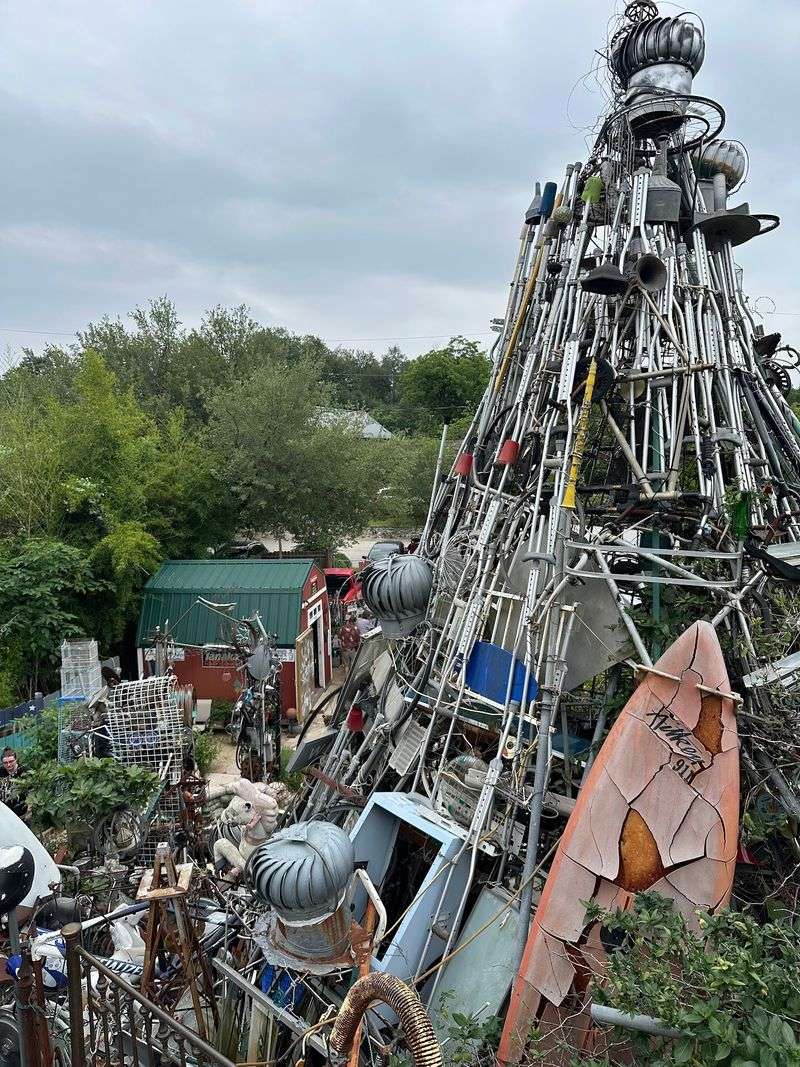
Some places explain a city’s personality better than a slogan ever could. The Cathedral of Junk shows a side of Austin that makes room for unusual ideas and gives creative people a chance to pursue them.
Nothing about this backyard work feels polished for a souvenir shelf, and that honesty is a large part of its charm.
Its maker built something he wanted to build, using things many others had finished with. Visitors now arrive from well beyond the neighborhood to see how far that simple choice went.
Look at the structure as a piece of local art, not just a collection of odd photo props, and its appeal becomes easier to understand.
You do not have to love every crowded corner to appreciate the freedom behind it. Ask your travel companions what they would make if they had the time, space, and a growing pile of castoffs.
Their answers might be as interesting as the visit. For travelers hoping to understand why this stop draws such strong reactions, the best approach is to bring an open mind and let the place speak for itself.
The Backyard That People Helped Save
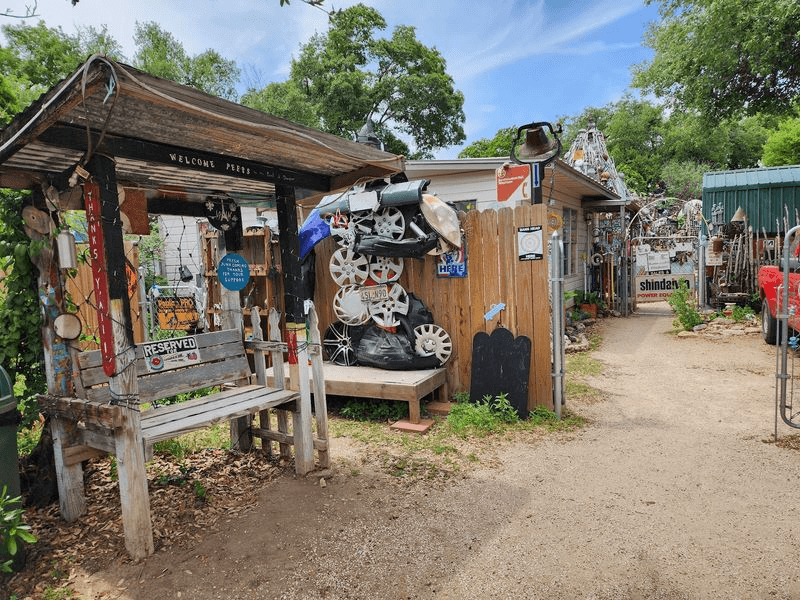
Imagine spending years building something you love, then hearing it might have to come down. That possibility became real for the Cathedral of Junk in 2010, when a complaint led to questions about permits and safety.
The struggle brought attention to a backyard artwork many people already cared about.
Supporters helped Vince Hannemann address the city’s concerns, and parts of the structure were changed or removed. The story matters because it shows that keeping an unusual place open takes more than imagination.
It also takes work, cooperation, and respect for the people who live nearby.
As you walk through, notice how much responsibility comes with sharing a personal project with visitors. Following the rules, arriving only with permission, and treating the property carefully are small ways to support its future.
The Cathedral of Junk is not frozen at one moment in history; it has had to adapt. Knowing that can make a quiet pause beneath its towers feel more meaningful.
What survives here is not only an artwork, but also the effort people made to give it another day in the sun.
A Fresh Look at Things We Throw Away
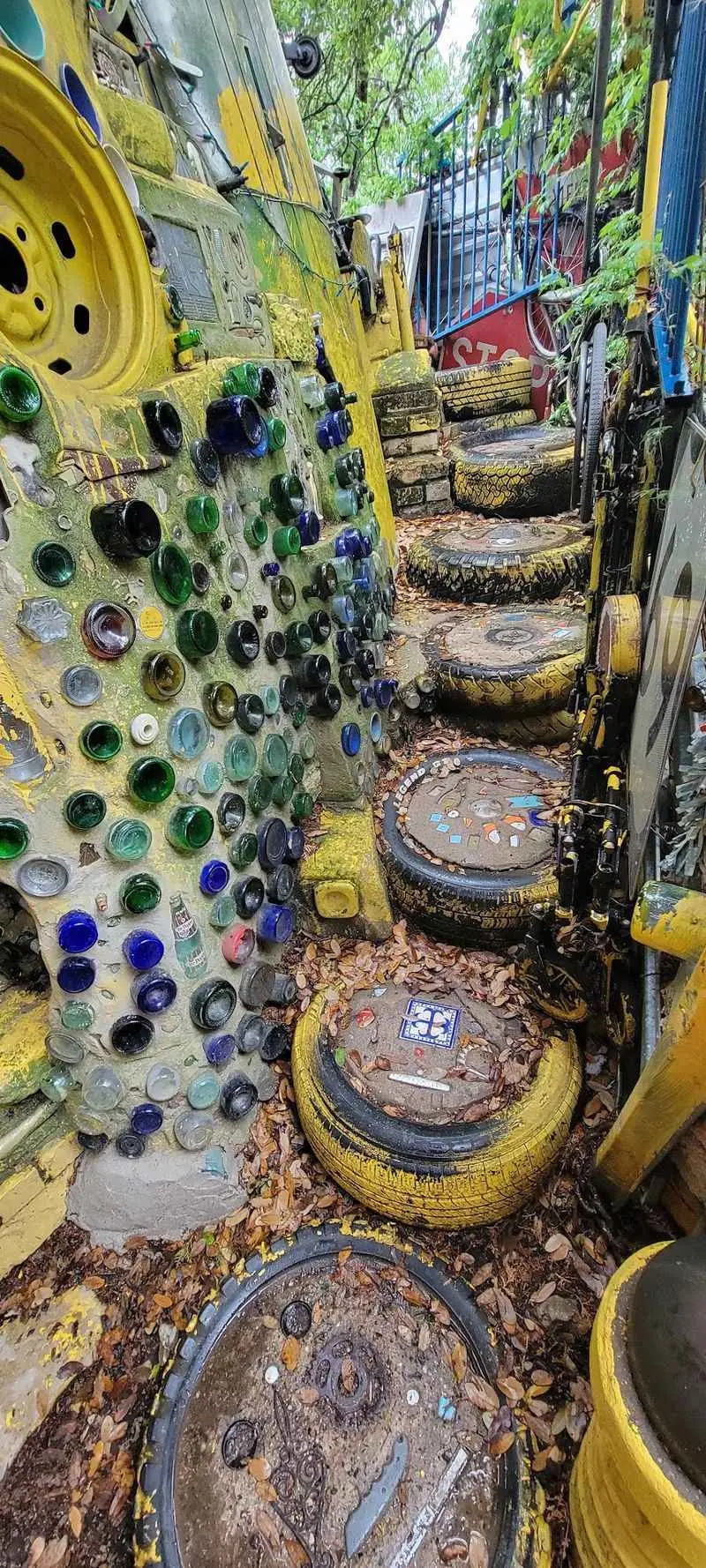
A broken wheel or worn-out tool usually marks the end of a useful life. Here, it might become part of a wall, a pattern, or a doorway.
The Cathedral of Junk gives discarded materials another job, and seeing that happen on such a large scale can change how you look at everyday waste.
Vince Hannemann’s project is not a lesson posted on a sign. Its message comes through the objects themselves, each one still recognizable even after becoming part of something new.
As you explore, think about which pieces could have gone to a landfill and which might have been repaired, shared, or reused at home.
You need not build a tower in your yard to take an idea from the visit. Fixing a small item, donating something usable, or making art from safe scrap materials are simple places to start.
Be careful not to remove anything from the Cathedral or leave your own unwanted objects there without permission. The visit is a chance to admire resourcefulness, not an invitation to add to someone else’s work.
You may leave seeing possibility in things you once overlooked.
Plan Ahead for a Better Visit
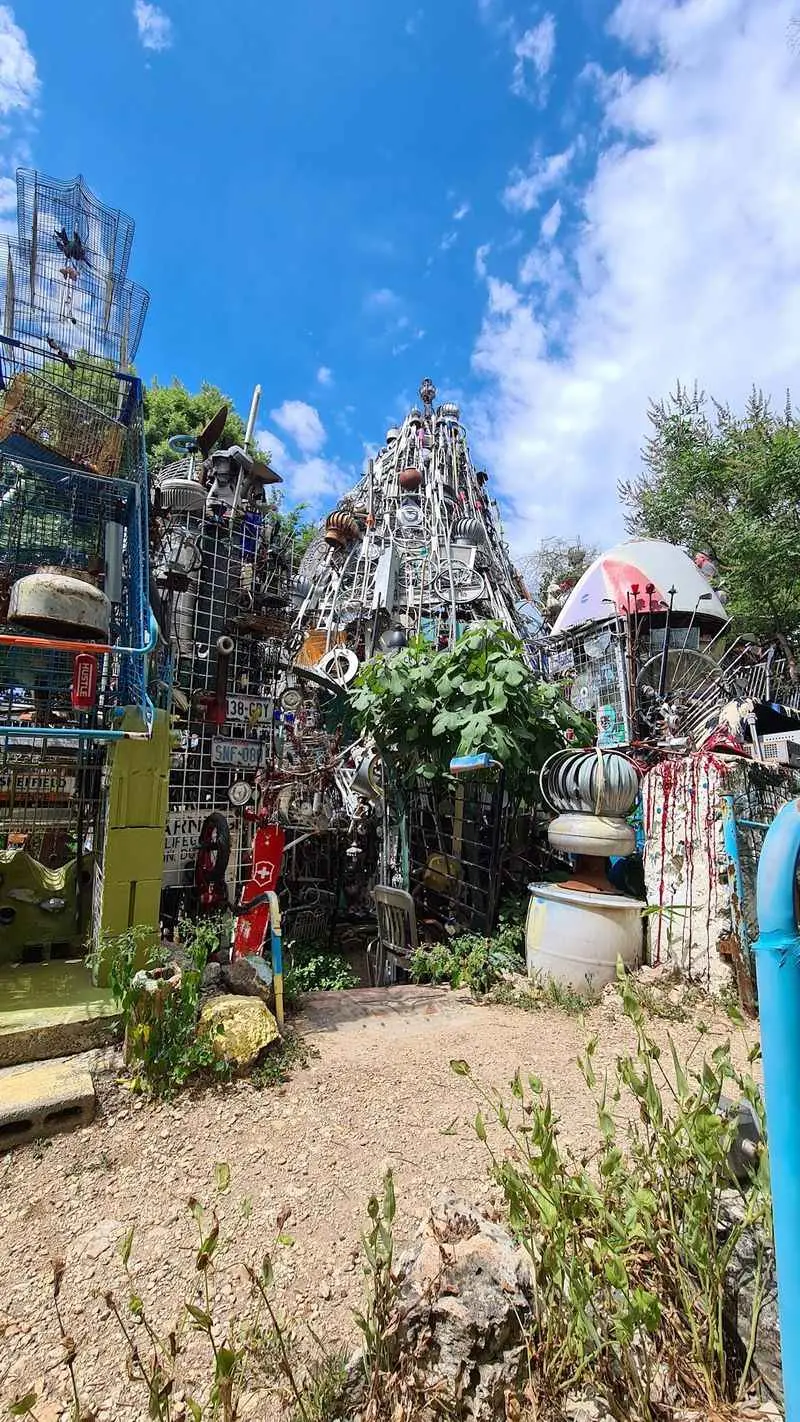
A long drive feels better when you know someone will be there to welcome you. The Cathedral of Junk sits in Vince Hannemann’s private backyard, so it does not work like a museum with a staffed ticket desk.
Call 512-299-7413 ahead of your trip to ask about access and confirm a time before setting out.
Find it at 4422 Lareina Drive in Austin, and allow enough time to look around without rushing. Admission is generally free, but donations are appreciated; bringing some cash is a thoughtful way to be prepared.
Wear sturdy, closed-toe shoes, keep children close, and expect uneven areas as you explore.
Plan a restroom stop before arriving, since facilities may not be available to visitors. If your call goes unanswered, wait for confirmation rather than assuming you can walk in.
Conditions, access, and requested donations can change, so asking directly is more reliable than trusting an old post. Once the practical details are settled, you can focus on the pleasure of looking closely.
A little planning protects your trip and shows respect for the person who shares his home and artwork.