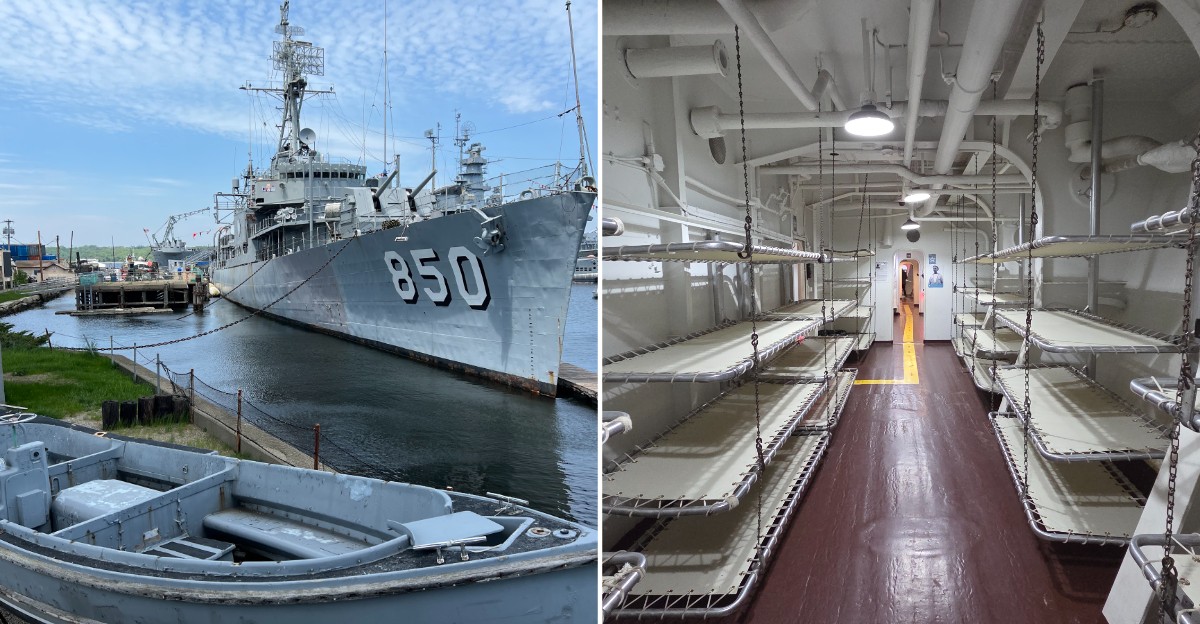
From the dock, a battleship looks almost impossibly large; inside, its tight passageways make you wonder how so much machinery and so many people fit beneath the steel. At Battleship Cove in Fall River, Massachusetts, visitors can step aboard a real battleship and explore the spaces where sailors worked, ate, rested, and carried out their daily routines.
The experience goes far beyond standing on the deck. Narrow corridors lead toward cramped compartments, steep ladders connect different levels, and the sounds of footsteps against metal help you imagine life aboard these working vessels.
Battleship Cove also preserves other historic Navy ships and tells the stories of the people who served on them. Comfortable shoes are useful, because there is plenty to explore and many details reward a slower look.
Step aboard, and you’ll discover the rooms, machinery, and stories waiting beyond the ship’s imposing exterior.
Meet the Fleet From the Waterfront
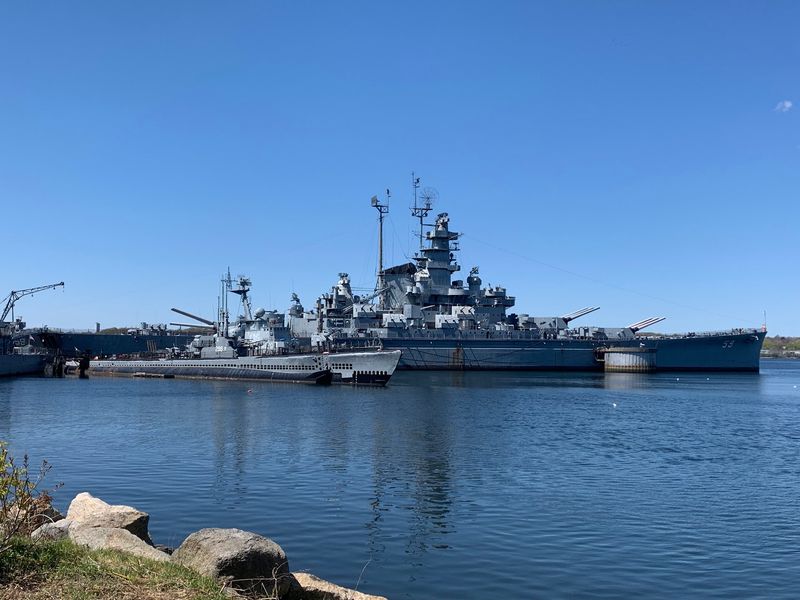
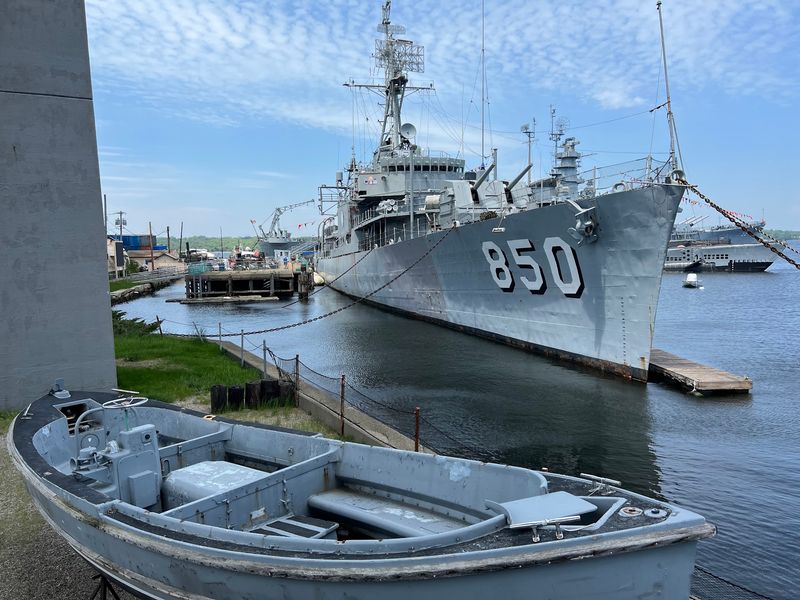
From the shore, the ships seem almost too large to be real. Their gray sides rise above the water, while the Braga Bridge stretches across the scene behind them.
Before climbing aboard, pause along the waterfront and take in the different shapes of the fleet.
Battleship Cove sits at 5 Water St in Fall River, beside the Taunton River. Its collection brings together vessels built for very different jobs, including a battleship, a destroyer, a submarine, and patrol torpedo boats.
Seeing them side by side makes their differences easier to spot than any picture in a book could.
Give everyone in your group a moment to choose the ship they want to explore first. A child may point to the battleship’s enormous guns, while an adult may wonder how anyone lived inside the submarine.
Those first questions can guide the rest of your visit.
The waterfront is also a useful place to get your bearings before the ladders and passageways begin. Look across the river, notice the bridge, and remember how peaceful the ships appear today.
Soon, their interiors will tell a much busier story.
Stand Beneath Big Mamie’s Guns
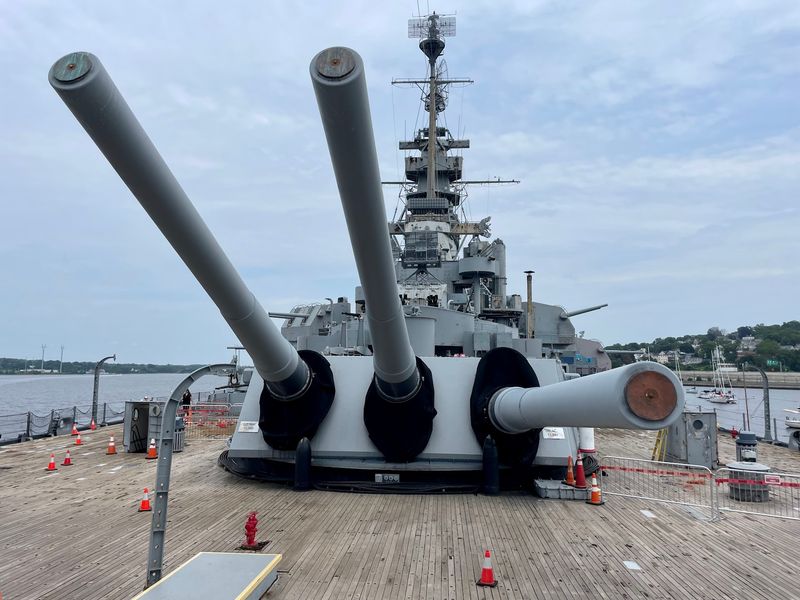
Those giant gun barrels can stop a conversation in its tracks. Up close, they make it easier to understand why the USS Massachusetts earned the nickname Big Mamie.
Her broad deck feels like a neighborhood of steel, yet she was built to move across oceans.
The battleship is the centerpiece of Battleship Cove in Fall River. Commissioned during World War II, she served in both the Atlantic and Pacific and earned 11 battle stars.
Former crew members and local supporters helped save her, allowing visitors to walk aboard rather than only read about her service.
Start outside if the weather allows. From the deck, compare the size of the gun turrets with the people beside them, then look toward the Taunton River and Braga Bridge.
The view gives you room to imagine a ship this large far from land, with sailors carrying out separate jobs across its many levels.
Take your time near signs and marked routes instead of rushing straight below. The guns draw attention, but the deck also helps you understand the ship’s scale.
That sense of size makes the smaller living spaces inside even more surprising.
Follow the Crew’s Daily Routes
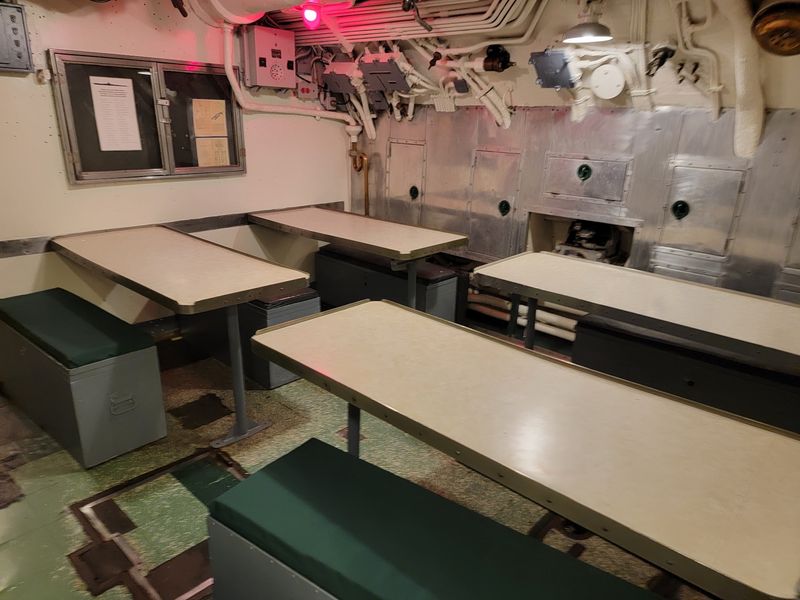
A narrow passage can change your picture of a battleship faster than any giant gun. Inside the USS Massachusetts, steel walls, tight turns, and steep ladders show that thousands of people once had to share this floating workplace.
Even an ordinary trip from one room to another took practice.
At Battleship Cove, marked self-guided routes lead visitors through different parts of Big Mamie. Depending on which spaces are open, you may see bunks, work areas, displays, and rooms connected to the ship’s operations.
Follow posted directions rather than wandering past barriers; they protect both visitors and the vessel.
Try picturing a sailor finishing a long shift and finding a place to sleep. The bunks look small beside the huge open deck above, and that contrast gives the ship a human scale.
Younger visitors might enjoy choosing one room and guessing what job happened there before reading its sign.
Low doorways and raised hatch edges deserve your full attention. Keep a hand free for railings, let faster groups pass when safe, and pause whenever a space feels crowded.
Moving slowly lets you notice the everyday details that make the history memorable.
See How a Destroyer Worked
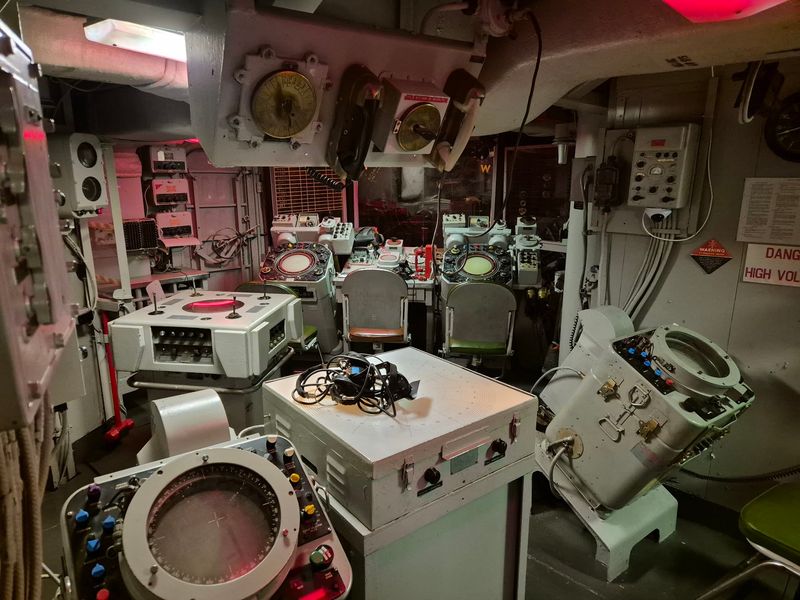
After the battleship, the destroyer can look almost lean. Walk closer, though, and its long deck reveals another complex world of equipment, workspaces, and watch stations.
The change in scale makes the next stop feel like a new chapter rather than more of the same.
USS Joseph P. Kennedy Jr. is part of the fleet at Battleship Cove.
She entered service after World War II and went on to serve during the Korean War and the Cuban Missile Crisis. Her story shows how naval service continued as the world changed after 1945.
As you explore the areas open to visitors, notice how quickly you can move from an outdoor view to a narrow interior passage. Imagine crew members keeping track of weather, other ships, and orders while working together in limited space.
If a museum display catches your eye, stop and connect the objects to the rooms around you.
Families can make a simple comparison game of the visit: Which vessel has the wider deck, and where would you rather spend a long shift? There is no need for expert naval knowledge.
Looking carefully at two different ships is enough to start asking good questions.
Squeeze Through the Lionfish
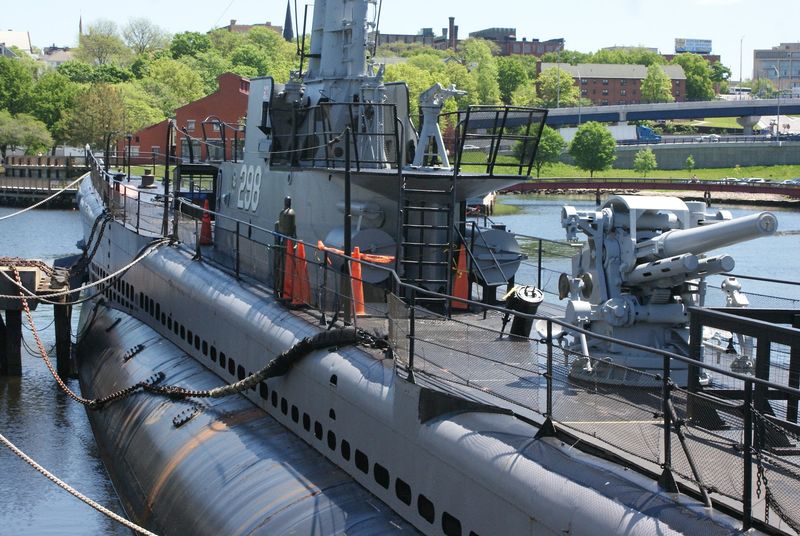
One step through a submarine hatch makes the outside world feel far away. The ceiling seems lower, the walkway narrows, and every bit of space has a purpose.
A visit to the USS Lionfish can turn a familiar story about submarines into something you can feel.
Lionfish is a World War II-era submarine preserved at Battleship Cove in Fall River. She completed two war patrols in the Pacific before the war ended.
Inside, the compact arrangement of bunks, equipment, and working areas helps explain how crew members lived close together for long stretches at sea.
Pay attention to the route as you move between compartments. Doorways may have high edges, and narrow spaces can require patience when another group is coming through.
Closed-toe shoes and a small bag make it easier to keep your balance and leave your hands available.
If someone in your group dislikes tight spaces, check the entrance before committing to the tour. There is plenty to appreciate from the outside, too.
For visitors comfortable going in, the short walk through Lionfish may be the moment that makes a sailor’s daily challenges feel most real.
Spot the Speedboats of the Fleet
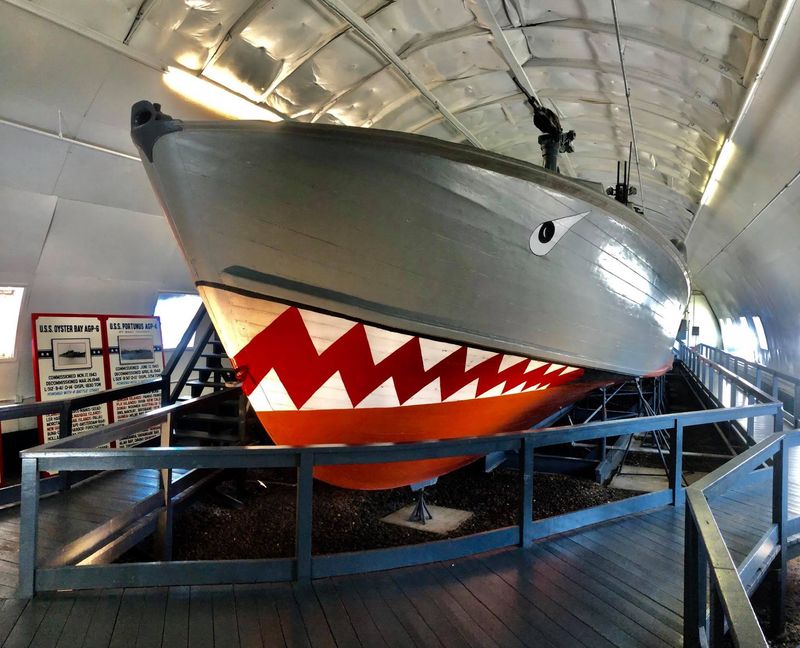
Small boats can tell a surprisingly big war story. After seeing towering ships at the waterfront, the low shapes of the PT boats may seem almost playful.
Their size, however, points to a different kind of mission, one built around speed and quick action.
Battleship Cove displays PT-617 and PT-796 as part of its National PT Boat Museum. Patrol torpedo boats served in World War II, and these rare survivors give visitors a close look at craft that played a role very different from Big Mamie’s.
You can examine their shapes and nearby exhibits without expecting the same walk-through experience offered by the larger ships.
Look for details that suggest how little room a crew had to work. Then compare the boats with the battleship you just toured.
What could a smaller vessel do more easily, and what protection would it lack? Questions like these make the exhibit engaging even for visitors who have never heard of a PT boat.
Leave time to read the stories and view the artifacts, not just photograph the boats. Their compact design can be easy to overlook beside a battleship.
Giving them a few quiet minutes reveals how many kinds of people and vessels made up a fleet.
Take a Quieter Maritime Detour
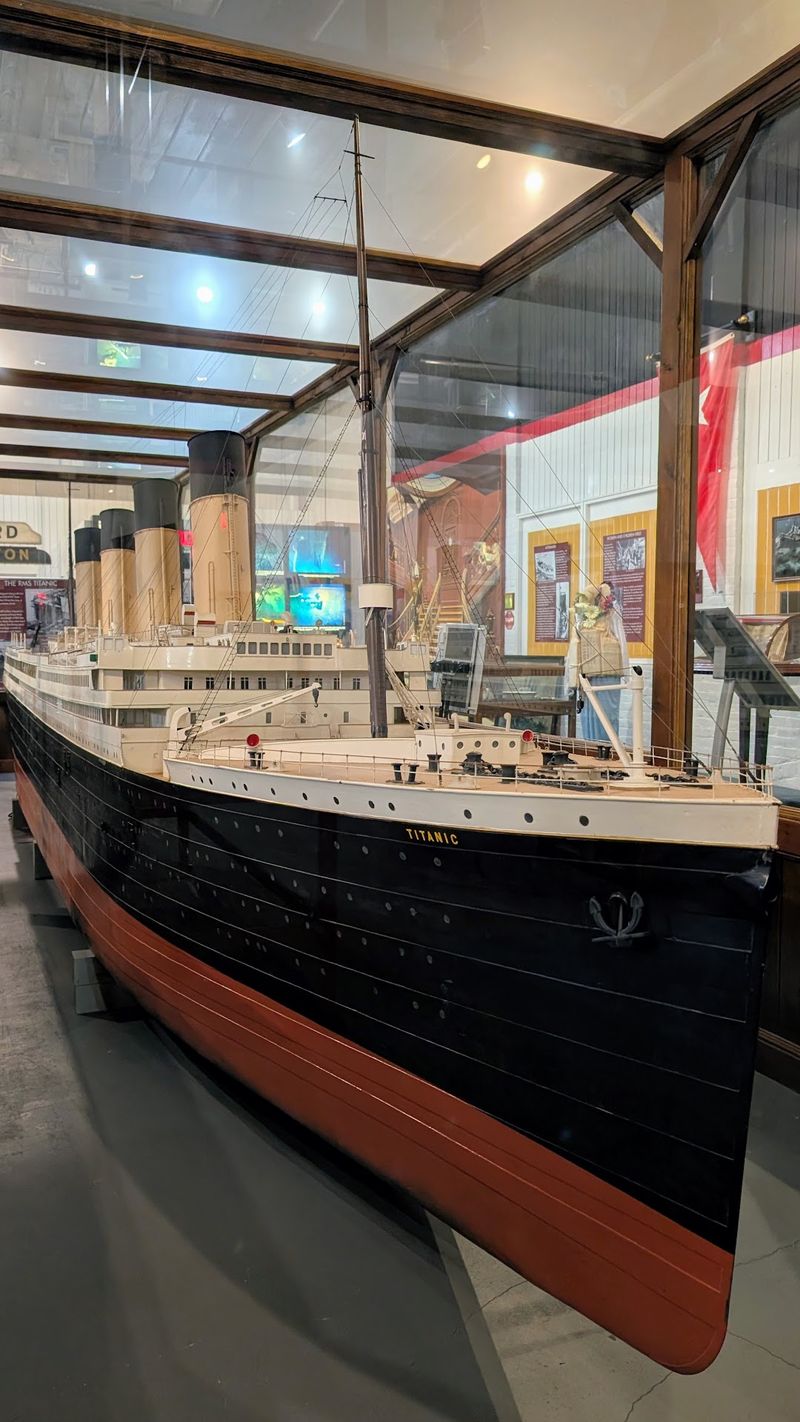
After climbing ladders, a quieter gallery can feel like a welcome change of pace. Ship models invite you to step closer, while photographs and objects tell stories that are easy to miss when the warships command your attention.
The Maritime Museum adds another side to a day on the waterfront.
Part of the Battleship Cove experience in Fall River, the museum explores seafaring history beyond the vessels at the dock. Exhibits have covered the region’s maritime past and the Titanic, including a large model associated with the 1953 film.
Check current exhibit information before you go, since displays and admission arrangements can change.
Children who need a break from steep stairs may enjoy searching a model for tiny features such as windows, decks, or lifeboats. Adults can slow down with the stories behind a photograph or artifact.
Both approaches help turn a quick indoor stop into something more personal.
Plan to visit the gallery before everyone runs out of energy. It offers a chance to think about how ships carried people, goods, and hopes, not only sailors and weapons.
That wider view gives the vessels outside a richer setting when you return to the river.
Imagine Sleeping Aboard
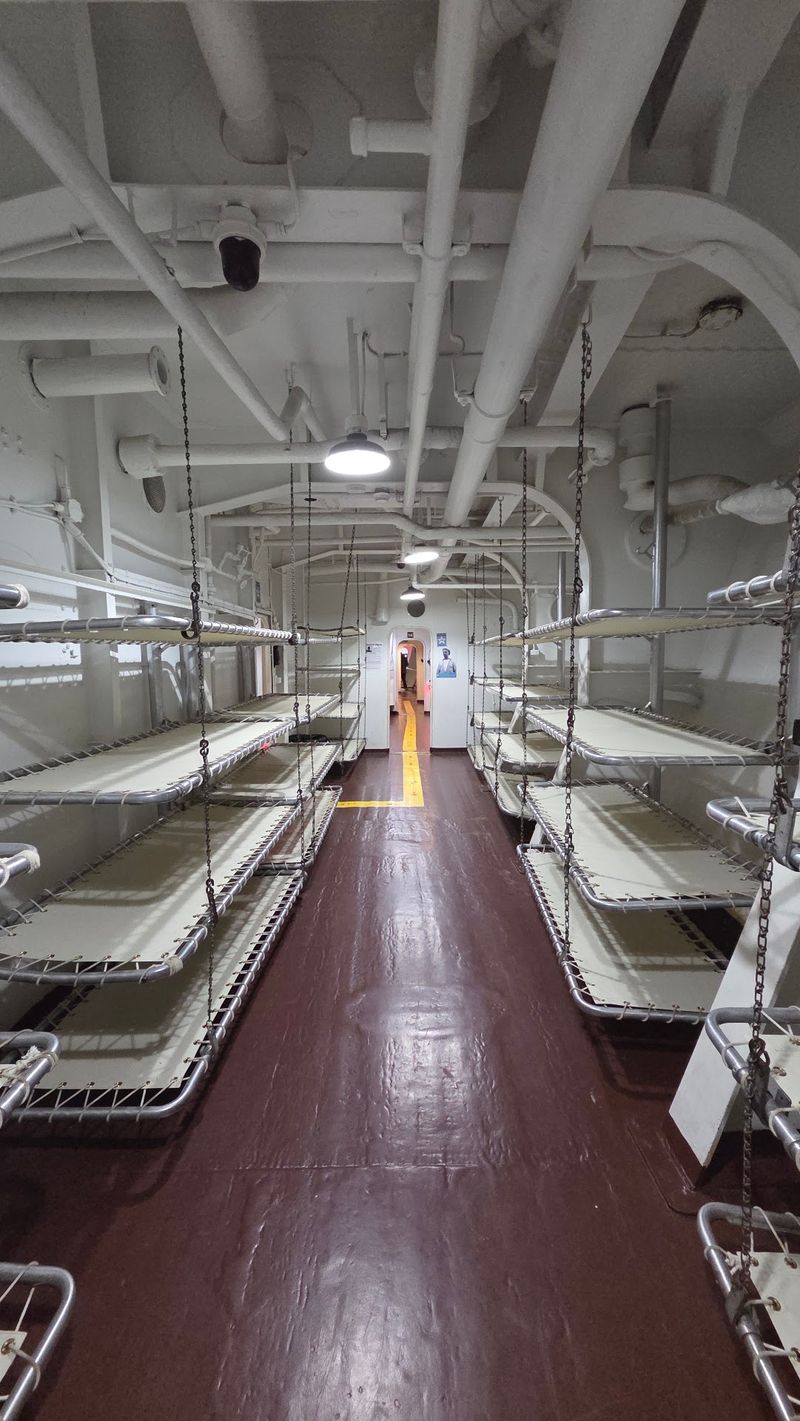
When the day’s visitors leave, the idea of sleeping on a battleship sounds both exciting and a little strange. The bunks are far from roomy, and the walls are made of steel.
That is exactly why an overnight program can stay in a young visitor’s memory.
Battleship Cove has offered group overnight experiences aboard the USS Massachusetts, often called Nautical Nights. Participants may sleep in sailors’ bunks and spend more time getting to know the ship than a daytime visit allows.
Program dates, ages, costs, and availability can change, so check directly with the museum before promising anyone a night aboard.
If an overnight stay is not possible, use the regular tour to imagine the same routine. Find the sleeping area, notice how close the bunks sit together, and think about what it would feel like to wake up before a shift at sea.
Those ordinary moments help balance the dramatic stories of battle.
Special tours and educational programs may offer other ways to learn from staff or volunteers. Book ahead when required, and ask which spaces a program covers.
A little planning can turn strong curiosity into a much deeper experience.
Make Room for a Full Visit
History feels more enjoyable when you are not hurrying up a ladder to beat the clock. With several vessels and exhibits at Battleship Cove, a quick stop can leave you wishing for another hour.
Giving yourself a flexible plan makes it easier to follow the stories that interest you most.
The museum is at 5 Water St in Fall River, Massachusetts. Allow at least a few hours for the ships, and add time if your group likes reading displays or taking breaks.
Check the official website for current hours, ticket details, open vessels, and any special programs before traveling; access can change with maintenance or weather.
Wear sturdy, closed-toe shoes with good grip. Expect steep ladders, raised door edges, and narrow passages in some areas, particularly inside the submarine.
If someone uses a stroller or has trouble with stairs, review the museum’s accessibility information and ask staff which parts of the visit will work best.
Begin with the vessel your group cares about most, then let curiosity set the pace. Pause for a river view or a drink when needed.
The goal is not to cover every hallway, but to leave with a clearer sense of the people who worked aboard these ships.