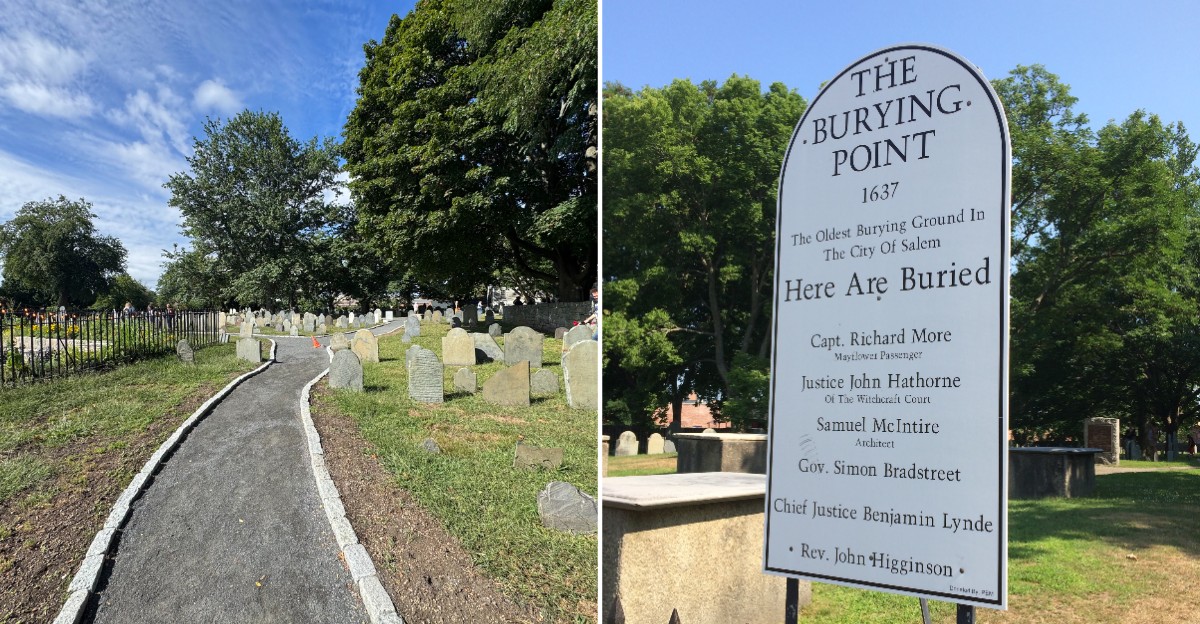
Some places make history feel less like something you read and more like something standing quietly beside you. At The Burying Point in Salem, Massachusetts, weathered gravestones line a small historic cemetery, their worn lettering offering glimpses of the people who lived here during one of the most unsettling chapters in American history.
Located at 51 Charter Street, The Burying Point sits close to the heart of Salem’s historic district and dates to the 17th century. Run your eyes across the uneven stones, notice the carved details softened by time, and imagine the footsteps that once passed along these same paths.
There is nothing theatrical about the setting, which makes the experience feel especially intimate. As you wander among the graves, you can discover names, stories, and small details that bring Salem’s past into sharper focus, with more waiting just ahead.
A Gate Between Two Centuries
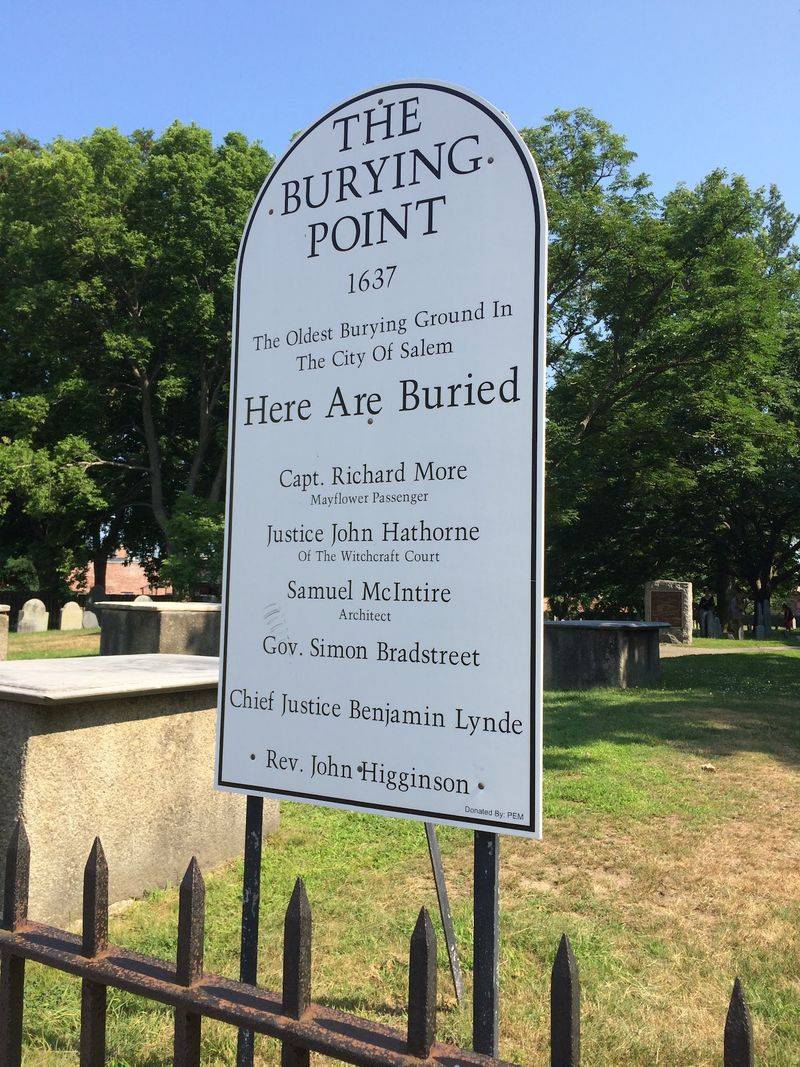
Street sounds do not vanish when you reach the gate, but your attention shifts almost at once. Beyond the entrance, rows of worn markers stand where Salem residents have been buried for centuries.
The Burying Point, also called Charter Street Cemetery, began in 1637, making it the oldest burial ground in Salem.
That date matters because the cemetery was already old when the witch trials shook the town in 1692. Instead of picturing history as one sudden event, you can imagine families living through decades of ordinary work, loss, and change.
Look at the space between the stones and remember that each marker belonged to someone with a daily life.
Begin your walk slowly, especially if the grounds are busy, and let your eyes adjust to the small details. The cemetery sits at 51 Charter Street, within easy walking distance of downtown Salem, yet it asks for a different pace.
You do not need to know every name before entering; curiosity and a little patience are enough to make the visit meaningful. A short pause at the gate helps set a respectful tone for everything that follows.
Names That Time Almost Erased
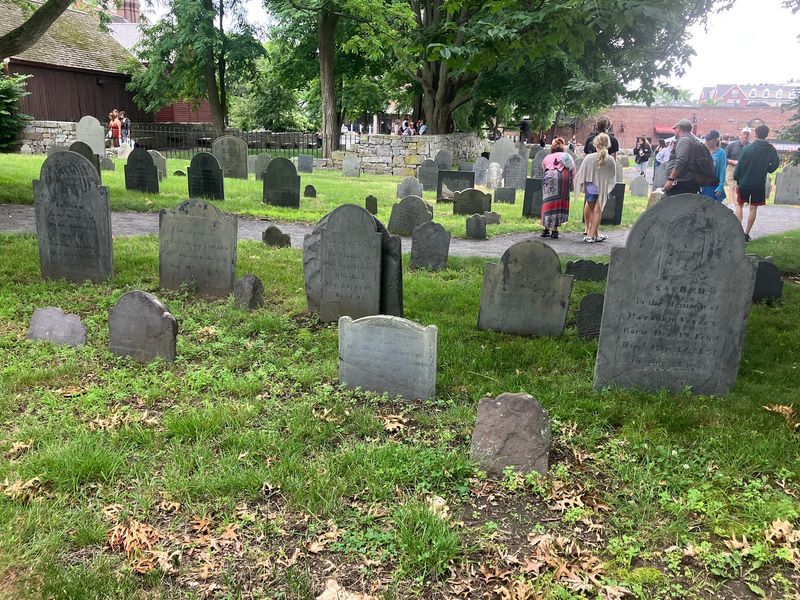
A faint date can hold your attention longer than a grand monument. At The Burying Point, weather has softened many letters, leaving names that take a careful look to read.
Some surviving stones date to the seventeenth century, so even a simple inscription can connect your walk to Salem before 1692.
Try reading only what you can see clearly rather than guessing at missing words. A name, an age, or a family link may be enough to make a stranger feel less distant.
The rough surfaces also show why these markers need protection: rain, frost, and centuries of exposure have already done plenty of damage.
Stay on the designated path while you look, and use your phone camera’s zoom if a stone stands too far away. Avoid touching carvings or attempting a rubbing, which can harm fragile surfaces.
You may leave without solving every faded inscription, and that is part of the experience. The gaps remind you that the past is not a complete story handed to us; sometimes it survives in just a few stubborn marks on stone.
Remembering People Who Are Not Buried Here
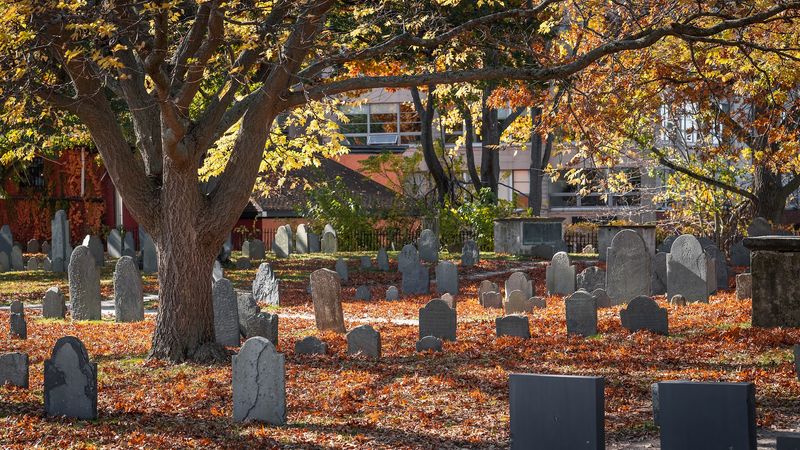
An empty space can say as much as a carved name. Visitors sometimes expect to find the graves of people executed during the Salem witch trials at The Burying Point.
You will not find marked graves for those victims here, despite the cemetery’s close connection to the story of 1692.
That absence changes the way the grounds feel. Judge John Hathorne has a known resting place, while the burial places of the people condemned in the trials remain uncertain or unmarked.
Rather than inventing a spot for them, let that difference raise questions about whose stories were preserved and whose were pushed aside.
Before visiting, consider learning the names of some of the accused from a reliable historical source. Then, as you follow the cemetery path, remember that a missing headstone does not mean a life mattered less.
Speak quietly if you discuss the trials with friends or children, and separate documented facts from local legends. The strongest moment here may come when you stop looking for a dramatic sight and simply think about the people who cannot be pointed out by a stone.
Skulls With Wings and Other Stone Clues
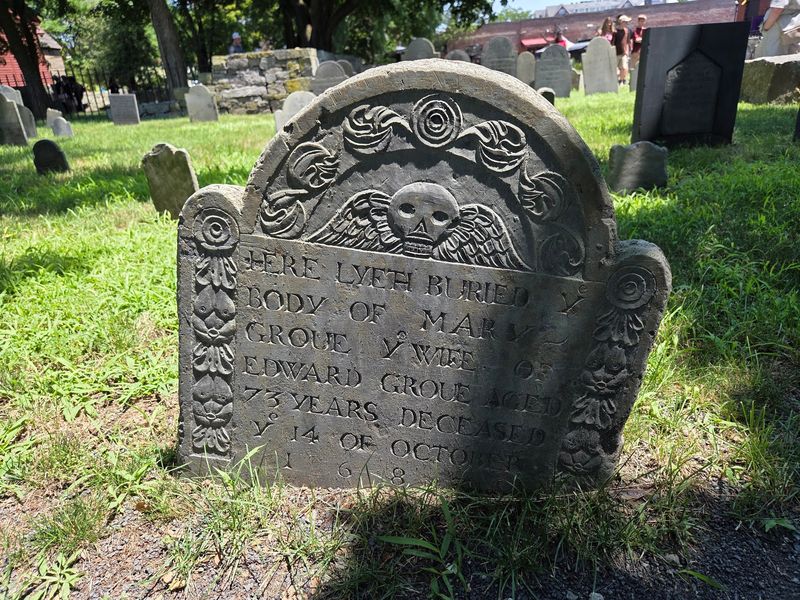
A skull with wings might catch your eye before you can read a single word. Some older markers at The Burying Point carry this striking design, often called a death’s head.
To people in colonial New England, such carvings were reminders that life was short and death deserved serious thought.
Look carefully at the shapes rather than treating them as spooky decorations. The wings, faces, and borders were cut by hand, so nearby stones may show different styles and levels of detail.
Weather has changed the art, too, wearing some lines smooth while leaving others surprisingly clear after hundreds of years.
Make a small game of spotting symbols from the public path, then ask what message each one may have offered the people who first saw it. Not every mark has one certain meaning, and a little caution makes the search more interesting.
A close photograph, taken without leaning on a stone, can help you study the carving later. Here, an ordinary walk becomes a lesson in how earlier generations used pictures to speak about loss, belief, and the passing of time.
A Mayflower Passenger Among Salem’s Dead
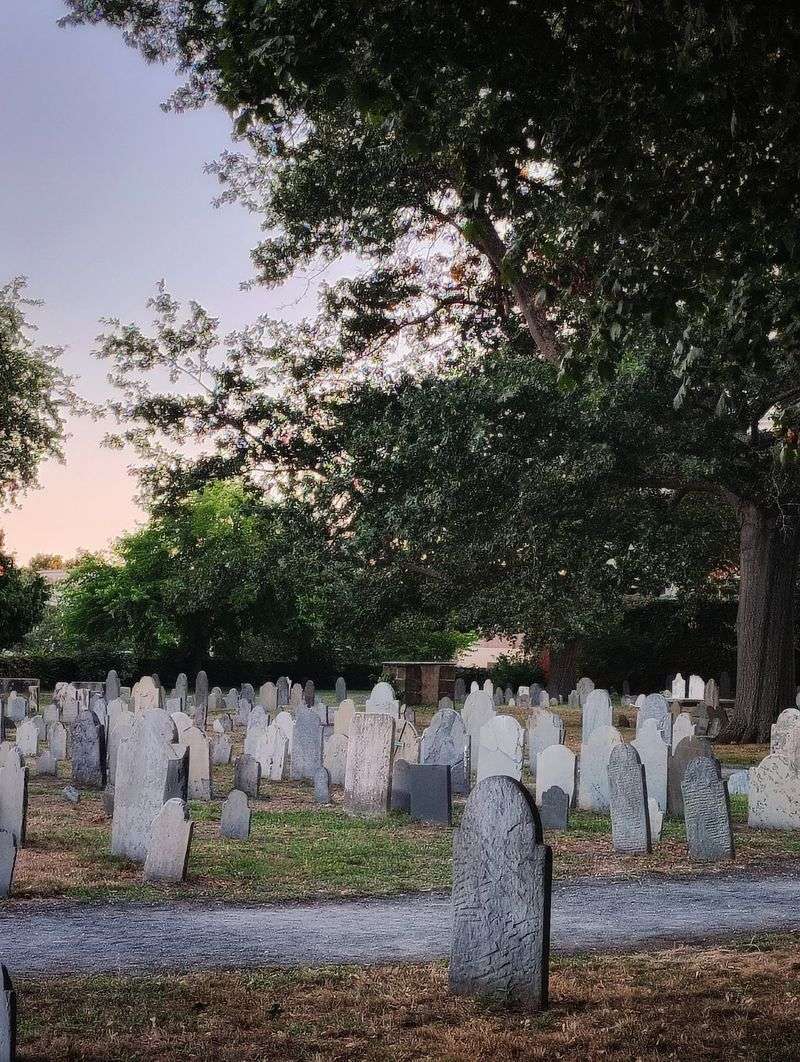
Salem’s story reaches beyond the trials, and one grave makes that clear in a surprising way. Richard More, who traveled to North America aboard the Mayflower as a child, is buried at The Burying Point.
His presence links this small cemetery to a much wider story of migration and colonial life.
Picture the distance between a child’s ocean crossing and the years that followed in New England. A headstone cannot tell you everything More experienced, but it can prompt better questions about how people traveled, settled, and built connections between towns.
That makes his marker a useful stop even if you arrived mainly to learn about 1692.
Check a cemetery map or visitor information to help locate his grave before you start scanning every stone. Once you find it, take a step back and notice the other markers around it; famous names share this ground with people whose stories are less widely known.
Give yourself time to follow one new question after your visit, perhaps by reading more about the Mayflower passengers. A single grave can open a chapter you did not expect to find in Salem.
A Governor’s Long View of Colonial Salem
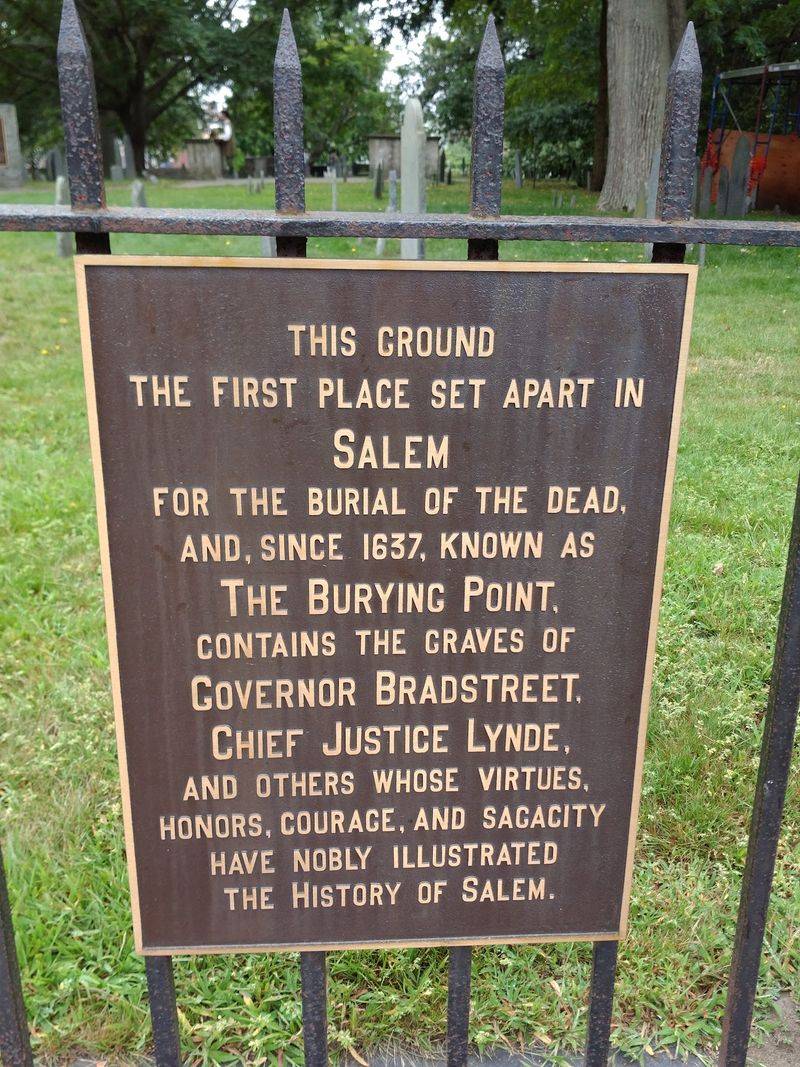
A governor’s tomb sounds grand, yet here it sits within the same weathered landscape as many other graves. Simon Bradstreet, a governor of the Massachusetts Bay Colony, is buried at The Burying Point.
His name points toward the political world that shaped Salem long before modern visitors arrived.
His life stretched across much of the seventeenth century, a period that included the years of the witch trials. Thinking about that long span helps place 1692 within a larger timeline instead of treating it as Salem’s entire past.
Government, religion, trade, and family life all influenced the world the town’s residents knew.
Use the marker as a starting point, not an answer to every question about colonial leadership. Notice how little a stone can explain on its own, then consider looking up Bradstreet through a historical collection after your walk.
While you are here, compare the scale and style of nearby markers without stepping off the path. The contrast between an important title and a quiet resting place can make history feel less like a list of officials and more like the record of people who lived through uncertain times.
The Path That Protects the Past
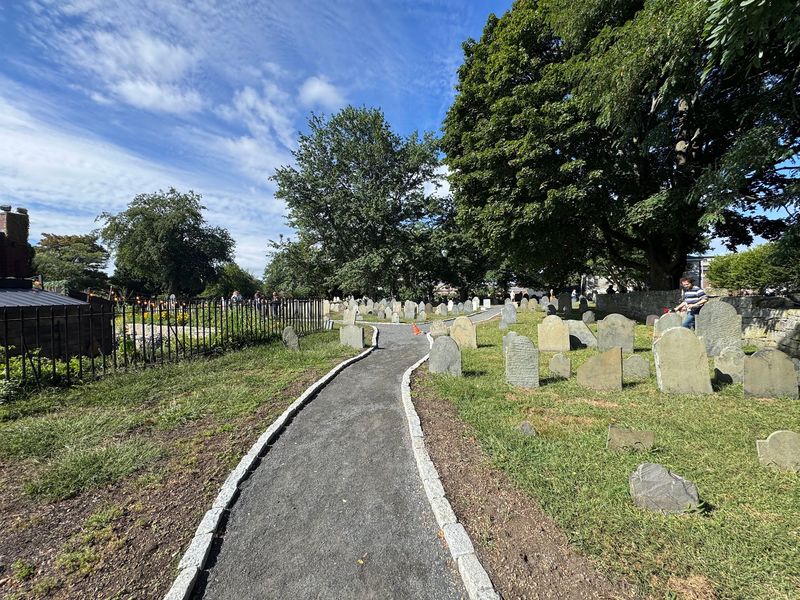
The urge to step closer to a fascinating stone can be strong. At The Burying Point, the designated path sets a clear boundary between visitors and fragile graves.
Following it may keep you from reading every inscription, but it also helps protect markers and the ground around them.
Many stones have stood through centuries of New England weather, and age makes them easier to damage. A stray hand, a foot on soft ground, or a crowded photo attempt can add to that wear.
From the walkway, you can still see carved shapes, compare marker sizes, and take in the cemetery as a whole.
Bring comfortable shoes and allow more time than you think a small site needs. If a group pauses ahead of you, wait instead of cutting across the grass, and let people have space for quiet reflection.
Photographs can be a good way to remember details, as long as taking them does not interrupt someone else’s visit. The path is more than a rule to work around; it is part of how a place this old can remain open to curious people in the years ahead.
A Quiet Finish in the Shadow of 1692
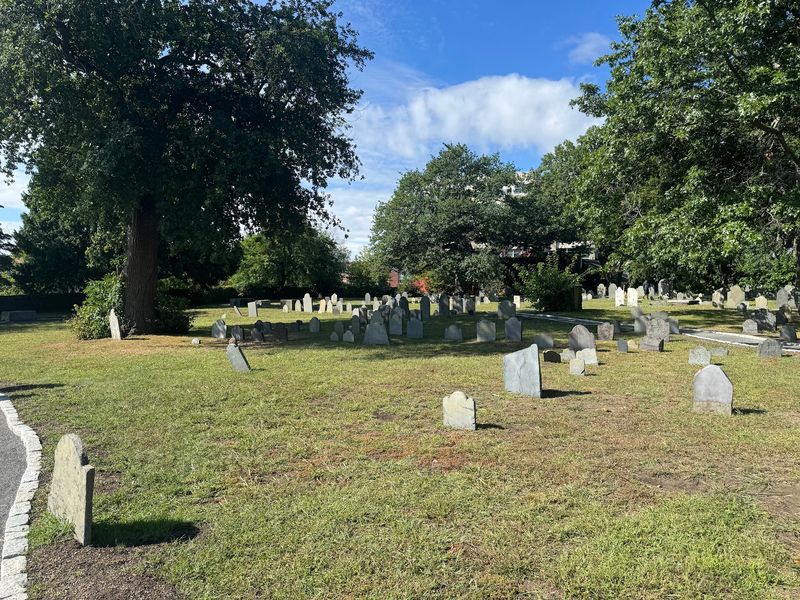
By the end of a slow walk, the oldest stones may feel less distant than they did at the gate. At The Burying Point, names from Salem’s early years stand alongside the memory of the witch trials, even though the executed victims have no marked graves here.
That mix of presence and absence gives the place its lasting power.
Try finishing with one final look across the grounds instead of rushing toward your next stop. Notice the uneven heights of the markers, the shade of the trees, and how close each grave seems to its neighbors.
It becomes easier to picture 1692 as a year lived by a whole community, not merely a date on a tour schedule.
If you want a calmer visit, consider going outside Salem’s busiest fall days and check the cemetery’s current hours and entry guidance before arriving. Access rules can change during crowded periods, while the need for respect never does.
Leave with a question you would like to research rather than a claim that you have solved the past. That feeling of unfinished history is one reason the walk stays with you.