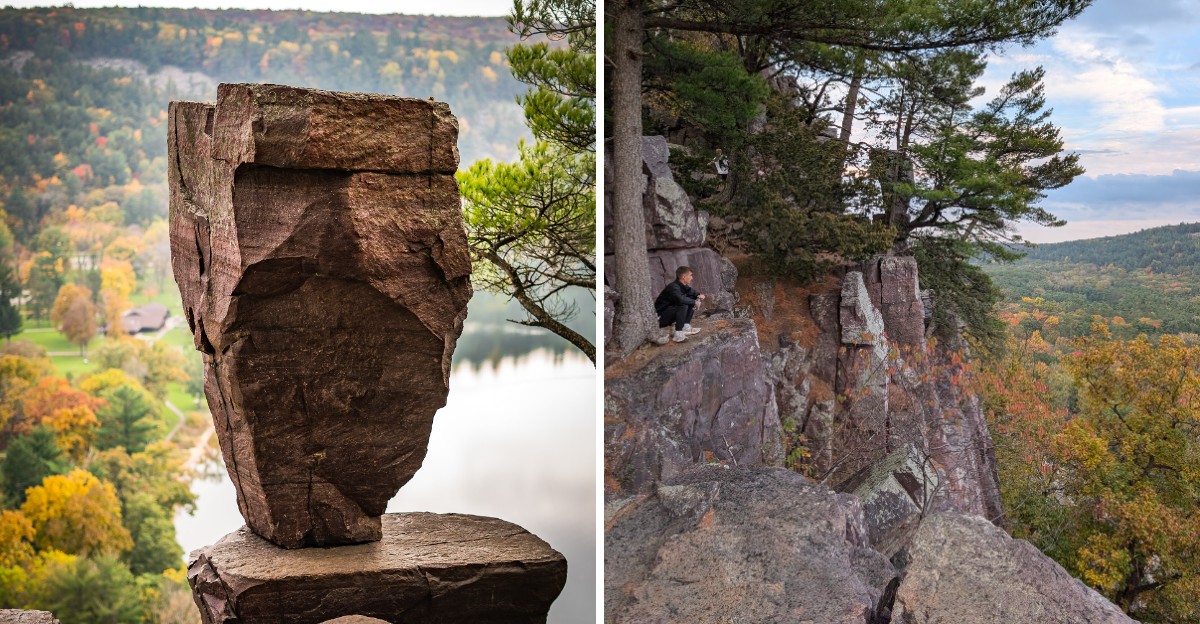
Fall at Devil’s Lake is a show worth climbing for.
Red, orange, and gold sweep across the hills, while the dark quartzite bluffs rise above the water like giant walls.
The trails turn the color season into an adventure.
Climb the East or West Bluff for sweeping views, scramble toward rocky formations, or stay closer to the lake for a calmer way to see the trees.
Every route brings a different view, and some climbs demand more than others.
Steep rocks, stairs, and uneven ground can make the bluffs a real workout, especially when leaves cover the trail.
Bring sturdy shoes, water, and a camera with plenty of room for photos.
Then take your time, because the best part may be the moment you stop climbing and simply stare across the lake.
Start With the West Bluff Trail
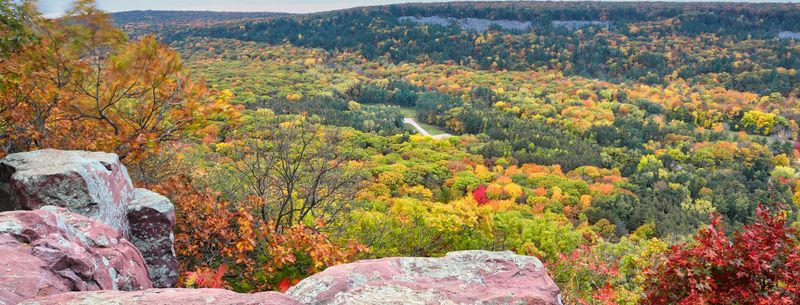
The lake seems to grow smaller with every step up the West Bluff Trail. Stone steps and steep stretches lead to a series of overlooks, so the reward does not have to wait until the end.
Pause where the trail safely widens and watch the fall colors spread across the hills on the opposite shore.
Give yourself more time than the distance suggests. Climbing takes effort, and fallen leaves can hide loose stones or make steps slick after rain.
Shoes with good grip help, and a light jacket is handy when the wind picks up above the water. Keep children close near exposed edges, and stay behind any barriers.
For a calmer walk, begin early, before the busiest visitors arrive. Carry water even on cool days, since the climb can feel warm.
Turn around whenever your legs need a break; you can enjoy excellent views without finishing every section. Before starting, check the park map so you know which trail connects to your parking area and how you will get back without guessing at a junction.
Take In the Colors From the East Bluff Trail
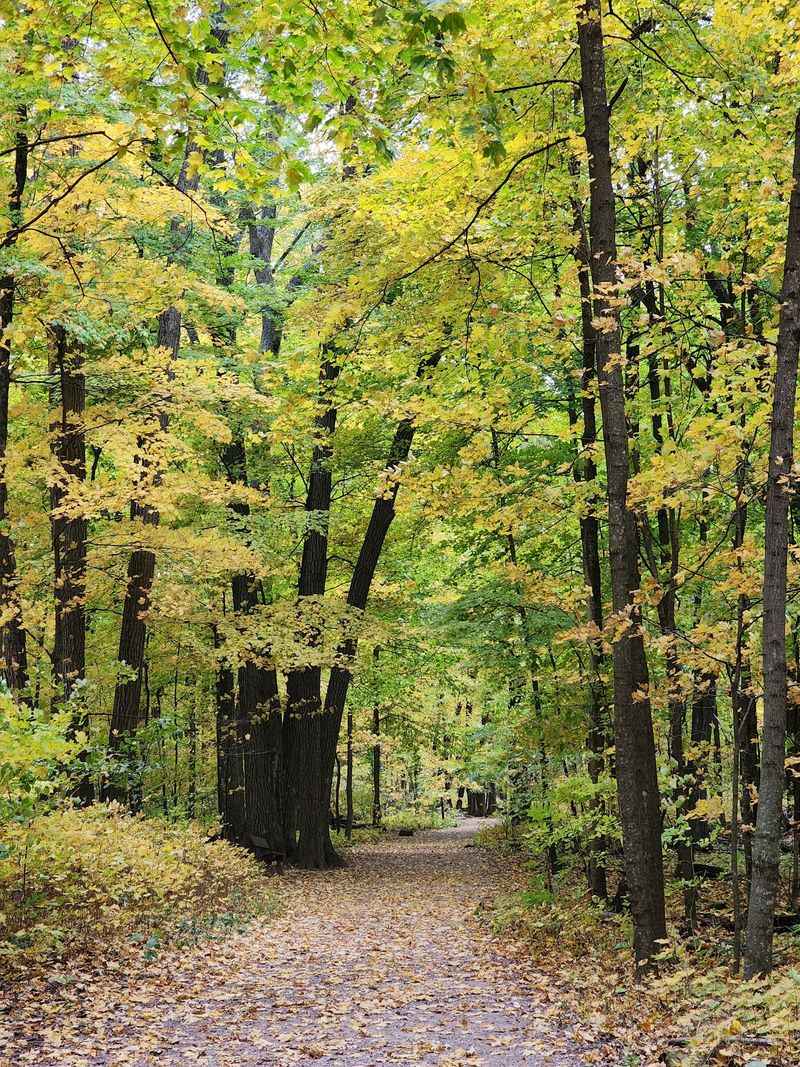
Blue water, bright leaves, and bare quartzite share the view along the East Bluff Trail. From the top, several viewpoints let you see how the lake sits between steep, wooded slopes.
Each opening frames a slightly different scene, so it pays to slow down instead of rushing to the next one.
Reaching the bluff requires a climb if you start near lake level. Check the map before choosing an access trail, and expect steps and uneven rock.
On a chilly morning, leaves may cover wet patches, so take small steps and leave room for hikers coming the other way. Keep your feet on the marked path around overlooks.
Clouds can make the trees look rich and soft, while sunshine brings out the blue of the lake. Either way, pack a snack and give yourself time to sit in a safe spot.
If you want photographs, look beyond the first opening; changing angles can reveal fresh colors without leaving the trail. A map also helps you plan a comfortable route back down.
Look for Devil’s Doorway
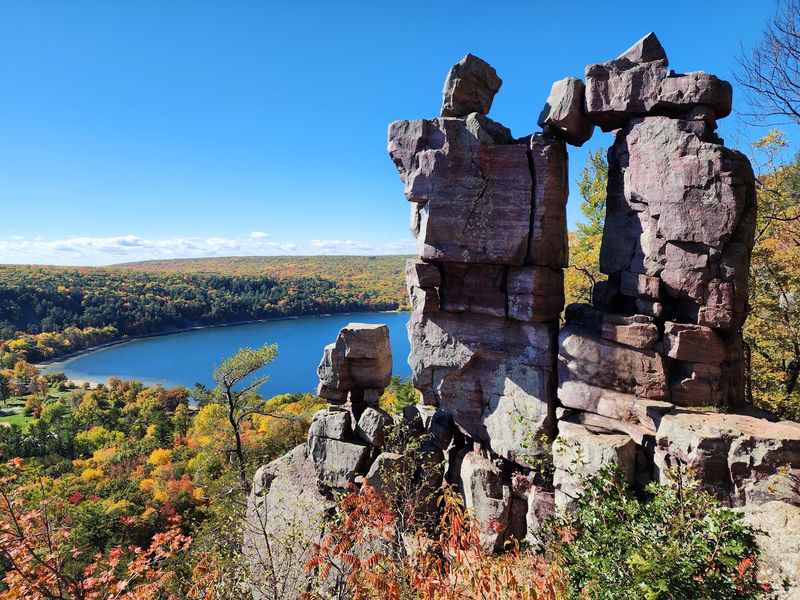
Nature made a doorway here, but it did not add a handrail. Devil’s Doorway is a striking quartzite opening reached by a short, steep, rocky side trail from the East Bluff area.
The shape stands out against the fall trees, making it one of the park’s most recognizable sights.
The approach deserves your full attention. Rocks may be uneven, and leaves can make it hard to see where to place your feet.
Use sturdy shoes, keep both hands free when possible, and do not climb onto the formation for a picture. Give other hikers space on narrow sections, especially when someone is coming down.
For a good photo, stop at a safe viewpoint and include a little of the surrounding woodland. The trees help show the doorway’s size and give the scene its fall color.
If the trail feels too steep or slippery, skip the side trip and enjoy the wider East Bluff views instead. No photograph is worth taking a fall near a steep edge.
Climb Toward Balanced Rock
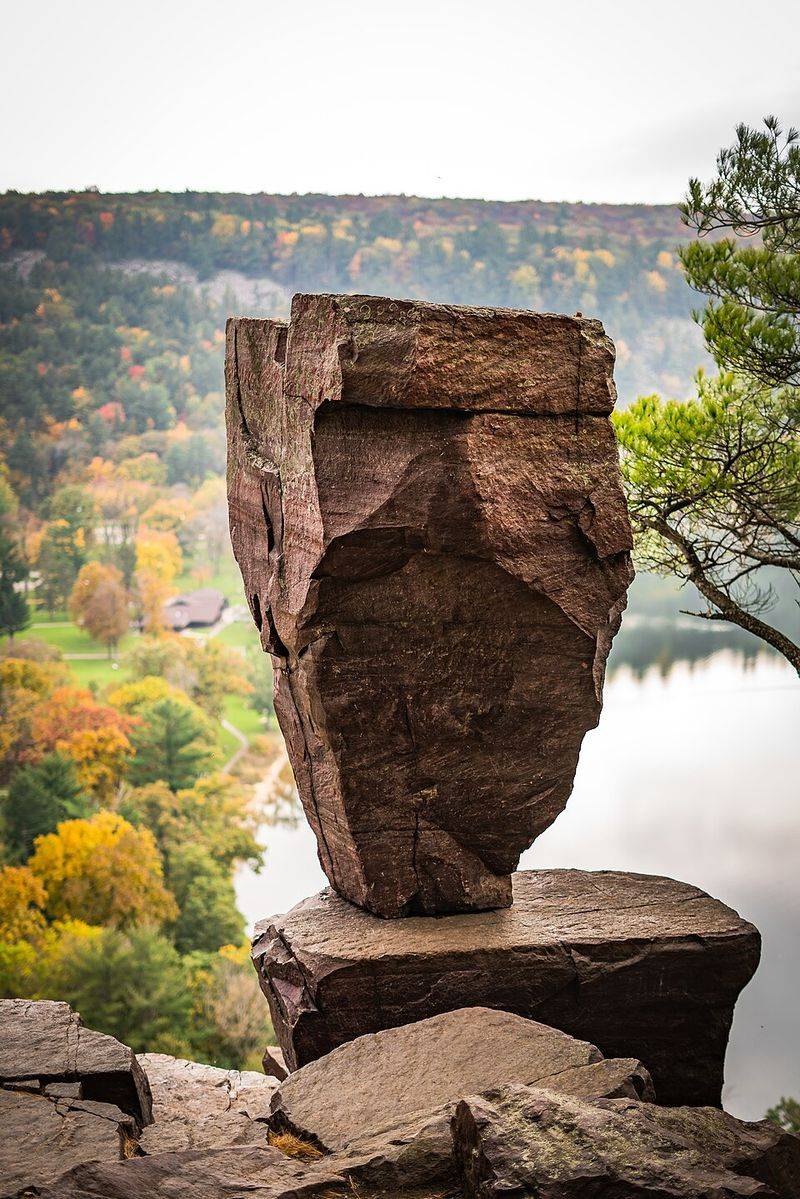
Balanced Rock looks like a giant placed one stone on top of another and stepped away. Getting near this well-known formation means tackling a steep trail with rocky footing.
As you climb, openings in the trees offer glimpses of the lake and the bright woodland below.
Think of this route as a scramble, not a casual stroll. Take your time on the rocks, and be especially careful when heading downhill, when tired legs can wobble.
Dry conditions make the climb easier to manage, so consider a different trail after rain or when fallen leaves cover slick surfaces. Follow signs and stay on the marked route rather than cutting across fragile ground.
Stop in a secure place to enjoy the view or take photos; moving and looking through a camera at the same time is a poor mix here. Bring water and allow extra time if your group includes newer hikers.
The rock is impressive, but the best part may be noticing how the colors change as you rise above the lake.
Walk the Tumbled Rocks Trail Below the Bluffs
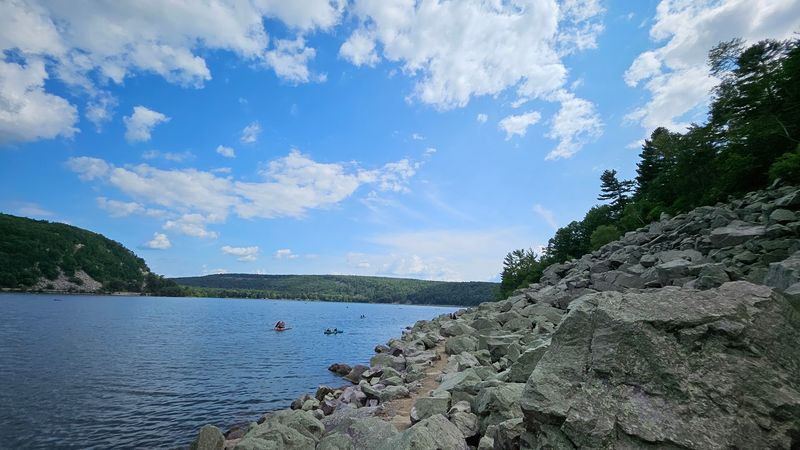
At the foot of the West Bluff, enormous rocks make the shoreline feel like a different world. The one-mile Tumbled Rocks Trail follows the lake past boulder fields, with colorful trees rising above the water.
Instead of looking down from a high overlook, you can look up and see the full height of the bluff.
This route avoids the long climb to the top, but do not expect a perfectly smooth sidewalk. Watch for uneven spots and give yourself time to step around rocks.
Check the trail map before setting out so you know where to start and how to return. On busy days, move aside in safe, wider places to let others pass.
Bring a camera for views across the water, especially when the surface is calm enough to reflect the leaves. A slow pace suits this walk: notice the shapes of the fallen quartzite and the way the hillside changes color.
Stay on the path rather than scrambling over boulders, which can be unstable or slippery.
See the Ancient Quartzite Bluffs Up Close
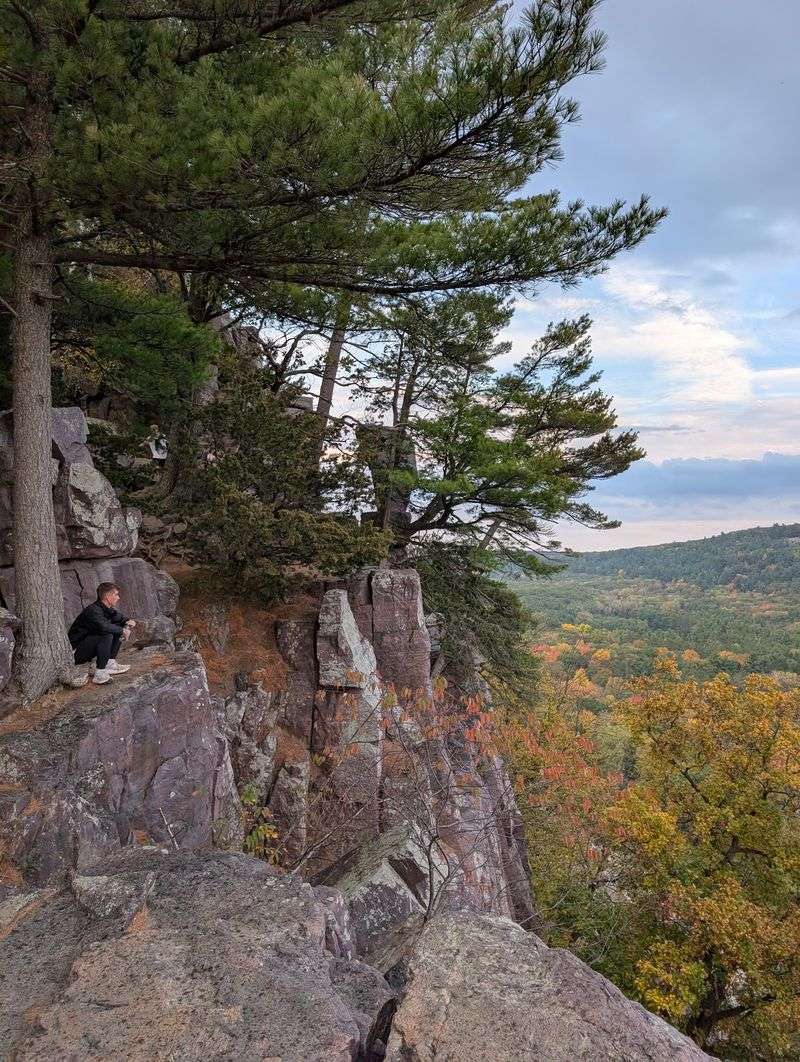
Those sturdy bluffs have a story much older than the fall leaves. The Baraboo Range contains quartzite made from rock materials dating back roughly 1.6 billion years.
Much later, glaciers helped shape the land around Devil’s Lake. Knowing that history can turn an ordinary rest stop into a chance to look more closely.
Along marked trails, notice the hard rock underfoot and the large pieces resting on the slopes. Some surfaces show lines, cracks, or shades that look different as the light changes.
You do not need to climb onto a ledge to appreciate them. A safe spot beside the trail often gives you a better chance to study the details.
Explain the scene to kids as a long story written in stone: ancient rock formed first, and ice helped shape the landscape much later. Take pictures rather than collecting pieces, and leave plants and rocks where you find them.
That small choice helps the next curious visitor enjoy the same close look at this remarkable place.
Follow a Bluff-to-Bluff Route
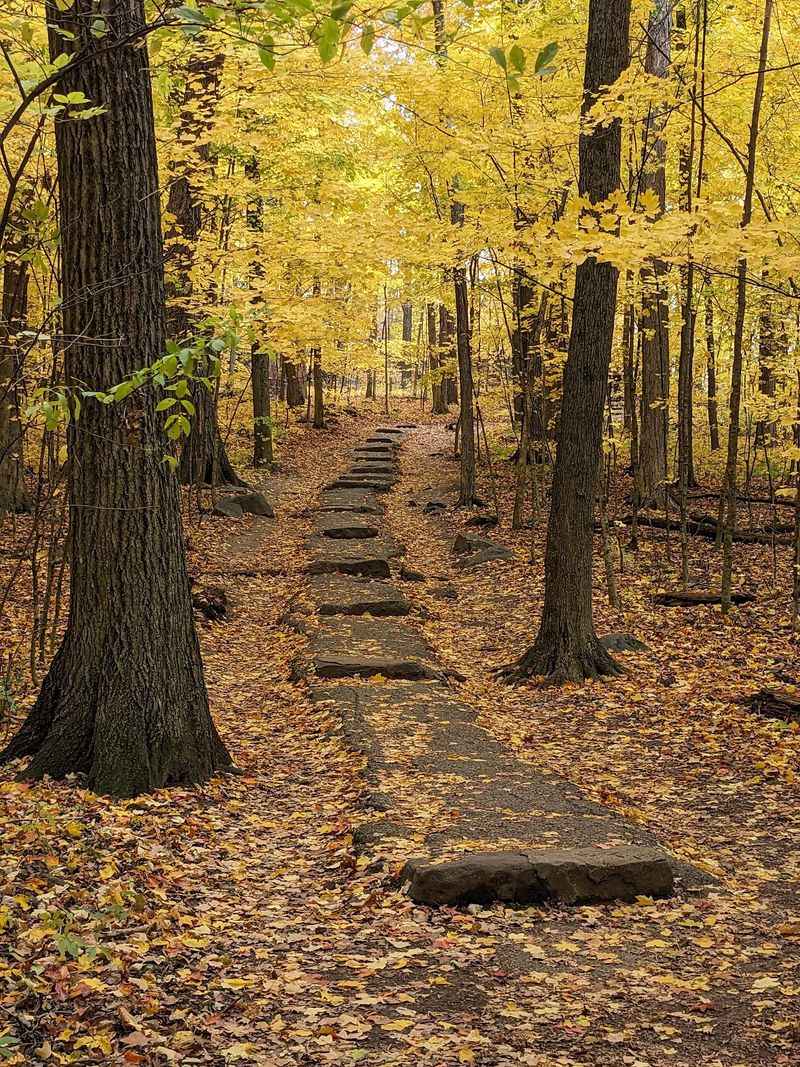
Some hikers finish one bluff and immediately wonder what the other side looks like. A longer outing can link the West Bluff, lakeshore, Balanced Rock, and East Bluff trails into a route around the lake.
That mix gives you high overlooks, shoreline views, and plenty of changes in scenery.
Plan the loop on an official park map before you leave the trailhead. Trail connections can be confusing when you are tired, and the route includes steep climbs, staircases, rocks, and uneven ground.
Count on a slower pace than you would use on a flat walk. Bring enough water, a snack, and layers for changing temperatures, and start with plenty of daylight left.
A long route is more enjoyable when everyone in your group knows the plan. Agree on places to pause, and turn back or shorten the hike if someone feels worn out.
Check current closures before starting, since an open trail matters more than the route you hoped to follow. The best finish is a safe one, with time to admire the lake.
Pair the Hike With the Ice Age Trail
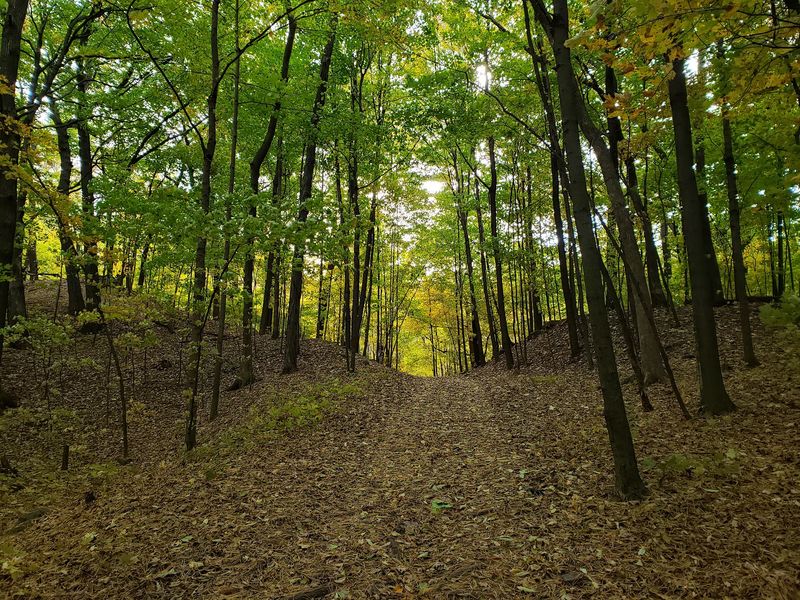
A trail that stretches across Wisconsin also passes through Devil’s Lake State Park. The Ice Age National Scenic Trail offers another way to explore the fall landscape, including woods, meadows, bluffs, and features left by glaciers.
Its changing surroundings can make even a short walk feel like a journey through several different places.
Pick a section that matches your time and energy rather than trying to cover too much. Some parts climb or cross rough ground, while others have a different feel from the busiest lake overlooks.
Use a current map to find trail access and junctions, and watch for trail markers as you walk. Bring water and keep track of when you need to turn around.
Look for clues that ice once shaped this area, such as the lake basin and the land around it. You do not need to know every geology term to enjoy the story.
Fall leaves, open spaces, and quiet stretches can make this trail a welcome change of pace. Stay on marked paths to protect plants beside the route.
Make Time for Lake-Level Fall Views
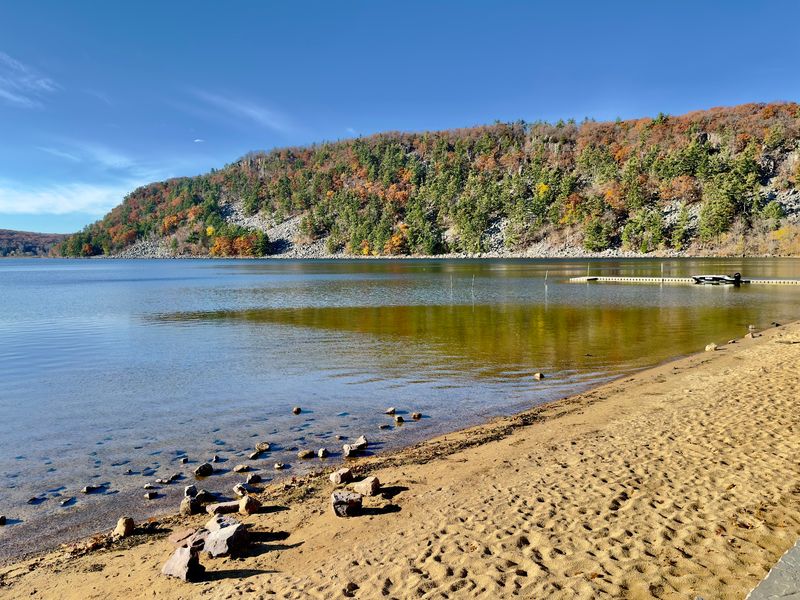
Not every great view asks you to climb a staircase. From lake level, the bluffs fill the sky, and the fall colors can reflect in the water on a still day.
Lakeside paths and the Tumbled Rocks Trail let you enjoy that scene while staying below the steepest routes.
Choose a comfortable place to pause where you will not block other walkers. Watch how the view changes as clouds pass over the hills or a breeze breaks up the reflections.
If you are hiking with children or someone who prefers a shorter outing, a shoreline walk can still feel like a full park visit. Check the path conditions, since wet leaves and rocks may still require care.
Pack a warm layer for a longer stop by the water, where the air can feel cooler. Keep food secured and carry out every wrapper.
For photographs, try including shoreline stones or nearby leaves in the foreground to show the size of the bluffs. Then put the camera away for a moment and enjoy the colors without a screen.
Plan Your Visit
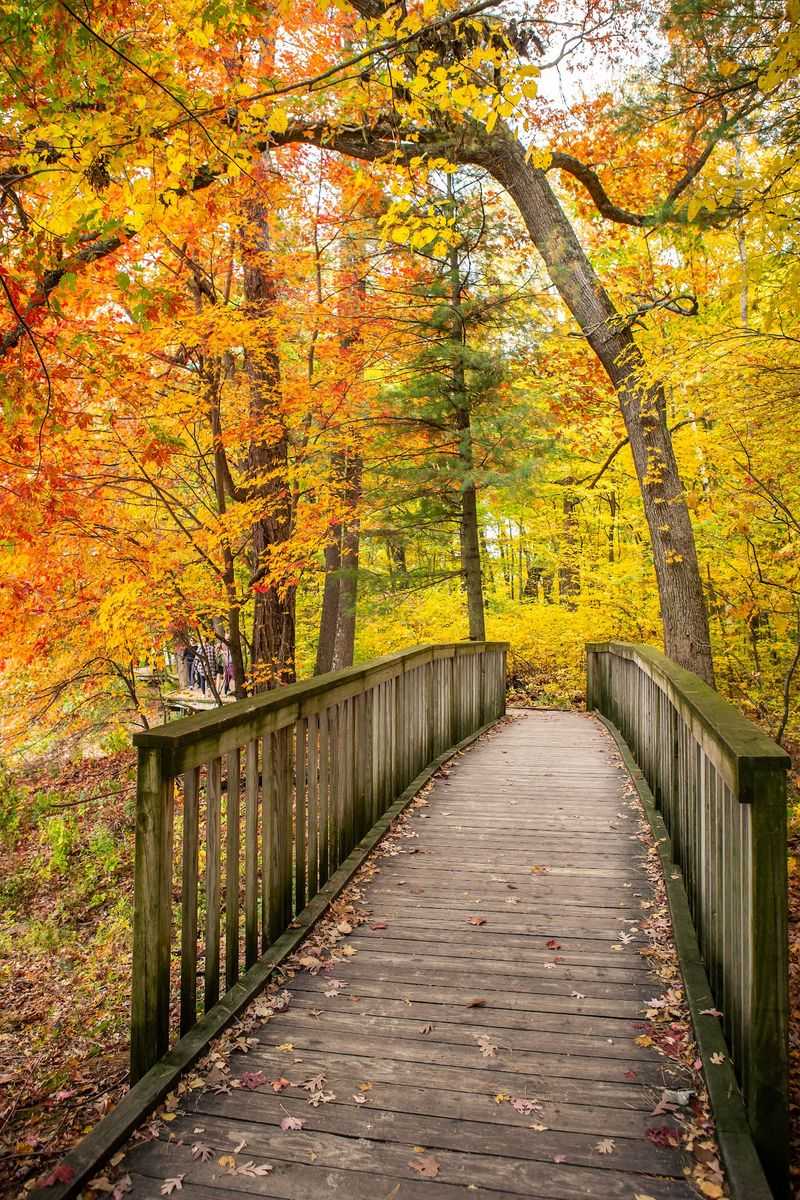
A little planning can save you a long search for parking. Devil’s Lake State Park is at S5975 Park Rd., Baraboo, WI 53913, and it is open year-round from 6 a.m. to 11 p.m.
A vehicle admission sticker is required. Fall weekends can get very busy, so arriving early gives you a better chance to park and begin your hike without rushing.
Before leaving home, check the park’s current trail notices and the weather forecast. Rain can make quartzite steps slippery, and cool mornings may turn into warmer afternoons.
Wear sturdy footwear, dress in layers, and carry water even if you plan a short walk. A downloaded or paper map helps when phone service is weak or your battery runs low.
Decide which route suits your group before starting uphill. Leave enough daylight for the return, especially if you hope to visit more than one overlook.
Rest when you need to, follow posted signs, and give wildlife space. With the basics covered, you can spend less time solving problems and more time looking at the lake.