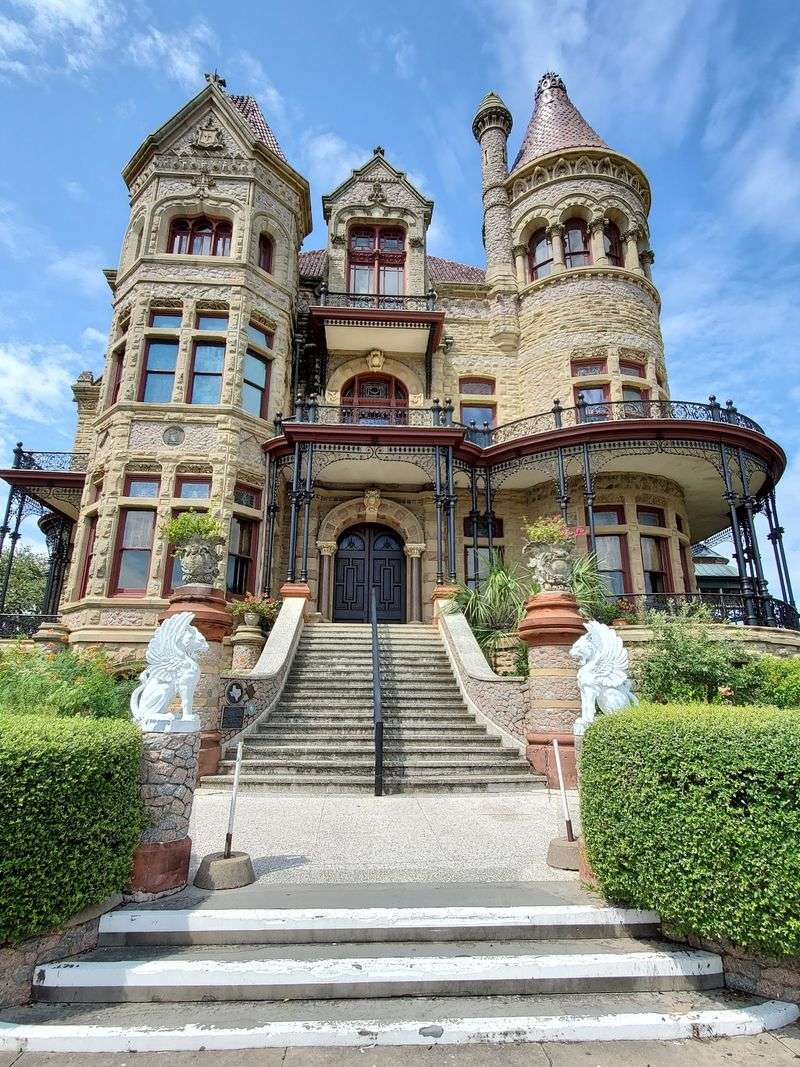
One look at Bishop’s Palace, and “house” feels like a serious understatement.
Towers rise above the Galveston street, while carved stone, grand windows, and ornate details give the mansion a theatrical presence that demands a closer look.
Built during Galveston’s wealthy late-1800s years, the home was created for the Gresham family, whose fortunes helped shape the city.
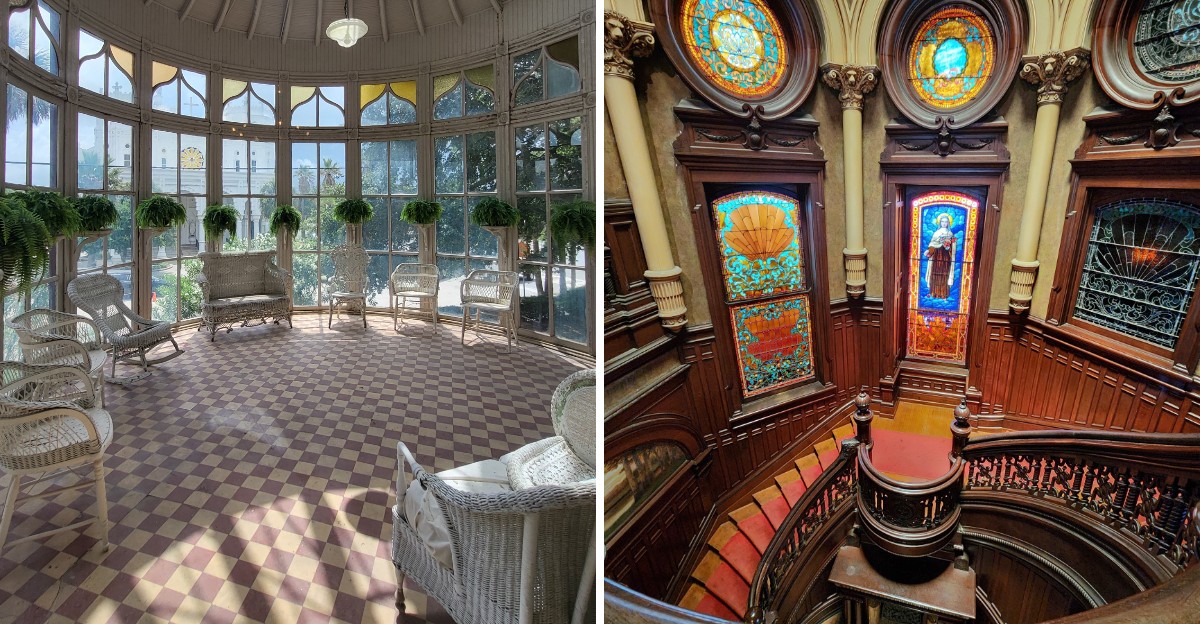
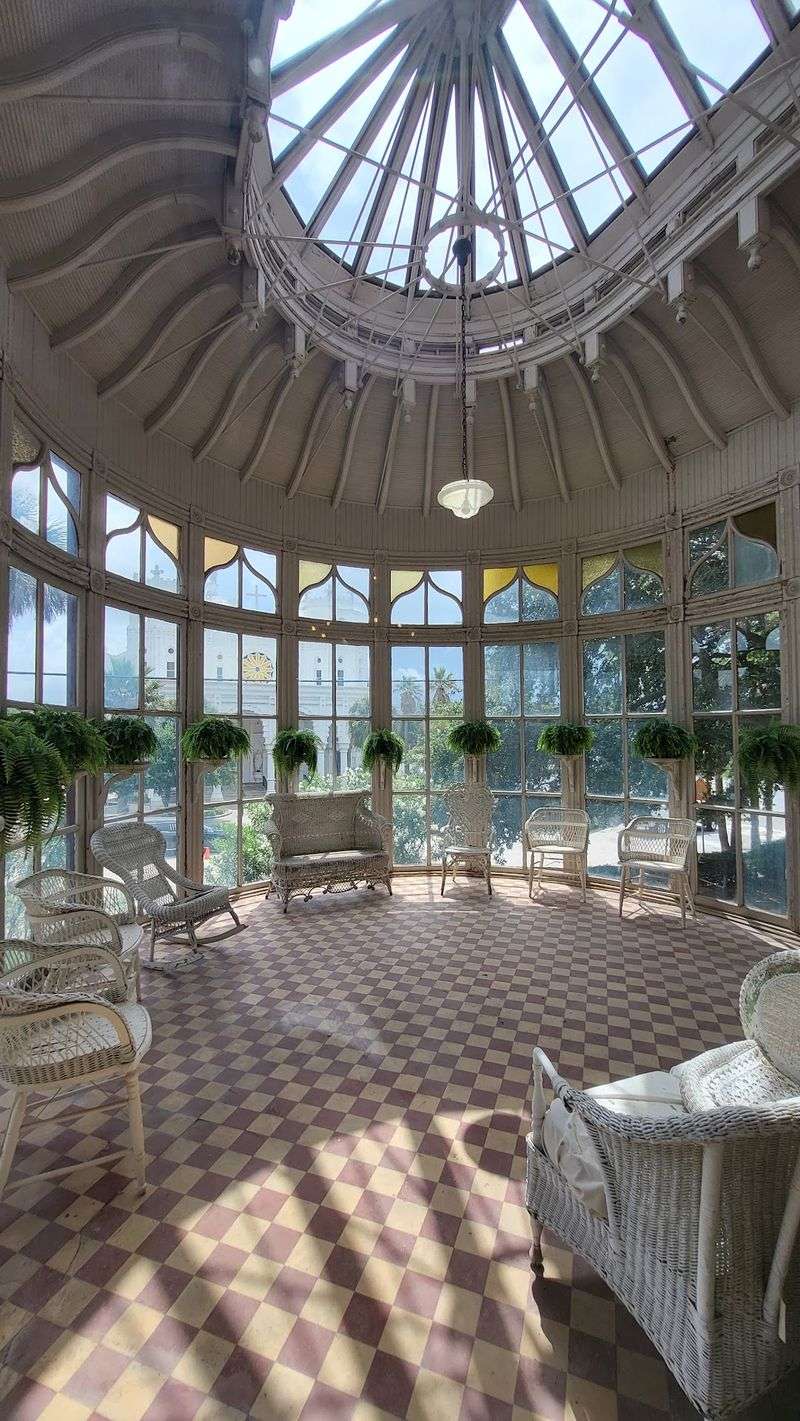
Inside, soaring ceilings, rich woodwork, stained glass, and elaborate finishes turn ordinary rooms into scenes worthy of a grand estate.
The story takes another turn when the mansion became a Catholic bishop’s residence.
Then came the devastating 1900 hurricane, yet this remarkable building endured.
Today, visitors can step inside and see the craftsmanship, family history, and storm-surviving strength that make Bishop’s Palace one of Galveston’s most memorable historic homes right in historic Galveston.
Meet Walter Gresham, the Man Behind the Mansion
A house this grand needed someone with big plans behind it. Walter Gresham was a Galveston lawyer, businessman, railroad figure, and Texas legislator who commissioned the mansion for his family.
His many roles show how closely the city’s business and public life were connected during the late 1800s.
Galveston was thriving when the residence took shape. Its busy port brought trade and money to the island, and wealthy residents built impressive homes to match.
Gresham chose a design that made his family’s place stand out, even in a city filled with fine buildings. Yet it was meant to be lived in, not just admired from the street.
As you tour, picture household routines alongside the showy rooms. Imagine visitors arriving, children moving through the halls, and family members gathering after a long day.
Thinking about Gresham as both a public figure and a father makes the mansion’s scale more interesting. It was a bold sign of success, but it was also one family’s everyday address.
That contrast follows you through every room you enter today.
Nicholas Clayton Designed a Texas Palace
From the sidewalk, the roofline seems to climb in every direction. Architect Nicholas J.
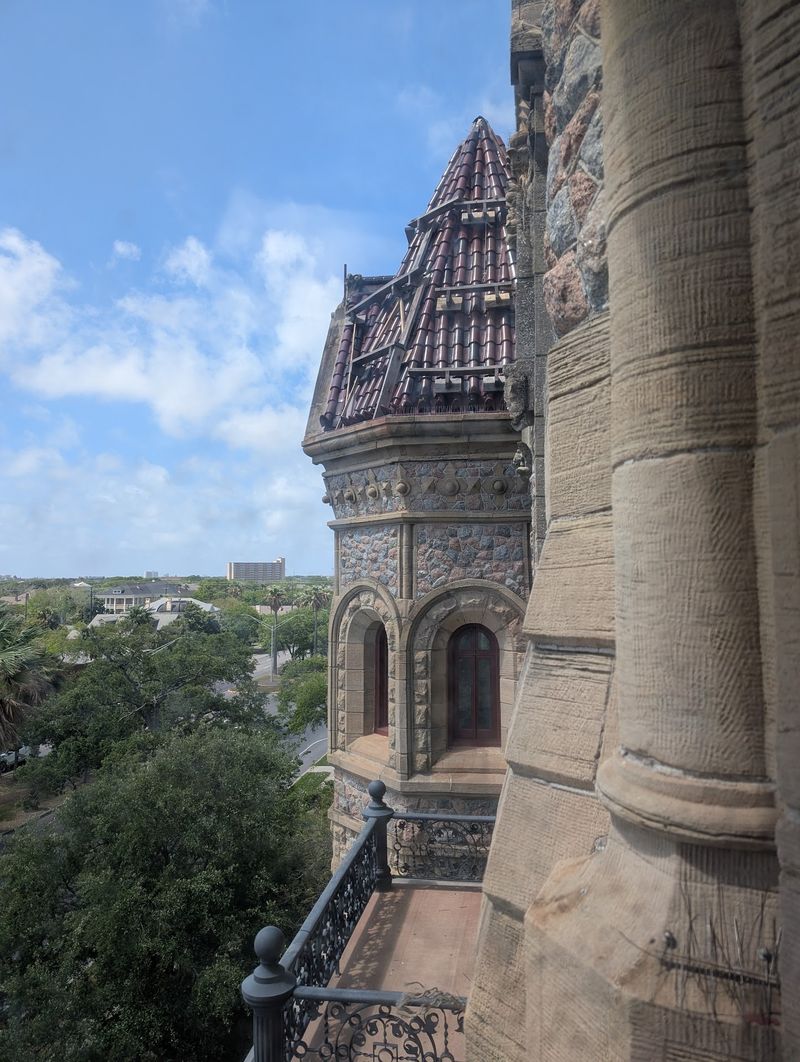
Clayton gave the Gresham house its striking mix of Châteauesque and Victorian styles. Steep roofs, towers, galleries, and richly carved surfaces make it feel closer to a European palace than an ordinary Texas home.
Clayton did more than add decoration. He arranged shapes and details so the building stays interesting as you walk around it.
One view may draw your eye upward to a tower; another may reveal a sheltered gallery or a carved edge you missed. The result rewards visitors who slow down instead of taking one quick photograph.
Try viewing the mansion from across the street before approaching. Notice how the roof, stone walls, and tall windows work together to create its dramatic outline.
Then move closer and compare the building’s large shapes with its tiny details. You do not need to know architectural terms to enjoy Clayton’s work.
Its main idea is easy to feel: even a family house can put on quite a show.
Carved Stone and Curious Creatures
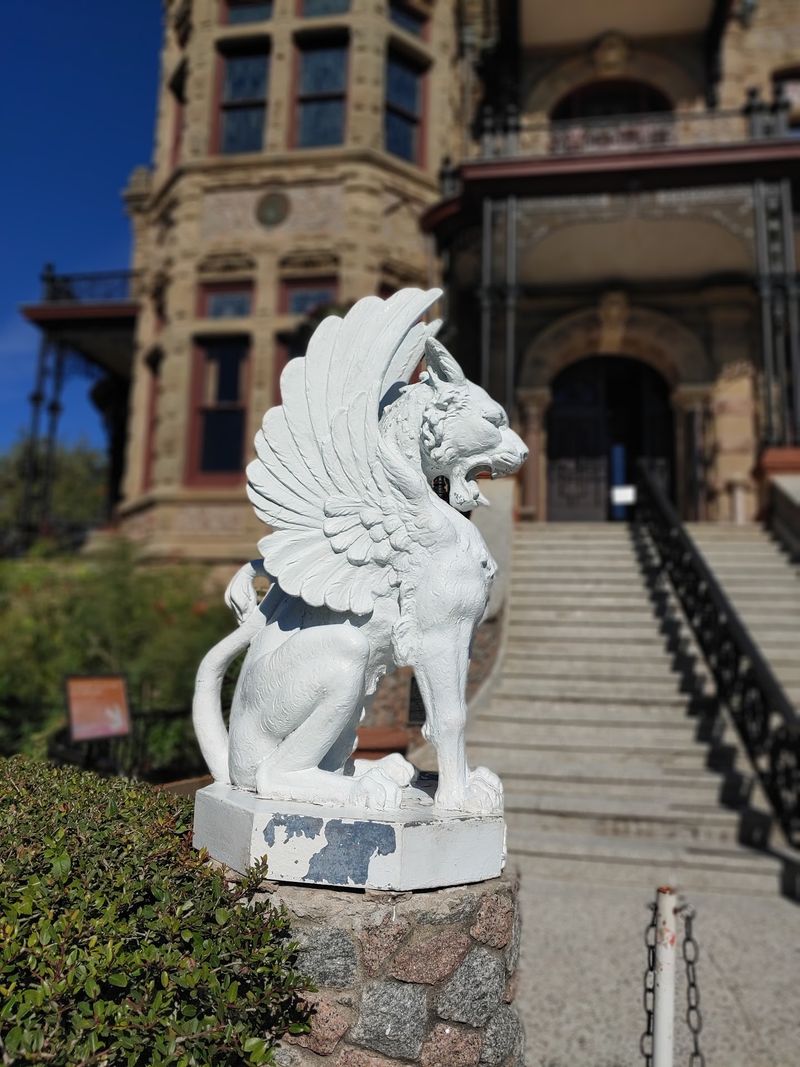
Before you reach the door, the walls offer a kind of treasure hunt. Bishop’s Palace combines granite, limestone, and sandstone with cast-iron details, giving its exterior both strength and texture.
Carved figures, animals, and mythical creatures add a playful side to the serious stonework.
Look beyond the biggest ornaments. A small carving tucked near a window can be just as memorable as a tower.
Different materials catch the light in different ways, so shadows may reveal details that are easy to miss at first. If you are visiting with children, invite them to spot an animal or an unusual face.
It turns a look at architecture into a simple game.
Take your time outside, but respect any barriers and avoid touching the carvings. Weather and many years can wear down delicate surfaces.
A photo lets you study a favorite detail later without harming it. By the time you step indoors, the exterior has already shared something about the house: its builders cared about wonder as much as size.
Step Inside to Stained Glass and Tall Ceilings
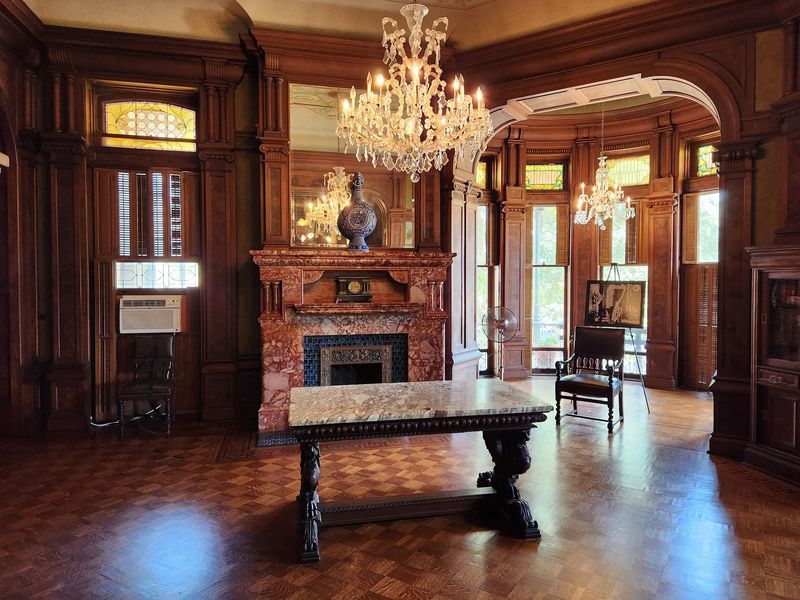
The outside is dramatic, but entering the mansion brings another surprise. Ceilings rise about 14 feet high, giving rooms a grand, open feeling.
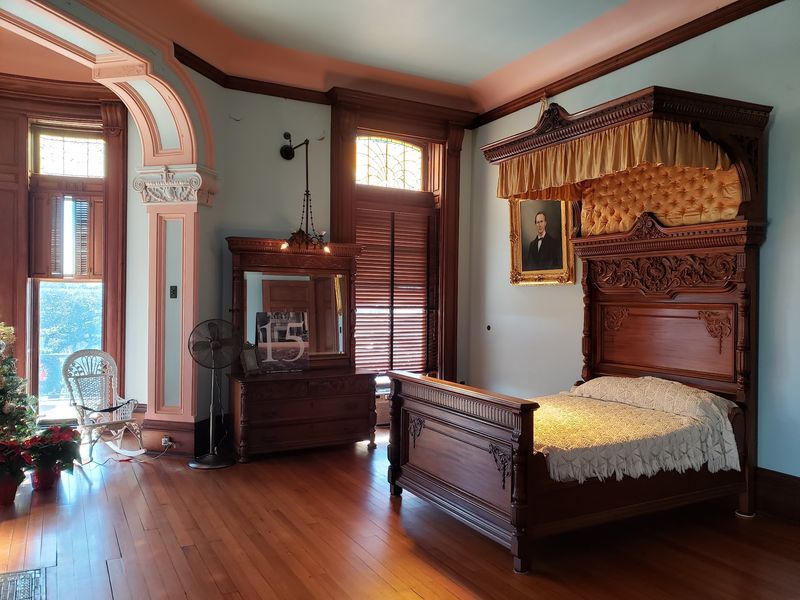
Stained-glass windows color the incoming light, while carved woodwork, marble, and decorative plaster show how carefully the interior was finished.
These materials were not chosen only to impress guests. Tall rooms can feel cooler and airier, a welcome quality in coastal Texas.
Windows bring light into spaces that might otherwise seem heavy with dark wood. Skilled workers shaped and fitted the many surfaces, creating details that still draw attention more than a century later.
Pause near a doorway and look at how one room frames the next. You may notice a change in wood grain, a pattern overhead, or light shifting across a wall.
Give your eyes time to adjust before rushing toward the largest feature. Small observations make the tour richer and help you picture the effort behind each finished space.
Here, craftsmanship is not hidden away; it surrounds every visitor who walks through the house.
Follow the Octagonal Mahogany Staircase
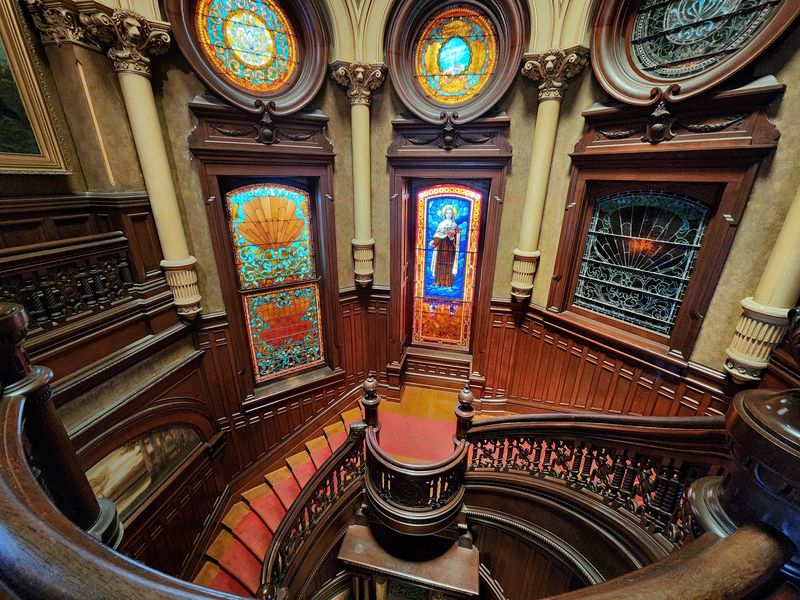
A staircase usually helps people get somewhere else. At Bishop’s Palace, it is a destination of its own.
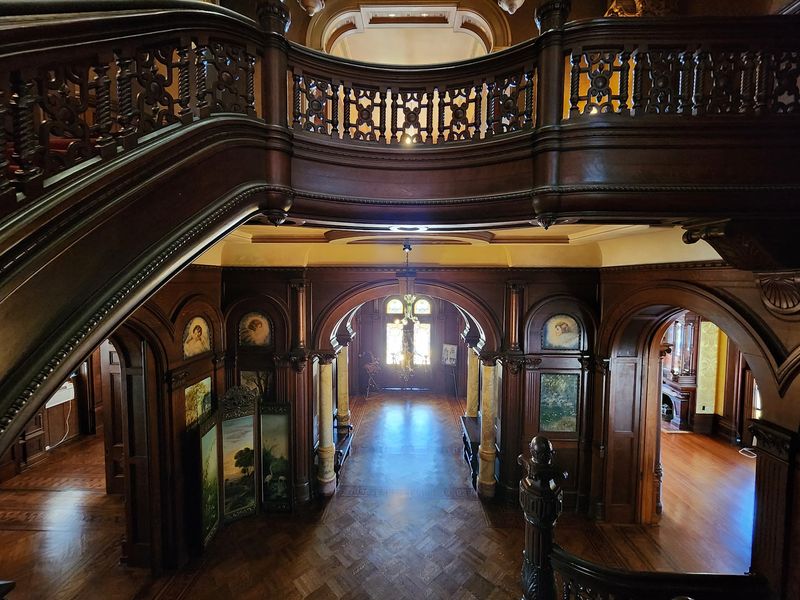
The octagonal mahogany stairwell rises roughly 40 feet toward a skylight, drawing your gaze upward through several levels of the house.
Its eight-sided shape makes the view feel carefully staged. Dark wood adds warmth, while light from above changes the mood as you move.
Clayton turned an everyday need, climbing between floors, into a dramatic part of the mansion’s design. Stand where your tour allows and look up before you start walking.
You can follow the lines of the railings and see how they guide your eye toward the skylight.
Take the stairs at a comfortable pace, especially if you are looking closely at the details. Hold the handrail and stop in a safe spot when you want a photograph.
It is easy to become distracted by the view overhead. The stairwell shows how much thought went into the whole home: even a route between rooms could be beautiful.
Find the Fireplaces and Fine Materials
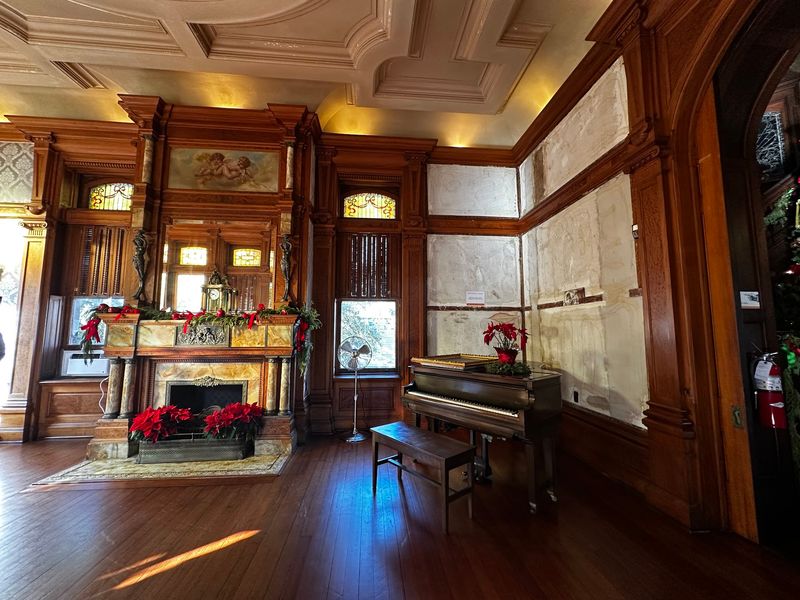
Some of the mansion’s finest details sit at eye level. Fireplaces throughout the house feature ornate mantels, while rare woods and marble add color and shine to nearby rooms.
Each finish invites a closer look at the choices that made this home so costly and unusual.
The music room holds an especially remarkable piece: a mantel made with silver and onyx. It won a prize at the 1886 New Orleans Exposition before becoming part of the mansion.
Imagine choosing a fireplace surround that had already earned attention at a major public event. It tells you that the family valued objects with stories as well as beauty.
While touring, compare one fireplace with another. Are the shapes, colors, or materials different?
A mantel can offer clues about a room’s purpose and the impression its owners hoped to make on guests. Keep a little distance from historic surfaces, even when their patterns make you want to touch them.
Careful looking is the best way to enjoy these pieces and help preserve them for future visitors.
Picture the Gresham Family at Home
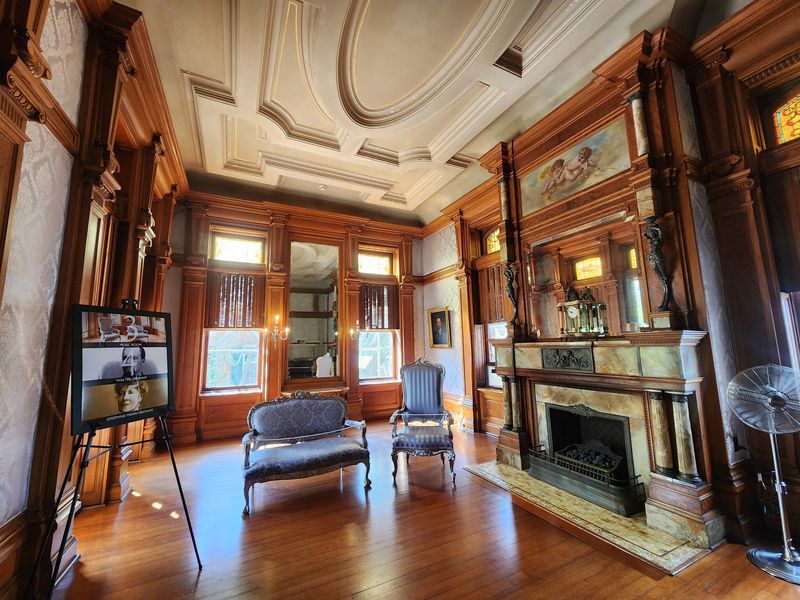
Formal rooms can make it hard to remember that people once called this place home. Walter and Josephine Gresham raised their large family here, so the halls carried far more than polite conversation.
Children grew up, relatives gathered, and daily plans unfolded among the carved wood and tall windows.
Try imagining a morning rather than a party. Someone might hurry between rooms while another family member looks for a quiet place to sit.
Meals, lessons, visits, and household work all belonged to the life of a big residence. The mansion needed people to care for it, too.
Its polished surfaces did not stay that way on their own.
As you move through each room, ask what it may have felt like to use that space every day. A grand room could still hold an ordinary family talk.
A long hallway could become a familiar path rather than a museum sight. Thinking about those everyday moments makes the building warmer and more human, without taking away any of its palace-like wonder.
How the House Became Bishop’s Palace
The building’s best-known name came after the Gresham years. In 1923, the Catholic Diocese of Galveston-Houston purchased the house.
Bishop Christopher Byrne lived there, giving the former family residence a new role and the name Bishop’s Palace.
That change is a useful reminder that old buildings can have more than one important story. The rooms were first planned for the Greshams, but later they served a bishop and his work.
The stone walls stayed in place while the people inside and their reasons for using the house changed. Both chapters help explain why Galveston values the mansion today.
When you hear the name Bishop’s Palace, do not picture a building created for royalty. It began as a private home and became a bishop’s residence decades later.
Keeping that timeline in mind makes a tour easier to follow. Look for signs of the original Gresham house while remembering its later chapter.
The two stories belong together, just as they do in the building’s familiar name.
The Mansion That Withstood the 1900 Storm
Galveston’s 1900 hurricane changed the island forever. The disaster took many lives and destroyed much of the city, yet the Gresham mansion survived.
Its sturdy stone-and-steel construction helped it withstand the storm, leaving a building that still connects visitors to Galveston before and after that terrible event.
Survival does not mean the storm was a small moment in the house’s story. Standing inside a room today, you can think about how frightening that night must have been for people across the island.
The mansion’s strong materials help explain why it remained standing, but they also highlight how much was lost nearby.
If you visit, make time to learn about the wider disaster as well as the building. Local museums and historic markers can add context that a single house cannot provide.
Treat the storm story with care and respect for those affected. Bishop’s Palace is impressive because it endured, and its survival gives us a place to remember a turning point in Galveston’s history.
Plan Your Visit to Bishop’s Palace
Ready to see the stonework and staircase for yourself? Bishop’s Palace is at 1402 Broadway Avenue J, Galveston, TX 77550.
For visit questions, call (409) 762-2475. Currently listed self-guided tour hours are 10 a.m. to 5 p.m. daily, with the last ticket sold at 4 p.m.
The Galveston Historical Foundation currently lists admission at $15 for adults and $12 for youth ages 6 to 18. Children 5 and under enter free.
If you want to see more than the standard route, ask about special Basement to Attic tours. They can include spaces normally off-limits, such as Mrs. Gresham’s studio and a third-floor view of the Gulf.
Check the official site before you travel because closures, prices, and special-tour schedules can change. Allow time to study the exterior before going in, and wear comfortable shoes for walking through the house.
A little planning leaves more time for the fun part: finding the details that make this Galveston landmark feel so extraordinary.