Forget dusty dinosaur books—at this Texas state park, kids can stand where dinosaurs once walked.
About 113 million years ago, enormous creatures crossed the area around Glen Rose, leaving footprints pressed into the limestone.
Today, those tracks remain along the Paluxy River, waiting for curious visitors to spot them.
Kids can wade into the shallow water, scan the riverbed, and suddenly come face-to-footprint with evidence of prehistoric life.
One minute it feels like a normal river adventure; the next, a giant three-toed track appears beneath the water.
The dinosaur tracks are protected, so visitors cannot dig them out or take pieces home.
That only makes the search more thrilling.
Bring sturdy shoes, keep your eyes open, and get ready for a hunt where the best discoveries are already millions of years old.
Step Into the Paluxy River
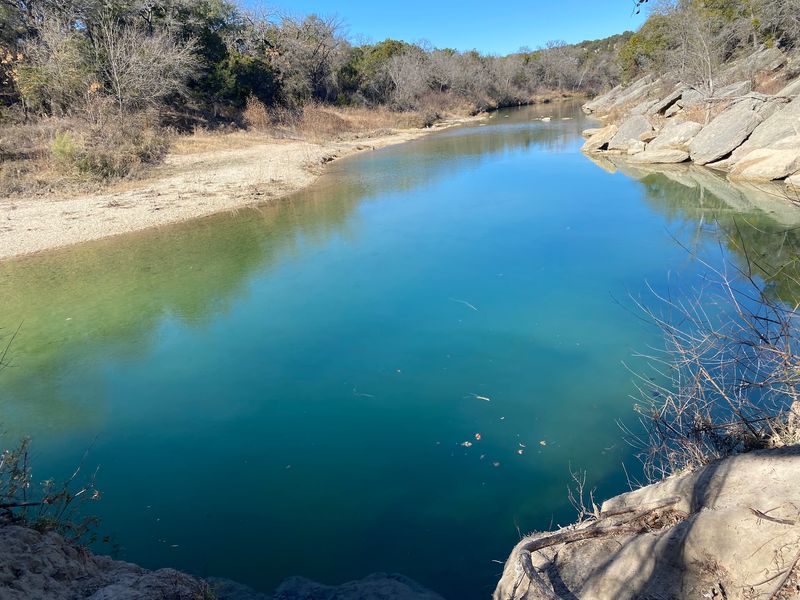
Imagine looking down through clear river water and spotting a footprint older than any castle. At Dinosaur Valley State Park, the Paluxy River runs over limestone that holds real dinosaur tracks from roughly 113 million years ago.
Kids can get close enough to study their shapes when conditions allow, making this feel more like a discovery than a museum visit.
Start at a designated access point and ask a ranger which tracks are visible that day. River depth, recent rain, mud, and sunlight can all change what you see.
A footprint that stands out in dry limestone may be hard to find beneath moving water. Take your time and look for repeated shapes rather than a single dent.
Wear shoes with good grip, since wet rock can be slippery. An adult should check the current and keep children close to shore when needed.
Photograph the tracks without scraping, digging, or trying to clean them. That simple care helps preserve the footprints for the next curious family and keeps the river a place where everyone can safely explore.
Stand Beside a Sauropod Footprint
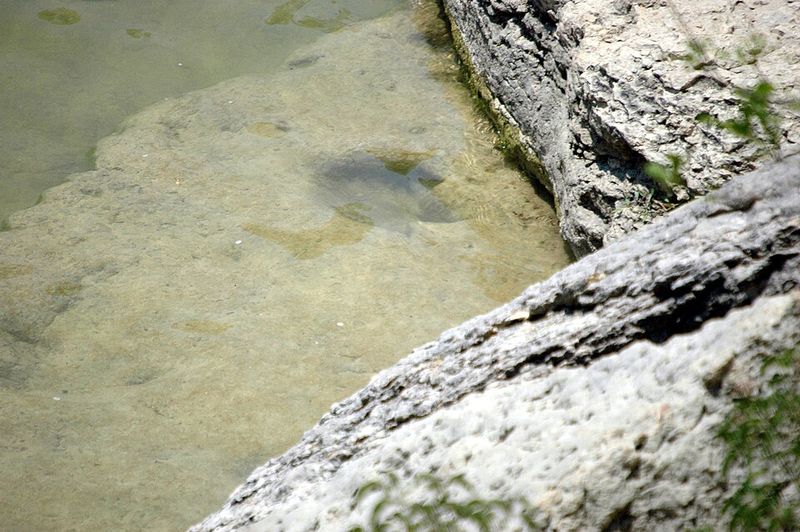
A single footprint can make a grown-up shoe look tiny. At the Main Track Site, large rounded impressions offer a way to picture the long-necked sauropods that once crossed this ground.
Instead of only hearing that these animals were huge, kids can compare a track with their own feet and see the difference for themselves.
Look at the outline before guessing which direction the dinosaur traveled. Nearby prints may form a trackway, a series of steps made by the same animal.
Ask children to point out one feature they notice, such as the print’s width or the distance to the next mark. A photo with a shoe beside the impression can help them remember its scale.
Visibility depends on the river, so check current park information before promising a clear view. Stay on open, permitted surfaces and avoid rubbing loose dirt out of a print.
These marks lasted millions of years, but rough treatment can still damage them. Sometimes the best souvenir is a family picture next to a footprint, followed by a wild guess about how tall its maker stood.
Spot the Three-Toed Tracks
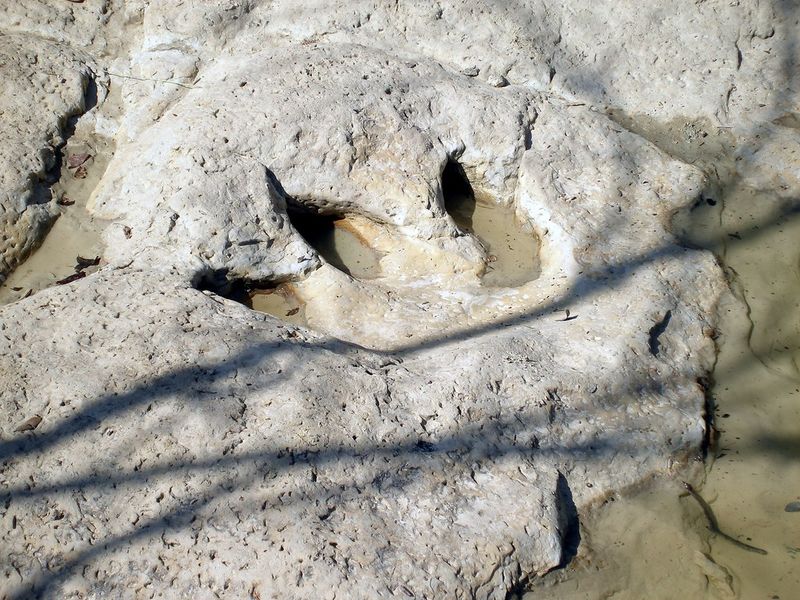
Some footprints look almost like giant bird tracks. Those three-toed impressions were made by theropods, a group of dinosaurs that included large meat eaters.
Seeing one beside a rounder sauropod print gives kids a quick lesson in how different animals left different clues behind.
Search exposed limestone slowly, especially where a ranger or park map identifies a track site. Look for three toe marks connected to a longer central print, then check whether similar shapes continue nearby.
A line of matching impressions is more convincing than one odd patch of rock. Bright glare and shallow water can hide details, so changing where you stand may help you notice an outline.
Turn the search into a guessing game: Which way was the animal heading, and how far apart are its steps? No one needs to invent a chase scene to enjoy the evidence.
These are real marks left in an ancient landscape, and looking carefully is exciting enough. Keep hands, tools, and shoes from scraping the prints, even when a toe shape is hard to see.
Explore the Ballroom Track Site
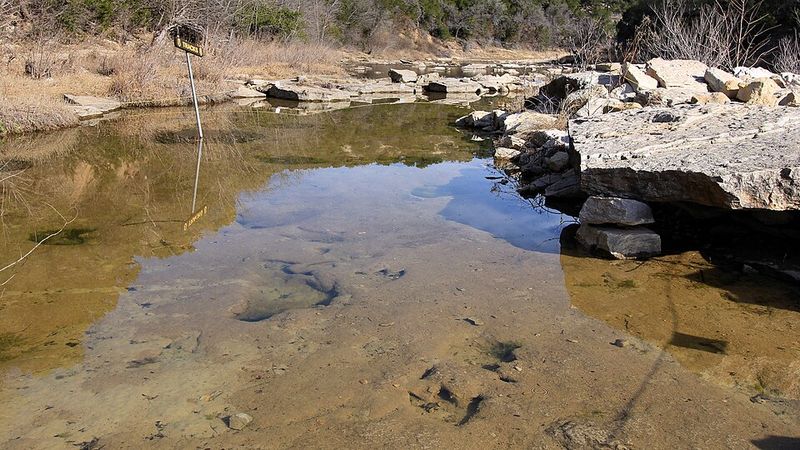
The Ballroom earned a memorable name for a reason: tracks point in different directions across the limestone. Sauropod and theropod impressions share this area, giving young explorers plenty to compare.
From one viewing spot, a child might notice a broad rounded mark and then spot a three-toed print a few steps away.
Before walking across the site, pause and see whether you can follow any one set of footprints. Try drawing a simple map in a notebook, using circles for sauropod prints and three-pronged shapes for theropod prints.
It does not need to be perfect. The goal is to observe what is actually there, not to build a story from every crack in the rock.
Ask park staff about access and visibility, since river conditions can cover parts of the site or make a crossing unsafe. Bring drinking water and give younger kids breaks while they search.
If a print is difficult to identify, photograph it and compare it with park information later. Treat the limestone as a historic record: look closely, tread carefully, and leave every mark exactly where it belongs.
Check the Ledges Near Blue Hole
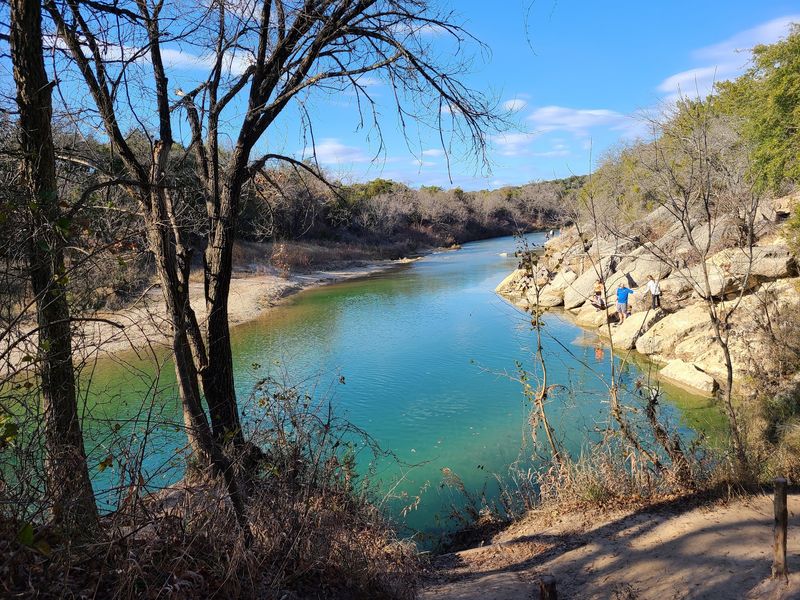
Blue Hole can look like a swimming stop, but its limestone holds another reason to slow down. Dinosaur impressions have been found around the area, including tracks on a ledge.
Depending on the river level, parts of the trackway may be exposed, underwater, or too hard to make out clearly.
Ask a ranger where visitors may safely look before approaching the ledge. Wet limestone can be slick, and water that seems shallow from the bank may be deeper than expected.
Children should stay within an adult’s reach near drop-offs. If the tracks are covered, do not wade into unsafe water for a better angle.
Conditions change, and a return visit might offer a different view.
Try visiting with curiosity rather than a checklist. Study the rock, watch how the water moves, and compare what you see with official track guides.
A nearby picnic can turn a short search into a relaxed afternoon. Whether you find a crisp outline or only a hint beneath the surface, you will see how the river affects the way these ancient clues appear today.
Take the Paluxy River Trail
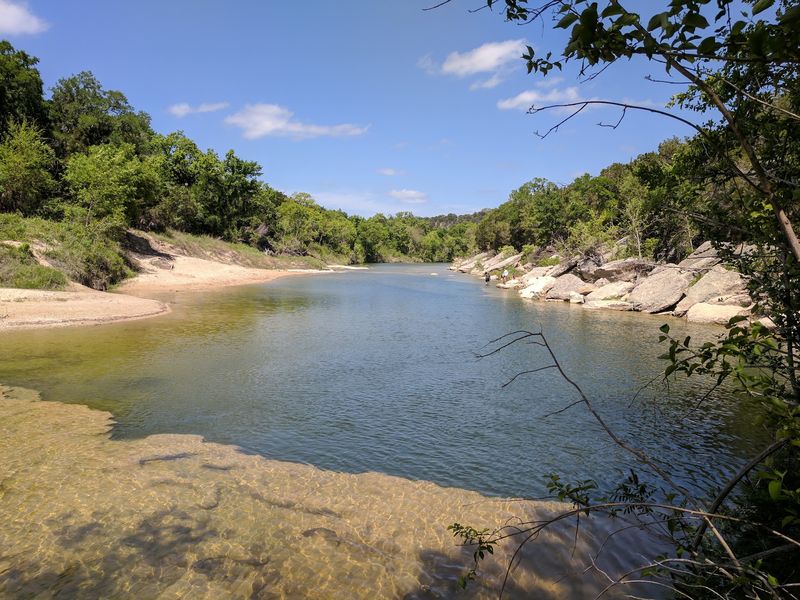
Footprint hunting feels different when the walk becomes part of the adventure. The Paluxy River Trail runs for roughly two miles along the river, giving families a way to enjoy the landscape between track areas.
Trees, water, and changing views help keep the trip interesting even if some prints are hidden.
Check the current trail map before setting out and choose a distance that suits your group. An easy-to-moderate walk for one family can feel long to a younger child, especially on a hot Texas afternoon.
Carry water, wear comfortable shoes, and allow time for stops. After rain, ask park staff whether trail or river access has changed.
Make the hike a quiet observation challenge. Listen for birds, notice where limestone meets the water, and watch for safe places to view the riverbed.
A small notebook lets kids record the date and conditions beside any tracks they find. Turn back before everyone is tired, rather than pushing to reach one more site.
A relaxed pace makes room for the unexpected discoveries children remember best.
Make Track Hunting a Detective Game
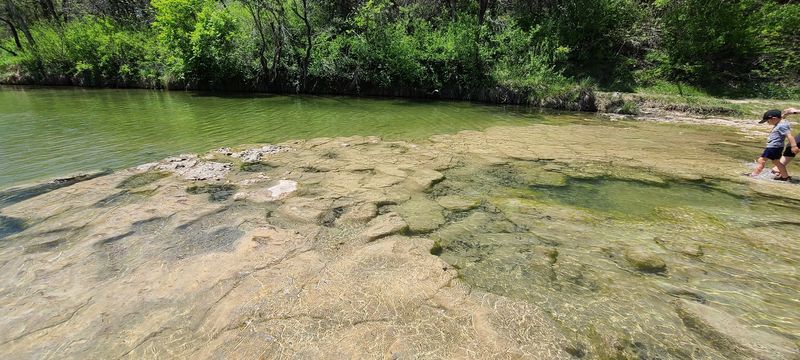
Finding a track is not always as easy as spotting a painted sign. Water, sediment, and ordinary cracks can make the limestone tricky to read.
That challenge turns a family outing into a detective game, with real evidence underfoot and no need to dig anything up.
Pick up current track information from the park or check its official resources before you go. Show kids pictures of rounded sauropod prints and three-toed theropod prints, then let them search for matching patterns.
Encourage them to look for several steps in a row. If a mark does not match, it is fine to call it a mystery instead of forcing an answer.
Give each child a job: one can watch for shapes, another can note locations, and a third can take photos. Compare your finds from a safe spot away from moving water.
Never use shovels, brushes, or sticks to uncover a track; the footprints are protected. The reward is learning to notice small details and sharing the moment when an ancient step suddenly becomes clear.
Meet the Dinosaurs Near Headquarters
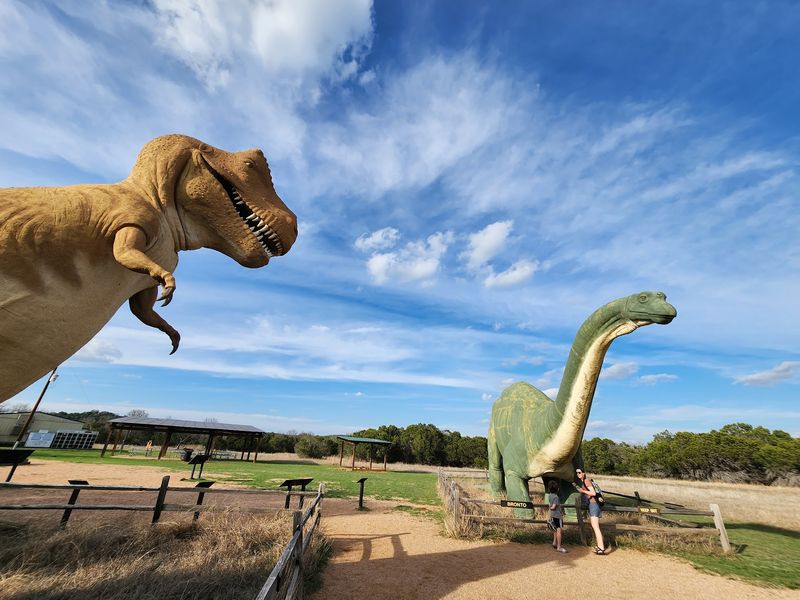
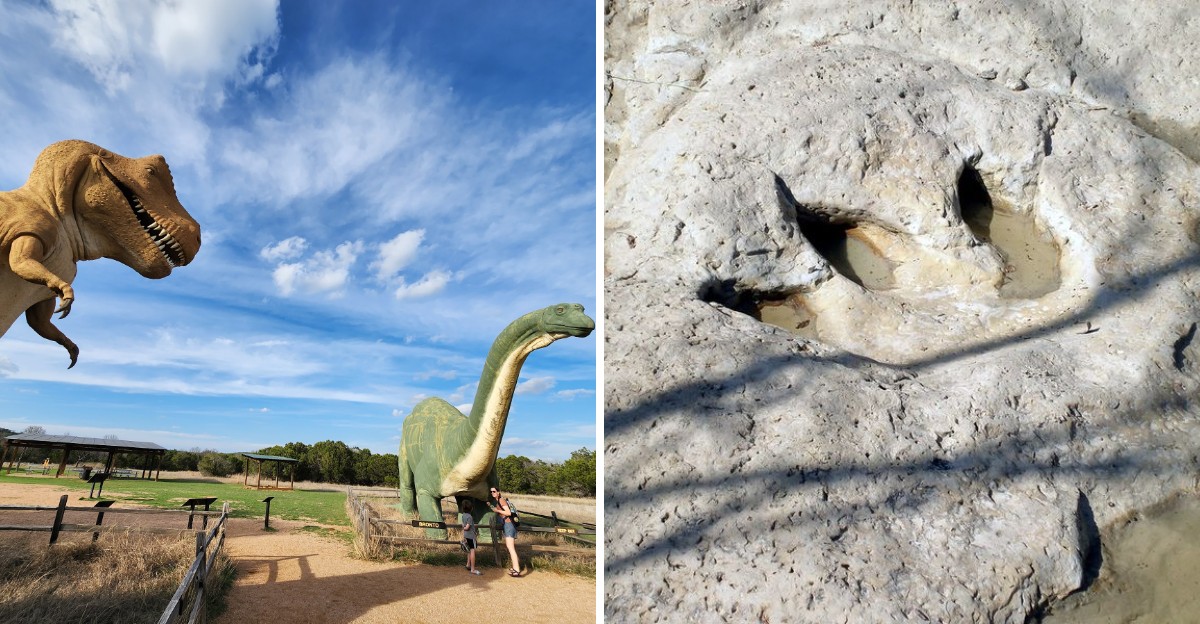
Before anyone gets wet, the dinosaur models near park headquarters can set the mood. Their size gives children an above-ground picture to pair with the footprints they hope to find below.
A quick stop here may help a younger visitor understand why a broad mark in the riverbed is such a big deal.
Let kids look closely at the models, then ask them what kind of footprint each animal might leave. Would a heavy, long-necked dinosaur make the same shape as a three-toed hunter?
Save their guesses and compare them with the real tracks later. The models are visual aids, not replacements for the ancient evidence preserved in limestone.
This stop is also useful if river conditions limit track viewing. Families can still take photos, talk about dinosaurs, and get oriented before choosing a trail.
Check posted information or ask staff which areas are open that day. For children who need a familiar starting point, meeting a dinosaur model first can make the quieter task of studying stone prints feel much more exciting.
Fill the Day With Outdoor Fun
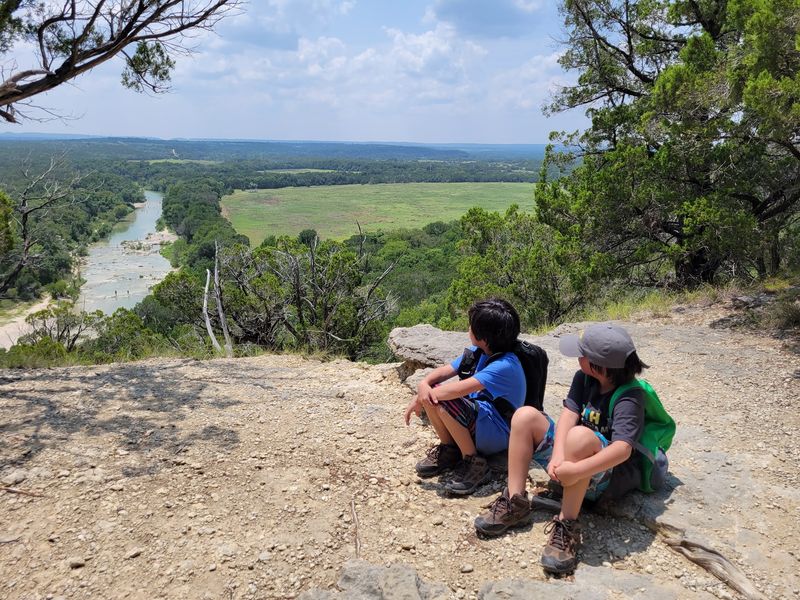
A track search might take an hour, but Dinosaur Valley can fill much more of a family day. The park has miles of trails and opportunities for picnicking, wildlife watching, fishing, paddling, and swimming when conditions and park rules allow.
Mixing activities gives everyone something to enjoy, including a child who has finished looking at rocks.
Pack lunch and plan a flexible route around one or two track sites rather than racing between them all. A shady break can help when the weather gets hot.
Keep binoculars handy for birds, and remind kids to watch wildlife from a distance. If swimming or paddling is on the schedule, check river conditions first and follow any posted closures.
Choose activities that fit your group’s energy and the day’s weather. A short hike followed by a picnic may be plenty for small children.
Older kids might enjoy comparing two track areas before cooling off near the river. Bring dry clothes and a bag for wet shoes, then carry out your trash.
Leaving the park clean protects both its wildlife and its remarkable fossil sites.
Plan a Safe Visit to Glen Rose
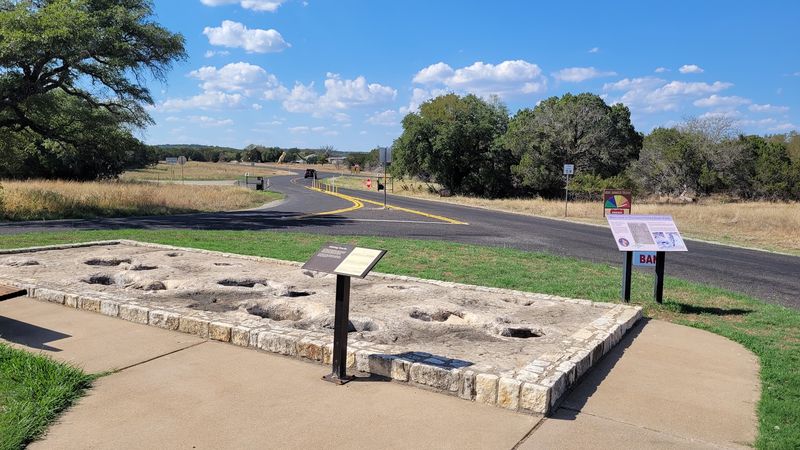
A little planning can save a long drive from ending in disappointment. Dinosaur Valley State Park is at 1629 Park Road 59 in Glen Rose, Texas.
Before leaving, check the park’s official website for current hours, admission fees, reservation details, river conditions, and reports about track visibility. Popular days may require extra planning.
Pack water, snacks, sunscreen, and shoes that can handle mud and wet limestone. A change of socks is a small comfort after river exploring.
Keep an eye on the forecast, since rain can raise water levels and affect access. Ask staff about safe viewing areas when you arrive, even if you have visited before.
Conditions can change quickly.
The title may make digging sound tempting, but visitors must not dig for footprints, remove rock, or disturb the tracks. They are protected resources, and the real thrill is seeing them where dinosaurs left them.
Take pictures, follow posted rules, and supervise children near the water. With a flexible plan, your family can enjoy the park even when some ancient prints stay out of sight.