You can actually climb inside the mouth of a giant fish in Hayward, Wisconsin.
Rising above the Northwoods, the enormous fiberglass muskie at the Freshwater Fishing Hall of Fame looks like something straight out of a fishing legend.
Its jaws open wide enough for visitors to step inside and take in the view from above.
Inside the museum, the surprises keep coming.
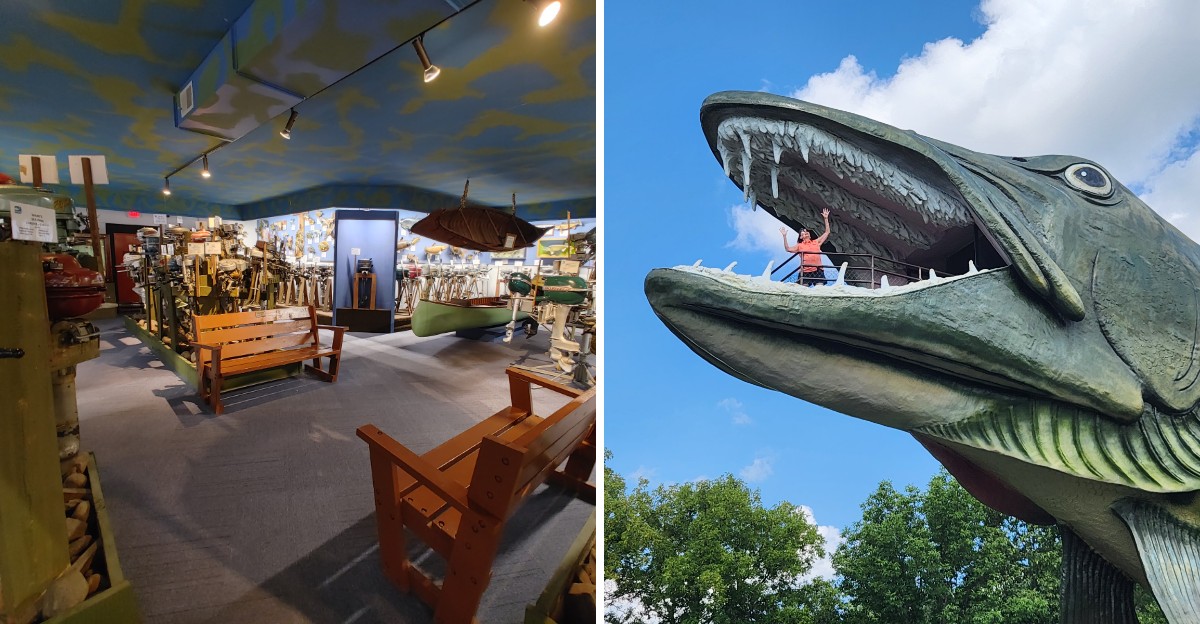
Thousands of fishing lures, antique outboard motors, mounted freshwater fish, and stories about legendary anglers turn a simple stop into a deep dive into fishing history.
You do not have to be a devoted angler to have fun here.
The giant muskie alone makes this one of Wisconsin’s most memorable roadside attractions, while the museum gives you plenty of reasons to stay awhile.
Bring your camera, your curiosity, and maybe a little respect for that enormous set of teeth.
Step Inside Hayward’s Giant Muskie
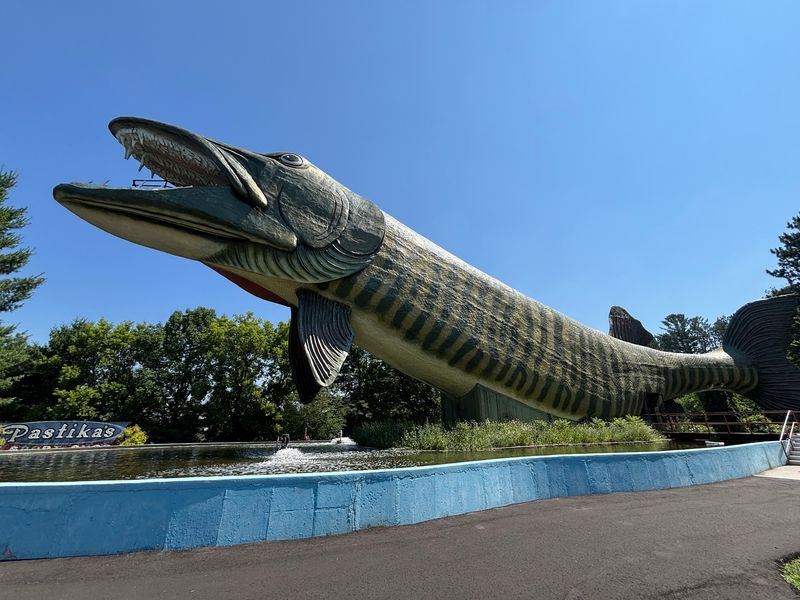
Picture a fish so big that it looks like it swallowed a building. Back in 1978, workers finished building the giant fiberglass muskie in Hayward, and it has been turning heads ever since.
It stretches about half a city block long and stands roughly four and a half stories tall.
The best part is that you are not just allowed to look at it. You can actually walk inside the fish and climb up through its body.
Stairs lead you higher and higher, and it feels a little like exploring the inside of a sea monster from an old adventure story.
A muskie, short for muskellunge, is a long, toothy fish found in northern lakes. Wisconsin even named it the official state fish, so the giant statue fits right in.
Wear comfy shoes for the climb, and take your time on the steps. Little kids may want to hold a grown-up’s hand, but most families find the trip upward exciting rather than scary.
Bring your camera, too.
Stand Inside The Muskie’s Open Mouth
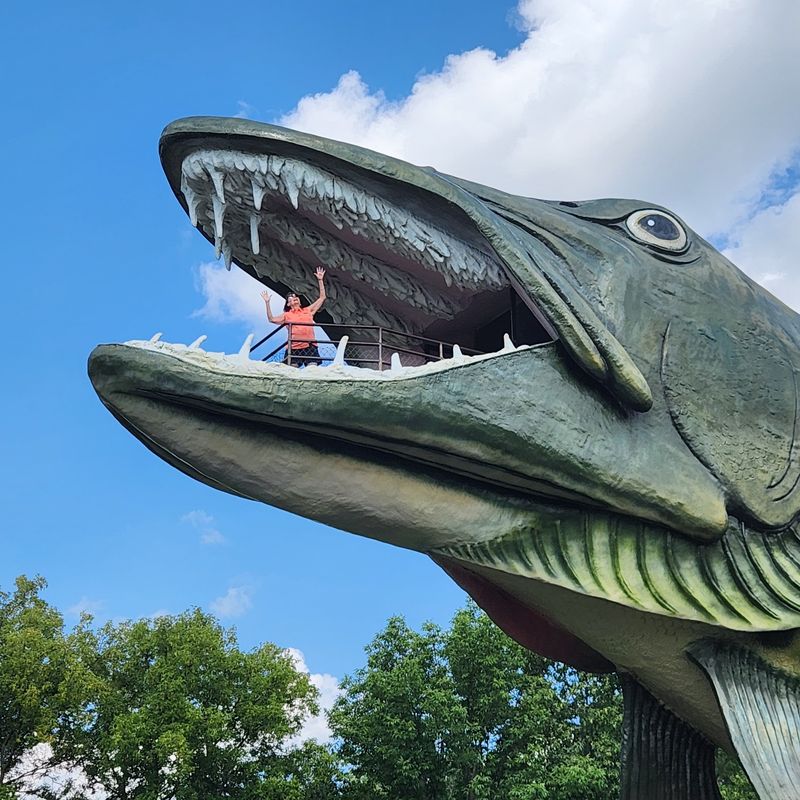
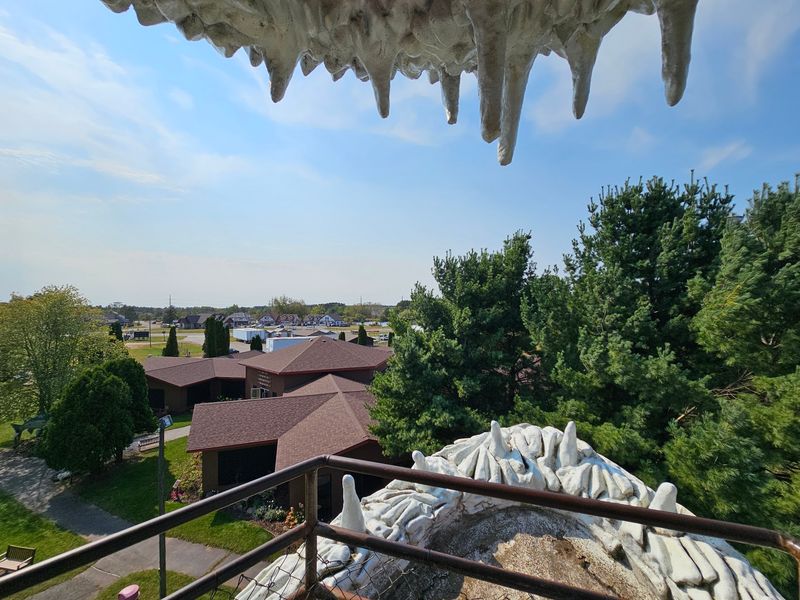
Not many people can say they stood inside a fish’s mouth and lived to tell about it. Once you reach the top of the climb, you step onto an observation platform tucked inside the muskie’s wide-open jaws.
Giant pointy teeth frame the view all around you.
From up there, you can see across the grounds, out to Lake Hayward, and over the treetops of the surrounding town. On a clear day, the scenery looks like a postcard.
In the fall, the colorful leaves make it even more striking.
Here is a tip that visitors love: grab a photo from the ground of a friend waving from inside the mouth. It makes a hilarious picture that looks like the fish is about to gobble them up.
You can also snap pictures looking out between the teeth.
The platform can get breezy, so hang on to hats. Hold onto phones carefully, too.
Wisconsin wind does not give back what it takes.
Browse Thousands Of Fishing Lures
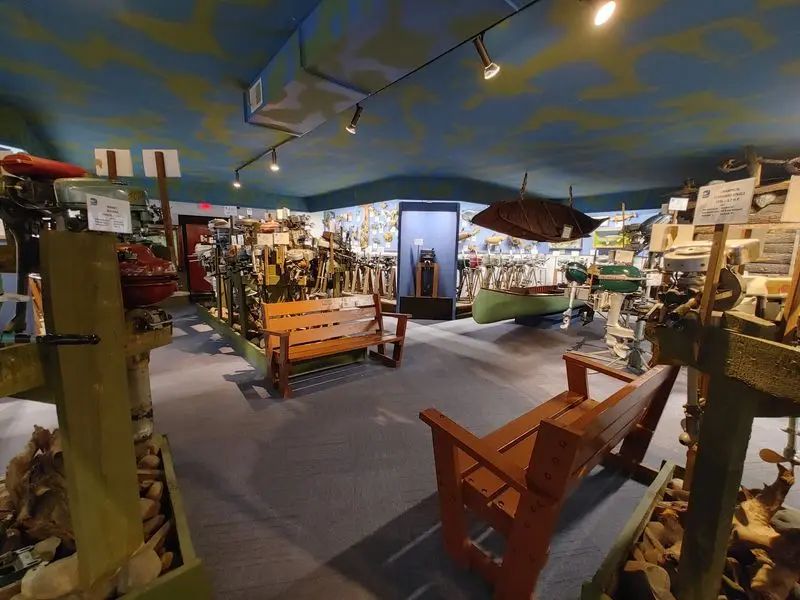
Ever wonder what fish find so tempting? Walk into the museum and you will get thousands of answers.
Rows and rows of fishing lures fill the displays, showing how anglers have tried to trick fish over many generations.
Some lures look like tiny painted minnows. Others look like frogs, mice, or shiny spinning spoons.
A few are so strange that you might laugh and wonder if any fish ever actually bit them.
Many of the older pieces were carved from wood and painted by hand. Back then, tackle makers worked carefully, and some of these lures are now valuable collector’s items.
Comparing an old wooden lure to a modern plastic one is a fun way to see how much fishing gear has changed.
If you fish at home, take a close look at the shapes and colors. You might spot an idea worth trying on your next trip.
Kids can also play a game of finding the weirdest lure in the room.
See Trophy Freshwater Fish
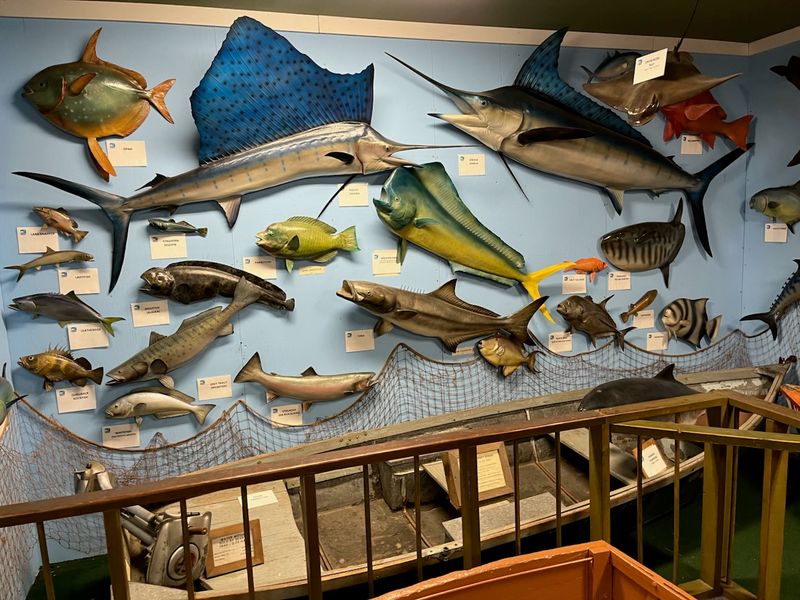
Hundreds of glassy eyes stare back at you from the walls. That is the first thing many visitors notice when they reach the mounted fish displays inside the museum.
These trophy fish represent species that anglers chase all across North America. You will see muskies, northern pike, walleye, bass, trout, and plenty more.
Some are so large it is hard to imagine pulling them into a small boat.
Seeing real fish up close helps the giant muskie outside make more sense. The statue is a cartoon-sized version, but the mounted muskies show their true long bodies, spotted patterns, and sharp teeth.
Suddenly, you understand why people call them the fish of ten thousand casts.
Here is a helpful idea for young visitors. Pick a fish you have never heard of and read its label.
Learning one new species can make your next lake trip more interesting. You might even be able to name a fish your family catches before anyone else can.
Check Out The Vintage Outboard Motors
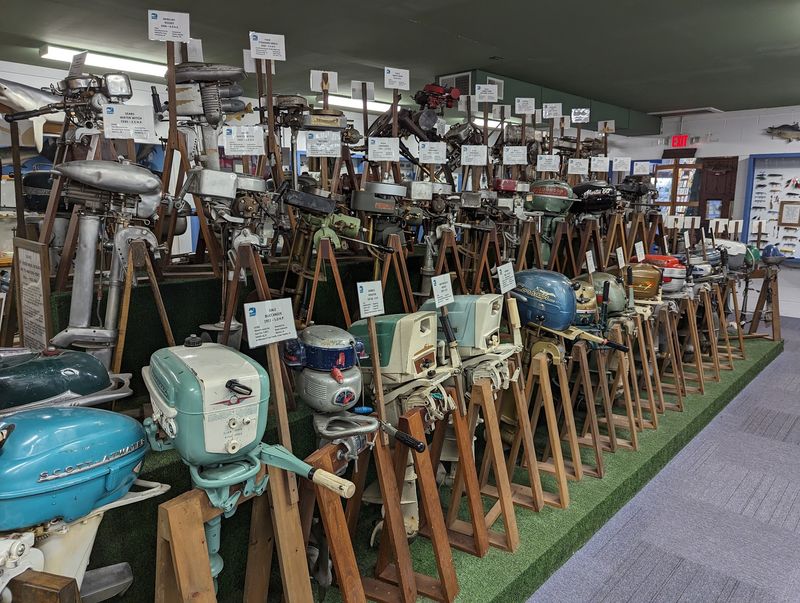
Before outboard motors, getting to the best fishing spot often meant rowing. A lot.
That is why the motor collection here feels like a big piece of the story.
The museum displays hundreds of antique outboard motors. One of the stars is an early Evinrude motor from 1909.
Fun fact: Ole Evinrude was a Norwegian-born inventor who lived in Wisconsin, so this machine has strong local roots.
As you walk along the rows, you can watch motors grow from small, simple machines into bigger and more powerful designs. Some have shiny metal parts, while others show off old paint and tiny gas tanks.
It is like a timeline of how anglers learned to zip across lakes faster.
Gearheads and grandparents especially tend to love this section. Ask an older family member if they remember any of these motors.
You might hear a great story about a boat trip from long ago, which is half the fun of visiting.
Explore Fishing Records And Big Catches
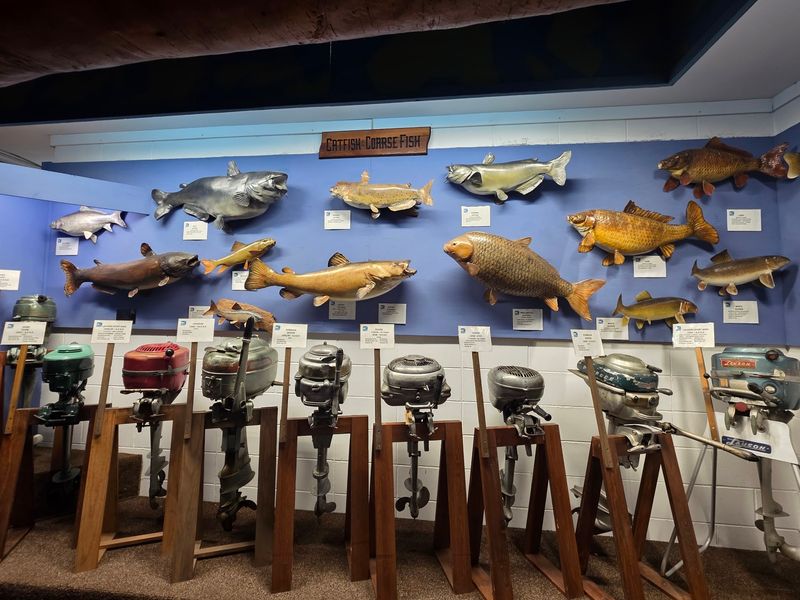
“You should have seen the one that got away!” Every angler has heard that line. At the Hall of Fame, though, the big ones did not get away, and there is proof.
The Hall keeps track of freshwater fishing records, which makes it an important place for serious anglers. Visitors can learn about record-breaking fish, famous catches, and the people who earned recognition for landing them.
Records are often sorted by the type of fishing line used, so there can be many different winners for one species. That means a regular person with the right gear and good luck could someday earn a spot in the books.
Pretty cool, right?
Here is some practical advice if you dream of a record catch. Weigh and measure your fish carefully, take clear photos, and have witnesses nearby.
Rules matter a lot when it comes to official records. Reading the displays gives you a good idea of how careful anglers must be to prove their amazing catches.
Walk Around The Seven-Acre Grounds
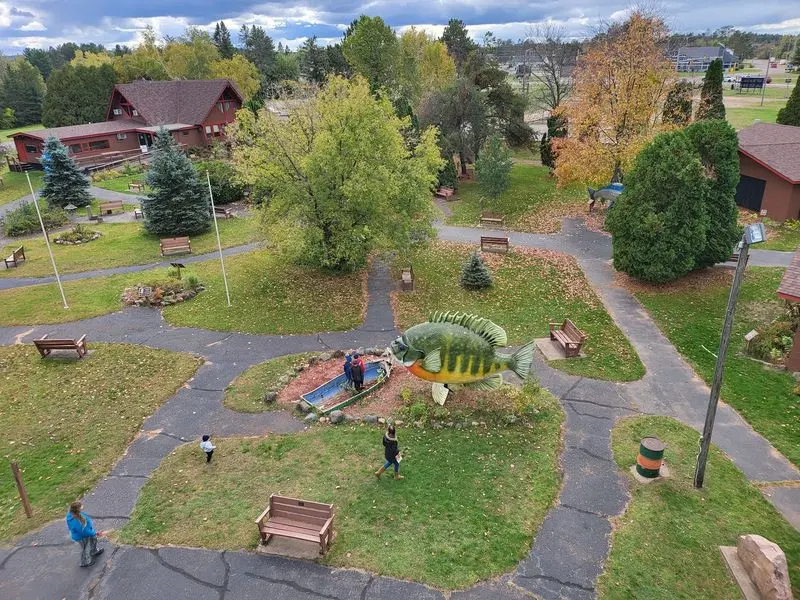
Some of the best moments happen outdoors. After exploring inside, step out and wander the seven-acre property surrounding the giant muskie.
The grounds include landscaped areas, peaceful ponds, and colorful gardens. Scattered around are other oversized fiberglass fish, like bass, trout, and more, each one big enough to pose beside.
It feels a little like a sculpture park built by someone who really, really loves fishing.
Families often spend extra time here taking photos. Try standing next to each giant fish and making a silly face, then put the pictures together into a funny collage later.
Younger kids can count how many big fish they spot.
Plan ahead if the weather is warm. Bring water, sunscreen, and maybe bug spray, since this is the Northwoods after all.
The open space also makes a nice break for anyone who needs to stretch their legs after a long car ride. Take it slow and enjoy the fresh air.
Make It Part Of A Hayward Northwoods Day
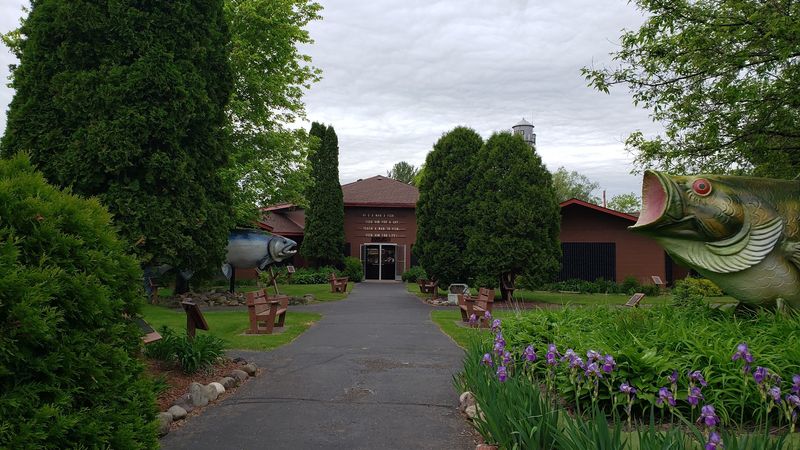
Hayward has a nickname some locals love to share: the Muskie Capital of the World. With lakes in nearly every direction, fishing is part of daily life in this cozy Northwoods town.
The Hall of Fame makes a perfect anchor for a full day of exploring. Start your morning at the giant muskie, then head into downtown Hayward for shops, ice cream, or a hearty lunch.
In the afternoon, you could rent a boat, paddle a quiet lake, or hike a forest trail.
You do not need to be a fishing expert to have fun here. The giant fish, quirky exhibits, and classic Wisconsin roadside charm appeal to almost everyone.
It is the kind of stop that ends up in family stories for years.
Visiting in summer? Check local event calendars before you go.
Hayward hosts outdoor festivals and races during warmer months, and those can add extra excitement to your trip.
Plan Your Visit
A little planning goes a long way, especially since this attraction is seasonal. The Fresh Water Fishing Hall of Fame sits at 10360 Hall of Fame Drive, Hayward, WI 54843.
You can call ahead at 715-634-4440 with questions.
The museum is open daily from mid-April through October 31. Hours run from 9:30 a.m. to 4 p.m. in April, May, September, and October.
During June, July, and August, it stays open a bit later, until 4:30 p.m.
According to the official site, admission is $9.95 for adults and $7.95 for kids ages 4 to 17. Children 3 and under get in free, and active military members are also free.
That is a pretty great deal for a giant fish adventure.
Keep in mind that the museum and grounds close from November 1 through the first half of April. Arrive early on summer weekends to beat crowds, and check the website for any updates before you go.