Tucked into the North Georgia mountains, this park is home to one of the tallest waterfalls in the Southeast.
Amicalola Falls State Park in Dawsonville showcases a cascade that tumbles 729 feet down the mountainside.
Visitors can choose between an easy paved path to the base and a famous staircase that climbs alongside the falls.
The park also holds the start of an approach trail that leads to Springer Mountain, the southern end of the Appalachian Trail.
In autumn, the surrounding forest bursts into shades of red, orange, and gold.
Lace up your shoes, bring a camera, and get ready to feel the mist on your face.
A 729-Foot Drop That Unfolds in Stages
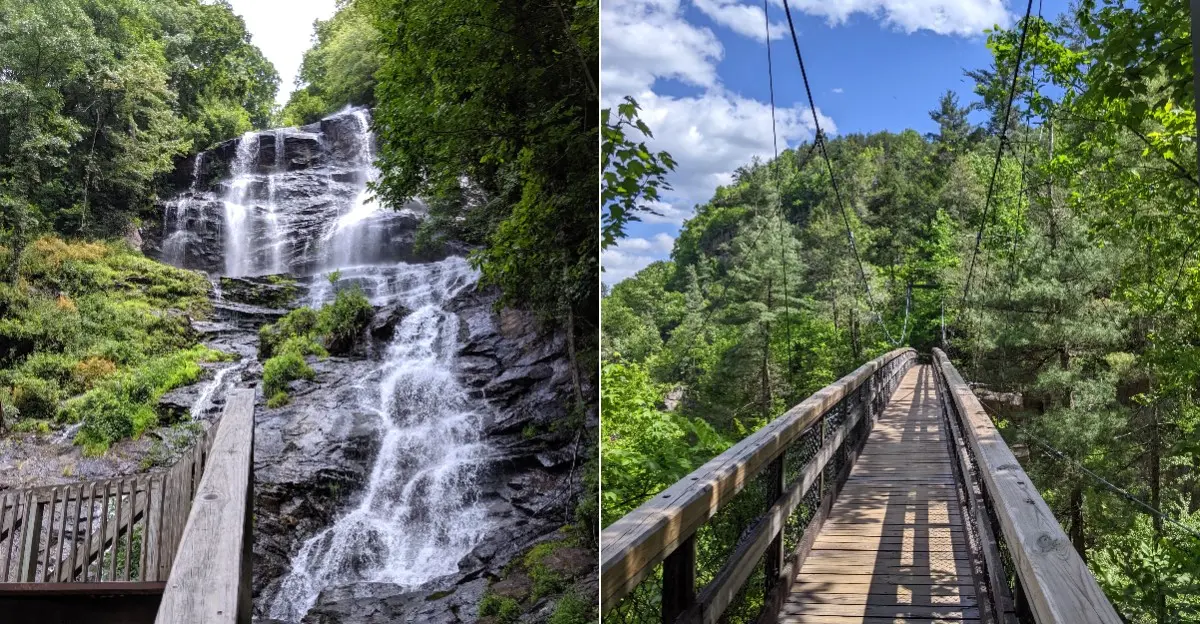
A roar rises through the trees before the full waterfall comes into view. At Amicalola Falls State Park, 418 Amicalola Falls State Park Rd, Dawsonville, GA 30534, that sound belongs to a cascade with a total drop of 729 feet. The number describes the entire waterfall, not one uninterrupted fall through open air.
Water tumbles over a series of rock faces, shelves, and steep channels as it travels downhill. From any single overlook, trees and the shape of the slope may hide part of that journey. That is why the waterfall can be much taller than your first photograph suggests.
It is widely recognized as Georgia’s tallest waterfall, making its height more than a catchy detail. Look for the separate stretches of whitewater instead of searching for one giant curtain. Watching how those stretches connect helps you understand the size of the whole feature.
Give yourself time at more than one viewing area if your schedule and ability allow. A lower view shows the water rushing toward you, while an upper view reveals the slope falling away. Together, those angles turn an impressive number into something you can actually picture and appreciate during your visit, without needing to complete every trail or climb every stair along the route.
Different Overlooks Tell Different Stories
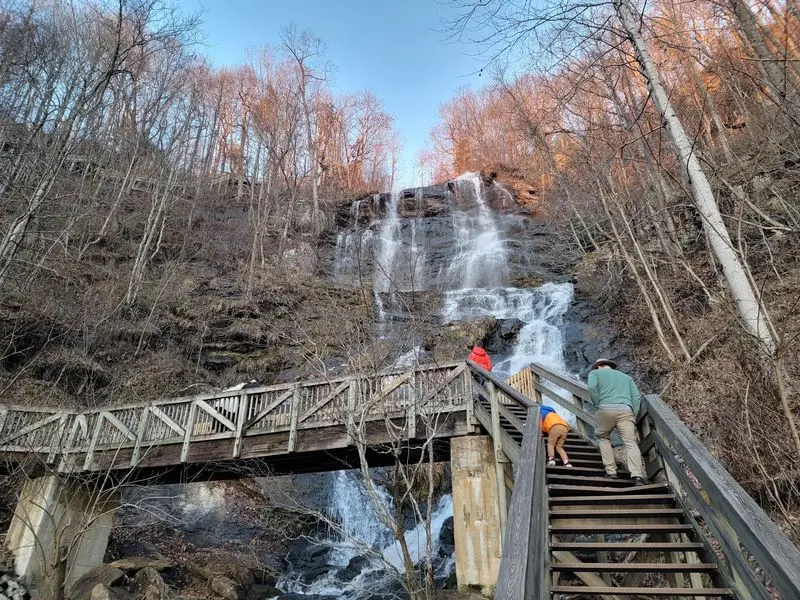
One photograph rarely tells the whole story of a waterfall this tall. The viewing areas offer different angles, and each angle changes what catches your eye first. Some highlight the rushing water, while others make the steep hillside easier to understand.
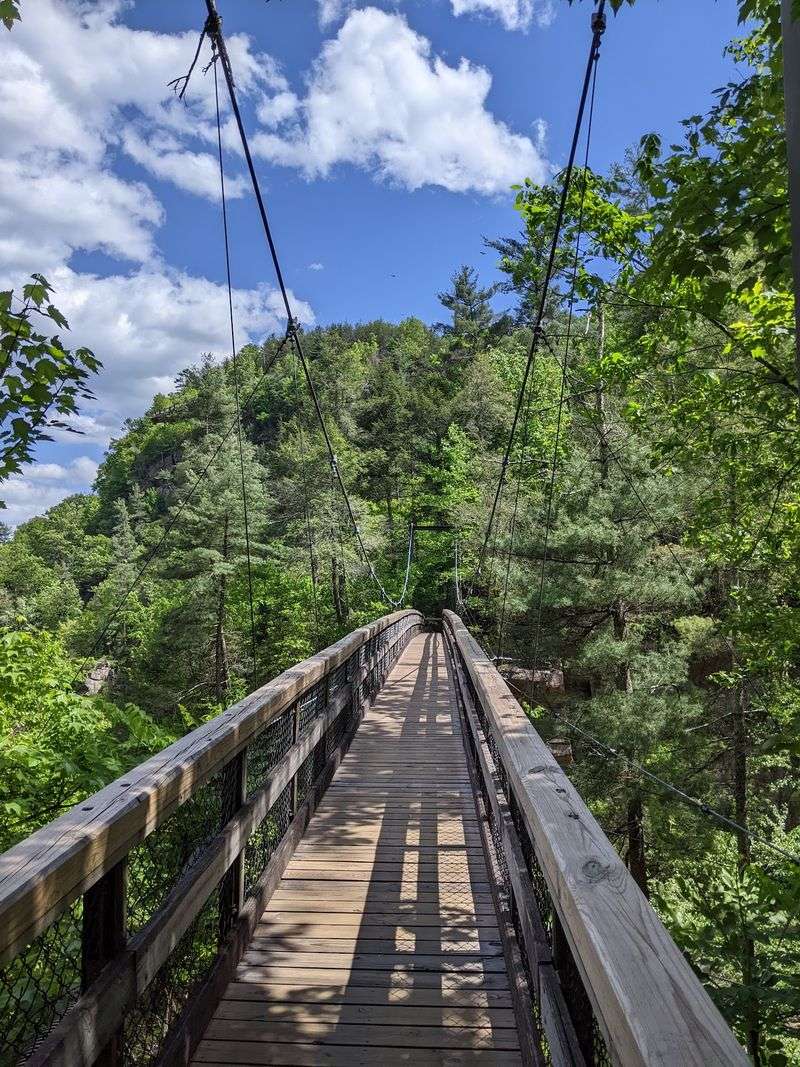
The bridge near the main cascade gives visitors a close look at water spilling over rock. Here, the sound and movement can feel more striking than the height itself. Pause before reaching for your phone so you can notice the smaller streams joining the main flow.
At the upper overlook, the experience shifts toward the drop below and the surrounding landscape. You are looking along the waterfall’s path rather than simply facing it. Stay behind barriers, even if a nearby rock seems to offer a better camera angle.
Choose viewpoints based on your comfort, available time, and the current trail conditions. There is no need to rush between every stop just to collect pictures. A careful visit to two viewing areas can be more rewarding than a hurried attempt to see everything.
Before leaving, compare your photos and notice which sections appear in each frame. That small exercise explains why visitors sometimes underestimate the total drop after seeing only one part of the falls from a single position.
The Staircase Makes the Height Feel Real
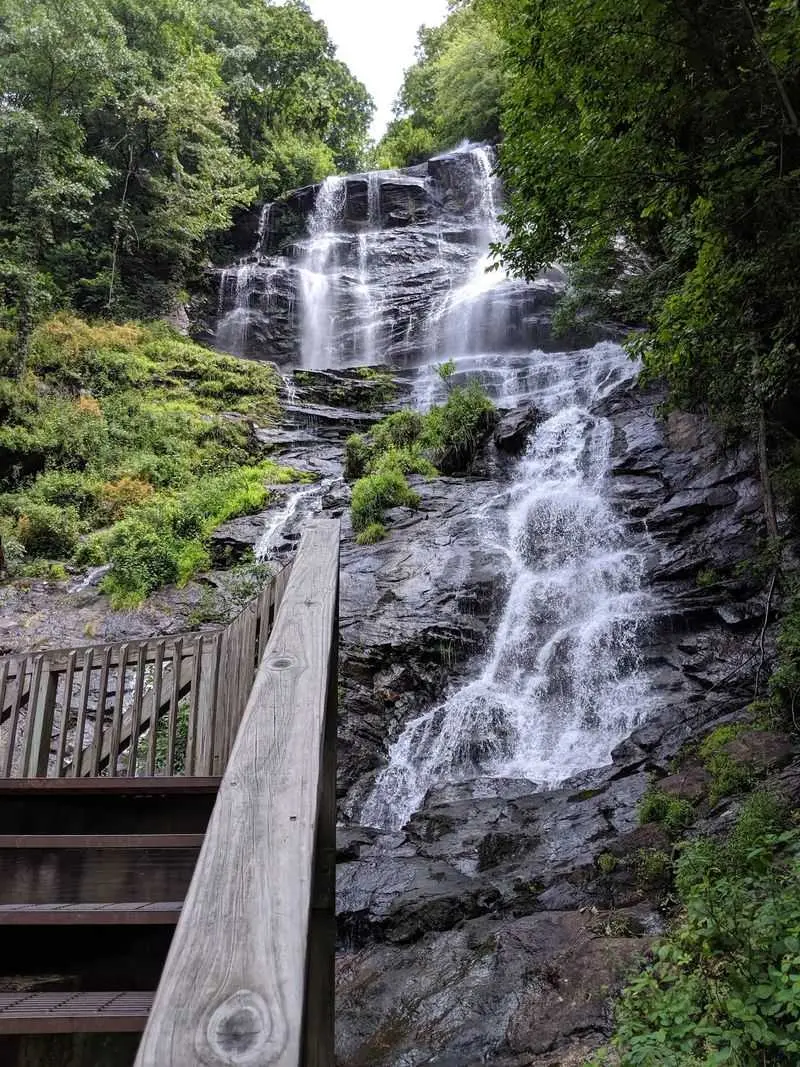
Your legs may understand 729 feet before your eyes do. The stair route beside the waterfall turns its height into a very real workout. Long flights climb through the forest, with places to pause and enjoy the water along the way.
The full staircase is commonly listed as 604 steps, including a 425-step stretch above the main viewing bridge. Those numbers explain why different visitors report different totals after walking different sections. Check the trail map rather than assuming every route includes the same climb.
Start slowly, carry drinking water, and wear shoes with dependable grip. Metal steps can become slick when wet, and the open treads may feel awkward for some dogs or walking aids. Use the handrails and avoid stopping where others need to pass.
Walking downhill is not a free pass, either. Your knees still work hard, and a return climb can feel tougher after you have spent time exploring. Think about the trip back before heading down several flights.
For families or mixed fitness groups, agree on a turnaround point before starting. Nobody needs to finish the entire staircase to have a worthwhile visit. Taking breaks and choosing a manageable section keeps the outing enjoyable instead of turning the waterfall into an unwanted endurance test.
A Shorter Visit Can Still Deliver Big Views
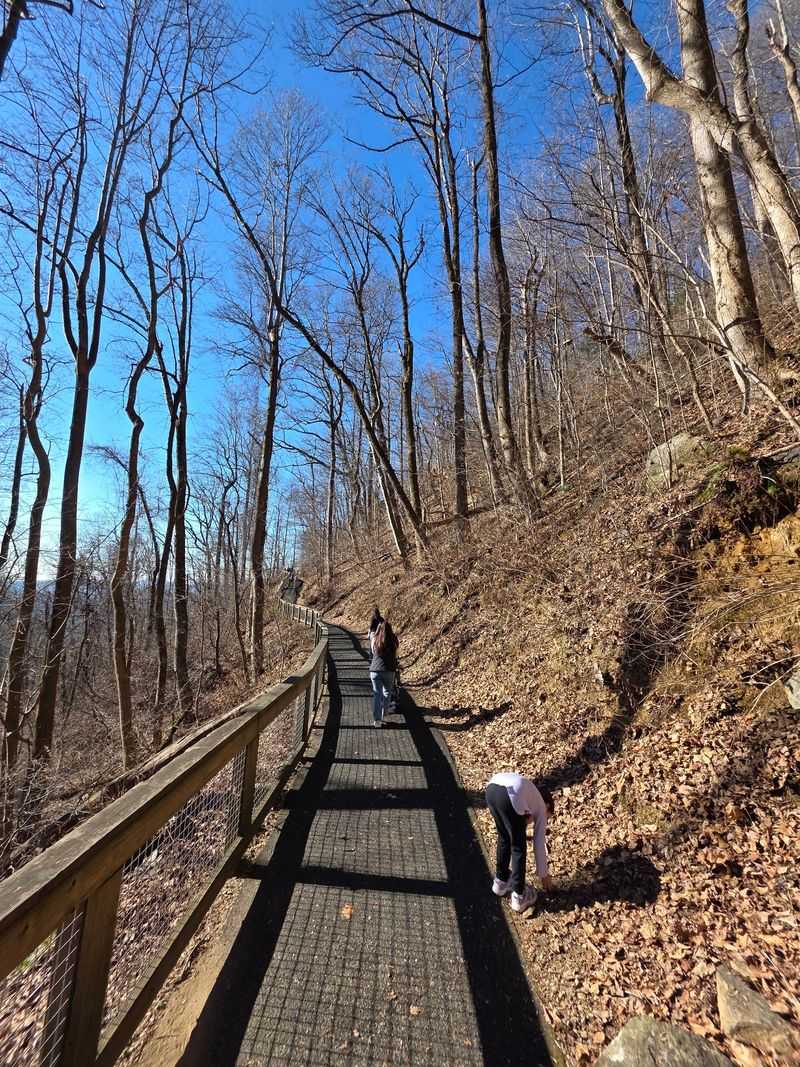
Not every memorable waterfall visit needs to end with tired legs. Road access to different parts of the park lets visitors choose an outing that fits their energy. Driving higher can reduce the amount of climbing needed to reach certain overlooks.
The West Ridge Falls Access Trail provides another option for reaching the main viewing area without tackling the entire staircase. This paved route is commonly described as about three tenths of a mile each way. Its surface makes it different from the rougher woodland paths, but conditions and individual needs still matter.
If you use a wheelchair, walker, or cane, ask staff about current access before setting out. A paved trail does not automatically mean every slope, connection, or viewing area will suit every visitor. Recent weather or maintenance can also affect the experience.
Parking at the top offers a different perspective, not a complete substitute for every lower view. Remember that descending stairs from an upper lot means climbing back unless you arrange another ride. Make that decision before the downhill walk feels deceptively easy.
Build your visit around one comfortable route and leave extra time for resting. The best plan is the one that lets everyone enjoy the waterfall safely without feeling pressured to keep up.
Rain and Seasons Change the Waterfall’s Mood
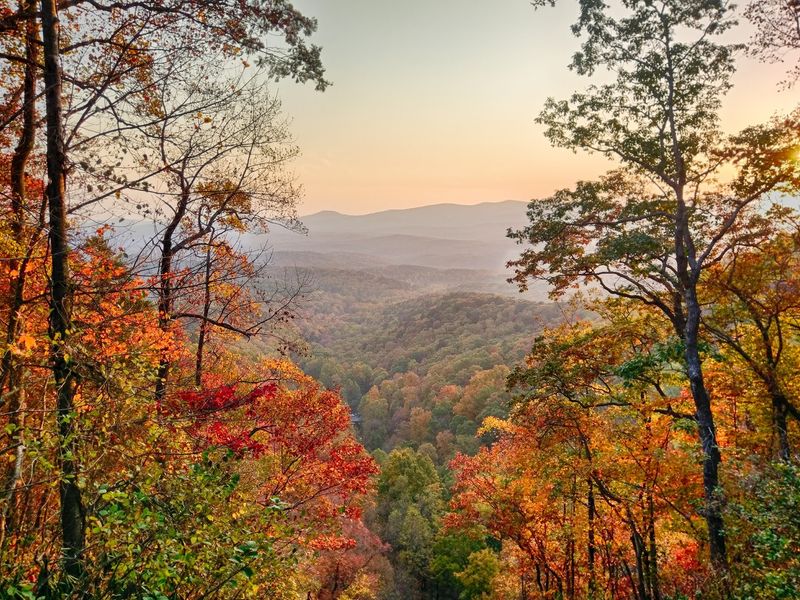
A familiar view can feel completely different after a change in weather. Rainfall affects how much water moves over the rocks, while the seasons change the forest around it. Together, those shifts give repeat visitors fresh reasons to return.
After rain, the cascade may look fuller and sound louder than during a dry stretch. That extra drama also comes with wet stairs, muddy paths, and slippery surfaces. Wait out thunderstorms and follow any closures instead of treating rough weather as a photography opportunity.
Spring brings fresh leaves and comfortable days, though showers can arrive quickly. Summer creates a thick green frame around the water, with heat making long climbs more demanding. Carry enough water even when the shade makes the trail feel cooler.
Autumn adds color to the hillside and often draws visitors hoping for classic waterfall pictures. Winter can reveal more of the rocky slope through bare branches, but ice can make walking hazardous. Check conditions before traveling during freezing weather.
For photography, cloudy skies often soften bright highlights on the water. A clear morning can be beautiful too, especially when you avoid harsh midday glare. Choose a season that suits your comfort, then let the actual conditions guide your route, pace, and expectations once you arrive at the park.
The Visitor Center Adds Meaning to the Climb
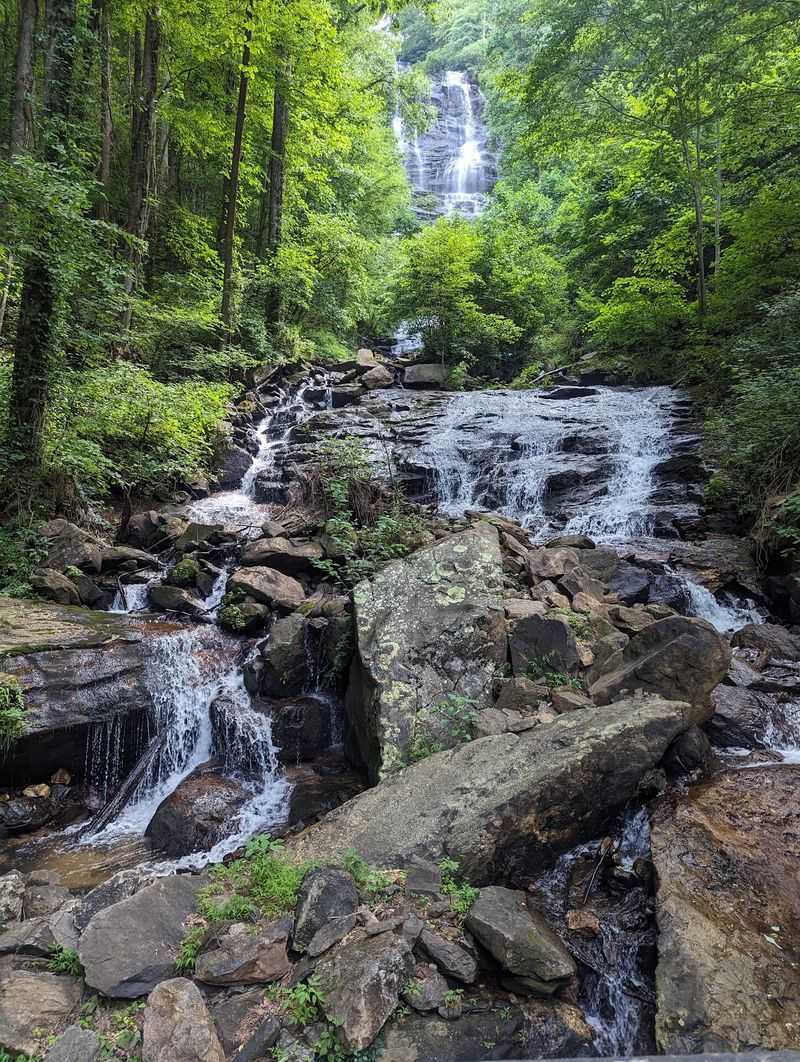
A few minutes with a trail map can save a lot of confused walking. The visitor center is a useful first stop for learning about routes, conditions, and the wider landscape. Staff can help you match your plans to the time and energy you have.
Ask which paths include stairs, where the main viewing areas sit, and whether any trails are closed. Those questions are especially helpful when traveling with children, older relatives, or someone with limited mobility. You can also confirm current parking fees rather than relying on an older review.
Another part of the park’s story reaches well beyond the waterfall. The roughly eight-mile Approach Trail leads toward Springer Mountain, the southern terminus of the Appalachian Trail. The Appalachian Trail itself does not officially begin at the visitor center.
That distinction matters if you are planning a hike instead of simply taking a photo near the approach route. A walk toward the mountain requires preparation, suitable gear, and a realistic understanding of distance. Do not mistake it for a short extension of the waterfall outing.
For a casual visit, let the exhibits and maps deepen what you notice outside. Knowing how the trails connect makes the park feel less like separate stops and more like one connected landscape.
Beyond the Falls, There Is Room to Slow Down
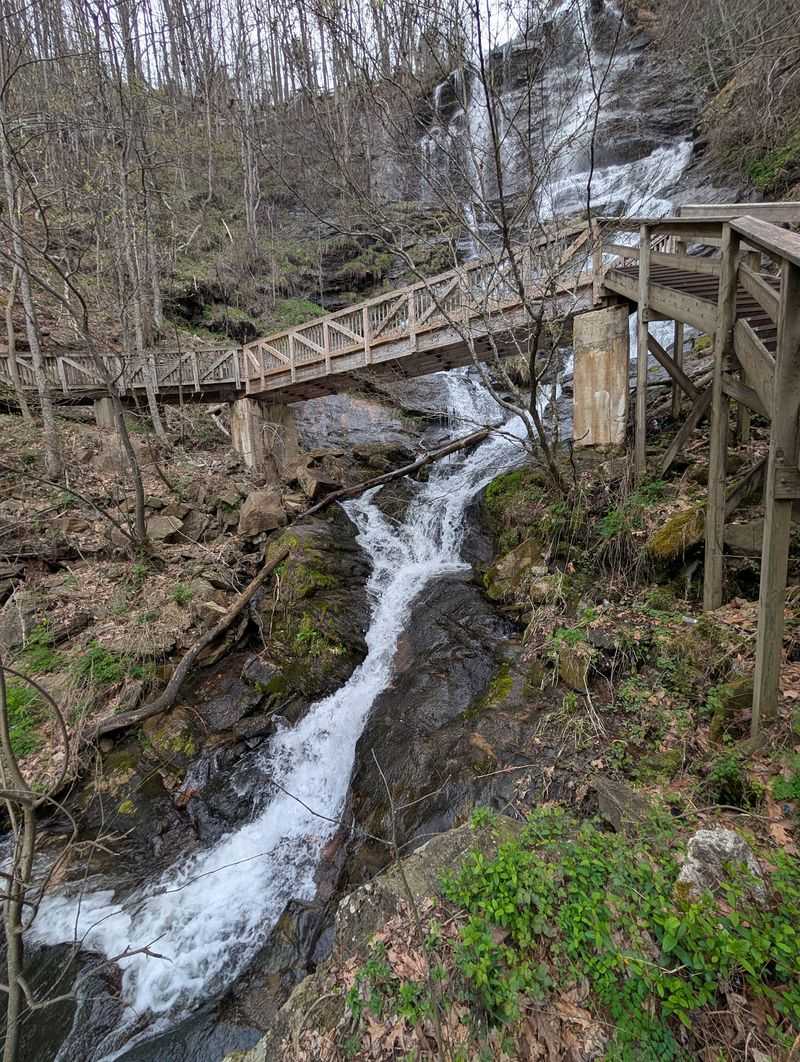
After the roar of falling water, a quiet lunch can feel especially good. Picnic areas, the lower reflection pool, and mountain views offer ways to stretch the day without adding another strenuous hike. They also give different members of a group room to enjoy the park at their own pace.
Pack a simple meal and use designated picnic spaces rather than eating on busy stairs or narrow overlooks. Carry out your trash and keep food away from wildlife. A relaxed break is easier when you bring enough water and do not depend on finding an empty table immediately.
The mountaintop lodge adds another side to the visit, with lodging, dining, and broad views of wooded ridges. Restaurant hours and meal options can change, so check before building your schedule around lunch there. Overnight choices also include cabins and camping, subject to availability.
For visitors seeking more activity, guided adventures such as zip lining may be offered through the park’s adventure program. Reservations, age limits, and weather restrictions can apply. Confirm details ahead of time rather than expecting every activity to be available on arrival.
Choose one extra experience instead of packing the schedule too tightly. Leaving room to sit and look around can make the waterfall visit feel like a getaway.
A Little Planning Protects the Best Part of the Day
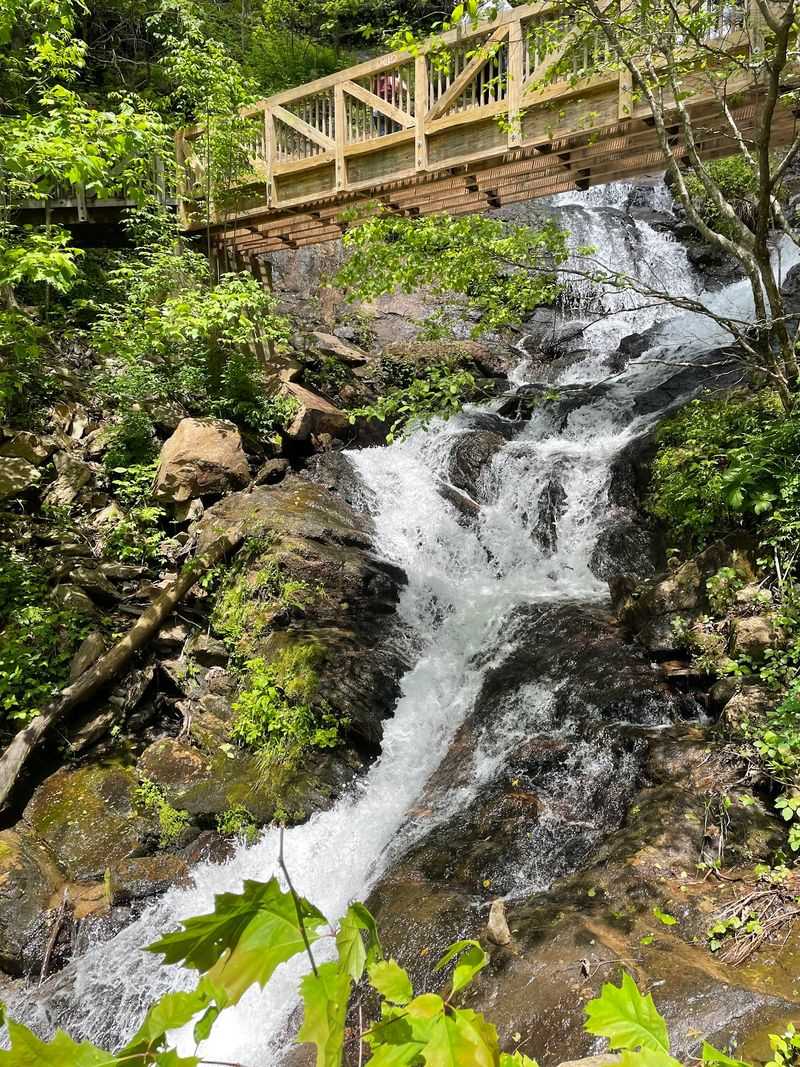
The best souvenir is a good memory, not a preventable injury. A tall waterfall deserves attention, especially where wet rock, steep slopes, and rushing water meet. Stay on marked paths and viewing platforms throughout your visit.
Never climb around barriers to reach the water or improve a photograph. Rock that looks dry can still be slippery, and moving water can be stronger than it appears. Keep children close near railings, stairs, and stream edges.
Before leaving home, check the official park or lodge website for current notices, fees, and service hours. An online listing that says open around the clock does not mean the visitor center, restaurant, or every activity operates all night. Plan waterfall walking for daylight unless staff confirms an appropriate alternative.
Bring supportive shoes, drinking water, a charged phone, and clothing suited to the forecast. Download or photograph the trail map before wandering farther from developed areas. Tell someone your plans if you expect to take a longer hike.
Finally, leave enough energy and daylight for the return to your vehicle. Crowds, rest breaks, and photo stops can make a short route take longer than expected. With a flexible schedule and sensible choices, the enormous drop remains the day’s highlight rather than becoming a challenge you wish you had avoided.