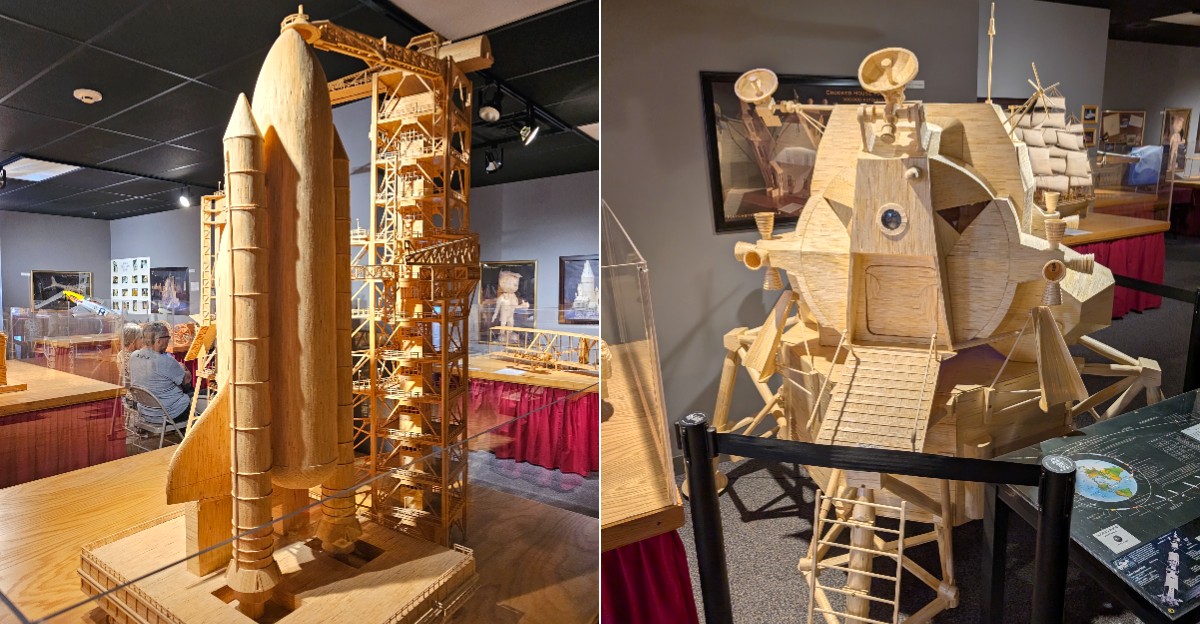
Some of the most jaw-dropping art in Iowa is built from something you probably have in a kitchen drawer.
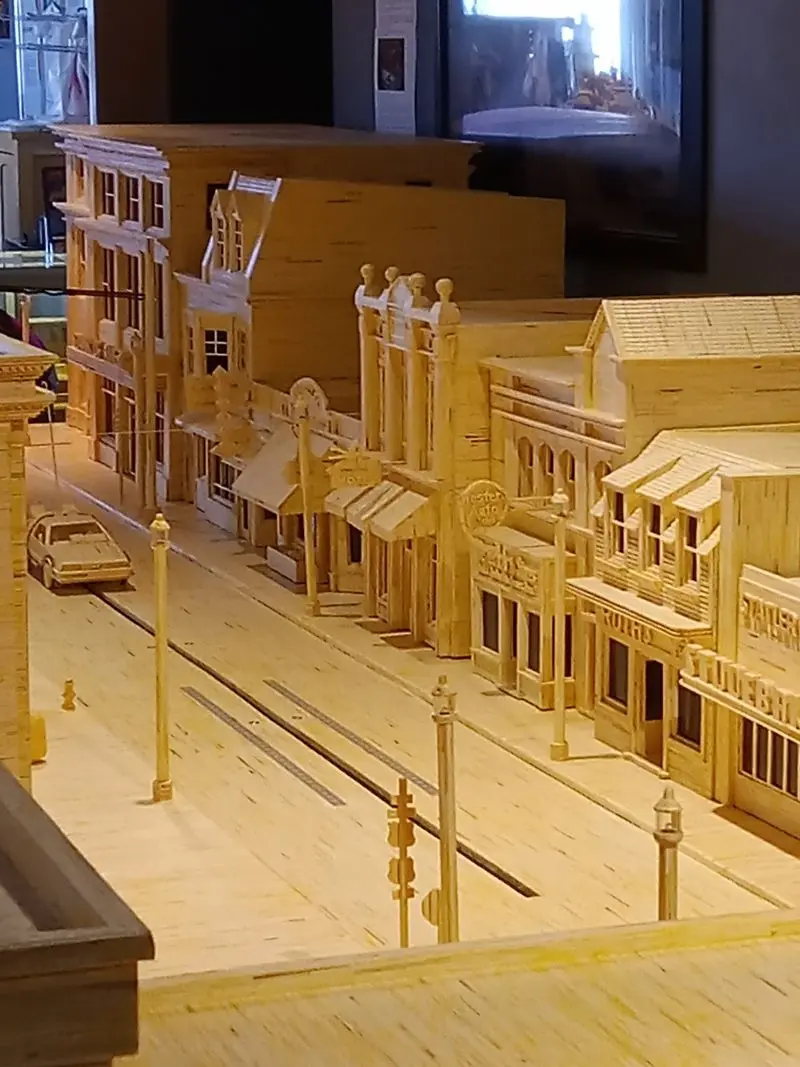
Matchstick Marvels in the small town of Gladbrook showcases giant models built entirely from wooden matchsticks.
Artist Patrick Acton spent decades gluing millions of matches into detailed replicas of famous buildings and ships.
Highlights include a towering model of the U.S. Capitol and a battleship packed with tiny details.
Up close, the precision is so impressive that it is hard to believe each piece was placed by hand.
Plan a slow visit and give yourself time to look closely, because the details are the real magic.
A Small Museum With a Giant Surprise
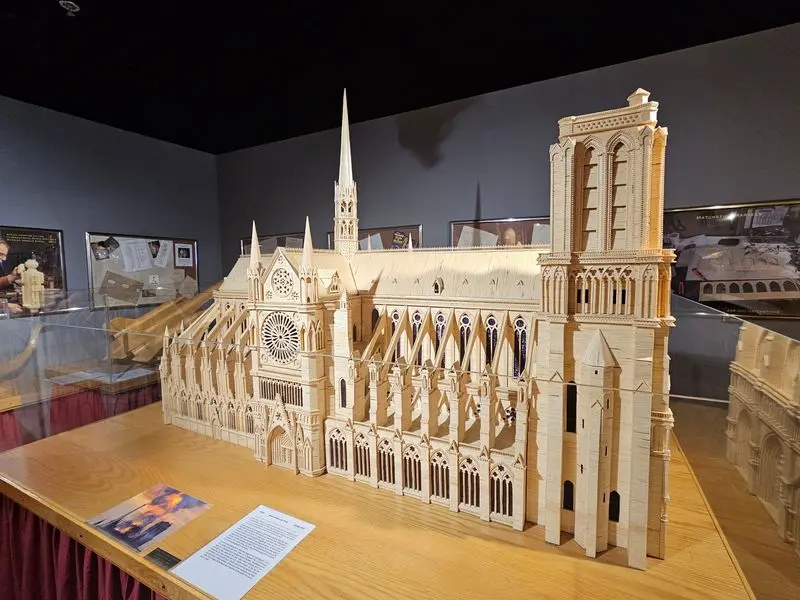
A humble doorway can lead to the kind of surprise that changes your whole afternoon. Inside, ordinary wooden matchsticks become large models that reward a much closer look. The contrast between the simple material and the finished artwork is the museum’s biggest hook.
Matchstick Marvels stands at 319 2nd St, Gladbrook, IA 50635. Rather than offering endless rooms, it gives visitors a focused collection built around one artist’s unusual skill. That smaller setting makes it easier to slow down and study individual pieces.
Visitor reviews often describe arriving with modest expectations and leaving amazed by the detail. The supplied Google Maps listing shows a 4.9 star rating from 340 reviews, though ratings can change. That response helps explain why such an unusual attraction earns enthusiastic recommendations.
Give yourself permission to linger instead of treating the visit as a quick photo stop. Start with an overall view, then choose one model and examine its smaller features. You may notice shapes and patterns that disappeared from farther away.
For families, the basic idea is easy to understand: tiny wooden pieces can build something remarkable. No background in art is needed. Curiosity is enough to turn this compact stop into a memorable part of your travel day.
Millions of Matches, One Patient Maker
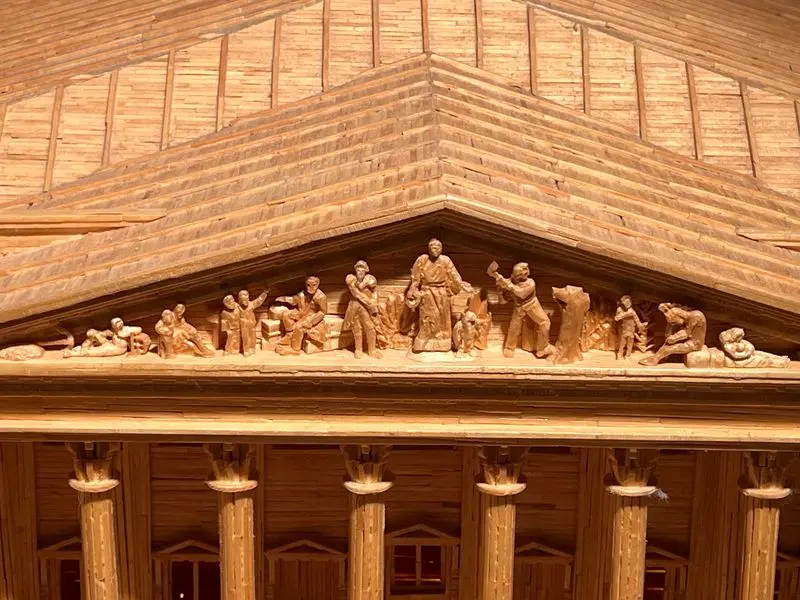
Ten million tiny pieces are hard to picture until you imagine handling them one at a time. One visitor review credits Patrick Acton with using more than 10 million matchsticks across nearly five decades of work. Treat that figure as a reported milestone, not a live count.
Acton is the artist behind the collection, and his work makes patience feel almost visible. Large models begin with small choices about shape, placement, and how separate parts will fit together. Repeated thousands of times, those choices produce something far beyond a simple craft project.
Look for information beside the displays about the materials and work involved. Visitors mention reading matchstick counts for individual pieces, which can change how you see the finished model. A roof or curved surface becomes more impressive when you consider every separate wooden element.
Parents can make the scale easier to grasp by asking children to imagine building with only one repeated material. How would they make a corner, a tower, or a smooth curve? The question turns admiration into a useful lesson about solving problems.
You do not need to calculate anything to enjoy the result. Simply remembering that a person placed these pieces gives every finished work a stronger human story.
Famous Buildings Become Wooden Wonders
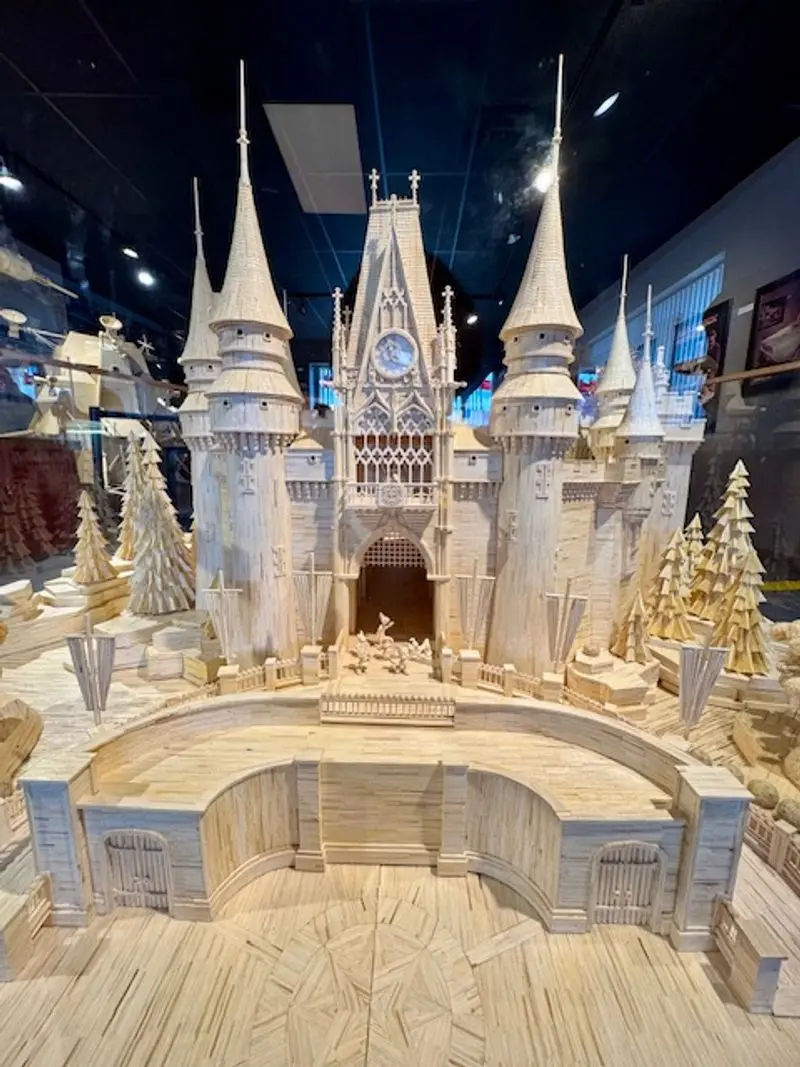
Recognizing a familiar building makes the next discovery even better: its walls are made from matchsticks. Architecture is one of the subjects visitors mention, including a model of the United States Capitol. Recent reviews also describe a Disney castle, although current displays should be confirmed before visiting.
Buildings provide a clear way to appreciate the artist’s control over shape and scale. Repeated windows, long rooflines, and balanced sections must work together for the model to look convincing. Even without knowing the original structure well, you can notice whether the whole design feels connected.
Begin by viewing an architectural piece from several steps away. That distance helps you see its overall outline before smaller details pull your attention elsewhere. Then move closer, staying within any marked viewing boundaries.
Try following one feature from bottom to top, such as a tower or central section. Watch how straight pieces form changing shapes as the structure rises. For younger visitors, counting repeated features can become a simple observation game.
Do not build your entire visit around a single photograph found online. Collections and displays can change, and older images may show work that is elsewhere. The real pleasure is seeing how ordinary wood can suggest buildings that usually require stone and steel.
Ships and Spacecraft Stretch the Possibilities
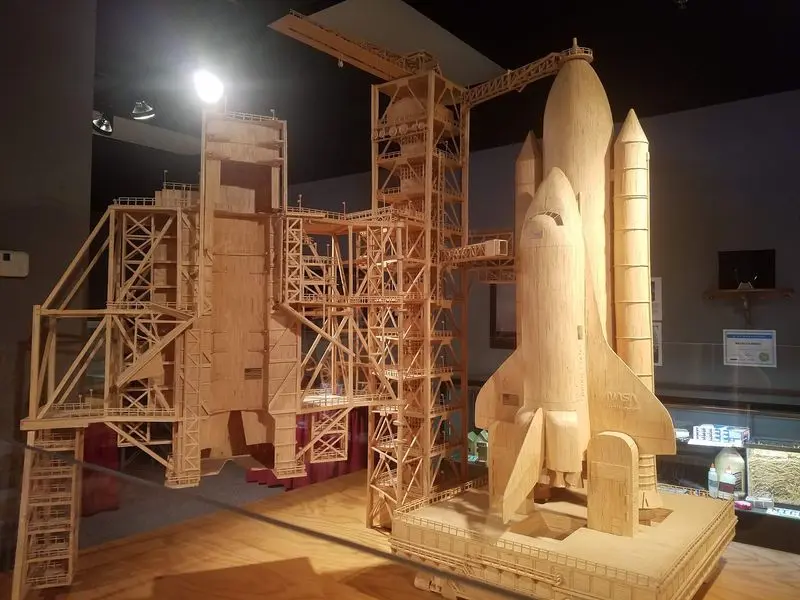
A wooden stick seems better suited to a straight fence than a sailing ship. That is why the collection’s range feels so surprising. Visitor accounts describe ships, spacecraft, plants, and an eagle alongside the architectural models.
Each subject brings a different challenge for the artist and a different viewing experience for you. A vessel asks your eye to follow long lines and layered sections. A wing or plant shape encourages you to study how small pieces suggest movement or growth.
Instead of comparing every model by size, compare the kinds of shapes they contain. Which has the strongest curve? Which seems most delicate, and which appears solid enough to belong in a much larger world?
Those questions help children participate without needing a long explanation of art or engineering. Adults may enjoy the same exercise because it draws attention to choices that are easy to miss. The variety also keeps the visit from feeling like a row of similar buildings.
Remember that reviews describe exhibits seen during different visits, so every named subject may not be present together. Ask staff what is currently on display if you have a particular favorite. Whatever the lineup, changing subjects reveal how flexible a very simple building material can become.
Tiny Details Deserve a Second Look
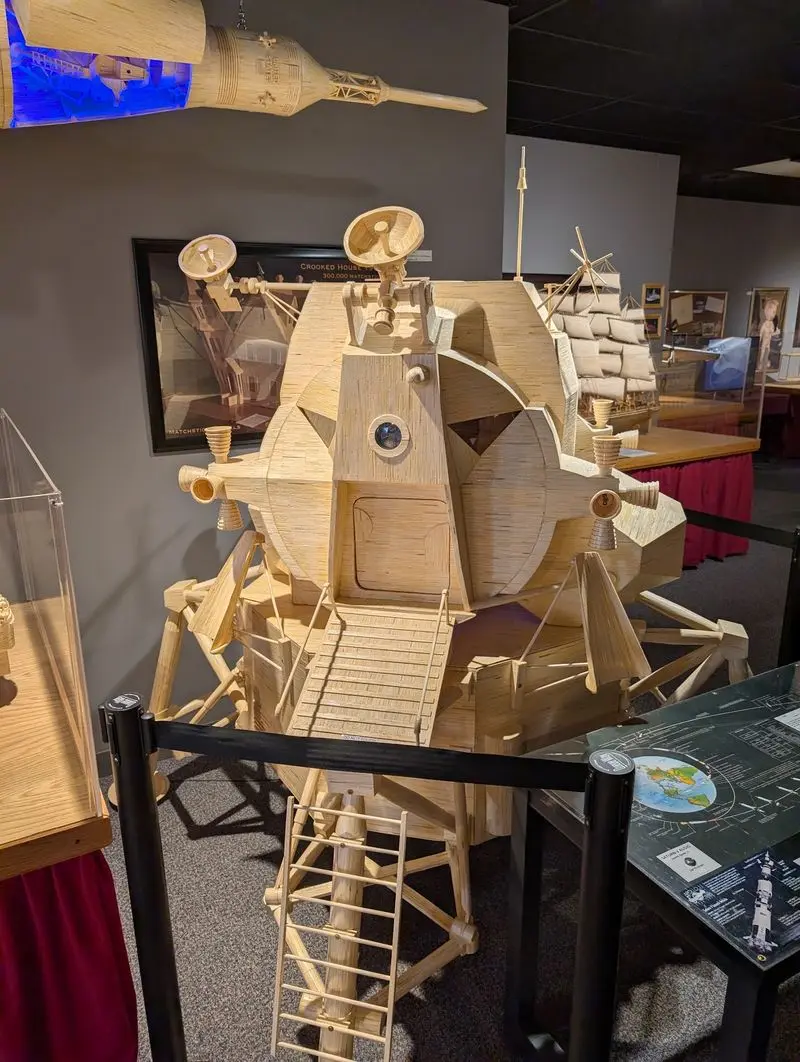
From across the room, you see a model. Up close, you begin to see the decisions that made it possible. That shift is where a casual visit can become a lesson in careful observation.
Reviews repeatedly praise fine details, precise work, and the effort visible in the finished pieces. Rather than rushing from one display to another, pick a small area and study it briefly. Look at how individual sticks line up and how their edges create a larger pattern.
Try comparing a flat section with a curved one. Both use similar material, but the finished effects can feel completely different. You do not need to know the exact construction method to appreciate that difference.
If photography is allowed, take an overall picture before trying a detail shot. Follow posted rules about flash, barriers, and handling, and never touch a model without permission. A clear photo matters less than protecting work that took considerable time to create.
For a simple family activity, let everyone choose one detail they think others overlooked. Share those discoveries before moving on to the next piece. The exercise slows the group down naturally and shows why the museum’s strongest moments often come from noticing something small rather than chasing the largest display.
The Story Behind the Models Adds Depth
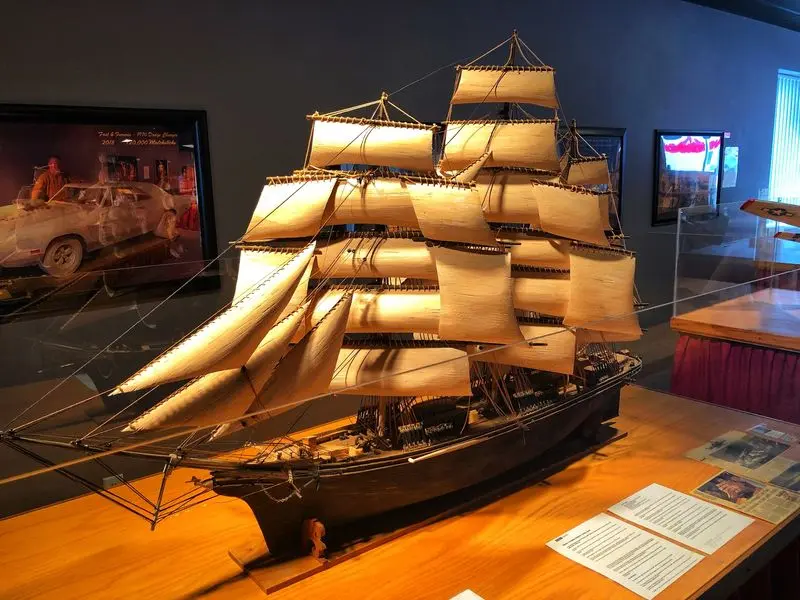
Watching how an idea becomes a finished object can be as interesting as seeing the object itself. Several visitors mention videos that explain the artist’s story and the development of his projects. One review specifically describes PBS documentaries playing during the visit.
If a video is available, leave time to watch at least part of it. Background information can help you connect the finished displays with the planning and effort behind them. It also gives your eyes a break after studying many small details.
Staff receive frequent praise in the supplied reviews for being friendly and knowledgeable. Ask whether they can explain a model’s matchstick count, construction time, or place in the artist’s career. A short conversation may answer something that a photograph cannot.
Some reviewers report meeting Acton himself, but an artist appearance should never be assumed. Consider it a welcome bonus if your visit happens to coincide with his presence. The collection remains the main reason to come.
This part of the experience is especially helpful for anyone who thinks creativity means having instant inspiration. The displays suggest a different story, built around repeated effort and patient choices. Learning that story can make the finished models feel less like magic and more like remarkable human achievement.
A Local Collection With a Wider Reach
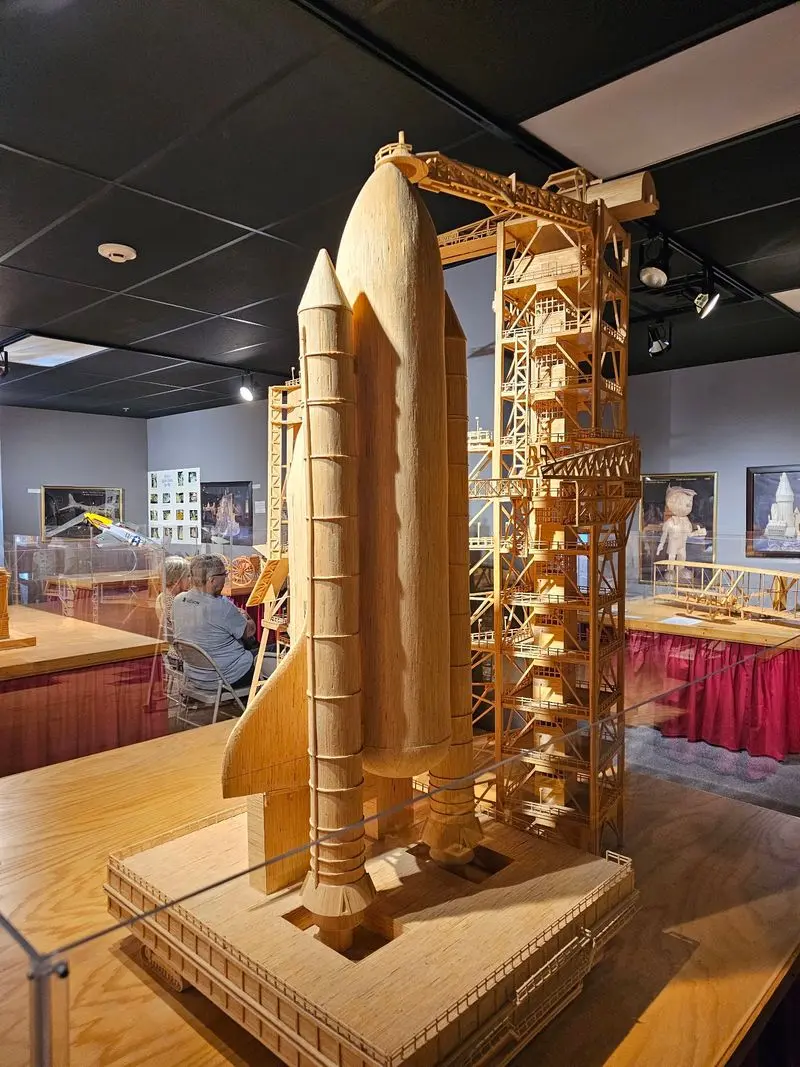
Not every creation stays under the same roof. Visitor accounts note that some of Acton’s work appears at Ripley’s Believe It or Not locations. That wider reach helps explain why the museum represents only part of his output.
One reviewer estimated seeing about 25 pieces from a body of more than 80 creations. Those numbers reflect that person’s visit and should not be treated as a guaranteed current inventory. They still offer useful context for understanding the collection as a selection rather than a complete archive.
A smaller group of works can actually make a visit easier to enjoy. You have room to compare subjects, notice different approaches, and spend longer with the pieces that interest you. There is no need to rush just to say you saw everything.
When browsing images before your trip, check whether a pictured model is actually on display at the museum. An artwork associated with Acton may be housed somewhere else. Contacting staff is safer than assuming every search result belongs to the current collection.
The broader story adds another layer to the visit: a highly unusual craft has reached audiences beyond one gallery. Yet the appeal remains personal and direct. You stand near the work and discover what repeated wooden pieces became.
Plan an Easy Afternoon Visit
A little preparation keeps the practical details from interrupting the fun. The supplied listing gives daily hours of 1 to 5 p.m., making an afternoon stop the sensible starting plan. Check the museum’s website or call 641-473-2410 before traveling, since schedules can change.
Several reviews mention cash admission, and one reports a five dollar ticket. Bring cash, but confirm the current price and payment policy rather than relying on an older visitor account. That quick check is especially useful when planning for a family or group.
Allow roughly 30 to 60 minutes for the collection, with extra time if you enjoy videos or detailed viewing. Visitor reports range from a short half hour stop to more than an hour. Your own pace will depend on how closely you study the models.
For accessibility needs, seating questions, or group arrangements, contact the museum directly before arriving. The supplied information does not establish those details. Asking ahead is better than guessing from photographs or reviews.
Finally, avoid packing your schedule so tightly that you must hurry through the displays. The attraction works best when you can pause, compare, and look again. An ordinary afternoon becomes far more memorable when you give these extraordinary wooden creations your full attention.