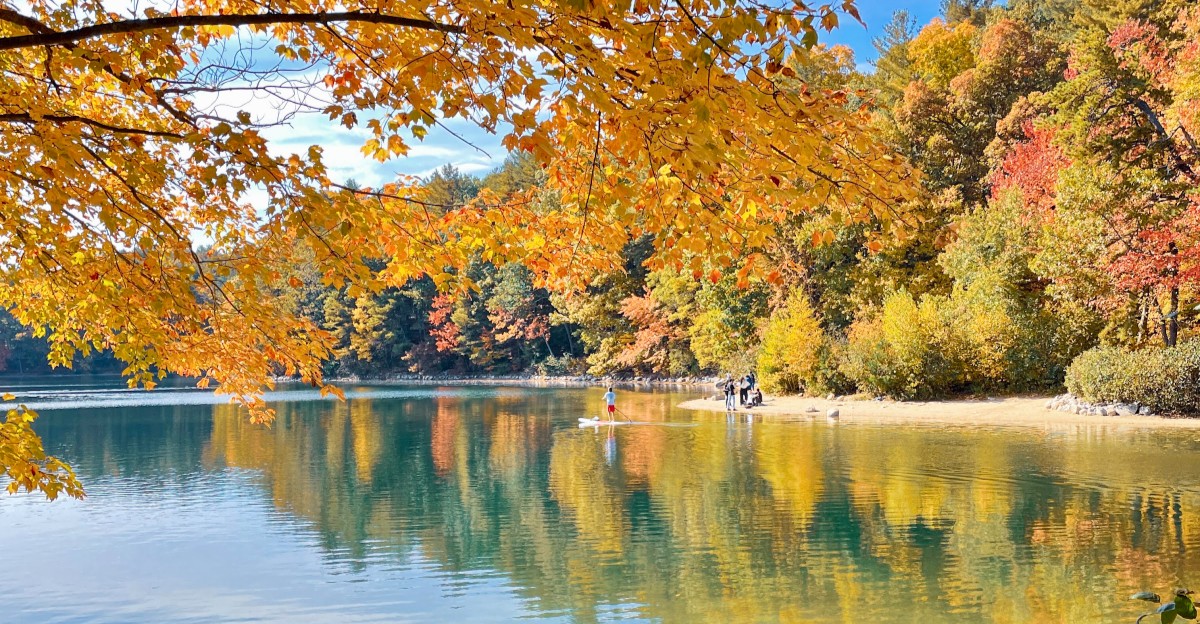
For a moment, the clear blue-green water at Walden Pond can look more like a secluded tropical lagoon than a Massachusetts landmark. In Concord, Massachusetts, the pond’s sandy shoreline and remarkably clear shallows create an unexpected scene, especially when sunlight reaches the water and the trees frame the view.
Walden Pond is beautiful, but its appeal goes well beyond the water. This protected landscape is closely tied to Henry David Thoreau, whose time beside the pond became part of one of America’s most enduring literary stories.
Visitors can swim from the sandy beach, walk wooded paths, visit the site associated with Thoreau’s cabin, and pause beside the water to take in the quiet. It is the kind of place where a simple shoreline can lead to both a refreshing afternoon and a deeper connection to history.
Around the next bend, more of Walden Pond’s scenery and stories await.
Clear Shallows That Might Fool Your Camera
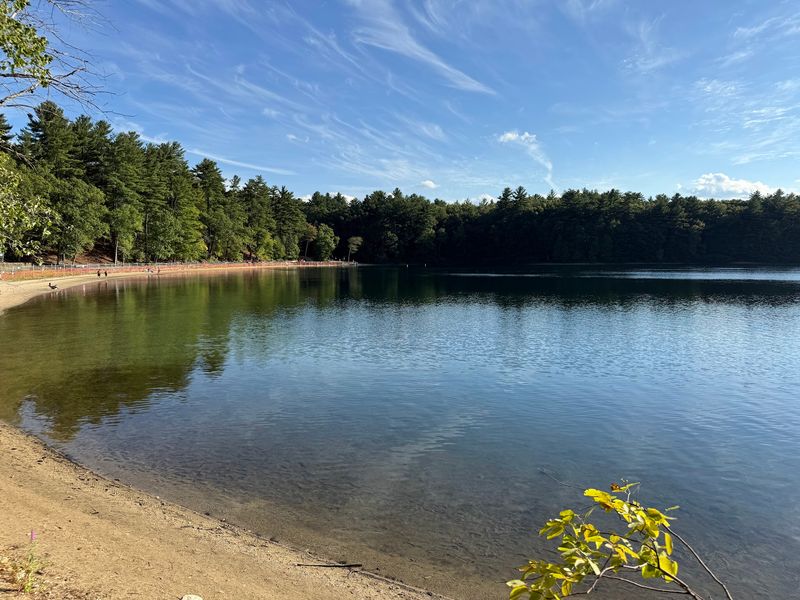
For a moment, the sandy bottom seems closer than it really is. Sunlight passing through the shallows can give the water a soft green or blue glow, especially when the surface is calm.
That surprising view is part of the appeal of Walden Pond in Concord, Massachusetts. Visitors often praise its clear water, but the tropical comparison describes a visual effect, not warm ocean temperatures or guaranteed Caribbean colors.
For the best chance of seeing beneath the surface, look from a permitted shoreline area on a bright day with little wind. Ripples, cloud cover, seasonal changes, and swimmers stirring the sand can all change what you see.
Polarized sunglasses may help reduce glare without changing the scene itself.
Give yourself a few minutes before reaching for your phone. Notice the shift from pale shallows to darker water farther out, then frame the trees above that color change.
A photo can capture the contrast, but standing there lets you watch it move with every passing cloud. Keep your feet on approved paths and beach areas so the fragile shoreline stays protected for future visitors.
A Sandy Beach With a New England Backdrop
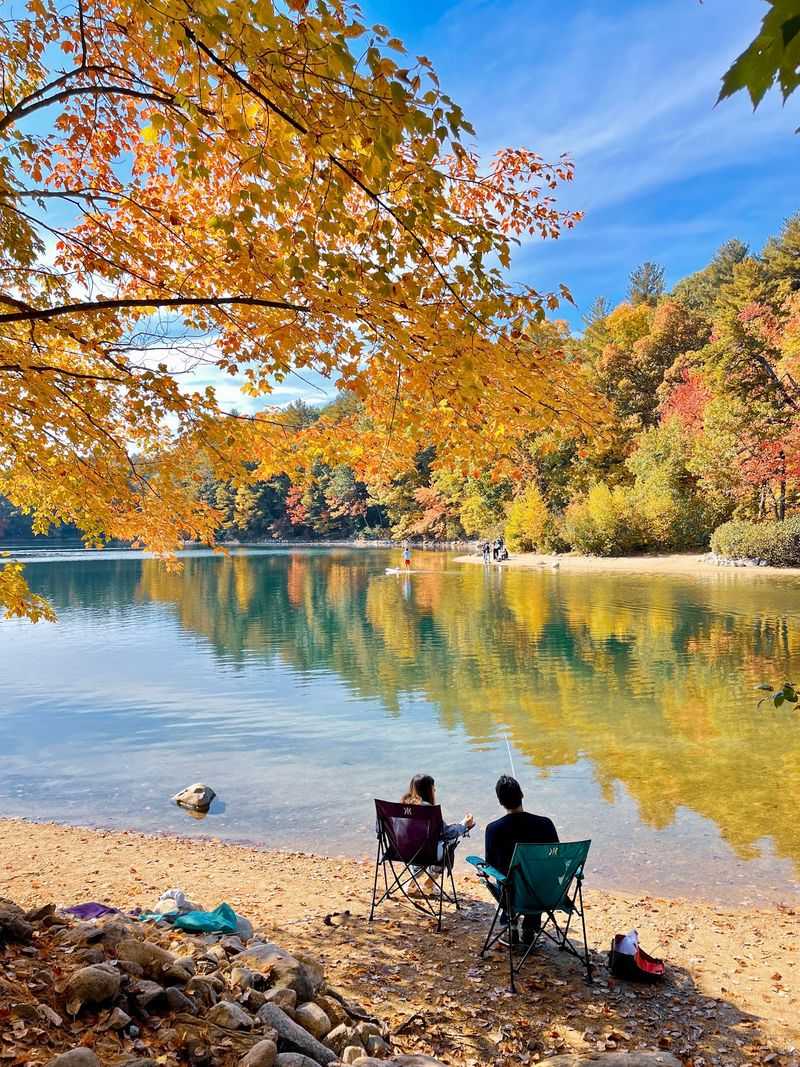
A towel, a patch of sand, and an afternoon without a packed schedule can feel like a small vacation. The pleasure here is simple: settle near the water and let the woods frame your view.
Walden Pond has a designated swimming beach that draws plenty of visitors during warm weather. Unlike an ocean beach, the setting is enclosed by trees, with freshwater stretching toward the opposite wooded bank.
Pack drinking water, sun protection, and only what you can comfortably carry from the parking area. Check current beach rules before bringing extra gear, and keep all belongings within permitted areas.
A small towel and a change of clothes are useful even if your plan is only to wade.
Expect company on hot summer days rather than an empty literary retreat. Families, walkers, and swimmers share this protected place, and that lively mood can be part of its charm.
If a quieter shoreline matters more than beach weather, choose a cooler weekday instead. Before leaving, collect every wrapper and small piece of litter around your spot, including anything that might otherwise blow into the pond.
A Swim That Deserves a Little Planning
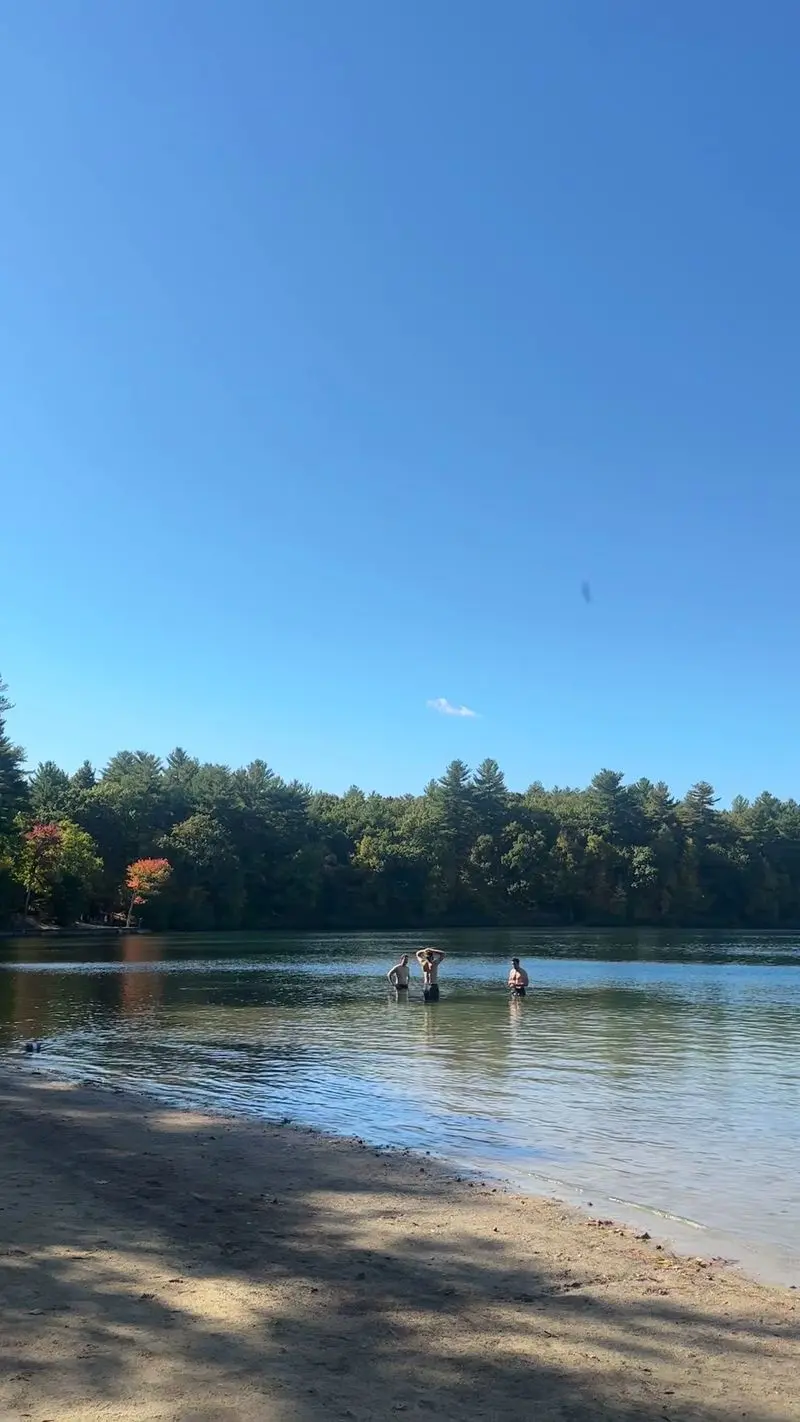
Cool water can reset the mood of an entire summer day. After a warm walk, even a short swim may feel more refreshing than another hour spent searching for the perfect view.
At Walden Pond, swimming is a popular activity, but clear water should never be mistaken for shallow water everywhere. The pond is deep, and conditions beyond the beach can be very different from what you see at your feet.
Use designated swimming areas and follow posted instructions, closures, and any lifeguard guidance. Check the state reservation’s current swimming information before traveling, since water conditions and staffing can change.
Children and less confident swimmers need close supervision, regardless of how calm the surface looks.
Keep your outing within your abilities instead of copying experienced swimmers you happen to see. A leisurely dip near shore can be enough to enjoy the setting without attempting a long crossing.
Bring a dry layer for afterward, because shaded paths can feel cool against wet skin. Once you are back on the sand, take a breath and enjoy the wooded horizon before rushing toward your next stop.
The Shoreline Walk That Keeps Changing the View
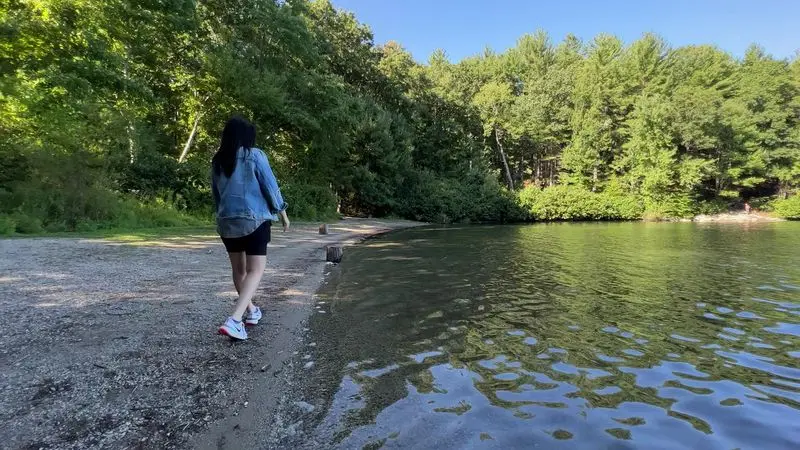
Every bend offers a slightly different pond. One stretch opens toward bright water, while another slips into shade where tree trunks break the view into narrow blue pieces.
The walk around Walden Pond is a favorite way to experience more than the swimming beach. The shoreline route is roughly a mile and a half, though detours, trail conditions, and stops can change your outing.
Allow about an hour for an unhurried circuit, with extra time for photographs or historic stops. Wear shoes with decent grip, because roots, uneven ground, mud, or winter ice can make a seemingly easy walk more demanding.
Follow marked routes and respect any closed sections rather than cutting closer to the water.
You do not need to turn the loop into a fitness challenge. Pause where access allows, compare the water’s colors, and listen for birds between the sounds of other visitors.
Roads and passing trains may still be audible, so expect nature beside daily life rather than complete silence. Carry water in warm weather and check for ticks afterward, especially if you have brushed against vegetation along the trail.
A Tiny Cabin With an Outsized Story
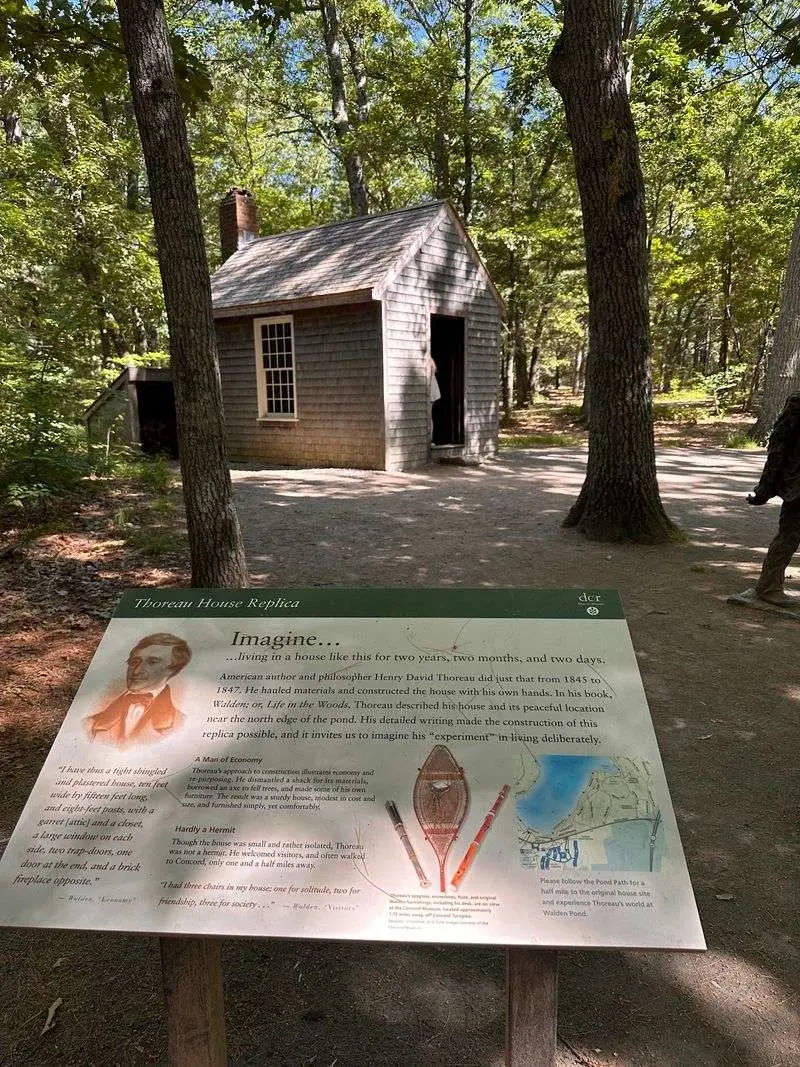
A room this small makes modern packing habits look a little funny. Standing beside a simple cabin, you may start wondering how many of your everyday belongings you actually use.
The replica of Henry David Thoreau’s cabin at Walden Pond helps give shape to that question. It offers a sense of the modest shelter connected with his experiment in simpler living, without being the original building.
Thoreau lived near the pond from 1845 to 1847, and those years helped form his book Walden, published in 1854. Seeing the cabin’s scale makes that history easier to picture than reading dates on a page.
Look for current interpretive information to understand which details belong to the replica and which describe his original home.
Leave time to notice the structure rather than treating it as a quick photo stop. Imagine fitting sleep, reading, and daily chores into such a limited space, then compare that with the broad outdoor setting.
You do not have to agree with every idea Thoreau explored to find the contrast interesting. The visit gives the pond a human story alongside its appealing water.
The Original Homesite Rewards a Slower Stop
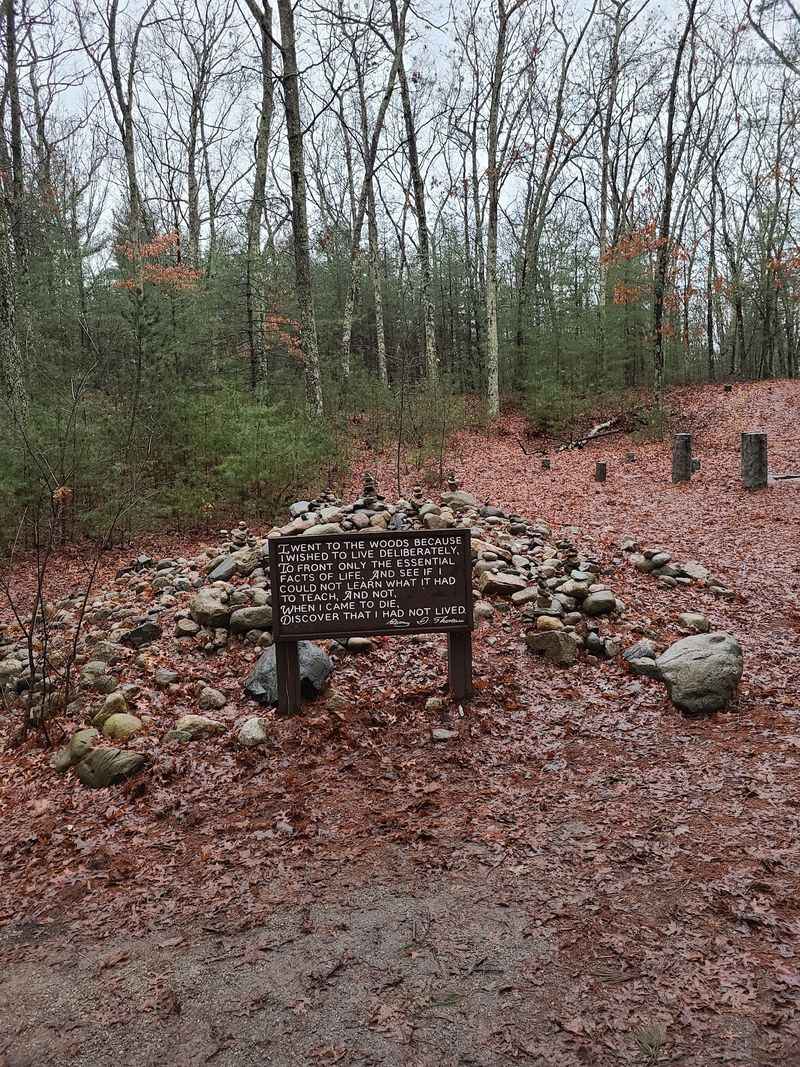
Sometimes the most memorable landmark is the space where something used to stand. Without a full building to fill the view, your attention shifts toward the ground, the trees, and the story.
Near Walden Pond, the marked site of Thoreau’s original cabin offers that quieter kind of encounter. It is separate from the replica, so visiting both helps avoid confusing a modern reconstruction with the historic location.
Follow the reservation’s signs to reach the site, and give yourself time to read the information there. A nearby stone cairn reflects the long tradition of visitors remembering Thoreau, but leave natural materials where they belong unless current park guidance explicitly allows otherwise.
Respect barriers and avoid stepping into protected areas for a better photograph.
The stop works especially well during a shoreline walk, when you have already felt the distance between beach activity and woodland shade. Rather than expecting a grand monument, arrive ready for a modest place with a lasting connection to American writing.
Read a short passage from Walden before your visit if you like. Familiar words can make this small patch of ground feel unexpectedly personal.
Ice Shaped the Pond Long Before Thoreau
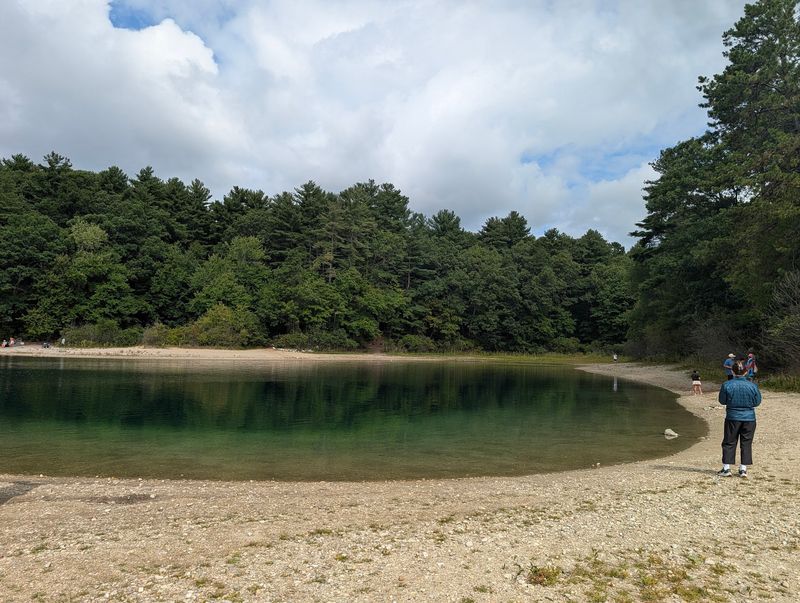
The beach looks peaceful, but its beginning belongs to a world of moving ice. Long before books or swimming towels arrived, glaciers helped shape the hollow that holds the water.
Walden Pond is a kettle-hole lake, formed through processes linked to retreating glaciers. A buried or stranded block of ice melted, leaving a depression that eventually became a pond.
That history adds another layer to the view from the shore. The darker water away from the beach is a reminder that this is a deep basin, not simply a shallow woodland pool.
Its appearance changes with light, weather, and what is happening in the water, so clarity alone cannot explain the whole landscape.
Look for geology information in the visitor center or on interpretive signs during your visit. Children may enjoy imagining an enormous chunk of ice where swimmers now gather, while adults can appreciate how slowly landscapes take shape.
Keep that curiosity grounded in the present by staying on maintained paths and avoiding steep banks. The pond is beautiful as scenery, but knowing its origin turns a pleasant view into a much longer story.
The Visitor Center Adds Meaning to the Scenery
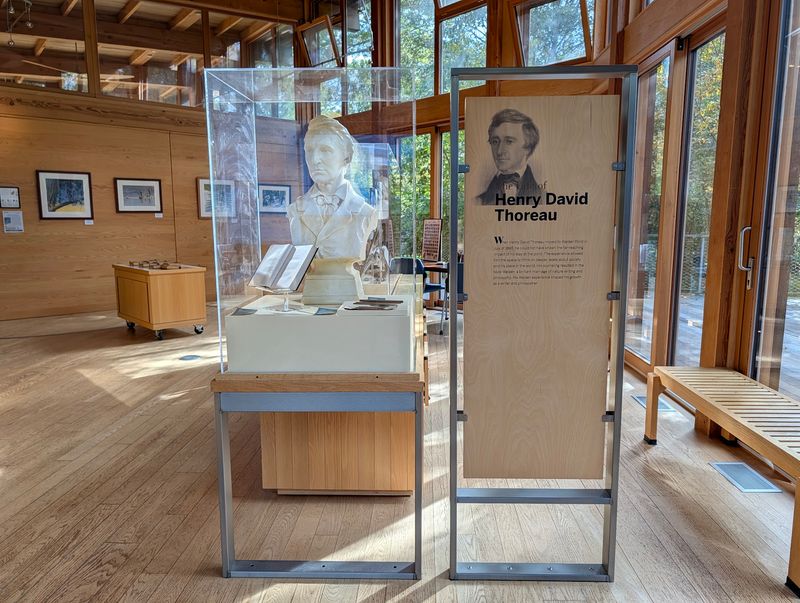
A beautiful view becomes richer when you know what you are looking at. A short indoor stop can turn a beach outing into a visit with history, questions, and a clearer sense of place.
The visitor center at Walden Pond is a useful starting point for learning about Thoreau and the reservation. Visitors frequently praise it, and it can help connect the cabin story with the landscape outside.
Check current opening hours before planning your day around access to the building. When available, use posted information and staff guidance to confirm trail conditions, swimming updates, and any areas that are closed.
This is also a sensible moment to ask about accessibility needs rather than guessing from photographs online.
Give the stop enough attention to find one detail that interests you, then carry that thought onto the trail. Perhaps the cabin’s small size catches your imagination, or the pond’s glacial past changes how you see the shoreline.
You do not need to absorb every display to benefit. A few minutes of context can make the next hour outside feel more connected, especially if this is your first visit.
Cooler Seasons Reveal a Different Personality
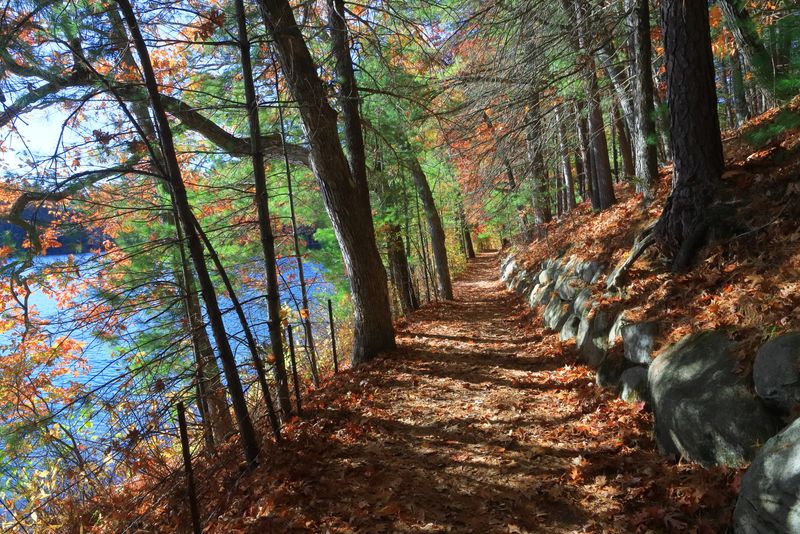
A red leaf floating near shore can steal the show from the brightest summer water. When beach season fades, the woods become a larger part of the pond’s personality.
Autumn at Walden Pond brings changing foliage, while winter can offer bare branches and a more open view through the trees. Visitors seeking fewer crowds often prefer these cooler periods, although no season guarantees solitude.
Dress for conditions rather than the calendar, and check reservation notices before leaving home. Wet leaves can hide roots, and winter paths may be slippery even when the parking area looks clear.
Stay off pond ice unless authorities explicitly permit access and confirm safe conditions; appearance alone is not a reliable guide.
Bring a warm drink for before or after your walk, and keep your route flexible if weather turns uncomfortable. You may hear traffic or a train, but the smaller beach crowds can still change the mood considerably.
Instead of chasing a tropical-looking photograph, watch for reflections, tree shapes, and shifting light. Returning in another season shows how one familiar shoreline can offer an entirely different reason to linger.
A Smart Arrival Keeps the Day Enjoyable
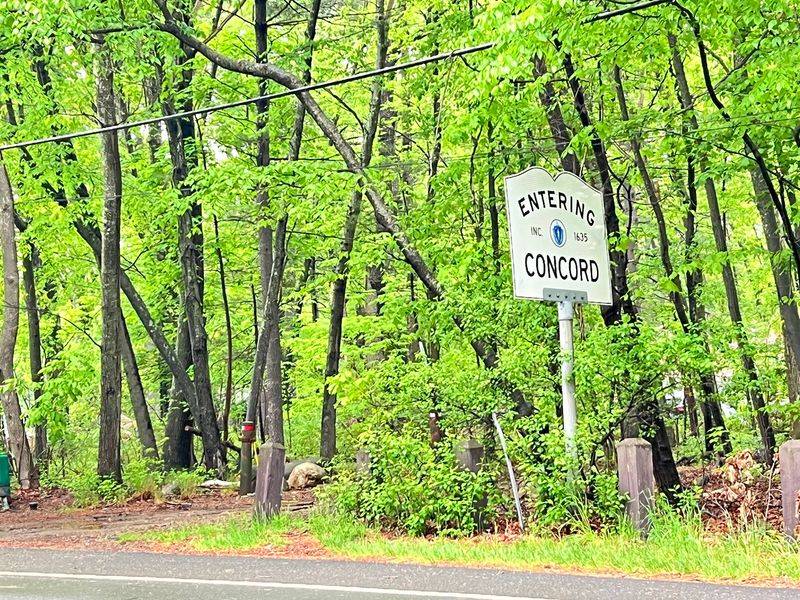
The least scenic part of a pond day can decide how the rest of it feels. Arriving with a little preparation is far better than discovering a full parking lot after a long drive.
Walden Pond State Reservation can reach capacity on busy summer days, with entry temporarily restricted. Check official Massachusetts park information and current alerts before departure, then check again if conditions suggest heavy demand.
Parking fees can differ for Massachusetts and other vehicle registrations, and published visitor reviews may contain outdated prices. Confirm current rates, payment options, operating hours, and gate closing times rather than relying on an old trip report.
Earlier arrival may help, but it does not guarantee admission or reentry later.
Leave pets at home because the reservation does not allow them, apart from applicable service animal access. Pack water, comfortable shoes, and a bag for your trash, then choose a realistic plan: a swim, a walk, or both with time to spare.
Follow staff directions if the lot is closed instead of attempting roadside parking or drop-offs. A flexible schedule helps protect your mood and keeps this heavily visited shoreline manageable for everyone.