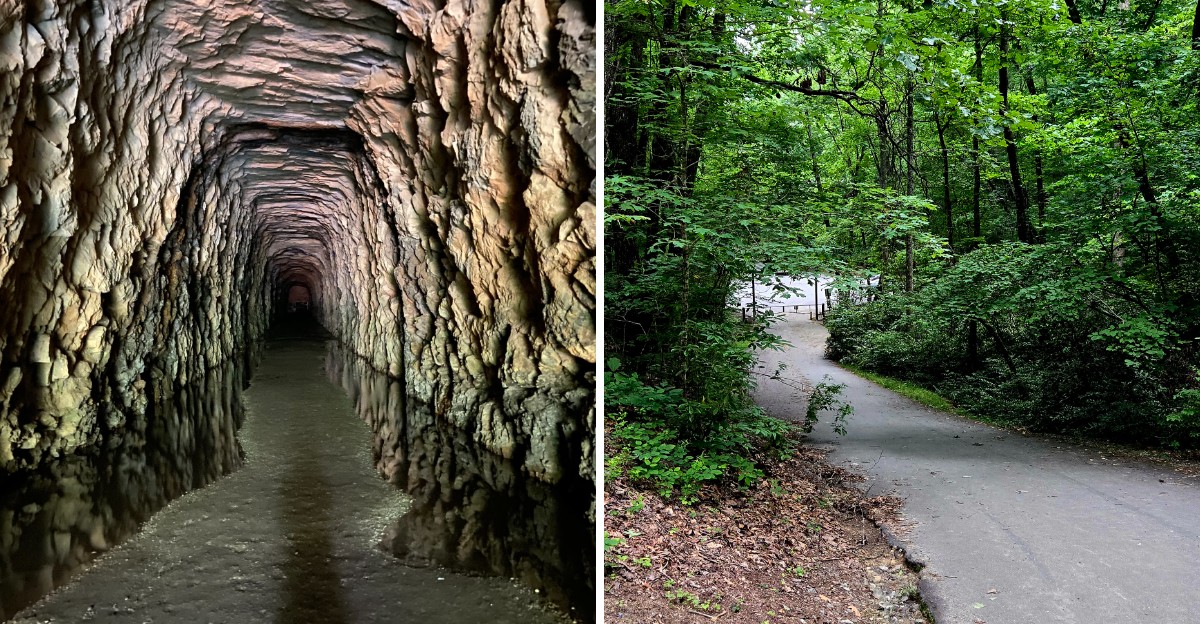
Step into a forgotten tunnel, and feel the temperature drop in an instant!
In Walhalla, South Carolina, an unfinished railroad passage from the 1850s hides inside a mountain, waiting for curious visitors to discover its chilly secrets.
Stumphouse Tunnel was supposed to carry trains through the rugged Blue Ridge Mountains, but money troubles brought construction to a halt.
No train ever completed that journey, leaving behind a remarkable piece of history frozen in time.
Today, you can walk into the rocky passage and feel the cool air against your skin, even when summer heat blankets the Upstate.
The darkness, rough stone walls, and echoes make every step feel like an adventure.
Add nearby Issaqueena Falls and beautiful woodland scenery, and you have a day trip packed with history, mystery, and unexpected surprises.
Step Inside the Unfinished Stumphouse Tunnel
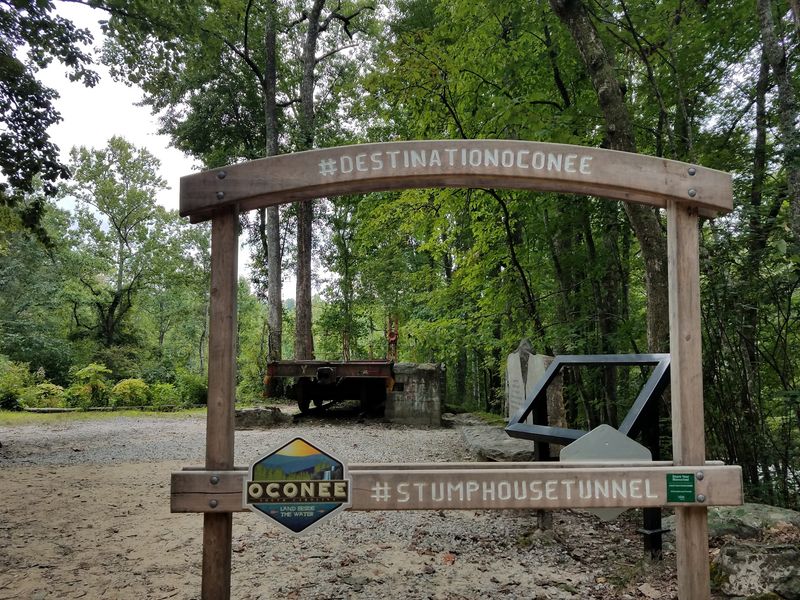
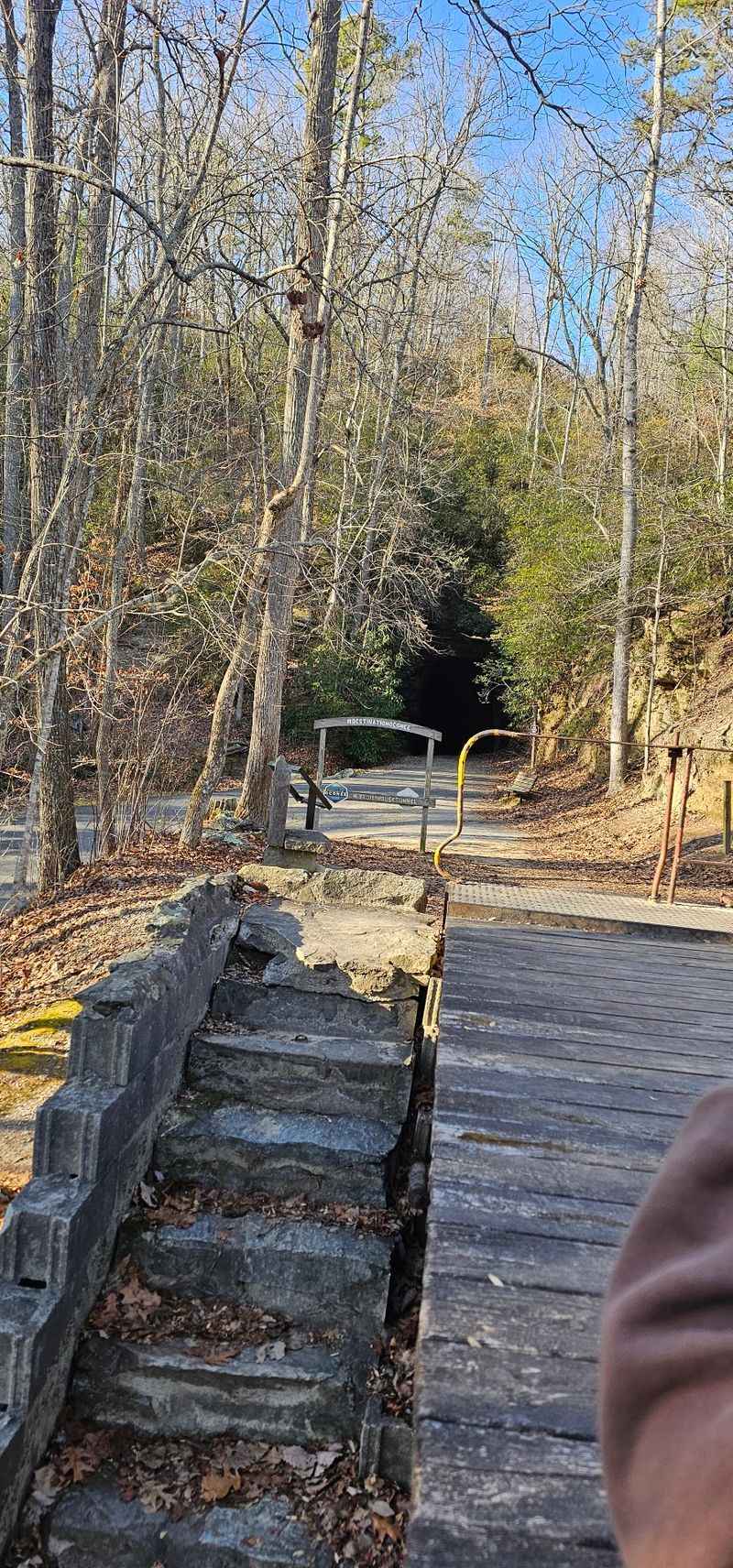
Picture a sunny afternoon in the South Carolina hills. You are walking along a path lined with green trees, and then a giant dark opening appears in the side of the mountain.
That is your doorway into Stumphouse Tunnel.
Most tunnels you have seen were built so cars or trains could pass through them. Stumphouse is different because it was never finished, so it simply stops deep inside the rock.
Walking in feels a bit like entering a secret cave that people carved by hand long ago.
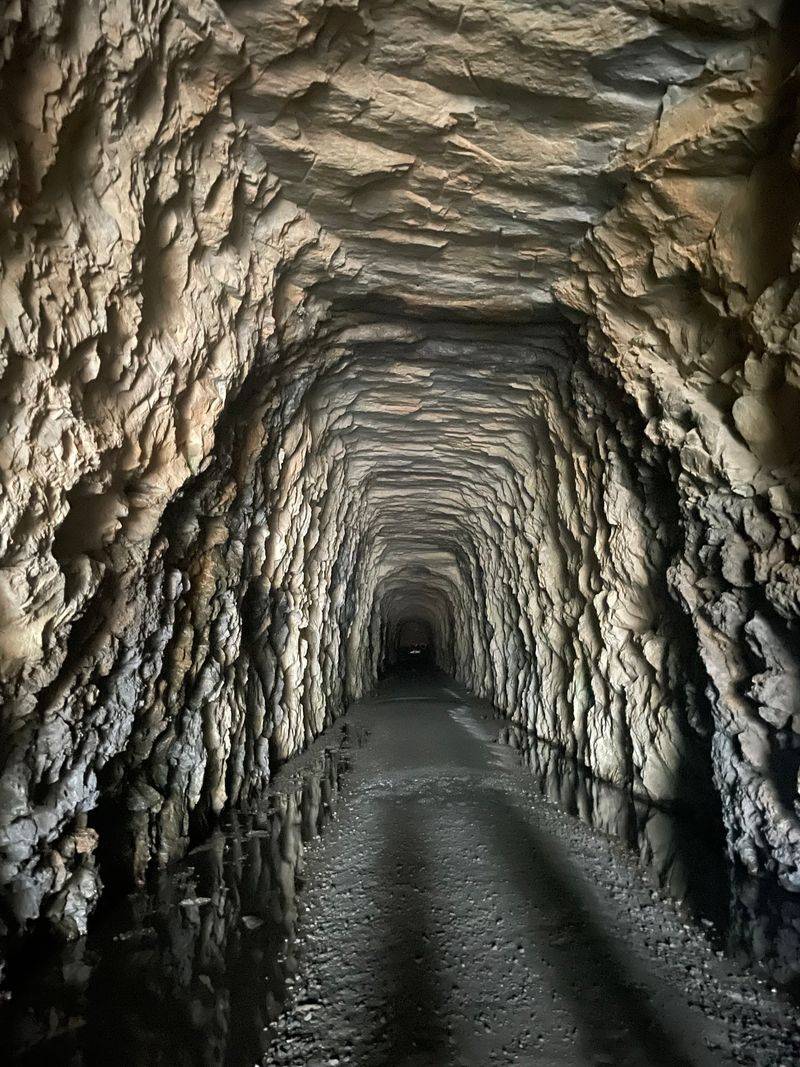
The walls are rough stone, and water often drips from above. Your voice may echo when you talk, which kids usually love to test.
The light from the entrance fades the farther you go, so the outside world starts to feel very far away.
Take a moment to stop and look back at the bright opening behind you. The contrast between the glowing green forest and the shadowy passage makes a great photo.
It also helps you understand just how much rock workers had to push through.
Discover the Ambitious Railroad Plan Behind the Tunnel
Back in the 1850s, Charleston business leaders had a big dream. They wanted a railroad that could carry goods from their busy seaport all the way to the Ohio River Valley in the Midwest.
That plan became known as the Blue Ridge Railroad.
There was one giant problem, though. The Blue Ridge Mountains stood right in the way, and trains cannot climb steep slopes easily.
The answer was to go straight through the mountains with tunnels, and Stumphouse was the biggest one planned.
Think about how bold that idea was at the time. There were no bulldozers, no electric drills, and no modern machines.
Planners believed hard work and determination could beat a mountain made of solid granite.
If the railroad had been finished, Charleston might have become one of the most powerful trade cities in America. Farmers and merchants could have shipped crops and products much faster.
Standing inside the tunnel, you are looking at the leftover piece of a plan that could have changed the whole region’s future.
Feel the Temperature Drop as You Leave the Sunlight
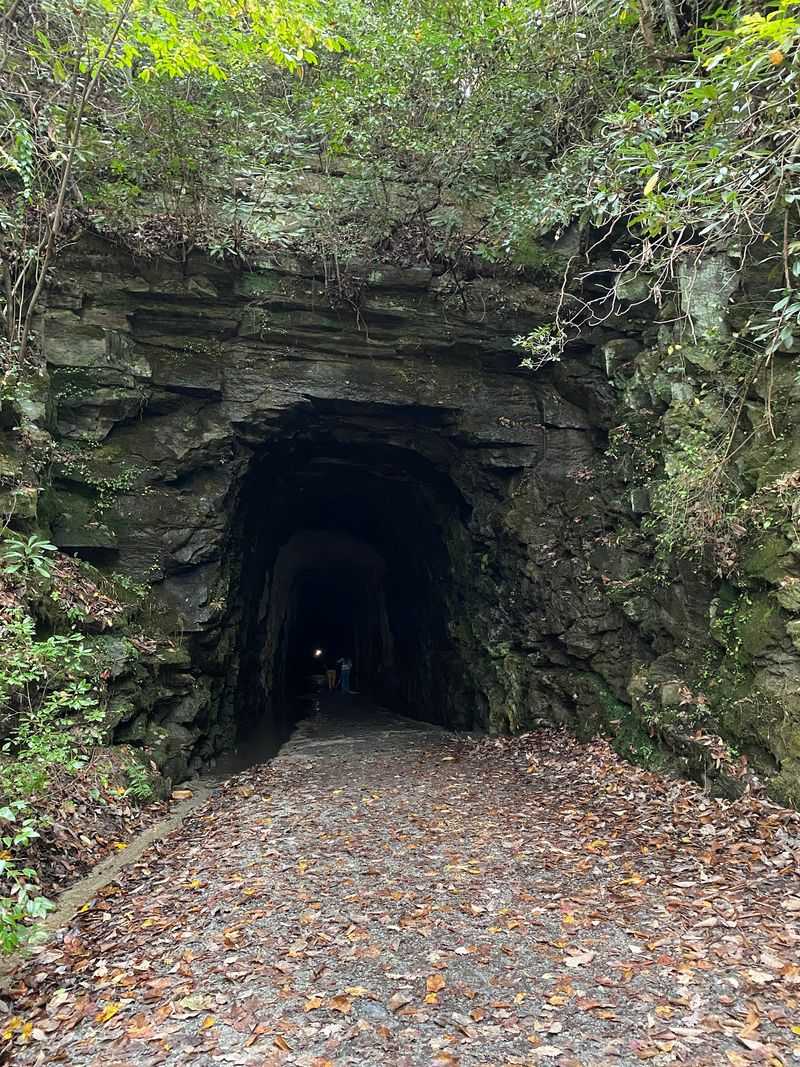
Goosebumps in July? It sounds silly until you visit.
On a sticky summer day, the air outside Stumphouse Tunnel can feel heavy and hot, but just a few steps inside, everything changes.
The thick rock around the tunnel acts like a giant cooler. Stone holds a steady temperature all year long, so it does not heat up much when the sun beats down outside.
That means the air inside stays chilly no matter what month you visit.
Sometimes you can even see a little fog or mist near the entrance. That happens when warm, damp outdoor air meets the cool tunnel air.
It looks a bit mysterious, almost like a scene from a movie.
Here is a fun idea for families. Bring a small thermometer and check the reading outside, then check it again deep in the tunnel.
Kids love seeing the numbers drop, and it turns a simple walk into a mini science lesson. Just remember to pack a sweater, because the shivers sneak up quickly.
See How Far Workers Managed to Dig Into the Mountain
Roughly 1,600 feet. That is how far workers dug into Stumphouse Mountain, which is longer than five football fields placed end to end.
Now imagine doing it mostly by hand.
Crews in the 1850s used hammers and steel drills to punch holes into the granite. Then they packed those holes with blasting powder and set it off to break the rock apart.
After each blast, workers hauled away the broken stone and started all over again.
The work was slow, loud, dusty, and dangerous. Many of the people who did this labor, including Irish immigrants and enslaved workers, faced long days in harsh conditions.
Remembering them adds real meaning to your visit.
As you walk, run your eyes along the jagged walls. Those uneven surfaces show the marks of human effort, not smooth machines.
Visitors usually cannot walk the entire length today, but even the part you can see gives you a strong feeling for how massive the job truly was. It is humbling to stand where so many hands once struggled.
Learn Why Construction Came to a Halt in 1859
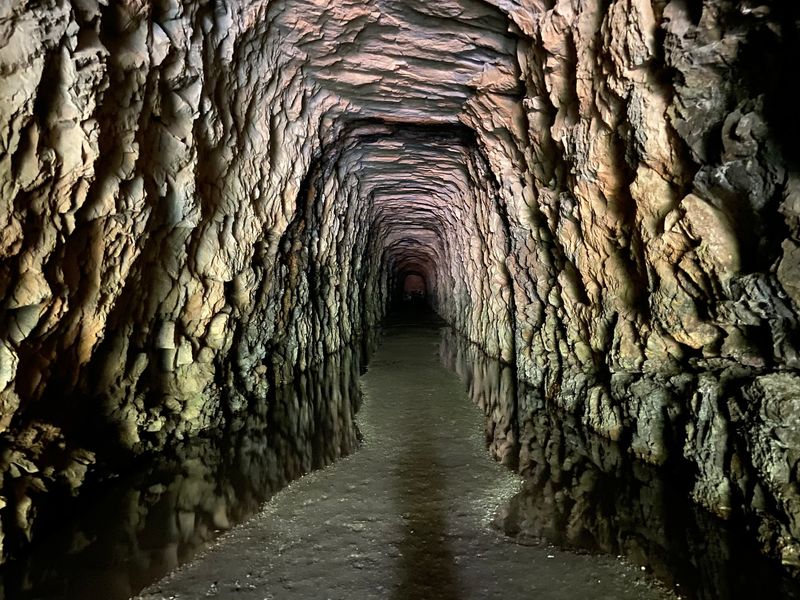
Every good story needs a twist, and this one has a sad ending. By 1859, after years of digging and spending huge amounts of money, the railroad company simply ran out of cash.
The tunnel was still far from reaching the other side of the mountain.
Leaders asked the state of South Carolina for more help, but the funding never came through. Meanwhile, tension between the North and South was growing fast.
Soon the Civil War began in 1861, and nobody had time or money for a mountain railroad anymore.
After the war, the South was struggling to rebuild. A few people talked about finishing the project, but those plans fizzled out each time.
The tools went quiet for good, and nature slowly moved back in around the entrance.
What you see today is a frozen moment in history. It is a reminder that even the biggest dreams can stall when money and world events get in the way.
Ask yourself while you walk: what might Walhalla look like if trains had rumbled through here?
Discover the Tunnel’s Unexpected Blue Cheese Connection
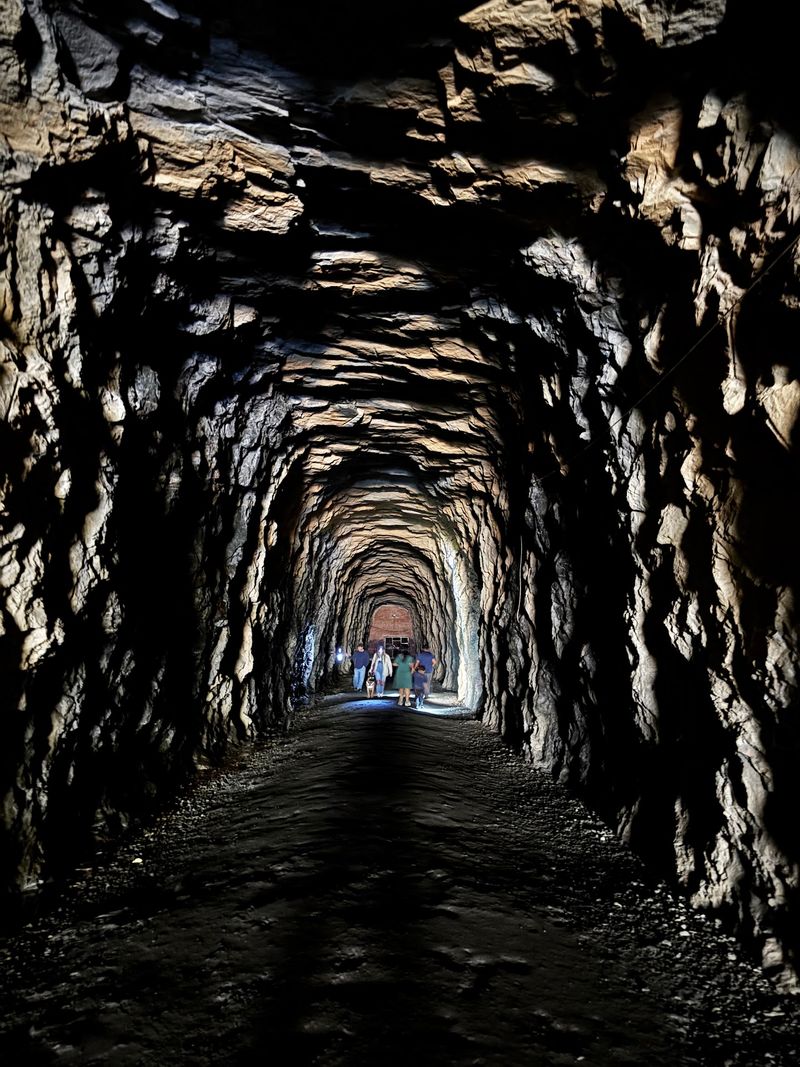
Here is a fact that makes people laugh: a failed railroad tunnel helped make cheese. Yes, really.
Stumphouse Tunnel got a tasty second life thanks to Clemson University.
In the 1950s, researchers discovered that the tunnel’s cool, damp air was almost perfect for aging blue cheese. Blue cheese needs steady chill and lots of moisture to develop its famous flavor and those blue-green streaks.
The tunnel delivered both without any fancy equipment.
Clemson scientists stored and studied cheese inside the passage, turning the old rock tube into a natural lab. Later, the university built special rooms on campus that copied the tunnel’s conditions.
Clemson Blue Cheese is still made and sold today, and many fans love it.
Did you know? Famous cheeses in Europe, like French Roquefort, are also aged in cool caves.
So this little corner of South Carolina joined a cheesy tradition that goes back centuries. Want a fun souvenir idea?
Try some Clemson Blue Cheese after your visit and taste a little bit of tunnel history.
Visit Issaqueena Falls Just a Short Walk Away
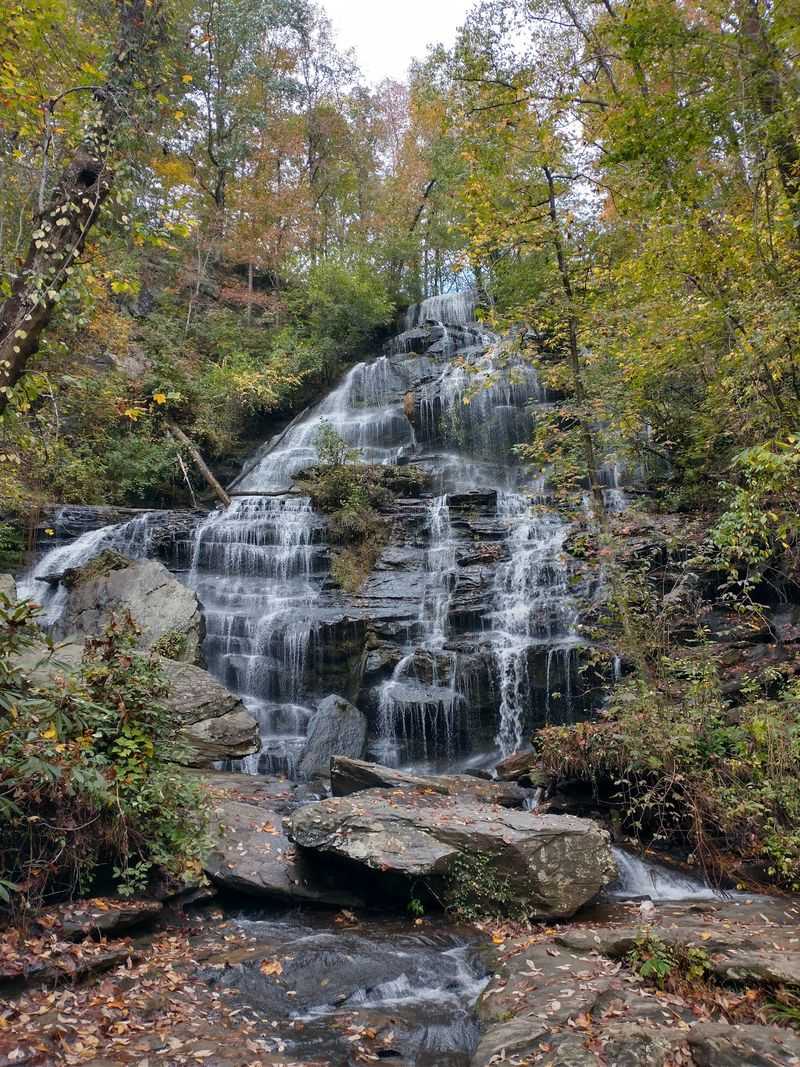
After the shadows of the tunnel, the bright splash of a waterfall feels like a reward. Issaqueena Falls sits inside the same park, and it only takes a short stroll to reach it.
The falls drop about 100 feet down a rocky cliff, tumbling in white ribbons of water. A wooden viewing platform gives you a safe and easy spot to watch and snap photos.
In spring or after a good rain, the water roars with extra power.
Local legend says the falls are named after a Native American woman named Issaqueena. The story claims she pretended to leap from the falls to escape danger but actually hid behind the water.
Whether true or not, it is a fun tale to share with your group.
A steeper path leads closer to the base, but it can be slick and tricky. If you have little kids or want a relaxed outing, stick with the overlook.
You will still get a gorgeous view without the risky scramble down.
Explore the Park’s Trails and Forest Scenery
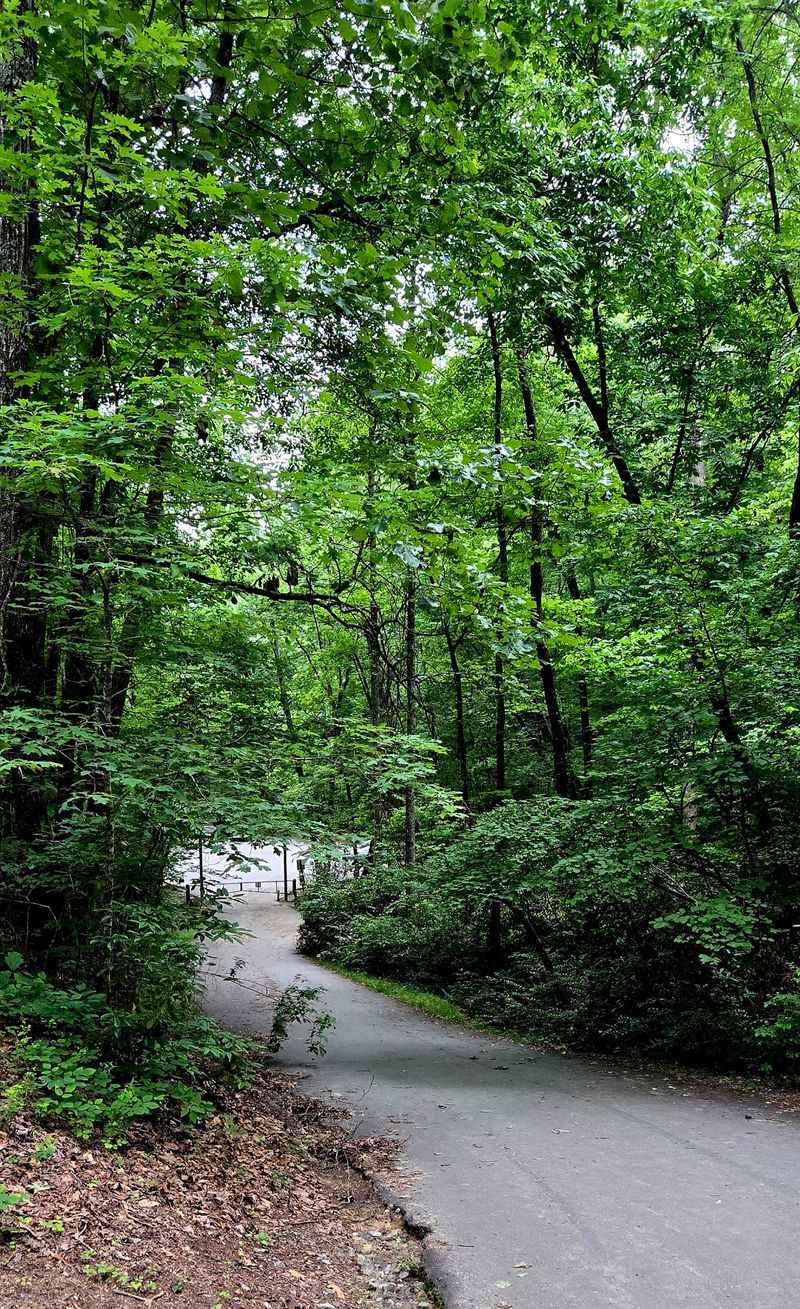
Lace up those boots, because the adventure keeps going once you leave the tunnel. Stumphouse Mountain Park is wrapped in thick forest, and several trails let you wander deeper into the Upstate’s hills.
The Blue Ridge Railroad Trail follows parts of the old railroad route, so history buffs can spot leftover cuts and grades along the way. It is a neat way to picture where tracks might have run.
The Stumphouse Passage of the Palmetto Trail also passes through the area for hikers who want a longer outing.
Along the paths, you might see mountain laurel, tall hardwood trees, mossy rocks, and small streams. Birds chatter overhead, and in fall the leaves turn bright orange and red.
Mountain bikers also enjoy trails in the park.
Before heading out, check trail conditions and pick a route that fits your energy level and schedule. Bring water, snacks, and a map or phone with offline directions.
Even a short loop can feel like a mini escape into the wild.
Plan Your Visit to Stumphouse Tunnel
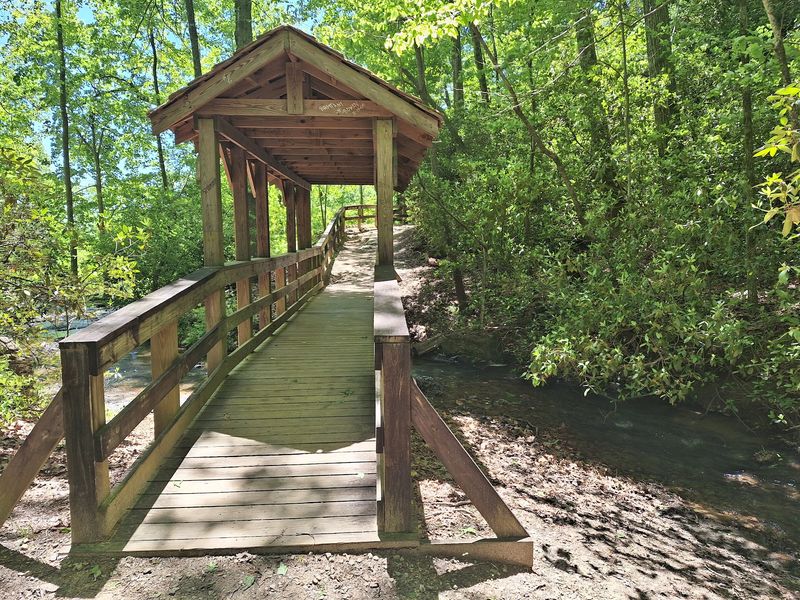
A little planning goes a long way toward a great trip. Stumphouse Tunnel is located on Stumphouse Tunnel Road in Walhalla, SC 29691, just a short drive from downtown Walhalla.
The park’s published phone number is (864) 638-4343 if you have questions.
Pack smart for the chill. The tunnel has historically stayed around 50 degrees Fahrenheit, so a light jacket is a good idea even in the middle of summer.
Sturdy shoes with good grip are a must because the floor can be wet and slippery.
A flashlight helps you spot puddles and see details on the walls, as long as the park allows it. Walk slowly and keep an eye on younger kids near damp spots.
Fees, hours, and access rules can change from time to time. Check the official Stumphouse Park website before you go, especially after storms or heavy rain, since the tunnel may close for safety.
A quick check now saves you from a disappointing drive later.