Staff here set off black powder on purpose, right in front of visitors. It’s a demonstration, of course.
Still, that’s a bold way to teach history.
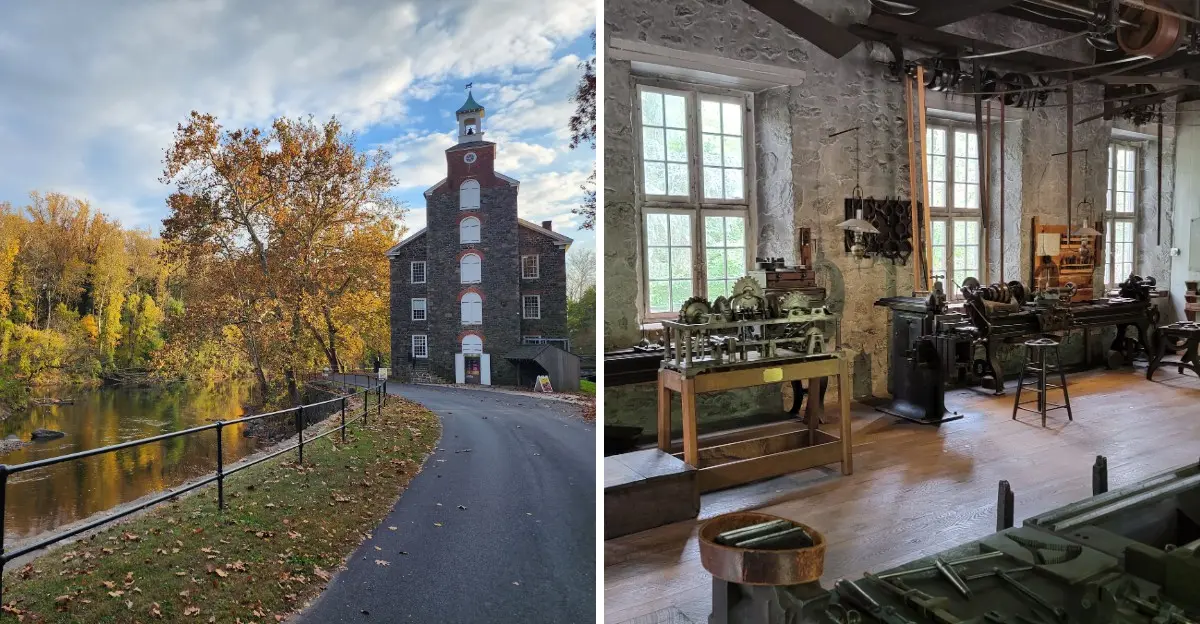
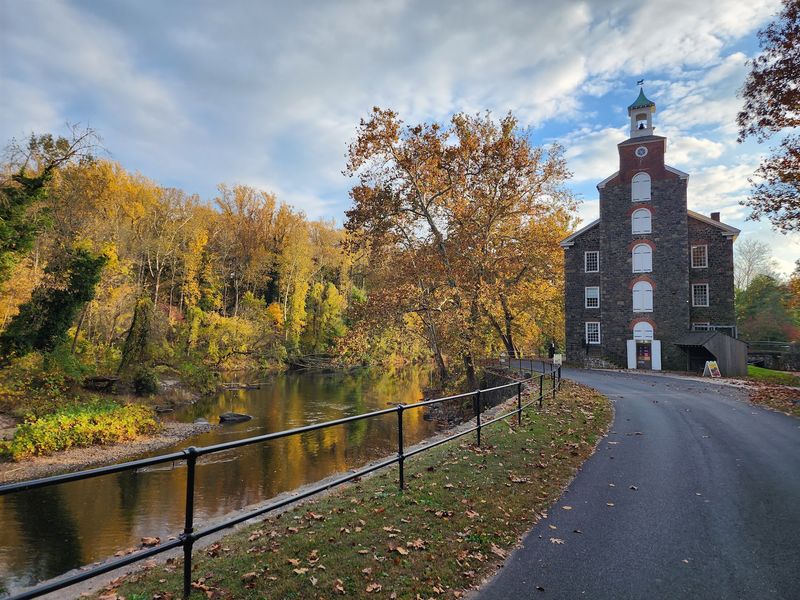
The stone mills behind that bang made black powder for more than a century. The river beside them turned the machinery.
Today, a roll mill still runs on water power along the same banks.
I like how this Delaware site refuses to stay behind glass. Machines hum and wheels turn.
A family mansion sits high on the hill above the old powder works.
I can’t imagine a better place to feel the weight of the early 1800s. You get rushing water, heavy stone walls, and the faint thrill of danger, all wrapped in gardens.
So how loud does history get when someone actually lights the fuse?
The Brandywine River Still Runs The Show Here
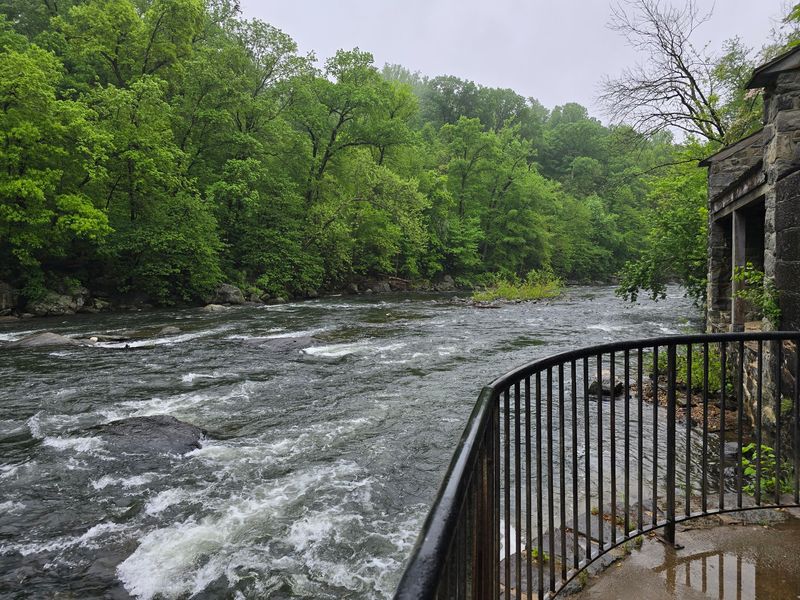
Rivers make great coworkers. They never take breaks, and the Brandywine River powered an entire gunpowder business for over a hundred years.
Hagley Museum and Library sits on that working riverbank in Wilmington, Delaware. The grounds stretch across 235 acres of indoor and outdoor exhibits.
E. I. du Pont founded his black powder works here in 1802.
The mills kept running until 1921, which is a long career for any factory.
Why this spot? The fast water could turn wheels and turbines all day.
That steady power made the river the beating heart of the operation.
Today, you can follow the same water that once drove the mills. Stone buildings line the banks, and the sound of the current follows you along the paths.
Plan for a long visit, because the property is large. Many people spend several hours exploring and still leave parts unseen.
Comfortable shoes are a smart choice here. A water bottle helps too, especially on warm days along the trails.
Think of the river as your tour guide. Almost every story on the property connects back to it somehow, from the machines to the mansion.
Cover Your Ears For The Black Powder Blast
Boom. That one word sums up the most talked-about moment along the Powder Yard Trail.
Hagley offers black powder explosion demonstrations that show what all those careful workers were making. It’s a quick, dramatic lesson you won’t forget anytime soon.
The trail itself is the core of the gunpowder story. Historic stone structures here once held different steps of the powder-making process.
Walking the path feels like following the recipe in order. Each building adds another piece to the puzzle of how raw ingredients became explosive powder.
Cannon firings happen at times too. They help show just how much force this tiny black material could pack.
Check the daily schedule when you arrive. Demonstrations run at set times, and you’ll want to be in the right place for the big moments.
Kids usually love this part, and honestly, so do adults. Few museums let a loud noise double as a science class.
Give yourself time between demos to read the signs. The background stories make each pop and puff of smoke much more meaningful.
A Roll Mill That Still Turns On Water Power
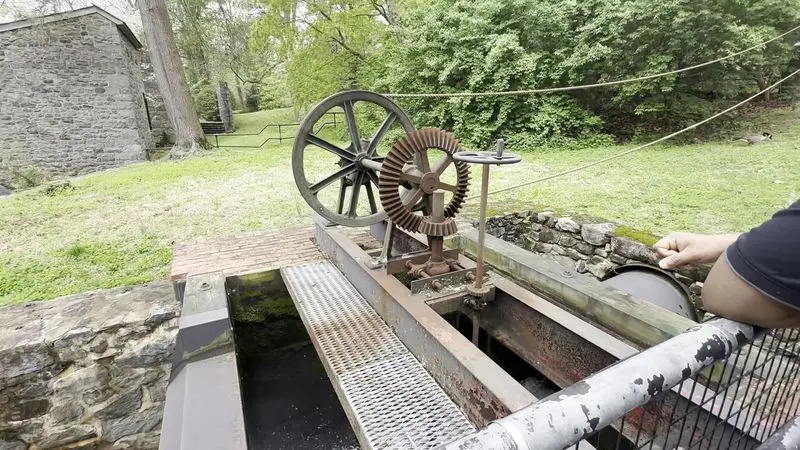
Only one black powder roll mill still operates in the whole country. You can find it right here at Hagley Museum.
The mill runs on water turbines, just like the old days. Watching those heavy wheels move gives you a real sense of the strength involved.
Roll mills crushed and mixed ingredients for black powder. It was slow, steady work that needed a lot of muscle from machines.
Seeing it in motion beats any textbook diagram. The machinery feels alive, and you can picture the workers who once watched over it.
Staff demonstrate how the water turns into power. They also explain why the process had to be handled so carefully.
Ask questions during the demonstration. The guides here know their history, and their answers often add surprising details.
Look closely at the stone building around the mill. Its sturdy design tells part of the safety story all by itself.
Pairing this stop with the explosion demo makes perfect sense. One shows how powder got made, and the other shows why people respected it so much.
Gears, Belts, And A 16-Foot Water Wheel
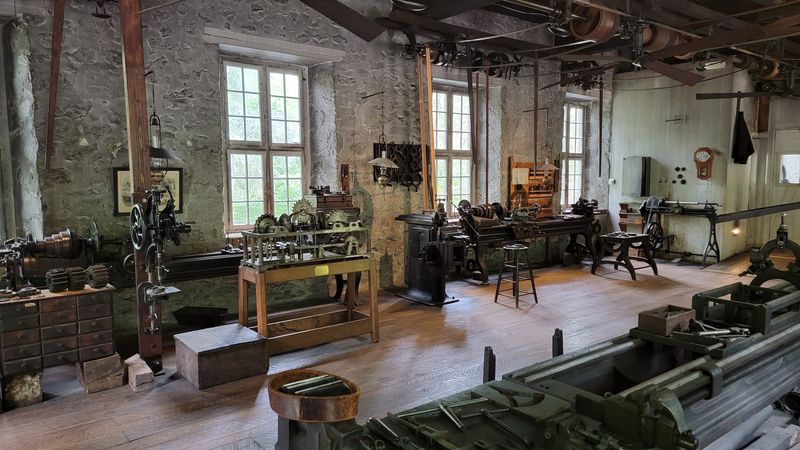
Every factory needs a fix-it crew. At Hagley, that crew worked inside the 1870s Machine Shop.
The shop sits within the Millwright Shop building. Working machines here still run on water wheels and turbines fed by the Brandywine.
Workers made and repaired equipment for the powder yards in this space. When something broke, this is where the solution came from.
Belts and gears connect the machines in a way that feels almost musical. It’s a neat look at life before electric motors took over.
Don’t skip the 16-foot Birkenhead water wheel nearby. Its size alone makes it worth a slow walk around.
Machine lovers could easily stay here a while. Even folks who don’t know a lathe from a ladder will enjoy the motion and noise.
Demonstrations show how the tools actually worked. That hands-on feel turns old iron into something exciting.
Snap a photo of the wheel for scale. Standing beside it makes the engineering of the 1800s feel a lot more impressive.
The Company’s First Office Kept Things Ticking
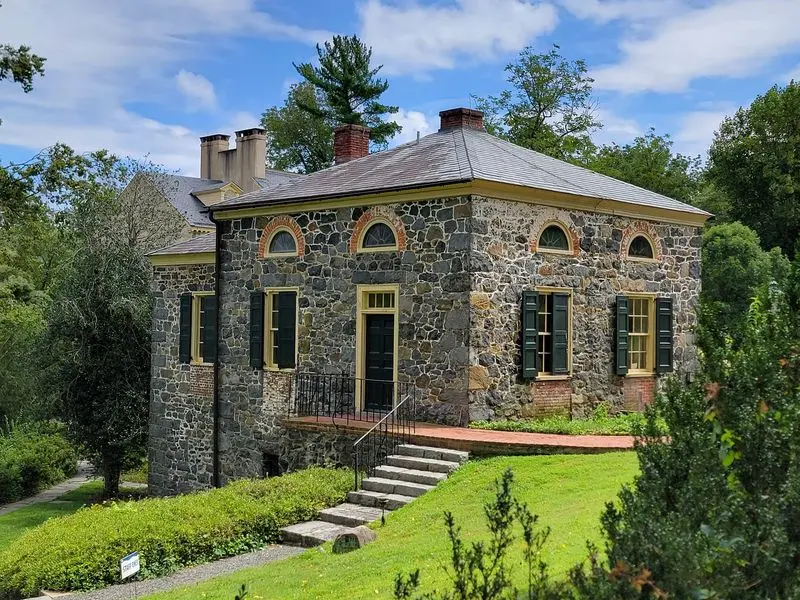
Before giant corporate towers, the DuPont Company ran business from one modest building. That building still stands at Hagley.
The First Office was built in 1837. It served as the company’s nerve center for more than fifty years.
Inside, you’ll spot artifacts like an early typewriter and old ledgers. They show how records were kept long before computers.
It’s funny to think huge decisions happened in such a small space. Orders, payments, and plans all moved through these rooms.
The office helps balance the loud mills with quieter history. Business skills mattered just as much as machinery here.
Students might enjoy comparing the typewriter to their own devices. It’s a fun reminder of how much office life has changed.
Take a peek at the handwriting in the ledgers if you can. Neat penmanship was a serious job skill back then.
This stop is a short one, so it fits easily between bigger attractions. Still, it rounds out the story of how the company grew so strong.
Five Generations Called This Hilltop Home
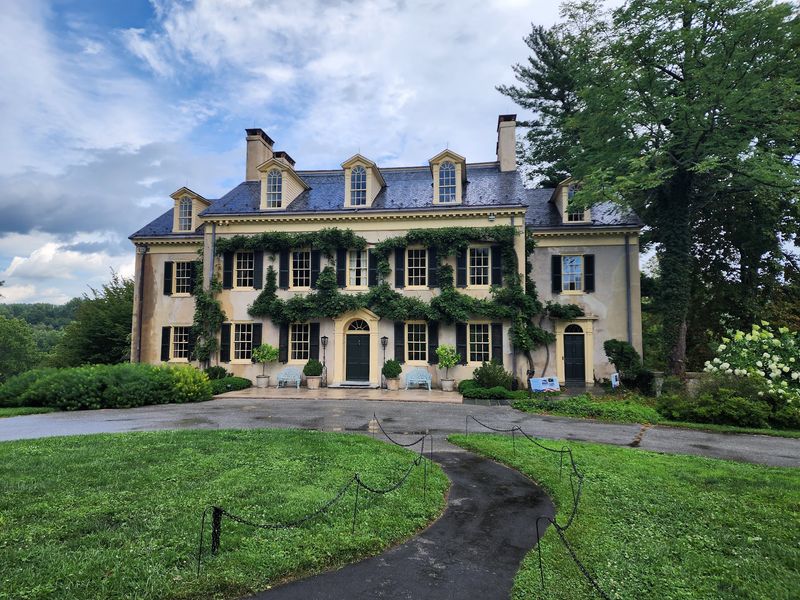
High above the noisy powder mills, E. I. du Pont built a Georgian-style home in 1803.
He named it Eleutherian Mills.
Five generations of the du Pont family lived there. For nearly a century, it was the center of both family life and business.
Guided tours lead you through the rooms today. You’ll see decorative arts, American folk art, and family artifacts.
Some treasured items came from France when the family moved to America in 1799. Those pieces add a personal touch to the bigger story.
Living this close to a powder works took nerve. The location kept the family right beside the business they were building.
Tours run on a schedule, so plan your day around one. The shuttle can carry you up from the powder yards easily.
Pay attention to how the house changed over the years. Each generation left its own mark on the rooms.
The view from the hill helps everything click. You can see how home and industry sat side by side in Delaware history.
Stop And Smell The Founder’s Favorite Hobby
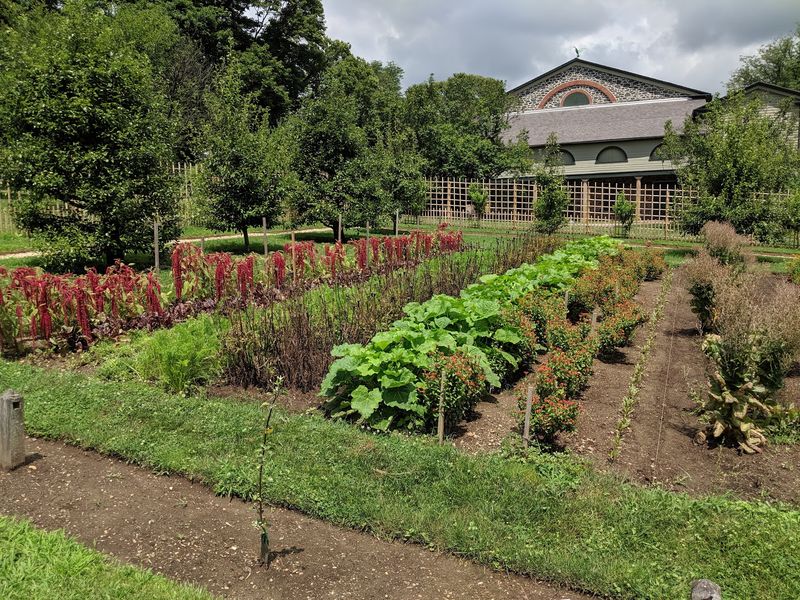
Gunpowder paid the bills, but plants won the founder’s heart. E.
I. du Pont loved botany.
The E. I. du Pont Garden sits near the family home.
It reflects his passion for growing and studying plants.
Nearby, the Crowninshield Garden offers a different mood. Together, the two spaces add a peaceful break from the industrial side.
The gardens are a self-guided walk. You can wander at your own pace and stop wherever something catches your eye.
Bring a camera or just enjoy the quiet. After loud demonstrations, the calm feels like a reward.
Seasons change the look of the gardens throughout the year. Spring and summer usually bring the most color.
It’s interesting to think about a powder maker kneeling in the soil. That hobby shows a gentler side of a busy businessman.
Pair your garden stroll with the house tour. Both sit close together, so you won’t waste energy walking back and forth.
Leave a little extra time here. The gardens are easy to rush past, but they reward anyone who slows down.
Meet The Workers Who Made It All Possible
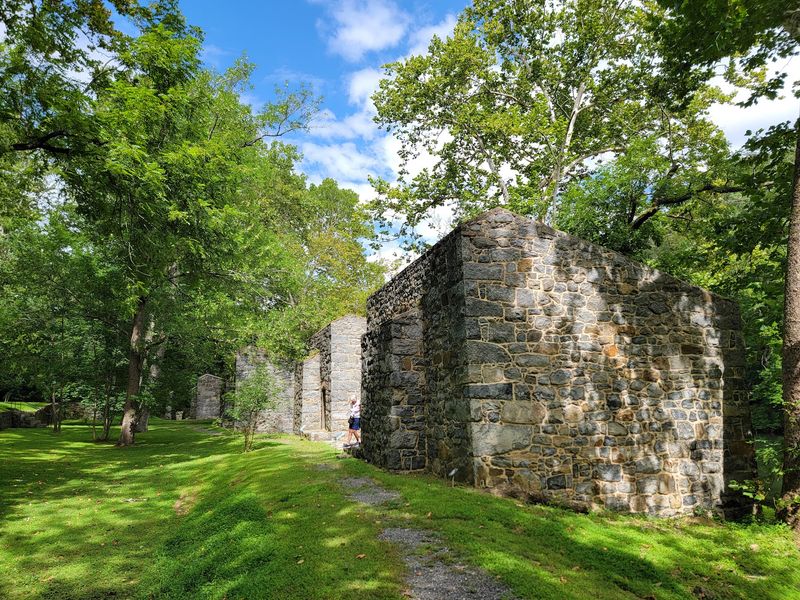
Famous families get the headlines, but workers did the heavy lifting. Hagley gives them their own spotlight.
A restored workers’ community shows how immigrant families lived along the Brandywine. Their homes and routines tell a story as important as the mansion’s.
Workers’ World Tours share details about Workers’ Hill. Guides explain who these people were and how they built their lives.
The job was risky, and the company knew it. DuPont’s famous “Safety First” motto began right here in the powder yards.
Workers were checked for matches and metal before shifts. One tiny spark could cause big trouble.
Neighbors leaned on each other in this community. Those strong bonds helped families handle tough conditions.
This part of the visit adds real heart. It reminds you that history is about ordinary people too.
Check the schedule for tour times when you arrive. A guided visit brings out stories you might miss on your own.
Leaving Workers’ Hill, you’ll likely see the whole site differently. Every stone wall suddenly has faces behind it.
Inventions, Shuttles, And Snack-Friendly Planning
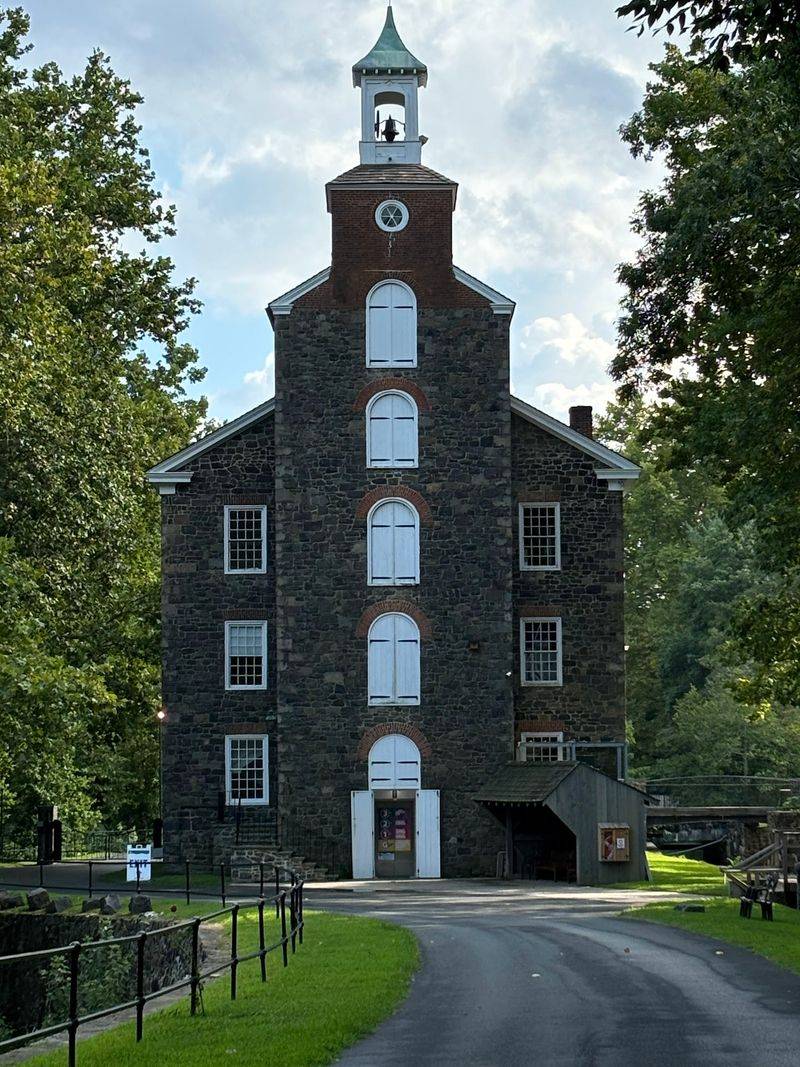
Over 120 tiny patent models wait inside the Visitor Center. They’re part of a permanent exhibition called Nation of Inventors.
The exhibit explores how Americans spotted problems and dreamed up fixes in the 1800s. It’s a clever warm-up before heading to the powder yards.
Hagley Museum sits at 200 Hagley Creek Rd, Wilmington, DE 19807. Parking at the Visitor Center is free.
A free shuttle connects the Visitor Center, the powder yard, and the family home. It’s wheelchair accessible, which helps on such a big property.
Some historic buildings may not fit wheelchairs. The shuttle still makes getting around much easier for everyone.
Picnics are welcome, and tables are available. Packing lunch is a smart move, since the site has only small pre-made snacks.
The museum opens 10 a.m. to 5 p.m., but it’s closed on Wednesdays. Last admission is at 4 p.m.
Holiday hours can change, so check ahead around Christmas. Free Wi-Fi in the Visitor Center helps with planning.
Start early if you can. Delaware history this big deserves a full, relaxed day.