
Nearly 10 million wooden matchsticks.
One man glued every single one of them by hand, one stick at a time.
That’s not a typo, and it’s not a weekend craft project gone wild.
The artist started in 1977 as a hobby and kept going for decades.
His count now sits at about 80 scale models, and some are taller than most grown adults.
I like how a small Iowa town quietly hosts work that famous museums around the world have bought. Ripley’s Believe It or Not! owns a stack of these pieces.
Yet roughly 20 large models stay on display right here at any given time.
I can’t imagine the patience this takes. A Disney castle, a Mars rover, and a cathedral, all built from the same humble stick.
So how does a matchstick become a masterpiece?
One Patient Hobbyist Turned Millions Of Tiny Sticks Into A Career
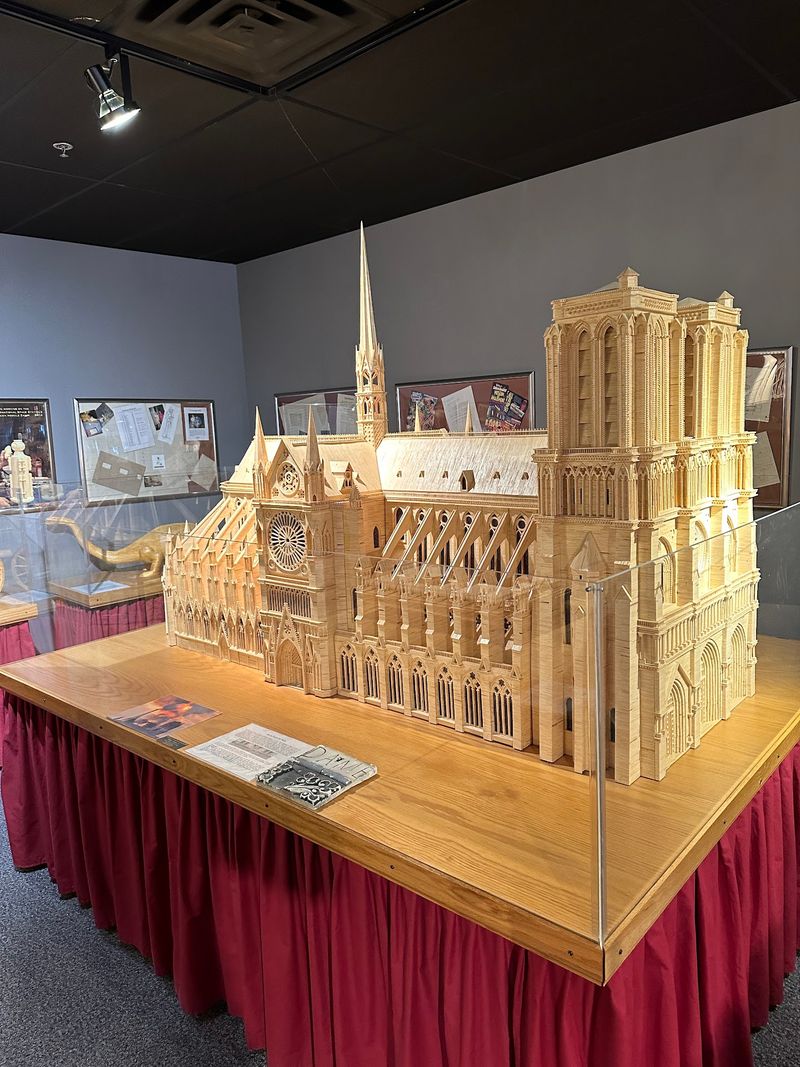
Back in 1977, Patrick Acton picked up a hobby that most people would drop after one afternoon. He started gluing matchsticks together, and he simply never stopped.
Today his work fills Matchstick Marvels, a museum in his longtime hometown of Gladbrook, Iowa. The city runs the place, and volunteers keep the doors open for curious travelers.
For years, Acton built models in his spare time while working as a career counselor. That’s right, the guy helping others plan careers was quietly building one of his own.
After retiring from counseling in 2012, he became a full-time, self-employed artist.
The numbers behind his work feel almost silly. He’s used nearly 10 million matchsticks and hundreds of gallons of glue across about 80 models.
Every piece starts the same way, with one single stick placed by hand. No kits, no shortcuts, and no robots doing the boring parts.
The museum opened in 2003, giving his creations a permanent home base. If you enjoy stories about ordinary people doing extraordinary things, this one hits the spot.
It proves a little stubborn dedication can go a remarkably long way, one tiny stick at a time.
Disney’s Most Famous Castle Now Stands Nearly Nine Feet Tall Here
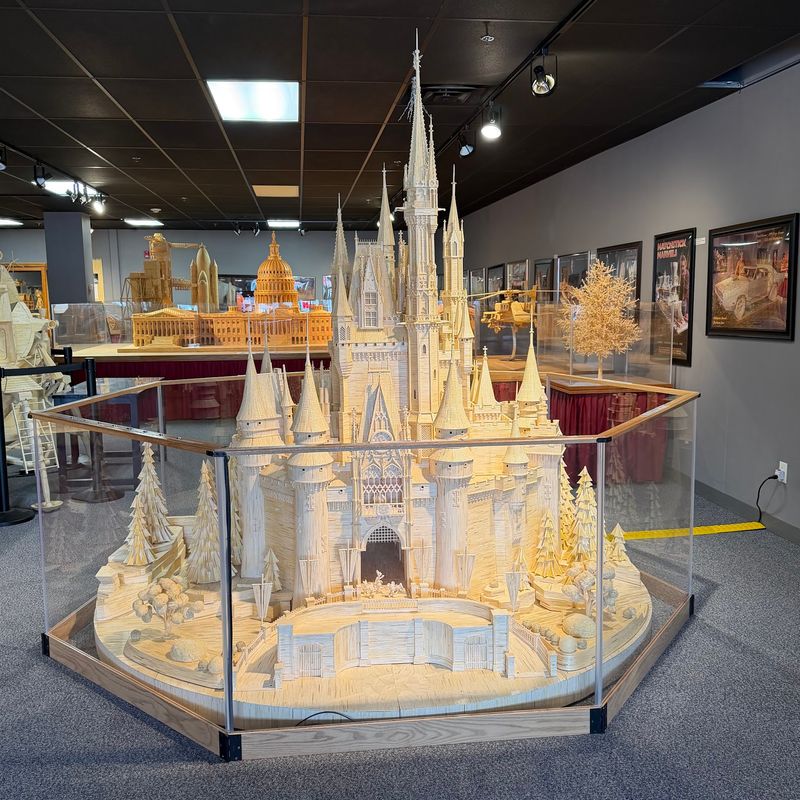
Fairy tales usually come with magic wands. This one came with 607,000 matchsticks and two full years of careful gluing.
Disney’s Cinderella Castle is the newest star at Matchstick Marvels, arriving in 2026. It stands nearly 9 feet tall, so you’ll be looking up at those spires like a wide-eyed kid.
Think about the turrets for a second. Every pointed tower and curved edge had to come from straight wooden sticks.
Acton shapes sticks with pliers to get curves, which explains how a castle this graceful came from such stiff material.
Families with young Disney fans should put this model at the top of the list. It’s a fun way to show kids that big dreams can be built piece by piece.
Grown-ups get plenty out of it too. Try picking one small window and tracing how each stick fits around it.
A quick tip for your visit: give yourself a few extra minutes here. The castle rewards slow looking, and you’ll keep spotting new details the longer you stand there.
It’s hard to believe something this dreamy started life as a pile of plain wood.
Space Fans Should Brace For A Matchstick Mission To Mars
NASA builds rovers with metal and computers. Patrick Acton built his Mars 2020 Rover Perseverance with 880,000 matchsticks, and honestly, his version is easier to visit.
Space lovers get a real treat at Matchstick Marvels. The collection leans heavily into exploration, and the models cover decades of history.
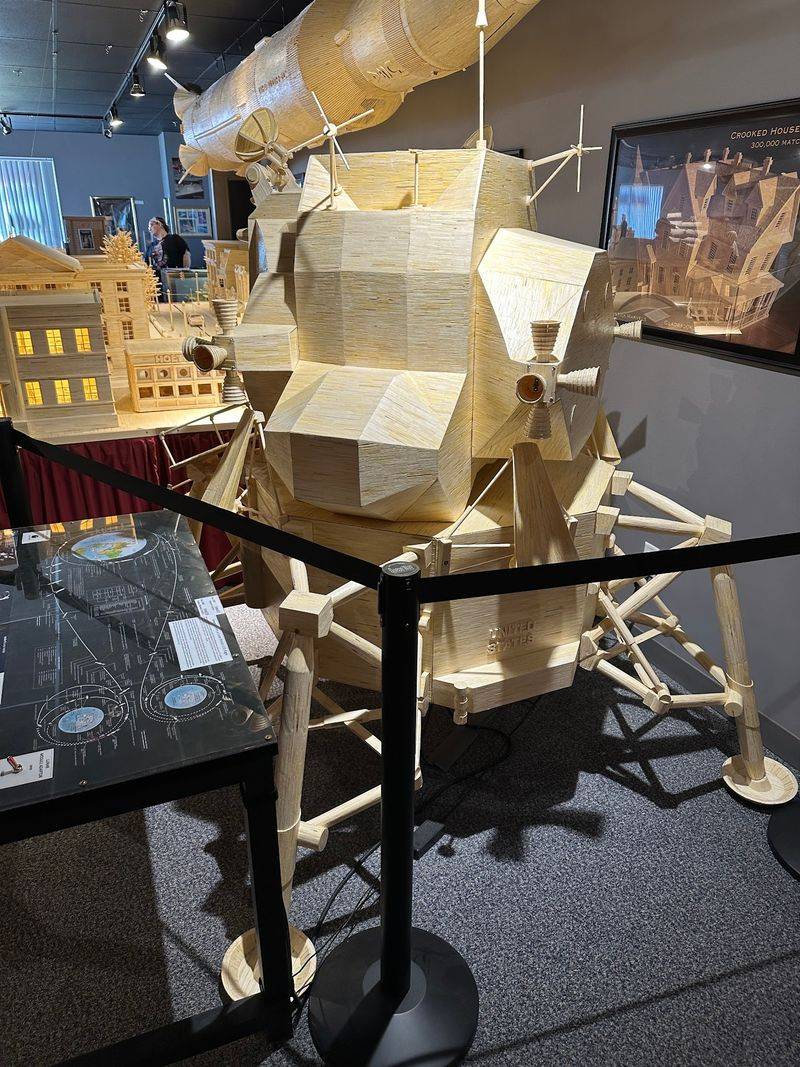
There’s an Apollo 11 exhibit featuring the Saturn V rocket and the lunar lander Eagle. Seeing both together helps you picture how astronauts actually reached the Moon.
It’s a solid history lesson without a single textbook.
The International Space Station model used 282,000 matchsticks. All those panels and connecting parts make it look delicate, like it might float away.
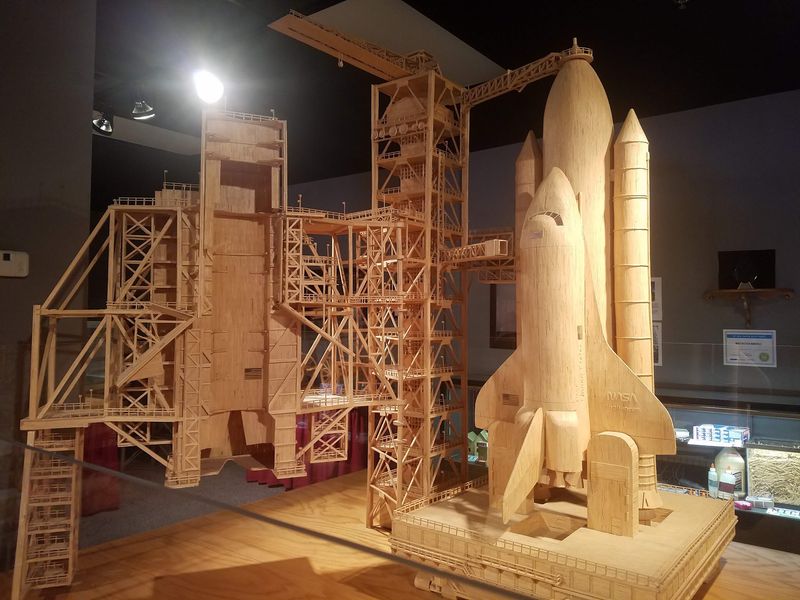
Acton also created a Space Shuttle Challenger model in 1997 as a tribute. It stands 7 feet tall and contains over 200,000 matchsticks, built with obvious care and respect.
If you have a young scientist at home, bring them here. Ask them to guess the matchstick count before reading the sign, then compare answers.
It turns the visit into a playful game, and the real numbers usually earn a big gasp. Who knew outer space could feel so close in Iowa?
Wizards, Hobbits, And Time Travelers Share The Same Room
Movie buffs, this section is basically your fan convention. Only here, everything is made of wood and glue instead of plastic merchandise.
Acton built Hogwarts from the Harry Potter series using over 600,000 matchsticks. The famous school looks just as mysterious in wood, with towers stacked in every direction.
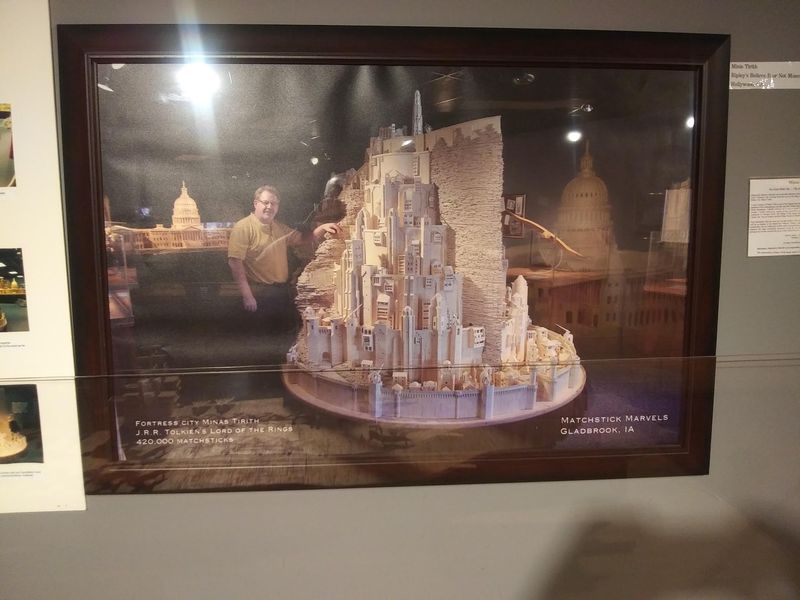
Then there’s Minas Tirith from The Lord of the Rings. The layered white city rises over six feet tall in matchstick form.
Fans will recognize its stacked rings and climbing shape right away.
Back to the Future gets love too. Acton recreated the main town square with 723,000 matchsticks, which is a lot of sticks for a place famous for one clock tower.
These pieces make a great bridge for visitors who don’t care much about history. Kids who shrug at buildings often light up when they spot a castle from their favorite movie.
Remember that the lineup can shift. About 20 large models are shown at a time, and some pieces travel or rotate.
Before your trip, it’s smart to call ahead if one specific model is your must-see. That way nobody leaves heartbroken over a missing wizard school.
Iowa Pride Shows Up In Some Seriously Big Models
Thirteen feet long. That’s the size of the USS Iowa model, built from 137,000 matchsticks and shaped with impressive precision.
It makes perfect sense that an Iowa artist would honor a ship named for his home state. The long hull and stacked decks feel even more striking up close.
Closer to home, Acton built Terrace Hill, the Iowa Governor’s Mansion, from 193,000 matchsticks. The real mansion sits in Des Moines, so this is a fun preview if you plan to see it later.
Its fancy rooflines must have taken serious patience.
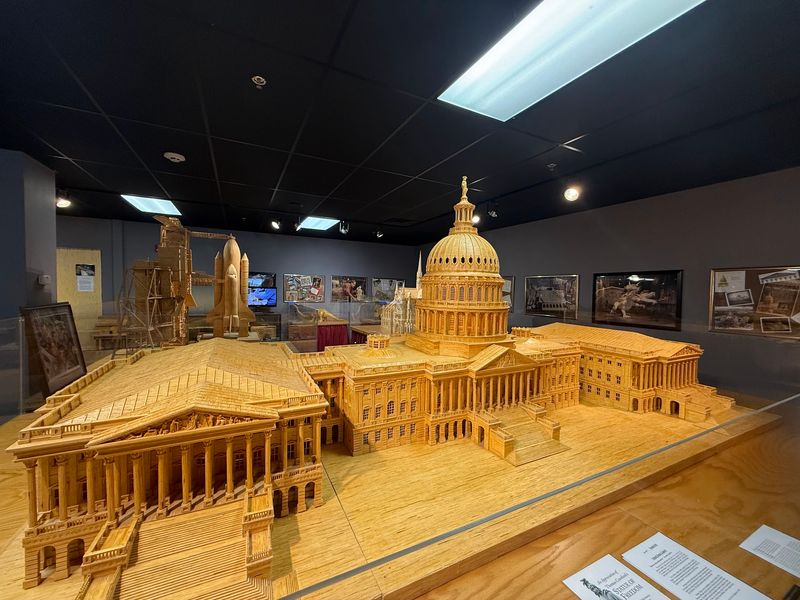
The United States Capitol might be the showstopper of the group. It measures 12 feet long and 5.5 feet tall, using almost 500,000 matchsticks.
Standing near the Capitol gives you a feel for how much planning goes into each project. The dome alone looks like a puzzle that would make most people quit early.
These models are great for students studying government or state history. Snap a photo and share it with a teacher, and you might spark a classroom conversation.
Hometown pride rarely looks this detailed, or this wooden.
The Building Tricks Behind The Magic Are Half The Fun
Here’s a fun surprise: for the first ten years, Acton cut the heads off every single match himself. Imagine that pile of trimmed tips on the workshop floor.
Since 1986, he’s bought headless matchsticks from a supplier instead. That small change saved countless hours and probably a lot of sore fingers.
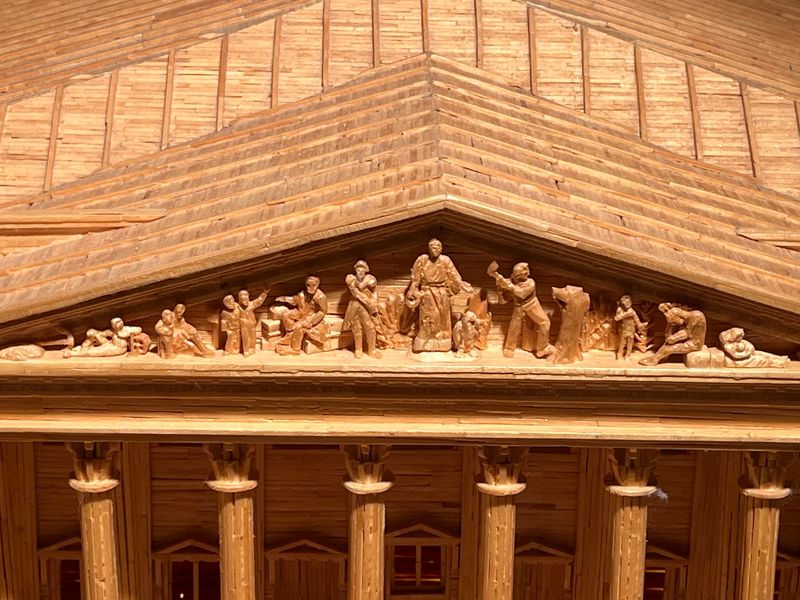
His methods get clever from there. He shapes sticks with pliers to create curves, which lets round domes and arches take form.
He also developed a sheet-building method to make larger flat sections.
Supply became a real worry in 2017. When Acton learned the last U.S. supplier was closing, he bought 5 million matchsticks at once.
Since then, he’s used about 4.3 million of them. That’s a stockpile most of us would struggle to store, let alone glue.
Understanding these tricks changes how you see each model at Matchstick Marvels. Instead of just admiring the result, you start spotting curves and flat panels everywhere.
Kids who love building blocks or crafts might leave inspired to try a small project at home. Just maybe start with a birdhouse before attempting a cathedral.
Sketches, Tools, And One Painted Plane Reveal The Artist’s Mind

Finished models get the spotlight, but the backstage stuff is just as interesting. Matchstick Marvels also displays Acton’s drawings, plans, and tools.
Looking at the plans helps you understand how much math and thinking happen before any glue comes out. It’s like peeking inside an artist’s notebook.
There’s also a short film featuring Acton talking about his creations. Grab a seat and watch, because hearing him explain the work makes the models feel even more personal.
It’s a nice break for tired legs too.
Keep an eye out for a quirky detail. The North American P-51 Mustang is the only painted model in the collection.
Acton actually regrets painting it. That honest little fact says a lot about why he loves the natural look of bare wood.
Once you know that story, the other models look different. You start appreciating the warm wood tones and how the sticks themselves create the texture.
It’s a small lesson in trusting your materials. Plenty of artists would hide their medium, but Acton lets every single stick show off proudly.
Bring Cash And Plan For An Afternoon Visit
Timing matters with this one. The museum keeps afternoon hours, open 1 to 5 PM daily from April 1 through November 30.
You’ll find Matchstick Marvels at 319 2nd Street, Gladbrook, IA 50635, inside the Gladbrook City Centre building. It sits right in the small downtown, so it’s easy to spot.
The museum closes on Easter Sunday, Memorial Day, July 4th, Labor Day, and Thanksgiving Day. From December 1 through March 31, visits are by appointment only.
Bus tours and groups are welcome year-round with an appointment too.
Here’s the biggest tip: bring cash. Admission is cash only, and credit cards aren’t accepted, so stop at an ATM before you roll into town.
Admission stays friendly on the wallet, and kids under 5 get in free with an adult. That makes it an easy add-on during an Iowa road trip.
The building is handicap accessible, with accessible entryways, large restrooms, and an elevator. That’s great news for families with strollers or anyone who prefers skipping stairs.
Plan your route, check the calendar, and you’ll be set for a smooth visit.
Stick Around For A Movie, More History, And A Snack

Good news for anyone who hates short trips. The same building that houses Matchstick Marvels also holds the Gladbrook Theater, which shows movies.
A matchstick museum and a film in one stop? That’s an afternoon plan that basically writes itself.
Head to the upper level of the City Centre for the Gladbrook Historical Museum. Viewing is free, and it adds local flavor to your visit.
You’ll get a better sense of the community that proudly hosts all those matchstick masterpieces.
Hungry after all that looking? Hometown Foods sits right across from the museum.
It offers snacks, deli sandwiches, ice cream, and noon-time lunch specials. Catering can be arranged too, which helps if you’re planning a group outing.
Stacking these stops together turns a quick museum visit into a relaxed small-town day. Grab a sandwich, catch a movie, and talk about which model blew your mind most.
Odds are the debate will last the whole drive home. Not bad for a town built around a museum full of tiny wooden sticks.