One man designed these homes by building the roof first, then tucking the rest of the house underneath. That alone made me stop and read twice.
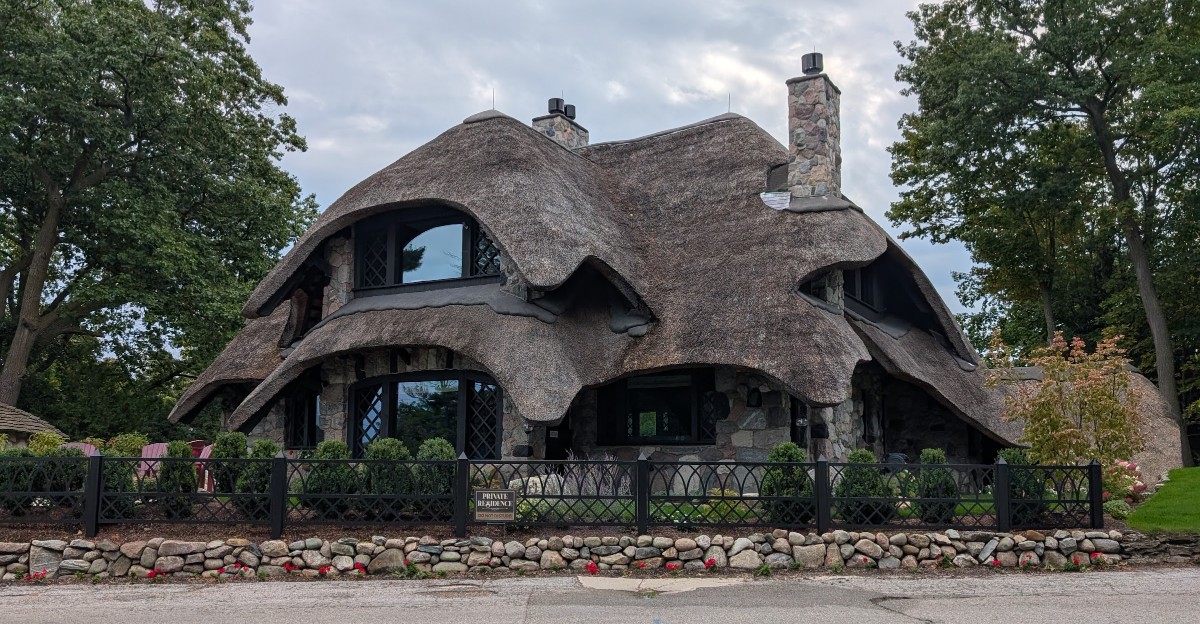
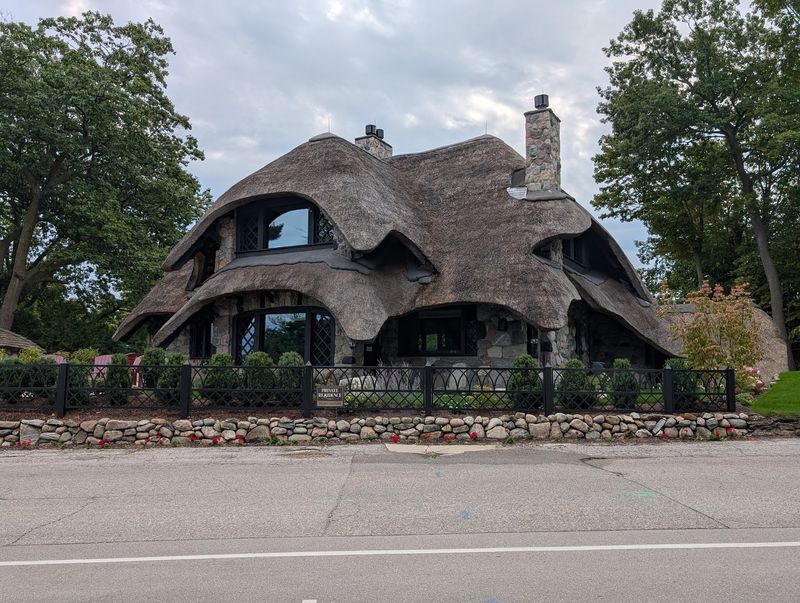
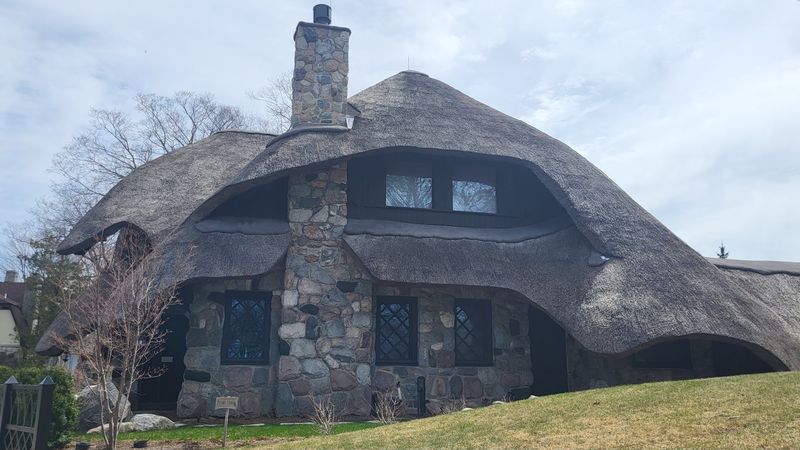
The walls are packed with giant glacial boulders and fieldstone. The cedar-shake roofs curve and droop like melting frosting.
Some chimneys even wear little stone snow caps.
And none of it looks planned by a committee. It looks like a gnome got a building permit and ran wild in a small lake town in Michigan.
The best part? Families still live in many of these storybook homes today.
You can stroll right past them on regular sidewalks, coffee in hand, feeling slightly underdressed for a fairytale.
So who dreamed them up, and how do you see them without trespassing into somebody’s front garden?
The Self-Taught Dreamer Behind Every Curvy Roof
Earl A.Young never earned a license as an architect. He still shaped a whole neighborhood that people now travel across the country to see.
The Charlevoix Mushroom Houses are his life’s work, built over roughly five decades in his hometown. Young was born in 1889 and moved to Charlevoix as a young boy.
He studied at the University of Michigan before working in real estate and insurance back home.
That day job matters more than you’d think. Selling property gave him access to land, lots, and plenty of chances to experiment.
By the 1930s, he was building and reworking homes with his signature look.
Young created around 30 structures, including homes and commercial buildings. Every single one stands in and around Charlevoix.
He reportedly refused to build his designs anywhere else, which feels wonderfully stubborn.
Frank Lloyd Wright’s idea of blending buildings with nature reportedly inspired him. Young took that idea somewhere far more playful, though.
His homes look less like modern art and more like cottages grown from the soil.
Young passed in 1975. His Michigan neighbors have been caring for his quirky creations ever since.
Boulders So Big They Waited Years For The Right Home
Most builders order supplies from a catalog. Earl Young hunted for his.
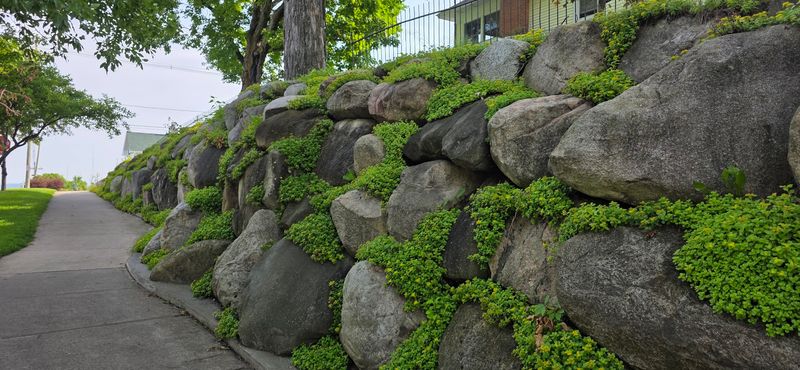
He favored local materials like glacial boulders, fieldstone, and Onaway limestone. Many of the stones came from the Lake Michigan shoreline and nearby fields.
Some sources say he spent years searching for just the right boulder.
Here comes the wild part. Young sometimes buried a great stone and left it there for a very long time.
He waited until the perfect project came along to use it.
That patience shows in every wall. The rocks sit in chunky, uneven patterns that feel natural instead of stacked.
It’s a little like the house was built around the land, not on top of it.
Look closely at the doorways and window frames when you visit. Huge stones often frame the openings like a giant’s picture frame.
Some houses also use limestone and redstone for extra color.
The result feels sturdy and old in the best way. Honestly, these homes look ready to outlast the rest of us.
Bring a camera, because stone this dramatic photographs beautifully in any season.
Roofs That Look Like They’re Slowly Melting
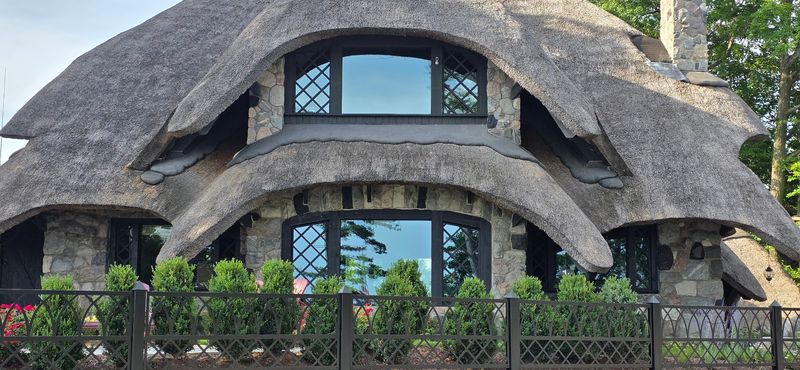
Wavy. Drooping.
Slightly sleepy. That’s the best way to describe the rooflines on these famous homes.
Young loved wide eaves that curl and dip over the stone walls. Cedar shakes cover many of the roofs, adding a soft, rustic texture.
Exposed rafter tails peek out underneath like little wooden fingers.
In 1971, a Michigan newspaper described some roofs sitting so low that side windows had to be cut into them. Young also told a reporter he designed and built the roof first.
Then he fit the rest of the house beneath it.
Doesn’t that sound completely backward? It also explains why the tops feel like the star of each home.
The walls almost seem to hide under a big wooden hat.
Don’t skip the chimneys either. Several wear pale stone caps that look like snow or frosting on a gingerbread house.
They’re a tiny detail that makes the whole scene feel sweeter.
Walk slowly and look up often. The curves change from house to house, so no two silhouettes match.
That variety is half the fun of exploring.
The Little House That Gave Everyone A Nickname
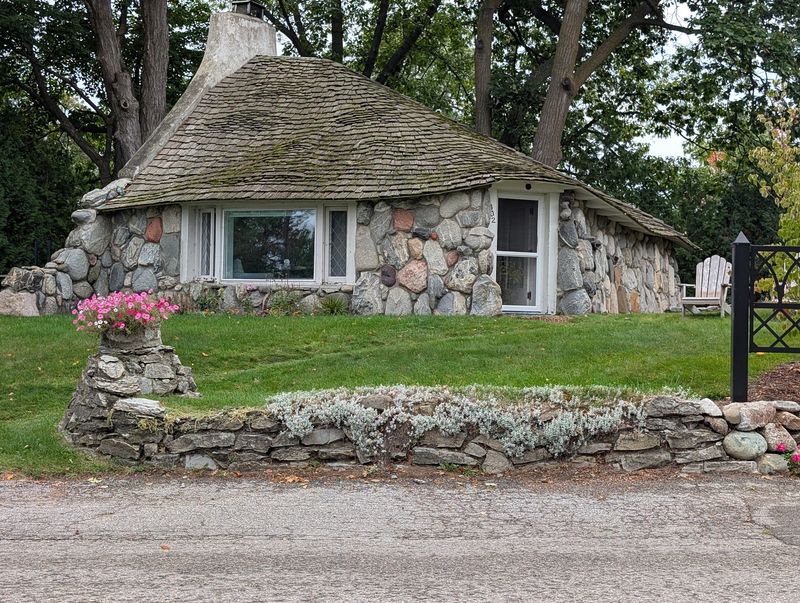
Earl Young never called his work Mushroom Houses. He simply called them Earl Young houses, which is pretty humble for a guy building fairytale cottages.
Admirers came up with the cute names on their own. You’ll hear them called Hobbit Houses, Gnome Homes, and of course, Mushroom Houses.
With those capped roofs, the names were bound to stick.
One home really sealed the deal. The house at 103 Grant Street, often called Boulderdash or simply The Mushroom House, was built in 1951.
It was designed to resemble a button mushroom.
It’s one of the most photographed homes in the bunch. The rounded shape and low roof make it look like something you’d find in a forest after a rainy night.
Another favorite is Boulder Manor. Construction began in 1928 and wrapped up in 1940, after the Great Depression slowed things down.
Twelve years is a long time, but stone homes clearly don’t rush.
Remember that many of these homes are private residences. Admire them from the sidewalk and keep voices friendly.
The families inside are living in a postcard, not running a museum.
Your Free Self-Guided Stroll Starts Right Here
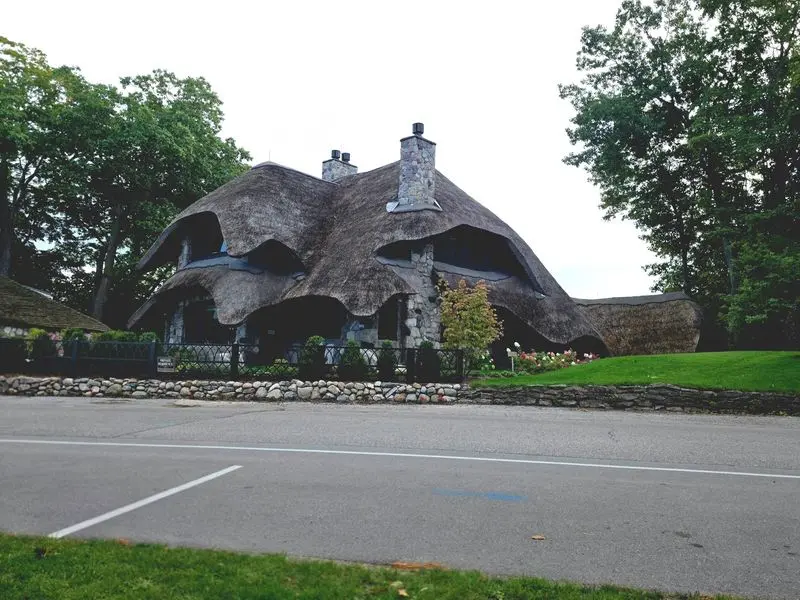
Good news for budget travelers. Seeing the Charlevoix Mushroom Houses can cost you nothing but a little shoe leather.
The homes cluster in a handy triangle formed by Park Avenue, Clinton Street, and Grant Street. The general address is Charlevoix, MI 49720, and that small area holds many of the highlights.
Maps of the route are easy to find around town.
Walking lets you set your own pace. You can stop at a favorite roofline for as long as you like.
Nobody will rush you past the house with the best chimney.
Parking near the homes can be tricky on busy days. Michigan Beach Park and Bridge Street are often easier options.
From there, it’s a pleasant walk over to the houses.
The homes sit close to Lake Michigan, so a lighthouse and beach views are nearby too. That makes the stroll easy to pair with some shoreline time.
Stay on public sidewalks and skip the front yards. A quick photo from the walkway works just fine.
Respect keeps this neighborhood welcoming for future visitors.
Let A Little Electric Car Do The Storytelling
A good guide turns a pretty house into a great story. That’s exactly why guided tours are worth considering here.
Local companies run narrated rides in small electric GEM cars. These quiet little vehicles roll past the homes while a guide shares history and building details.
Tours commonly meet near 106 Park Avenue downtown.
You’ll learn about the masonry, the stones, and the odd habits of the man who built everything. It’s the difference between seeing a boulder and knowing why it was picked.
Plus, your feet get a break.
Plans have changed for one longtime option, too. The Charlevoix Historical Society is ending its walking tours as of June 9, 2026.
That makes the GEM car rides a handy choice for anyone wanting expert background.
Tours tend to run during the warmer months. Booking ahead is smart, especially on summer weekends.
Check current schedules before your trip, since timing can shift by season.
Kids usually love the ride as much as the houses. Riding around in a mini car past gnome-style cottages is basically a cartoon come to life.
Downtown Got A Taste Of The Fairytale Too
Earl Young didn’t stop at homes. He brought his boulder-loving style to some of the town’s public buildings as well.
The Weathervane restaurant is one standout example on Park Avenue downtown. Construction started in August 1953.
Its massive stones and unusual roofline make it look like a cousin of the Mushroom Houses.
He also designed the Weathervane Terrace Inn and Suites. The Lodge is another of his hospitality projects in Charlevoix.
These buildings give you a different way to enjoy his work. Instead of peeking from a sidewalk, you can actually step inside a Young design.
That’s a fun bonus for curious architecture fans.
It also shows how far his vision reached. A whole town’s look shifted because one local guy loved big rocks and curvy roofs.
Few small towns can say that about their main street.
Add these stops to the end of your walk. They’re close to the residential streets and easy to find downtown.
After admiring cottages all morning, spotting the same style on a commercial building feels like finding a secret level.
Yes, You Can Actually Sleep Under One Of Those Roofs
Sidewalk views are fun. Waking up inside one of these homes is next-level.
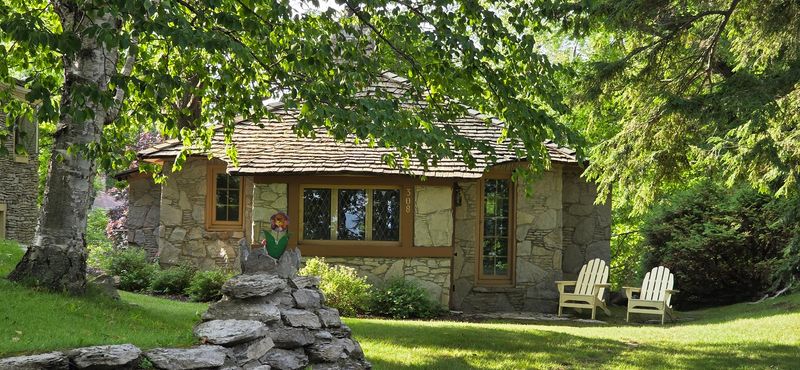
Several Earl Young houses are available as vacation rentals. At least six of the recognized Mushroom Houses currently welcome overnight guests.
That’s a short list, so plan early.
Each rental has its own personality. The Thatch House features a thatched roof redesigned by its current owner, while keeping Young’s original stonework.
The Half House looks sliced in two, thanks to a property line.
Love water views? The Boulder Park Cottage looks out over Lake Michigan.
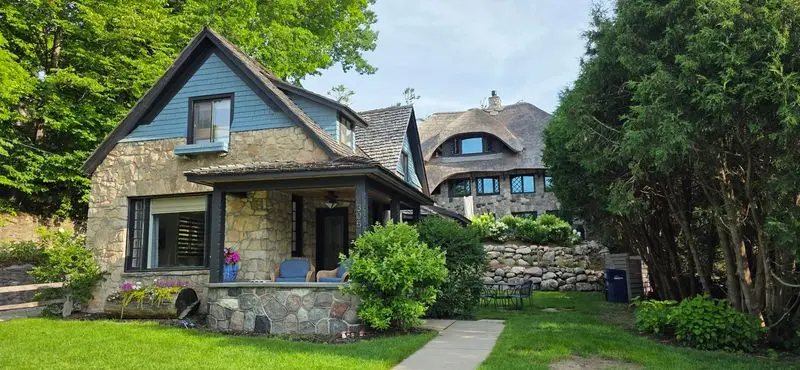
The Cottage at 305 Clinton Street shows how Young transformed a plain clapboard house into something magical.
A quirky detail to know before booking. Young reportedly disliked cooking, so some of his homes have tiny kitchens.
Others have few or no closets at all.
Pack light and plan to eat out a bit. Those quirks are part of the charm, not a flaw.
Staying in a Michigan storybook cottage is worth trading a big kitchen for, at least for a few nights.
Why These Storybook Homes Aren’t Going Anywhere
Charm this rare deserves protection. Charlevoix agreed, and made it official.
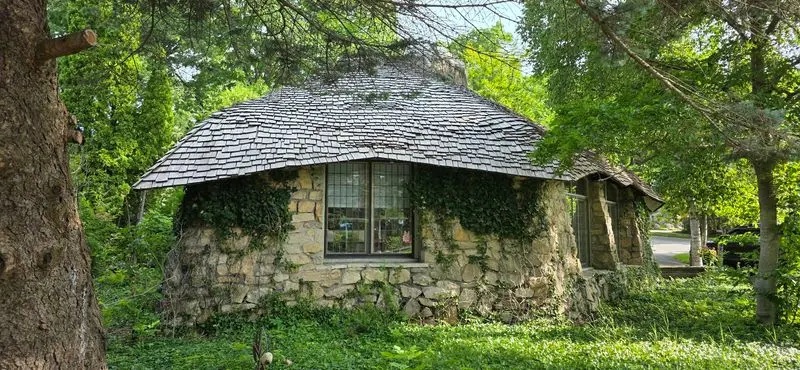
In 2016, the city created a local historic district for 11 of the Mushroom Houses. The goal is to protect the homes’ historic character over time.
It’s a big promise from a small Michigan town.
The district covers more than the buildings themselves. Original landscaping features are included too.
That matters because Young designed homes and grounds to work together.
Think about it for a second. A curvy stone cottage surrounded by a giant parking lot just wouldn’t feel the same.
The gardens, slopes, and stones help each home look like it grew there.
Owners have also spent years restoring and caring for these places since Young’s passing in 1975. Their effort keeps the roofs curving and the boulders standing proud.
Visitors get to enjoy the payoff.
So when you stroll through, you’re seeing history that people chose to save. That makes each photo feel a little more meaningful.
It also means your kids, and maybe their kids, can wander these same streets and grin at the very same gnome-worthy rooftops someday.