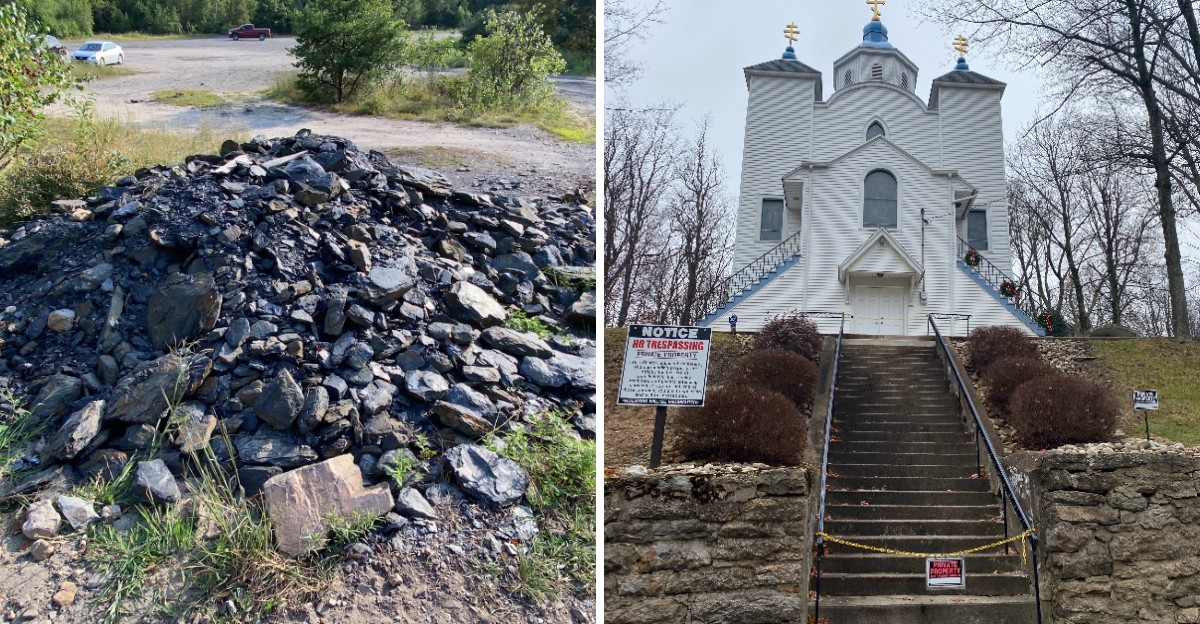
A mine fire that began in May 1962 is still burning today.
It spread from a trash fire in an abandoned strip-mining pit into nearby underground coal workings, and nobody has managed to put it out since.
The flames sit as deep as 300 feet below the surface.
Engineers think the fire could keep going for another 250 years.
That’s longer than the United States has been a country.
Once home to about 1,500 people, this Pennsylvania town now has only a handful of residents. Its ZIP Code was taken away in 2002.
Streets still crisscross the woods, leading to houses that are gone.
I can’t imagine watching my own neighborhood slowly disappear because of heat I couldn’t even see. Yet the ground still breathes out warm steam in a few spots.
So where does all that smoke actually come out?
The Ground Here Literally Breathes Out Warm Steam
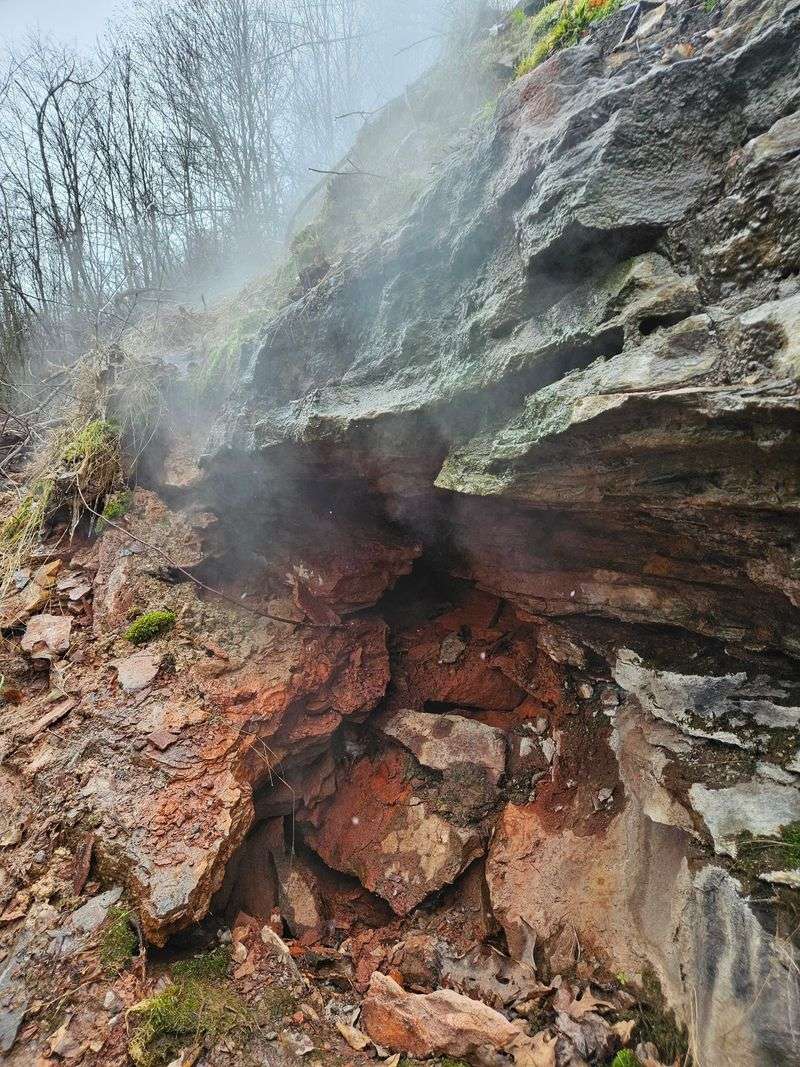
Steam drifting out of a rocky hillside is the main event at the Active Centralia Smoking Vents in Centralia, Pennsylvania. Those wisps come from a coal fire burning far beneath your feet.
The vents are cracks and gaps in the ground where heat and gases escape. They sit in the woods along the edge of the old town, reached by short, informal paths.
Don’t expect a volcano. The plumes are often faint and come and go, so patience pays off here.
Weather plays a huge role in what you’ll see. Cold, damp, or rainy days make the steam far easier to spot because warm air meets chilly air.
On a hot summer afternoon, the vents can look almost invisible. Even then, the heat coming out of the rocks still tells the story.
I like how something this small explains something so huge. A few curls of vapor are the only visible sign of a fire covering thousands of acres.
That’s the strange magic of this place. The biggest thing happening here is completely hidden, and the steam is its only messenger.
Blame It On A Spring Cleanup That Went Very Wrong
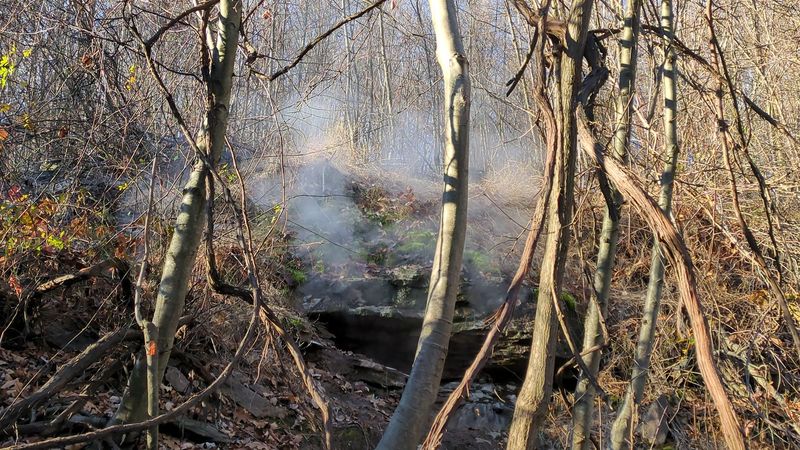
May 1962 started with a tidy goal. Before Memorial Day, the borough council wanted a trash dump cleaned up, and the most accepted theory says they set it on fire.
That dump sat in an abandoned strip-mining pit near the Odd Fellows Cemetery. Burning trash seemed simple enough at the time.
The problem was an unsealed opening in the pit. Through that gap, the flames reached the Buck Mountain coal bed lying underneath.
Coal is basically fuel packed into rock. Once the fire reached the underground coal workings, it had extensive coal deposits to fuel its spread.
Crews tried again and again to stop it over the years. Every attempt failed, and the spending on control and relocation climbed into the tens of millions.
I believe this is the most relatable part of the whole saga. A routine chore turned into a disaster nobody could undo.
So when you look at the steam rising from the Active Centralia Smoking Vents, you’re seeing the leftovers of a single cleanup day. That’s a lot of consequence from one match.
Numbers So Big They Sound Made Up
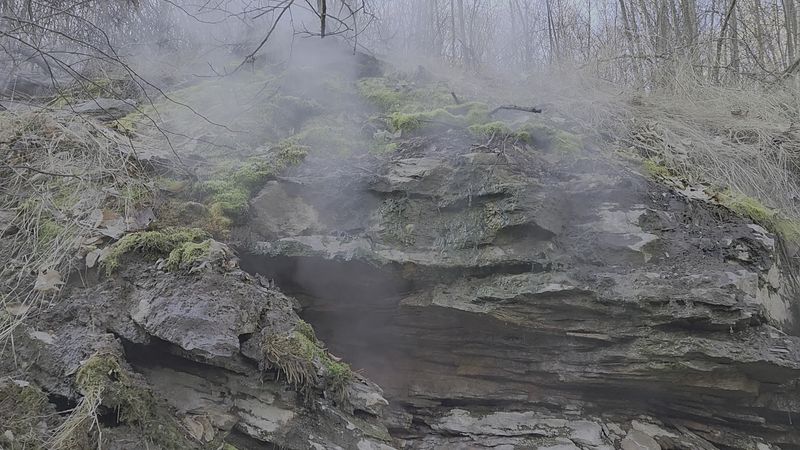
Three hundred feet. That’s how deep parts of the fire burn, roughly the height of a 30-story building stacked underground.
The blaze spreads across an estimated 3,700 acres. It also runs along a stretch of about eight miles.
Engineers estimate it could keep burning for another 250 years. Your great-great-great-grandkids could still visit and find warm rocks.
Trying to put out a fire like this is not like spraying a campfire. Water and digging can’t easily reach coal tucked deep inside the earth, and the seams connect in tricky ways.
Because of that, the plan shifted over time. Relocating people became the safer answer instead of fighting flames forever.
Fun fact for your next road trip quiz: the fire has already burned for over 60 years. It started before the first moon landing.
Standing near the vents, those figures suddenly feel real. The little puffs of steam are tiny windows into something enormous and slow.
Good luck looking at a rock the same way after this. Underneath all that quiet forest, the ground is busy.
Finding The Vents Takes A Little Detective Work
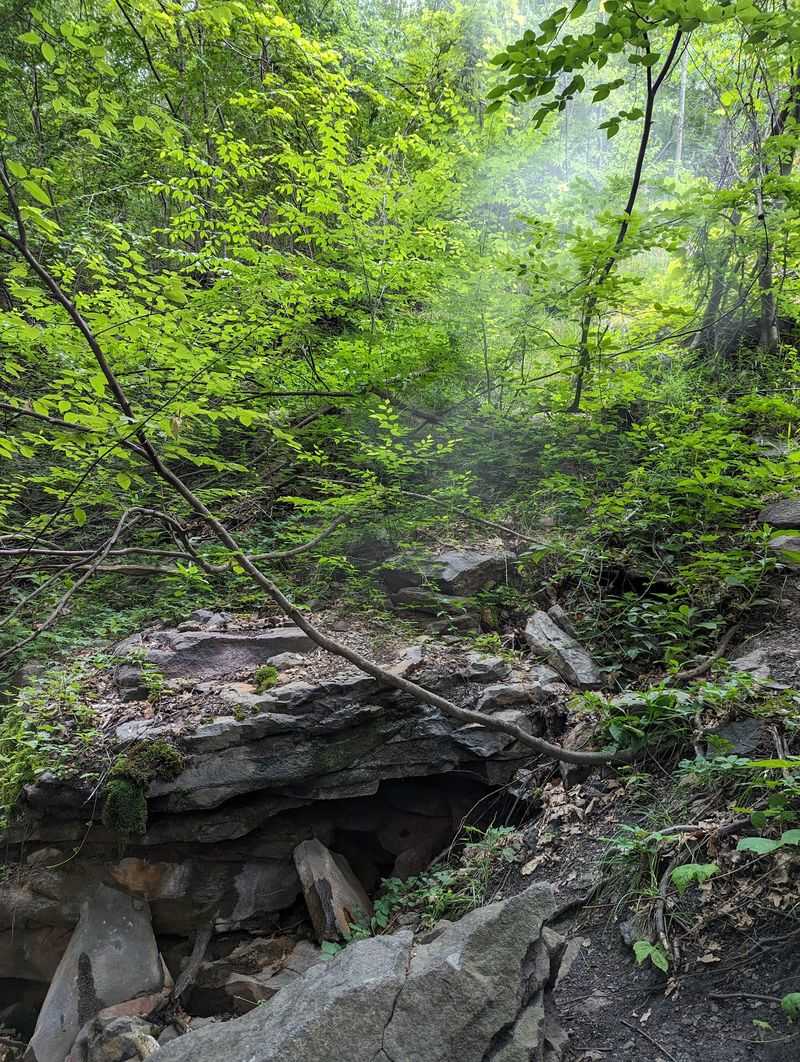
No big welcome sign points the way. The Active Centralia Smoking Vents are listed on maps simply as Centralia, PA 17921, and spotting them takes some attention.
The vents sit just off the road on a wooded hillside. Small, informal paths lead into the trees, worn down by curious feet over the years.
Parking is tight and right beside a busy road. Pull fully off the pavement, watch for traffic, and drive slowly so you don’t zoom past.
Mapping apps help a lot here. Keep your phone handy, since the turnoff is easy to miss.
Once on the path, the vents aren’t far. Some sit higher up the slope, so a short climb may be needed.
Wear sturdy shoes with good grip. The ground is rocky, uneven, and sometimes surprisingly warm.
I like that the search becomes part of the adventure. It feels more like a scavenger hunt than a tourist stop.
Remember that some land nearby is private property. Stay respectful, stick to obvious paths, and leave the area exactly as you found it.
Your Nose Will Notice Before Your Eyes Do
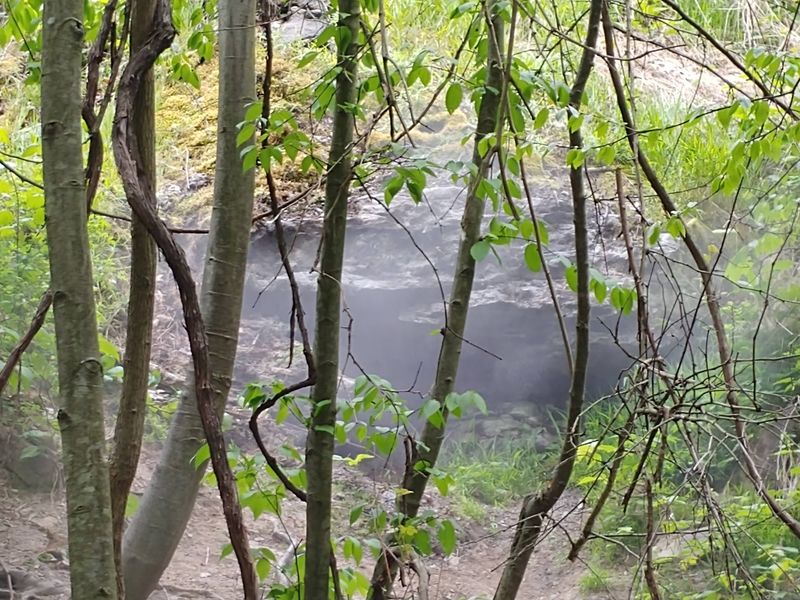
Sulfur. That rotten-egg smell often hits first as you get close to the vents.
It comes from gases escaping the burning coal below. The smell is a clue that you’re near an active spot.
Then there’s the heat. Rocks around some vents feel noticeably warm, even when the air around you is chilly.
Here’s where caution matters most. The Pennsylvania Department of Environmental Protection warns about gases like carbon monoxide and sulfur compounds in the area.
Carbon monoxide has no smell at all. So the sulfur odor isn’t a reliable safety alarm, and lingering over a vent is a bad idea.
Keep your face away from the openings. Don’t lean in for a big sniff or crouch down to breathe the warm air.
Kids especially should stay back from the cracks. Short looks and quick photos are the smart way to enjoy this spot.
It’s honestly wild to feel warmth rising from a cold forest floor. Just treat that warmth with respect, because it’s coming from a real fire.
The State Has A Blunt Message: Stay Out, Stay Alive
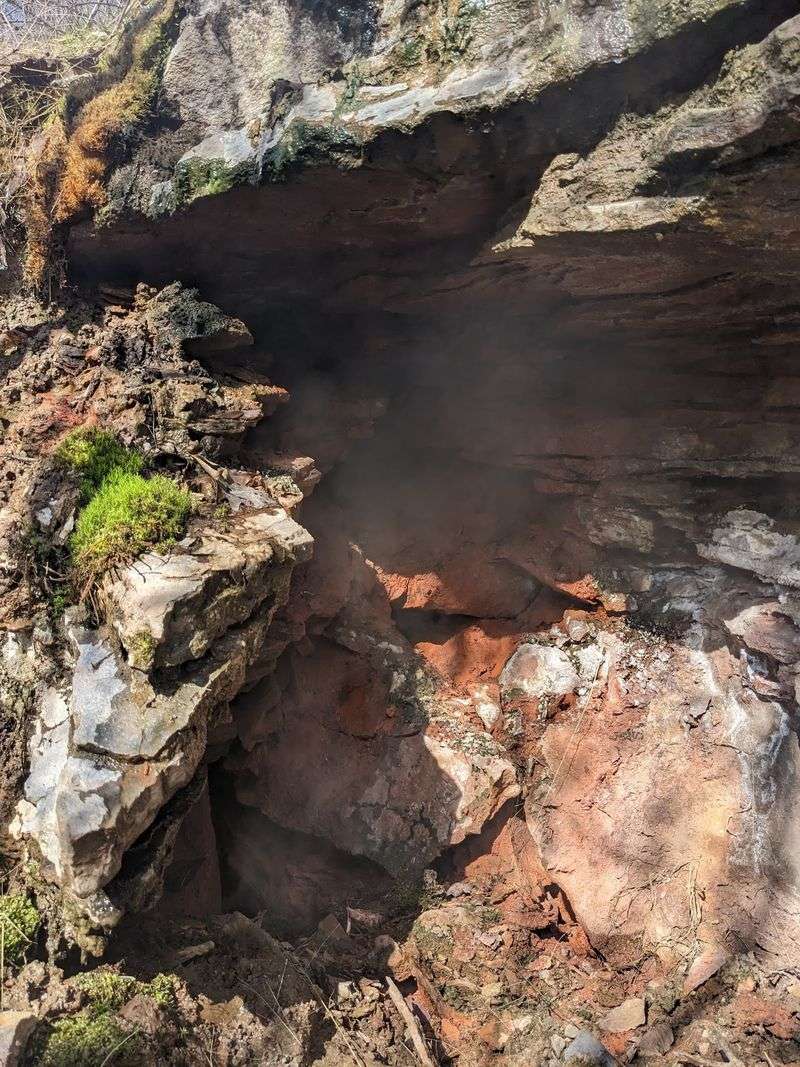
Officials don’t sugarcoat things here. Pennsylvania’s Department of Environmental Protection strongly discourages visits to the immediate area around the fire.
Their slogan says it plainly: Stay Out, Stay Alive. That’s about as direct as a government message gets.
The biggest worries are toxic gases and unstable ground. Land above an underground fire can collapse suddenly, opening sinkholes without much warning.
Burning coal leaves empty spaces as it’s used up. The surface above those gaps can weaken over time.
So what’s a curious traveler to do? Many people choose to view the area from roads and established spots instead of wandering deep into the woods.
If you do stop near the Active Centralia Smoking Vents, keep visits short. Avoid stepping on cracked, sunken, or steaming ground.
Never let kids or pets roam freely. Bring a buddy, and tell someone where you’re going.
I believe the warnings actually make the place more fascinating. Few spots in America come with such an honest reminder that nature is still in charge.
Streets That Lead Absolutely Nowhere
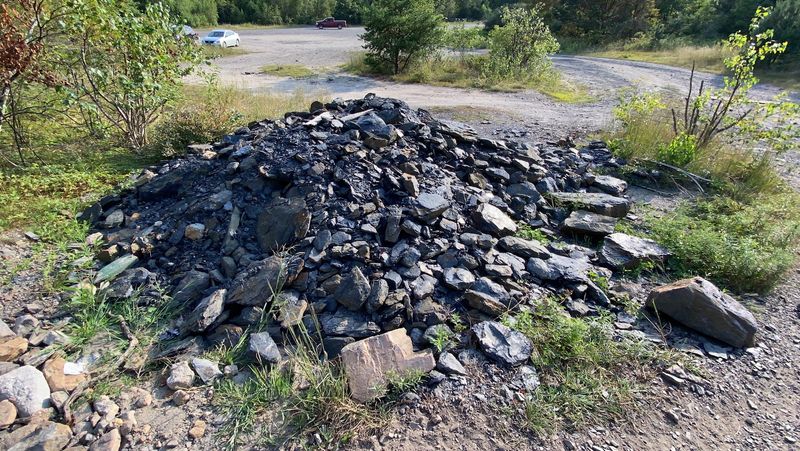
Around the vents, old roads still cut through the trees. Curbs, cracked asphalt, and side streets mark where entire neighborhoods once stood.
Most buildings are gone now. Many were torn down, and young forest has grown where yards and porches used to be.
The town began as Bull’s Head in 1832, later became Centreville, and was renamed Centralia in the 1860s. Another Pennsylvania town already had the Centreville name.
Coal mining started here in 1842. When the railroad arrived in 1865, the place grew quickly.
By 1890, the population hit about 2,500 people. The 2020 census counted just five, making it the least-populated municipality in the state.
A 2013 agreement lets the last residents stay in their homes for life. Those homes are private, so admire from a distance and never bother anyone.
Walking past empty streets feels like reading a book with missing pages. You can see the shape of the story but not the details.
That eerie quiet is a big reason people visit. History here is written in pavement and trees.
A Famous Graffiti Road Got Buried Under Dirt
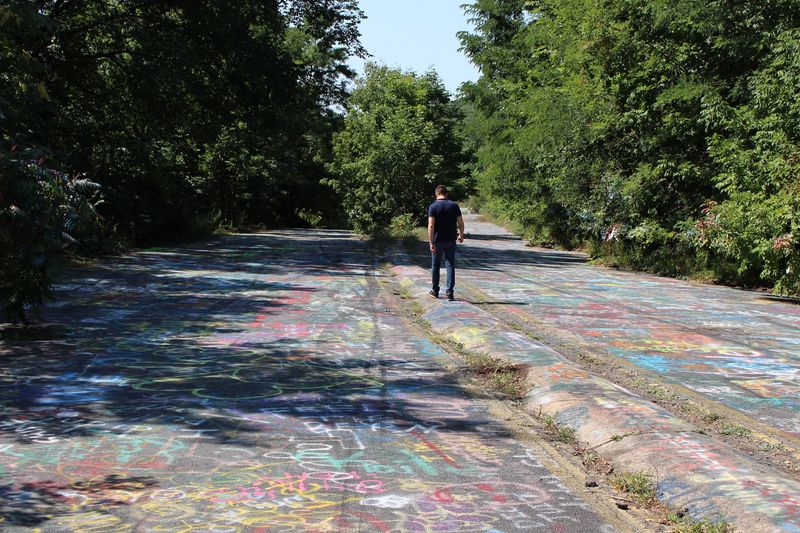
For years, a broken stretch of old Route 61 drew crowds for a colorful reason. People covered it in spray paint, and it earned the nickname Graffiti Highway.
The road had been abandoned after damage linked to the area’s problems. Visitors turned it into a giant outdoor canvas.
Then in April 2020, everything changed. The road was covered in dirt to discourage trespassing.
So if you’ve seen old photos packed with bright paint, know that view is gone. Searching for it today mostly leads to mounds of earth.
Honestly, that shift fits the town’s larger story. Centralia keeps slowly fading back into the landscape, one piece at a time.
The vents now hold much of the spotlight that the highway once enjoyed. Steam rising from the woods is harder to bury than paint on pavement.
I can’t imagine a better reminder that places change fast. What was a must-see a few years ago can vanish overnight.
If anything, that makes current visits feel more special. You’re seeing a chapter that won’t last forever either.
A Church And Cemeteries Still Stand Their Ground
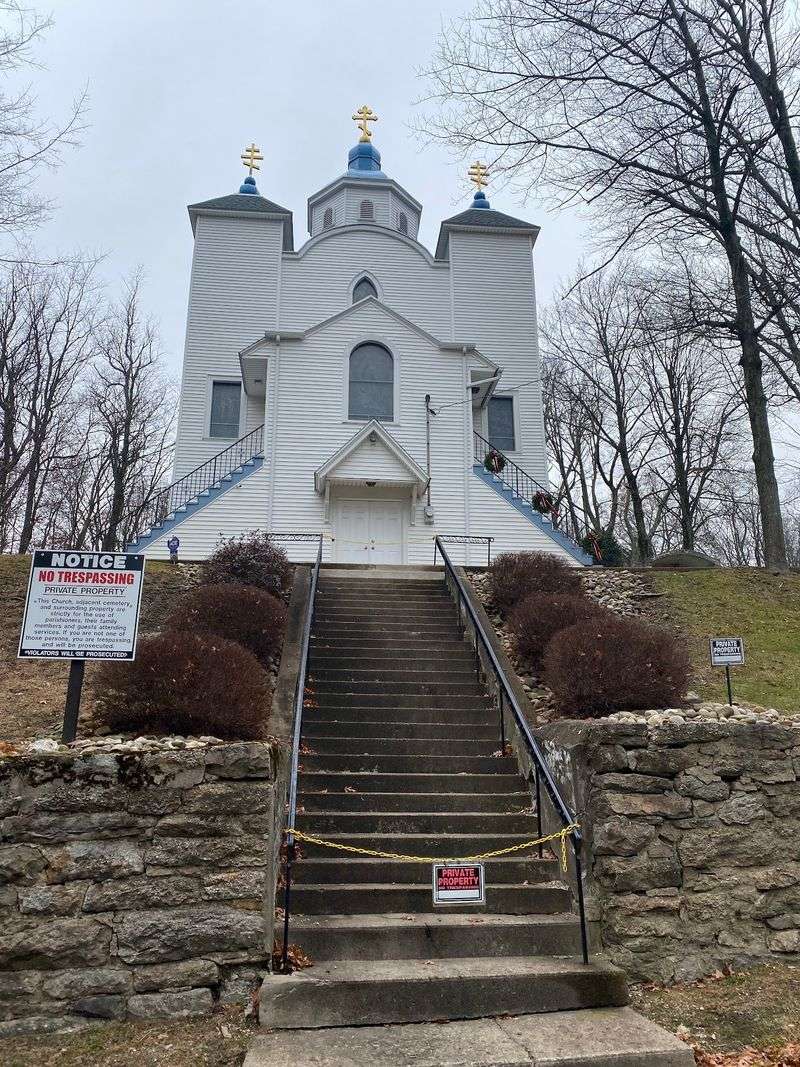
Not everything here is crumbling. Several cemeteries remain carefully kept, a quiet sign that people still care deeply about this place.
The Odd Fellows Cemetery sits near where the fire is believed to have started. Smoke has occasionally been reported rising from the ground in or near it.
That detail gives a lot of visitors chills. It connects the steaming vents directly to the spot where this whole story began.
Nearby, St. Mary’s Church is one of the very few buildings still standing. It continues to hold weekly services, which feels almost unbelievable in a nearly empty town.
Treat these sites with respect. They’re places of worship and remembrance, not photo props.
Keep voices low and stay on paths. Don’t climb on headstones or wander into private spaces.
I like how these spots balance the spooky side of a visit to the Active Centralia Smoking Vents. They remind you that real families built lives here.
After the steam and the empty streets, ending at a church still in use feels hopeful. Some roots run deeper than any fire.