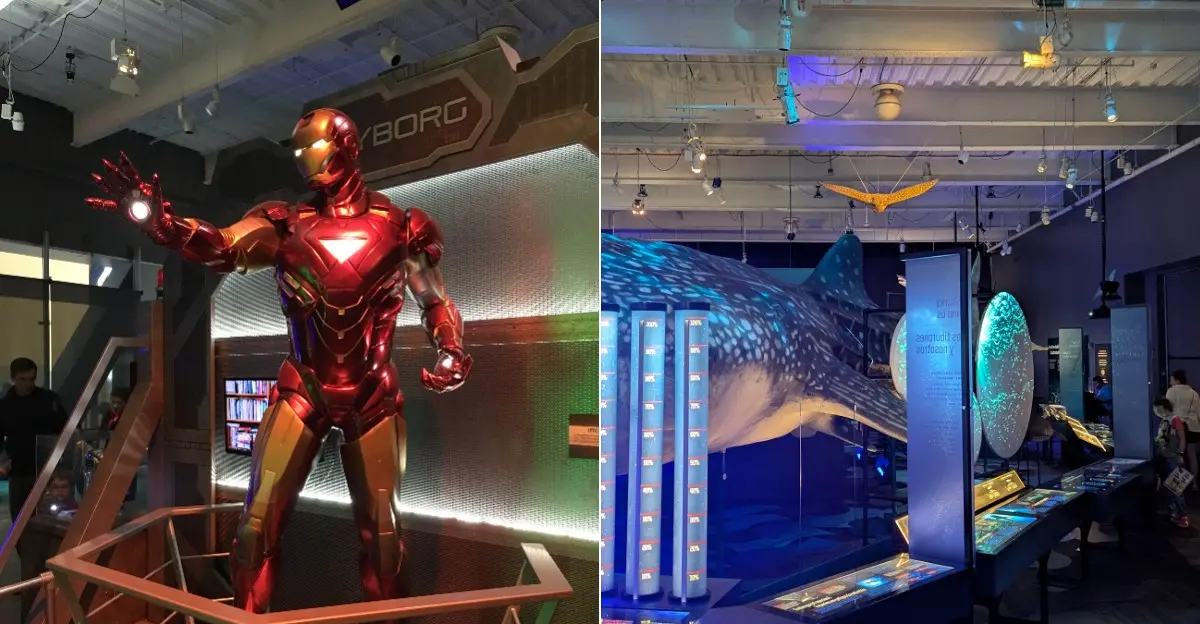
Somewhere in Connecticut, a nine-story science building runs mostly on power from its own fuel cell. That alone made me curious.
Then I learned it holds more than 165 hands-on exhibits.
Inside, tropical butterflies flutter freely all year long. A laser harp turns beams of light into music.
One gallery even lets kids test gravity, friction, and momentum with their own hands.
I like how the whole place treats curiosity as the main event. Nobody here expects kids to stand still and read tiny signs.
They get to push, spin, build, splash, and figure things out on their own terms.
I can’t imagine a better answer to a gray, soggy Saturday. Rain outside suddenly feels like a perfect excuse.
So what exactly makes this spot worth the drive?
Rainy Weekends Feel Different Once You Know This Building Exists

Gray skies have met their match at the Connecticut Science Center. The nonprofit museum opened to the public on June 12, 2009, and has continued to welcome curious visitors ever since.
Architects at César Pelli & Associates designed the striking building. It rises nine stories and covers about 154,000 square feet, with roughly 40,000 square feet devoted to interactive exhibits.
That’s a lot of indoor space for restless legs. More than 165 hands-on exhibits fill the galleries, so kids can bounce from one idea to the next without hearing the word bored.
The building also earned Gold Level LEED certification. Even better, it generates most of its power from an on-site fuel cell.
It ranks among the first science centers to do that, making the building itself a lesson in clean energy.
Planning ahead helps a lot. During the regular season, from September through June, the center is open Wednesday through Sunday from 10 AM to 4 PM.
In July and August, it opens daily from 10 AM to 4 PM.
Hours can change for special events, so check the schedule before you leave. Then grab the raincoats and let the weather do its thing outside.
Butterflies Might Choose Your Shoulder As A Landing Pad

Twenty to thirty species of tropical butterflies flutter around inside Butterfly Encounter. It’s a warm, leafy indoor habitat that stays open year-round, even when Connecticut is buried in slush.
The butterflies fly freely here. That means kids walk among them instead of peering through glass, and sometimes a curious butterfly decides a sleeve looks like a good place to rest.
Slow movements work best in this room. Teach little ones to keep their hands calm and their voices soft.
Butterflies don’t respond well to excited lunges, no matter how sincere the excitement may be.
The habitat is also a sneaky biology lesson. Kids can compare wing colors, patterns, and sizes across different species.
Ask them which butterfly they’d pick as a mascot, and you’ll get surprisingly strong opinions.
Bring a camera, but keep it ready rather than raised the whole time. Some of the best moments happen fast.
A bright wing opens, closes, and suddenly floats off toward the plants.
Before leaving, do a quick check of shoulders, hats, and backpacks. Butterflies are lovely guests, but they belong in their tropical home, not in your car.
Gravity Gets A Serious Workout In The Forces In Motion Gallery
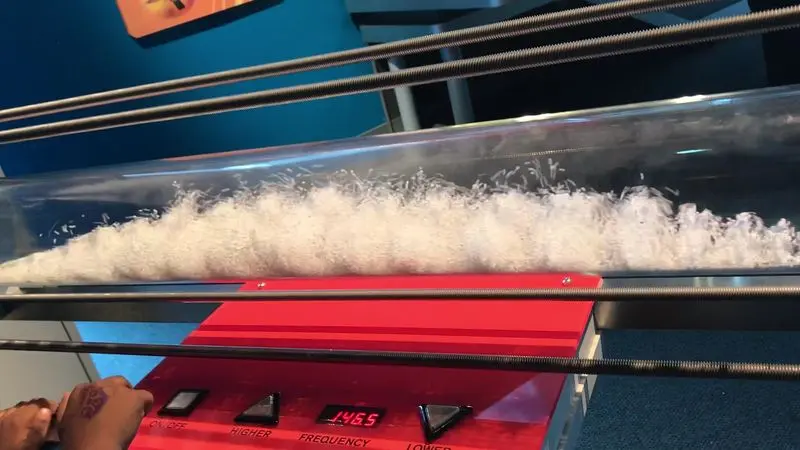
Physics sounds like homework until something starts spinning. Forces in Motion turns gravity, friction, energy, and momentum into a playground for curious hands.
Kids explore movement, spin, flight, and sound here. Instead of memorizing definitions, they test ideas and watch what happens.
That’s how real scientists work, after all.
Here’s a fun trick for parents. Before your child tries an exhibit, ask them to guess the result.
Will it roll faster, fly farther, or spin longer?
Then let them test it. Wrong guesses become the best part, because they spark questions like why did that happen?
Suddenly a ten-year-old is explaining momentum at dinner.
Older kids tend to enjoy repeating experiments with small changes. Encourage it.
Change one thing, try again, and compare. That simple habit is the heart of the scientific method, wrapped up in pure fun.
Younger siblings can join in too, even if they’re mostly there for the motion. Watching something zoom or twirl is satisfying at any age.
Fair warning, though. Your kids may start testing friction on the kitchen floor in their socks.
Consider that a sign the lesson stuck.
A Laser Harp Turns Light Into Music You Can Play
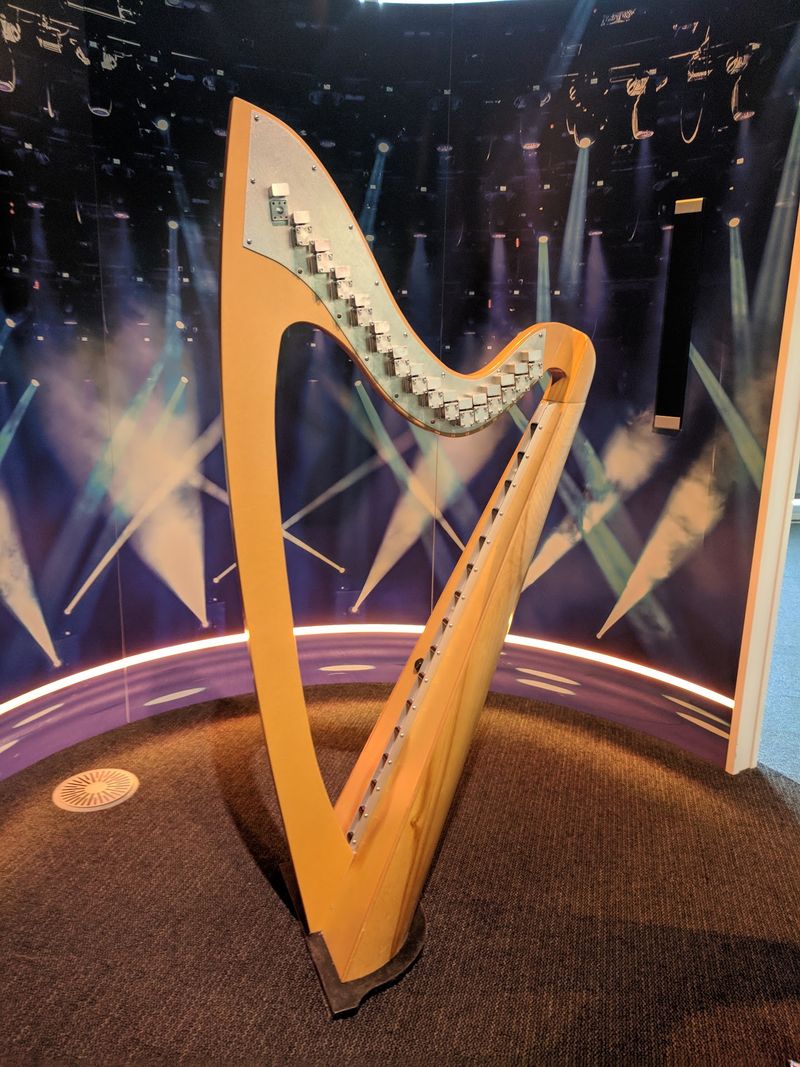
Strings are so last century. In the Sight & Sound gallery, kids can play a laser harp, where beams of light do the job strings normally handle.
The gallery shows how light, sound, motion, and perception all connect. It’s the kind of science you can actually hear and see at the same time, which makes it click quickly.
Music lovers will want to linger. Even kids who swear they aren’t musical often end up composing their own little tunes.
No lessons required, and no one will make them practice scales afterward.
Perception is the sneaky star of this area. Our eyes and ears can play tricks, and the exhibits help explain why.
Kids learn that the brain is constantly working to make sense of the world.
A good conversation starter helps here. Ask your child how they think a beam of light can make a sound.
Their theories may be wild, but the curiosity is the point.
Sound-sensitive kids might want breaks between exhibits. The center also offers periodic Sensory Friendly Days with adjusted lighting and sound, which can make visits easier for some families.
Future Engineers And Astronauts Get Plenty Of Room To Dream

Small builders, big ideas. The Connecticut Science Center packs several galleries that feel made for kids who love asking how things work.
Engineering Lab invites hands-on building and problem solving. Invention Dimension celebrates creative thinking, which is perfect for the kid who turns every cardboard box into a machine.
Then there’s Energy City. It gives kids a chance to think about where power comes from and how we use it.
Since the building runs mostly on its own fuel cell, the topic feels extra fitting here.
Exploring Space takes things farther out. Young astronomers can learn about the universe beyond our planet, and parents may pick up a fact or two as well.
Health Lab rounds out the mix by turning attention inward. Kids discover how their own bodies work, which tends to be fascinating and slightly gross in the best way.
Try letting your child lead the route through these galleries. Kids who choose their path often stay engaged longer.
You might discover a budding engineer, inventor, doctor, or astronaut along the way.
Just don’t be surprised if bedtime questions get much harder afterward.
The Connecticut River Becomes A Lesson Right Outside The Window

Water play and real-world science make a fantastic team. River of Life focuses on the Connecticut River, which flows right past the museum in downtown Hartford.
A stream table lets kids see how water moves and shapes the land. They can watch channels form and shift, which helps explain how rivers change over time.
Pack a spare shirt, just in case. Kids who love water tend to get very involved, and enthusiasm doesn’t always stay neatly on the table.
The Overlook Balcony adds a real highlight. It offers a view of the river, so kids can connect what they learned to the actual waterway outside.
That link between exhibit and reality is powerful.
Ask a few simple questions while you look out. Where does the river start?
Where does it go? Which animals might live in it?
Questions like these keep learning going long after the visit.
This area is a nice breather between busier galleries too. The river view gives everyone a calm moment to reset.
Even on a rainy day, watching water flow past feels oddly peaceful and fitting.
Little Ones Get A World Built Just For Their Size
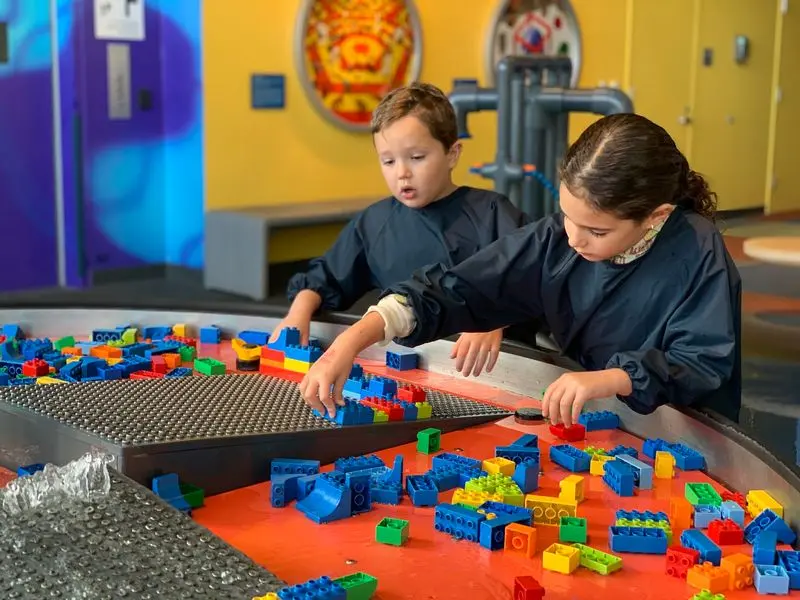
Toddlers deserve science too. KidSpace is an early childhood area designed for children ages 6 and under, and it gives the youngest explorers a space all their own.
Recently, the center expanded it with KidSpace Outdoors. That addition doubled the area’s size, offering more room for little legs to move and little minds to wonder.
Age limits matter here. Older siblings may want to jump in, but the space is built for small kids.
Keeping bigger children elsewhere helps everyone play safely.
For families with very young kids, the center also hosts Toddler Tuesday programming. Check the schedule for dates, since special events can vary throughout the year.
Parents will appreciate some practical comforts as well. A First Aid, Calm Down, and Nursing area sits near the Theater.
Restrooms throughout the building include touch-free features, which feels like a gift when traveling with toddlers.
Plan for breaks. Small kids burn energy fast and crash just as fast.
A snack, a quiet moment, then back to exploring often works better than pushing through.
Nap timing still rules the day, sadly. Science can’t fix everything.
Sharks Swim Across A Giant Screen In 3D
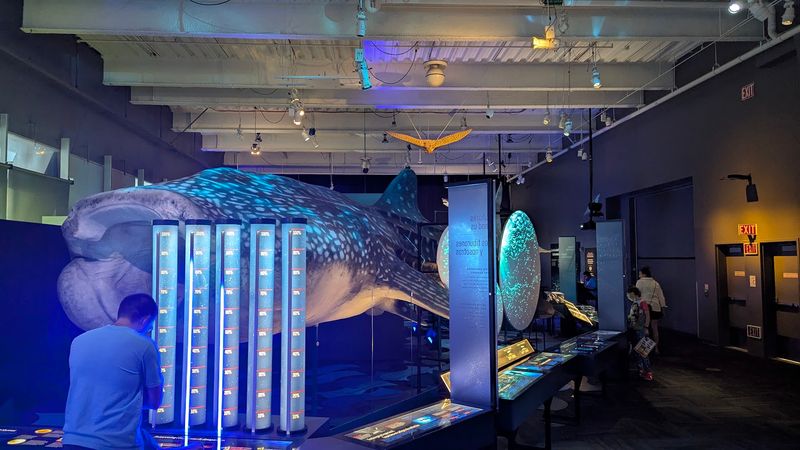
A 30 by 40 foot screen changes movie time completely. The Maximilian E. and Marion O.
Hoffman Foundation Science Theater brings big nature films to life in 3D.
Stadium seating helps everyone see clearly. An 18,000-watt Dolby sound system fills the room, so ocean waves and animal calls feel close.
Film titles have included Sharks (3D), Wild Asia: Life at Extremes (3D), Secrets of the Sea (3D), and Call of the Dolphins (3D). Showings change, so check what’s playing before your trip.
Booking a film is a smart move on rainy days. It gives tired feet a break while keeping the learning going.
Everyone gets to sit down, and nobody has to pretend they aren’t exhausted.
Assistive listening devices are available in the theater too. That small detail helps more families enjoy the experience together.
Shark fans may also find a matching limited-time Sharks exhibit featuring life-sized models of different species. Pairing the film with the models makes a neat themed afternoon.
One tip for younger viewers is to sit them near the aisle. If a giant shark feels a little too giant, a quick exit is easy.
Special Events Give You Reasons To Keep Coming Back
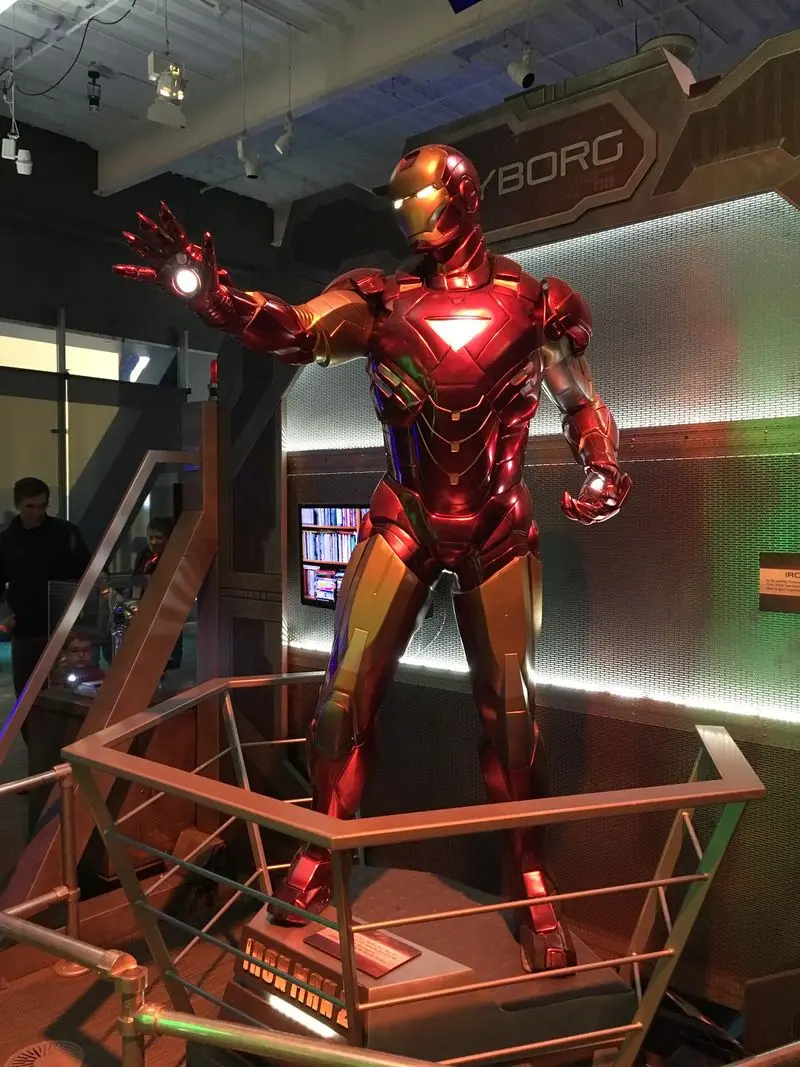
Daily LIVE Science experiences keep things lively on ordinary days. On special days, the Connecticut Science Center really pulls out the fun.
Past and planned events include Spooktacular, an Ofrenda Installation, Pokémon Day, and Holiday Enchantment with Santa and Mrs. Claus. Space Day brings space-themed crafts, photo stations, and planetarium shows.
Popular events can draw big turnouts, so arrive early. Lines for character meet-and-greets may close before the posted time.
Getting there is fairly easy. The museum sits at 250 Columbus Blvd, Hartford, CT 06103, overlooking the Connecticut River.
It’s close to both I-84 and I-91.
An on-site paid parking garage makes rainy arrivals much less soggy. Members receive a parking discount, which adds up for frequent visitors.
Wheelchairs are available on a first-come, first-served basis. The building is ADA compliant, which helps families of all abilities explore comfortably.
Before heading home, the Gift Shop is worth a peek, especially for LEGO fans. And when the weather clears, the seasonal Rooftop Garden opens from Earth Day through August.
Connecticut sunshine and native plants make a sweet finale.