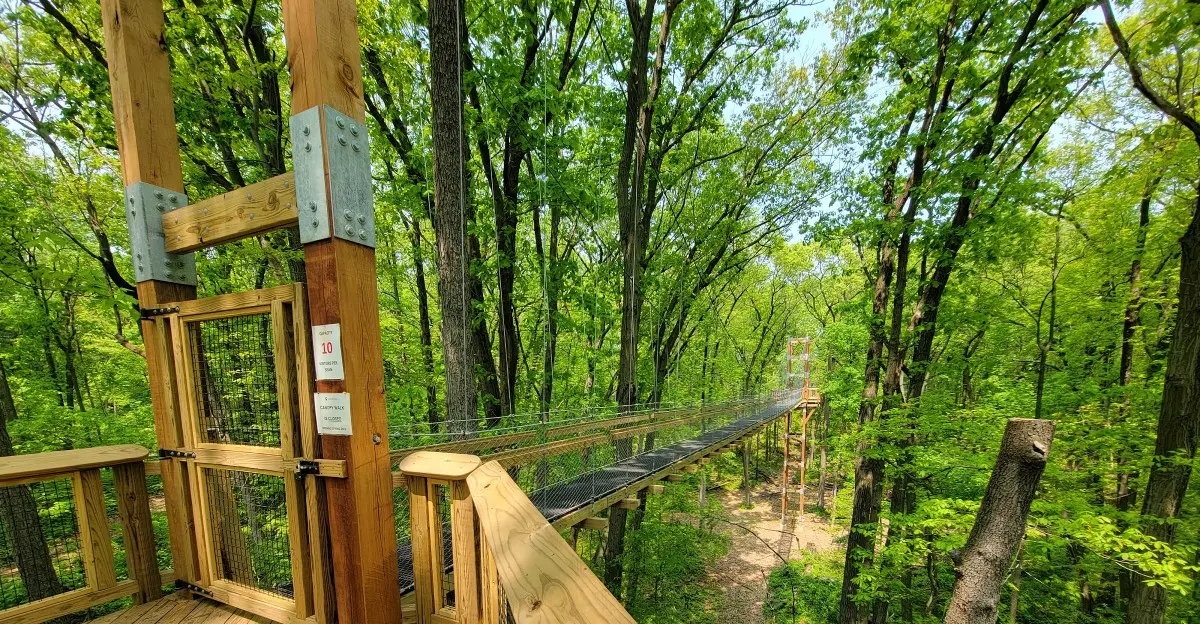
A suspension bridge hangs 65 feet above a glacial kettle hole, and its path is wide enough for a wheelchair. That one detail changed how I think about treetop adventures.
The whole walkway stretches 726 feet through the forest canopy. Its suspension bridge alone runs 374 feet.
Strollers roll across it, and grandparents get the same leafy view as the teenagers.
This place in Michigan refuses to leave anyone on the ground. Treetop walks usually mean ladders, harnesses, or a fitness test.
This one asks for comfortable shoes and a little patience on the uphill trail.
The bridge is only the headline, though. Rare tiny conifers, a glass conservatory, and miles of quiet trails surround it.
Let’s find out how much sky can one afternoon hold.
Your Whole Crew Can Roll Right Up Into The Treetops
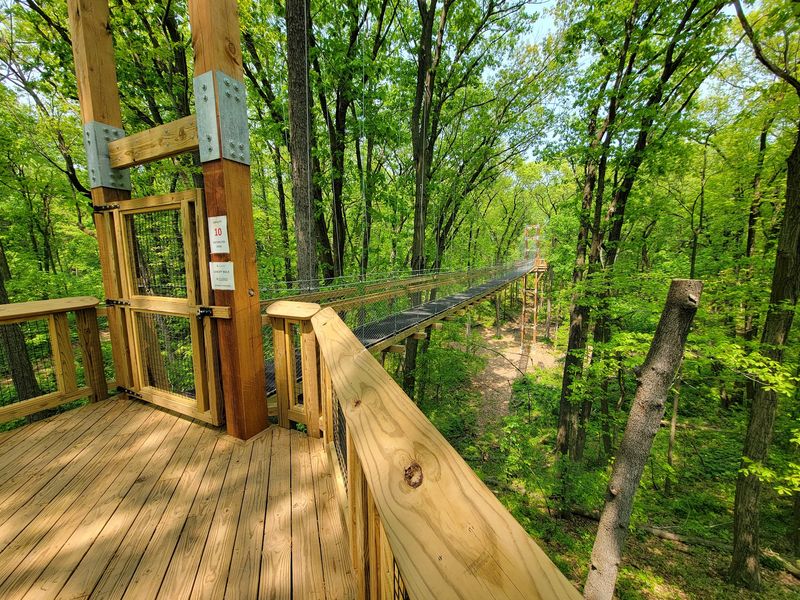
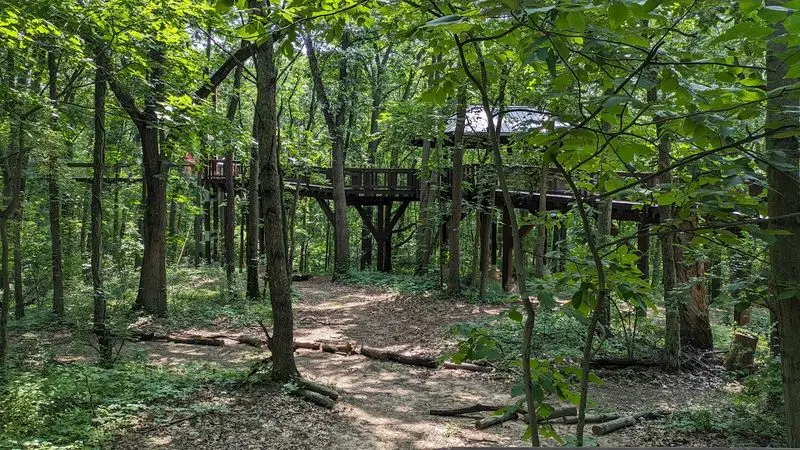
Sixty-five feet up, the forest looks completely different. At Hidden Lake Gardens, the Reach for the Sky Canopy Walk puts you right at that level.
Most folks just call it the Sky Walk. The pathway is 36 inches wide, so wheelchairs and strollers fit across it.
The full structure stretches 726 feet through the trees. Its suspension bridge makes up 374 feet of that span, hanging over a glacial kettle hole.
A kettle hole is a bowl in the land left behind by melting glacier ice. Walking above one is a pretty fun way to sneak a geology lesson into a family outing.
Be ready for a little movement underfoot. Suspension bridges sway, and that gentle wobble is part of the thrill.
The views reach past the arboretum to the rolling Irish Hills. On clear days, you can spot parts of nearby counties too.
Grandpa gets the same postcard view as the kids. Nobody waits at the bottom holding the bags while everyone else has fun.
That shared moment is the real magic here. Everyone in the group reaches the sky together, at their own pace, without climbing gear.
The Trail Up Is Half The Adventure, So Pace Yourself
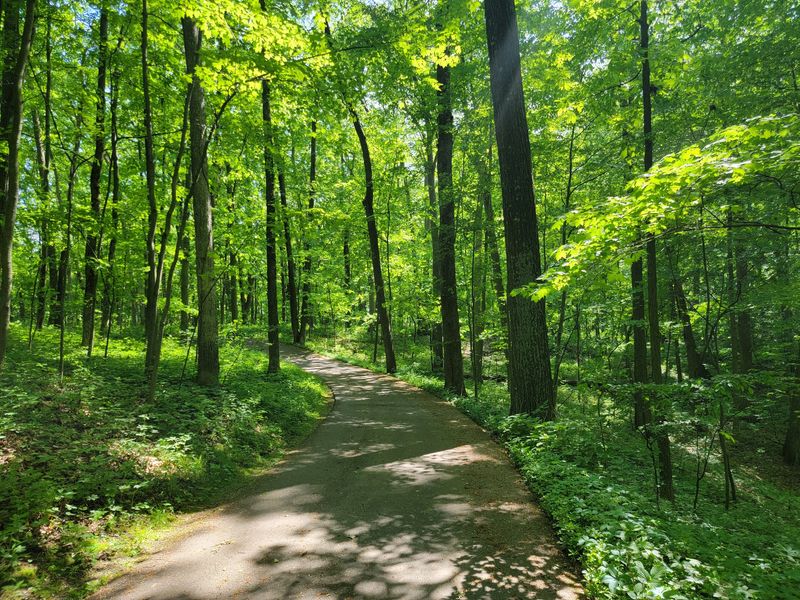
Getting to the bridge takes a bit of a walk. Think of it as the warm-up act before the main show.
From the Trailhead parking lot, the Sue and John Gruel Nature Trail runs about one-third of a mile. It’s a multi-access trail built to bring visitors up to the Sky Walk.
Starting from the Visitors Center parking lot instead? Plan on roughly 0.8 miles each way.
The surfaces change as you go. You’ll find paved stretches, gravel sections, and some woodchipped ground along the route.
Some parts climb uphill, and a few spots have steep inclines. Families pushing wheelchairs or strollers should give themselves extra time and take breaks.
Shoes matter more than you’d guess. Sturdy soles feel much better on gravel than thin sneakers do.
Bring water, especially on warm days. A small backpack makes the trip easier for everyone carrying snacks or jackets.
Try not to rush, either. The forest along the way is lovely, and slowing down turns a long hike into a peaceful stroll.
You’ll reach the bridge with fresher legs and a better mood.
755 Acres Means You Should Clear Your Whole Afternoon
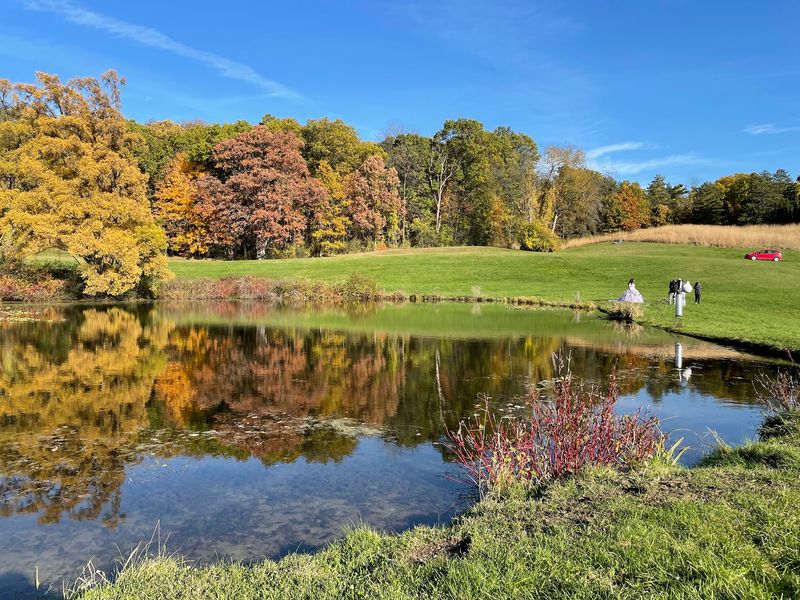
That number is not a typo. Hidden Lake Gardens covers 755 acres in southeastern Michigan, and Michigan State University owns and runs it.
So yes, the canopy walk is the star. But the supporting cast is huge.
The grounds include oak-hickory forests, open meadows, and wetlands. Each one gives the landscape a different feel as you move around.
Hikers get more than 12 miles of trails to explore. That’s enough to keep busy legs happy for a long time.
Not up for big hikes? A six-mile paved scenic loop called Woodland Drive lets you see a lot from your car.
It’s a handy option for grandparents or anyone saving energy for the Sky Walk. Just know the drive may close to vehicles in winter.
Picnic areas sit around the property too. Packing a lunch is a smart move, so you can refuel without leaving.
Many families make a full day of it. Start early, pick a few highlights, and leave room to wander.
The best plan here is a loose one, with plenty of breathing room built in.
Three Climates Live Under One Glass Roof
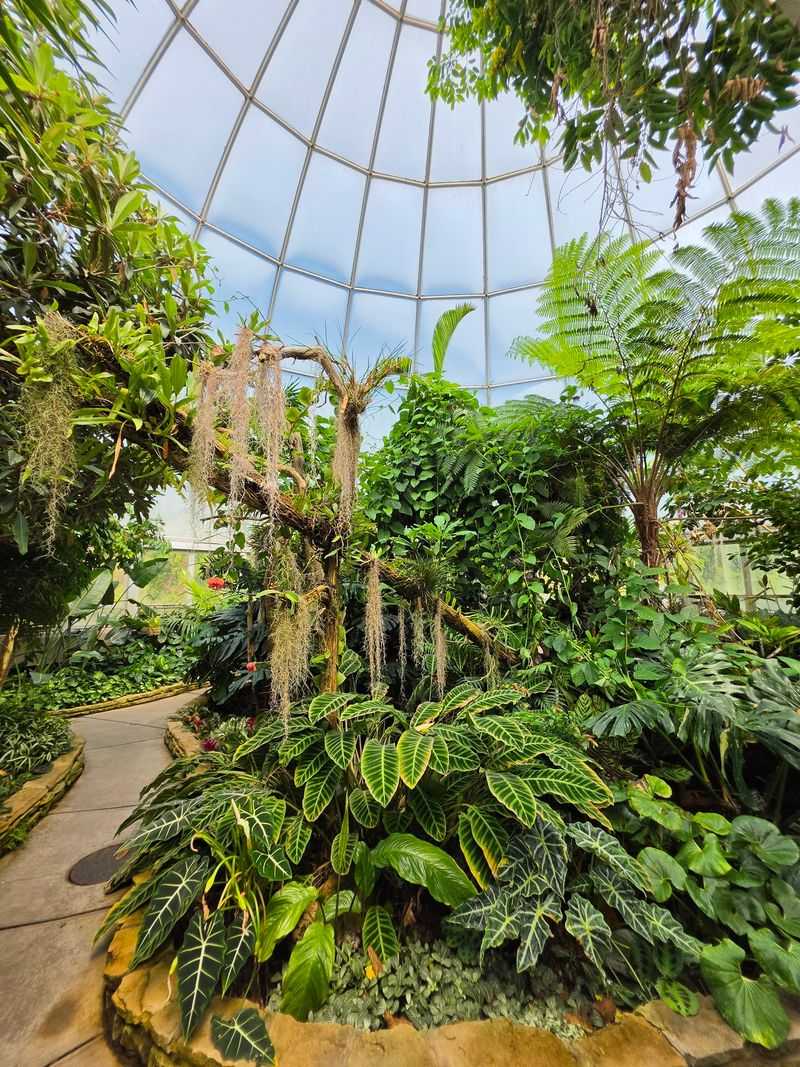
Rainy day? No problem.
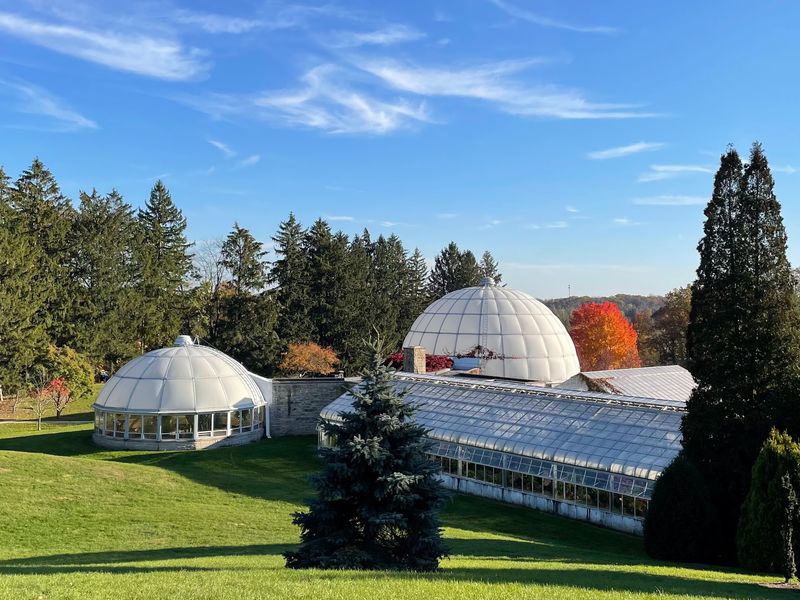
The Conservatory at Hidden Lake Gardens lets you travel the world without packing a suitcase.
Inside, you’ll find three different biomes. There’s a tropical zone, an arid zone, and a temperate zone.
A biome is a big area with its own climate and plants. Here, each one is recreated so you can step from jungle to desert in minutes.
The tropical section brings warm, leafy plants you won’t see growing wild in Michigan. The arid section shows off plants built to handle dry places.
Then the temperate area feels a little closer to home. Comparing all three is a fun game for curious kids.
Ask them which room they’d want to live in. You might get some surprisingly strong opinions.
It’s also a cozy break during chilly months. When the trails feel cold, the glass rooms offer a warm change of scenery.
Some aisles inside are narrow, so wheelchair users may not reach every path. Still, it’s worth a peek.
Few places pack so many corners of the planet into one short visit.
Tiny Trees With Big Personalities Wait In The Courtyard
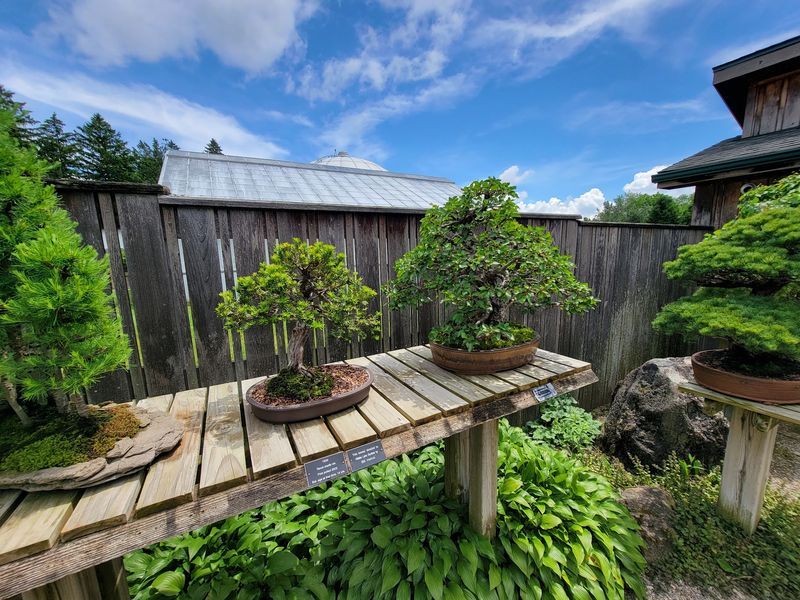
After walking among towering oaks, the bonsai feel like a funny twist. These trees are small enough to sit on a stand.
Hidden Lake Gardens has a Bonsai Collection and Courtyard. It’s a calm spot that rewards slow, close looking.
Bonsai is the art of growing trees in containers and shaping them carefully over many years. Every branch is trained with patience.
Kids often love this part because the trees look like miniatures from a storybook. Adults tend to admire the skill behind each one.
Timing matters here. The bonsai are typically displayed outdoors during the warmer season, so early spring visitors may find them still tucked away.
Check the season before you go if this is a must-see. A quick call to the gardens can save some disappointment.
Take your time once you’re there. Notice the twisty trunks, the tiny leaves, and the way each tree seems to tell a story.
It’s a nice contrast to the canopy walk. One spot shows you trees from above, and the other shows trees you could almost hold.
Rare Dwarf Conifers Steal The Show For Plant Nerds
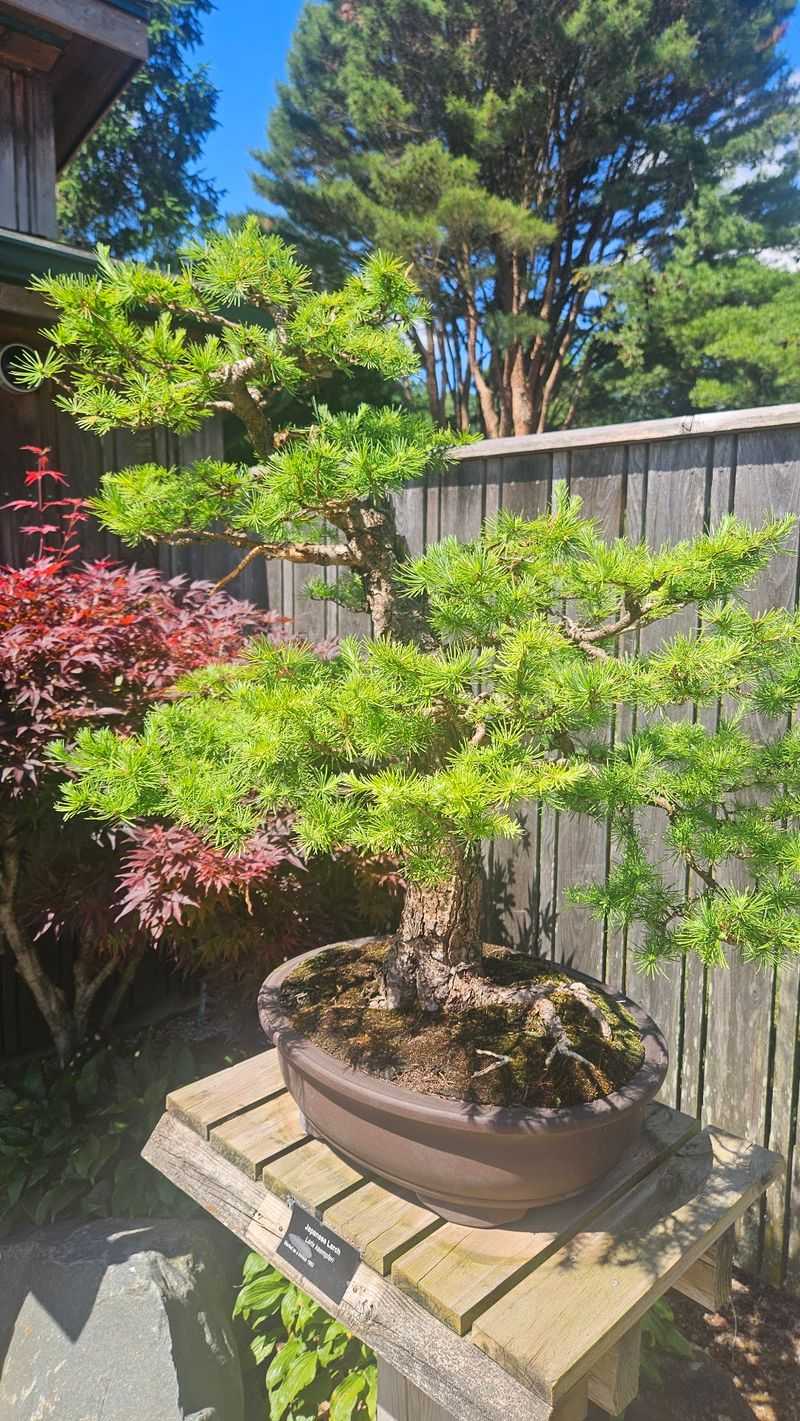
Evergreens don’t all look like Christmas trees. The Harper Collection of Rare and Dwarf Conifers proves that in a big way.
Conifers are trees and shrubs that usually have needles or scales and grow cones. Pines, spruces, and firs belong to this group.
Dwarf types grow slowly and stay small. That makes their shapes, colors, and textures easy to see up close.
Some look round and puffy. Others spread low or stand tall and skinny, like nature’s version of a sculpture garden.
The collection is a great stop for gardeners hunting ideas. Small conifers can work well in home yards where space is tight.
Kids can play a quick game of find-the-weirdest-shape. It keeps little legs moving and eyes busy.
Bonus: evergreens stay green when other plants rest. That gives this area appeal in colder months too.
Bring a phone for photos and maybe a notebook. You might spot a plant you want for your own garden in Michigan.
Just don’t try to fit one in your pocket on the way out.
Bring Binoculars, Because The Locals Have Feathers
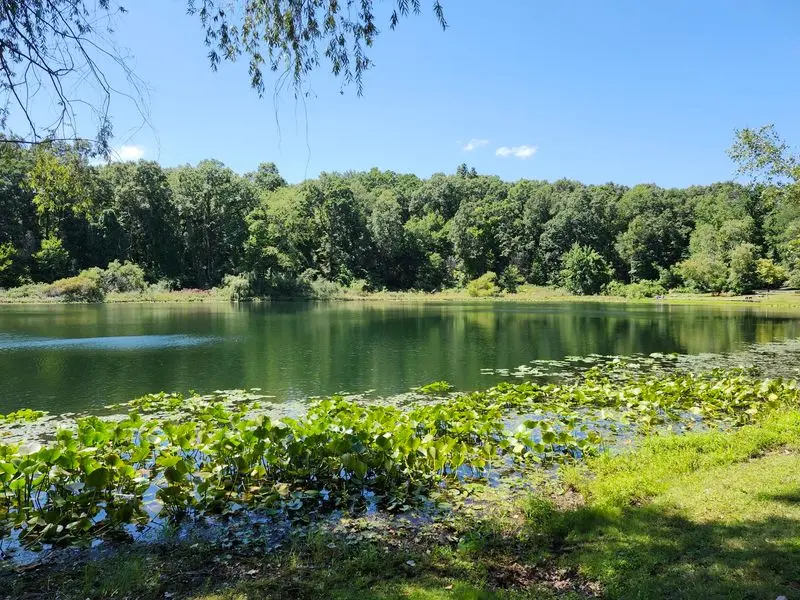
Quiet footsteps pay off here. The grounds are home to white-tail deer, wild turkeys, and plenty of songbirds.
With forests, meadows, and wetlands all in one place, animals have lots of spots to hide and feed. That variety gives your eyes plenty to search.
Up on the Sky Walk, you’re at a whole new level for bird watching. Treetop height puts you closer to where many songbirds spend their time.
Binoculars are worth packing. Even a cheap pair makes spotting birds more exciting for kids.
Wild turkeys can be a fun surprise. Seeing a group stroll across a meadow feels a little like a nature show.
Keep a respectful distance from all wildlife. Watching calmly is better for the animals and gives you longer looks.
Early in the day, the grounds open at 9 a.m., which is a good start for animal spotting. Stay on trails to protect the habitats.
Make it a challenge for the family. Who can spot the first deer?
Winners get bragging rights, and maybe the first pick of snacks.
Winter Nights Turn The Sky Walk Into Something Magical
Most people think of gardens as a summer thing. Hidden Lake Gardens keeps its calendar busy all year long.
The Sky Walk itself runs year-round, weather permitting. Its usual hours are 10 a.m. to 4 p.m.
During winter, the gardens host special lighted night walks on the canopy walk. Glowing lights high in the bare trees make for a totally different experience.
These evening events are special, so check the schedule ahead of time. Dates and details can change from season to season.
Fall brings bright leaf color across the forests. Spring wakes up the gardens with fresh blooms.
Summer offers shade under the tall trees, which helps on hot days. Each season feels like a new visit to the same place.
Families who go more than once often notice something new each time. A membership can make repeat trips easier on the wallet.
Dress for the weather, especially for winter events. Warm boots and mittens make a big difference on a long walk.
Hot cocoa in the car afterward? That part is totally up to you.
Plan Smart Before You Point The Car Toward The Irish Hills
A little planning goes a long way. You’ll find Hidden Lake Gardens at 6214 Monroe Road (Hwy M-50), Tipton, MI 49287.
The grounds are open Tuesday through Sunday from 9 a.m. to 5 p.m. Last admission is at 4:30 p.m., and Mondays are closed.
The gardens also close for major holidays. That includes Thanksgiving, Christmas Eve, Christmas Day, New Year’s Eve, and New Year’s Day.
General admission or a membership covers your visit, including the Sky Walk. No separate ticket needed for the treetop thrill.
Start at the Visitors Center to get your bearings. The Daffodil Gift Shop is there too, for souvenirs and gifts.
The story behind it all is pretty sweet. Harry Fee bought the land in 1926 and donated it to Michigan State University in 1945.
Because the Sky Walk opens at 10 a.m., time your arrival with that in mind. You could explore the conservatory first, then head up.
Fundraising for the canopy walk began in 2018. It officially opened on June 20, 2023.
Now it’s your turn to reach the sky.