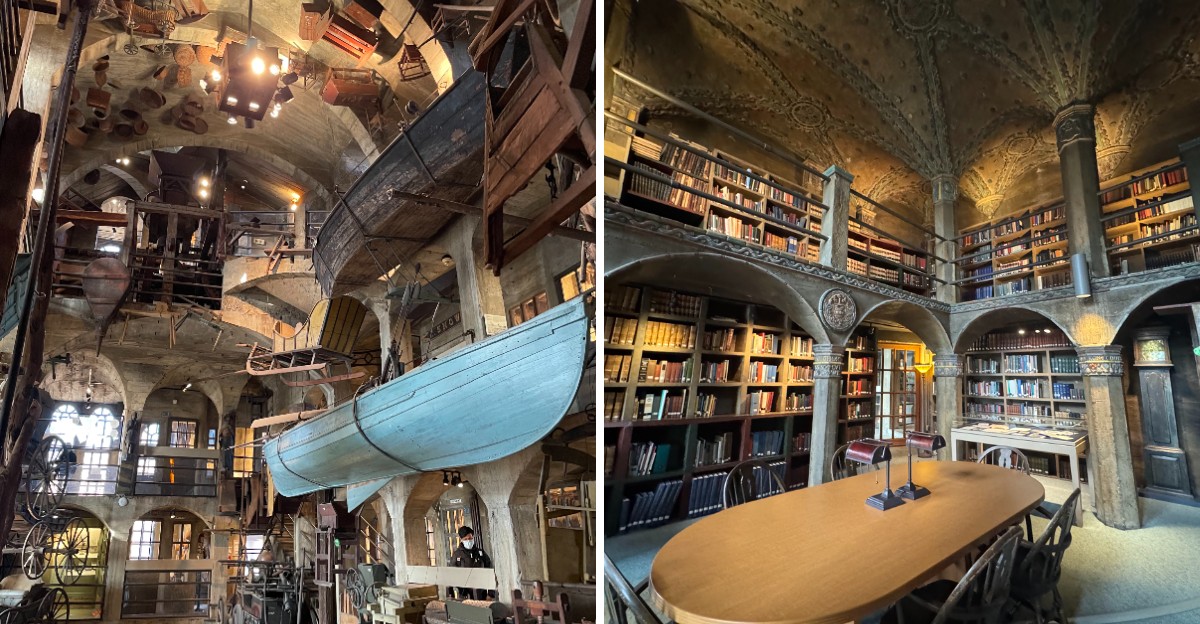
A Conestoga wagon hangs in the air above your head.
So does a whale boat, a stagecoach, and an old fire engine.
Henry Chapman Mercer designed the six-story concrete castle to house his collection of early American tools and artifacts.
He designed it himself and finished it in 1916.
Then he filled it with tools most of us couldn’t name if our lives depended on it.
I like how stubborn the idea feels.
He saw factories replacing handmade work and decided to save the old stuff before it vanished.
I believe that kind of stubbornness deserves a road trip.
This odd fortress sits in a small Pennsylvania town, and it looks like a storybook castle got a concrete makeover. Inside, dozens of trades fill rooms and alcoves stacked to the ceiling.
So what exactly is a sugar nip, and why does a castle need one?
Look Up, Because The Best Stuff Is Hanging Over Your Head
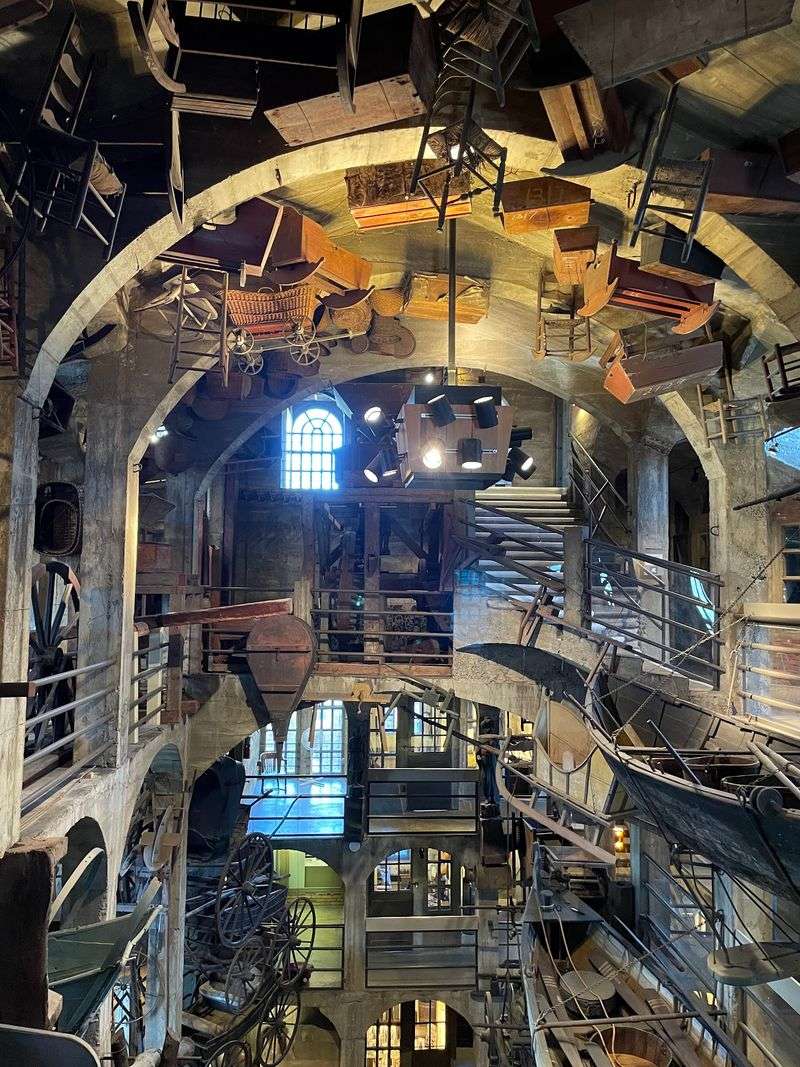
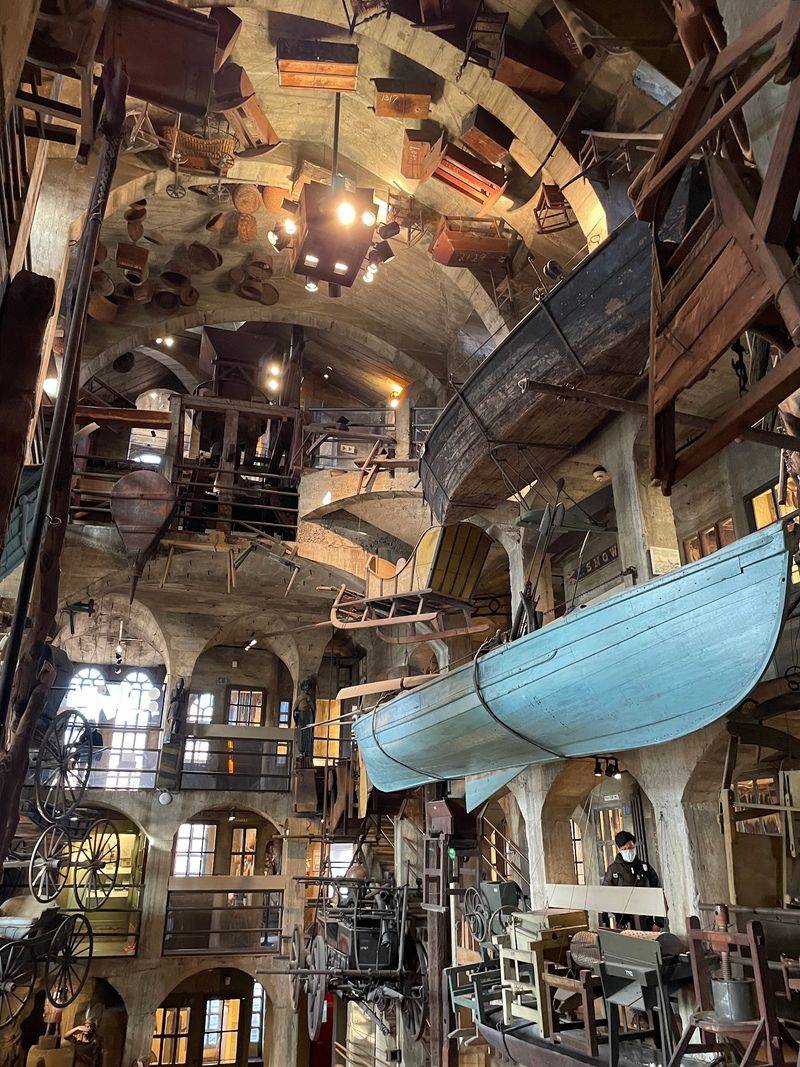
Gravity seems optional at the Mercer Museum. The towering Central Court is famous for objects that appear to float in mid-air.
Suspended overhead, you’ll spot a Conestoga wagon, horse-drawn carriages, a whale boat, and a stagecoach. An antique fire engine joins the party too.
Most museums keep big vehicles on the floor, so this setup feels delightfully backward.
The court rises through several levels of concrete balconies. Each level gives you a new angle on the hanging collection.
A wagon that looks huge from below looks different when you’re eye level with its wheels.
Henry Chapman Mercer planned this arrangement on purpose. The museum describes the arrangement of his collection as both logical and provocative.
In plain terms, he wanted you to see ordinary objects in a brand-new way.
Here’s a smart move for your visit. Stand in the center of the ground floor first and take it all in.
Then climb and keep checking back over the railings as you go.
Your neck might get a workout. That’s a fair trade for seeing a whale boat drifting above Pennsylvania.
Few museum views anywhere compare to it, and it’s the image most visitors carry home.
A Castle Made Of Poured Concrete Sounds Wild Because It Is
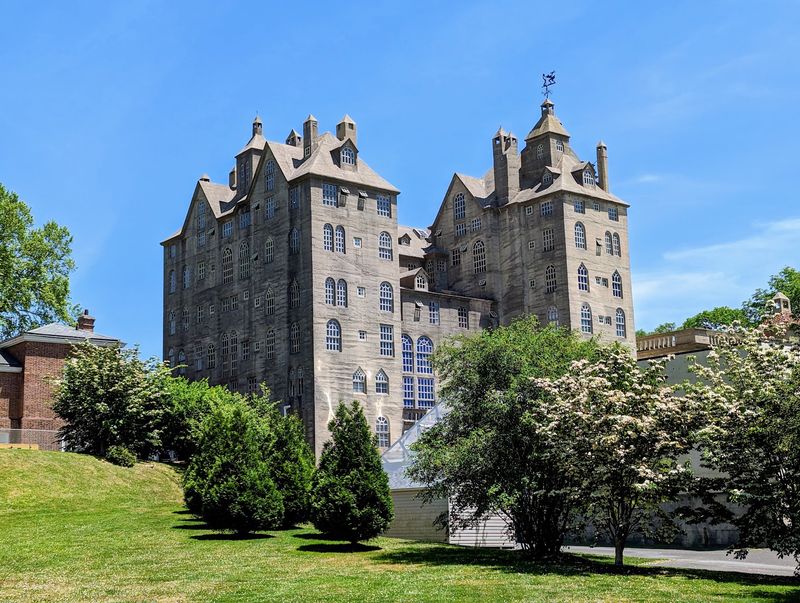
Most castles get built from stone blocks. Henry Chapman Mercer went a different route and poured his in concrete.
The Mercer Museum rises six stories tall. It’s made of reinforced concrete and was completed in 1916.
Mercer designed it himself, which makes it even stranger and more charming.
He wasn’t a trained architect, either. Mercer was an archaeologist, anthropologist, ceramicist, and scholar.
He studied law first, then switched paths entirely. Clearly he never met a project he considered too ambitious.
The building stands as an early example of poured-in-place concrete architecture. That means the concrete was formed right on site, not stacked in pieces.
For 1916, that was bold thinking.
From the outside, the towers and rooflines look like something from a fairy tale. Up close, the gray material gives it a sturdy, no-nonsense feel.
It’s a castle built to protect things, not to host royal banquets.
Take a few minutes outside before heading in. Walk around and notice how the shapes change from each side.
Snap a photo, because friends won’t believe a castle this unusual sits in a Pennsylvania town.
Meet The Collector Who Saved Everyone Else’s Old Junk
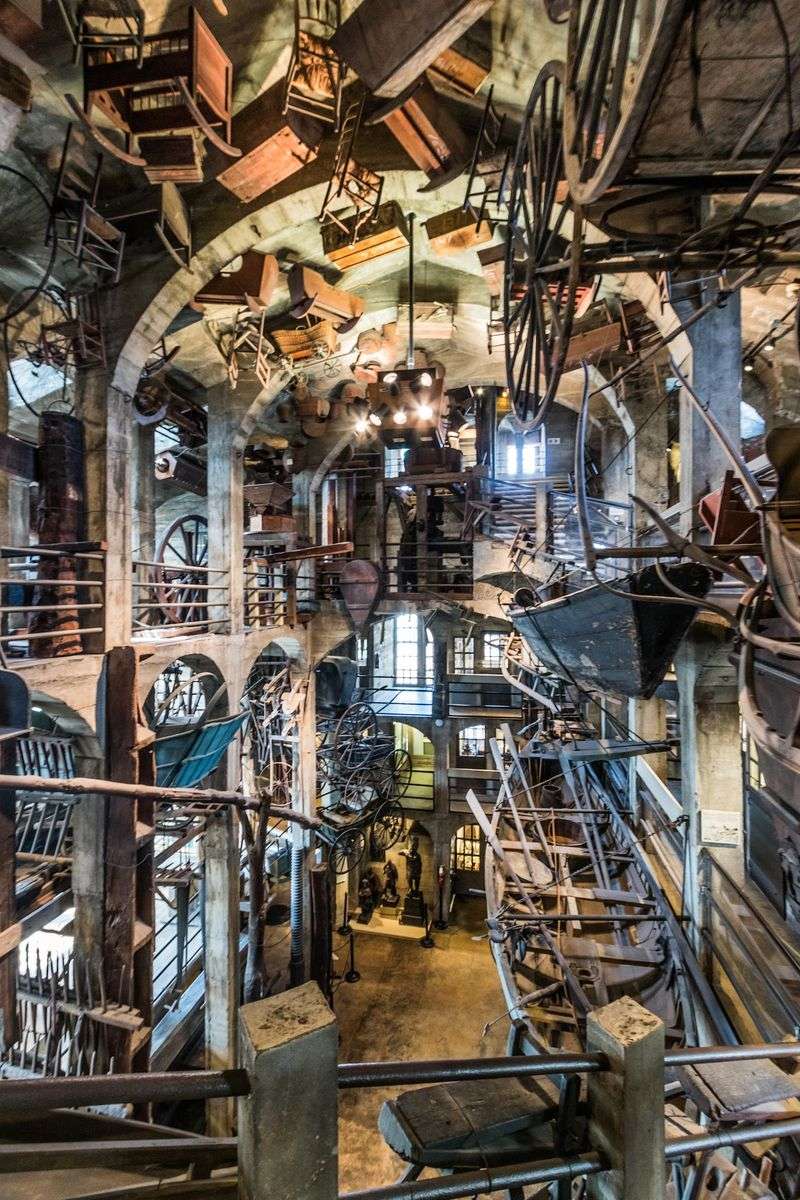
Around 1897, Henry Chapman Mercer got worried. Factories were replacing handmade work, and old tools were disappearing fast.
Mercer was born in Doylestown in 1856. He became Curator of American and Prehistoric Archeology at the University of Pennsylvania’s museum in the early 1890s.
So he knew how quickly everyday objects could vanish from history.
His solution was simple and a bit outrageous. He started collecting the tools people used before industry took over.
Things others tossed aside, he carefully saved.
That mission grew into an enormous collection of tools and artifacts documenting everyday American life before the Industrial Revolution, mostly before about 1850. Think of it as a giant time capsule built by one very determined person.
Mercer later donated the building and his collection to the Bucks County Historical Society. That group still runs the museum today.
His gift keeps on giving more than a century later.
Knowing his story makes the visit richer. Every rusty blade and wooden gadget becomes part of his rescue mission.
You start seeing each object as something he refused to let the world forget.
Sixty Trades, Thousands Of Tools, And Zero Boring Corners
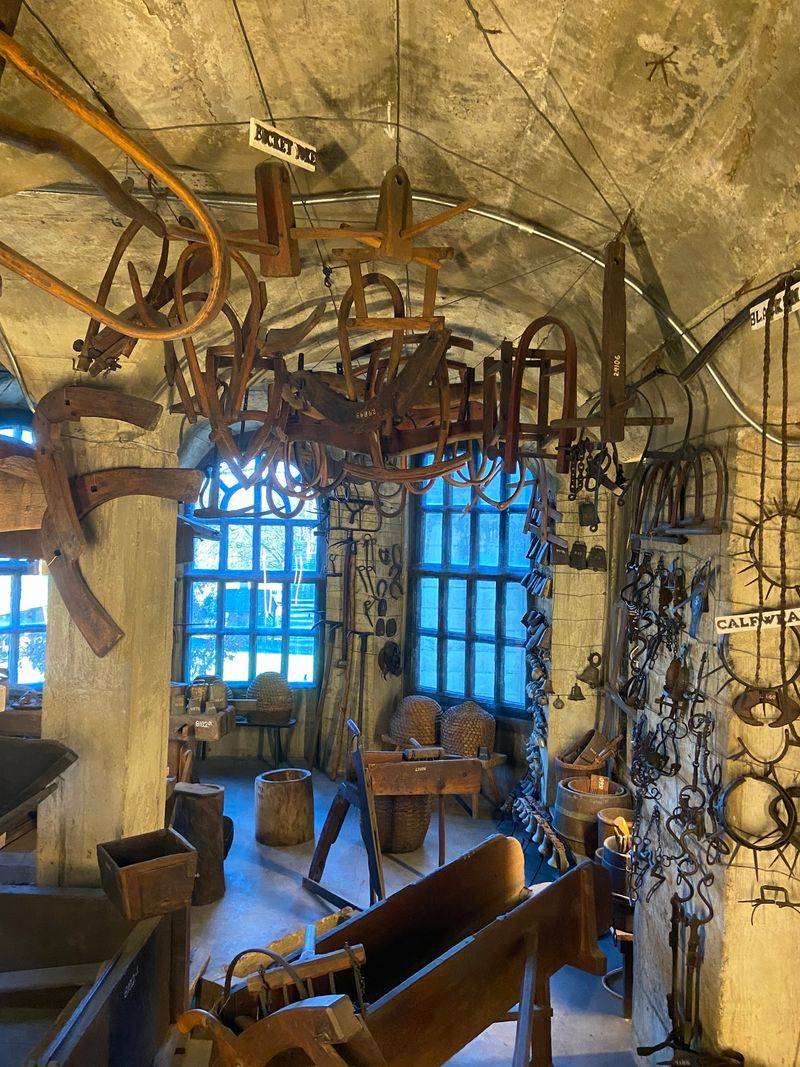
Ever wondered how a cooper made barrels or how a blacksmith shaped iron? The answers are hanging on these walls.
The collection documents over 60 early American crafts and trades. Each one gets its own room or alcove, with somewhere between 55 and 60 exhibit spaces total.
You move from trade to trade like flipping through chapters of a book.
The museum’s collection includes nearly 50,000 objects associated with preindustrial American life and technology. Museum professionals consider it among the most complete collections of its kind in America.
Organization helps a lot here. Tools are grouped by the job they did, so patterns become easy to spot.
You’ll start noticing how certain trades shared clever ideas.
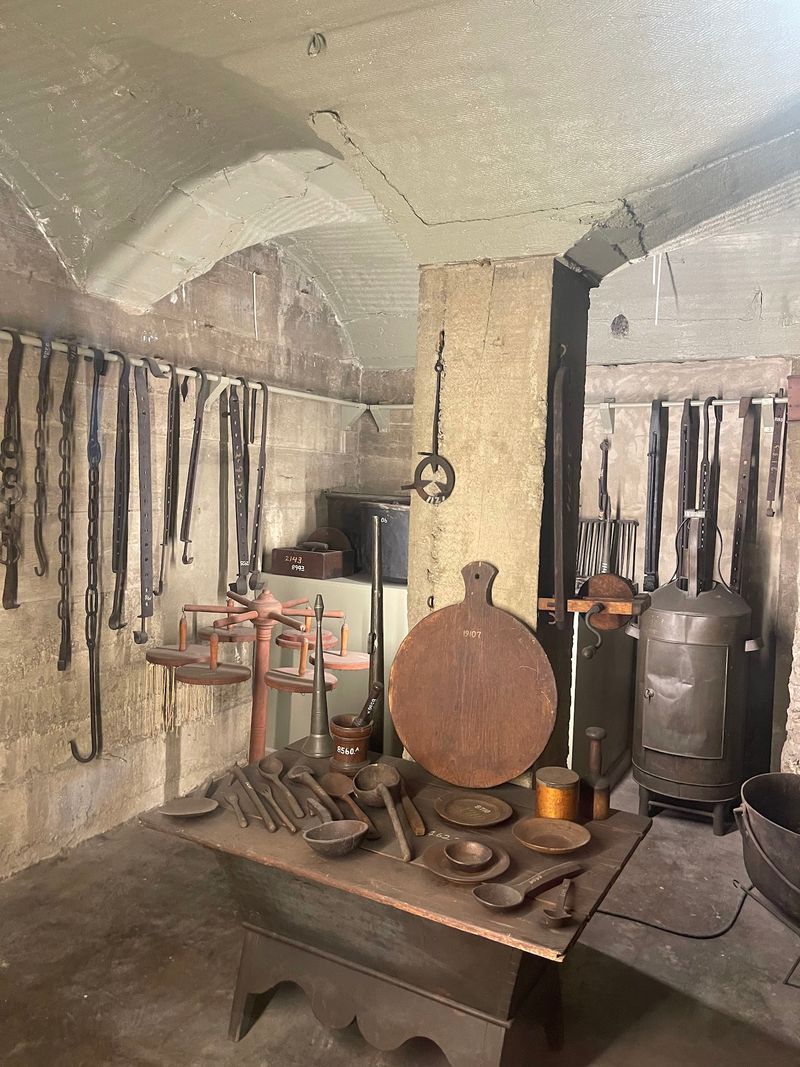
Some objects look familiar, like axes and saws. Others look like puzzles carved out of wood and iron.
Half the fun is guessing what a tool did before reading its label.
Give yourself time for this part. Rushing through 60 trades would be like speed-reading a mystery novel.
Pick a few favorite rooms and really study them. You’ll leave with a new respect for people who built everything by hand.
Things Get Global In Surprising Ways
Not everything here came from down the street. While most pieces originated in the Middle Atlantic region, the reach goes much farther.
The Mercer Museum holds thousands of objects from New England, Appalachia, and the Deep South. That gives you a bigger picture of early American life beyond one corner of the map.
Regional differences start popping out once you look closely.
Then the collection travels overseas. Comparative pieces come from cultures including West Africa, China, and Southeast Asia.
Native American artifacts are part of the holdings too.
Mercer was an anthropologist, so this mix makes sense. He liked comparing how different people solved similar problems.
A tool from one continent might look surprisingly like a tool from another.
This is a great spot for curious kids and adults alike. Try matching objects that seem to serve the same job.
It turns the visit into a quiet detective game.
The museum also keeps strong ties to local Bucks County history. So you get both a world tour and a hometown story under one concrete roof.
That’s a lot of ground to cover without ever needing a passport.
Kids Get Their Own Reasons To Love Old Tools
Old tools and kids might sound like an odd pairing. The museum makes it work with family activities and resources built for younger explorers.
Crossword puzzles are among the family resources available. They give kids something to chase while wandering the floors.
A good puzzle turns a long staircase into a mission.
School groups get special programs too. One called “Simple Machines” serves elementary students.
It connects historic tools with basic science ideas like levers and wheels.
That link is pretty clever. Kids learn that a pulley from the 1800s follows the same rules as modern gadgets.
Science class suddenly feels less like homework and more like a scavenger hunt.
Gallery guides are around to answer questions. That helps when a child asks what a strange contraption did.
Adults may secretly appreciate the help just as much.
Plan for breaks if your crew is young. The museum has many levels, and little legs tire out.
Let kids pick a favorite object on each floor. That small job keeps them looking closely and talking about history on the ride home.
The Newer Wing Brings Fresh Exhibits To The Old Castle
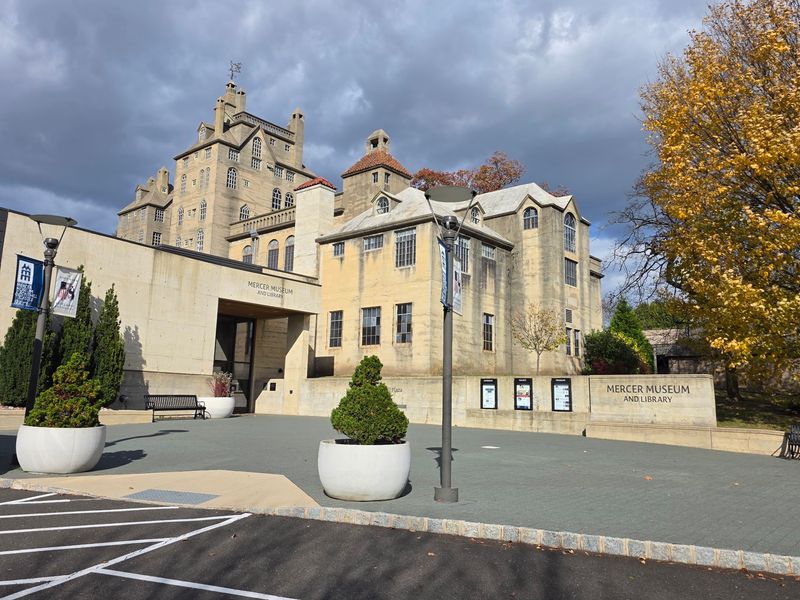
History doesn’t sit still here. In 2011, a new wing opened to expand exhibit and program space.
That addition lets the Mercer Museum host changing exhibitions. Some come from local sources, while others travel in from around the country.
So a repeat trip can feel different from your last one.
The museum combines Mercer’s original castle and permanent collection with a modern wing for changing exhibitions. Old and new sit side by side without stepping on each other’s toes.
Special exhibits give regular visitors a reason to return. They also offer fresh angles on Bucks County and American history.
It’s worth checking what’s showing before you plan your day.
The museum shop lives in this part of the experience too. It carries unique, handcrafted items.
That’s a fitting choice for a place devoted to handmade work.
Think of the wing as the museum’s welcome mat. It eases you in before you climb into the castle’s maze of rooms.
And when you’re done, it’s a nice spot to catch your breath and pick a souvenir that actually means something.
Bookworms And Family History Fans Have A Secret Weapon Here
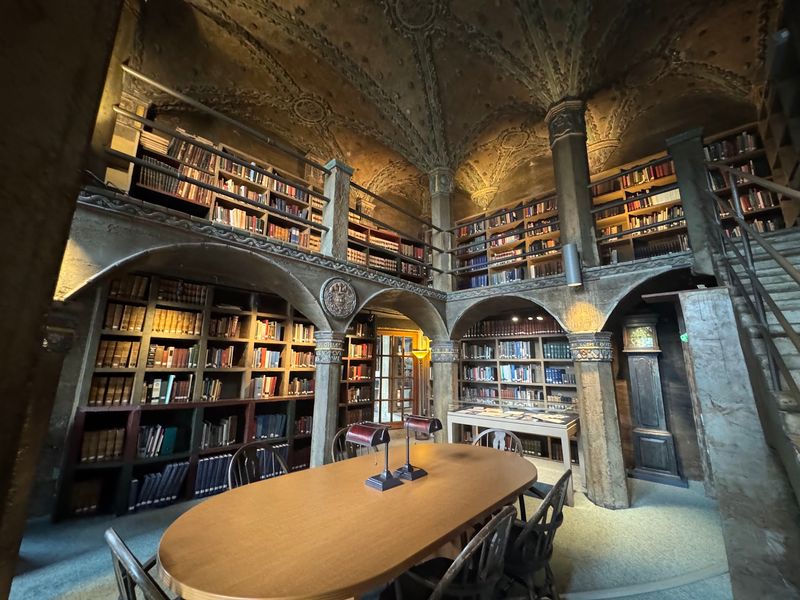
Over 20,000 books live in the Research Library. That’s before counting the archives and photos.
The library also holds 2,500 feet of county archives. Yes, that’s measured in feet, which tells you how much paper is involved.
It also houses over 12,000 images.
This is a goldmine for anyone digging into local history. Researchers, students, and family history fans can all find something useful.
Bucks County records make it especially valuable for people with Pennsylvania roots.
Hours are different from the main museum, so plan ahead. The library opens Tuesday and Wednesday from 1 to 5 p.m.
On Thursday through Saturday, it runs from 10 a.m. to 5 p.m.
Bring a clear question if you can. Knowing a name, place, or time period makes research smoother.
Good notes will save you from wandering through shelves without a plan.
Even casual visitors might enjoy knowing it exists. The collection upstairs shows how people worked.
The library helps explain who they were. Together, they make the Mercer Museum feel less like a display and more like a full story.
Plan Your Trip And Then Keep Walking The Mercer Mile
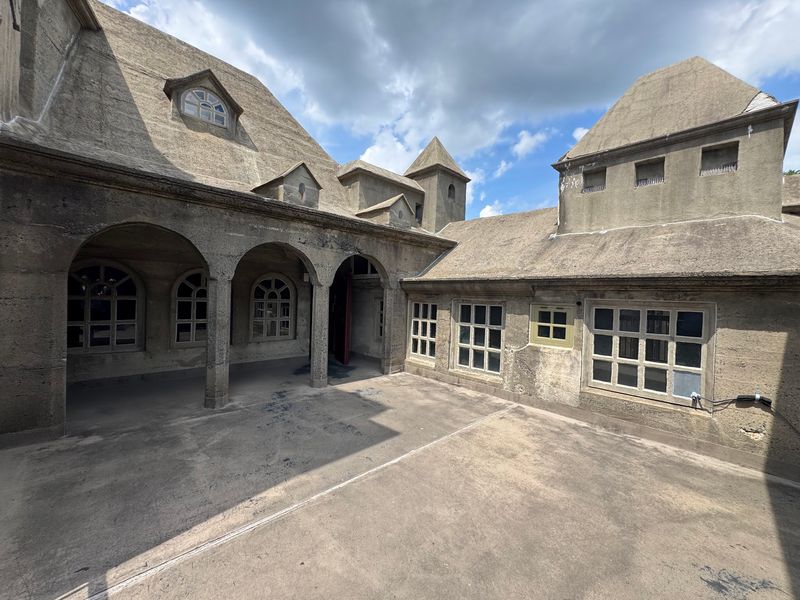
Finding this castle is easy. The Mercer Museum sits at 84 S Pine St, Doylestown, PA 18901.
Hours run Tuesday through Sunday from 10 a.m. to 5 p.m. The museum closes on Mondays, and hours can change.
A quick check before you go saves a disappointing drive.
Now for the bonus round. The museum is one of three concrete buildings Mercer built in town, known together as the Mercer Mile.
Collecting all three feels like finishing a very nerdy treasure map.
Fonthill Castle sits about a mile away. Mercer built it between 1908 and 1912 as his home and showplace for tiles and prints.
If the museum impressed you, his house will make you laugh at how far he went.
The Moravian Pottery and Tile Works rounds out the trio. It’s a working history museum that still makes handmade tiles using Mercer’s original designs.
You can watch his ideas keep living.
The Michener Art Museum sits right next door too. That means one Pennsylvania town packs a whole weekend of culture.
Pack comfortable shoes and plenty of curiosity.