A tiny high desert town once shipped so much wool that people called it the Wool Capital of the World. Today, about 30 people live there.
The weathered buildings from its boom years still line the streets.
The railroad that built this place arrived in 1900. Within a few years, sheep ranchers hauled millions of pounds of wool through its warehouses.
Then a rival rail line skipped it, and the money moved on.
I love that the town never got bulldozed or polished into a theme park. You can stroll past a brick hotel, an old schoolhouse, and a tiny city jail without paying a cent.
It sits right on a major highway in central Oregon, so the detour is easy.
So why do so few families know it exists?
A Wool Boomtown Sitting Quietly On Highway 97
Drive north from Madras on U.S. Route 97 and the sagebrush starts to feel endless.
Then Shaniko appears, a cluster of old buildings sitting under a huge central Oregon sky.
Shaniko is a town in Wasco County, about 8 miles north of Antelope. The 2020 census counted just 30 residents, which makes the place feel almost private.
Calling it a ghost town is a bit of a stretch, since people still live here. Still, the label sticks because so much of its early 1900s skyline remains in place.
Many of its structures date to the town’s boom years around the turn of the century.
That mix is what makes it fun for families. You get real history without velvet ropes, gift shop pressure, or a ticket booth at the edge of town.
Walking the public streets doesn’t cost anything.
It also works beautifully as a road trip break. Highway 97 is a main north-south route through central Oregon, so you’re not hunting down a remote gravel road.
Pull over, stretch your legs, and let the kids poke around a town that time mostly left alone.
Honestly, few free stops pack this much story into a few short blocks.
The Railroad That Turned Sagebrush Into Money
Everything changed in 1900. That year, the Columbia Southern Railway pushed its line south and made this spot the end of the tracks.
Being the last stop mattered enormously. Ranchers from across the interior of Oregon brought sheep, wool, cattle, and grain here to ship north toward the Columbia River.
The town incorporated in 1901, and growth came fast. Warehouses, a hotel, stores, and homes popped up to serve the flood of freight and people.
Wool became the real star. In the early 1900s, the town handled such huge volumes that it earned the nickname Wool Capital of the World.
Sales here reportedly brought in millions of dollars, which was a staggering sum for the era.
Picturing that now feels almost funny. The streets are quiet, and the loudest sound may be the wind rattling a loose board.
Yet those empty lots and solid old walls are evidence of a genuine frontier boom. Kids who think history is boring might change their minds here.
It’s easier to believe a story when the buildings that witnessed it are standing right in front of you.
Bring that context along, and every block feels a little more alive.
How A Mispronounced Name Stuck For Good
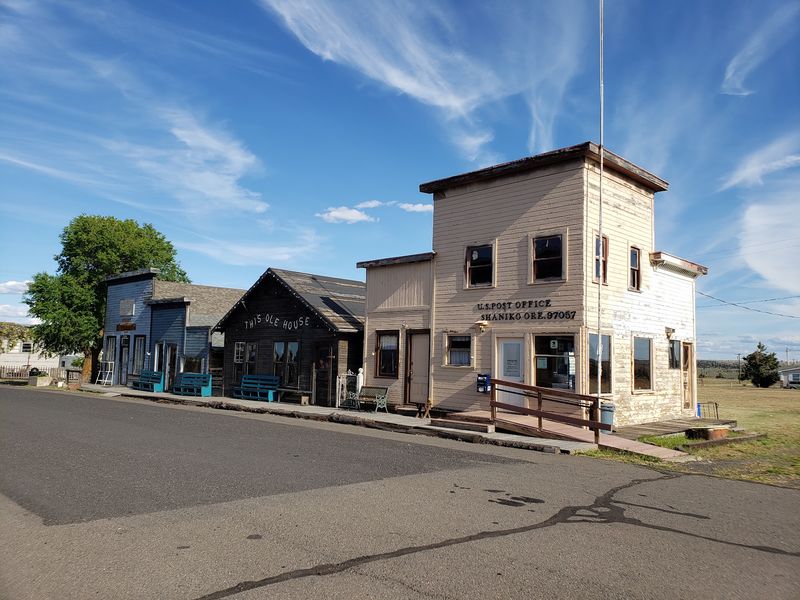
Here’s a fun bit of trivia for the car ride. The town’s name comes from August Scherneckau, an early settler who ran a stage stop in the area.
Local folks apparently struggled with that German name. They said it more like Shaniko, and that easier version became the official one.
Families love this kind of detail, and it makes a great road trip quiz question. Ask the kids to guess the original spelling before you arrive.
Odds are nobody gets it right.
The story also says something about frontier life in Oregon. Places were often named casually, shaped by the people who passed through rather than by planners in an office.
A stagecoach stop owner gets remembered through a nickname, and the nickname outlasts nearly everything else.
Scherneckau’s stop predated the railroad boom. Travelers moving through this dry country needed water, rest, and a place to swap horses.
Those small needs planted the seed for the bustling town that followed.
So when you see the name painted on old signs around town, you’re reading a happy accident. Plenty of places carry grand names.
Shaniko carries a friendly mispronunciation, and that feels perfectly fitting for such an unpretentious spot.
That Handsome Brick Hotel You Can’t Miss
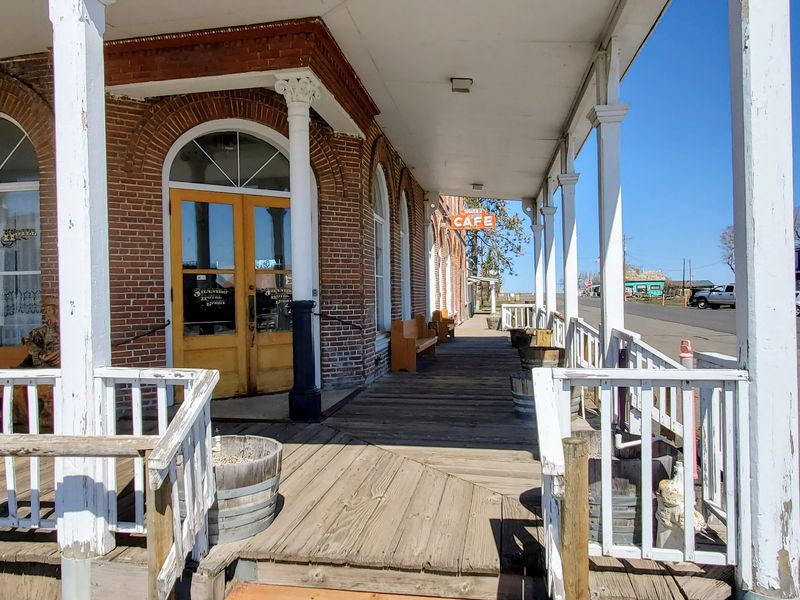
Red brick in the middle of sagebrush country? That’s the first thing your eyes will grab on arrival.
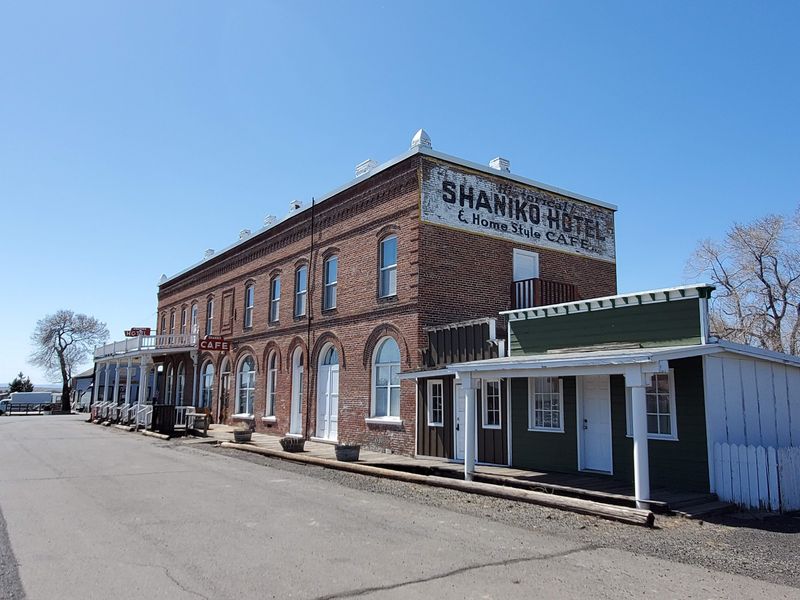
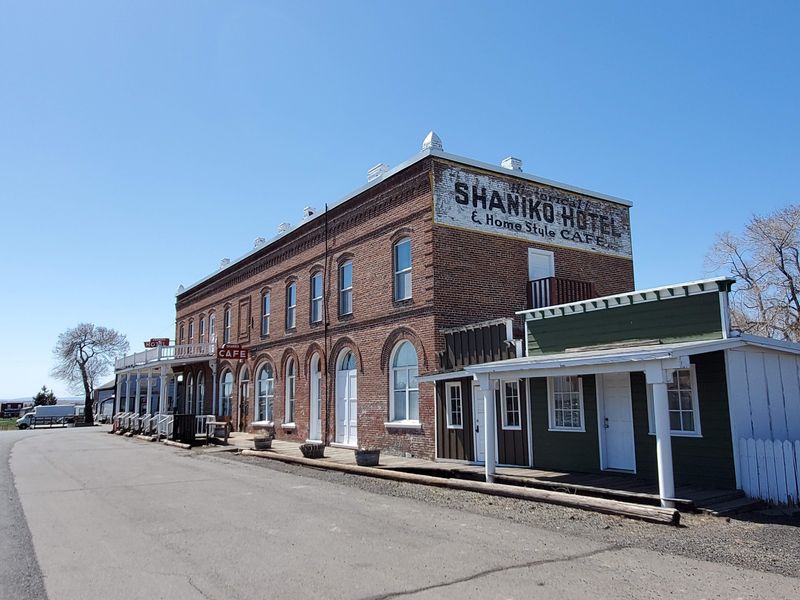
The Shaniko Hotel, originally called the Columbia Southern Hotel, went up in 1901 during the boom. Its two stories of brick made a bold statement in a town built largely of wood.
Back then, it served the ranchers, buyers, and travelers who came for the railroad trade. A sturdy brick hotel signaled that the town planned to stick around.
The building has changed hands over the decades and has had periods of being closed. Because its status can shift, don’t count on booking a room or grabbing a meal inside.
Treat it as a landmark to admire from the street.
That’s still a real treat. The balcony and brick face make it the most photographed spot in town, and it frames a great family picture.
Stand across the street to fit the whole facade in your shot.
For history-loving kids, it’s a chance to see what passed for fancy lodging in early 1900s Oregon. Imagine wool buyers swapping deals on that porch.
Then compare it to the hotels you usually book on vacation.
A Little Schoolhouse With A Big Personality
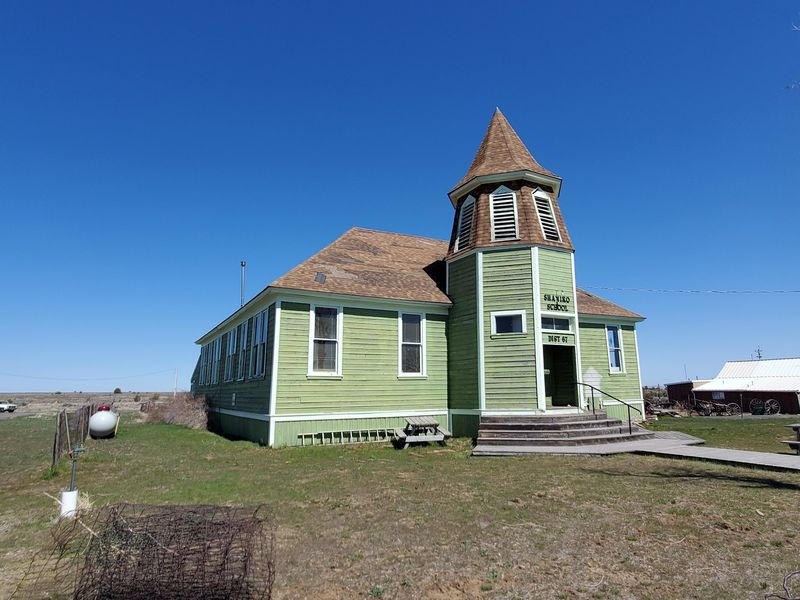
Kids tend to perk up at this one. The old Shaniko schoolhouse is a classic white wooden building that dates to the town’s early 1900s heyday.
It looks straight out of a storybook, with simple lines and a small bell tower on top. You can almost hear a teacher ringing that bell to call students in from recess.
Boom towns needed schools as families arrived with the railroad. A permanent schoolhouse meant this place was becoming a real community, not just a shipping stop.
Today, it’s one of the most charming buildings to see on a walk. Its bright paint stands out sharply against the tan hills and big sky.
Use it as a conversation starter with your own crew. Ask what they’d think about walking to class across open desert in winter.
Then ask how they’d feel without phones, tablets, or even electric lights in every room.
Those talks often land better than any textbook chapter. Seeing a real schoolroom from more than a century ago makes the past feel close.
It’s free, it’s quick, and it gives everyone something to talk about back in the car.
The Tiny Jail And City Hall Combo
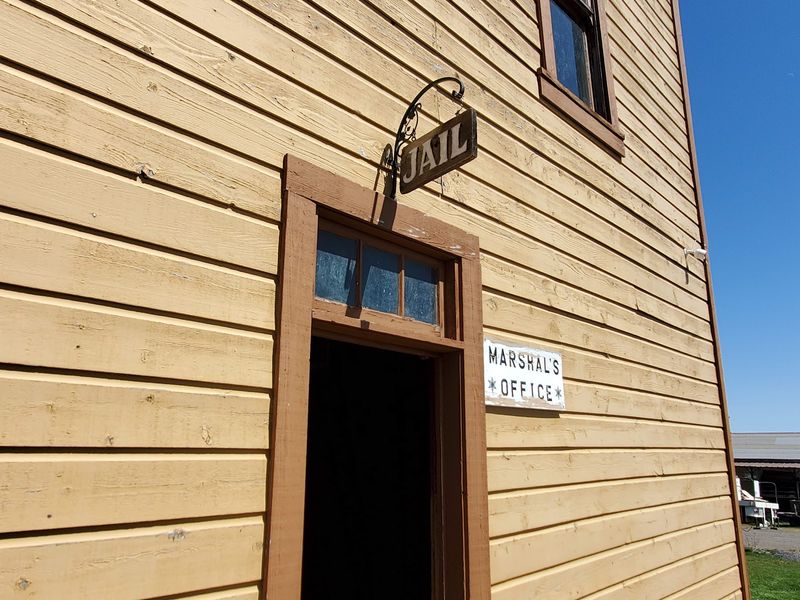
Every frontier town needed a place to cool off rowdy visitors. Shaniko’s answer was a modest city hall building that also housed a small jail.
The jail cells are a favorite stop for families. Peeking at those cramped quarters gives kids a firsthand look at old-fashioned frontier justice.
Railroad and wool money brought plenty of workers, cowboys, and travelers into town. More people meant more noise, and occasionally more trouble after a long week on the range.
Having government and jail under one roof says a lot about small-town practicality. Nobody wasted lumber or space out here.
A single building handled town business and the occasional troublemaker.
Access to the interior may vary, so don’t plan your day around going inside. The exterior alone is worth a look, and it pairs nicely with the schoolhouse and hotel on a short loop.
Expect some giggles here, especially from younger kids. Someone will inevitably pretend to be locked up, and someone else will play the sheriff.
That’s honestly the point. Free, hands-on imagination play beats another hour staring at screens, and the photo op is pretty great too.
Old Wagons And Storefronts Worth A Slow Stroll
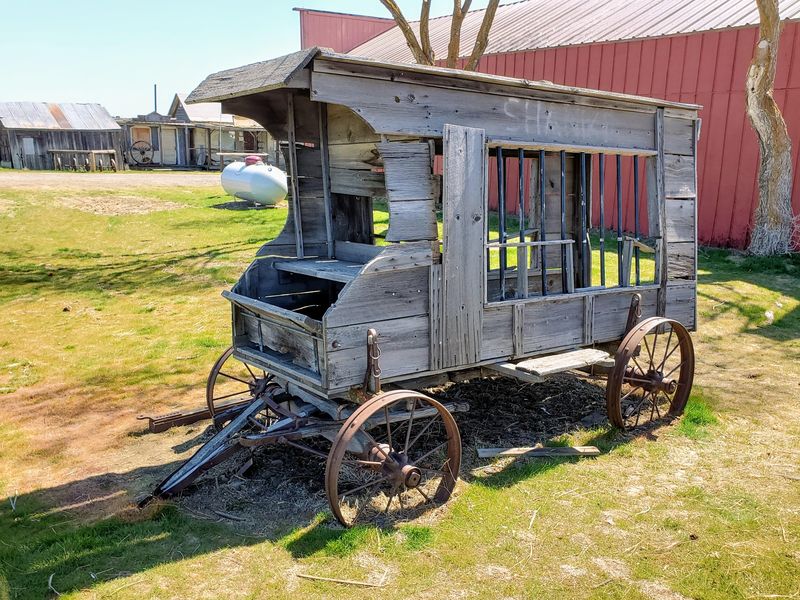
Slow down on the main blocks. Some of the best details here are small, weathered, and easy to miss if you rush.
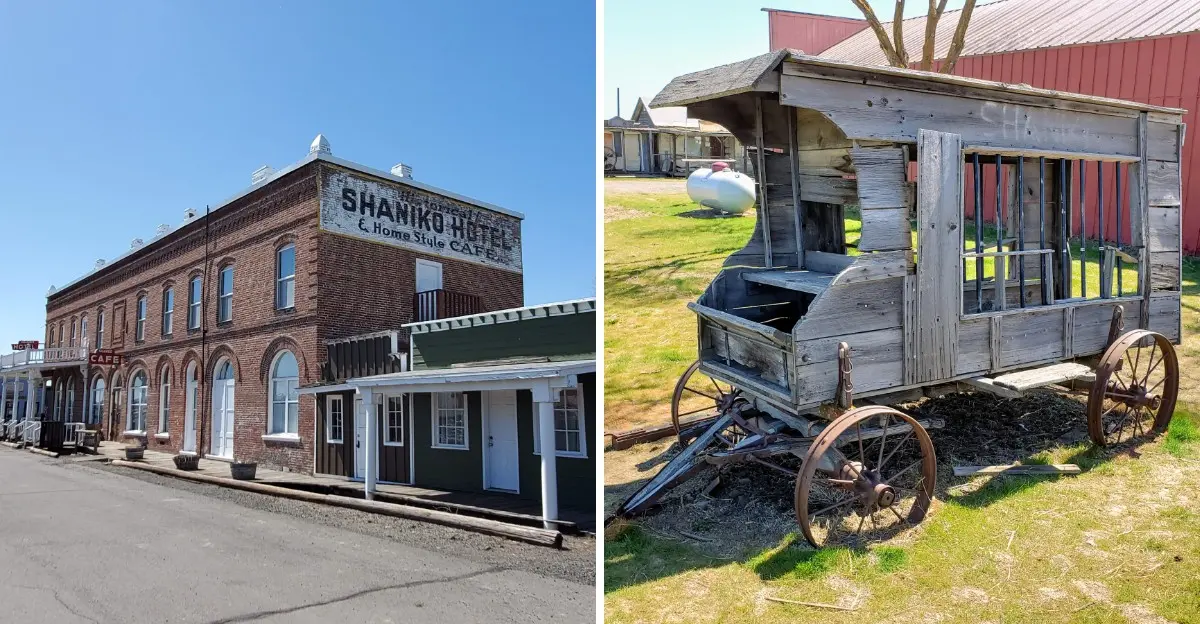
Shaniko has a collection of old wagons displayed around town. They’re a reminder that horses and wagons once hauled wool and supplies across this rugged country before trucks took over.
Look closely at the wood grain, iron wheel rims, and faded paint. Each piece shows decades of sun, wind, and desert weather.
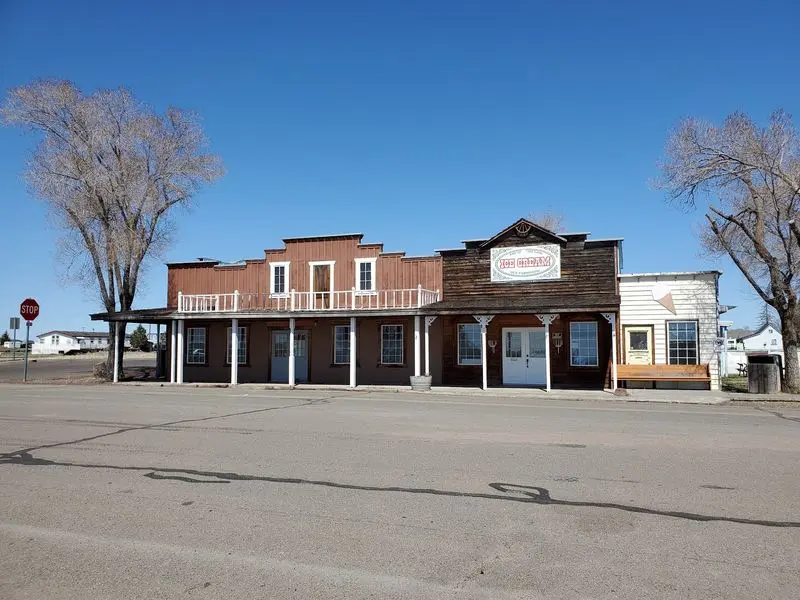
Nearby, false-front buildings line parts of the street. That style was common in western towns, making simple structures look taller and more impressive from the road.
It’s basically frontier curb appeal.
Some storefronts may open seasonally or for special events, while others stay closed. Hours aren’t something to rely on, so think of shopping as a possible bonus rather than the plan.
For families, this is the part where everyone can wander at their own pace. Little ones can count wagons, while older kids snap moody photos of peeling paint.
Parents get a few quiet minutes in fresh air. Not bad for a stop that doesn’t ask for your wallet at all.
The Year The Trains Went Elsewhere
Booms rarely last forever, and this one faded quickly. Around 1911, the Oregon Trunk Line opened a route through the Deschutes River canyon, bypassing the town.
Freight that once poured through Shaniko found an easier path. Business slipped away, and the population began shrinking.
A major fire in 1911 also damaged part of the business district. Between the new rail route and the lost buildings, the glory days were clearly over.
The Columbia Southern line hung on for decades in a reduced role. Service eventually ended in the 1960s, closing the final chapter of the railroad era here.
That decline is exactly why so much survives. With little money flowing in, nobody rushed to tear down old buildings and replace them with shiny new ones.
Neglect, oddly enough, became a kind of preservation.
It’s a great lesson to share with older kids on the drive. Towns rise and fall based on roads, rails, and choices made far away.
Shaniko shows both sides of that story in one quiet place. You can see the ambition in its brick and the leftover silence in its empty lots.
Quiet Streets, Huge Skies, And Room To Breathe
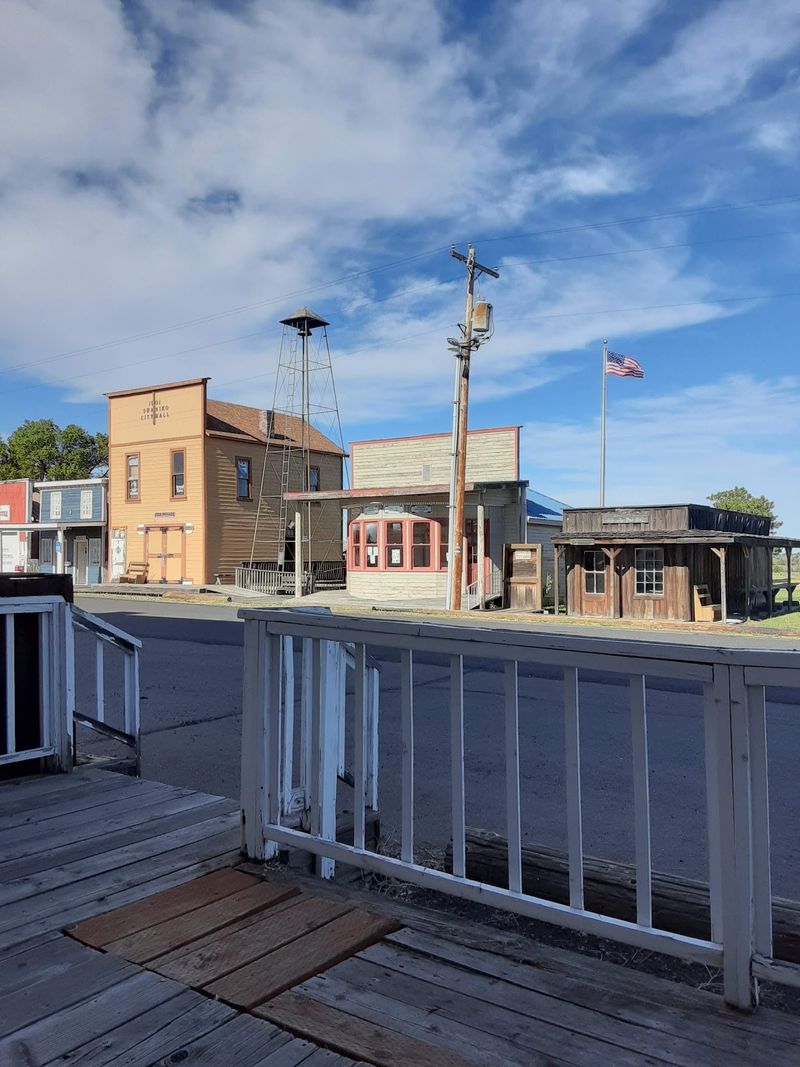
Silence might be the most surprising feature here. With roughly 30 residents, the town feels calm in a way crowded attractions rarely do.
The high desert setting adds to that mood. Rolling hills, wide skies, and dry grasslands stretch out in nearly every direction.
Photographers will appreciate the light, especially early or late in the day. Low sun makes old wood glow and brick look richer.
Clouds drifting over the open plateau can make even simple shots dramatic.
Families with energetic kids get space to roam without dodging tour groups. Just remember this is a living town, so respect private property and stay on public streets.
A little courtesy keeps places like this welcoming.
The vibe suits several kinds of travelers. History buffs get authentic buildings, while photographers get texture and light.
Road trippers get a peaceful break from long highway stretches.
It probably won’t thrill anyone hoping for rides or arcades. That’s fine.
Shaniko rewards curiosity, patience, and a willingness to slow down for an hour. In a busy summer of packed parks and long lines, that kind of quiet can feel like a luxury you didn’t have to pay for.
Practical Tips Before You Point The Car North
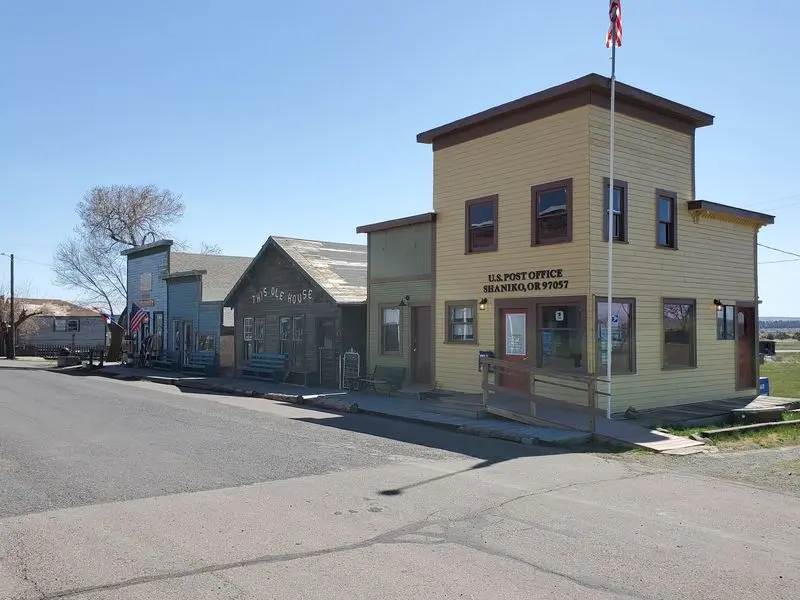
Good news first. Wandering the public streets costs nothing, so the main expense is gas.
For your map app, the town sits in Shaniko, Oregon 97037, right along U.S. Route 97.
It’s about 8 miles north of Antelope in Wasco County.
Services are very limited in such a small town. Fill your tank and pack snacks and water before you arrive.
Larger towns along Highway 97 make better spots for full meals and fuel.
Weather matters out here. High desert summers can get hot, and winters can turn cold and windy.
Bring hats, sunscreen, and layers so nobody gets cranky halfway through the walk.
Businesses inside town may keep seasonal or irregular hours, and some buildings stay closed. Plan to enjoy the exteriors and treat any open shop as a pleasant surprise.
Hours can change, so check ahead if something specific matters to you.
Plan on about an hour for a relaxed loop, longer if you love photos. Wear comfy shoes for uneven ground.
Most importantly, be a gracious guest. People still call this place home, so keep voices friendly and leave everything exactly as you found it.
Why This Free Detour Earns A Spot On Your Calendar
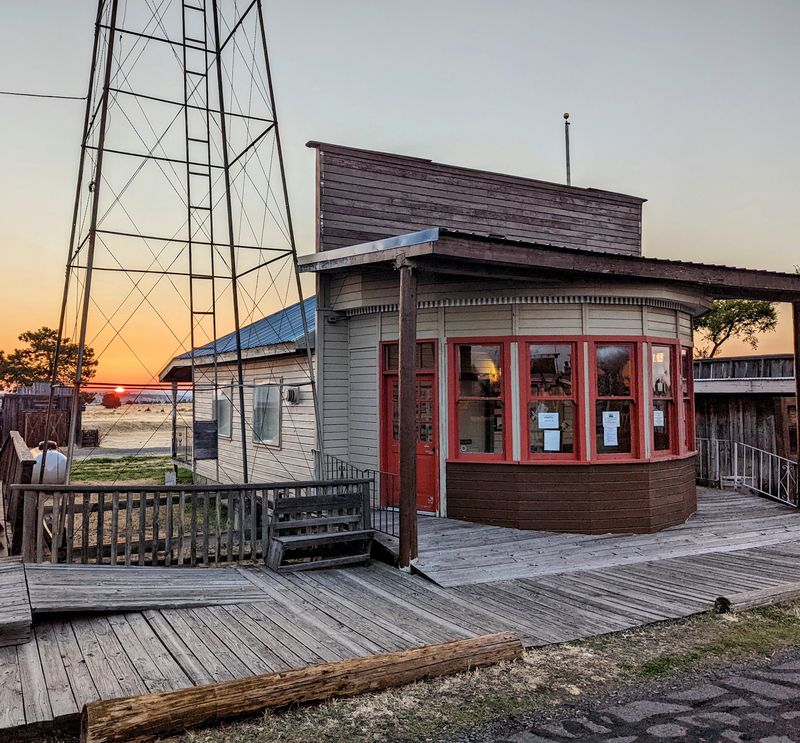
Cheap, old, and easy to reach. That combination is surprisingly hard to find, and Shaniko checks every box.
For the price of a tank of gas, your family gets a real Oregon boomtown with buildings dating to its early 1900s peak. The brick hotel, schoolhouse, jail, and wagons tell a story better than any brochure.
It also slots neatly into bigger plans. Anyone heading through central Oregon on Highway 97 can add it as a leg-stretching stop.
It turns a long drive into a mini history lesson.
Kids walk away with bragging rights about visiting the onetime Wool Capital of the World. Parents walk away with great photos and a calm hour.
Grandparents may enjoy it most of all, since it echoes stories they likely heard growing up.
Is it flashy? Not even a little.
That’s part of the charm, honestly.
Shaniko feels like a place that simply refused to vanish, even after the trains moved on. Standing on those quiet streets, you get a rare sense of the West as it actually was.
For a free outing, that’s a pretty remarkable reward. Pack the snacks and go see it for yourselves.