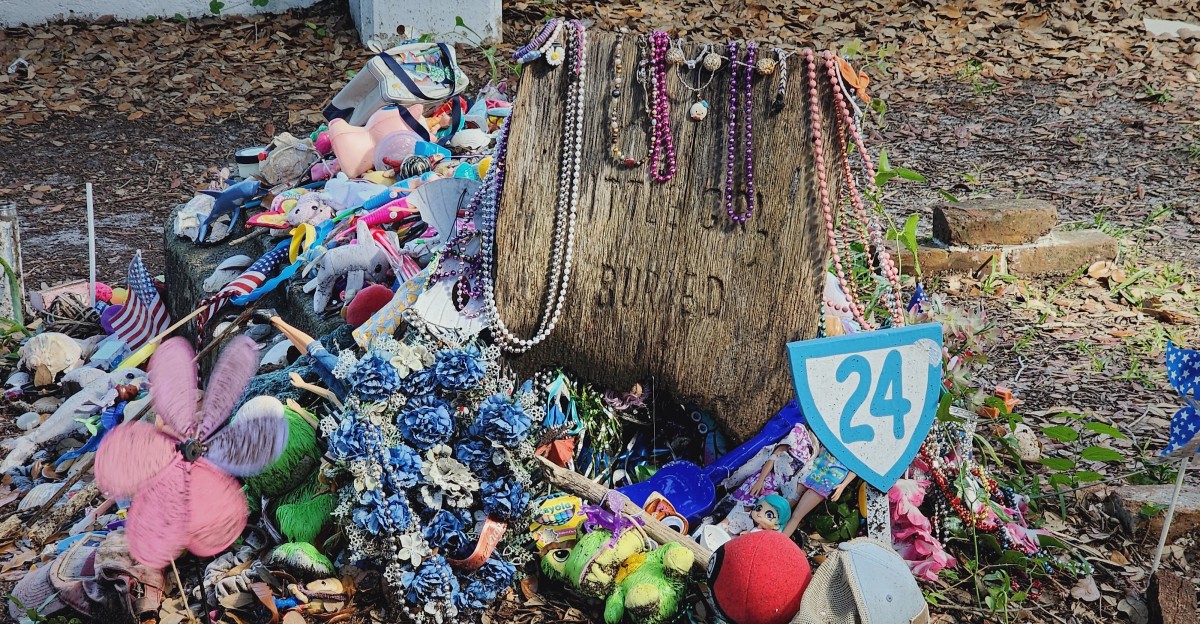
A cypress slab in a coastal graveyard marks the resting place of a little girl who came home inside a barrel. Her father made a promise to her mother, and he kept it across an entire ocean.
Today, strangers leave seashells, necklaces, and dolls on her small grave. I can’t imagine a sweeter way to honor a child whose name history seems to have lost.
Her story is the most famous one here, but it has plenty of good company. A soldier rests standing upright, and a sea captain shares his tomb with a cannon.
All of it sits beneath huge live oaks in a small North Carolina seaport. I believe the most interesting old places tell stories you can walk right through, and this one holds dozens.
The Little Girl in the Barrel Is the Reason Most People Come

Back in the mid-1700s, a Beaufort family sailed for England with their young daughter. The Old Burying Ground now holds the end of her remarkable story, and it starts with a promise.
Her father had told his wife he would bring their girl home safely. Sadly, she passed away at sea before the return voyage was over.
Burial at sea was the normal choice for sailors back then. He refused, and instead he kept her preserved inside a barrel for the long trip back.
Once the ship reached home, she was laid to rest still inside that barrel. A simple cypress slab marks the spot, carved with words that say exactly what happened.
Her grave is easy to spot because people keep it decorated. Seashells, necklaces, and little dolls often rest on top, left by visitors who feel connected to her.
Feel free to bring a small token of your own if you’d like. Just keep it gentle and simple, because this spot means a lot to many people.
Her name never made it onto the marker, yet countless people know her story. That’s a pretty powerful kind of remembering.
A Soldier Stands at Attention Here, Even Now
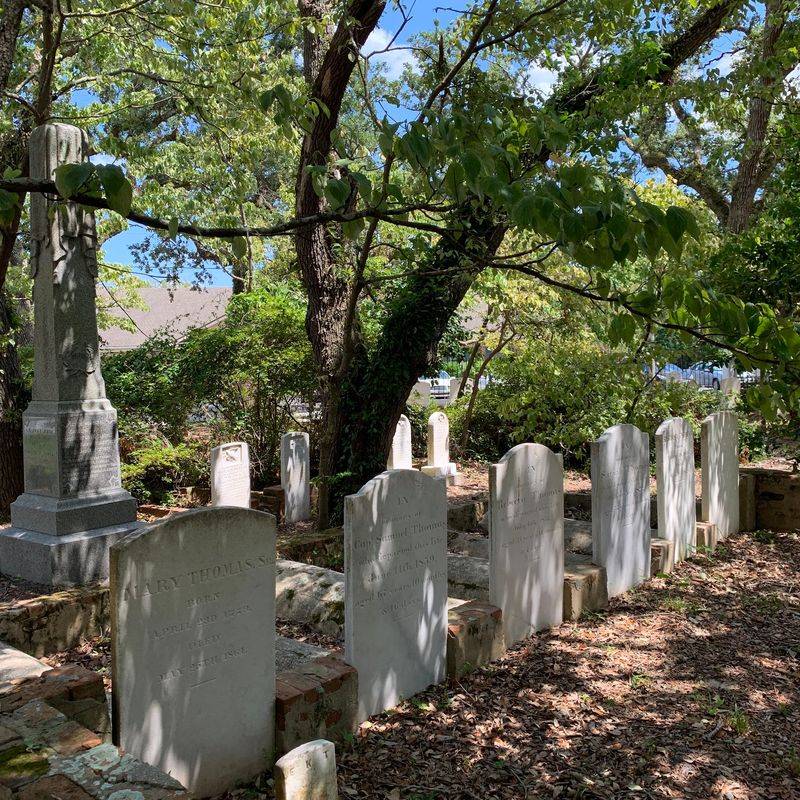
Most folks get laid down flat for their final rest. One British soldier from the 1700s apparently had other plans.
He passed away aboard his ship, far from home and family. Legend says he refused to be buried with his boots off.
So the crew honored his wishes in the most literal way possible. He was buried standing upright, still ready for duty.
You won’t see him, of course, since the ground keeps that secret well. The story is what makes the spot worth finding on your walk.
I like how this tale mixes stubbornness with a strange kind of dignity. He clearly cared about how he’d be remembered, and it worked.
Kids will probably find this one hilarious and a little spooky. Honestly, plenty of grown-ups will too.
Grab the self-guided map before you start searching. Numbered graves and short write-ups help you track down stories like this one without wandering in circles.
Nobody knows his name today, which only adds to the mystery. Still, his boots-on wish has outlasted plenty of fancier tombs nearby.
He sailed with the British, yet he rests in American soil for good. Talk about a long assignment.
A Sea Captain Brought His Cannon Along for Good
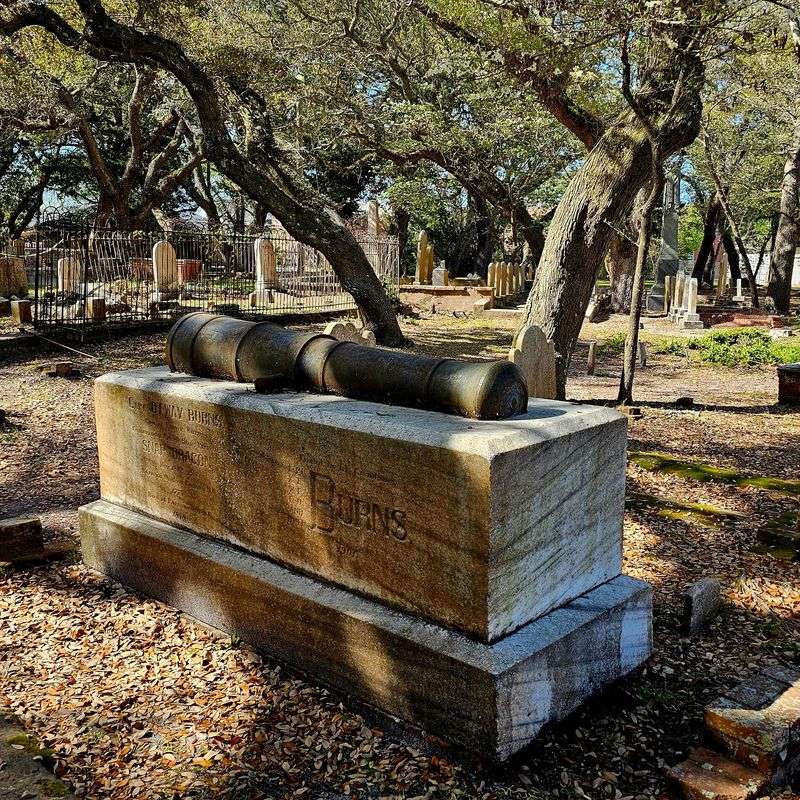
Captain Otway Burns did not believe in subtle goodbyes. His grave is topped by a large box-like stone with a real cannon resting on it.
That cannon came from his ship, the Snap Dragon. Burns earned fame as a naval hero during the 1812 conflict with Britain.
Few cemeteries anywhere can claim artillery as decoration. It makes his tomb one of the easiest landmarks to find once you’re inside the gates.
Look closely at the size and shape of the marker. It feels bold and proud, which seems to fit a man remembered for daring at sea.
Burns isn’t the only military name worth seeking out here. Colonel William Thompson, a commander during the American Revolution, also rests within these grounds.
Sergeant George Johnson of the U.S. Colored Infantry is buried here as well.
His grave adds another important chapter to the town’s story.
History buffs could easily spend an hour just tracking down these names. Bring comfortable shoes, because tree roots and stones make the ground uneven.
A cannon on a grave sounds like a tall tale. In this case, it’s simply true, and it’s sitting right there.
One Shared Grave Holds an Entire Ship’s Crew
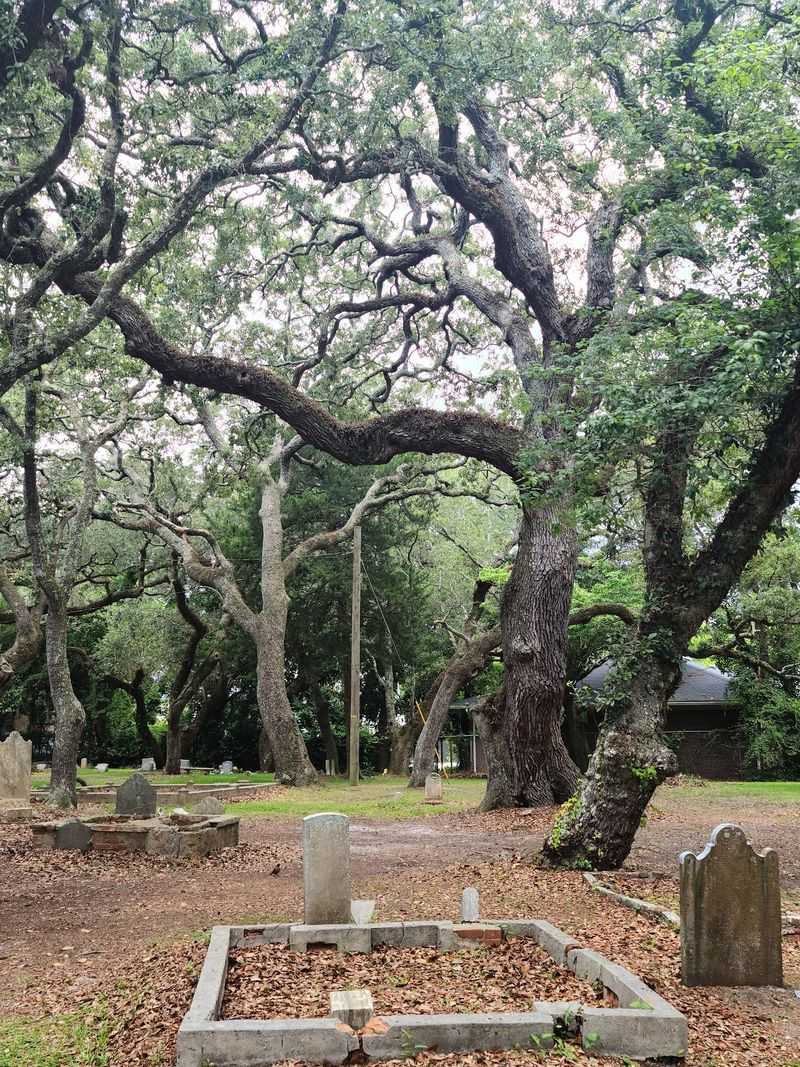
Winter storms on the Carolina coast can be brutal, and 1886 brought a terrible one. The schooner Crissie Wright ran aground at Shackleford Banks during that storm.
Her crew was lost, and the town gave them a common grave here. They now rest together, just as they sailed together.
Standing near it, you understand how closely this seaport lived with the ocean. The water fed families, but it also took sailors without warning.
Shackleford Banks sits just across the water from town. That closeness makes the story feel very real, not like something from a faraway book.
I believe graves like this one matter as much as the famous ones. They remind us that ordinary working people built coastal towns like this.
Take a quiet moment here before moving on. A shared grave tells a story of community, and of a town that refused to forget them.
Reading the tour map entry first helps a lot. Then you can look at the site knowing exactly what you’re seeing.
Sailors spent their lives working side by side on deck. It feels fitting that they never had to part ways.
Shell, Brick, and Wood Reveal How Rare Stone Really Was
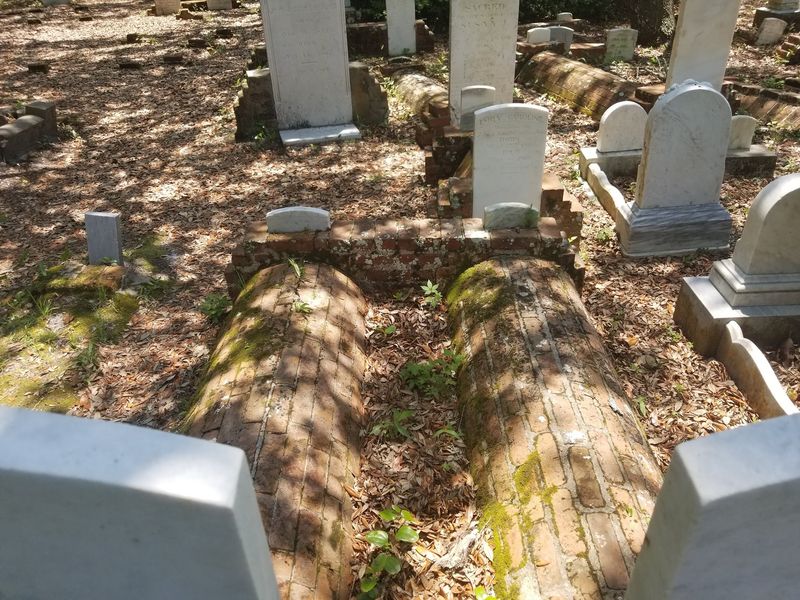
Fancy marble headstones were hard to come by in an early colonial seaport. Stone had to travel long distances by sailing vessel, so families often used what was nearby.
That’s why you’ll spot markers made from shell, brick, and wooden slabs. Each one shows how creative people got when supplies were scarce.
Then there are the vaulted brick graves, shaped a bit like low rounded ovens. They were built to protect the graves from high water and wild animals.
Living by the sea meant planning for floods, even in a cemetery. Those brick vaults are a clever answer to a very coastal problem.
The earliest readable marker dates to 1765. Many stones are actually older, but weather has worn their words away.
Bring your patience and maybe your reading glasses. Some carvings are faint, and tilting your head toward the light can help.
Please look without touching, though, because these markers are fragile. Centuries of coastal weather have already worn many of them thin.
I like how each material quietly reveals what life was like back then. You learn the history just by noticing what the graves are made of.
Those Giant Live Oaks Make This the Shadiest Stroll in Town
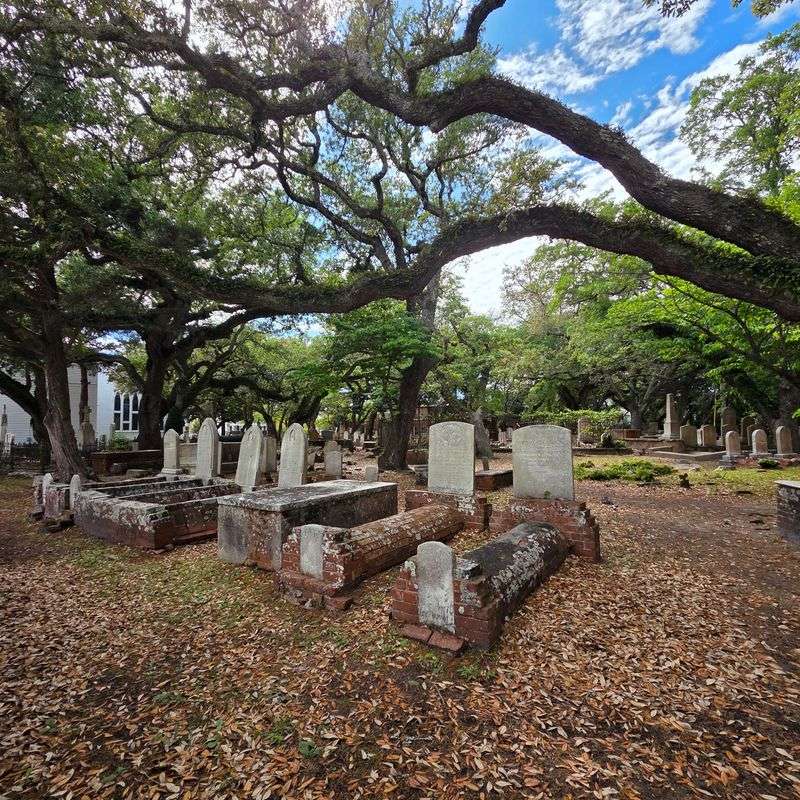
Resurrection ferns sound like something out of a ghost story. Here, they’re real, growing along the branches of the massive live oaks overhead.
Those oaks form a thick canopy across much of the grounds. On a hot coastal day, that shade feels like a gift.
Below the branches, ivy spreads across the ground and fallen leaves pile up. Azaleas and daffodils add bright splashes of color in their seasons.
The whole place has been called gorgeously overgrown and charmingly ramshackle. Those words fit nicely, because nothing here feels too polished or fussy.
I can’t imagine a more fitting setting for stories this old. The trees seem like quiet guards watching over everyone below.
Spring could be a lovely time to come, with blooms brightening the paths. Late summer and early fall may bring bugs, so pack some spray.
Roots and stones make the ground bumpy in spots. Keep your eyes down every few steps, then look back up at those branches.
Photographers will have fun with the twisted limbs and dappled light. Just stay on the paths and give the graves their space.
Older Than the Country Itself, and Still Full of Surprises
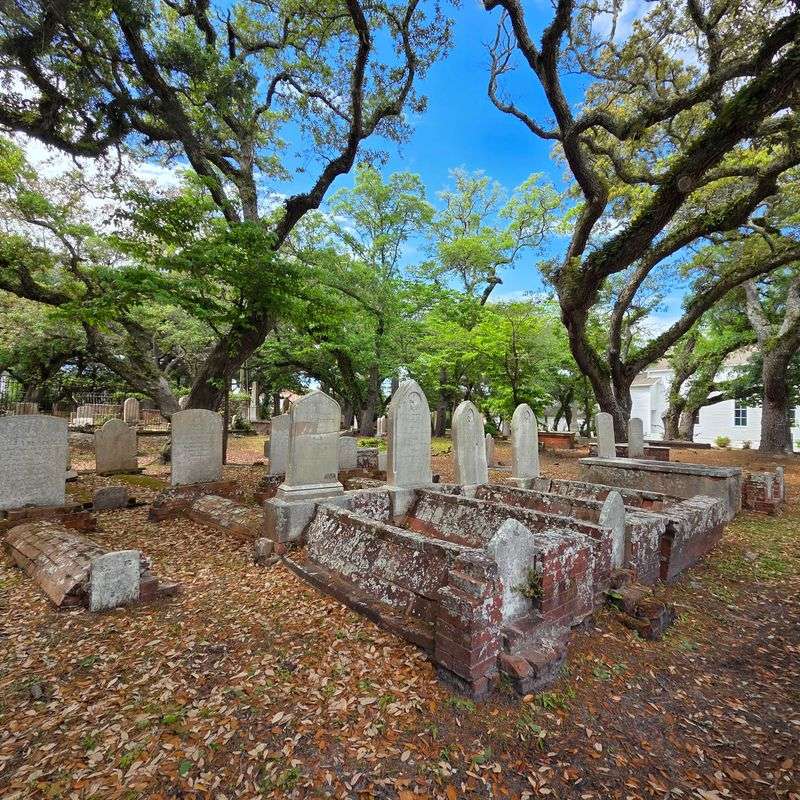
Land for this cemetery was tied to St. John’s Parish around 1724. In 1731, Nathaniel Taylor formally deeded it to the town of Beaufort.
That means these grounds were in use decades before the United States existed. Plenty of folks resting here lived and worked as colonists under British rule.
Head to the northwest corner if you want the oldest section. Many graves there are unmarked and may date back to the early 1700s.
By 1852, the Old Burying Ground was mostly full. Even so, burials carried on into the early 1900s.
In 1974, the cemetery earned a spot on the National Register of Historic Places. That’s a big honor for a small seaside graveyard.
The Town of Beaufort owns it today. The Beaufort Historical Association helps maintain and manage it, keeping these stories in good hands.
Josiah Pender rests here too, and his story is a wild one. He seized Fort Macon in 1861, before North Carolina officially left the Union.
Pierre Henry, a Black man born free during the era of slavery, is also buried here. Every corner seems to hold one more name worth learning.
Grab a Map at the Gate Before You Start Wandering
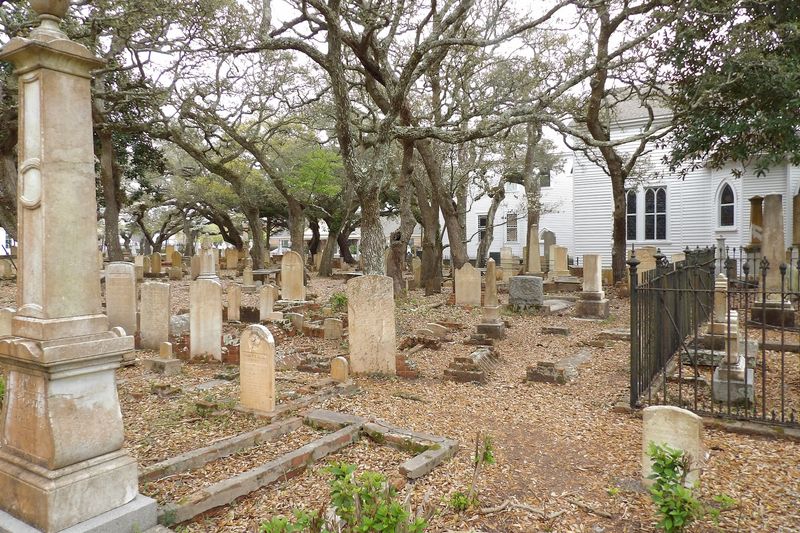
Finding the place is the easy part. The Old Burying Ground sits at 411 Ann St, Beaufort, NC 28516, bordered by Ann, Craven, and Broad Streets.
The site is open Monday through Saturday, with seasonal hours: 9:30 a.m.–5 p.m. for April–December and 10 a.m.–4 p.m. for January–March.
Self-guided tour maps wait at the gates when supplies hold out. You can also pick one up at the Beaufort Historic Site Welcome Center on Turner Street.
Some graves are numbered, and the map matches each number with a short story. That turns a quiet walk into a fun treasure hunt through history.
Parking is on the street, and spaces can get tight on busy days. Please be kind to the neighbors, since real people live right around the cemetery.
Wear sturdy shoes, because roots and stones make the ground uneven. A water bottle is smart too, especially in the warmer months.
Give yourself time to read each entry on the map. The stories pull you along from one grave to the next.
Above all, treat the grounds with respect. This is still a cemetery, after all, not a theme park.
Let a Guide or a Ghost Walk Fill in the Spooky Details
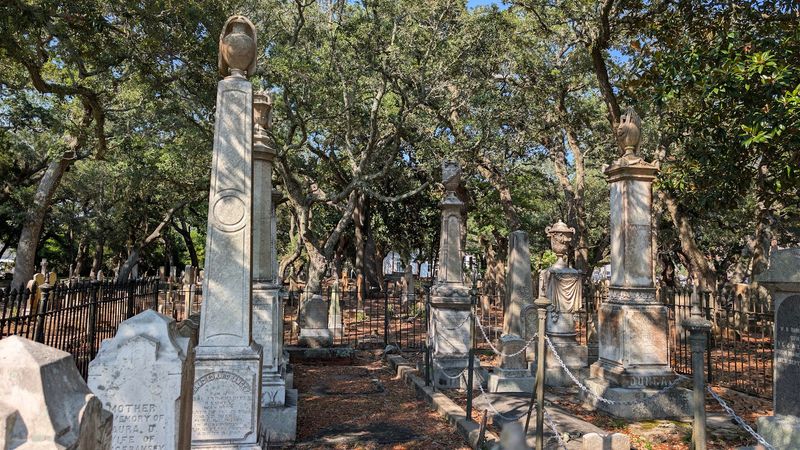
Maps are great, but a good storyteller brings these graves to life. During summer, docents from the Beaufort Historic Site lead guided tours here.
Exploring in another season? The Beaufort Ghost Walk offers guided visits to the cemetery throughout the year.
Plan ahead if you want a guide, because about 24 hours of notice is usually needed. Reaching out to the historic site a day early should do the trick.
The Beaufort Historic Site is staffed Monday through Saturday all year. Winter brings adjusted hours, so check before you count on a particular slot.
I like the idea of hearing these tales from someone who knows them inside and out. Small details land differently when a person tells them out loud.
A guided walk pairs nicely with the rest of this North Carolina town’s historic district. You’ll leave with names, dates, and stories you can actually picture.
Going twice, once with the map and once with a guide, could be the smartest plan. Each visit fills in what the other one missed.
And yes, you’ll hear about that little girl again. Somehow, her story never gets old, even when you know how it ends.