An 18-foot silver coffee pot once served lunch to hungry drivers in Pennsylvania. It even had a handle and a spout, like it was waiting for a giant to pour a cup.
If it could actually hold coffee, it would fit about 816,000 cups. That math makes my morning mug feel pretty tiny.
A gas station owner built it in 1927 to catch the eye of drivers on an old highway.
The pot no longer serves food, so don’t plan on lunch inside. It came close to being torn down, then got rescued for a single dollar.
I like how one quirky idea outlasted almost a century of changing roads.
I can’t imagine driving past without pulling over. Wouldn’t you want a photo next to a coffee pot taller than a house?
A Silver Giant That Stops Traffic Without Even Trying
Some buildings blend in. The Big Coffee Pot in Bedford, Pennsylvania, does the exact opposite.
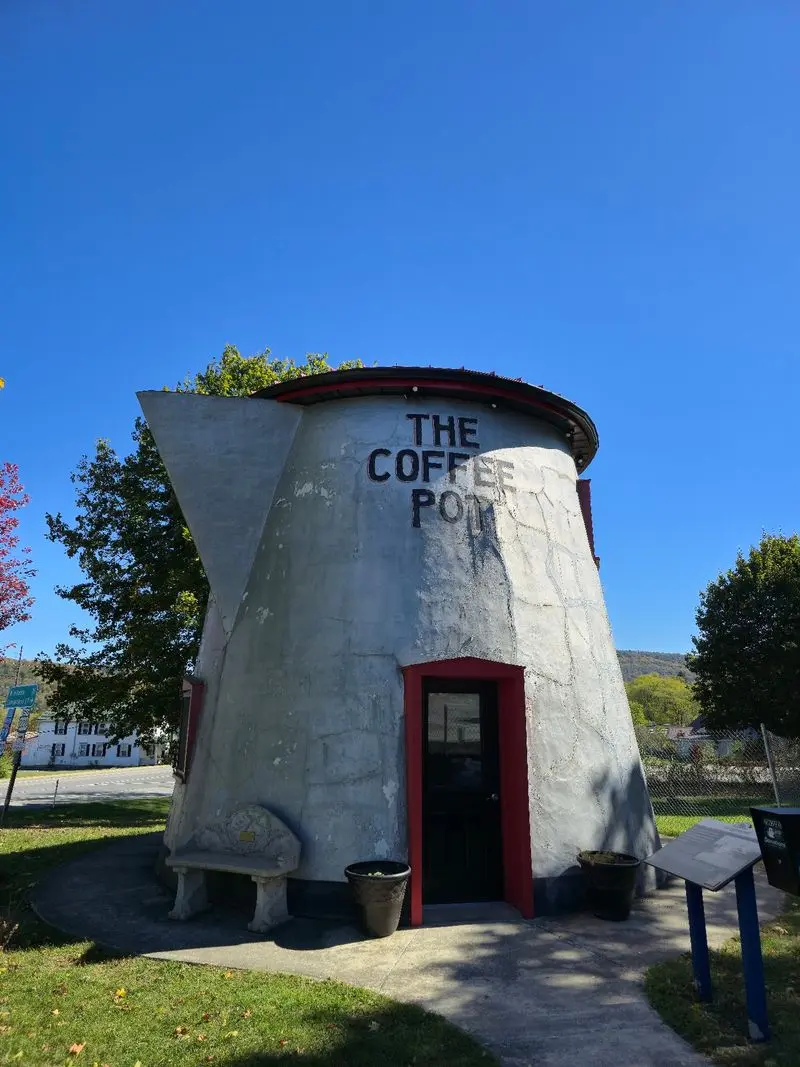
It stands 18 feet tall and measures 22 feet across. That makes it taller than many houses and wider than most living rooms.
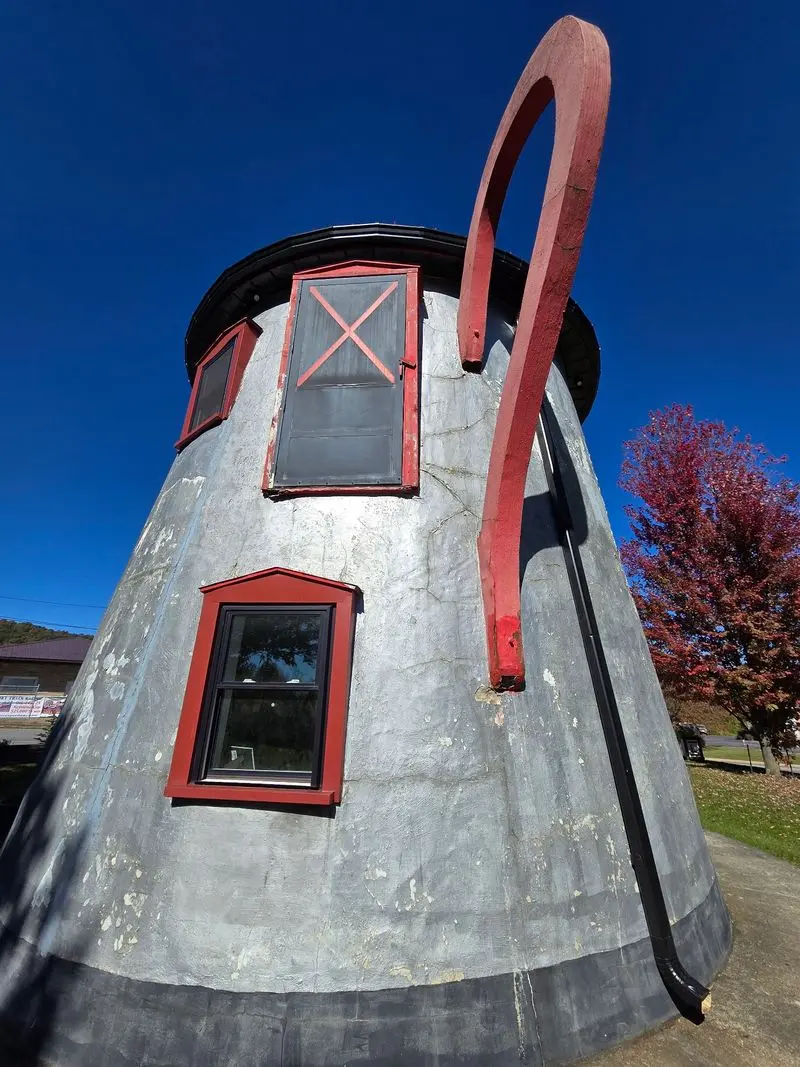
The outside is painted a shiny metallic silver. The paint copies the look of the sheet metal panels that once covered it.
A curved handle and a pouring spout finish the look. From the road, it really does resemble a kitchen coffee pot that grew way too big.
You may also hear it called the Koontz Coffee Pot. That name honors the man who built it back in 1927.
Underneath the silver skin, it was originally built from bricks. Then sheet metal went on top to create that classic pot shape.
Architects call buildings like this programmatic architecture. In plain words, the building looks like the thing it is selling.
It’s a playful idea that feels rare today. Most new buildings look like boxes, so a giant pot feels like a treat for your eyes.
Bring a phone with a full battery. You’ll want more than one angle of this shiny silver character.
Blame A Clever Gas Station Owner For This Whole Idea
Back in 1927, David Berton Koontz had a problem. He needed drivers to notice his gas station on the busy Lincoln Highway.
His answer was bold. He built a giant coffee pot right next to his garage.
The plan made perfect sense for the time. Road trips were becoming popular, and travelers needed fuel, snacks, and a reason to stop.
Nothing says take a break like a building shaped like coffee. Koontz basically created a billboard you could walk inside.
The Lincoln Highway was one of the first roads to cross the country. Today, that stretch through Bedford is part of Route 30.
Koontz is also known as Bert or Albert in some records. Either way, his idea is still turning heads almost 100 years later.
I believe he would be amazed at how far his plan went. A marketing trick from the 1920s became a protected piece of history.
That is quite a legacy for one gas station owner. Next time someone calls your idea silly, just remember Bert and his oversized pot.
Lunch Counter Days Gave The Pot Its Diner Fame
Ice cream, coffee, and light lunches were once on offer inside this pot. That small menu earned it a spot in diner history.
The lunch counter was connected to the Koontz Garage. Travelers could fuel up their cars and then grab a quick bite.
Here’s a funny detail. The coffee pot originally had no outside door of its own.
Guests had to enter through the gas station to reach the pot. It’s like a secret room hidden inside a roadside stop.
Things changed in 1937 when Koontz sold the property. The new owner, Neil Pepple, turned the pot into a bar and added a three-story hotel behind it.
Over the years, it even worked as a bus stop. So the pot welcomed eaters, sleepers, and riders at different points in its life.
Ironically, it was never just a coffee shop. The shape promised coffee, but the story kept changing.
It finally closed in January 1989. Today it no longer serves food, so pack your own snacks for the trip.
Rescued For One Dollar And Moved Across The Road
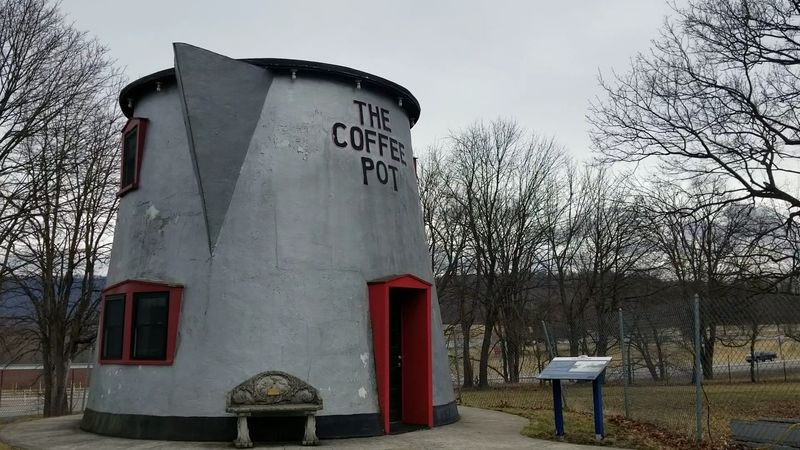
One dollar. That’s what saved this landmark from disappearing forever.
After closing in 1989, the pot fell into serious disrepair. By the 1990s and early 2000s, demolition was a real threat.
In 2000, Samuel Lashley and his sons bought the property. They mainly wanted the land for their neighboring garage and truck rental business.
Then a hero stepped in. The Lincoln Highway Heritage Corridor, a nonprofit preservation group, bought the pot for just one dollar in 2003.
That December, crews moved it about 125 yards across Route 30. It landed at the entrance of the Bedford County Fairgrounds.
A big restoration followed in 2004. The work cost more than $80,000 and gave the pot a fresh new life.
Moving a brick building shaped like a coffee pot sounds like a puzzle. Yet the team pulled it off, and Pennsylvania kept a treasure.
I like how a group of people refused to let it go. Sometimes saving history just takes stubborn love and a single bill.
Plan Your Photo Stop Right At The Fairgrounds Gate
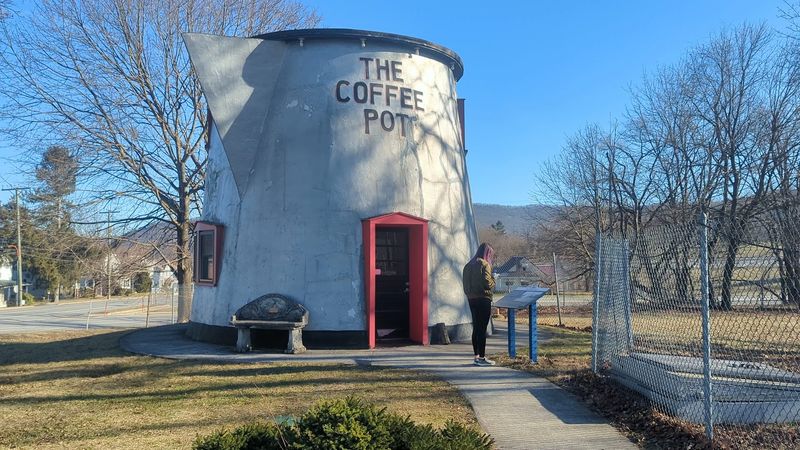
Finding the pot is the easy part. It sits at 714 W Pitt St, Bedford, PA 15522, right at the entrance of the Bedford County Fairgrounds.
Some maps also list it at 108 Telegraph Rd. Both point you to the same shiny landmark beside the fairgrounds gate.
The grounds are listed as open 24 hours. That means you can swing by for a quick photo whenever your road trip allows.
Parking is limited, though. A small area in front of the structure fits only a few cars.
Be careful not to drive through the fairgrounds gate. Stick to the spots near the pot so you’re not blocking anyone.
The best plan is a short, friendly stop. Snap your photos, stretch your legs, and get back on the road refreshed.
Morning or evening light can make that silver paint glow. Try standing back far enough to fit the handle and spout in one frame.
Kids love posing like they’re about to lift it. Good luck getting that cup poured, though.
Peek Inside When The Door Swings Open
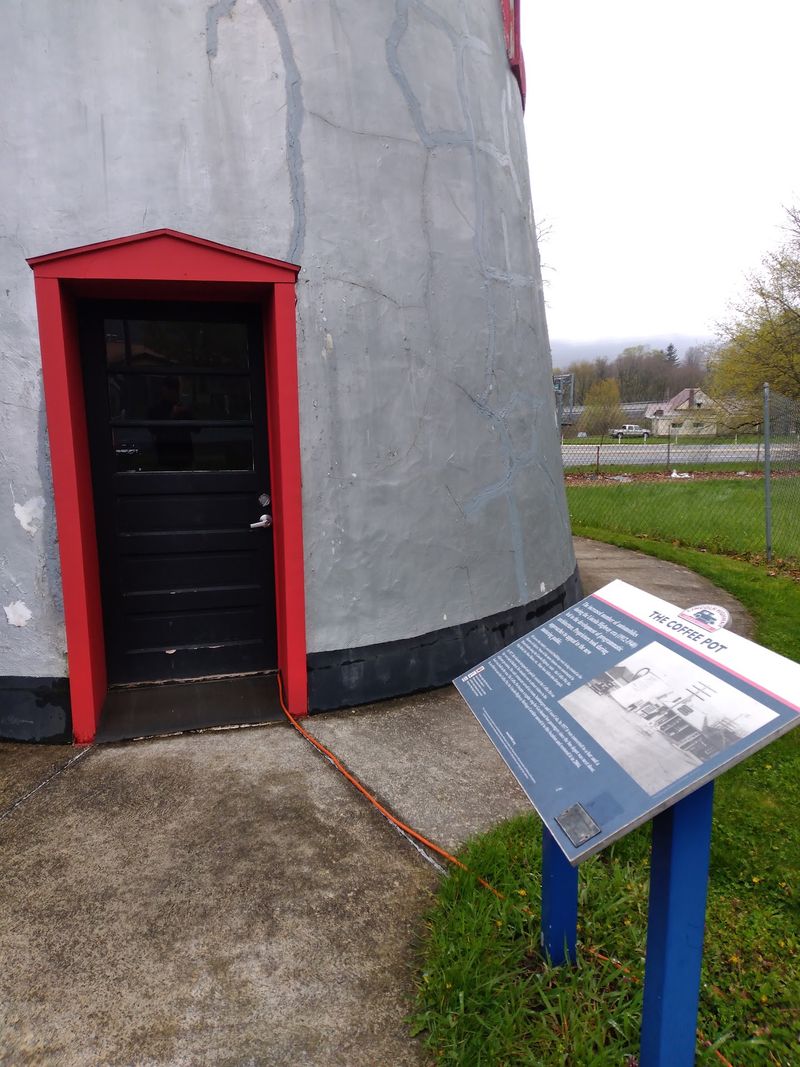
Most days, the door stays shut. You can still look through the windows to get a sneak peek inside.
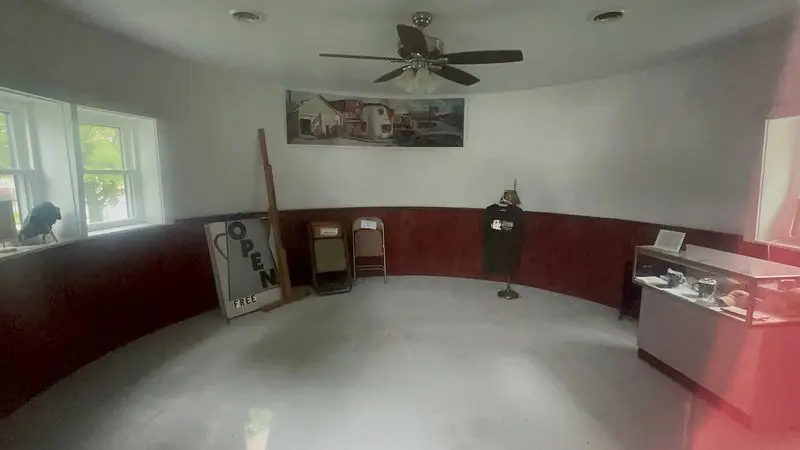
Timing is everything if you want to step in. The pot sometimes opens as a gift shop and small museum during special events.
The Bedford County Fair is one of those times. The Bedford Fall Foliage Festival in October is another.
Inside, you’ll find historical artifacts and information about the Bedford Fair. It’s a cozy way to learn how the fair and the pot connect.
The space also has a creative side. As of 2020, a group called the Coffee Pot Quilters used it as a meeting place.
I love that idea. Quilters stitching away inside a giant coffee pot sounds like the coziest club ever.
Want to go in? Check local event news before your trip so you don’t miss an open day.
Even if it’s closed, the outside sign shares plenty of history. You won’t leave empty-handed when it comes to fun facts.
Fall Colors And Fair Days Make Great Timing
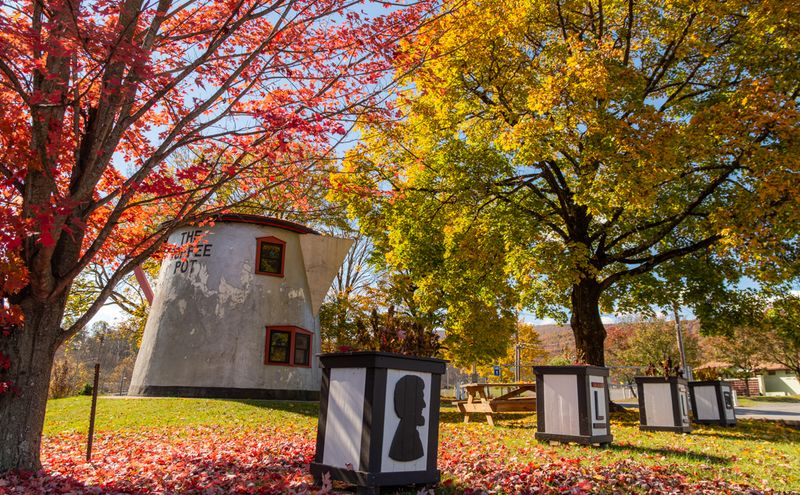
October in Bedford brings a special kind of magic. The Bedford Fall Foliage Festival is one of the few times the pot may open its door.
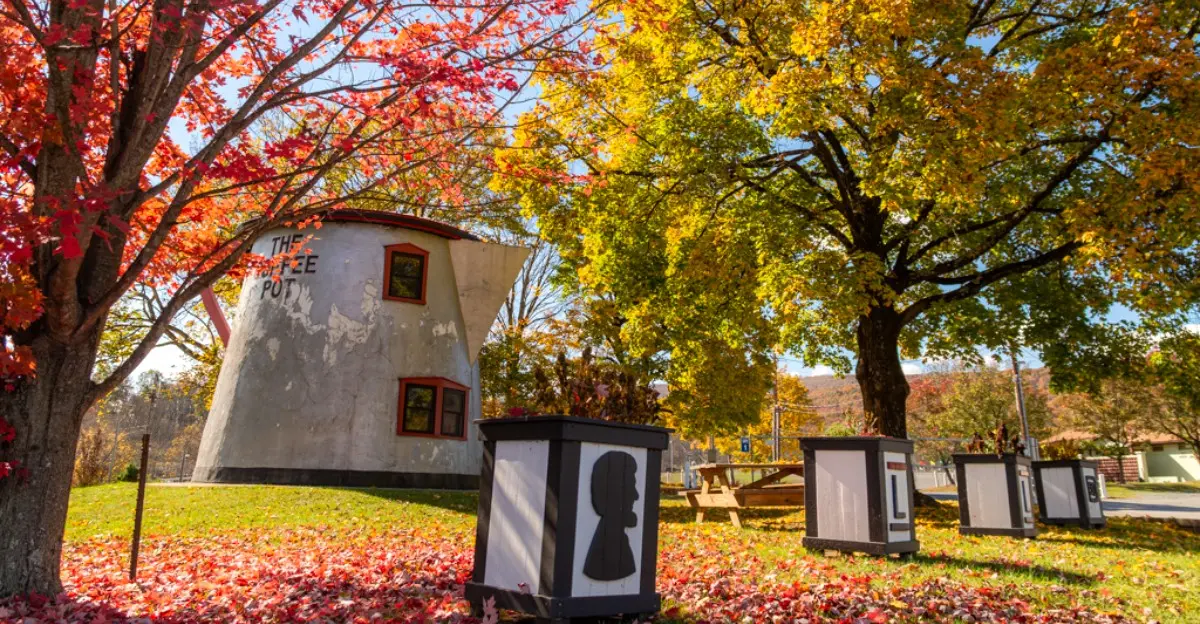
Picture the silver pot against bright orange and red leaves. Actually, don’t just picture it, go get that photo.
Fair season is another strong choice. Since the pot sits at the fairgrounds entrance, it becomes part of the action during the Bedford County Fair.
The Bedford County Fair organization now handles the pot’s upkeep. That makes the fair and the pot natural partners.
Visiting on an ordinary day has its perks too. You can enjoy a quieter moment and take your time reading the history sign.
Each season gives the pot a different look. Snowy winters, green summers, and colorful autumns all frame that silver shape in new ways.
Pennsylvania road trips shine in the fall. Adding this stop to a foliage drive turns a pretty day into a memorable one.
Just pack a thermos of your own coffee. It feels right, doesn’t it?
Fewer Than A Handful Of These Pots Still Exist
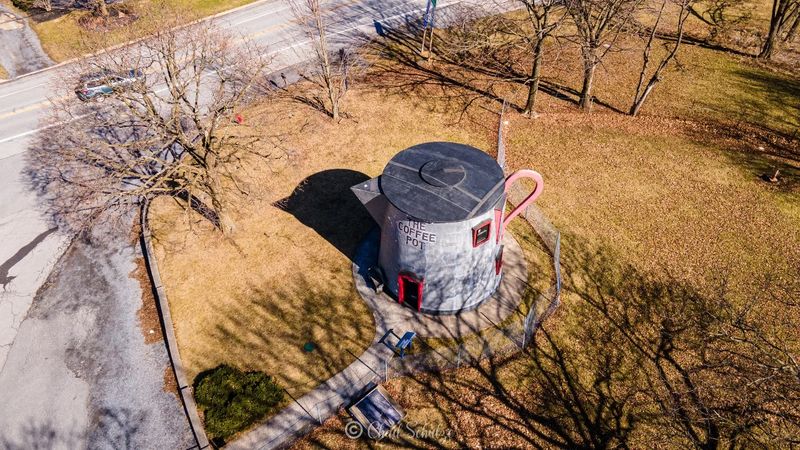
Rarity alone makes this stop worth it. Coffee pot buildings were never common, and most have vanished.
Reports say the number across the United States dropped from about 15 to only five. Bedford’s pot is one of the lucky survivors.
It’s listed on the National Register of Historic Places. That puts it among buildings the country has chosen to recognize and protect.
For a giant pot built to sell gas, that’s quite an honor. It went from roadside gimmick to official piece of history.
Programmatic buildings like this were popular during early car travel. Owners built giant ducks, shoes, and pots to grab attention fast.
Many of those buildings were torn down as highways changed. The Bedford pot almost joined that list before its rescue.
Standing beside it connects you to an older style of travel. Families once rolled up here in early cars, hungry and curious.
Here’s a fun math fact. If filled, it could hold about 51,000 gallons of coffee, enough to keep a whole town wide awake.
Help Get It Shining For A Big 100th Birthday
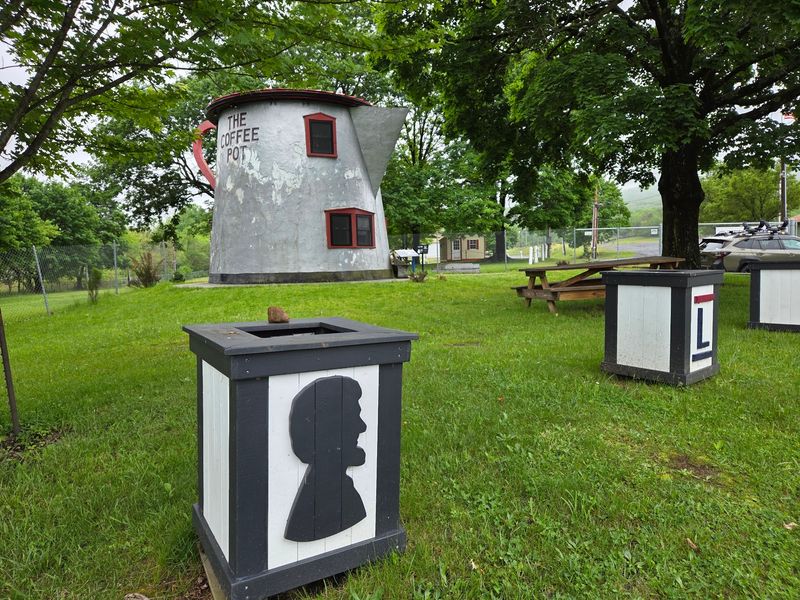
The year 2027 is a big one. The Big Coffee Pot turns 100, and folks want it looking sharp for the party.
As of March 2026, a fundraising effort was underway for more exterior restoration. The goal is to have the pot shining for its centennial.
Time and weather have been tough on the outside. Fresh work will help protect that famous silver look for years to come.
Supporting the project is a nice way to give back. Local groups have kept this landmark alive, and every bit of help counts.
A geocache is also hidden near the pot. Treasure hunters can add a little adventure to their visit.
Planning a Route 30 drive across Pennsylvania? Make Bedford a stop and see the pot before and after its glow-up.
I believe landmarks like this deserve a happy ending. A century of travelers, lunches, quilters, and photos is worth celebrating.
So raise your mug to the old pot. Few buildings can say they’ve been brewing smiles for a hundred years.