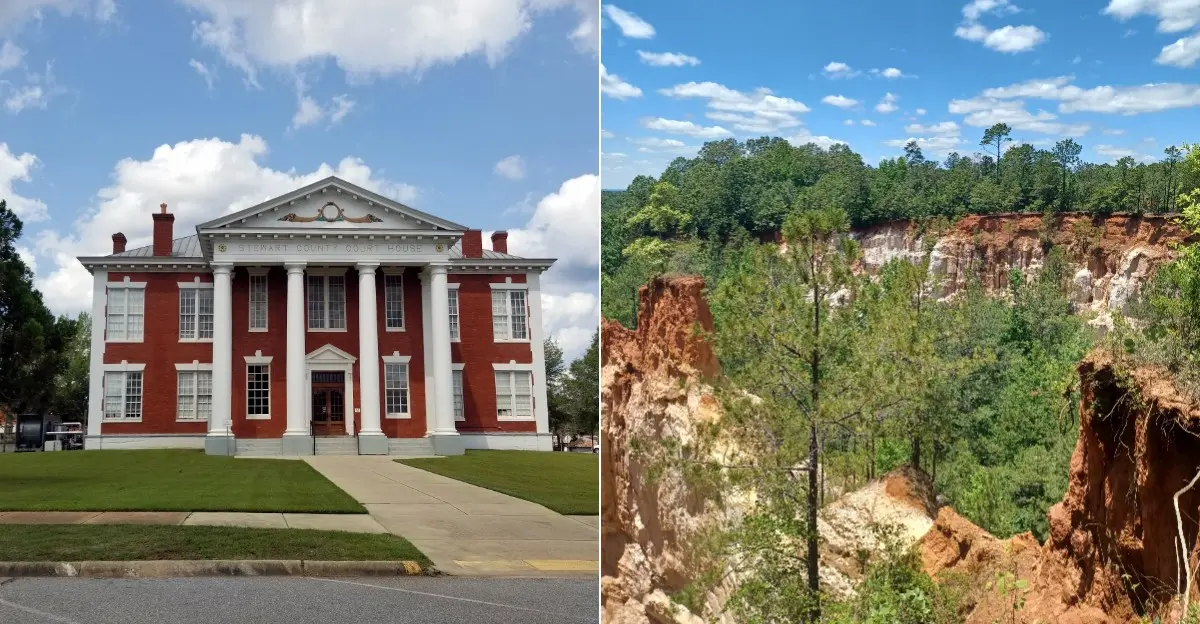
Some of the canyon walls here show up to 43 different colors of sand. Pink, orange, purple, red, white, and even black all stack up like a giant layered dessert.
The wild part? Most of it wasn’t carved by an ancient river.
Poor farming in the early 1800s let rain chew through the soil, and the gullies just kept growing.
Today, some of those canyons drop as deep as 150 feet. I find it amazing that a mistake turned into one of Georgia’s Seven Natural Wonders.
I also like how close it sits to a small town with fewer than 900 residents.
You can hike the rim, splash along the canyon floor, and still be back in town for an afternoon of history.
A Small Town With A Very Big Backyard
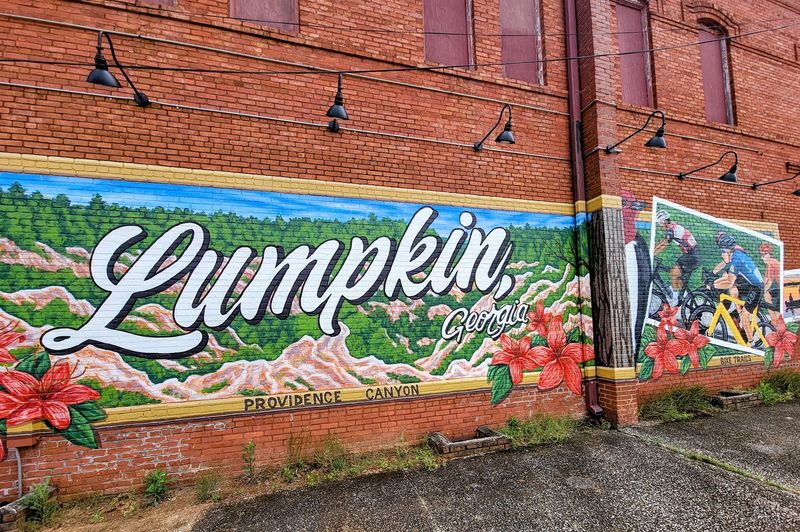
Lumpkin, Georgia keeps things simple with fewer than 900 residents. Yet it serves as the county seat of Stewart County, so it carries more weight than its size suggests.
The real headline sits just outside town. Providence Canyon State Park lies a short drive away, and it is often called Georgia’s Little Grand Canyon.
That nickname sounds bold for southwest Georgia. Then you see the canyon walls, and suddenly it feels earned.
I like how the town and the park balance each other. One gives you quiet streets and old Southern charm, while the other hands you dramatic views and muddy sneakers.
Lumpkin works best as a home base for slow exploring. You can spend a morning on canyon trails and an afternoon learning how people lived here in the 1800s.
That mix makes the trip feel fuller than a quick photo stop. It also gives families, hikers, and history fans something to share.
Plan for more time than you think you need. Small towns tend to stretch a schedule in the best way, especially when one of the South’s most surprising landscapes sits right next door.
Those Rainbow Walls Were Never Supposed To Happen
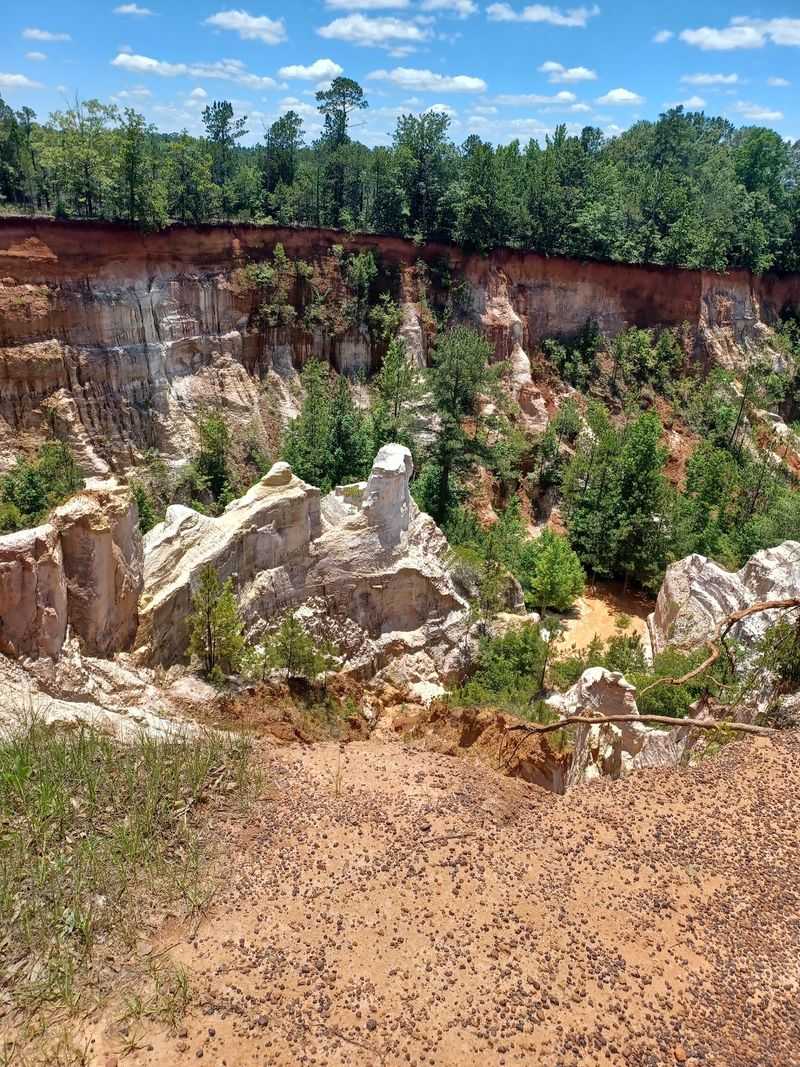
Blame the plows. In the early 1800s, poor farming practices stripped the land, and heavy rains began cutting deep ditches into the soft soil.
By 1850, some of those ditches were already 3 to 5 feet deep. They never stopped growing, and today certain canyons reach about 150 feet down.
That history gives Providence Canyon State Park a strange double identity. It looks ancient and grand, yet it began as an accident of human hands.
The colors steal the show. Canyon walls display up to 43 shades of sand, from soft pink and purple to bright orange and deep black.
Minerals staining different layers of sediment create that painted effect. Each band tells a bit of the story about what lies beneath this corner of Georgia.
I believe this backstory makes the view even more powerful. It’s beautiful, but it’s also a lesson about caring for land before it washes away.
The park opened in 1971 and now ranks among Georgia’s Seven Natural Wonders. Not bad for a giant gully that started as a farming problem.
Your Shoes Will Get Wet On This Loop, And That Is Half The Fun
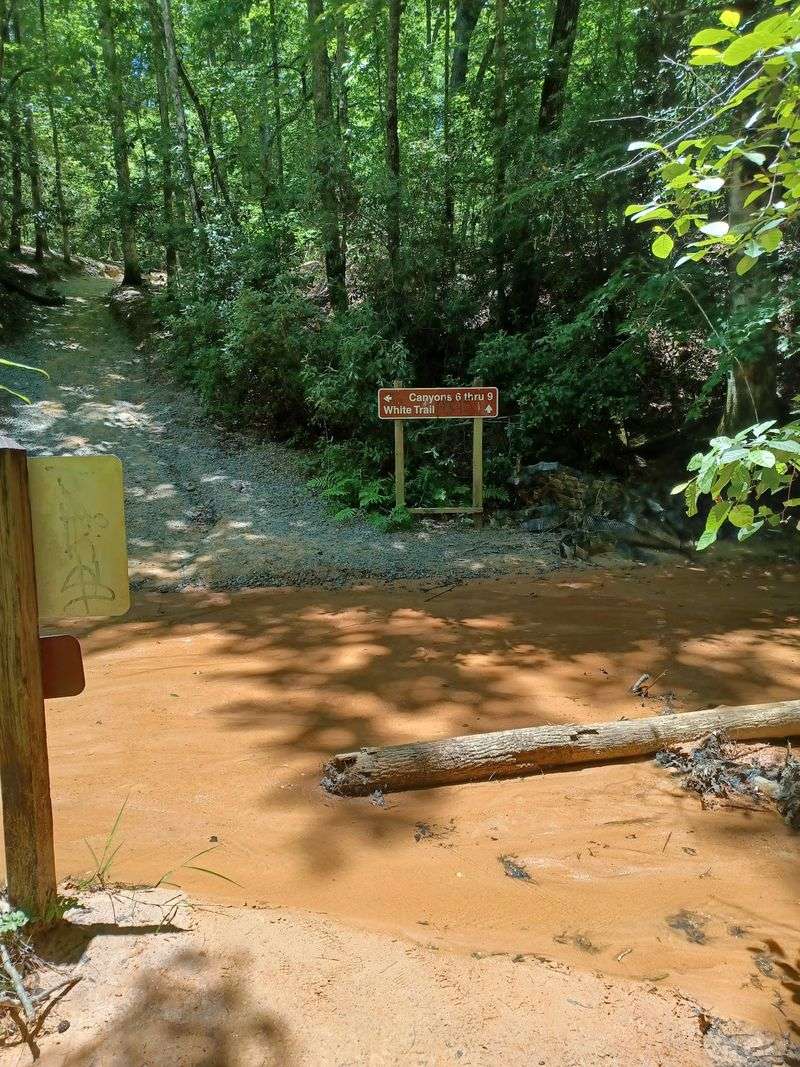
Most visitors start with the Canyon Loop Trail, marked with white blazes. It runs about 2.5 miles and is rated easy to moderate.
The loop circles nine canyons and leads right down to the canyon floor. Expect it to take around two hours, though extra time for gawking is smart.
Down in the deepest parts, a thin layer of water often covers the path. That water marks the natural water table, so it’s a normal part of the hike.
Wear shoes you don’t mind soaking. Fancy white sneakers will regret every life choice that brought them here.
Stay in the middle of the creek beds while walking inside the canyons. The soil along the sides can turn very muddy and behave a lot like quicksand.
That tip matters for kids and pets too. Dogs are welcome on the trails, as long as they stay on a six-foot leash.
Once you’re standing at the bottom, the walls tower overhead in bands of color. It feels far bigger than a two-hour walk should.
Prefer Your Views From Above? The Rim Has You Covered
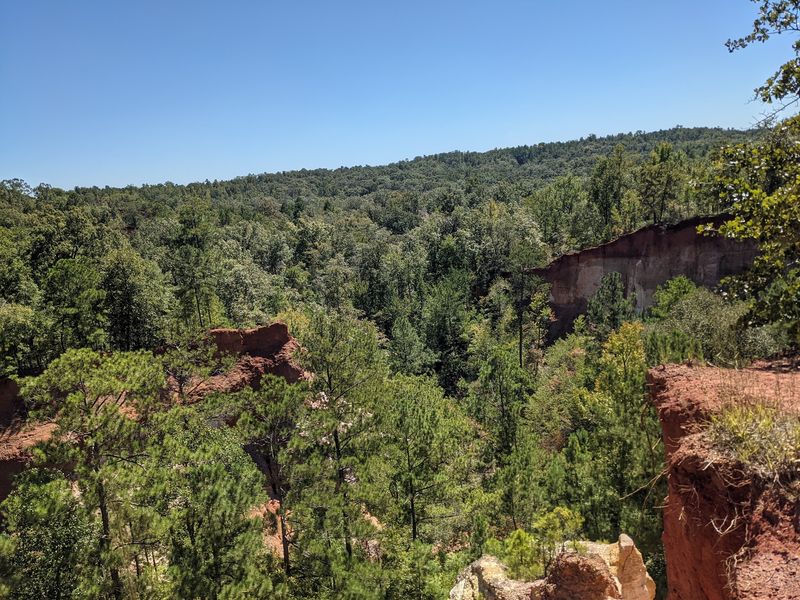
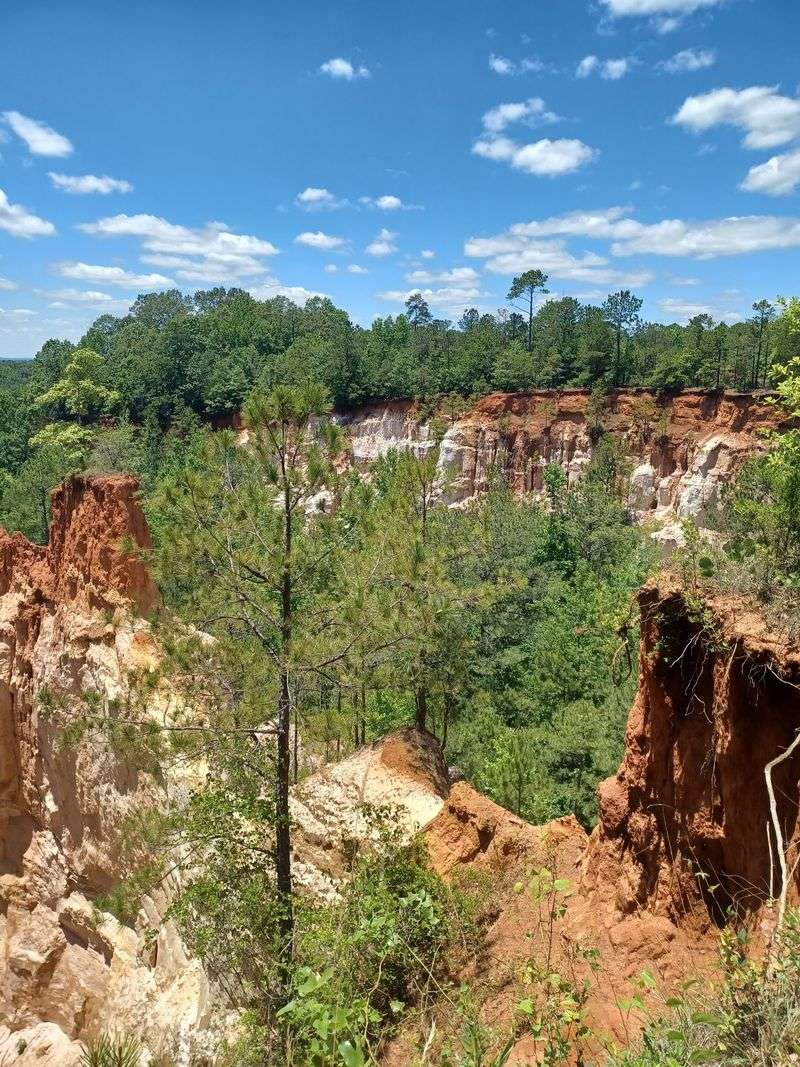
Not every great view needs a muddy climb. The Rim Trail offers wide panoramic looks across the canyons from up top.
From the edge, you can see how the gullies branch and twist through the forest. It’s a little like viewing a map that someone painted orange.
Safety comes first here. The canyon edges are fragile, so stay behind the fences placed along the overlooks.
Those barriers aren’t there for decoration. Soft soil formed this place, and soft soil can give way without much warning.
Photographers love Providence Canyon State Park for good reason. Sunrise and sunset light make the pinks, reds, and oranges glow even richer.
Plan your arrival around that golden window if you can. Spring and summer hours stretch until 9 p.m., which gives evening shooters a little breathing room.
From mid-September to mid-April, the park closes at 6 p.m. Check the season before you plan a sunset shot.
Even without a camera, the rim makes a relaxing stop. It’s an easy way to show older relatives or small kids the big picture.
Seven Miles Of Forest For Hikers Who Want A Real Workout
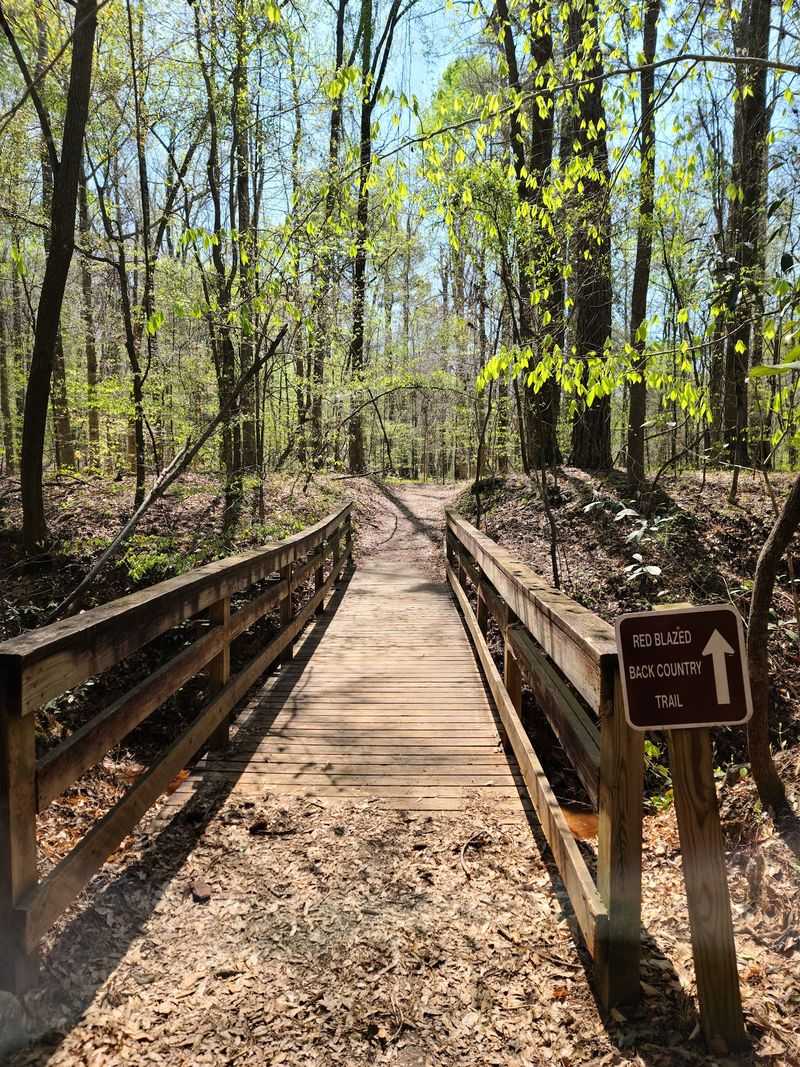
Ready to earn your snacks? The Backcountry Trail, marked with red blazes, stretches into a 7-mile loop rated strenuous.
Give it at least six hours. That’s a full day of trail time, so pack plenty of water and food.
The route winds through forest and shows off different sections of the canyon. You’ll see sides of the park that quick visitors never reach.
Altogether, the park holds roughly 10 to 12 miles of trails. The backcountry loop covers a big chunk of that mileage.
Wildlife makes the longer hike more interesting. Deer, raccoons, armadillos, lizards, and snakes all live in the park.
Bird lovers can scan the sky for hawks and vultures. Songbirds add their own soundtrack through the trees.
Watch your step and give snakes plenty of room. They’re part of the neighborhood, after all.
Here’s a fun bonus for loop-walkers too. Hikers who reach canyons 4 and 5 can join the Canyon Climbers Club, with registration at the visitor center.
It’s a small reward, but bragging rights count for something on the drive home.
Sleep Under The Pines Without A Single Hookup
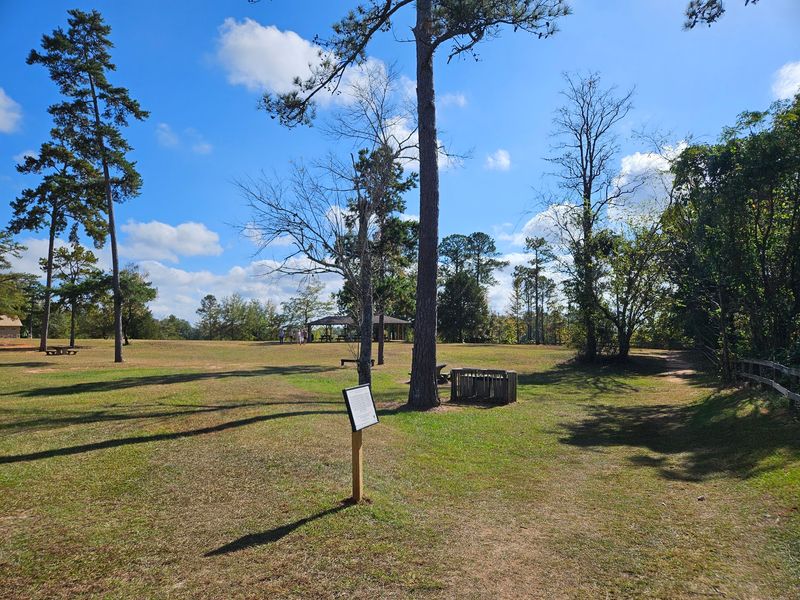
Campers here go old school. Providence Canyon State Park offers primitive camping only, so leave the RV dreams at home.
Three pioneer campsites sit about a quarter mile from the parking lot. They work well for groups, and each comes with an open shelter, picnic tables, fire pit, and grill.
Restrooms are available at site number 3. That detail matters more than you’d think after a long day on dusty trails.
For true quiet, six backcountry campsites line the 7-mile Backcountry Trail. Reaching them requires a hike of about 2 to 3 miles.
These sites include fire rings and very little else. There’s no drinking water, no hookups, and no showers.
Carry in all your water, food, and gear. A lightweight water filter won’t help much, so bring what you’ll drink.
Want a softer landing? Florence Marina State Park sits about 9 miles away on Lake Walter F.
George. It offers cottages and RV hookups for travelers who like electricity.
Either way, Lumpkin, Georgia makes a fine weekend base. The stars come free.
A Rare Summer Bloom Turns The Canyon Even Brighter
Most azaleas show off in spring. The plumleaf azalea waits until July and August, when the rest of the garden has given up.
Its fiery orange-red blossoms are rare. The species grows only in southwest Georgia and east Alabama.
Providence Canyon hosts its largest known wild colony. That makes this park a true headquarters for the flower.
Timing a summer visit around the bloom adds another layer of color. Bright petals against painted canyon walls?
That’s a combination worth planning for.
Summer heat in southern Georgia can feel intense. Start early, bring water, and take shade breaks during the hottest hours.
Remember that longer summer hours run from mid-April to mid-September. You’ll have until 9 p.m. to catch cooler evening light.
I find it charming that a rare plant chose a canyon shaped by erosion. Nature clearly made the best of a messy situation.
Look, enjoy, and leave the blossoms where they grow. Picking them would rob the next hiker of the same thrill.
Bring a zoom lens instead. Photos last longer anyway.
Start At The Visitor Center Before Hitting The Dirt
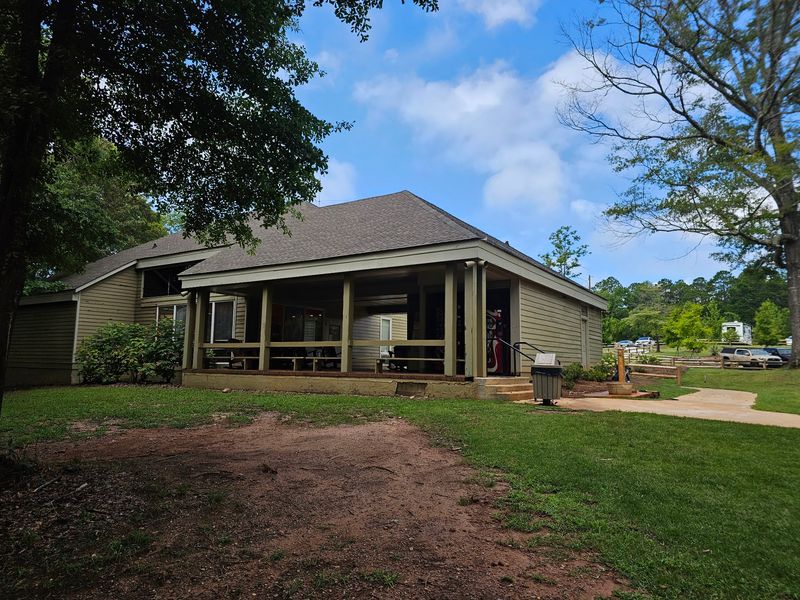
Smart hikers make one stop first. The visitor center opens daily from 8 a.m. to 5 p.m., and it’s packed with useful extras.
Inside, you’ll find a small museum, maps, restrooms, and water fountains. The gift shop sells Georgia Grown souvenirs and snacks.
The park itself sits at 8930 Canyon Road, Lumpkin, GA 31815. Plug that in and you’ll land right where the fun begins.
A daily parking fee applies per vehicle. Frequent visitors can grab an annual pass instead.
Families get plenty of downtime options too. A playground sits near the visitor center for kids who still have energy after hiking.
Two picnic shelters offer spots for lunch. Pack sandwiches, sit in the shade, and swap trail stories.
The park also runs educational programs on astronomy and geology. Those talks help explain how the canyons formed and what’s twinkling overhead at night.
Gates open at 7 a.m. year-round. Arriving early usually means cooler air and an easier start.
Step Back To 1850 Right Here In Town
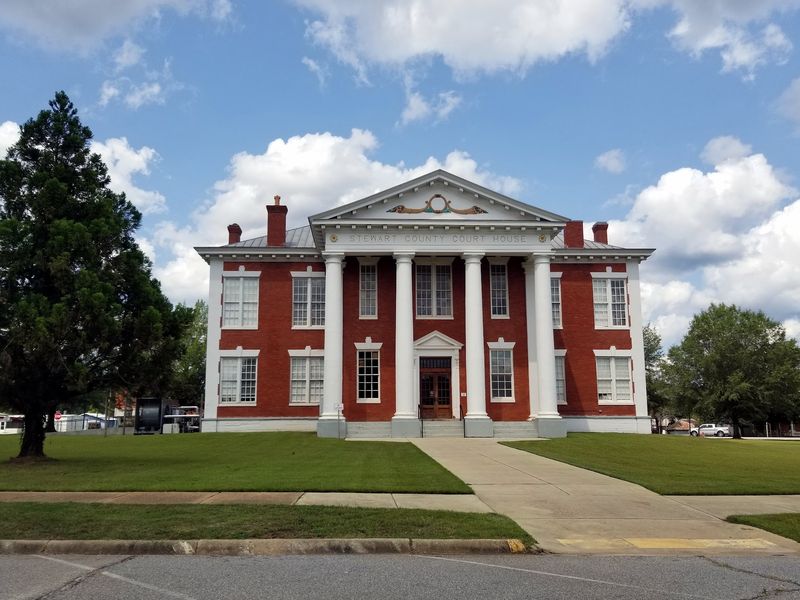
Canyon walls tell one part of the 1800s story. Westville Historic Village tells another.
This living history museum shows what life looked like around 1850. That’s the same era when farm ditches near town were already growing into gullies.
I like how neatly those two stops connect. You can see the damage at the canyon, then learn how people lived and worked during that time.
Kids especially benefit from that pairing. History feels less like a textbook when you’ve just hiked through its results.
Need more outdoor time afterward? Florence Marina State Park sits about 9 miles from Providence Canyon on Lake Walter F.George.
Lake views make a calm counterpoint to the dramatic canyon scenery. Together they round out a weekend in this part of Georgia.
Lumpkin may be tiny, but it doesn’t run short on reasons to linger. Big views, deep history, and quiet roads make a satisfying mix.
Pack muddy shoes and a curious mind. This little town rewards both.