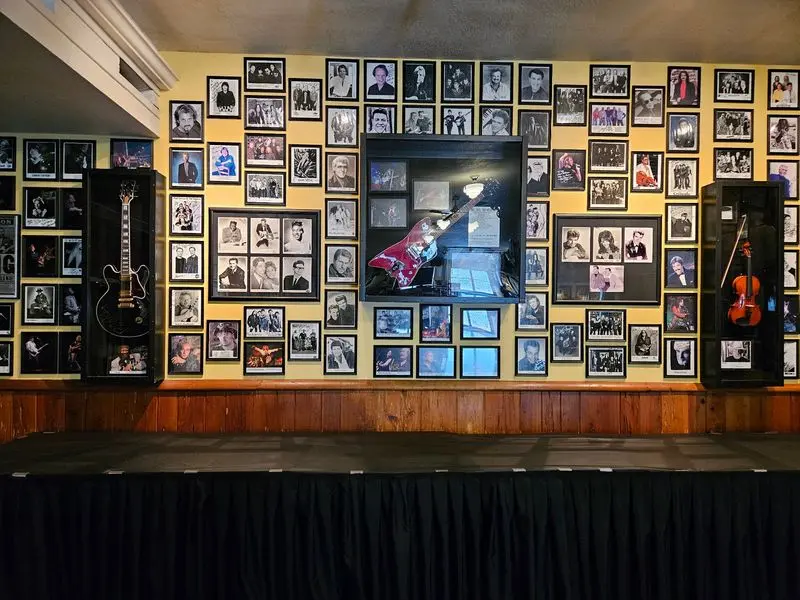
The microphone Buddy Holly sang into on his final night is on display. So is a guitar he signed on that same 1959 tour.
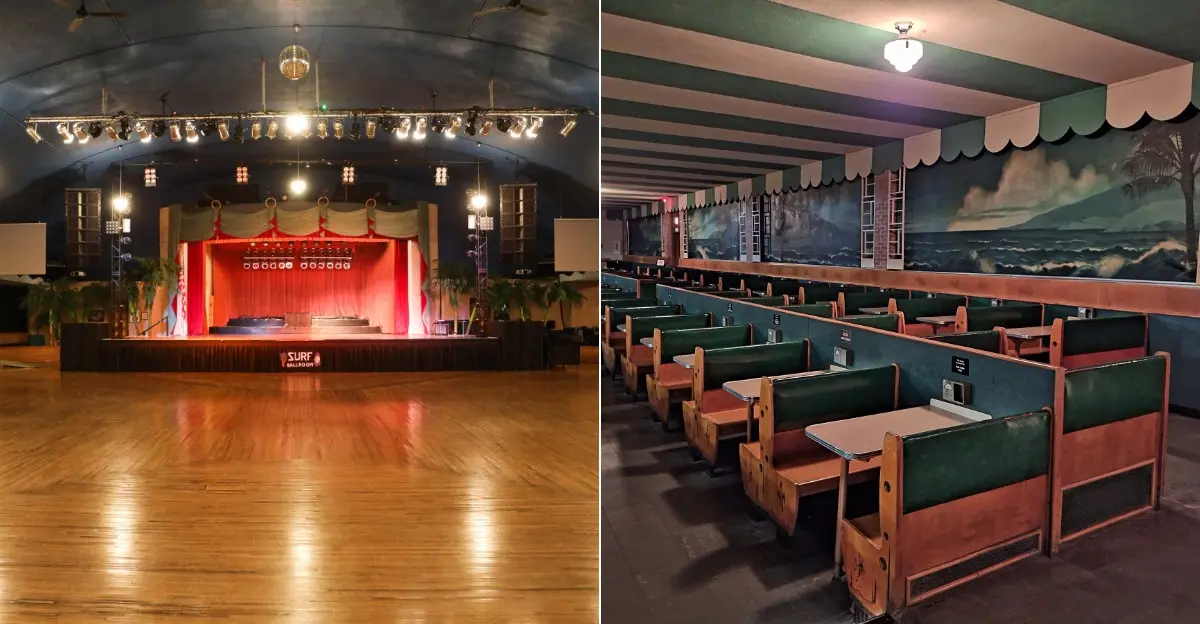
The building around them still has its original maple dance floor. Painted palm trees and crashing waves cover the walls, which feels wonderfully bold for a ballroom in northern Iowa.
I like how it never pretends to be anywhere practical.
The booths still carry little metal reservation boxes above each table. Bands still play on the same stage where Holly, Ritchie Valens, and The Big Bopper closed out their last show.
I find it moving that the music never stopped here.
So how does one dance hall hold this much joy and this much heartbreak at once? The answer is worth the trip.
A Beach Club Landed In The Cornfields, And Nobody Complained
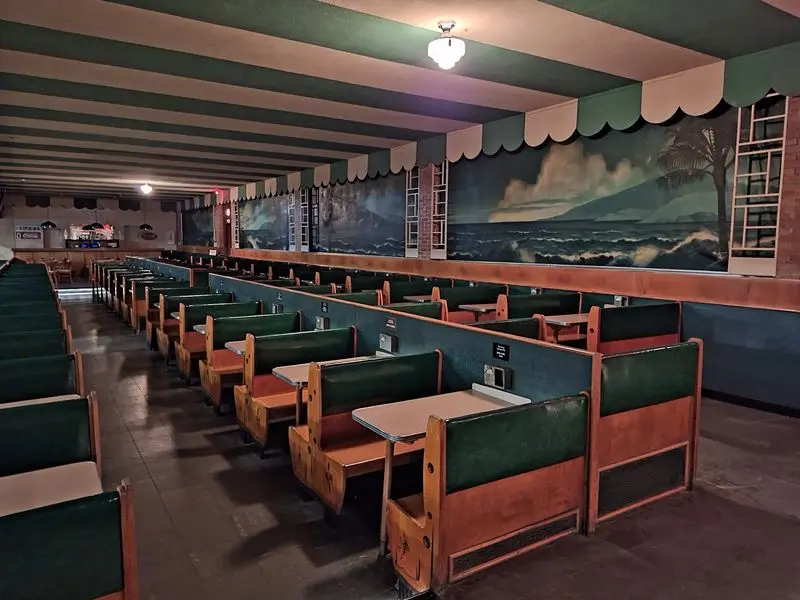
Palm trees in Iowa sound like a typo. At the Surf Ballroom & Museum, they’re part of the plan.
The 1948 dance hall was designed to feel like a South Seas beach club.
Hand-painted murals stretch across the walls with crashing waves, sailboats, and lighthouses. Swaying palm trees join the scene, and nobody seems bothered by the lack of an actual ocean.
Honestly, the lake down the road makes a decent stand-in.
The furniture plays along too. Pieces made from bamboo and rattan complete the island mood.
It’s the kind of theme commitment that modern restaurants rarely manage for more than a year.
Artificial palm trees flank the stage, adding one more tropical touch. The whole room feels playful without turning silly.
That balance is harder than it looks.
Give yourself time to wander the edges of the room slowly. Small painted details reward anyone who looks closely at the walls.
Bring your phone, because these murals deserve a few photos.
It’s a cheerful setting, which makes the history here hit even harder. Joy and memory share the same walls.
You’ll feel both before you leave the main room.
February 2, 1959 Still Shapes Every Corner Here
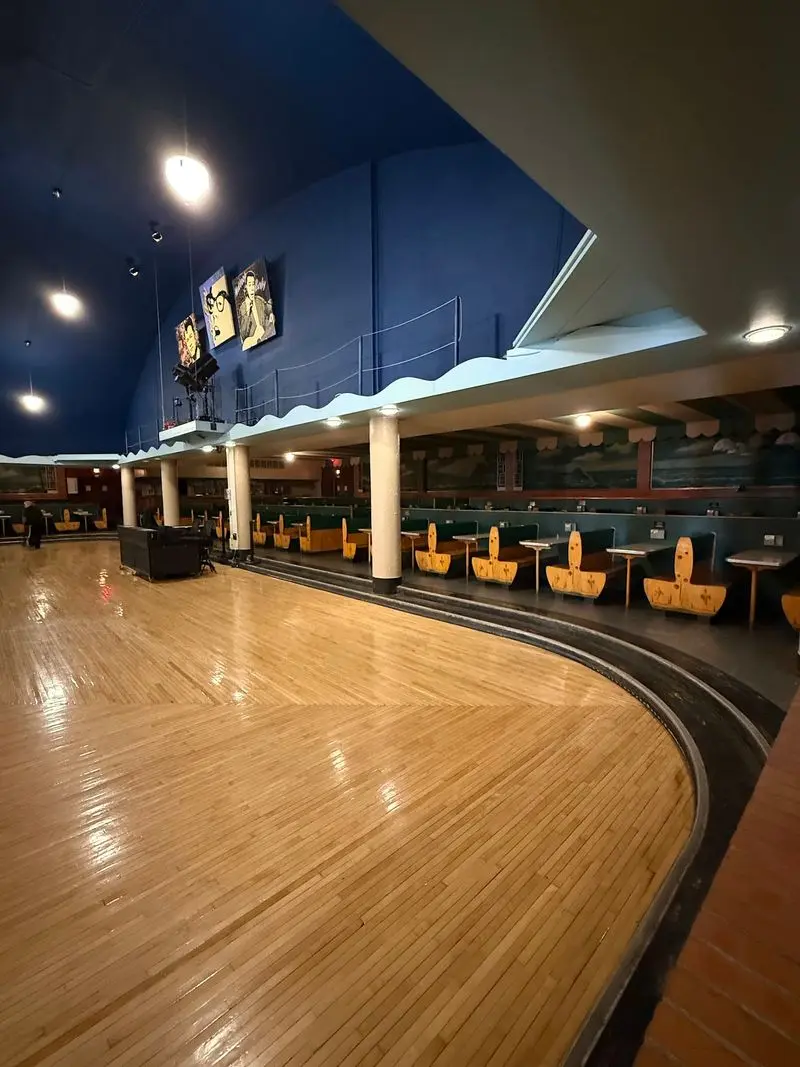
Over a thousand fans packed the Surf Ballroom & Museum on a cold winter night in 1959. They came for the Winter Dance Party Tour.
Buddy Holly, Ritchie Valens, and J.P. “The Big Bopper” Richardson were on the bill.
Rock and roll was still young and wild back then. These performers were shaping its sound in real time.
For a few hours, the crowd danced to the future of music.
Hours after the show, their small plane went down near Clear Lake. Pilot Roger Peterson was lost too.
The news shocked fans across the country.
Years later, Don McLean called it “The Day the Music Died” in his song “American Pie.” That line turned a local tragedy into a national memory. Most people know the phrase even if they never heard the full story.
Here, the story feels close and personal. Photos of the three stars line the lobby.
Their faces greet visitors before the ballroom even comes into view.
Take a quiet moment near those portraits. It helps the rest of the visit land with real meaning.
That Maple Floor Has Survived Decades Of Happy Feet
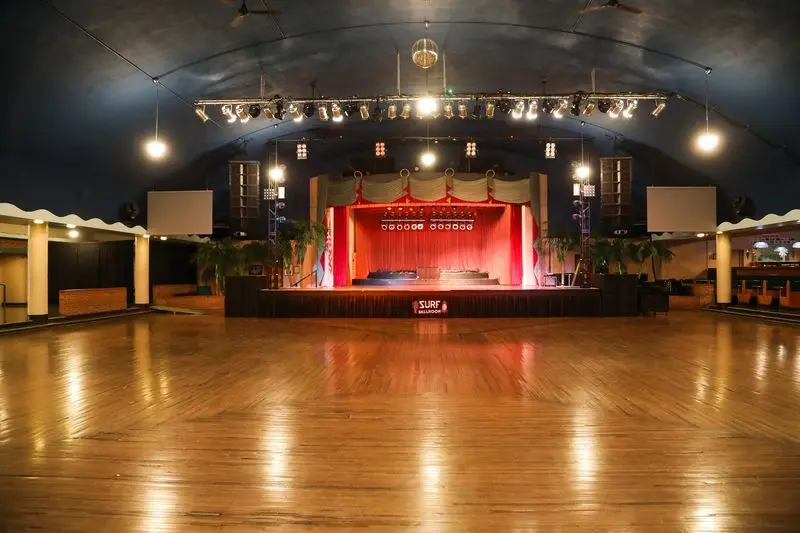
Fifty feet by ninety feet of original maplewood. That’s the dance floor, and it’s still in use today.
Generations of dancers have crossed it, and it keeps going strong.
Booths circle the floor just like they did in the early days. Above each booth table sits a gray metal reservation box.
Staff still use those boxes to identify the booths, which feels delightfully old school.
Sliding into one of those booths offers a fun perspective. You get the same view of the stage that fans had decades ago.
Few museums let history feel this comfortable.
Look up toward the stage too. Cloud projections were designed to make dancers feel like they were under an open sky.
It’s a dreamy idea from a time before light shows got fancy.
Concertgoers should check seating charts when buying tickets. Some booth seats may have partial views of the stage.
A little planning helps you land a better spot.
On tour days, the floor is open for exploring. Feel free to walk right across it.
A tiny shuffle step is optional, but highly encouraged.
The Immersive Exhibit Brings Rare Treasures Back To Life
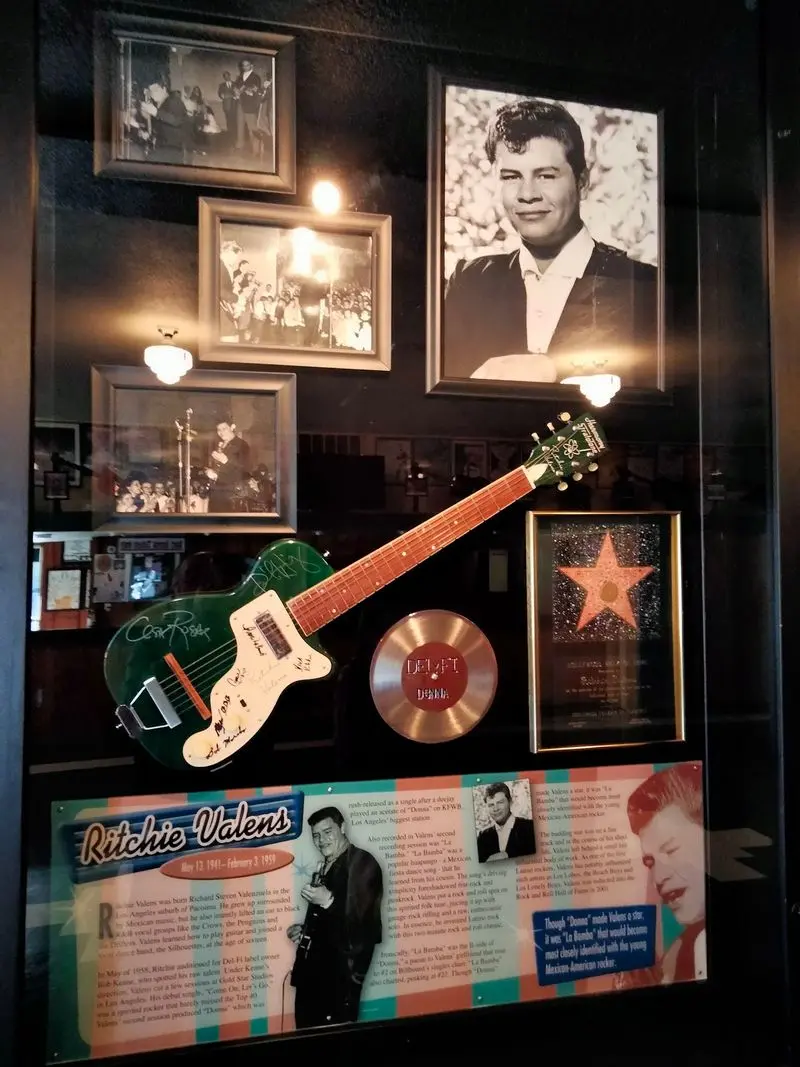
Ritchie Valens’ wallet sits in a display case here. It’s a small, everyday object that suddenly feels enormous.
That’s the magic of “Not Fade Away: The Immersive Surf Ballroom Experience.”
The permanent exhibit opened in September 2025. It lives in the Music Enrichment Center right next to the ballroom.
Digital storytelling, restored audio, and archival materials work together to tell the story.
Buddy Holly’s final microphone headlines the collection. A guitar he signed during the 1959 tour sits nearby.
Seeing them in person beats any documentary.
Guitar fans get a bonus treat. A prototype of Les Paul’s “The Log” is on view.
It was an early solid-body electric guitar, and it helped change how music sounds.
The experience aims to honor the lost artists. It also hopes to inspire new musicians and fans.
Bring along any young guitar players in your family.
Plan extra time for this part of the visit. Moving too fast means missing the sound and story layers.
Slow down, listen closely, and let the goosebumps happen naturally.
Uncle Sam Officially Agrees This Place Matters
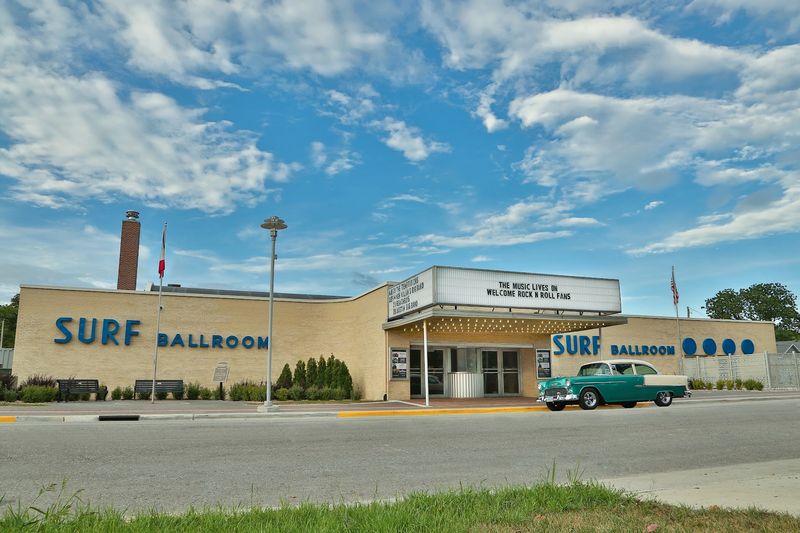
Three big honors, three different years. The Rock and Roll Hall of Fame named the Surf Ballroom & Museum a Historic Rock and Roll Landmark in 2009.
That was only the start.
On September 6, 2011, the building joined the National Register of Historic Places. Then January 2021 brought the biggest news yet.
The U.S. Department of the Interior named it a National Historic Landmark.
That title puts it among the most important sites in Iowa. It also recognizes the building’s design.
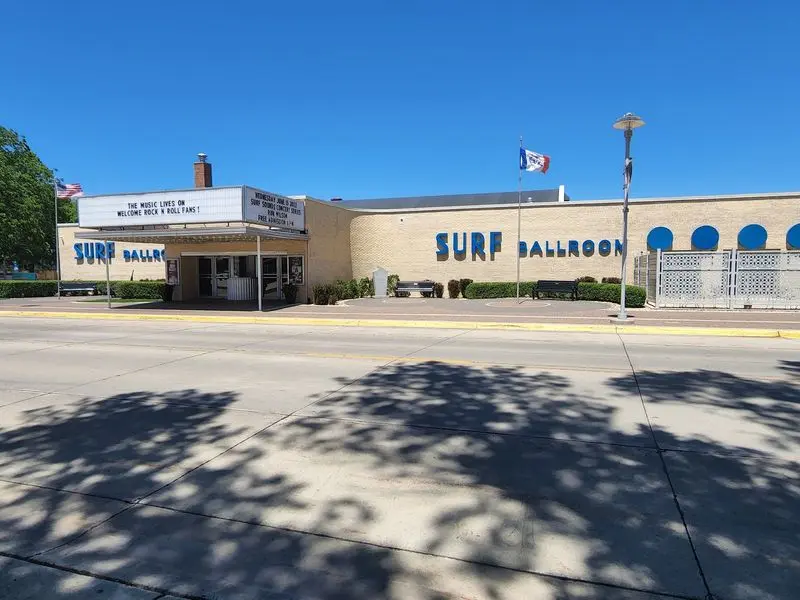
The Surf is a well-preserved example of the Moderne style.
Moderne buildings love clean lines and curved forms. They skip heavy decoration and lean toward a sleek look.
Technology inspired that style, which suits a place tied to electric guitars.
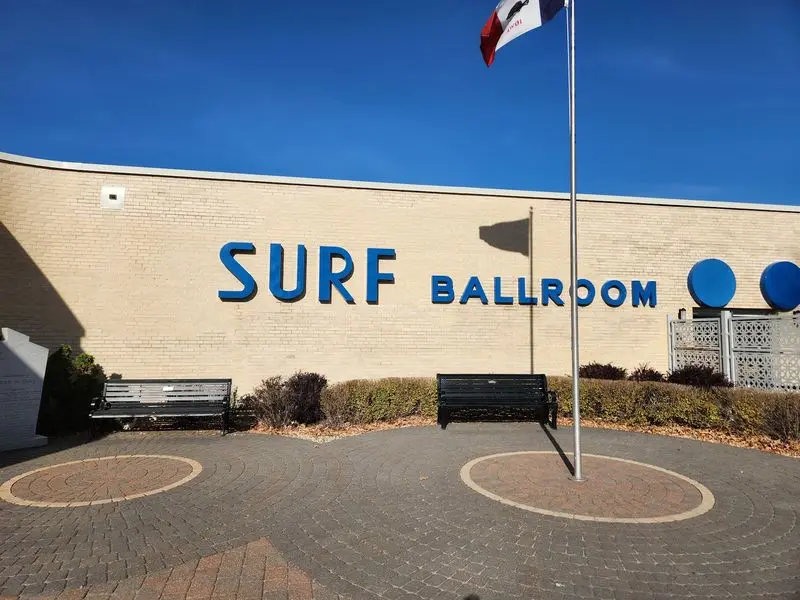
Take a slow walk outside before heading in. The exterior tells its own story about mid-century taste.
Architecture fans will enjoy spotting those smooth curves.
Not bad for a lakeside dance hall. Most buildings collect one fancy award, if they’re lucky.
This one keeps a small trophy shelf going.
Touring On Your Own Schedule Is Easy And Relaxed
Self-guided tours make visiting simple. Head over Monday through Saturday from 10 AM to 5 PM.
Sunday is closed, so plan around that.
You can wander at your own pace and linger where you like. Staff members are on hand to answer questions.
That’s handy when a photo or guitar sparks a sudden curiosity.
Groups have another option. Guided tours are available by appointment for at least 30 people.
Book at least two weeks ahead to secure a spot.
A donation helps preserve the building and its collections. Giving back keeps this history in good shape for future visitors.
It’s an easy way to say thanks.
Walls inside are packed with autographed photos of performers. Many famous musicians have played the Surf over the decades.
Spotting favorite names becomes a fun game fast.
The full address is 460 N Shore Dr, Clear Lake, IA 50428. Arrive early in the day for a more relaxed pace.
Comfortable shoes are smart, since there’s plenty to explore.
Every February, The Music Comes Roaring Back
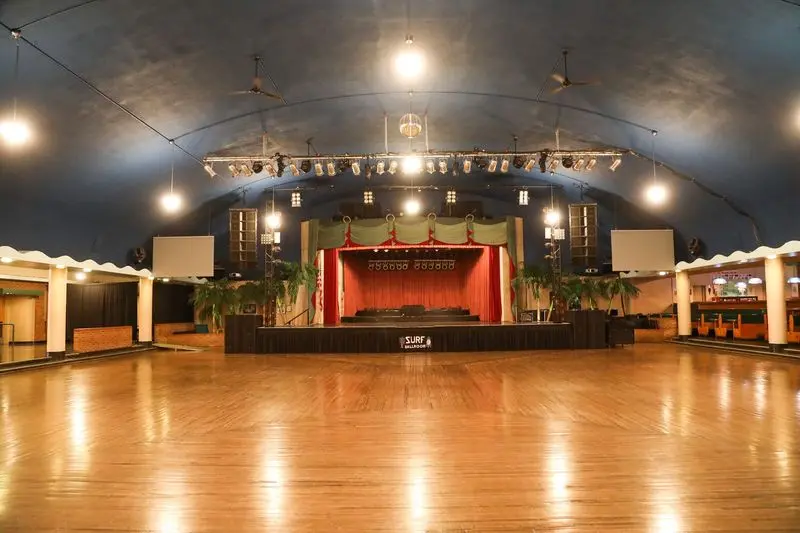
Concerts never stopped at the Surf Ballroom & Museum. It’s still a working live music venue.
That alone makes it rare among historic landmarks.
The biggest event lands each February. The Winter Dance Party tribute draws fans and musicians from far and wide.
It honors Buddy Holly, Ritchie Valens, and The Big Bopper.
Winter in Iowa can be chilly, so pack a warm coat. Inside, the dance floor heats up quickly.
Tickets for this event are worth grabbing early.
Summer brings its own fun. A Summer Concert Series runs on select Wednesdays.
Regional and international acts take the same famous stage.
Other artists and events fill the calendar throughout the year. Check the schedule before planning a trip.
Catching a show adds a whole new layer to the visit.
Hearing live music in this room feels special. The sound bounces off murals that have seen it all.
Dancing where rock legends once played makes any night memorable, even for folks with two left feet.
Two Nearby Stops Complete The Story
A trip here feels incomplete without a short drive north of town. The Three Stars Memorial Site honors Buddy Holly, Ritchie Valens, and J.P.
Richardson. It marks the location of the 1959 crash.
Many fans pay their respects there after touring the ballroom. The visit feels quiet and thoughtful.
It turns the story from a headline into something deeply human.
Back near the ballroom, the Carl Fox House adds another chapter. Carl Fox was the Surf’s original manager.
His former home is now part of the Surf experience.
The house offers a look at the behind-the-scenes history. It also shows the community ties that helped build the venue’s legacy.
History buffs will appreciate those extra details.
Plan both stops on the same day if possible. Together they give the full picture of what happened.
The ballroom shows the joy, and the memorial shows the loss.
Bring a respectful attitude to the memorial site. It’s a meaningful place for many families and fans.
A moment of silence fits perfectly.
Big Plans Mean Even More Reasons To Visit Soon
Clear Lake isn’t standing still. A $35.2 million Surf District revitalization project is reshaping the area.
The Surf Ballroom & Museum sits right at the heart of it.
Plans include a new gateway arch. Better lake access with a scenic dock is also on the list.
Improved streetscapes should make the walk around the area more inviting.
Public funding helped make this happen. Over $4.7 million came through Destination Iowa and Community Attraction and Tourism grants.
Those dollars support the music center and nearby improvements.
The Surf runs as a nonprofit under the North Iowa Cultural Center and Museum. That setup keeps the focus on preservation and education.
It also helps the venue inspire young musicians.
The lake itself deserves some attention too. Clear Lake offers pretty views and a friendly small-town feel.
A stroll by the water is a lovely way to end the day.
Iowa has plenty of charming towns, but few pair rock history with lakeside calm. Here, a sad chapter became a lasting celebration.
Rave on, indeed.