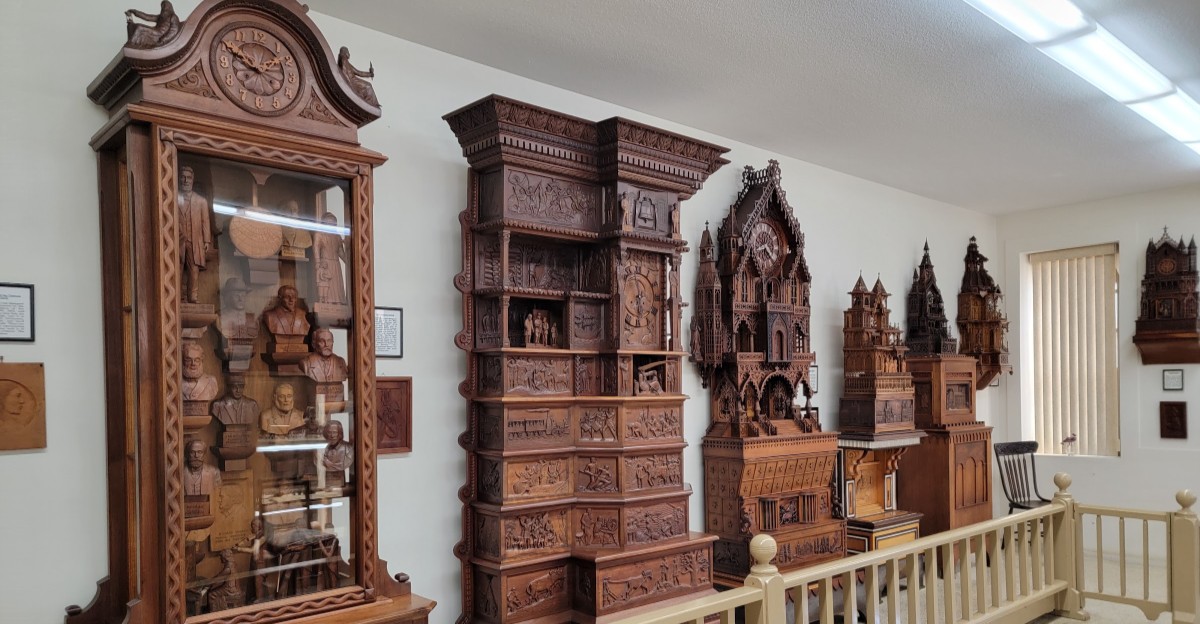
Two bachelor farmers with grade-school educations once turned down an offer of one million dollars for a single clock they carved. Yes, a clock.
They built it by hand, in their spare time, after the farm chores were done.
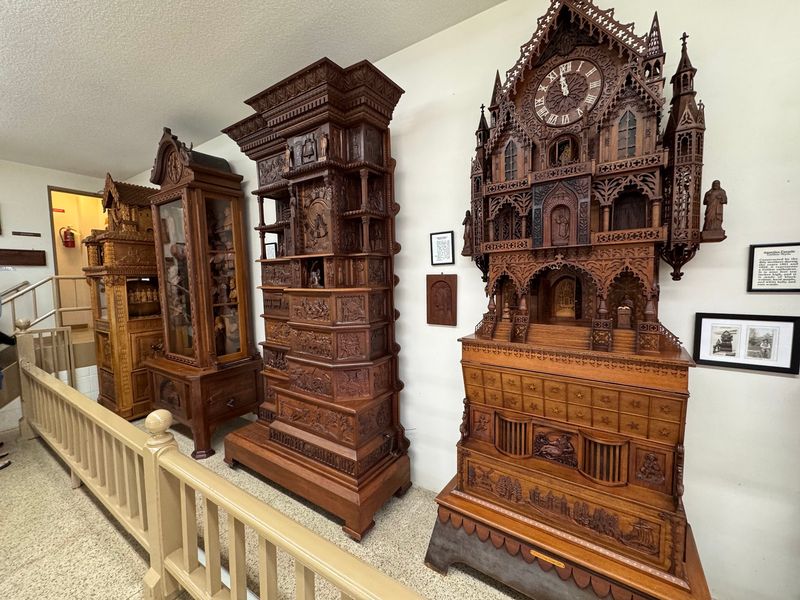
Their carved timepieces now fill a sturdy brick building in a tiny Iowa town. Some stand nearly ten feet tall.
Many have moving figures, and some still play music.
I like how the story keeps getting stranger. The same building once housed a world-famous composer for a summer.
His time there is tied to one of the most loved symphonies ever written.
I find it hard to resist a place where farm life, woodcarving, and classical music share one address. So how did two quiet brothers end up making clocks worth more than their farm?
Two Farm Brothers Turned Winter Evenings Into Wooden Masterpieces
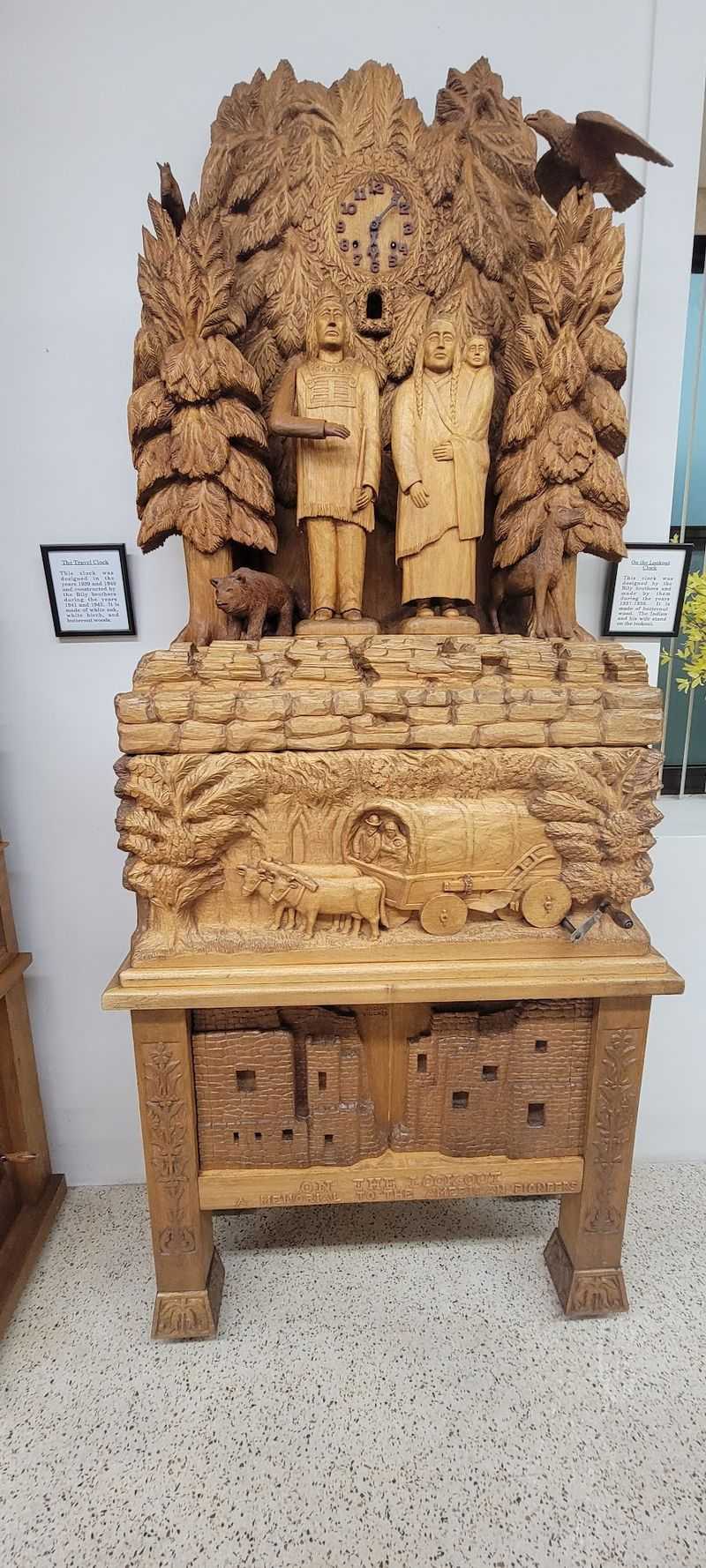
Frank and Joseph Bily spent their days farming near Spillville, Iowa. Their real passion came alive when the fieldwork slowed down.
The brothers had no formal art training. Their schooling reportedly stopped around fifth grade, which makes their carving skill even more jaw-dropping.
Today their work fills the Bily Clocks Museum & Antonín Dvořák Exhibit. It’s one of those places where a simple hobby grew into something truly remarkable.
The brothers carved during spare hours, often in the colder months. Wood, patience, and stubborn focus did the heavy lifting.
They never married and stayed close to home. Their clocks became their life’s work and, in a way, their family legacy.
What makes their story so relatable is how ordinary it starts. Two farmers with chores, weather worries, and long evenings to fill.
Then you see the results, and ordinary flies out the window. Detailed figures, towering cases, and moving parts all came from their hands.
Keep this story in mind as you visit. Every carved leaf and tiny figure looks different once you know who made it.
The Clock That Was Worth More Than a Fortune
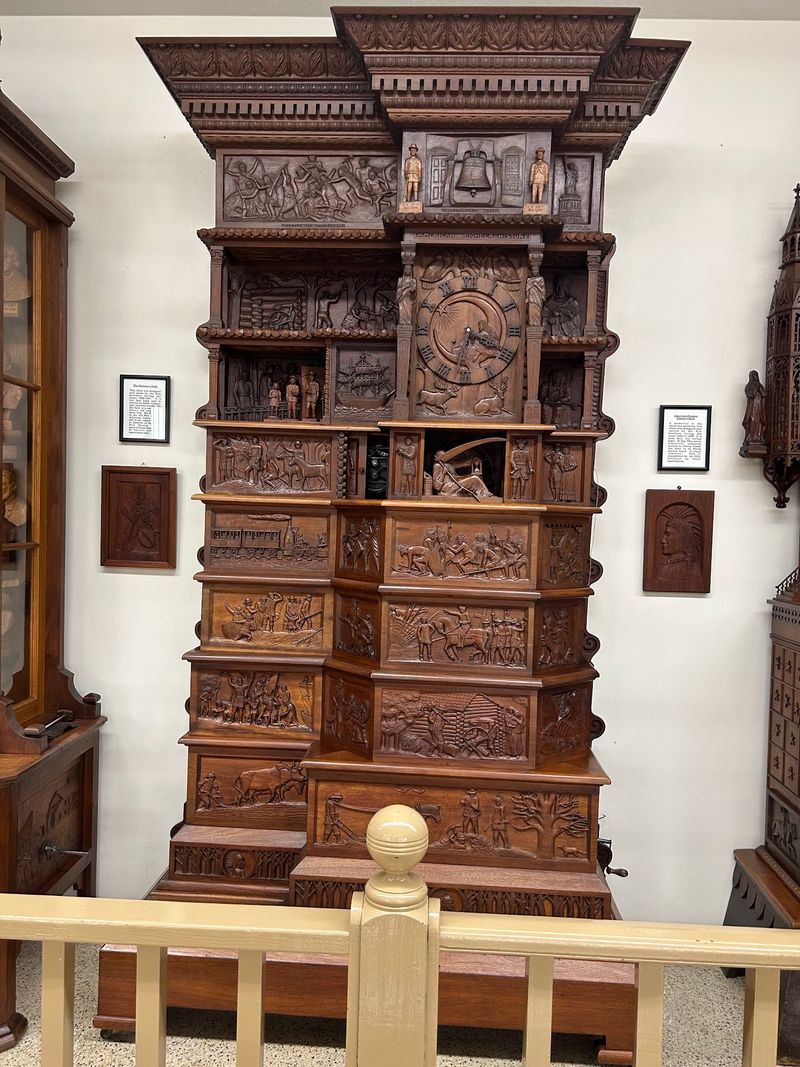
One million dollars. That’s the offer the Bily brothers famously refused for one of their clocks.
Most people would at least pause before saying no. The brothers simply weren’t interested in selling their creations.
Their choice explains why the collection stayed together. Instead of scattering into private homes, the clocks remain in one spot for everyone to enjoy.
Some of the clocks reach nearly ten feet tall. Standing beside one feels a bit like meeting a carved building with a heartbeat.
The size alone grabs your attention first. Then the details pull you closer, panel by panel and figure by figure.
It’s easy to rush past a big object in a museum. Here, slowing down pays off in a big way.
Look at the tops, the sides, and the little corners. The brothers clearly cared about every surface, not just the front.
Try picking one favorite clock and studying it for a few minutes. You’ll likely spot carvings you missed on the first pass.
That kind of patient looking matches the patient carving. It’s a fitting way to honor work this careful.
Tiny Figures Spring to Life When the Clocks Do Their Thing
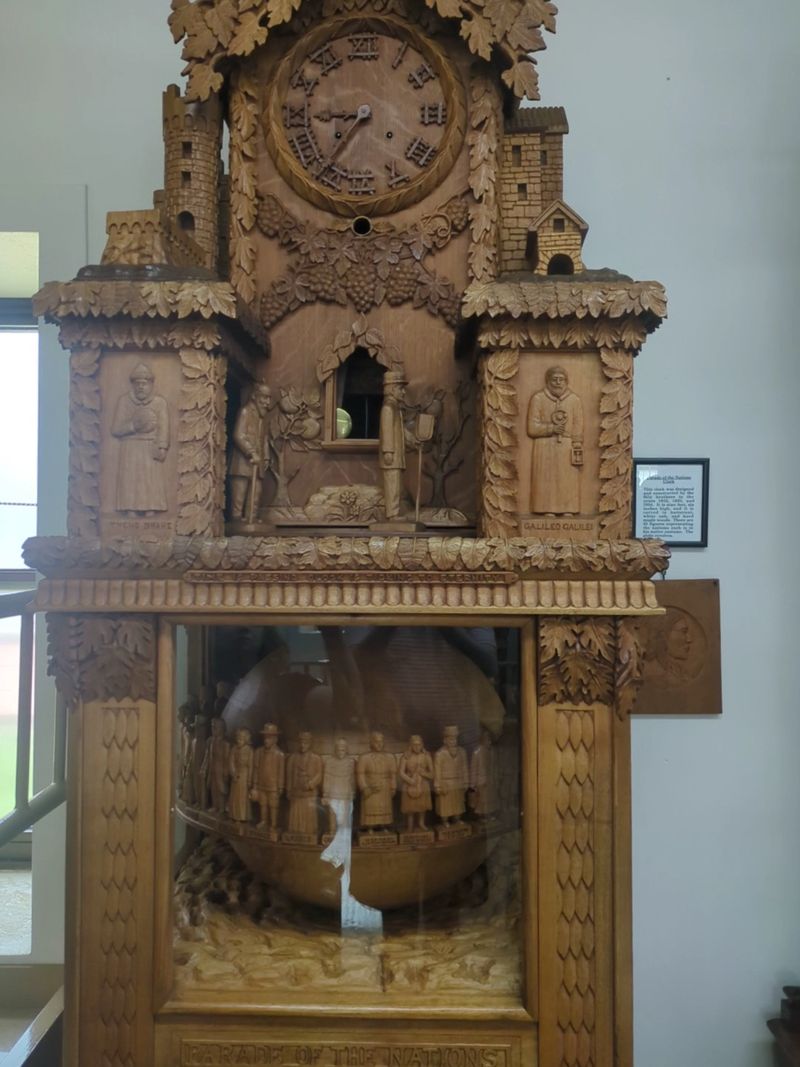
Carved clocks are impressive enough sitting still. These ones go further, with moving figures and working mechanisms tucked inside.
Some clocks still chime and play music. That’s a big deal for timepieces built by hand so many decades ago.
Guides at the museum demonstrate how certain clocks work. Watching the little parts move adds a whole new layer to the visit.
Think of it as wooden theater on a tiny stage. The clock strikes, the figures shift, and the room suddenly feels lively.
Kids especially tend to perk up during these moments. Adults usually do too, though they may pretend to stay calm.
Pay attention to how the motion connects with the carving. The brothers designed the art and the action to work together.
It shows planning, not just decoration. Each moving piece had to fit, turn, and repeat without fuss.
Bring your questions about the mechanisms. The guides know these clocks well and can explain what’s happening behind the wood.
You may leave with new respect for gears. Honestly, that’s a fun souvenir for your brain.
Skip the Solo Wander and Join a Guided Tour
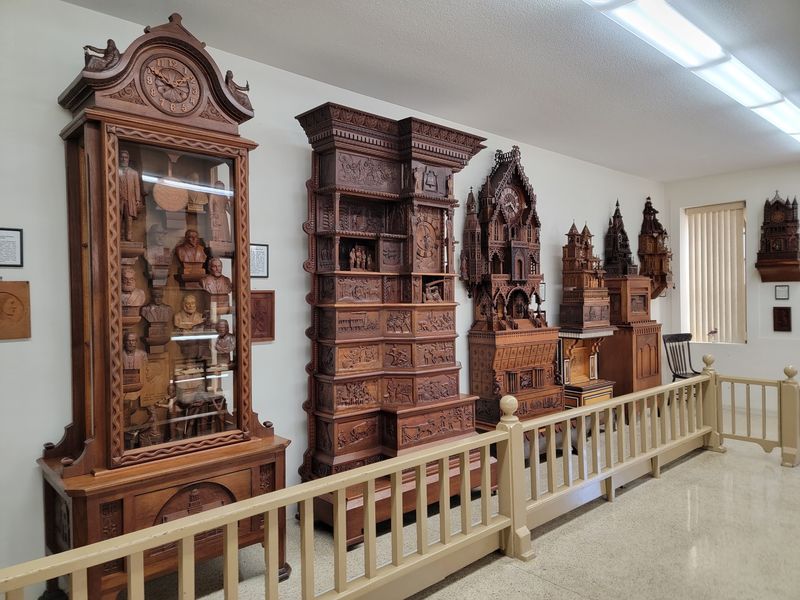
Reading signs works fine at many museums. At this one, the guided tour is the smarter move.
Guides share the story of Frank and Joseph Bily as you walk through the clock room. They also show how several clocks move and sound.
That live demonstration is the part you don’t want to miss. A sign can’t make a clock chime for you.
Plan on spending roughly an hour or two here. The exact time depends on how deep you go into the history.
If a tour is about to start, it’s worth waiting a few minutes. You’ll get context that makes every carving more meaningful.
Families will find the pace easy to follow. The storytelling style keeps things moving without feeling like a lecture.
Ask about the brothers’ carving habits or favorite designs. Small questions often lead to the best stories.
Tour guides here clearly care about this local history. Their knowledge connects the clocks to Spillville and its Czech immigrant roots.
That connection turns a pretty display into a real story. And good stories stick with you long after the drive home.
A World-Famous Composer Spent a Summer Upstairs
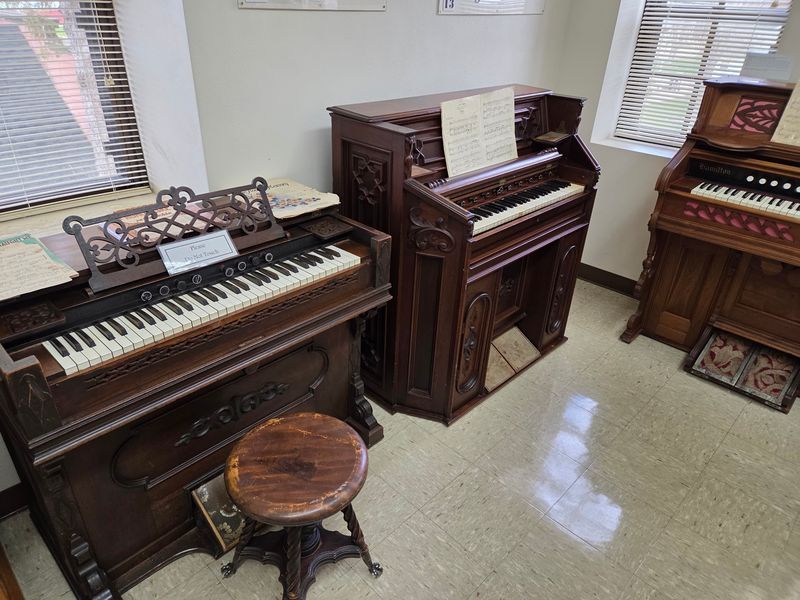
In 1893, Czech composer Antonín Dvořák came to Spillville for the summer. He stayed in this very building.
Spillville had a strong Czech community, which helped him feel at home. Small-town Iowa became an unexpected chapter in his famous career.
That’s why the museum carries two names. The Bily Clocks Museum & Antonín Dvořák Exhibit shares space for a good historical reason.
The Dvořák exhibit sits on the second floor. Several rooms tell the story of his stay and his music.
His Symphony No. 9, known as From the New World, premiered in New York in late 1893. It became one of the most performed symphonies anywhere.
Connections to his time in America make the exhibit feel personal. You’re standing where a giant of classical music once lived.
Music fans will love this part most. Even casual listeners may recognize a melody or two from the symphony.
The pairing sounds odd at first. Clocks downstairs, a composer upstairs.
Yet both stories come from the same Czech roots in Iowa. Together, they give this building a double dose of history.
Organs, a Violin, and Music History You Can See Up Close
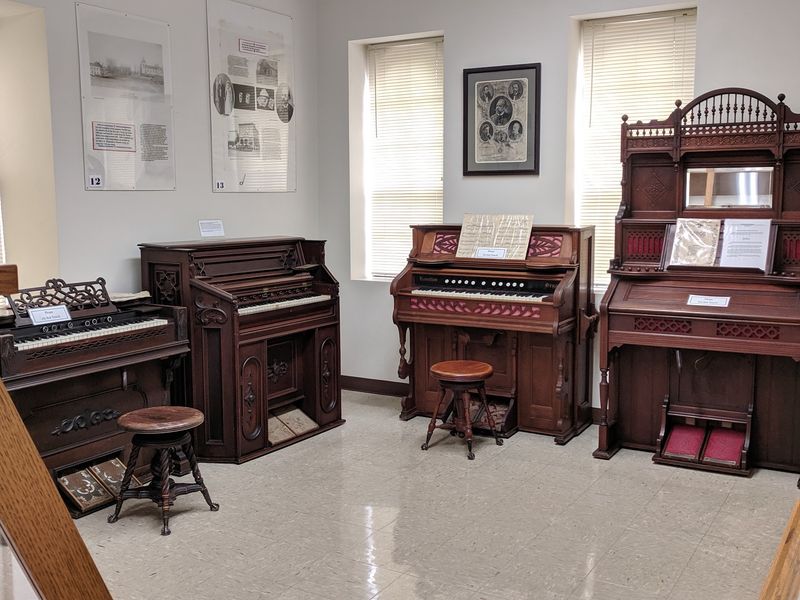
Pianos get most of the attention in music history. Here, organs and a violin steal the show.
The Dvořák exhibit displays instruments connected to the composer’s 1893 stay in Spillville. Seeing them in person makes his visit feel real.
Artifacts help fill in the story of his summer. They show a world-class musician spending time in a quiet farm community.
Some visitors come mainly for this collection. Classical music lovers may find it hard to leave the second floor.
The exhibit also includes clocks the Bily brothers collected rather than carved. It’s a fun peek at their wider interests.
Take your time reading the displays in each room. The details about Dvořák’s travels add helpful background.
If you know the New World Symphony, listen for it in your memory. Then look around and connect it to this small Iowa town.
It’s a neat reminder that big art can grow anywhere. A violin and a summer breeze can go a long way.
One note for planning: the upstairs may not be fully accessible. Call ahead if stairs could be a challenge.
Don’t Leave Without Peeking at the Little Schoolhouse
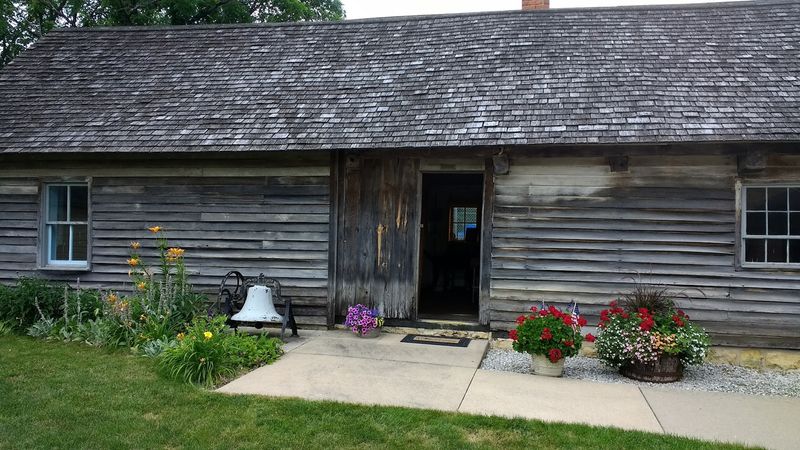
Bonus buildings are always a nice surprise. The museum grounds include a historic one-room schoolhouse cabin.
It offers a glimpse of rural education from Iowa’s past. Kids today might be shocked by how simple classrooms once were.
One room for every grade sounds wild now. Back then, it was normal in many farm communities.
The schoolhouse fits nicely with the Bily brothers’ story. They grew up in a farm world where schooling was short and practical.
Seeing the cabin helps explain how much they achieved. Their skills came from practice, not fancy classrooms.
Families can use this stop as a fun comparison game. Ask kids what they’d miss most from their own schools.
The answer is probably Wi-Fi. Fair enough.
Give yourself a few extra minutes for the outdoor buildings. They round out the visit and add more local history.
It’s a quick stop, but a meaningful one. Small details like this make the whole museum feel connected to its community.
Before heading back to your car, take one last look. The grounds hold more stories than the main building alone.
Plan Around the Hours So You Don’t Miss the Chimes
Timing matters here, which feels very on brand for a clock museum. Current hours run Wednesday through Saturday, 10 a.m. to 4 p.m.
The museum is closed Sunday, Monday, and Tuesday. Double-check before you go, since small museums sometimes adjust seasonal schedules.
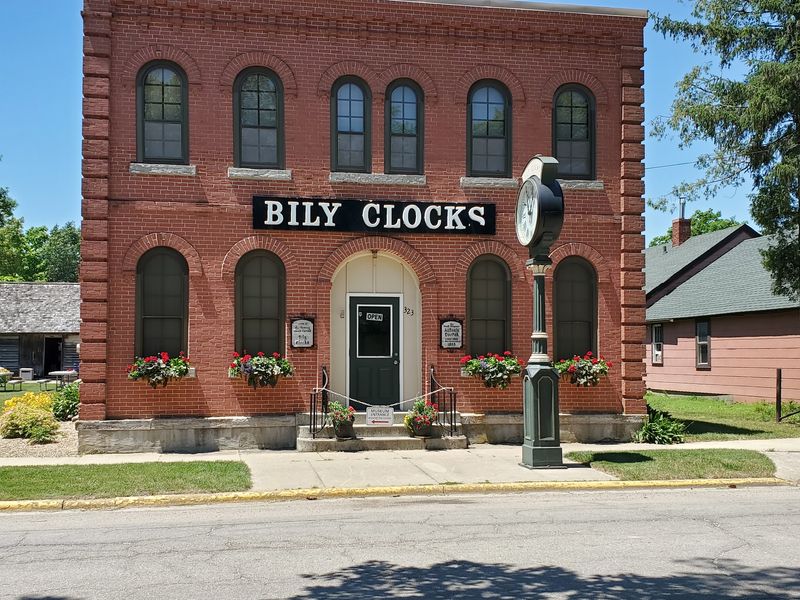
You’ll find it at 323 S Main St, Spillville, IA 52168. The building sits right on the town’s main street.
Parking is available behind the museum. That makes the stop easy, even on a busy road trip day.
Arriving earlier gives you more breathing room. You can join a tour, explore upstairs, and check out the grounds without rushing.
Admission helps support the museum and its care of the clocks. These pieces need steady upkeep to keep running and chiming.
The gift shop is worth a browse before you leave. It’s a nice spot for a small keepsake from Iowa.
Wear comfortable shoes for standing during the tour. You’ll spend plenty of time looking up at tall carvings.
A little planning pays off here. Show up ready, and the clocks handle the rest.
Make a Day of It in Scenic Northeast Iowa
Spillville sits about 15 miles from Decorah. That makes it an easy add-on for a northeast Iowa road trip.
The drive in is part of the fun. Rolling farmland sets the mood for a museum built on farm-family history.
Spillville itself carries deep Czech heritage. That background explains both the Bily brothers and Dvořák’s summer stay.
A visit here works well for many kinds of travelers. Woodworkers, music fans, history buffs, and curious kids all find something to enjoy.
Small-town museums like this offer a different pace. You won’t fight giant crowds or wander endless hallways.
Instead, you get focused stories and one-of-a-kind objects. Quality beats size every time here.
Pair your visit with a stroll around town afterward. Spillville’s main street is small and easy to explore.
Bring a camera for the building and the countryside. Both make great reminders of your trip.
Honestly, few places mix carving, clocks, and classical music this well. The Bily Clocks Museum & Antonín Dvořák Exhibit pulls it off with charm.
So add it to your Iowa list. Your road trip deserves a stop with this much character.