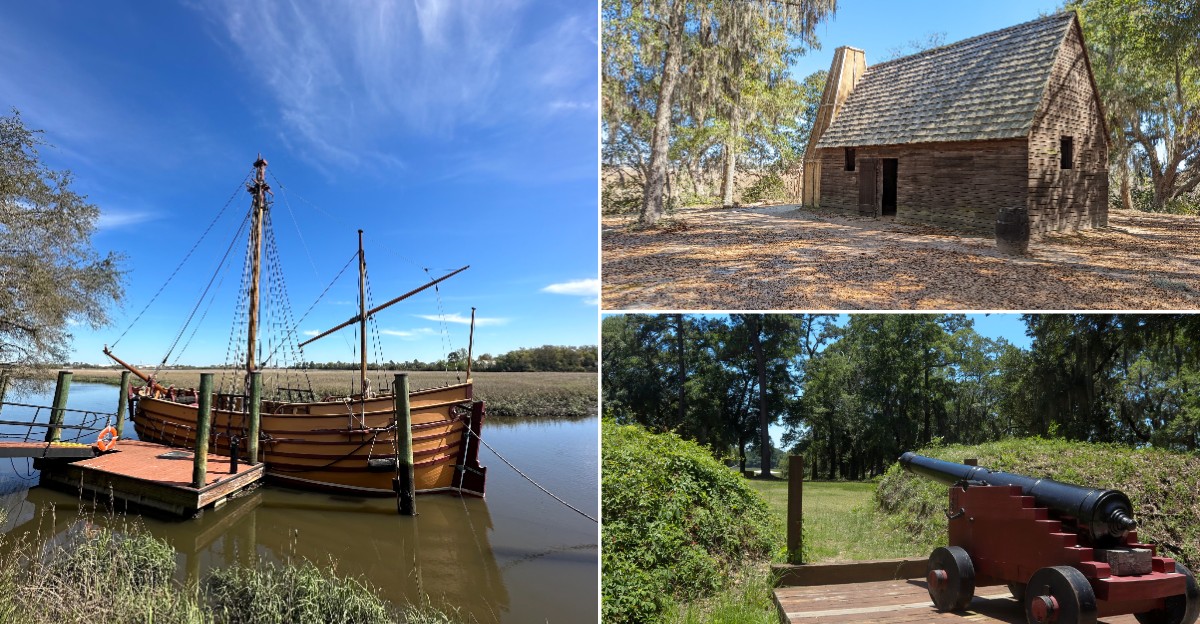
A full-scale replica of a 17th-century trading ship sits on a riverbank here, and you can climb aboard. That alone got my attention.
Then I learned a bear and a puma live just down the path.
The ground under that ship marks the exact spot where English settlers landed in 1670. It’s the birthplace of South Carolina.
Very few original colonial settlement sites survive anywhere in the country, and this one is still wide open to explore.
I like how the place refuses to pick just one personality. History buffs get reconstructed fortifications and cannons.
Nature fans get marsh views, giant live oaks, and seven miles of trails.
I believe the best history lessons happen outdoors, with real dirt under your shoes. But how many places let you walk the first streets of a colony and meet a red wolf before lunch?
You Are Literally Standing On Day One Of South Carolina
Most history sites point to where something happened nearby. Charles Towne Landing State Historic Site puts you right on the spot where English settlers came ashore in 1670.
That landing created the first permanent English settlement in what became South Carolina. The settlers came from England and Barbados.
They also brought enslaved Africans, whose labor and culture shaped the colony in deep ways.
The park tells all of those stories, not just the tidy ones. You’ll find an African-American cemetery on the grounds.
A Native American Ceremonial Center also highlights the people who were here long before any ship arrived.
The site first opened in 1970 to celebrate the state’s Tricentennial. In 2006, it went through major rebuilding to sharpen its focus on history.
The result feels thoughtful rather than dusty.
Here’s my favorite part of the whole idea. Few original settlement sites in the United States are still preserved like this one.
Most got paved over long ago.
So when you stroll these grounds, you’re not looking at a model or a plaque on a parking garage. You’re on the real thing.
That changes how every story here lands.
Start Indoors With A Digital Dig Before Hitting The Trails
Twelve rooms of hands-on exhibits wait inside the visitor center. That’s a solid warm-up before the outdoor adventure begins.
The exhibit hall walks you through Charleston’s earliest colonial years. Instead of just reading signs, you get interactive pieces that invite you to touch, explore, and figure things out.
The star of the show might be the digital dig. It introduces you to the idea of uncovering the past layer by layer.
Kids especially seem built for this kind of detective work.
Practical perks live here too. The visitor center offers free Wi-Fi, which helps if you want to load the audio tour.
There’s also a gift shop for souvenirs and maybe a book about colonial Carolina.
Timing matters a little. The visitor center and gift shop run from 9 a.m. to 4 p.m. daily.
They close on Christmas Day, so plan around the holiday.
My advice is simple. Spend real time inside before you head out.
The trails make far more sense once you know who arrived, why they came, and what they faced. Think of it as reading the map before the treasure hunt.
Rangers In 17th-Century Clothes Make The History Trail Talk Back
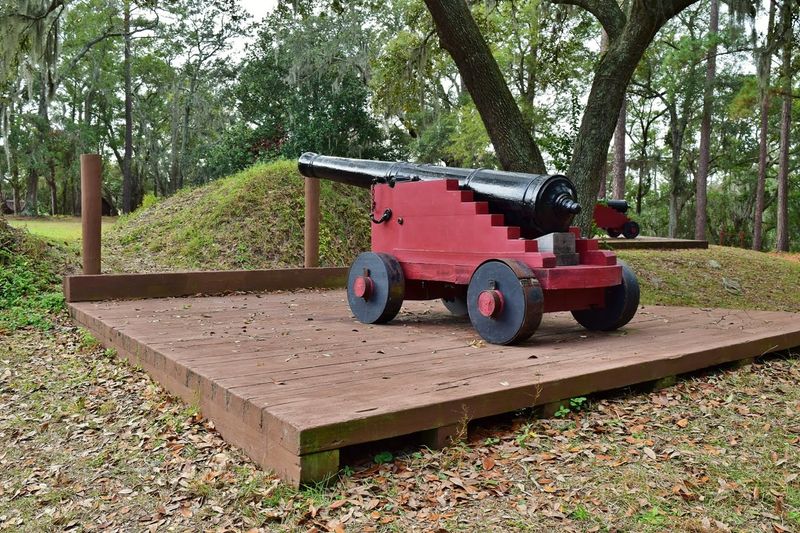
Some trails hand you a brochure and wish you luck. This one comes with a self-guided audio tour and, quite often, people dressed like it’s the 1670s.
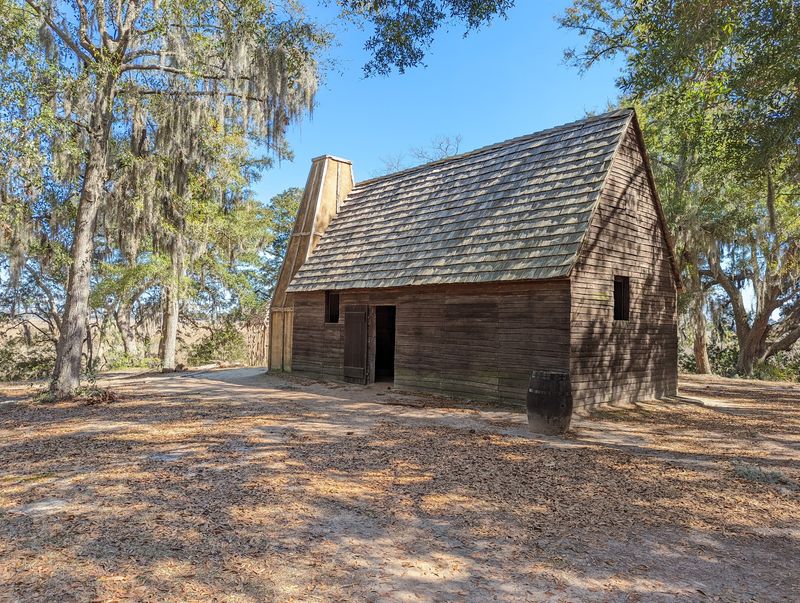
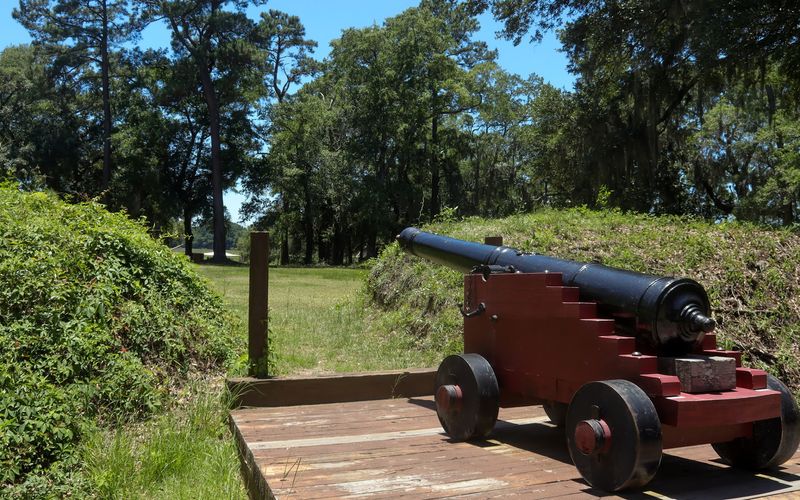
The history trail winds through the original settlement area from 1670 to 1680. Along the way, you’ll see reconstructed earthwork fortifications and a protective palisade wall.
Those defenses show how seriously the early colonists took their safety.
Interpretive rangers in 17th-century attire chat with guests about daily colonial life. They also demonstrate heirloom crops.
It’s a lot easier to picture old Charles Towne when someone in period clothes explains it face to face.
Keep an eye out for the six reproduction cannons. They get fired during special events, so check the park calendar if loud history sounds like your thing.
Cover your ears and enjoy the boom.
Ongoing archaeological work also happens here. Sometimes you can watch archaeologists uncover clues, like remnants of a 1671 town lot.
Bring water and comfortable shoes. The paved paths are friendly to strollers and wheelchairs, and the main loop covers real distance.
Your feet will earn every fact you learn.
Climb Aboard A Ship Built For Colonial Trade Runs
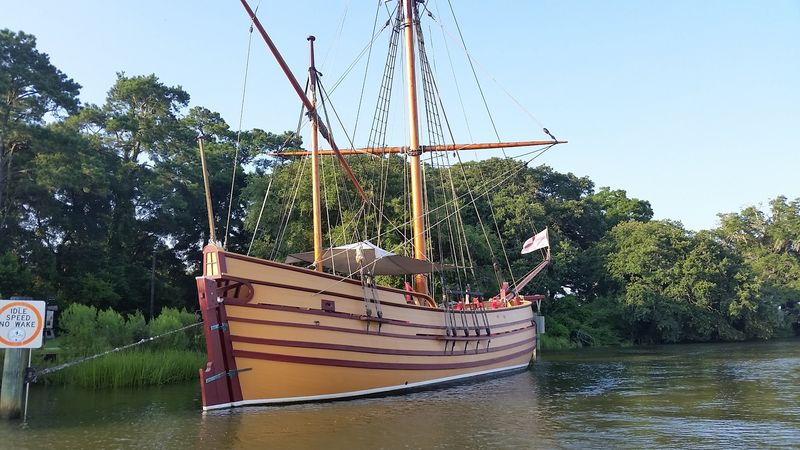
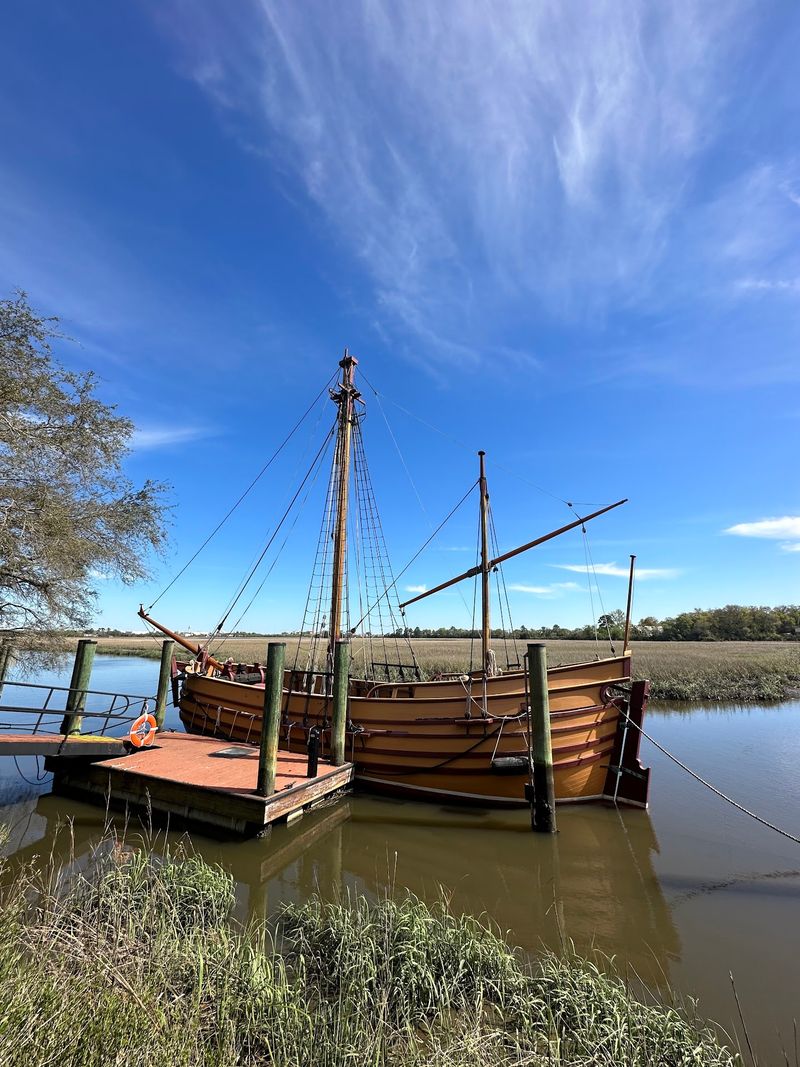
Ships in museums usually sit behind ropes. The Adventure invites you right onto its deck and down into the lower level.
It’s a full-scale replica of a 17th-century trading ketch. Vessels like this carried goods between the Carolina colony, New York, and Barbados.
In other words, this was the delivery truck of its day.
Standing on board gives you a real sense of scale. You’ll quickly realize how cramped sea travel must have been.
Long voyages on something this size took serious grit.
Kids tend to treat it like the best playground in South Carolina. Adults usually end up just as curious, poking around corners and imagining cargo stacked below.
Now for the timing details, because they really matter. The ship is open from 10 a.m. to 4 p.m. but closes on Tuesdays and Christmas Day.
It also leaves the park for yearly maintenance from January 1 through April 1. Planning a winter trip mainly to see the ship?
Wait until spring. Showing up to an empty dock would be a very colonial-level disappointment.
A Bear, A Puma, And A Red Wolf Walk Into A Forest
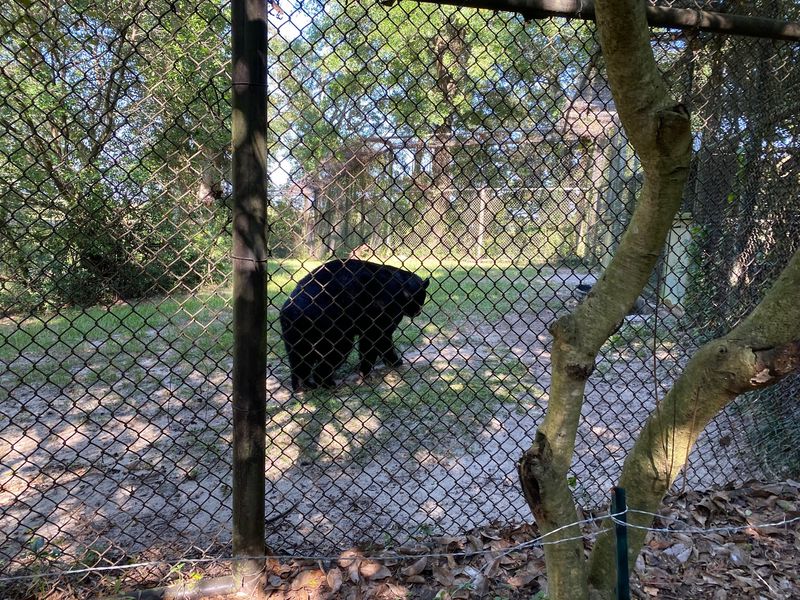
Charleston has exactly one natural habitat zoo, and it lives inside this historic park. The Animal Forest covers 22 acres.
The idea is clever. It features species that lived in Carolina during the colonial period.
So the animals connect directly to the history you’ve been learning all day.
Residents include pumas, black bears, white-tailed deer, wild turkeys, otters, and bison. You’ll also find red wolves, skunks, gopher tortoises, and various marine birds.
That’s quite a guest list.
A three-quarter-mile paved trail loops through the habitats. The enclosures look natural and leafy, which means some animals play hide-and-seek.
Patience helps a lot here.
Hours run from 10 a.m. to 4 p.m. daily, closed on Christmas Day. Heads up for weekday visitors, though.
As of October 2026, roughly half the Animal Forest, including the puma and bear exhibits, closes Monday through Friday for construction.
The red wolf, otter, skunk, and gopher tortoise areas stay open on weekdays. Weekends run as usual for the whole forest.
If the bear is your must-see, aim for Saturday or Sunday.
Live Oaks This Grand Deserve Their Own Round Of Applause
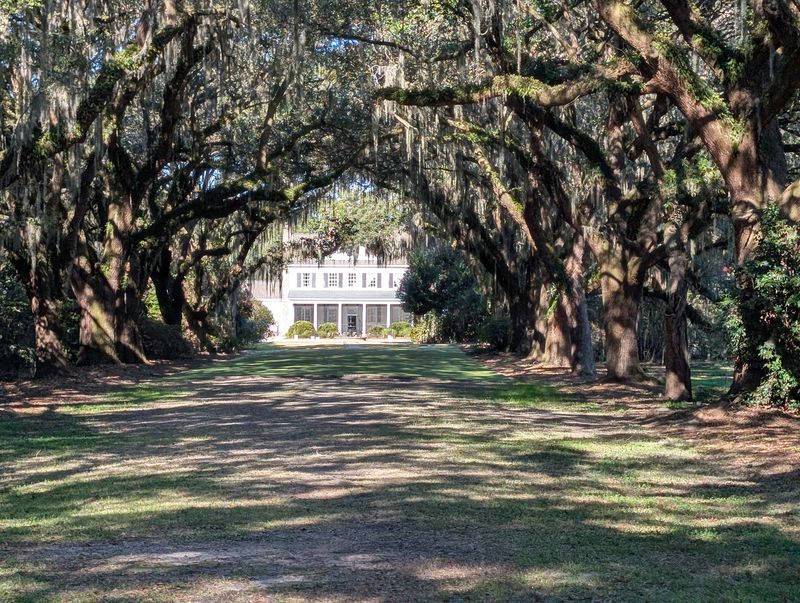
Eighty acres of gardens is a lot of green. At Charles Towne Landing State Historic Site, those gardens might steal the spotlight from the cannons.
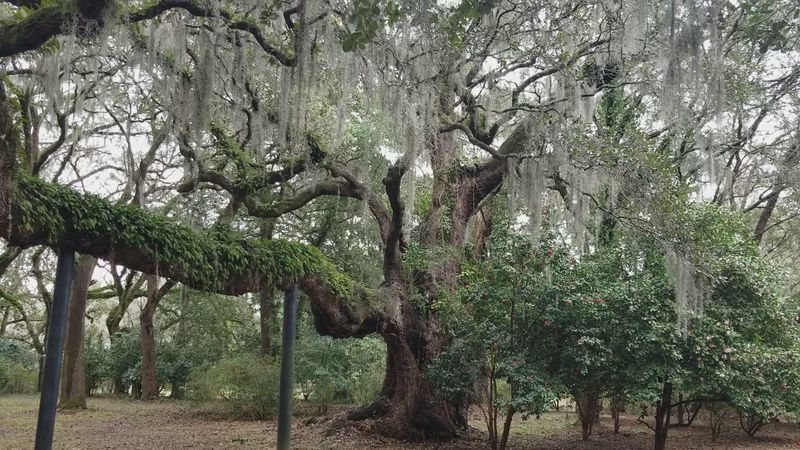
The headliner is a grand alley of centuries-old live oaks. These trees were growing long before most of us were born.
Their twisting branches create the kind of shade South Carolina summers practically beg for.
The whole park stretches across 664 acres. That’s way bigger than many people expect from a history site.
Expect wide lawns, marsh views, and quiet corners for a breather.
Bring a camera and some patience for the perfect shot. Morning and late afternoon light tends to flatter old trees the most.
Picnic areas sit around the grounds, so packing lunch is a smart move. A shady table beats eating a granola bar while speed-walking.
Here’s a gentle reminder for garden lovers. These spaces are carefully maintained, so stick to the paths and leave plants where they grow.
The oaks have survived centuries. Let’s help them handle a few more.
Colonists Gambled On These Crops, And You Can See Them Growing
Sugarcane, cotton, and flax sound like an odd shopping list. For early colonists, they were serious experiments in survival and trade.
The Experimental Crop Garden shows what settlers tried growing in this new place. Some crops fed families.
Others were tested as money-makers that could ship out to other colonies.
I find it fascinating how much guesswork was involved. Nobody handed these settlers a planting guide for the Lowcountry.
They tested, failed, adjusted, and tried again.
Seeing the plants up close makes that struggle feel real. A stalk of sugarcane looks very different from a photo in a textbook.
Cotton bolls are smaller and fluffier than many people imagine.
Interpretive rangers sometimes demonstrate heirloom crops, which adds even more context. If someone is nearby, ask a question.
Rangers here clearly enjoy sharing the story.
Gardeners will find plenty of inspiration. Kids get a surprisingly fun lesson about where clothing and sweeteners come from.
It turns an ordinary patch of dirt into a story about risk, hope, and a colony trying to stand on its own.
Bring Your Bike, Your Dog, Or Both For Seven Miles Of Trails
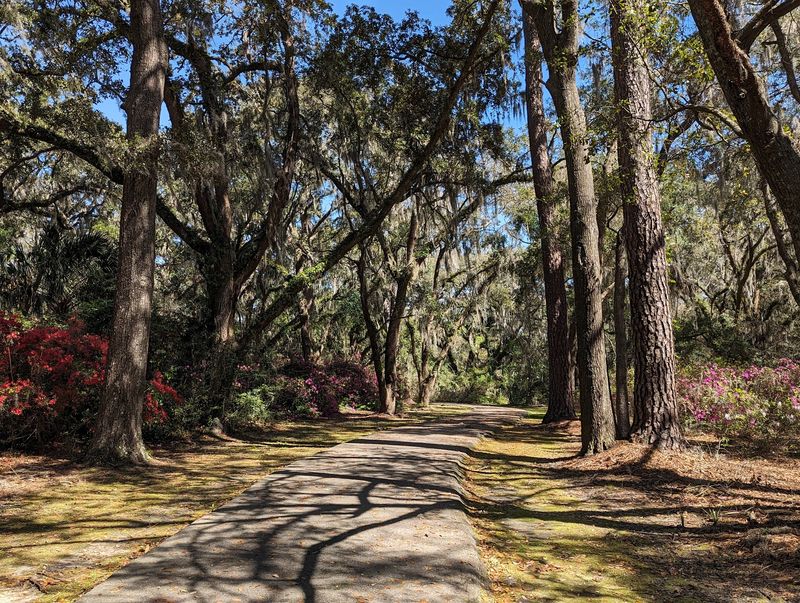
Walking every inch of this park could take a while. Luckily, bicycle rentals are available, and seven miles of paved and unpaved trails await.
The trails wind past marsh and natural landscapes. Biking lets you cover more ground without wearing out little legs or tired knees.
It’s also simply fun on a breezy day.
Dogs are welcome too, which is a big win. Leashed pets can join you in most outdoor areas.
Just know they aren’t allowed inside the Animal Forest, so plan a swap if your group splits up.
Charles Towne Landing State Historic Site also keeps practical stuff covered. Restrooms are available, and there’s even an EV charging station for electric car drivers.
The park grounds open daily from 9 a.m. to 5 p.m. Getting there early helps you beat the afternoon heat, especially in summer.
Pack sunscreen, water, and a bowl for your pup. Then pick a direction and roll.
Few places let you mix marsh views, colonial ruins, and exercise in one afternoon without anyone calling it a workout.
Plan Your Visit Around Harvest Days And Hands-On Workshops
Special events give this park an extra jolt of energy. Colonial Trades and Harvest Day is one of the annual highlights.
Charles Towne Landing hosts all kinds of educational programs throughout the year. You’ll find historical demonstrations and archaeology workshops on the schedule.
Some events even feature those six reproduction cannons firing.
Finding the place is easy. The site sits at 1500 Old Towne Rd, Charleston, SC 29407, just a short drive from downtown.
It makes a great half-day escape from busier city streets.
There’s one more spot worth knowing about. The historic Legare Waring House on the property hosts weddings and special events.
It isn’t open for public tours, so admire it from the outside.
Check the park calendar before you go. A regular day here is great, but an event day adds demonstrations you won’t catch otherwise.
I believe Charles Towne Landing State Historic Site rewards repeat visits. Each season brings different events, blooms, and animal activity.
South Carolina started right here, and it still has plenty of stories left to tell.