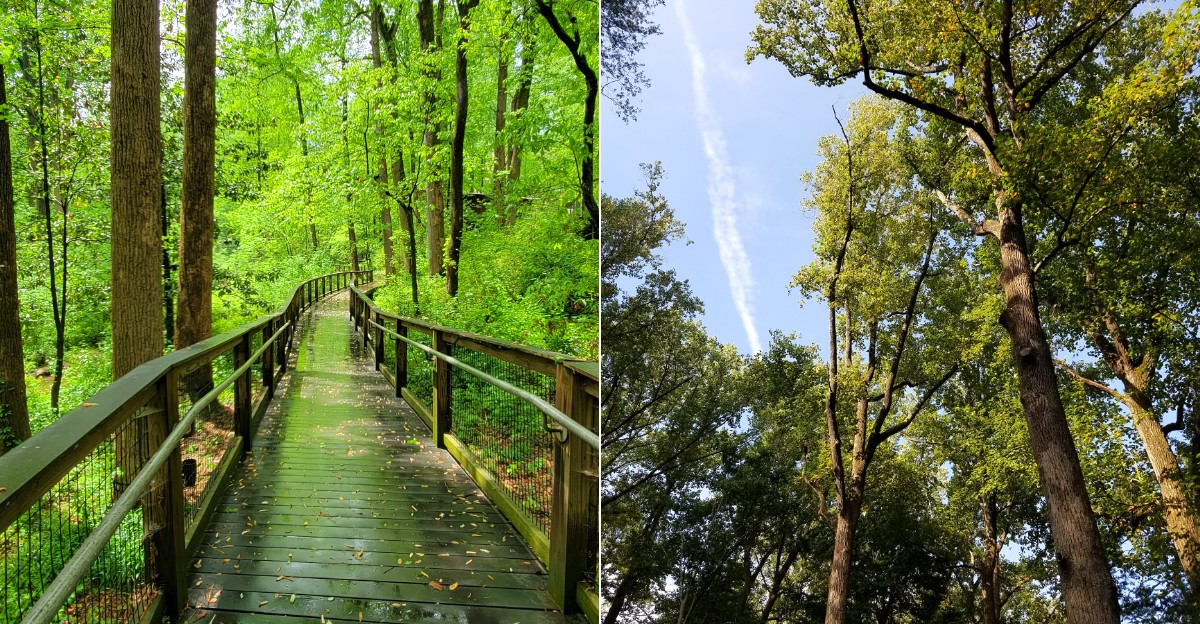
Some of the trees here are over 300 years old, and a few rise about 16 stories into the sky. They stand inside a major city.
That alone made me stop scrolling.
The woods cover 65 acres of rare old-growth Piedmont forest. Barred owls live here.
Pileated woodpeckers drum on the trunks, and coyotes quietly patrol the edges.
I like how close this wild place sits to busy streets in Georgia. You can leave traffic behind and be under a giant tulip poplar soon after.
I can’t imagine a faster escape from city noise.
The best part is how easy it feels to reach. The paths wind past a pond, a huge rock outcrop, and trees that were growing long before the city existed.
So how does a forest this old survive in a place this busy?
Your Neck Will Get A Workout Staring Up At These Giants
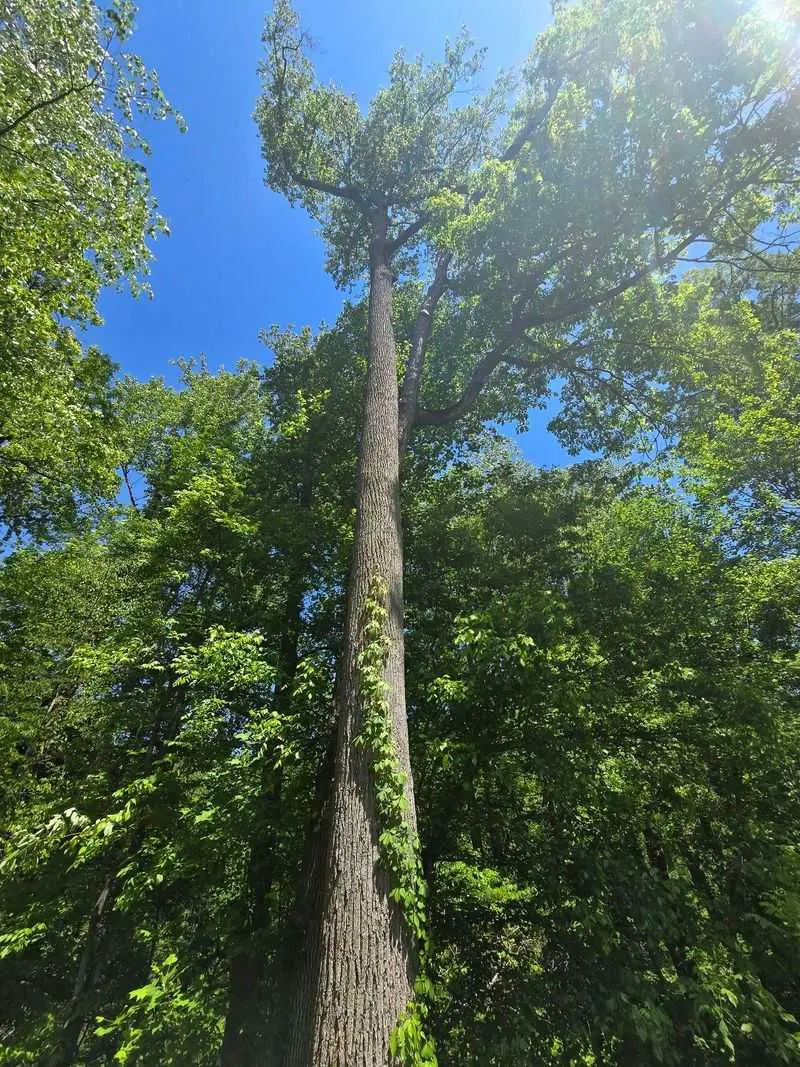
Fernbank Forest holds some of the tallest trees you can find inside any American city. Certain tulip poplars and white oaks stretch roughly 156 to 160 feet high.
That’s about 16 stories of bark and leaves. Your phone camera will struggle to fit one into a single shot, and that’s half the fun.
The forest covers 65 acres in Atlanta, Georgia. It’s known as one of the few surviving old-growth urban Piedmont forests in the country.
Some of its trees have been growing for more than 300 years.
Think about that for a second. These trunks were already sprouting before the United States even existed as a nation.
The canopy mix is impressive too. You’ll find American beech, black oak, northern red oak, and southern red oak.
Pignut, bitternut, and mockernut hickories join them, along with loblolly pines and red maples.
Smaller trees fill in the gaps below. Look for sourwood, umbrella magnolia, eastern redbud, and flowering dogwood.
Bring a simple tree guide or a plant app if you like naming things. Matching leaves to labels turns a pleasant stroll into a fun scavenger hunt.
It also helps you notice how different each giant really looks.
The Front Door Is Actually A Museum
Here’s a fun twist. You don’t enter this ancient forest from a gravel lot or a ranger hut.
Access runs through the Fernbank Museum of Natural History at 767 Clifton Rd NE, Atlanta, GA 30307. General admission to the museum includes your entry to Fernbank Forest.
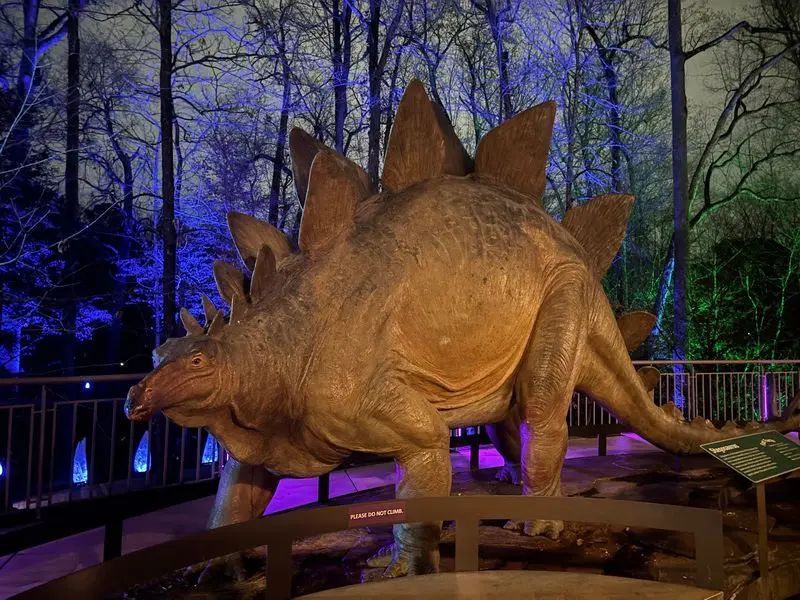
That means one ticket covers dinosaurs indoors and centuries-old trees outdoors.
From the museum, you’ll pass through WildWoods. It’s a 10-acre woodland area behind the building that connects straight into the forest.
WildWoods also offers ADA-accessible pathways, which makes the start of the trip easier for many families.
Timing matters here. The forest opens daily at 10 AM and closes at 4:30 PM.
The museum and WildWoods stay open until 5 PM.
Plan your walk early enough to enjoy it without rushing. A late arrival could leave you sprinting past oaks that deserve a slow, respectful look.
My advice is simple. Hit the forest first while your energy is fresh, then head inside for the exhibits afterward.
Your legs will thank you, and the fossils aren’t going anywhere.
Lace Up For An Easy Loop Through Deep Woods
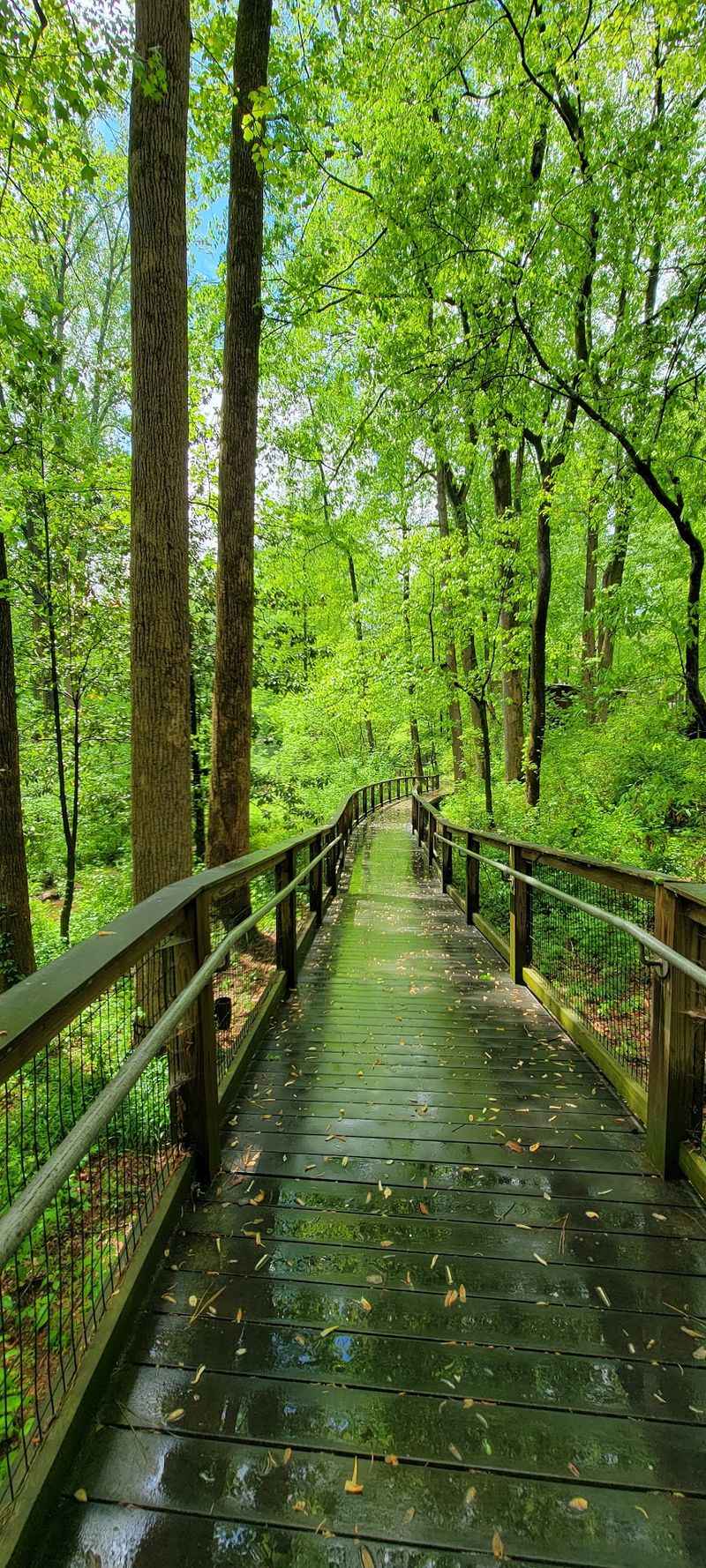
About 1.7 miles. That’s the length of the outer loop path that circles through Fernbank Forest.
It’s rated as an easy walk through preserved native habitats. Most people can handle it at a relaxed pace, with plenty of chances to stop and gawk at the trees.
Still, don’t assume every path is smooth. Some areas inside the forest have rugged or steep terrain.
Not every trail is ADA accessible or friendly for strollers. If you’re pushing little ones, stick with the easier sections and the accessible paths in WildWoods.
Comfortable shoes are your best friend here. Sneakers with decent grip work well, especially after a rainy day.
Staying on the marked paths is required. That rule protects fragile plants and animal homes from getting trampled.
It also keeps you from getting turned around among all those tall trunks.
The trails are open for self-guided exploring every day. You can wander at your own speed, linger by favorite trees, or loop back whenever you want.
No schedule, no tour bus, and no one hurrying you along.
Keep Your Eyes Peeled For Owls, Hawks, And Maybe A Bobcat
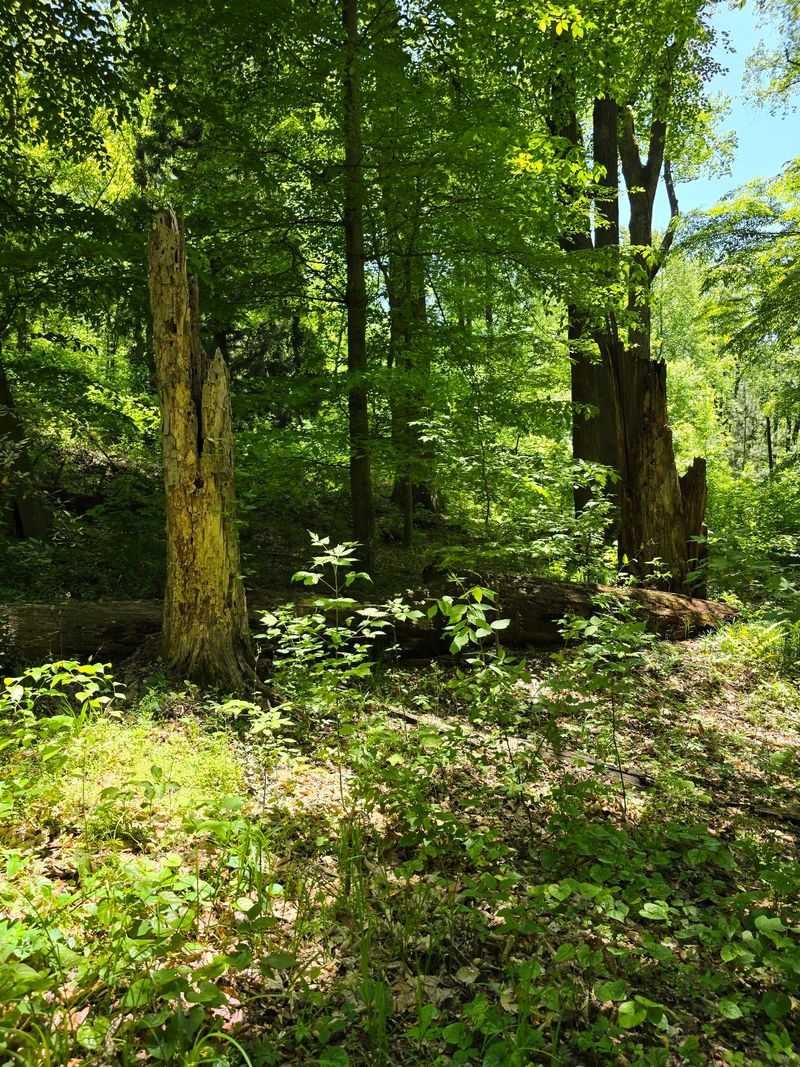
Hundreds of animal species call these woods home. Not bad for a forest surrounded by city neighborhoods.
Birders, get ready. Pileated woodpeckers, red-shouldered hawks, and American crows all live here.
The forest also has resident barred owls, famous for their hooting calls.
Mammals keep things lively on the ground. Eastern chipmunks and gray squirrels are common, along with raccoons, Virginia opossums, and white-tailed deer.
Eastern coyotes roam here too.
Every so often, a bobcat or black bear makes an appearance. Don’t count on it, but it’s fun knowing the chance exists.
Reptiles add another layer. Look for five-lined skinks, broad-headed skinks, and eastern box turtles.
Snakes include garter snakes, watersnakes, and the eastern copperhead, so watch where you step.
The rules here are clear and sensible. Visitors shouldn’t handle or collect any living things or natural items.
Let the critters keep their homes exactly as they are.
Quiet steps give you the best odds of spotting wildlife. Pause often, listen closely, and scan both the treetops and the leaf litter.
Patience pays off in the woods.
Frogs, Dragonflies, And A Rock Shaped Like A Legend
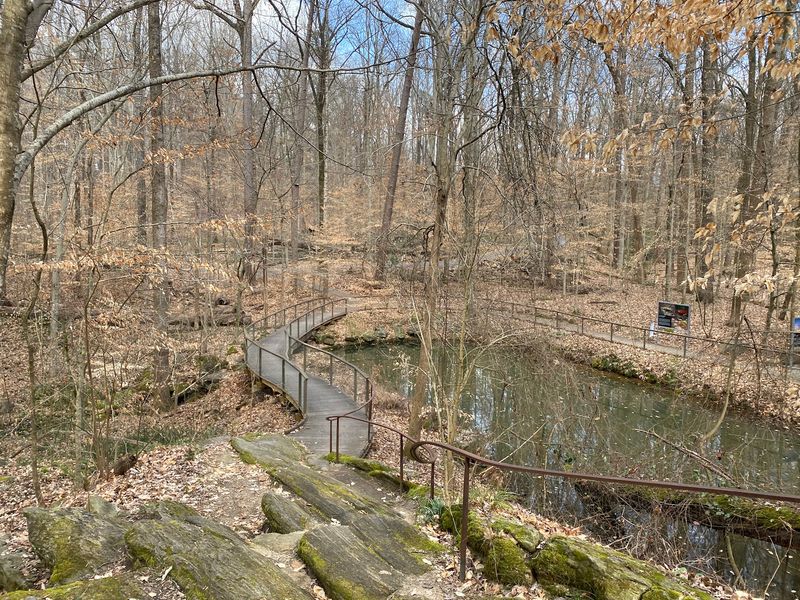
Tadpoles wiggle. Dragonflies zip around like tiny helicopters.
Welcome to Huntemann Pond, one of the best stops inside Fernbank Forest. The pond supports frogs, turtles, fish, and dragonflies.
Kids especially love scanning the water for movement.
Remember one key rule, though. Visitors aren’t allowed to enter ponds, creeks, or other water features.
Enjoy the show from the edge and let the frogs keep their privacy.
A short walk brings another highlight. Elephant Rock is a large rock outcrop that stands out among the trees.
Does it really look like an elephant? That’s a fun debate to have with your walking buddy.
Either way, it makes a memorable landmark on the trail.
These spots give the forest some variety. Towering trees are amazing, but water and stone break up the scenery nicely.
Families with younger hikers can use these stops as goals. Promise the pond, then promise the rock.
Little legs often walk farther when there’s something cool waiting ahead.
Spring and summer can be lively times at the pond. Frogs and tadpoles tend to steal the spotlight.
Every Season Paints These Woods A Different Color
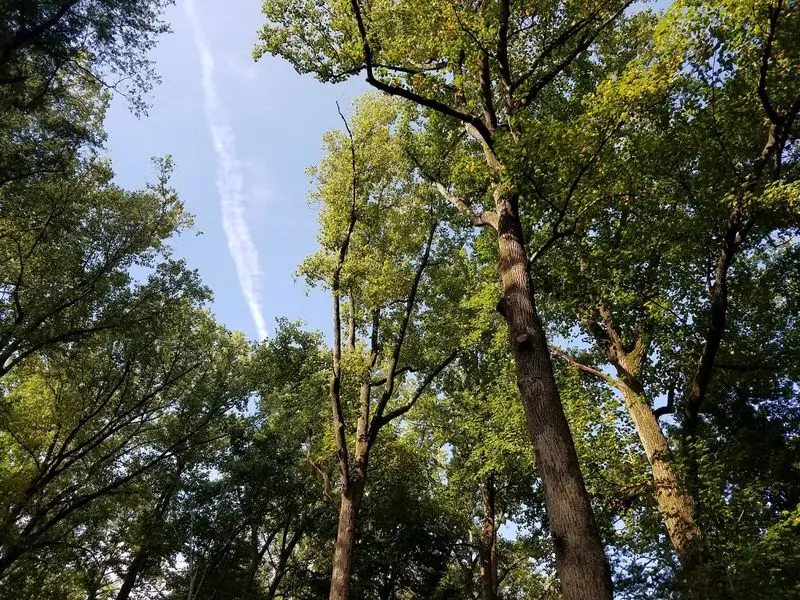
Spring wildflowers, summer shade, fall color, and winter evergreens. This forest doesn’t really have an off-season.
From spring through fall, Fernbank Forest bursts with lush foliage. Wildflowers bloom across spring and summer, adding pops of color near the ground.
Spring may be the showiest time for smaller trees. Eastern redbuds and flowering dogwoods grow here, and both are beloved across Georgia for their blossoms.
Fall brings a different kind of drama. Oaks, hickories, maples, and sourwood fill the canopy, giving you plenty of changing leaves overhead.
Winter shouldn’t scare you off either. With many leaves gone, the evergreens really stand out against the bare branches.
Bare trees also reveal the true shape of these giants. You can see their massive trunks and limbs more clearly in the colder months.
My suggestion? Visit more than once a year if you can.
The same trail can feel like a brand-new place in each season.
A camera is worth bringing every time. Shoot the same favorite tree in spring and fall, then compare the photos.
It’s a simple project that makes repeat visits even more rewarding.
Rangers Bring The Forest’s Stories To Life
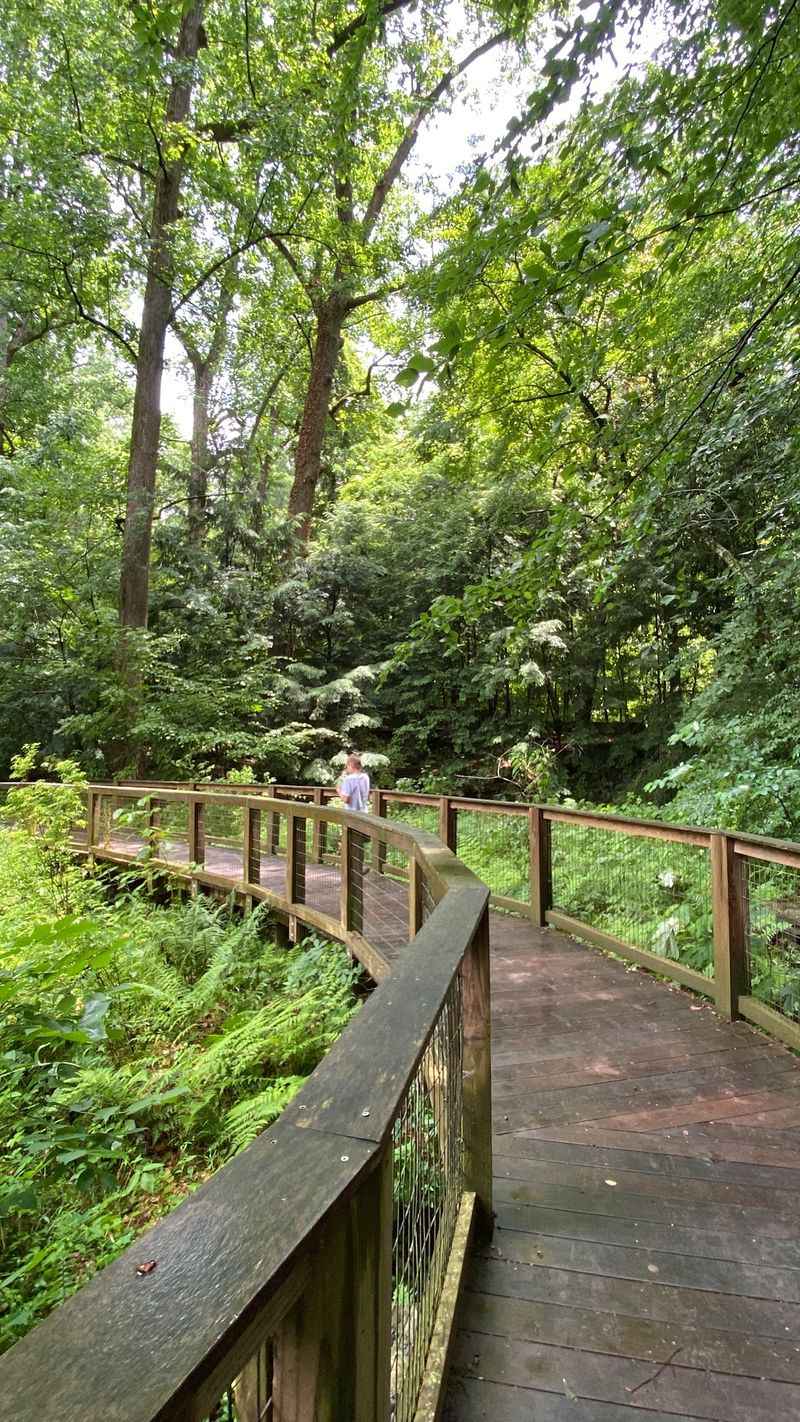
Self-guided walks are great. But sometimes you want someone who knows which hickory is which.
Fernbank offers guided outdoor programs that help visitors learn more about the forest. One popular option is Meet A Ranger.
These are 30-minute drop-in sessions on different nature topics. You don’t need to commit a whole afternoon, which suits families with short attention spans.
Want something more personal? Private guided tours can be booked for a fee.
That’s a fun choice for birthdays, small groups, or curious nature fans.
Guided programs fill in details you might miss alone. Topics can range from animals to plants to how the forest works as a system.
Check the museum schedule before your visit. Program times can vary, and you’ll want to plan your walk around a session you like.
Kids often light up when a real expert answers their questions. Adults usually walk away with a few fresh facts too.
Bring your best questions along. Ask about the oldest trees, the barred owls, or the snakes.
Rangers are there to share, and the forest gives them plenty to talk about.
A Teacher’s Dream From The Late 1800s Still Stands
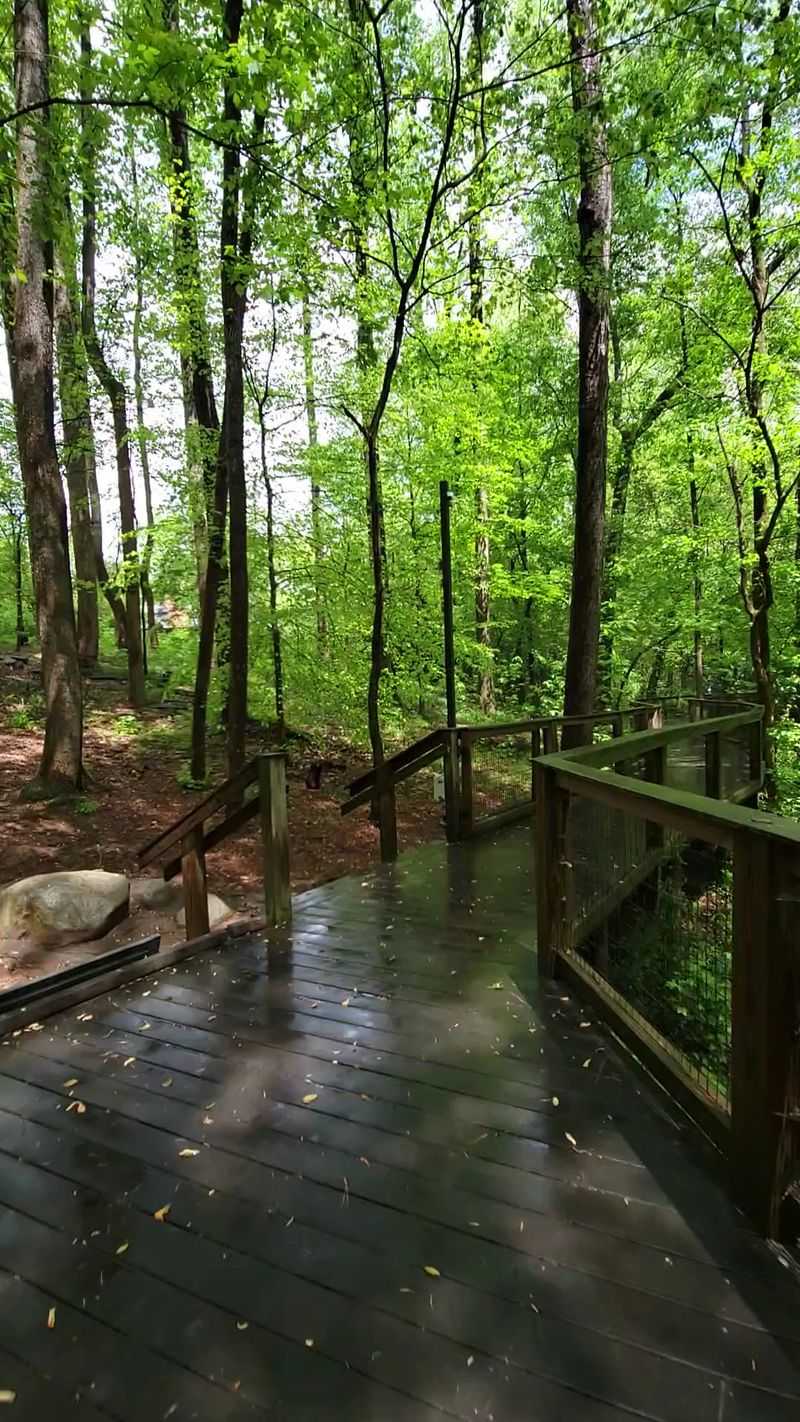
Emily Harrison had a big idea in the late 1800s. She wanted these Atlanta woods preserved as a school in the woods for nature study.
Her dream took a long road. In 1939, Harrison and Dr. Woolford Baker joined 15 conservation-minded supporters to form Fernbank as a nonprofit.
Their goal was to buy and protect these 65 acres.
That move made Fernbank one of the oldest nonprofit environmental organizations in the country. Pretty impressive for a patch of Georgia woodland.
The story kept growing from there. A 1964 agreement with the DeKalb County School Board allowed free public access, and the forest was dedicated in 1967.
Management fully returned to the Fernbank Museum of Natural History in 2012. A four-year restoration effort followed.
Fernbank Forest reopened to the public in September 2016. It became part of the museum, which itself opened in 1992.
I love that a single person’s vision still shapes what visitors see today. Every tall oak here owes something to people who refused to let it disappear.
Harrison’s school in the woods is still teaching. The lessons just have more visitors now.
Scientists Are Busy Here While You Stroll
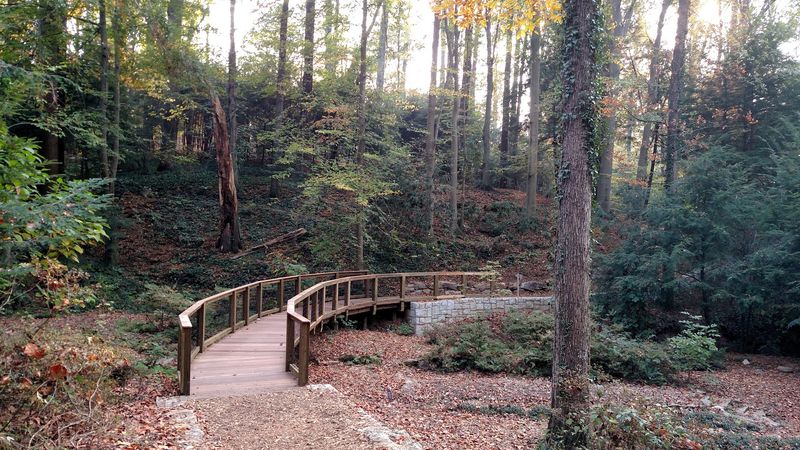
Flying squirrels are being studied in these woods. So are amphibians, coyotes, and even tree rings.
Fernbank Forest is an active research site. Ongoing projects include amphibian surveys, coyote monitoring, and dendrochronology, which is the science of reading tree rings to learn their age and history.
Restoration is another big job. Since 2012, staff and volunteers have worked to remove invasive plants like English ivy, Chinese privet, kudzu, Japanese wisteria, and nandina.
Clearing those plants helps native species bounce back. Healthier native plants mean better homes and food for local wildlife.
Fernbank has offered volunteer chances for invasive plant removal. If you enjoy hands-on work, ask the museum about current opportunities.
A few practical tips before you go. There are no restrooms or water fountains inside the forest itself.
Use the museum lobby or the Kendeda Pavilion in WildWoods first.
Outside food and drinks aren’t allowed in the museum, WildWoods, or the forest. Eat before your walk and plan accordingly.
Follow the rules, stay on the paths, and leave everything as you found it. You’ll be helping protect one of Georgia’s rarest forests for the next 300 years.