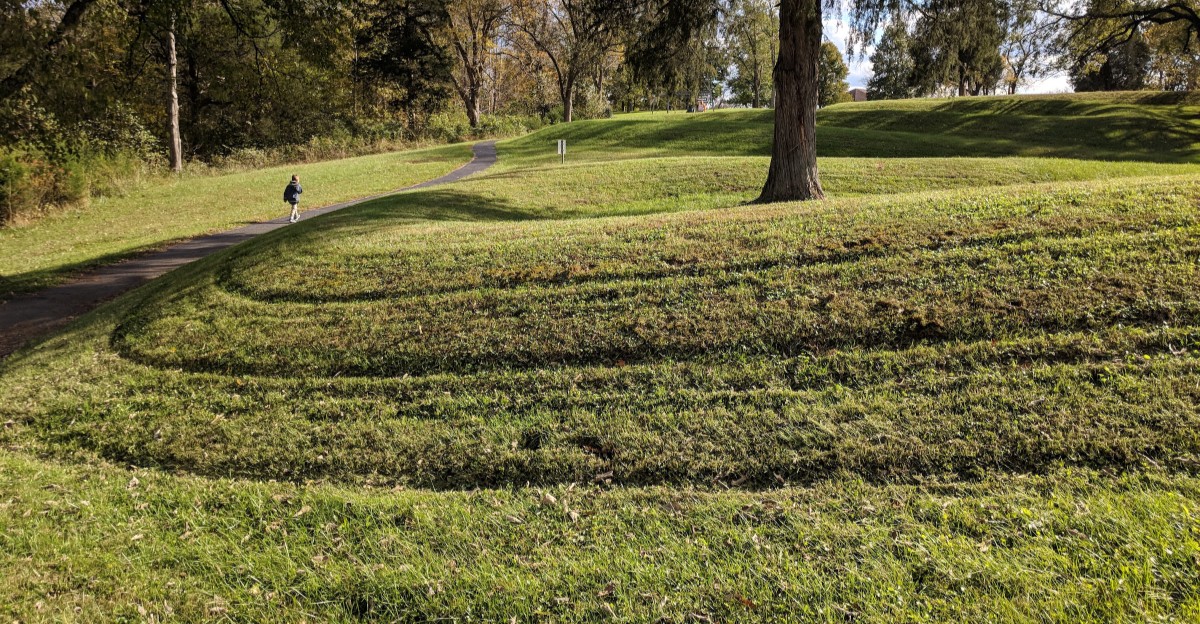
A giant earthen snake stretches more than a quarter mile across a quiet hilltop.
It’s over 1,300 feet long, and researchers continue to debate its age, with proposed construction dates ranging from around 320 BCE to approximately 1070 CE.
Nobody knows exactly who built it or why. Archaeologists have argued about it for well over a century.
I love that the mystery is still wide open.
The snake isn’t even the only strange thing here.
It rests on a patch of Ohio ground that scientists believe was rattled by a meteorite roughly 250 million years ago.
That’s a lot of history stacked in one spot.
You can stroll the whole length on a paved path.
You can climb a tower and look down at its coils.
I can’t imagine a cheaper way to stand next to something this old. So who made it?
The Largest Snake Effigy On Earth Is Waiting In Southern Ohio
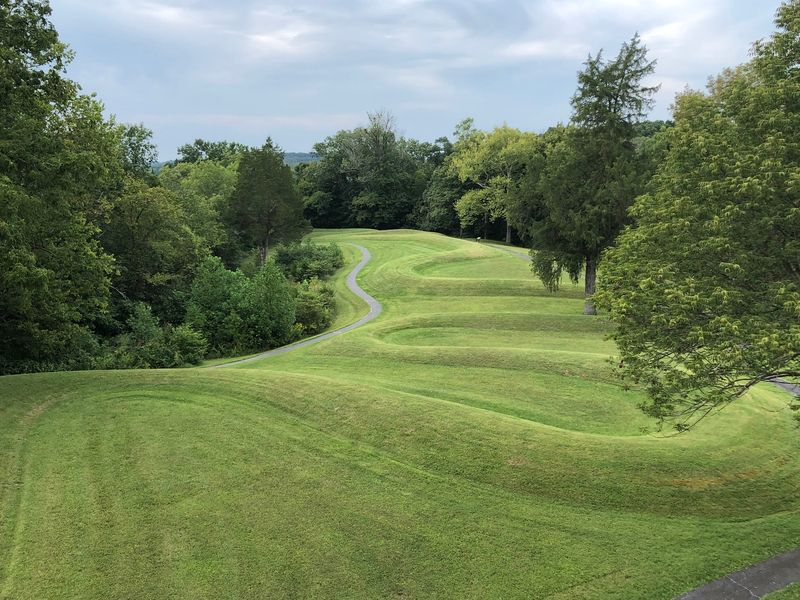
Serpent Mound State Memorial holds a world record most folks have never heard of. It’s the largest surviving prehistoric effigy mound on the planet.
The serpent runs about 1,348 feet from head to tail. That’s longer than four football fields placed end to end.
Its body rises between one and five feet high. It also spreads about 25 feet wide as it winds across the ground.
The shape is what makes people stop and stare. Gentle curves roll along like a snake in motion, ending with a coiled tail.
At the other end sits an oval-shaped head. Some people think the oval is an egg the snake is about to swallow, while others see an eye.
Nobody has settled that debate yet. Honestly, that makes it more fun to look at.
The whole thing is built from earth, piled and shaped by hand. No machines, no trucks, just people with a plan and plenty of patience.
Think about that the next time a backyard project feels like too much work. These builders moved serious dirt, and their snake is still holding its pose centuries later.
Your Admission Is Basically A Parking Fee And Nothing More
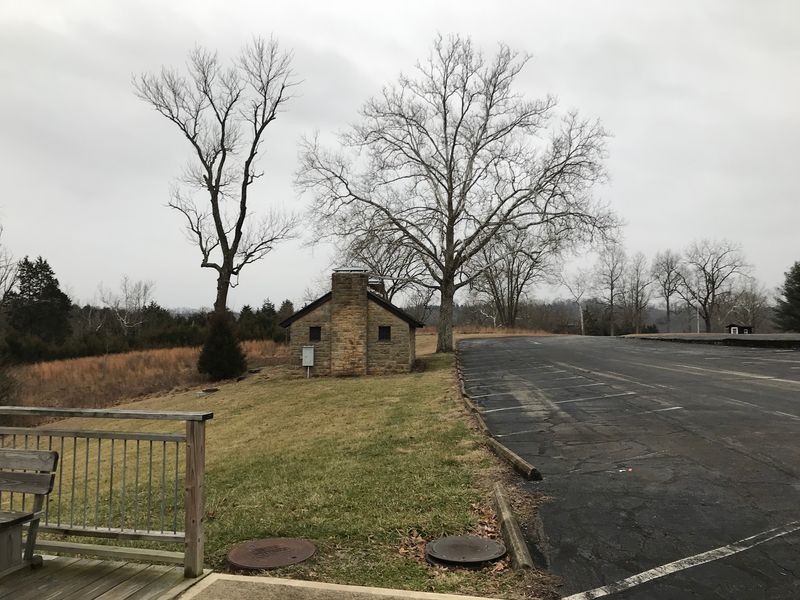
Good news for your wallet: parking costs $8 per car, and there is no separate admission fee for the mound itself.
There’s no separate ticket for the mound itself. Instead, you pay a small parking fee per car at the museum, and motorcycles pay even less.
A whole carload of friends can split that fee. Suddenly, a trip to a National Historic Landmark costs each person pocket change.
Planning to come back more than once? An annual parking pass is available too, and it pays for itself fast.
Members of the Ohio History Connection get an extra perk. They don’t pay to park at all.
The park sits at 3850 OH-73, Peebles, OH 45660, out in the rolling countryside of Adams County. Cell service can be spotty around here, so download your directions before you leave home.
Bring a little cash or card for the museum desk. That’s where the fee gets paid.
Then the whole grounds open up to you. Paths, mounds, views, and picnic spots all come included with that one small payment.
Follow The Paved Path From Tail To Head
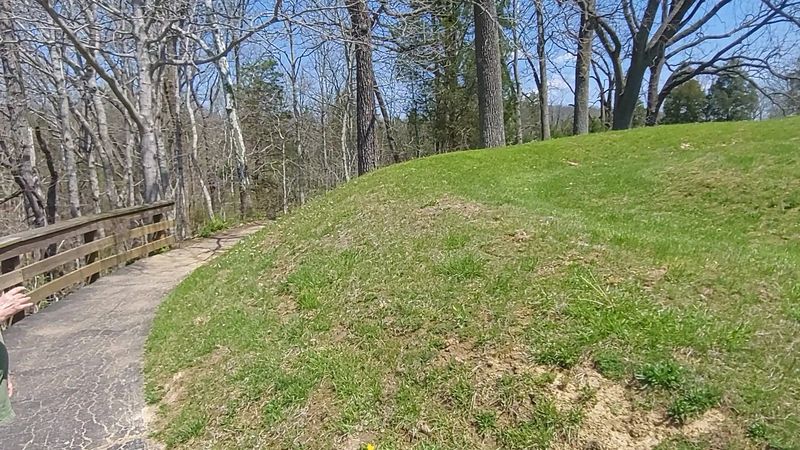
Walking beside a 2,000-year-old snake turns out to be pretty relaxing. An asphalt path follows the curves of the mound from end to end.
You get to see every bend up close. Signs along the way explain what you’re looking at, so you won’t be left guessing.
One rule matters a lot here. Walking directly on the earthen mound is not allowed.
Feet wear down the soil over time and cause erosion. Staying on the path helps keep the serpent in shape for the next few centuries.
The main loop is short and easy. It’s paved and works for many wheelchairs and strollers.
Watch your step in a couple of spots, though. Tree roots have pushed up the pavement in places, so take those bumps slowly.
Near the serpent’s head, a small overlook gives you a view toward the valley below. It’s a nice place to pause and catch your breath.
The whole stroll fits easily into a short visit. Still, nobody will rush you if you want to linger at each curve.
Climb The Tower For The View Everyone Wants
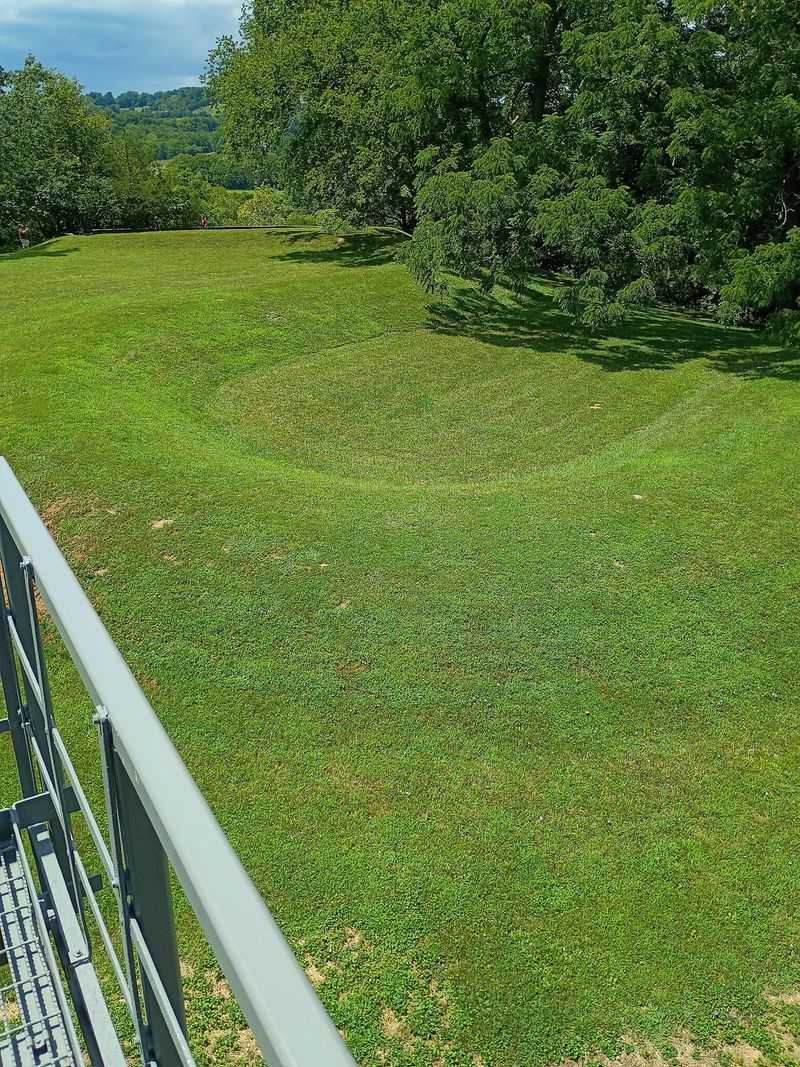
From ground level, the serpent looks like a long grassy ridge. From above, it suddenly makes sense.
That’s the magic of the observation tower. It stands about 25 feet tall near the snake’s tail.
The original tower went up back in 1908. It’s a historic structure in its own right, which means repairs take care and time.
The observation tower is undergoing restoration in 2026, and its reopening date has not yet been announced. Check the Ohio History Connection’s latest updates before visiting if the bird’s-eye view is your top goal.
When it’s open, the climb is worth every step. You can trace the coils and curves in a way the path simply can’t show you.
Timing helps a lot here. Early spring and late fall bring fewer leaves on the trees, so more of the serpent stays in view.
Summer greenery is lovely, but it can hide parts of the body. Think of autumn as the season the snake gets its close-up.
Bring your camera. You’ll want proof that this shape is really out here in Ohio.
Nobody Agrees On Who Built It, And That’s Half The Fun
Archaeologists have been arguing over this snake for generations. It’s one of the best long-running mysteries in the Midwest.
Early experts credited the Adena culture, who lived in the region from about 800 BCE to 100 CE. That seemed settled for a while.
Then radiocarbon dating pointed somewhere else. Results suggested the Fort Ancient culture built it around 1070 to 1120 CE.
Some researchers argue that the Adena built the mound around 320 BCE and that Fort Ancient people repaired it centuries later, while other archaeologists dispute this interpretation. So which answer is right?
The honest reply is that experts still aren’t completely sure.
The purpose is just as puzzling. No human remains or burial items have been found inside the serpent itself.
That suggests it wasn’t a tomb. Many believe it served a ceremonial role, perhaps honoring a powerful serpent figure from the world below.
Standing beside it, you get to form your own theory. Just know you’re joining a debate that started long before you arrived.
The Sun Might Be Part Of The Design
Here’s a theory that gives people goosebumps. The serpent’s head may line up with the summer solstice sunset.
That’s the longest day of the year. Some researchers think the builders shaped the mound to track the sky.
Other curves may point toward different solar and lunar events. If that’s true, this snake doubles as a giant calendar made of dirt.
No smartphones, no clocks, just careful watching over many seasons. That’s a pretty impressive level of patience.
Not every expert agrees on the alignments. Still, the idea adds a fun layer to your walk.
Try visiting near the solstice in June if you can. Watching the sun drop in the west while standing near the head feels special, even if the science stays fuzzy.
Remember that the park grounds stay open from dawn to dusk. Plan your timing so you aren’t racing the gate.
Any season works for wondering, though. Look up, look around, and ask yourself what those ancient builders were watching.
A Space Rock May Have Shaped The Ground Below
Talk about a dramatic backstory. The land under the serpent may have been hit by a meteorite around 250 million years ago.
Geologists call the area the Serpent Mound Disturbance. It’s a strange, jumbled zone about five miles wide.
The rock layers here are twisted and broken in ways that don’t match the surrounding land. An ancient impact crater is the leading explanation.
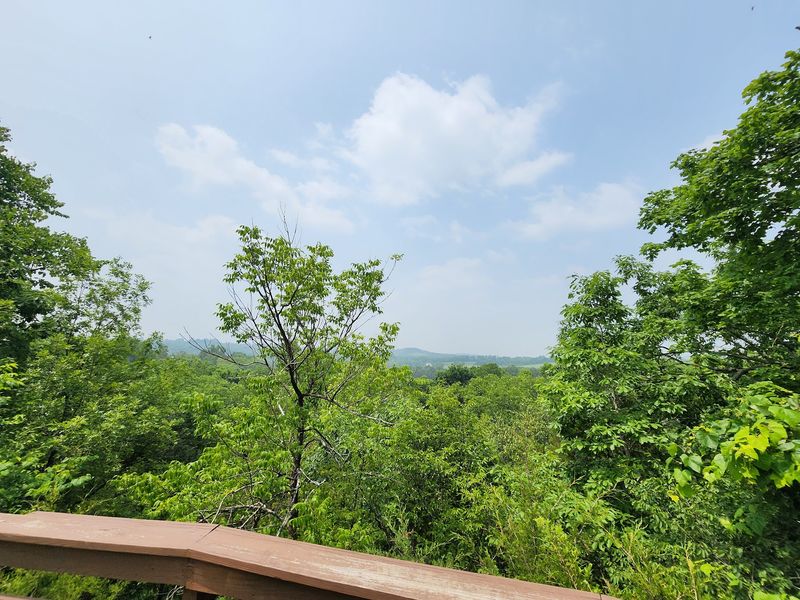
The mound sits on a plateau above the Ohio Brush Creek valley. From the overlook, you can take in the rolling scenery below.
Did the builders know something unusual happened here? Nobody can say for sure.
Still, it’s hard not to wonder. Of all the hilltops in southern Ohio, they chose this one.
Maybe the dramatic setting caught their eye. Maybe it was pure coincidence.
Either way, you get two wonders for one visit. There’s an ancient sculpture on top and a cosmic crash story underneath, which is a pretty good deal for one small parking fee.
The Museum Fills In The Blanks Nicely
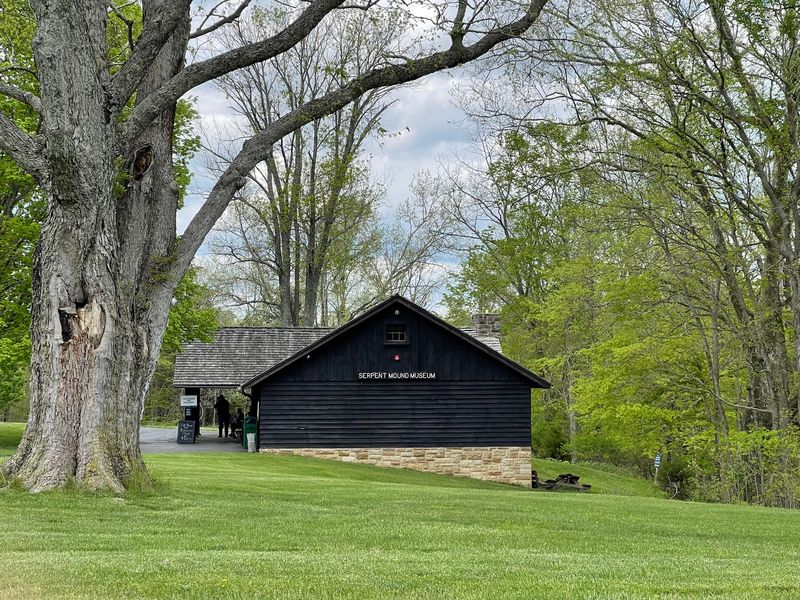
Questions pile up fast after seeing the serpent. The museum and visitor center are ready with answers, or at least good guesses.
Illustrations and stories explain the mound, its history, and the many theories about it. Artifacts from the Adena and Fort Ancient cultures are on display too.
A short video gives you the big picture. It’s a smart first stop before heading out to the trail.
The preservation story is a highlight. In the 1880s, Frederic Ward Putnam raised money to buy the land, saving the mound from farm plowing.
That made it one of the first privately funded archaeological preserves in the country. Ownership later passed to what’s now the Ohio History Connection.
Museum hours change with the seasons. It’s typically closed on Mondays and usually takes January and February off.
A gift shop sits right inside as well. You’ll find souvenirs for the snake fan in your life.
Even if you’re not a souvenir person, step in anyway. A little background makes the walk outside much richer.
Pack A Lunch And Meet The Other Mounds
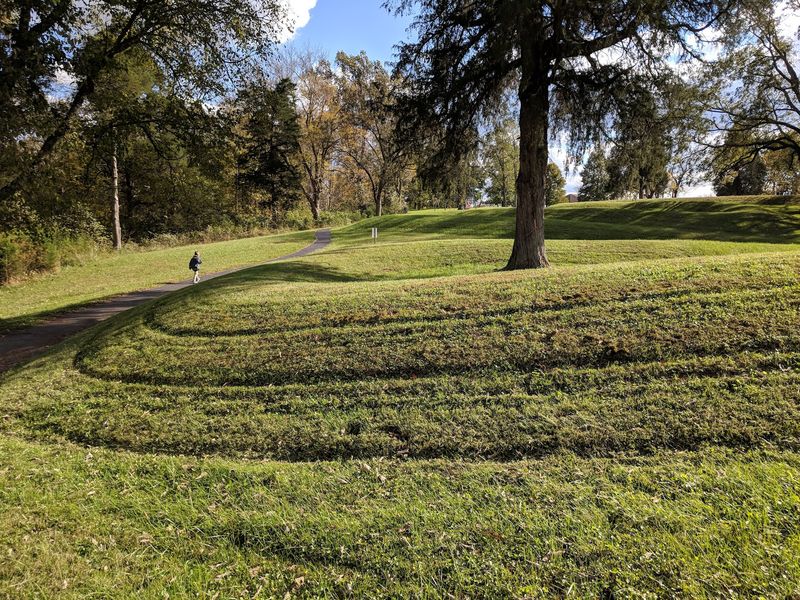
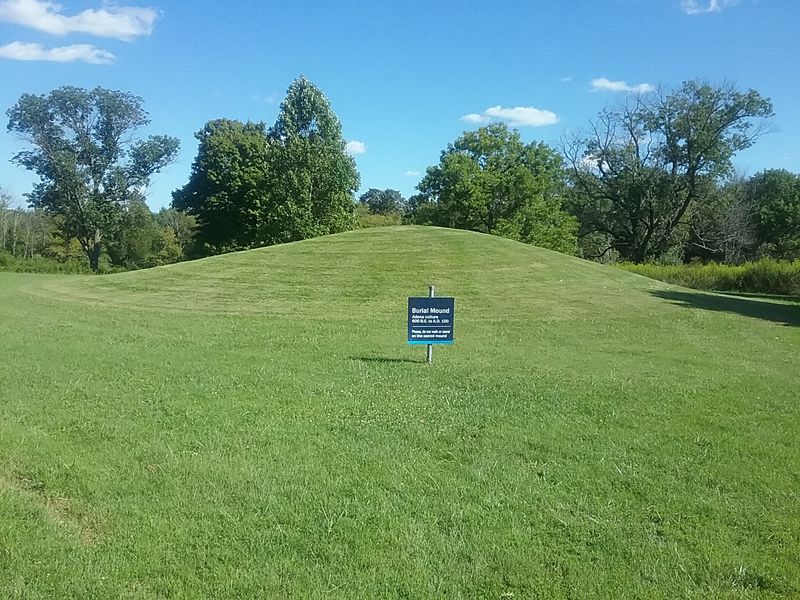
The snake gets all the attention, but it has neighbors. Three more burial mounds sit within the 60-acre grounds of Serpent Mound State Memorial.
They’re linked to the Adena and Fort Ancient cultures. Markers also point out spots where ancient villages once stood.
Wander over and read the signs. It helps you picture the people who lived and gathered here long ago.
Hungry after all that history? The park has picnic spots and a shelter, plus restrooms nearby.
A packed lunch under the trees makes a cheap trip even cheaper. Sandwiches taste better next to a National Historic Landmark anyway.
Want to stretch your legs more? Nature trails wind through the surrounding woods, though they’re rougher than the paved loop.
A couple of rules apply. Drones and unauthorized commercial filming aren’t permitted.
History buffs should check the calendar too. Guided archaeology walks happen on the second and fourth Fridays each month, making Serpent Mound State Memorial an easy pick for a curious Ohio day trip.