The air inside sits around 42 degrees all year, even when it’s 80-plus outside. That’s the first clue this tunnel plays by its own rules.
It stretches about 2.5 miles through solid volcanic rock. Inside, it’s so dark that a phone flashlight barely makes a dent.
I like how one cave offers two totally different days. Little kids can stroll a mostly flat route, while bolder families scramble over boulder piles and climb a metal ladder out.
Both start at the same entrance in southwest Washington.
I can’t imagine a cooler way to escape a hot summer afternoon, literally. The entry costs less than most fast-food lunches.
So how does a family plan a trip into total darkness without wasting the drive?
A Volcanic Tunnel Hiding In The Woods Near Mount St. Helens
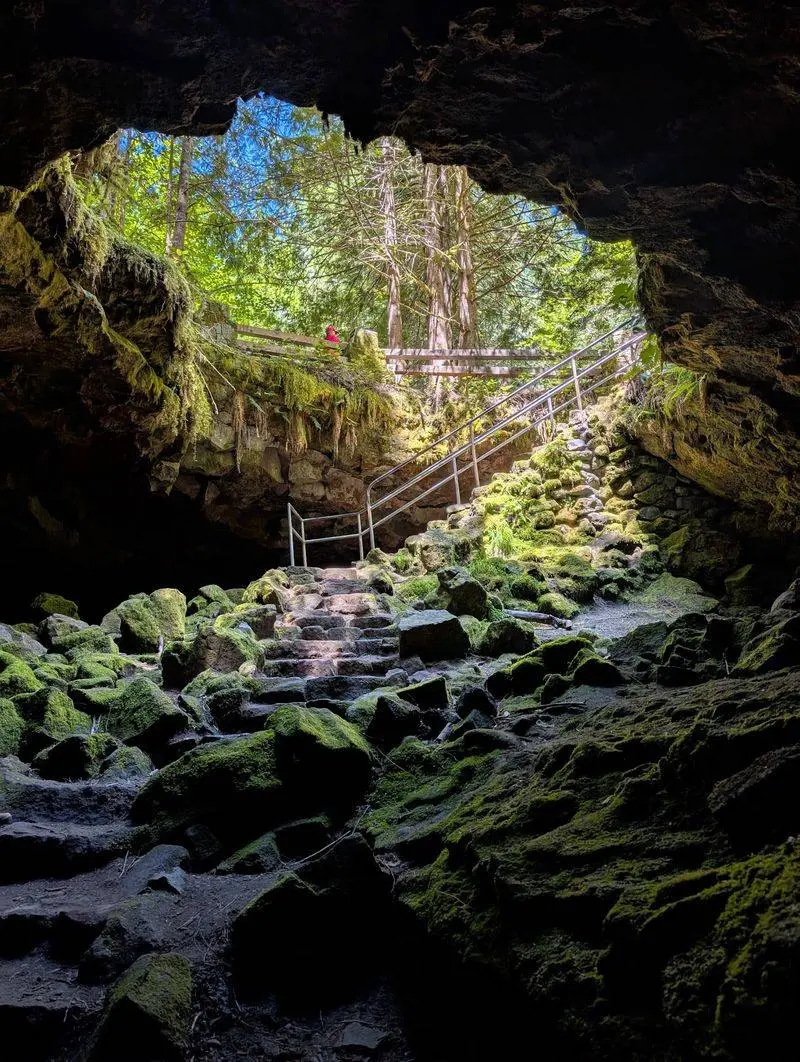
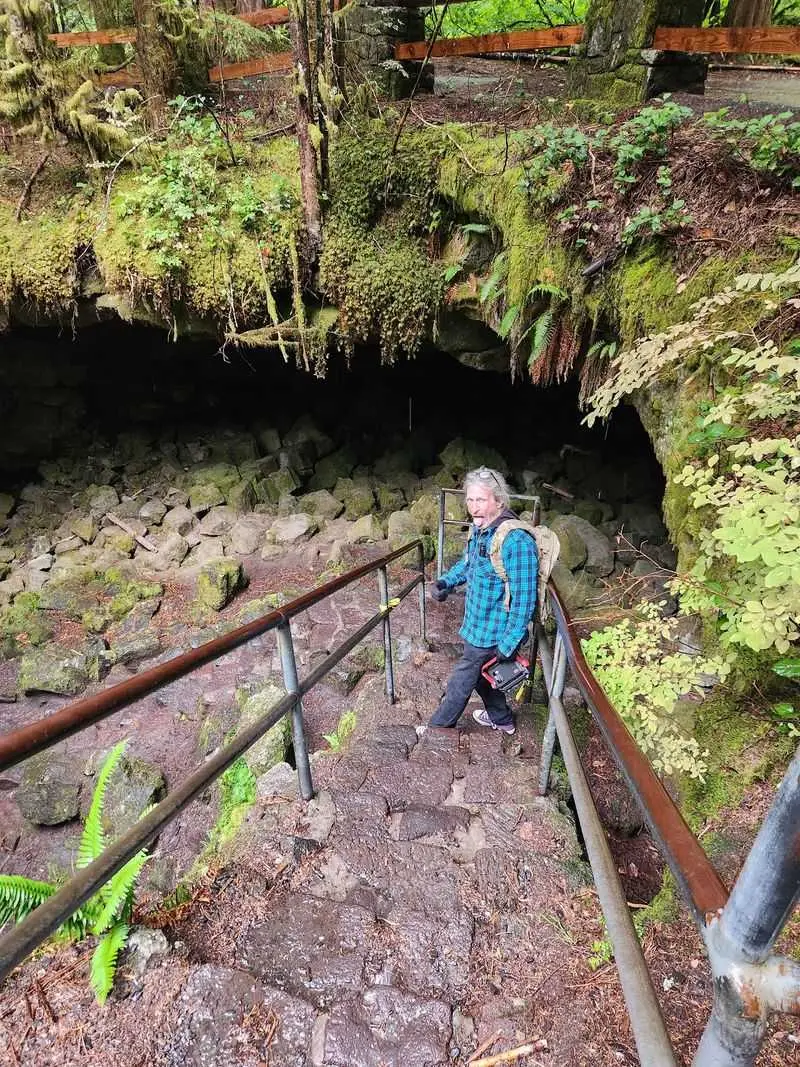
Deep in the forest on the south side of Mount St. Helens sits the Ape Cave Interpretive Site. It’s a lava tube, which means flowing lava once carved a hollow tunnel underground.
The cave runs roughly 2.5 miles long. That makes it the third-longest lava tube in North America, according to people who have studied up before visiting.
Families don’t need climbing gear or caving experience for the easy section. They just need good lights, warm layers, and sturdy shoes.
The site sits in the Gifford Pinchot National Forest in Washington. It’s managed by the U.S.
Forest Service, so think rangers and reservations rather than ticket booths and gift-wrapped souvenirs.
Here’s what makes it special for parents. One cave splits into two routes with very different personalities.
The Lower Cave works for young explorers and grandparents who prefer steady footing. The Upper Cave suits teens and adults who want a full-body workout among boulders.
Both routes share the same main entrance. So a family can arrive together and pick an adventure that matches everyone’s energy that day.
The cave also earns a 4.8-star rating from more than 1,200 Google reviews. That’s a lot of happy, chilly people.
Lava Flows Frozen Into A Two-Thousand-Year-Old Tunnel
Around 2,000 years ago, Mount St. Helens sent rivers of lava down its slopes. The outer layer cooled and hardened while hot lava kept flowing underneath.
Once the molten rock drained away, it left an empty tube behind. That leftover passage is the tunnel families explore today.
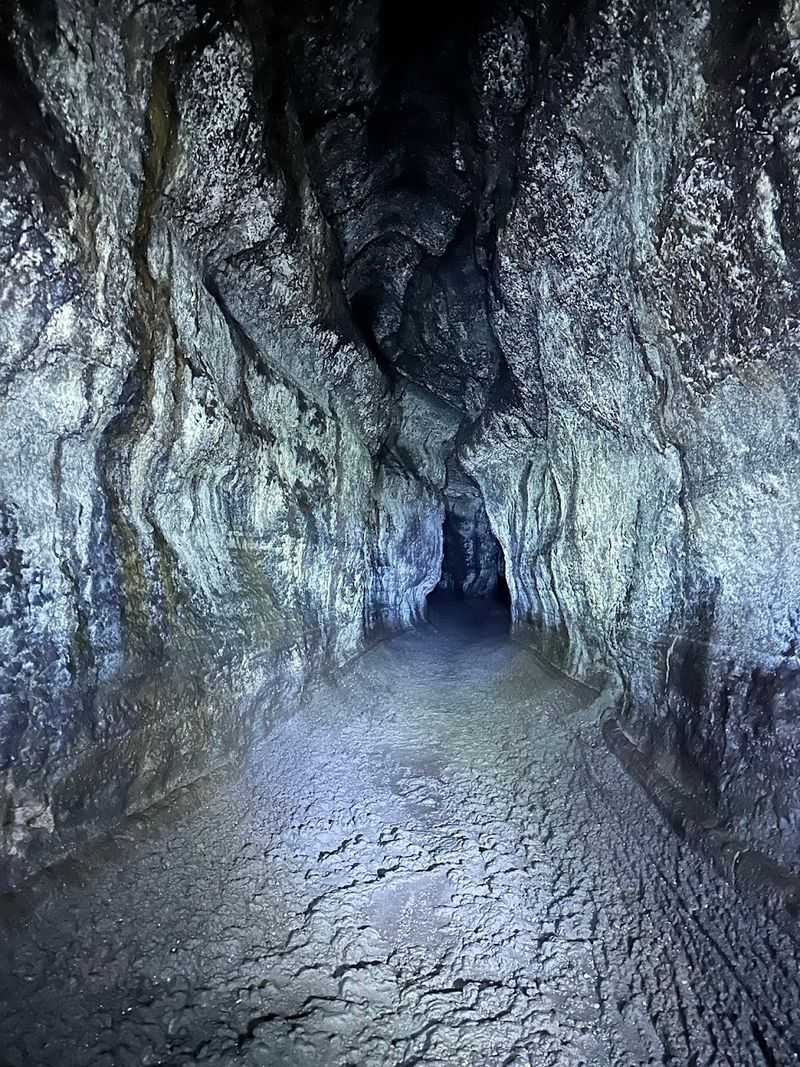
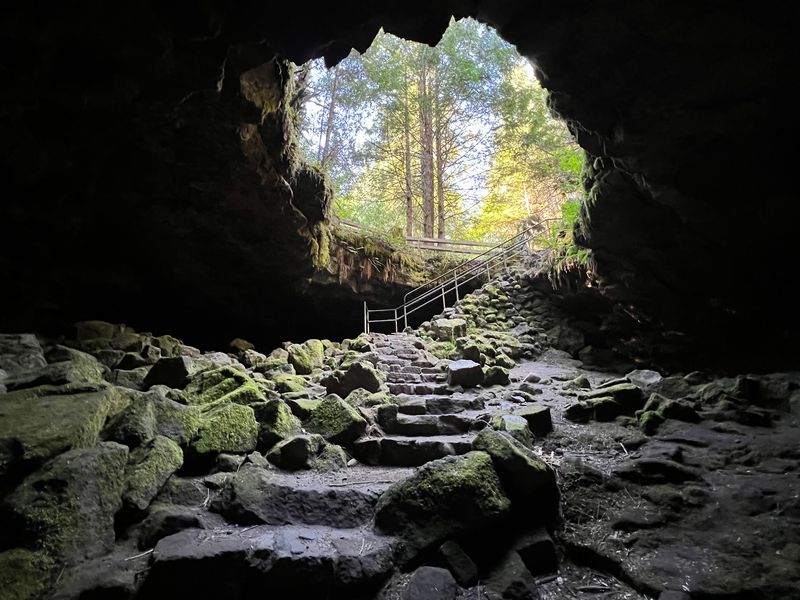
Walking through it feels a bit like strolling inside a giant stone pipe. The walls curve overhead, and ceilings reach 30 to 40 feet in some spots.
Some sections feel almost cathedral-like in size. Sounds carry in interesting ways, so a single voice can echo surprisingly far.
Kids get a real geology lesson without opening a textbook. They can see how lava shaped stone, then picture the eruption that made it.
Up on the surface, the newer story of Mount St. Helens shows up too. The return trail from the Upper Cave passes lava landscapes that hint at the mountain’s restless past.
It’s rare for a field trip to cover ancient eruptions and fresh forest in one afternoon. Here, both come bundled together.
Parents might just catch themselves learning something new. That counts as a bonus win on any family outing.
The Lower Cave Is The Easy Win For Little Explorers
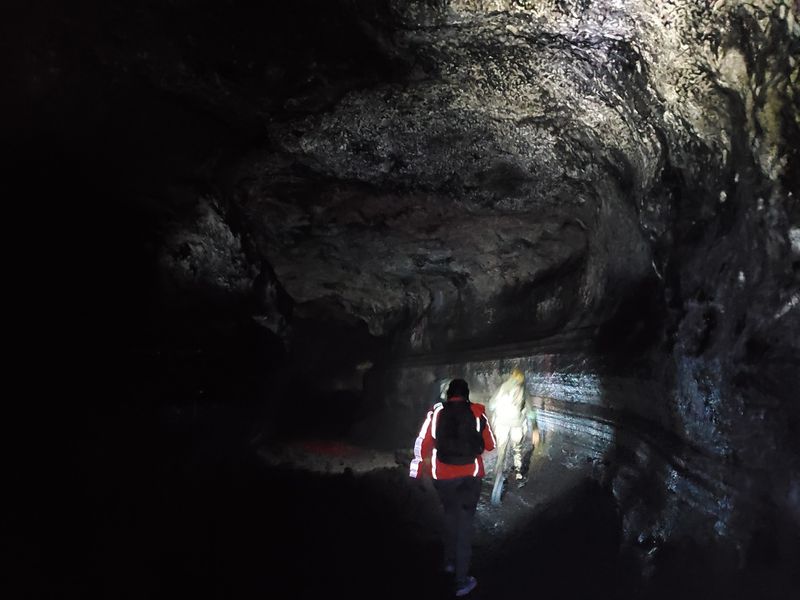
Three-quarters of a mile in, three-quarters of a mile back. That’s the Lower Cave, and it’s the go-to pick for families with young kids.
No boulder climbing is required on this route. The ground can be uneven, and there are a few steps up and down, plus stairs near the start.
Most groups spend about an hour to an hour and a half on the round trip. That’s a sweet spot for short attention spans and tired legs.
The tunnel stays roomy, so it doesn’t feel cramped. Near the far end, it gradually narrows where sand has filled the passage.
Families often describe it as easy and well-suited for children. Grandparents with steady balance can usually manage it at a relaxed pace.
It’s still a real cave, though, so puddles and slick rock appear in places. Closed-toe shoes beat flip-flops or foam clogs every time.
Here’s a fun idea once the path is clear of other groups. Switch off every light for a moment and soak in true, total darkness.
Little ones may squeal. Then they’ll probably ask to do it again.
Boulder Piles And An Eight-Foot Wall Await On The Upper Route
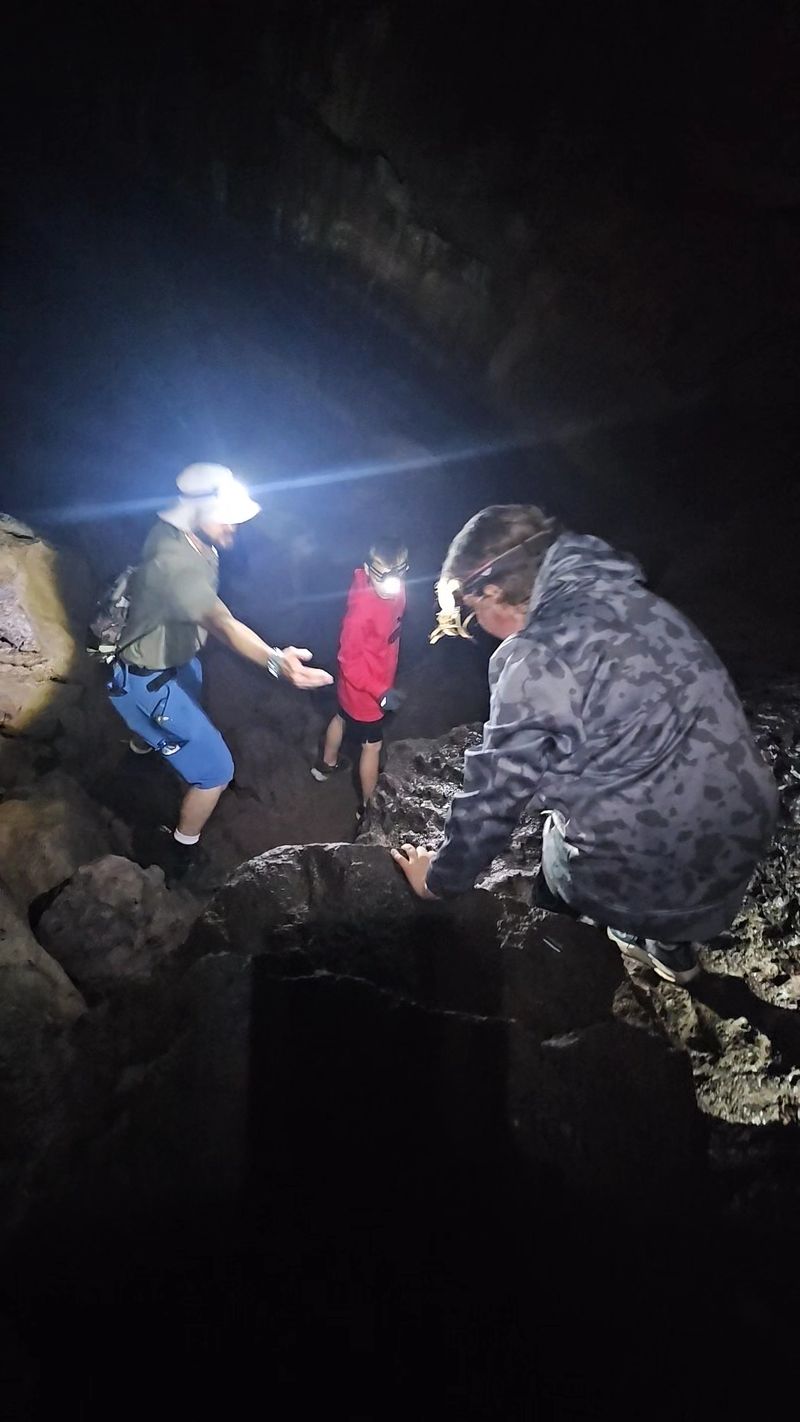
Ready to climb? The Upper Cave runs about 1.5 miles underground, and it’s a whole different beast.
Hikers scramble over pile after pile of jagged lava boulders. Some stacks look tall enough to brush the ceiling.
Then comes the famous rock wall, roughly eight feet high, with very few holds. A rope with a foot loop has helped people up, but teamwork still matters.
Most groups take one and a half to two-plus hours underground. A few families report that it took longer than they expected.
Strong balance and some upper-body strength make a real difference. If the first boulder pile feels like too much, turning back is the smart move.
Leather or gardening gloves protect hands from sharp rock. Long pants save shins from scrapes too.
Plenty of determined kids finish it, including some surprisingly young ones. Teens often love it most, since every obstacle feels like a video game level.
Near the end, a small skylight opens in the ceiling. Daylight peeks in, and everyone knows the exit is close.
Out pops the group via a metal ladder through a small opening. Hand backpacks up first, because squeezing through with one is tricky.
Natural Air Conditioning At A Steady 42 Degrees
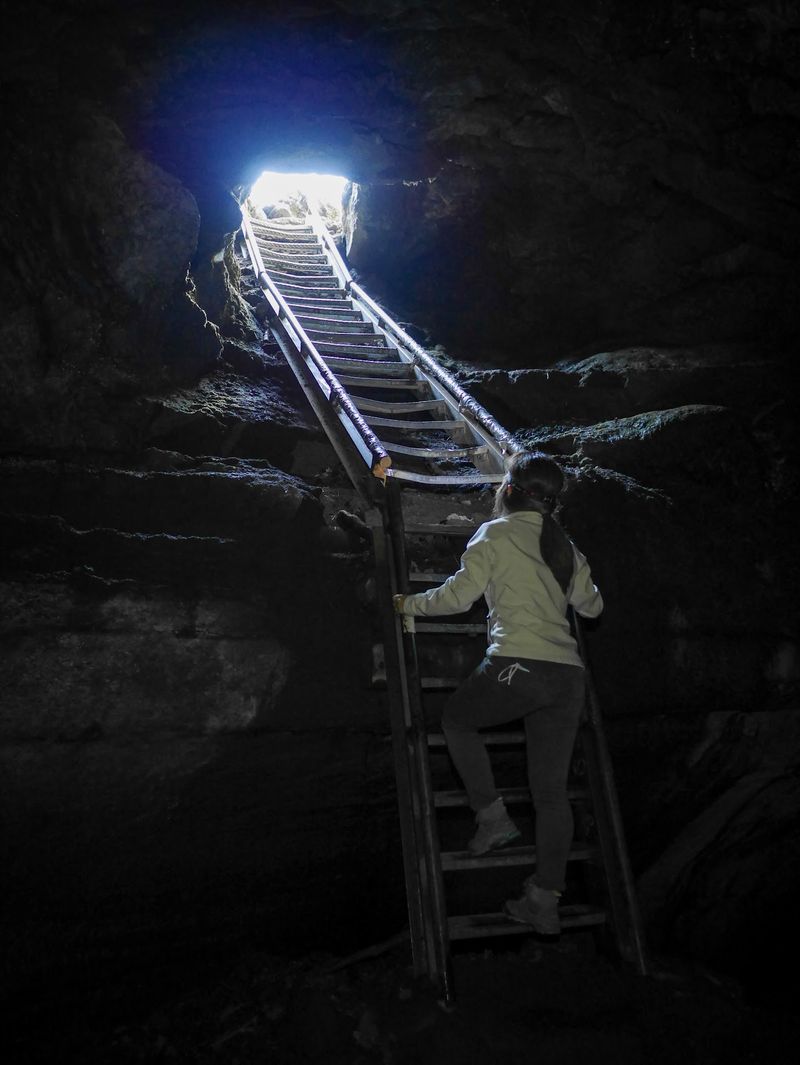
Summer heat waves don’t reach this far underground. The cave stays around 42 degrees all year long.
That’s great news on a scorching July day. One family called it an air-conditioned tube, which sounds about right.
Still, 42 degrees feels chilly after the first half hour. Hands get cold fast, especially while gripping rocks.
Pack a jacket for everyone, even if the parking lot feels like an oven. Hats and gloves are easy to stuff in a pocket once warm enough.
Layers work best for active Upper Cave climbers. Scrambling heats people up, then resting cools them right back down.
Some areas are damp, and rocks can turn slippery. Hiking shoes with good grip handle these spots much better than sneakers.
Lava rock can chew through lightweight tennis shoes too. Sturdy footwear is cheaper than replacing ripped ones afterward.
Bring water and snacks, particularly for the longer route. Hungry, tired kids at the end of a cave can test any parent’s patience.
It also helps to leave a spare set of dry clothes in the car. Puddle splashes happen when little feet get excited.
Your Phone Flashlight Will Not Cut It Down Here
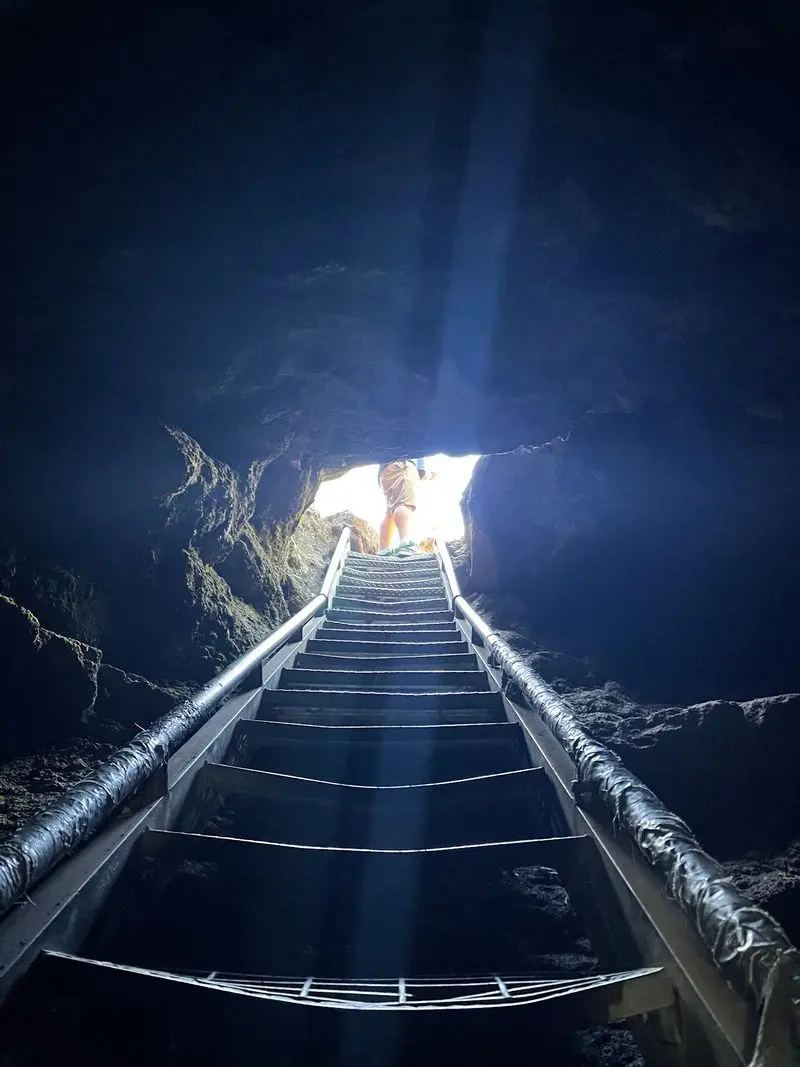
Pitch black means pitch black. There’s zero natural light inside, apart from that one skylight near the Upper Cave exit.
Phone flashlights simply aren’t bright enough. They also drain batteries you might want for photos later.
Headlamps win the day, hands down. They free up hands for climbing, balancing, and holding on to little ones.
On the boulder route, dropping a flashlight between rocks is a real risk. Fishing it out of a dark crack is nobody’s idea of fun.
A bright handheld light makes a nice backup. Some families carry both, and that combination helps for photos too.
Each person should have their own light. Sharing one beam across a family gets frustrating quickly.
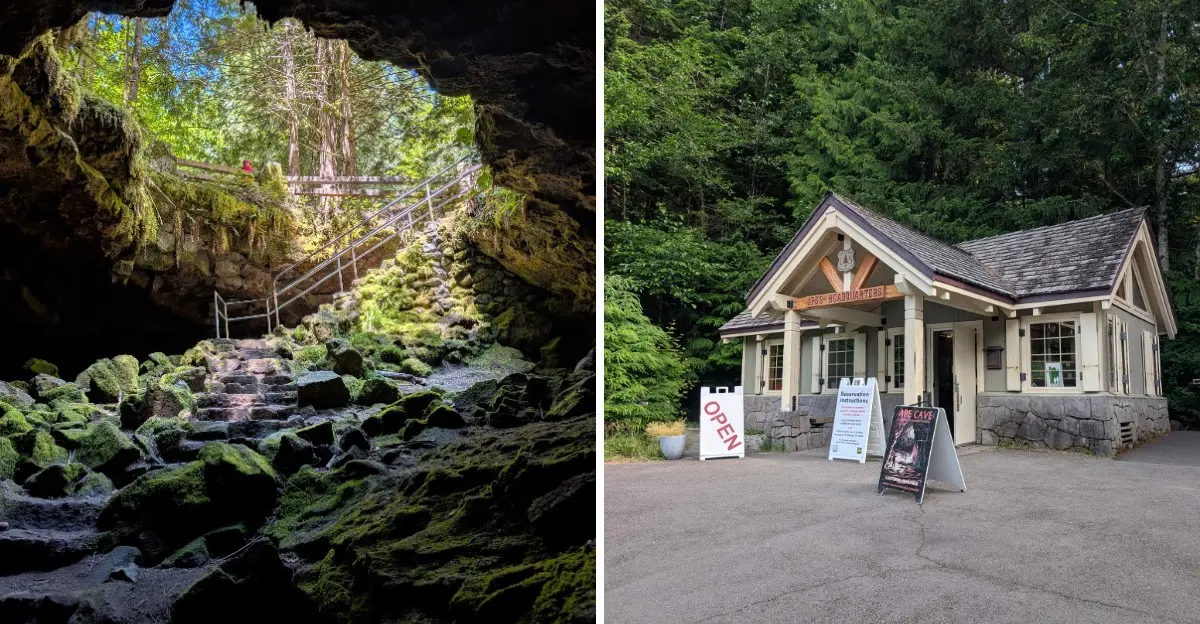
Forgot gear at home? Lanterns are available to rent at the headquarters near the cave.
Expect to pay a few dollars per lantern. It’s well worth it for families without their own bright lights.
Pack extra batteries regardless. Cold air can sap power faster than expected.
A dim headlamp halfway through a lava tube is a story you’d rather not tell. Fresh batteries make sure the only surprise is the cave itself.
A Cheap Ticket Into Total Darkness
Good news for budget-minded families. A trip here costs very little compared to most weekend outings.
Two things are needed before heading underground. First comes a timed cave reservation, booked online through Recreation.gov for a small per-vehicle fee.
Second is a parking or day pass. Families have reported a modest day fee at the site, and annual passes are available too.
Fees can change, so check current rates before driving out. Even so, a carload of kids can explore for less than a single movie ticket.
Don’t skip the reservation step. Visitors without a reservation may be turned away at the entrance.
Staff check names and booking details on arrival. Then the pass goes on the dashboard, and the adventure begins.
Book early during busy summer weekends. Popular time slots can fill ahead of time.
Here’s a heads-up for planners. Cell service is spotty or missing near the cave.
Download reservation confirmations and maps before leaving home. It saves a lot of stress in a parking lot with no bars.
That small bit of prep makes the whole day smoother. Cheap and easy is a pretty great combination.
Hours, Season, And The Headquarters Up Top
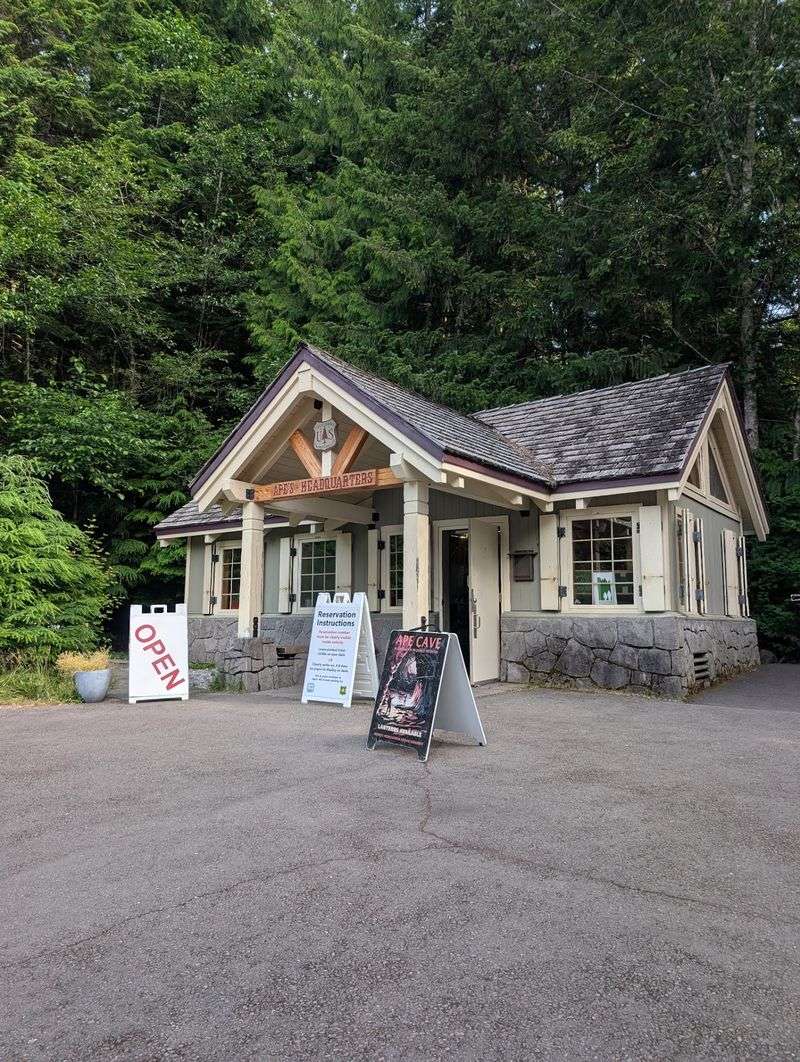
Timing matters at this cave. The site runs from 9 a.m. to 5 p.m., seven days a week during its operating season.
The headquarters season has generally run from mid-May through the end of October. Always confirm dates with the Forest Service before planning a trip.
Arriving early gives families more breathing room. Upper Cave hikers especially need time for the climb plus the hike back.
Up top, the Ape Headquarters handles lantern rentals and pass sales. A small shop also carries a few handy items for the cave.
Restrooms sit right at the site. Parents of small kids will appreciate that before heading into a tunnel with no facilities.
The address is simply listed as Cougar, WA 98616. Cougar is the tiny community closest to the cave.
Plan around a full half-day for the visit. Lower Cave families might finish faster, while Upper Cave groups can need three hours total.
Picnics make a great add-on. One grandmother brought her daughter and grandkids for a day trip and picnic, which sounds like a lovely plan.
Bring lunch from home and save even more. Fresh forest air does wonders for hungry appetites.
The Forest Walk Back Is A Reward Of Its Own
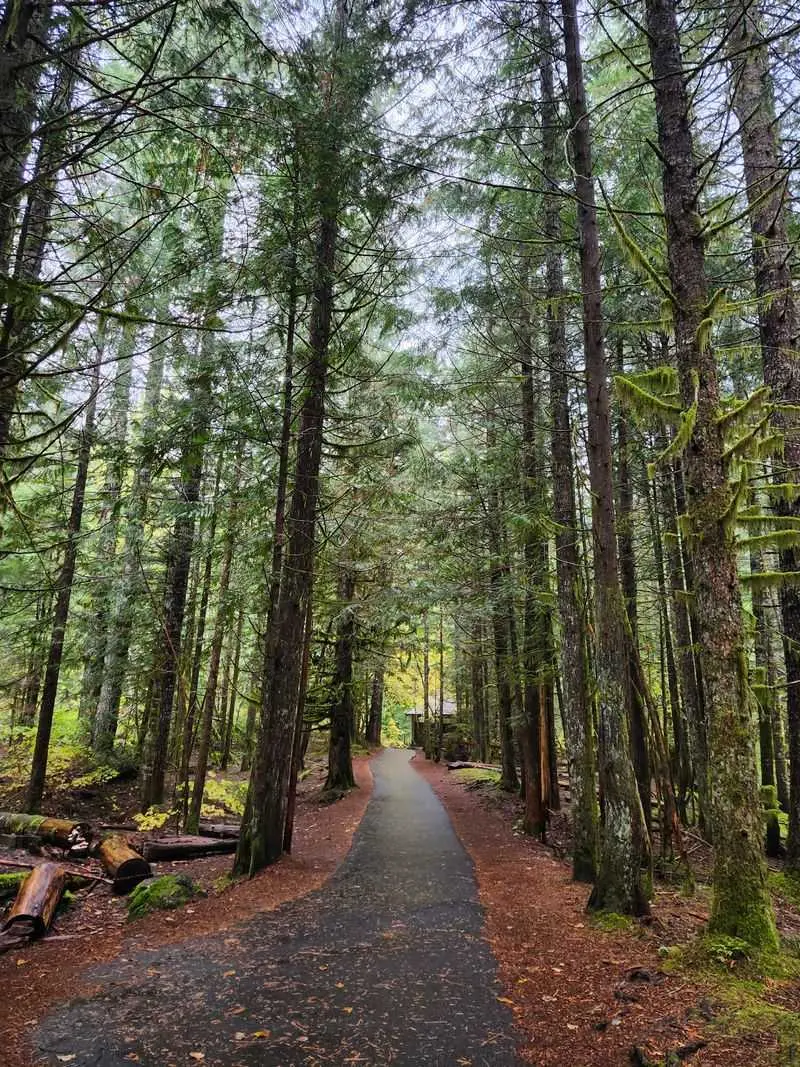
Climbing out of the Upper Cave ladder feels like surfacing on another planet. Then the forest takes over.
A surface trail leads hikers back down to the parking lot. It’s about 1.5 miles and mostly downhill.
Most groups take around 25 to 30 minutes for the return. The walking is relatively easy after all that boulder hopping.
Sunlight feels amazing after hours in the dark. Eyes adjust, and suddenly every tree looks extra green.
Along the way, lava formations add interest. They’re a reminder of just how much this landscape has been shaped by Mount St. Helens.
Late summer brings berry bushes along parts of the route. Ripe berries can attract wildlife, so stay alert and keep kids close.
Bring a little water and a snack for this stretch. Kids often announce they’re starving right about now.
Lower Cave visitors simply walk back out the same way they came in. They miss this trail, but they also skip the ladder.
For families who can handle the climb, the walk feels like a victory lap. Photos here usually show tired, proud, slightly dusty faces.
Which Family Members Will Love It Most
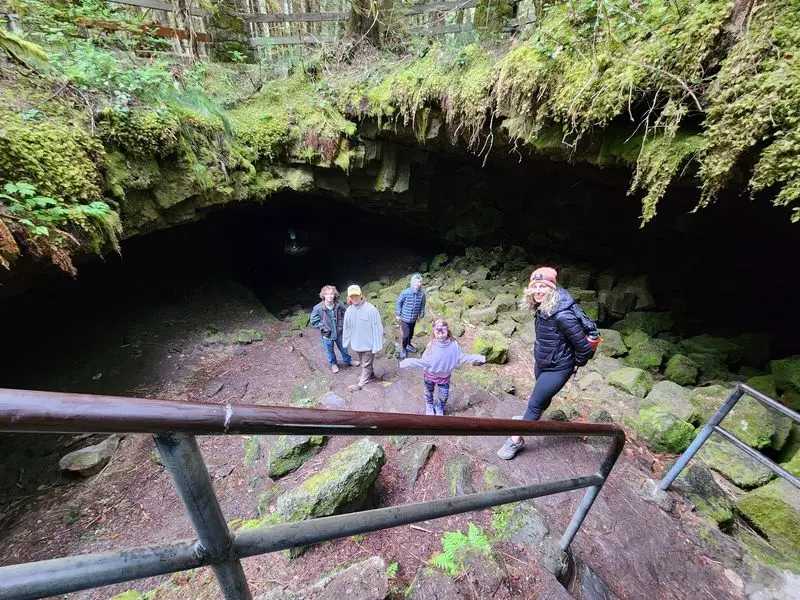
Curious kids top the list. Few outings in Washington let children walk through an ancient volcanic tunnel.
Families with kids around five and up have enjoyed the Lower Cave. Teens and tweens tend to thrive on the boulder-filled Upper Cave.
Grandparents with good mobility can handle the easier route at their own pace. People with leg or balance problems may find even the uneven floor challenging.
Strollers aren’t practical here. Babies would need a secure carrier, and parents should think carefully about footing.
Worried about tight spaces? The tunnel is mostly wide and tall, so it rarely feels claustrophobic.
Darkness may unsettle some little ones at first. Giving each kid their own headlamp helps them feel brave and in control.
Some families make it a yearly summer tradition. One mother and daughter return every summer, which says a lot.
Active families with good balance get the most from the Upper Cave. Everyone else still gets a memorable underground stroll.
Mixed groups can split up too. One parent can take younger kids through the Lower Cave while teens tackle the climb.
Well Worth The Drive For A Chilly Family Adventure
Few places pack this much wonder into such a small price tag. The Ape Cave Interpretive Site does exactly that.
It’s less than two hours from Portland, and a manageable road trip from much of western Washington. Families have even made six-hour drives and called it worth every mile.
The checklist is short and simple. Reserve a time, grab a pass, pack lights and layers, then go.
No special skills are required for the Lower Cave. The Upper Cave rewards those craving a real challenge.
That flexibility makes it a smart pick for mixed-age groups. Everyone can find their own comfort level underground.
Summer heat makes the 42-degree cave even more appealing. It’s a natural cool-down that kids will remember.
Pair it with other Mount St. Helens sights for a fuller day. The whole region feels a bit like another planet.
Bring the snacks, charge the headlamps, and toss in an extra sweatshirt. Families who plan ahead usually leave smiling and talking about it the whole drive home.
It’s cheap, unforgettable, and right here in Washington. Not bad for a hole in the ground.