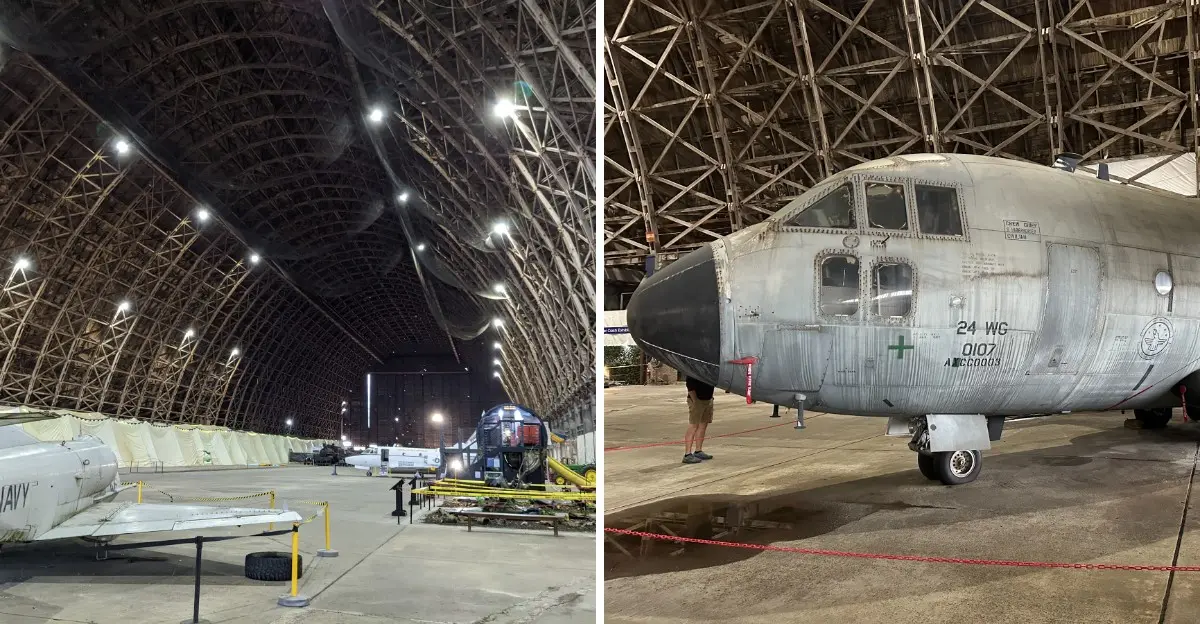
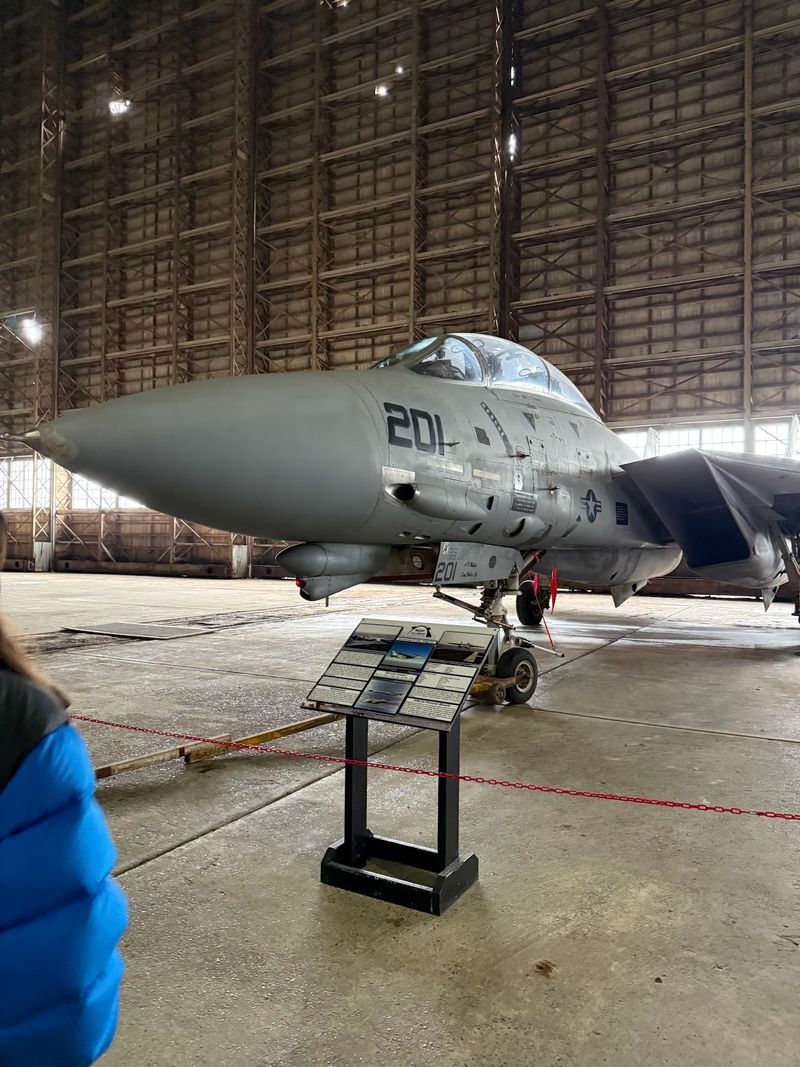
A real F-14 Tomcat sits parked inside a wooden building that was made to hold blimps. The building is so big that the jets inside look like toys left on a giant’s floor.
It ranks among the largest wooden structures on the planet.
I love that the main exhibit might be the roof over your head. Families climb into old cockpits, walk through a slice of a 1970s airliner, and watch a short film about how the place was built.
Little kids even get their own play corner.
The whole thing sits on the Oregon coast, close to a famous cheese stop that pulls in big crowds. Plenty of drivers spot the huge hangar from the highway and pull over on a whim.
I can’t blame them one bit.
So how does a blimp barn end up hosting a full air museum?
A Coastal Landmark You Can Spot From The Highway

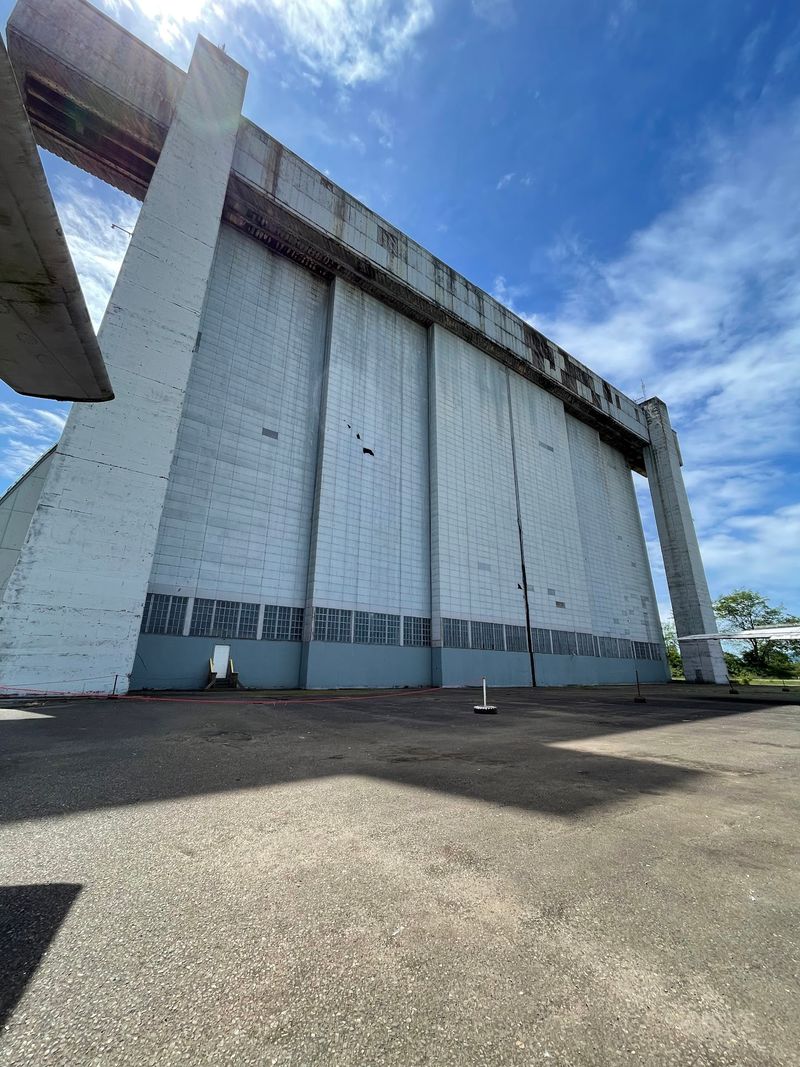
Drivers on the Oregon coast often notice something strange rising over the flat dairy pastures. It’s a gigantic arched building with the words Air Museum painted right across it.
That building is the Tillamook Air Museum, and it lives inside Hangar B. The hangar was built during the WWII era to shelter Navy blimps.
Today it holds an aircraft collection instead of airships. The Google listing calls it one of the world’s largest wooden buildings, which is a bold title for any barn.
The museum carries a 4.5-star rating across more than 2,700 reviews. That’s a lot of happy road-trippers for a place many folks discover by accident.
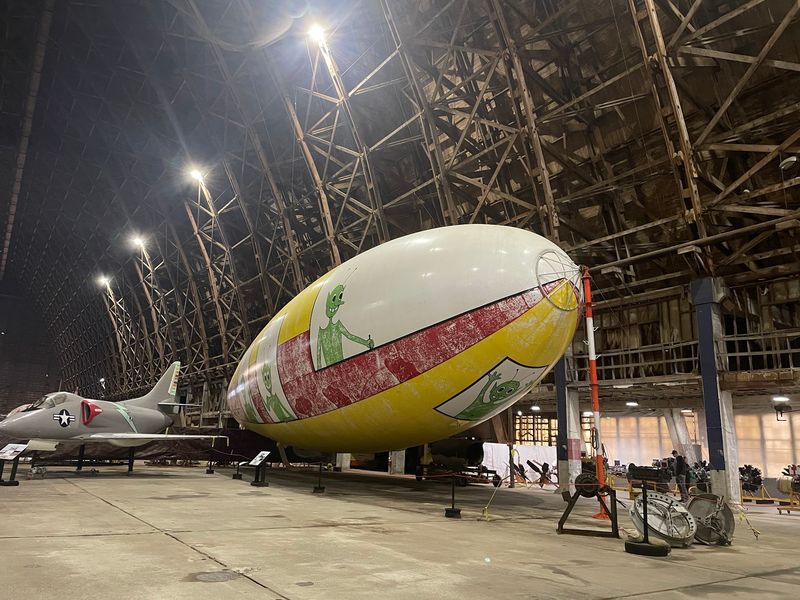
Inside, you’ll find fighter jets, passenger plane pieces, engines, tractors, and detailed models. You’ll also find an awful lot of empty air above your head, and that’s half the fun.
Families tend to treat it as a bonus stop on a Tillamook trip. Plenty of them plan on a quick look and leave hours later.
Think of it as the coast’s most surprising detour. Few buildings in Oregon make a first impression quite this loudly.
The Blimp Barn Story Behind Hangar B
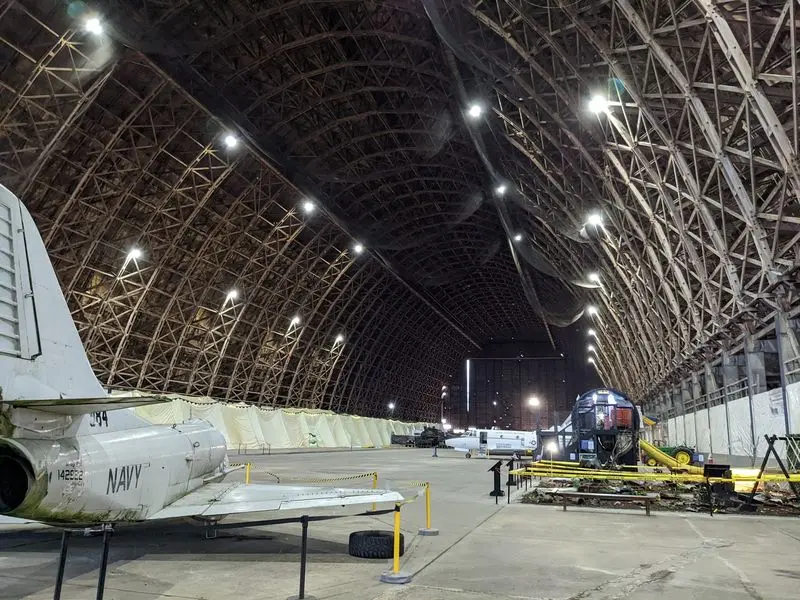
Two of these massive hangars once stood here, not just one. That fact surprises many first-time visitors who assume Hangar B was always a solo act.
Both were built during WWII to house Navy blimps. Those airships helped patrol the Pacific coastline during a tense chapter in American history.
Hangar B is the survivor, and it now holds the Tillamook Air Museum. Its sister hangar is no longer standing, which makes the remaining one feel even more precious.
The museum’s short history film explains how the hangars came together. It’s a well-made piece and a smart first stop before you wander the floor.
Knowing the backstory changes how the space feels. Suddenly you’re not just in a big room, you’re in a working piece of coastal defense history.
Many people who come for the planes leave talking about the building. Some even wish the hangar’s own story got more of the spotlight.
It’s hard to argue with them. A wooden structure built for airships still standing on the damp Oregon coast is a story worth telling twice.
Seven Acres Of Floor Under One Wooden Roof
Seven acres. That’s roughly how much floor space families describe inside this hangar, all under a single wooden roof.
The scale hits you the moment you step through the door. Aircraft that would dominate a normal museum look almost small sitting on this floor.
Look up and you’ll see the curved wooden framework stretching high overhead. Photos rarely capture it, and many visitors say you simply have to stand there yourself.
Kids especially love the open space. Unlike most museums, there’s actual room to move around without bumping into a velvet rope every three steps.
One playful description compared the hangar to something that could fit a small grocery store with room to spare. Honestly, that might be underselling it.
The size also explains why the building often steals the show from the planes. It’s a rare case where the container is as famous as the contents.
Bring a camera with a wide-angle setting if you have one. You’ll want proof for the relatives back home, because they won’t believe the description alone.
A Tomcat With Hollywood Credentials
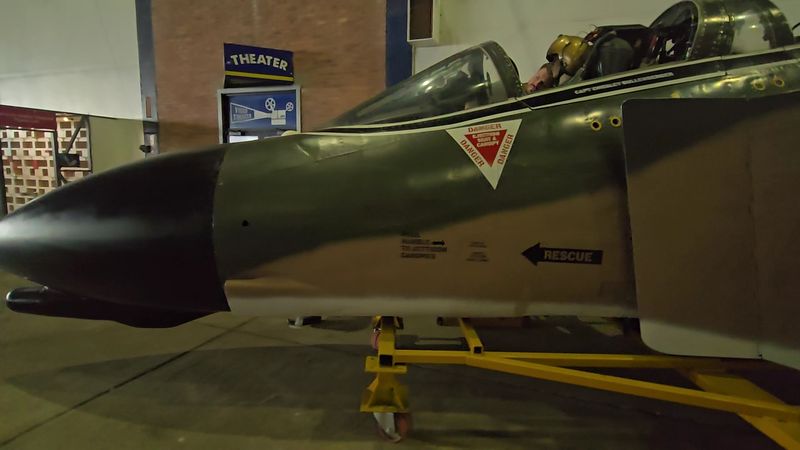
Movie fans, take note. The Tillamook Air Museum displays an F-14 Tomcat, and visitors connect one of its Tomcats to the original Top Gun.
The F-14 ranks among the most talked-about planes in the whole collection. It shows up again and again when families list their favorite moments.
Seeing the jet up close gives you a real sense of its size and shape. Those swept wings look far more dramatic in person than on a screen.
The Tomcat isn’t the only military star here. Visitors also mention P-38 aircraft and a long lineup of WWII-era planes.
Each aircraft comes with general background plus stories about that specific plane. That personal touch turns a row of metal into something closer to a cast of characters.
Dads, granddads, and aviation fans of every age tend to linger here. Don’t be surprised if someone in your group starts humming a certain movie theme.
Go ahead and let them. In a building this big, nobody will hear it anyway.
Cockpits Built For Climbing In
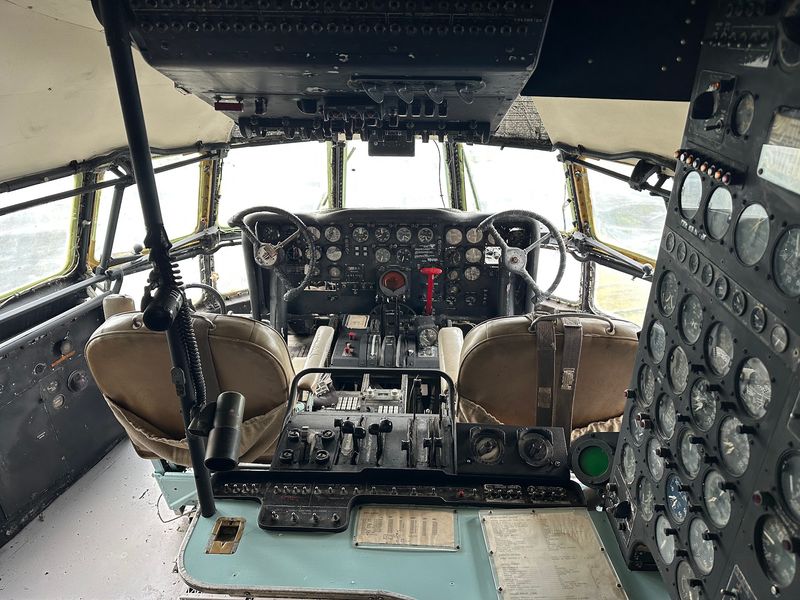
Most museums ask you not to touch anything. Here, several historic cockpits actually invite you to sit right down.
The interactive cockpits rank as a highlight for many families. Kids get to grip the controls and feel what a pilot might have felt.
The museum has added even more cockpits in recent years. That’s good news for anyone who hates waiting for a turn.
A children’s simulator area adds to the fun. Young pilots can pretend to take off without leaving the hangar floor.
The experience makes history feel tangible in a way placards never can. A cramped seat and a dashboard of old dials tell their own story.
Adults are welcome to climb in, too. Nobody’s checking whether you’re nine or ninety before you settle behind the stick.
Plan for photos at every stop. A kid peeking out of a vintage cockpit is the kind of picture grandparents frame.
Groovy Air Travel Inside A 1970s TWA Cabin
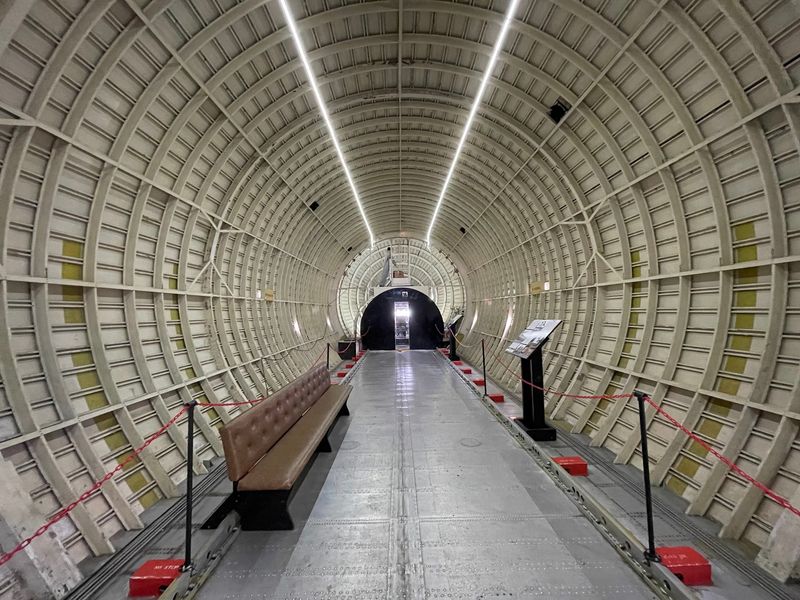
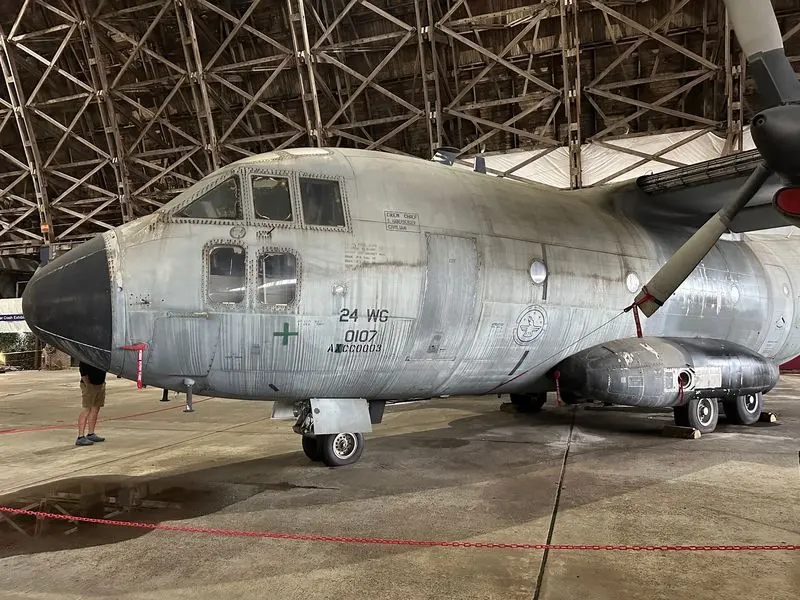
Not every plane here wore camouflage. Tucked among the warbirds sits a segment of a TWA passenger plane from the 1970s.
Families can walk through the cabin section. It’s a fun peek at what flying looked like back when air travel felt a bit more glamorous.
For grandparents, it may spark memories of their own early flights. For kids, it’s a time machine with seat rows.
The museum also features the Mini-Guppy, a distinctive cargo aircraft. Its analog engineering offers a nostalgic look at how planes worked before screens took over.
These civilian pieces balance out the military collection nicely. They remind you aviation was also about vacations, business trips, and moving oversized cargo.
Engine displays round out the picture for the mechanically curious. You can study the hardware that kept these machines in the sky.
It’s a quieter corner of the Tillamook Air Museum, but a memorable one. Who knew a slice of an old airliner could be this entertaining?
Tiny Battle Scenes With Big Patience Behind Them
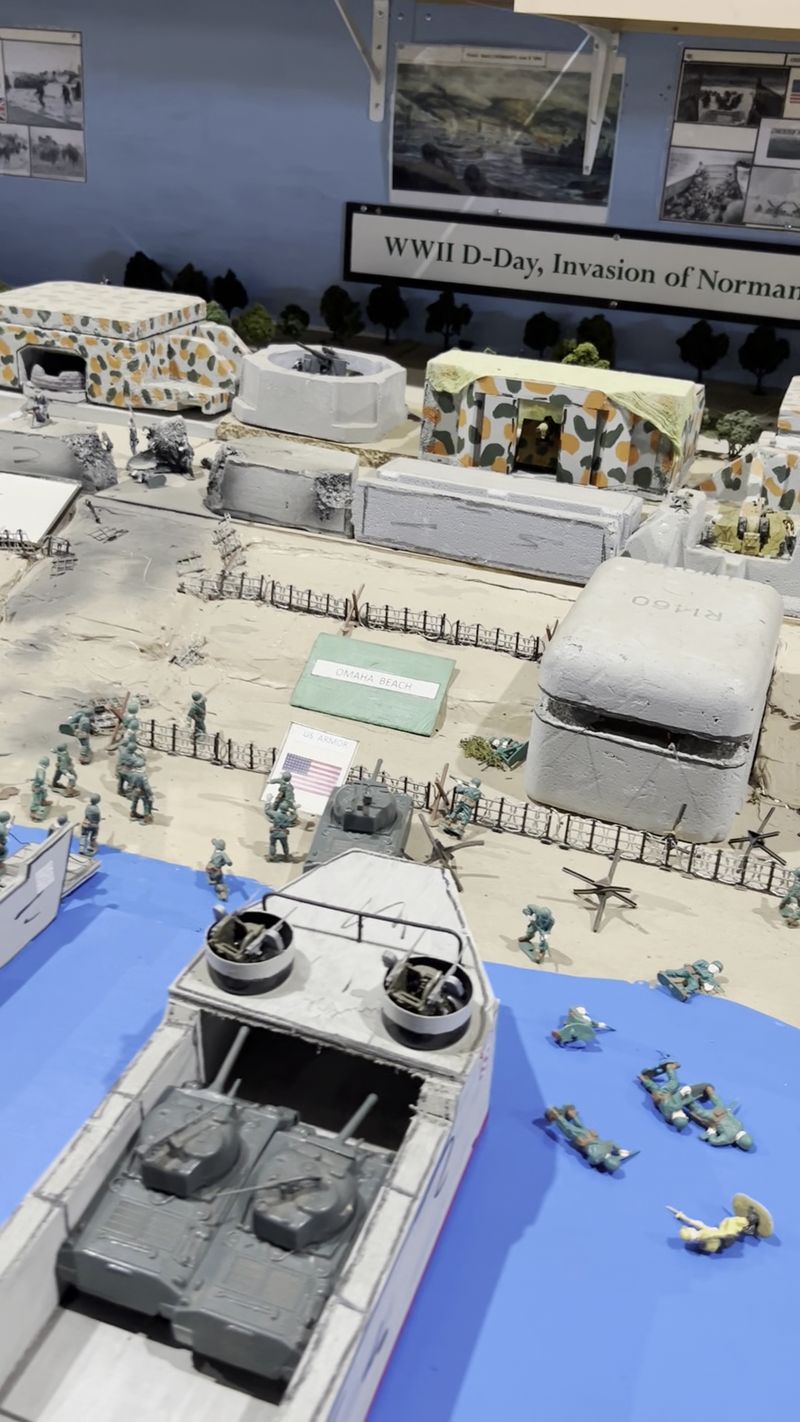
A father and son built a remarkable set of miniature reenactments here. The handmade models depict battles from WWII in careful detail.
Model ships and submarines fill the displays as well. Many people point to them as an unexpected favorite.
The scenes sit at eye level for young visitors. That makes complex history easier for kids to see and understand.
Wood carvings add another handcrafted touch to the museum. They show a different kind of skill than the engineering surrounding them.
There’s also an exhibit about women during the Holocaust. It brings a thoughtful, human side to the history on display.
Side exhibits mostly center on the WWII era, which fits the hangar’s own past. Together, they give context to the planes parked nearby.
Give yourself time here rather than rushing toward the jets. The tiny details reward slow looking, and the patience behind them deserves a nod.
Tractors, Locomotives, And Other Surprise Guests
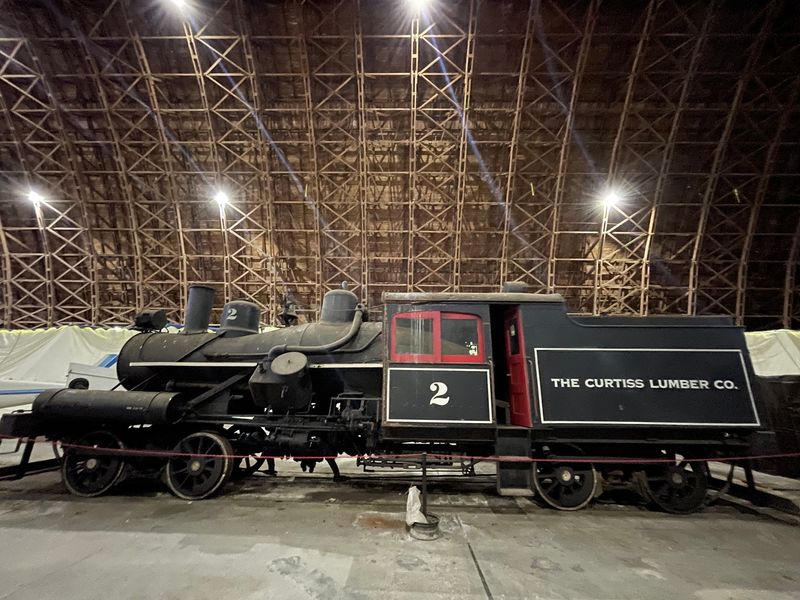
An air museum with a row of tractors? It sounds odd until you learn their connection to the hangar.
Some of the old tractors and locomotives were once used at the hangar itself. They’re part of the site’s working history, not random extras.
Farm-loving families will appreciate the vintage machinery. Tillamook County is dairy country, after all, so tractors feel right at home.
Little ones who care more about wheels than wings get something to cheer about. Nobody gets left out of the fun.
The mix keeps the visit from feeling like one long runway. You’ll bounce between airplanes, engines, and heavy equipment as you explore.
Videos and VR experiences also help immerse visitors in the hangar’s past. Tech fans can step into the story in a whole new way.
It’s a nice reminder that big buildings need big tools. Somebody had to move all that weight around these seven acres.
Toddler Corners And Scavenger Hunts For Small Explorers
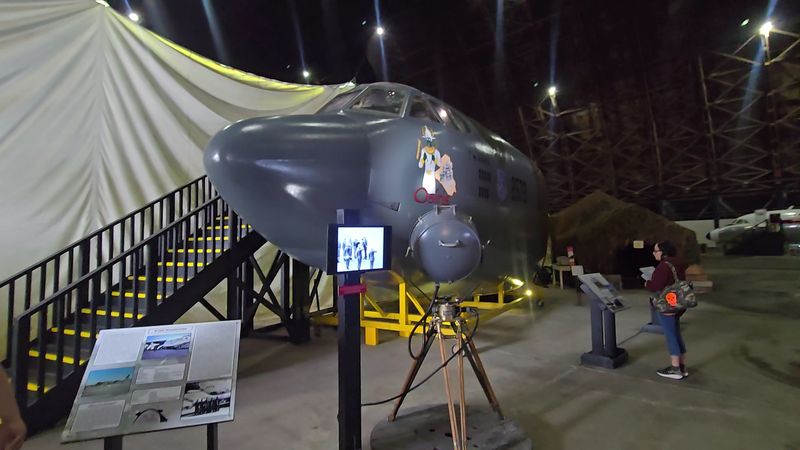
Toddlers get their own little play place inside the hangar. Parents of tiny tots will appreciate having a spot designed just for them.
Older kids can tackle a scavenger hunt. They answer questions and track down clues as they explore the exhibits.
Adults are welcome to play along too. It’s a clever way to keep everyone looking closer at the displays.
The children’s simulator area adds more hands-on fun. Between that and the cockpits, restless kids rarely run out of things to do.
Then there’s all that open floor space. Kids can burn off energy here in a way most museums never allow.
One family joked that even their hard-to-impress son loved it. That’s high praise from a tough audience.
For Oregon parents planning a coast trip, this matters a lot. A rainy afternoon suddenly has a giant, kid-approved backup plan.
Bring A Jacket For The Chilly Hangar Air
Wood, size, and coastal weather add up to one thing. The hangar stays pretty cold inside.
Visitors repeatedly suggest bringing a jacket. Heating a building this enormous is no small task.
Comfortable shoes matter too. You’ll cover plenty of ground wandering seven acres of exhibits.
The building shows some wear from the coastal elements. It’s not a polished, high-tech museum, and it doesn’t pretend to be.
Some areas feel dated compared to newer aviation museums. Still, that old-school vibe fits a structure from the WWII era.
Many guests hope ongoing restoration work keeps moving forward. Preserving a wooden giant like this takes real effort and funding.
Think of the chill as part of the authentic experience. You’re standing inside working history, drafts and all, on the Oregon coast.
Snacks, Souvenirs, And The Lone Plane Parked Outside

Almost every aircraft lives inside the hangar. One plane sits outside, and families often mention loving it.
It makes a great first or last photo of the visit. The giant hangar looming behind it doesn’t hurt either.
Hungry explorers can grab something at the snack bar. It’s handy when a two-hour visit stretches a little longer than planned.
The gift shop gets plenty of praise as well. Young aviators will likely spot something they simply must take home.
Admission is often described as reasonable. Prices can change, so check before you go.
That value angle makes the Tillamook Air Museum appealing for families on a budget. A full afternoon of exploring without a giant bill sounds pretty good.
Special events happen here too. The museum once hosted the final flight of a Harrier jet being delivered to its collection.
Easy Directions From The Creamery Crowds
Already heading to the famous cheese stop in town? You’re practically next door to a much bigger attraction.
The Tillamook Air Museum sits at 6030 Hangar Rd, Tillamook, OR 97141. It’s a short hop from the busy creamery many travelers already visit.
Plenty of folks stumble onto the museum after spotting the hangar from the highway. It’s tough to miss a building this size.
Plan on at least two hours inside. Many families call it a solid half-day activity.
Hours and admission can change, so check with the museum before you drive. That quick step saves disappointment on a long Oregon road trip.
Pair it with a coast drive for an easy family day. Planes in the morning and ocean views in the afternoon make a strong combo.
Bring layers, snacks money, and a fully charged phone. You’ll want photos of everything.
Why This Wooden Giant Earns A Spot On Your Calendar
Is it the flashiest air museum in America? Probably not, and that’s part of its charm.
The Tillamook Air Museum offers something no modern museum can copy. You get to stand inside a WWII-era blimp hangar that still dwarfs everything around it.
Add sit-in cockpits, a famous Tomcat, and handmade battle scenes. Suddenly you’ve got a day that works for toddlers, teens, and grandparents alike.
The building has a few wrinkles from age and salty air. Honestly, that only makes it feel more real.
It’s the kind of Oregon outing you’ll brag about later. Few people can say they explored a structure built for airships.
One visitor waited more than twenty years to finally see it. Good news, you don’t have to wait nearly that long.
Grab a jacket and point the car toward the coast. The giant wooden barn will be waiting, planes and all.