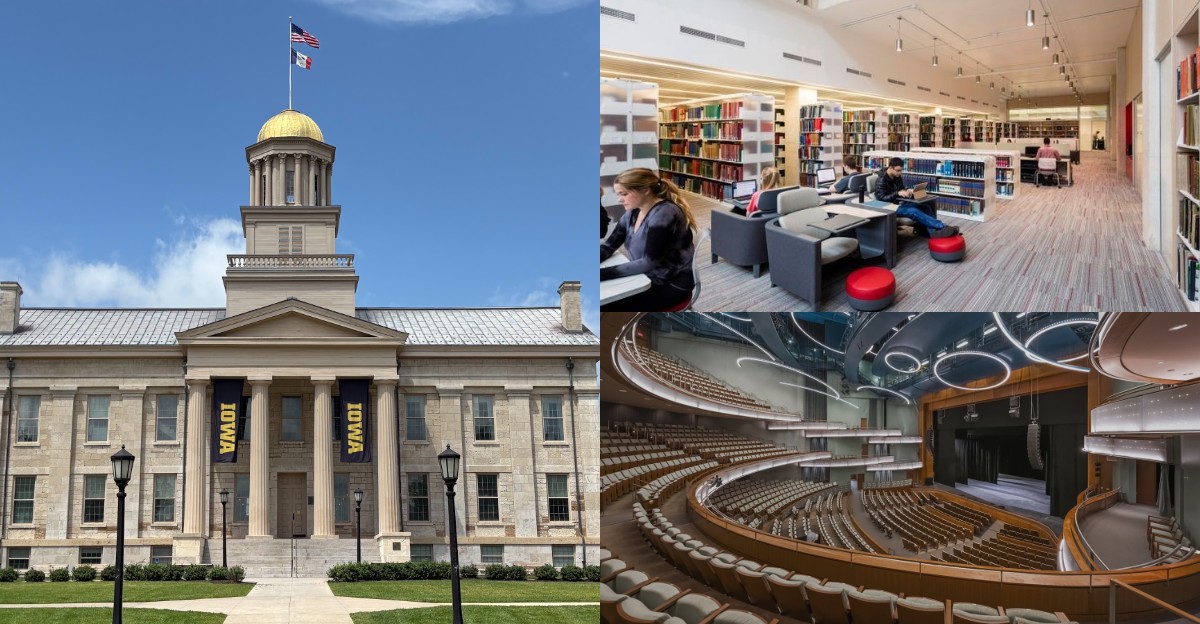
A walk across a college campus can take you past the very place where the rules of higher education began to change. In 1855, the University of Iowa in Iowa City became the first public university in the United States to admit women and men on an equal basis, opening a door that would help reshape American education.
Today, that history feels close enough to touch as you stroll past historic buildings, follow paths near the Iowa River, and step into spaces that preserve the stories of generations of students. The campus is more than a place to admire handsome architecture or enjoy a peaceful walk. It offers a chance to reflect on the determination it took for women to claim equal opportunities in classrooms once closed to them.
As you explore, look for the landmarks, museums, and campus corners that bring this remarkable chapter of Iowa history into view.
Meet a Bold Beginning at the Old Capitol
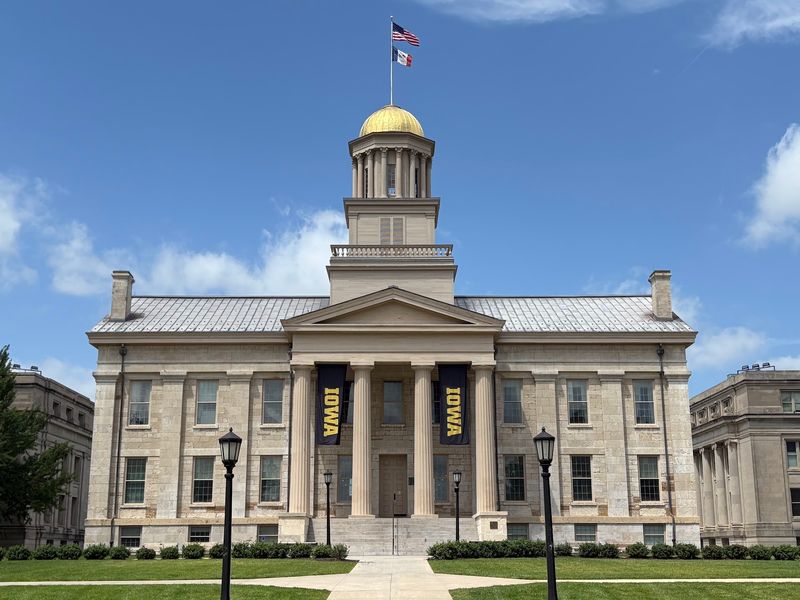
A golden dome catches the light before the history catches up with you. At the center of the University of Iowa campus, the Old Capitol gives a bold educational story a memorable front door.
The university was founded in 1847 and opened for classes in 1855, when it admitted women and men on an equal basis. That made Iowa the first public university in the United States to take that step, although equal admission did not mean every social barrier disappeared.
Walk around the building before heading inside the Old Capitol Museum, if it is open. Its former government rooms connect the university to Iowa’s early statehood, while the broad steps outside offer a useful place to pause and picture the campus taking shape.
Check current museum hours and accessibility information before your visit, since historic interiors can require planning. Rather than treating the dome as a quick photo stop, give yourself time to consider what opening classroom doors meant for students whose ambitions were often questioned, and how that decision still shapes the meaning of this public campus for visitors today.
Read the Campus Through the Pentacrest
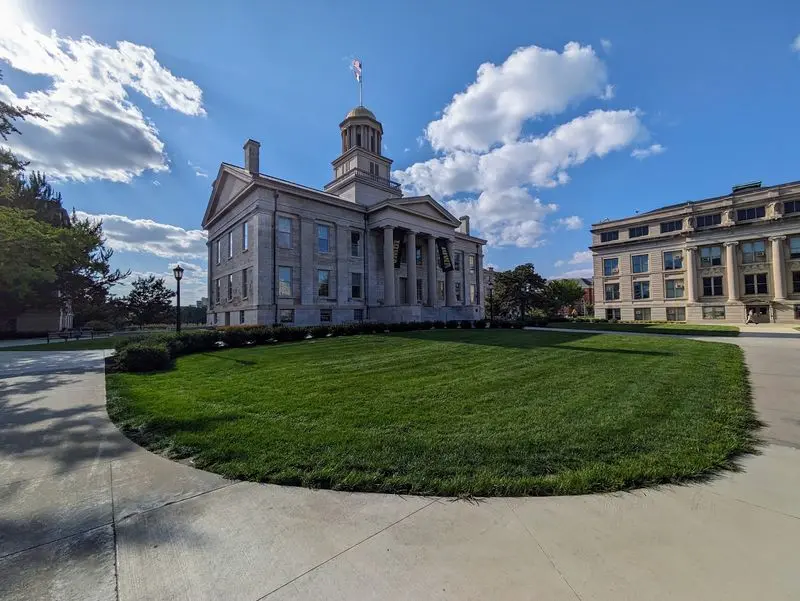
Backpacks cross the lawn in every direction, turning a historic setting into something wonderfully ordinary. Between classes, the Pentacrest feels less like a monument and more like a shared neighborhood with a very handsome roofline.
Five major buildings shape this central University of Iowa landmark, with the Old Capitol surrounded by four academic halls. The open grass and crossing paths make it easy to understand the campus without constantly checking a map or hunting for the next stop.
Choose a bench or a shaded edge and watch how people use the space. A student reading alone, friends catching up, and a group heading to class all offer a present-day view of the access that Iowa’s early admissions policy helped expand.
For photographs, move around the lawn rather than standing only in front of the dome. Morning and late afternoon bring different shadows across the columns, and paved routes provide alternatives to grassy shortcuts.
Keep entrances clear during busy class changes, and remember that this beautiful public space is also part of someone’s daily route to lectures, work, study sessions, and home.
Find Everyday History Outside Schaeffer Hall
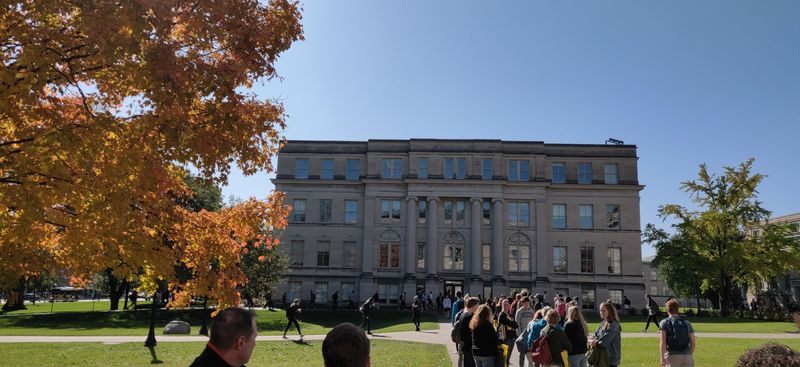
Some of the best campus history happens between the famous landmarks. Follow the paths toward Schaeffer Hall, and the sound of footsteps and opening doors brings the university’s big ideas back to the scale of an ordinary school day.
Standing on the southeast side of the Pentacrest, this academic building helps frame the Old Capitol without competing with its dome. Its solid stone presence belongs to a later stage of campus growth, not the university’s first days of admitting women.
That difference matters when you explore the University of Iowa. The buildings visible now represent many chapters, so avoid imagining that today’s campus looked exactly this way in 1855, or that every doorway has a direct link to that first class.
Enjoy the exterior details, then continue along the public paths for changing views of the central lawn. Academic rooms may be occupied or restricted, so a respectful outdoor look is often the best choice.
Here, the reward is simple: seeing how a major historical decision eventually becomes part of a busy, working university where learning continues behind familiar doors every weekday.
Follow Your Curiosity into Macbride Hall
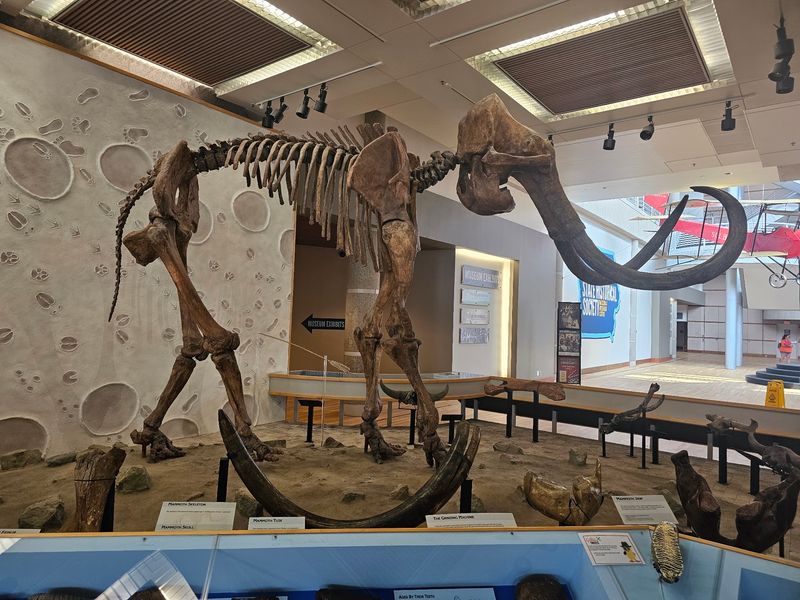
A bird specimen can stop a wandering visitor faster than a grand speech. Inside Macbride Hall, the University of Iowa Museum of Natural History offers a different way to think about college: as a place where curiosity deserves room to grow.
The museum traces its beginnings to 1858, just a few years after the university opened its classrooms to women and men. Its collections explore animals, environments, and the natural world, adding a lively science chapter to a walk often focused on buildings.
Look closely at the displays instead of trying to see everything at once. A single animal’s shape, coloring, or habitat story can spark a better conversation than a rushed tour, especially if younger travelers are beginning to lose interest in architecture.
Check current gallery access and hours before making this your main indoor stop. The museum’s long history does not prove that every early student enjoyed the same opportunities, but it does show how teaching resources grew alongside the institution.
Leave time afterward to step back onto the Pentacrest and compare the busy outdoor campus with the quieter world inside.
Notice the Quieter Side Around Calvin Hall
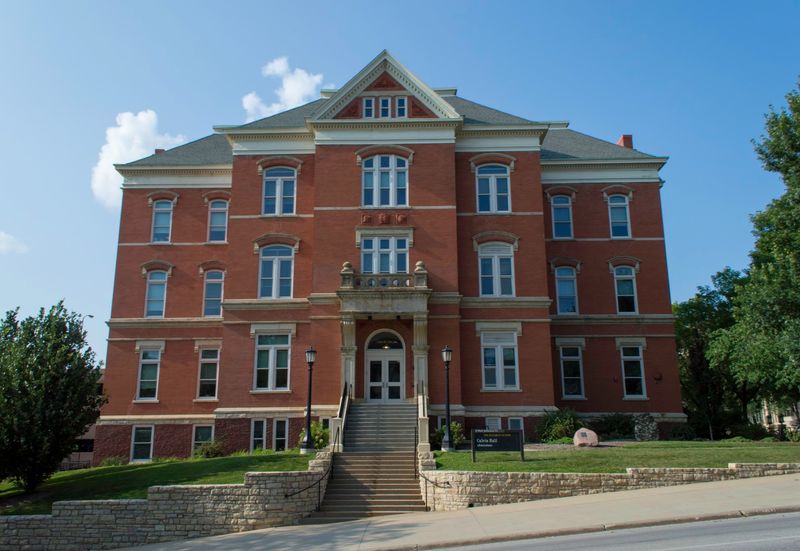
Not every memorable building needs a shining dome. The brick walls of Calvin Hall offer a quieter kind of appeal, inviting you to slow down and notice how much a university can change while keeping pieces of its older self.
Built in 1859, the hall belongs to the University of Iowa’s early years, though it came after the 1855 admissions milestone. It was later moved from the Pentacrest, a useful reminder that campus history includes rearranging buildings as well as constructing them.
Study the exterior from public sidewalks and compare its scale with the larger academic buildings nearby. The contrast helps make the early university easier to imagine, even though the surrounding streets and grounds have changed greatly since its first students arrived.
There is no need to enter working offices to appreciate the stop. Take a photograph, read any available historical information, and keep your visit brief if people are coming and going.
Calvin Hall rewards travelers who enjoy the less obvious details, especially those interested in how an institution preserves its past while making space for new students and needs.
Look for Real Voices in the Main Library

Dates tell you when a door opened; personal records can reveal what walking through it felt like. For a deeper look at the University of Iowa’s past, turn toward the Main Library and its Special Collections and Archives.
University Archives preserves material connected to campus life, including records that can help researchers explore women’s experiences. Availability varies, and historic photographs, letters, or student publications may require advance requests rather than a casual walk into a reading room.
If that research interests you, contact staff before traveling and explain your topic clearly. Asking about early women students or changing campus opportunities is more useful than expecting a permanent display devoted entirely to the university’s equal-admission milestone.
A library stop also adds welcome breathing room to an outdoor walk, subject to current visitor rules and building hours. Browse any public exhibits that are available, or explore digitized collections before your trip.
The larger lesson is worth carrying outside: an admissions policy is a starting point, while individual stories help show how people actually lived with its promises, limits, and possibilities across many changing decades.
Catch the Daily Rhythm at the Iowa Memorial Union
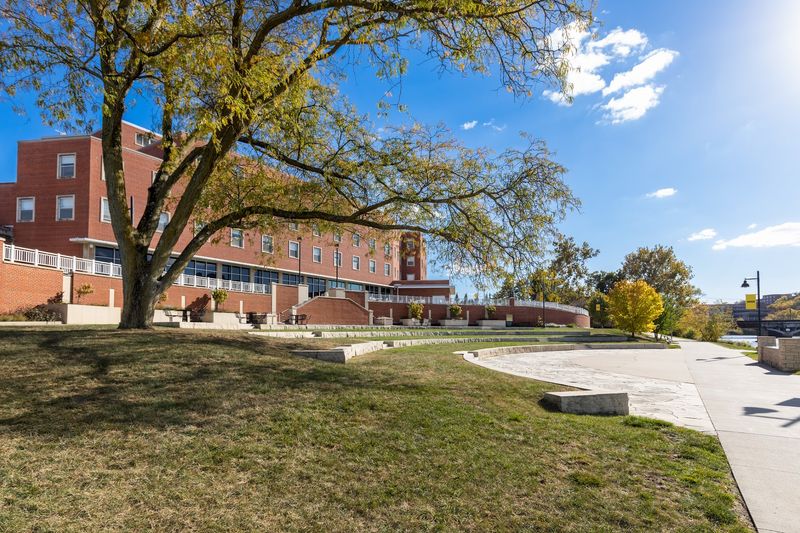
History feels different when someone nearby is laughing over lunch. At the Iowa Memorial Union, the formal campus gives way to the shared routines that make college life feel personal: meeting friends, checking messages, and finding a seat between commitments.
The building sits beside the Iowa River and serves as a gathering place for the University of Iowa community. Its name also carries a memorial purpose, adding a thoughtful layer to a stop that might otherwise seem purely practical.
Depending on current operations, visitors may find food options, public seating, or campus events here. Check building information before counting on a particular counter or service, especially during breaks, weekends, and summer periods when student routines and opening hours can change.
Use the pause to think beyond the first day women were admitted. Access to education also involves belonging, friendships, organizations, and a place to spend time between classes.
You do not need to turn lunch into a history lesson, but watching campus life unfold can make the larger story more human. After a rest, the nearby river paths offer a natural next chapter.
Change Your Perspective at the Stanley Museum of Art
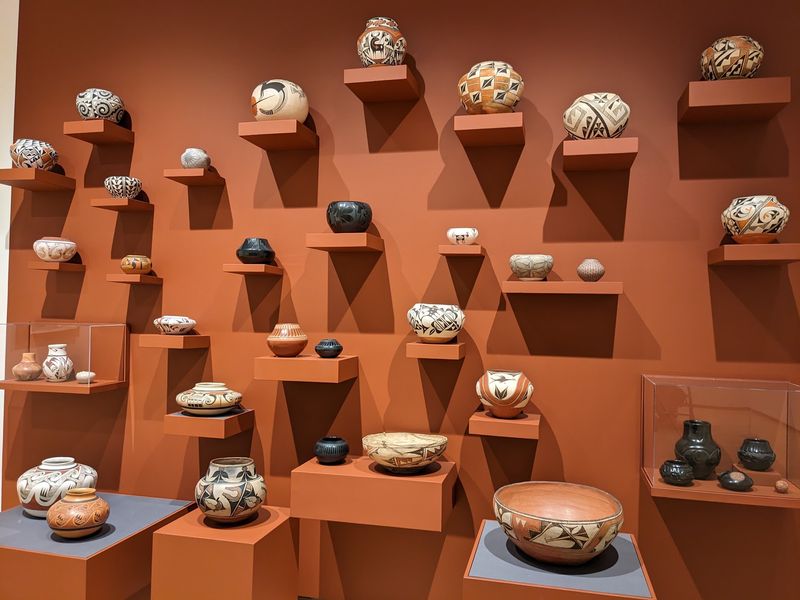
A single artwork can pull you out of sightseeing mode and make you look harder. That shift is part of the pleasure at the University of Iowa Stanley Museum of Art, where a campus visit becomes a conversation about ideas.
The museum’s current building opened in 2022, placing a modern cultural stop within the university’s much longer story. Its collection includes African art and major works of modern art, though individual pieces on display can change with exhibitions and loans.
Admission is free, but check current hours, closures, and visitor guidance before arriving. Once inside, pick a small number of works and spend real time with them; reading every label is not a requirement for enjoying the galleries or finding something unexpected.
This stop is not evidence of what women encountered in 1855, and it should not be presented that way. Instead, it shows the range of learning available on the campus today.
Moving from a historic admissions story into a welcoming art museum makes the university feel less like a frozen landmark and more like an active place for discovery now.
Let the Iowa River Set the Pace
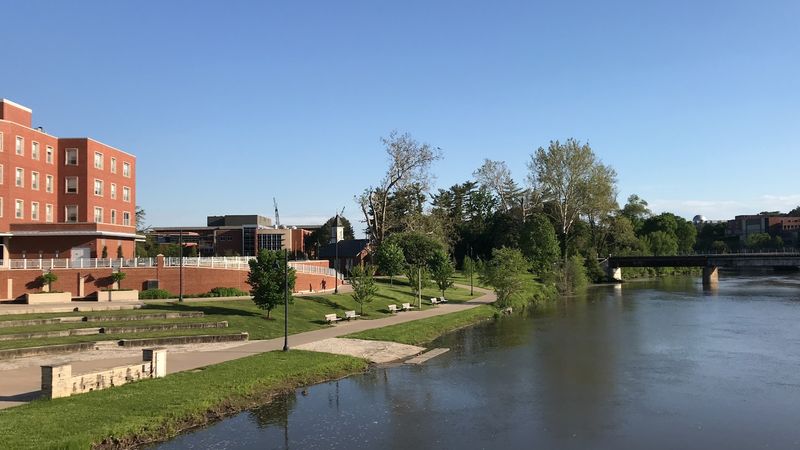
Water gives your eyes somewhere to rest after all those columns and classroom windows. Along the Iowa River, the University of Iowa opens into longer views, with paths and crossings that reveal how the campus stretches across both banks.
Choose a short riverside segment rather than assuming you need to complete a grand loop. Near the central campus, you can pair a walk with the Iowa Memorial Union, then decide whether your energy and the weather invite a longer outing.
Watch for bicycles, changing path conditions, and temporary closures, especially after heavy rain or during construction. River levels can change, so stay on designated routes and never treat a closed section as an invitation to explore closer to the water.
The river does not explain the university’s admissions history by itself, but it gives that story a living landscape. Students still cross campus carrying books, making plans, and heading toward futures they cannot fully picture.
For visitors, a quiet stretch beside the water provides space to absorb the day’s history without another label to read or another doorway to find right away.
Finish with Possibility at Hancher Auditorium
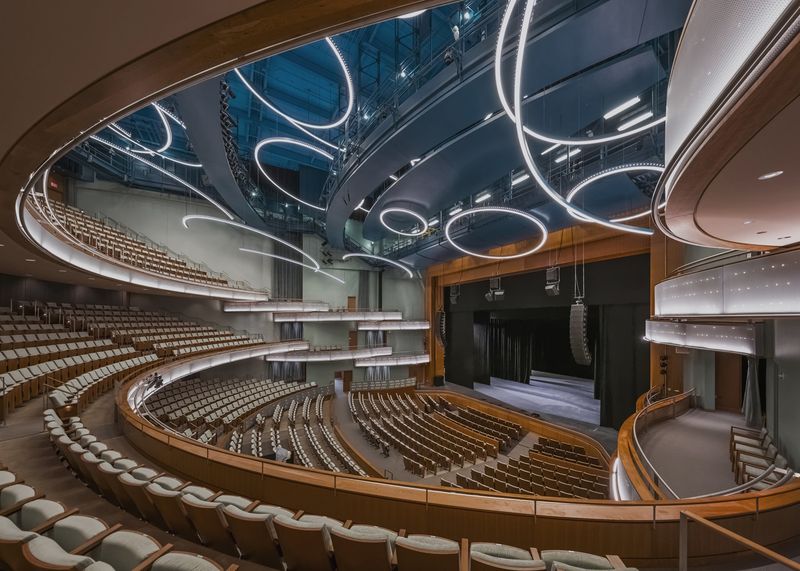
As evening light reaches the glass, the campus starts to feel ready for a different kind of lesson. Hancher Auditorium brings performance into the University of Iowa experience, offering a fitting final stop after a day spent thinking about opportunity.
The current building opened in 2016 after flooding forced the replacement of the earlier auditorium. Its setting near the Iowa River and its broad modern forms make the exterior worth seeing, even when your visit does not line up with a show.
For an indoor experience, check the official calendar and buy tickets through authorized channels. Performances, prices, entry times, and public building access vary, so do not assume you can wander inside simply because the grounds are accessible during your walk.
End by looking back at the larger campus story: a public university made a notable admissions choice in 1855, then continued changing through generations of students. Hancher adds music, movement, and shared attention to that ongoing story.
Whether you take a seat for a performance or pause outside, the visit closes on something more open than nostalgia: what learning might become next.