The oldest known Harley-Davidson sits behind glass, wrapped in a glowing outline of the tiny shed where it was built in 1903. That shed measured just 10 by 15 feet.
Not bad for a backyard project.
Now the story fills two floors with more than 450 motorcycles. There’s a whole wall of colorful gas tanks.
There’s an engine taken apart piece by piece, hanging in midair like a mechanical puzzle.
I like how this place speaks to grandparents and grade-schoolers at the same time. Kids can try on tiny leather jackets and rev pint-sized bikes.
Grown-ups can stare at race machines and custom builds until their feet beg for mercy.
This Wisconsin landmark sits on a riverfront campus with a playground, a restaurant, and summer demo rides. So how long can anyone really last before checking the clock?
It All Starts With A Bike Older Than Your Great-Grandpa
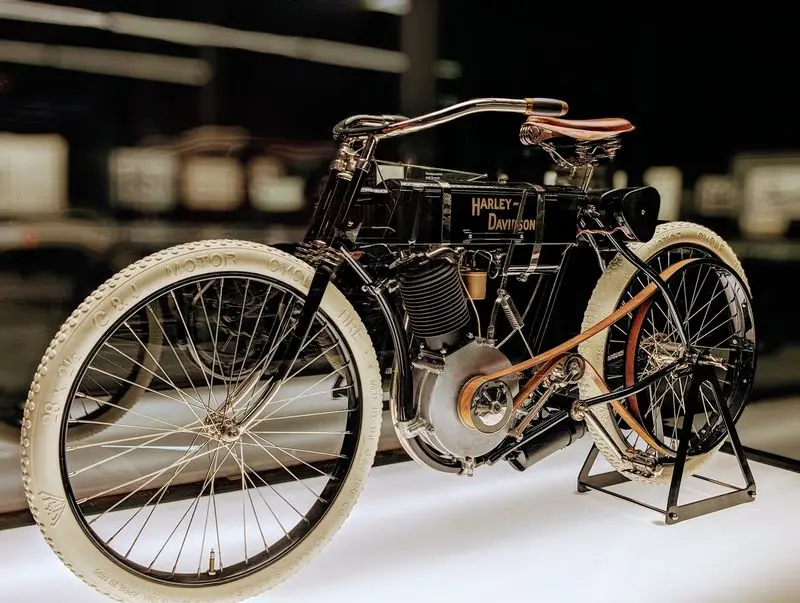
One hundred and twenty-plus years of motorcycle history begins with a single, skinny machine. Serial Number One is the oldest known Harley-Davidson, built in 1903, and it greets visitors at the Harley-Davidson Museum® like a quiet celebrity.
The bike rests inside a glass case. Around it, a lit-up outline traces the shape of the original wooden shed where the company got rolling.
That shed was only 10 by 15 feet, smaller than many bedrooms. Seeing the outline helps you picture how humble the beginning really was.
Kids usually notice right away that this bike looks more like a bicycle than a modern motorcycle. That reaction is half the fun, honestly.
It sets up the whole story you’re about to follow.
Grown-ups can spot the simple frame and tiny engine. It’s a great moment to talk about how inventors start small and keep improving.
Give this display a few extra minutes before rushing ahead. Everything else in the building grew from this one spot, so it makes the rest of the visit click into place.
Snap a photo, too, because this bike basically started it all.
Walk Down A Runway Of Motorcycles Three Bikes Wide
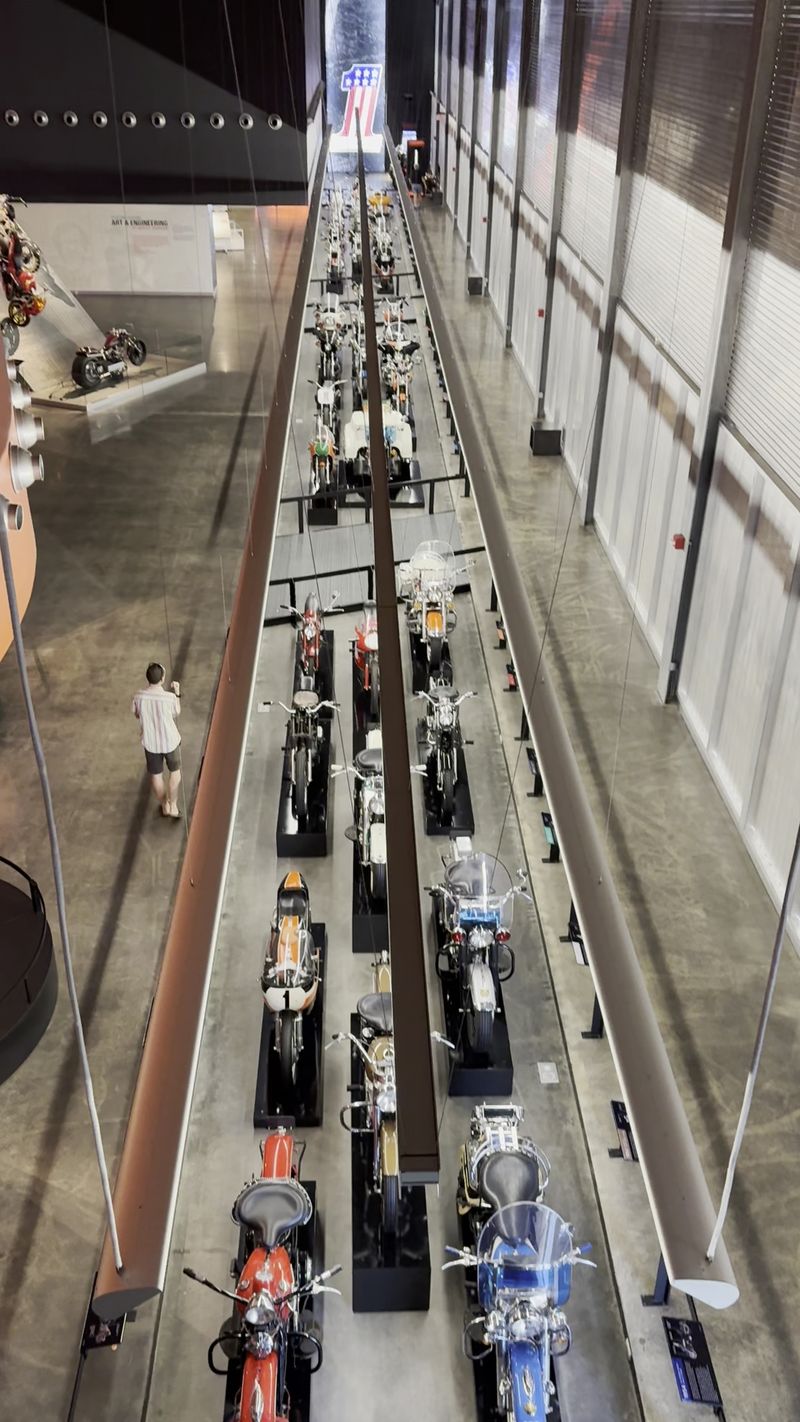
Here’s a fun number to chew on: 180 feet. That’s the length of the second-floor display where motorcycles line up three across, showing how Harley-Davidson changed from 1903 to today.
The Motorcycle Galleries stretch across two floors in total. You can basically walk through time, watching handlebars, tanks, and paint jobs shift from decade to decade.
Early bikes look thin and simple. Later models grow bolder, shinier, and more powerful, almost like the bikes hit a growth spurt.
The building itself fits the mood. Polished concrete floors, weathered beams, and Harley’s signature orange and black colors give the space a factory feel without feeling cold or stuffy.
Families can turn this stretch into a game. Have each person pick a favorite bike from every era, then compare choices at the end.
Arguments are allowed, but keep them friendly.
More than 450 motorcycles appear across the museum, so pace yourself. Wear comfy shoes and plan for breaks between galleries.
This Wisconsin collection rewards slow wandering much more than speed-walking, which is a little ironic for a motorcycle museum.
Your Ears Get A Workout In The Engine Room
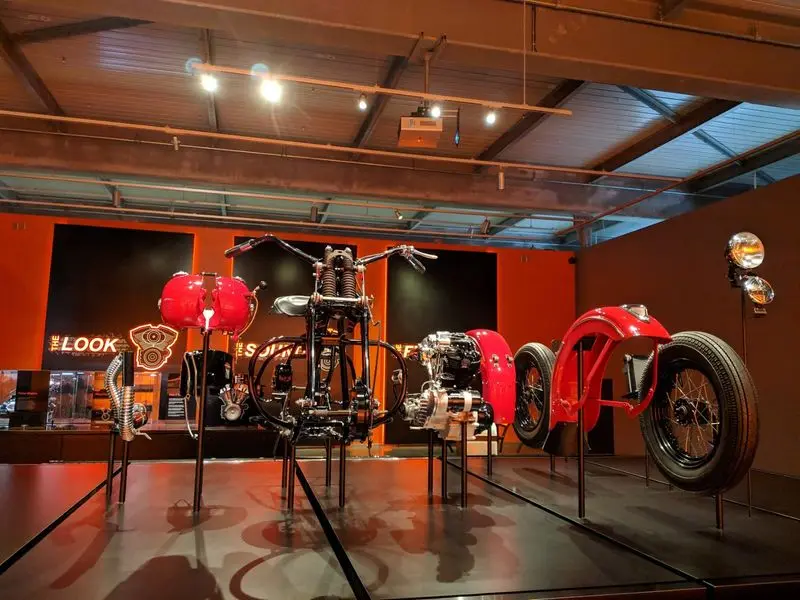
A 1940s Knucklehead hangs in pieces here, every part floating in place like someone hit pause mid-explosion. Called the Exploded Bike, it shows exactly how a motorcycle fits together.
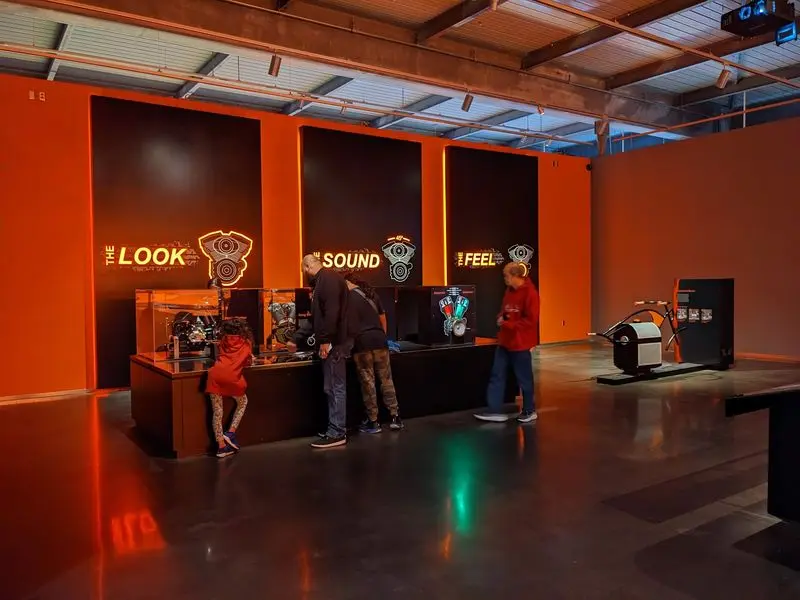
The Engine Room is the museum’s mechanical heart. Historic engines line the space, along with a family tree that maps how Harley engine designs developed over the years.
Touchscreen stations let you explore how each engine works. Better yet, many offer recordings of engine sounds, so you can hear the rumble instead of just reading about it.
Curious kids who take apart toasters will feel right at home. Adults who can’t tell a piston from a pancake might finally get it, too.
A smart move is to let everyone pick one engine and listen to it twice. Then compare which one sounds the toughest.
Spoiler alert: everyone will think theirs wins.
Plan extra time for this area if anyone in your group loves gadgets. The interactive screens go pretty deep.
It’s the kind of room where five minutes quietly turns into thirty, and nobody really minds.
Bring Your Camera Because The Tank Wall Begs For Photos
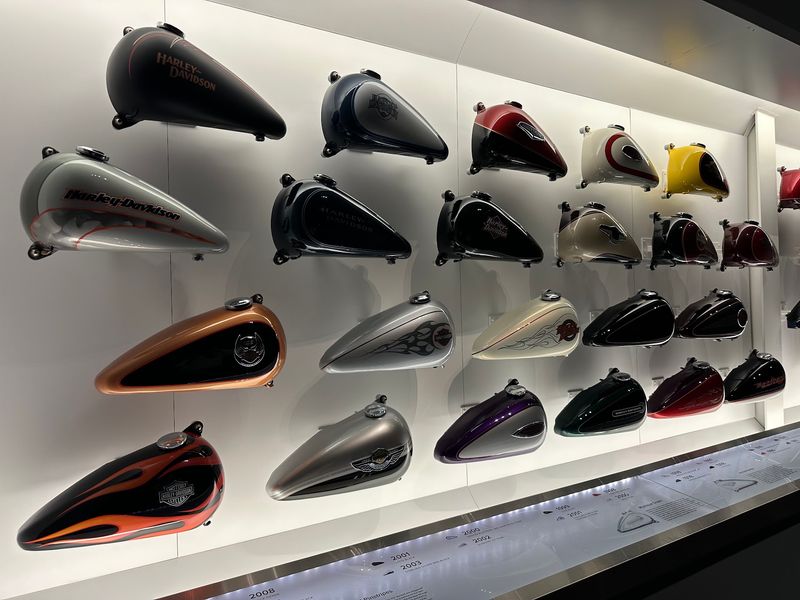
Rainbow, meet horsepower. The Tank Wall packs a huge spread of Harley-Davidson gas tanks into one eye-popping display, each with its own colors, logos, and style.
It’s one of the most photographed spots inside the Harley-Davidson Museum®. Good news, since photography is welcome throughout the building.
Look closely and you can trace how the company’s designs and logos changed over time. Some tanks feel classic and simple, while others go loud with bright paint and flashy graphics.
Younger visitors love hunting for their favorite color. Older fans often play a different game, trying to guess which era each tank came from before checking.
Quick photo tip: glass and shiny surfaces around the museum can cause reflections. Shift your angle a bit and step slightly to the side for a cleaner shot.
Art lovers who don’t care much about engines will still find plenty to enjoy here. Tanks work like tiny canvases on wheels.
Take a moment to notice the lettering and pinstripes, because the details are where the real artistry shows up.
Little Riders Get Their Own Pint-Sized Leather Jackets
Tiny leather jackets might be the cutest thing in Milwaukee. At the Imagination Station, young visitors can try them on and rev the engines on kid-sized motorcycles.
Parents, get your phones ready. That mini biker look is pure scrapbook material.
The museum adds plenty more for younger guests. A kids’ area offers drawing and rubbing activities, which works nicely when small legs need a break from walking.
Then there’s Build-A-Bike, an interactive display where kids and adults design dream motorcycles. Expect wild color choices and maybe a few flames.
Creativity rules here.
Over in the Experience Gallery, visitors can sit on a real Harley-Davidson and try a virtual ride. It makes a great photo moment for every age, including grandparents who swear they’re too cool for it.
The museum also runs STEAM activities and hands-on programs called Exhibits in Action. Scavenger hunts give groups a playful way to explore, too.
A good plan is to mix kid stops between bigger galleries. That keeps energy up and meltdowns down.
Everyone stays happier, and you get more time with the bikes.
Racing Bikes Tilt Sideways On A Steep Board Track
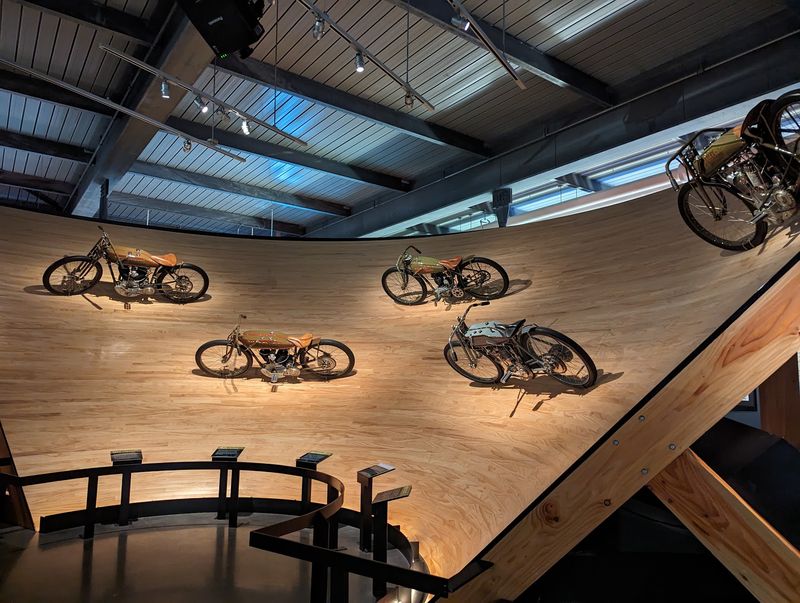
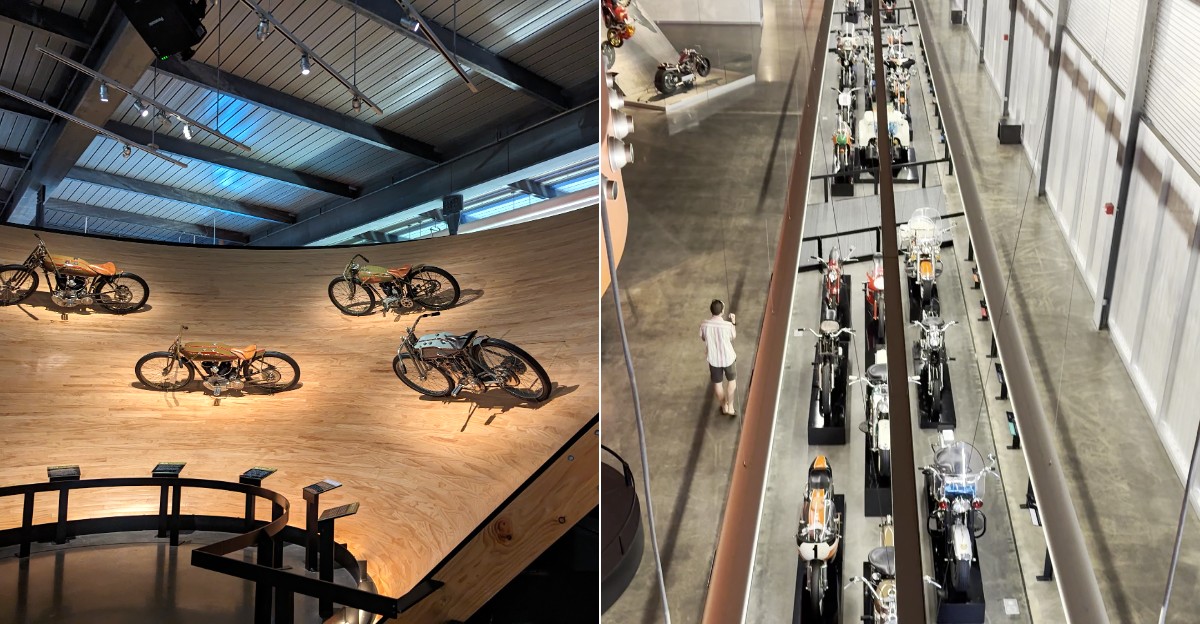
Gravity looks a little nervous in Clubs and Competition. Vintage race bikes sit on a board track angled at 45 degrees, surrounded by projected images and engine sounds.
The display gives a sense of how fast and daring early racing must have felt. Even standing still, it seems like the bikes could launch any second.
Famous machines appear here too, including Joe Petrali’s land speed record Knucklehead. Speed fans tend to linger, and who can blame them?
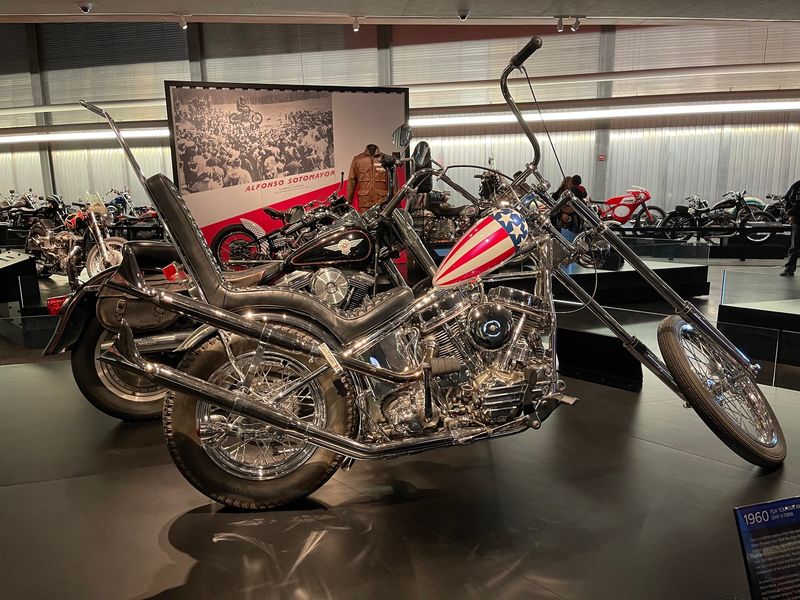
Not far away, Custom Culture celebrates riders who made their bikes totally their own. The star might be King Kong, a custom bike stretching about 4 meters long.
That’s roughly 13 feet of motorcycle. Good luck parallel parking it.
These two areas show different sides of Harley life. One focuses on competition and records, while the other is all about personal style and imagination.
Teens often connect with this part of the museum. Racing and customizing feel exciting and rebellious in the best way.
Ask them which custom bike they’d build, then brace yourself for some very creative answers.
Guided Tours Unlock Rooms Most Visitors Never See
Behind the public galleries sits something special. Since 1915, Harley-Davidson has saved one bike from each production line, and the company’s archives live right on the museum grounds.
Those archives supply over 85 percent of what’s on display. Want a peek at the rest?
That’s where guided tours come in.
The Beyond the Gate Tour runs about 90 minutes and includes access to the Motorcycle Vault. It’s offered on Thursdays, Fridays, and Saturdays.
Short on time? The Spotlight Tour takes about an hour, covering key exhibits and iconic motorcycles.
Look for it on Sundays, Mondays, and Fridays.
There’s also a Behind-the-Scenes Tour into the private Harley-Davidson Archives. And the Steel Toe Tour includes a shuttle trip to the Pilgrim Road Powertrain Operations facility.
Expert guides share stories you might miss wandering solo. They add context that turns cool bikes into memorable history lessons.
Schedules can change, so check ahead before your trip to Wisconsin. Booking early is smart if your heart is set on a specific tour.
Hardcore fans especially will consider it time well spent.
Refuel With Smoky Barbecue On A Riverfront Patio
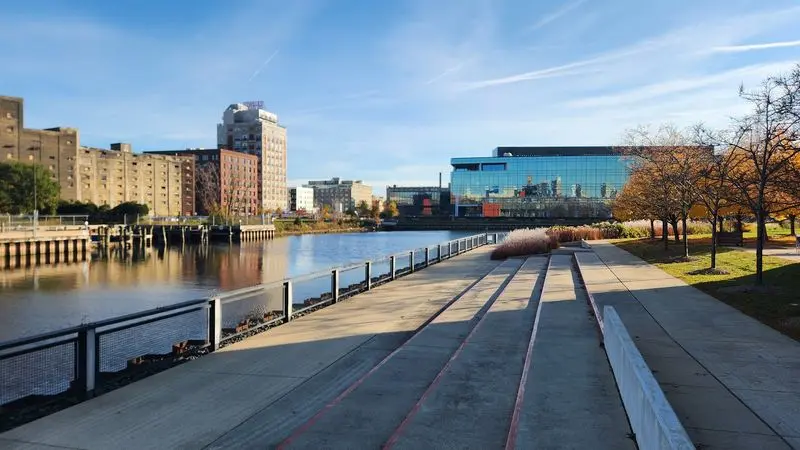
All that walking builds an appetite, and MOTOR Bar and Restaurant sits right on campus. The kitchen serves scratch-made New American food with a focus on bold barbecue and smoked flavors.
Burgers and fresh salads are on the menu. The restaurant also sources ingredients from local businesses like Clock Shadow Creamery and Milwaukee Pretzel Company.
Floor-to-ceiling windows bring in the view. Outside, the patio is billed as Milwaukee’s largest riverfront patio, set along the Menomonee River.
Families get some sweet perks. Kids eat for a special low price on Mondays, and children’s meals arrive on a take-home frisbee.
Yes, lunch comes with a souvenir. Pretty clever move.
The Can Room offers video games and a basketball pop-a-shot. In summer, the patio adds jumbo Jenga and cornhole, which can easily stretch lunch into an afternoon.
One more handy detail: museum admission isn’t required to eat at MOTOR. That makes it a solid stop even on days you’re not touring.
Grab a table, rest your feet, and plan your next round of exploring.
Save Energy For The Campus Outside, Because The Fun Keeps Rolling
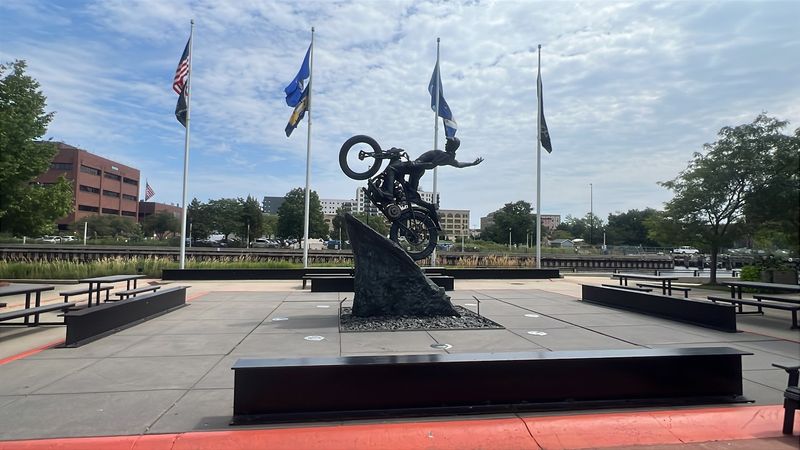
A 16-foot bronze sculpture called By the Horns, created by Jeff Decker, marks the entrance. Above it, a 17-foot steel sign announces you’ve arrived at the Harley-Davidson Museum®, 400 W Canal St, Milwaukee, WI 53201.
The campus covers 20 acres along the Menomonee River. It even holds a replica of the original 1903 workshop, known as The Shed.
Davidson Park offers a nature-based playground with slides, climbing walls, and ropes. Pathways are stroller-friendly, and free WiFi is available.
Don’t miss the Rivet Walls, a monument with engraved motorcycle messages. Reading them feels like flipping through a giant rider scrapbook.
From May through September, Thursday Bike Nights bring free live music. Weekend demo rides let licensed riders test the latest Harley models.
Seasonal fun keeps going with the Davidson Park Movie Night Series, a Pumpkin Party, Trunk or Treat, and Breakfast with Santa in December.
Free on-site parking fits 500 cars and 1,000 motorcycles. Swing by the H-D Shop and Factory Outlet before leaving Wisconsin, because museum-exclusive gear makes a fine trophy.