In June 1776, a room full of colonial lawmakers voted to split from Great Britain and Pennsylvania on the very same day. Two breakups, one afternoon.
That bold move is how Delaware became its own state.
I love that kind of surprise. The more I read about the First State, the more strange and wonderful stories popped up.
One museum displays a merman figure tied to Japanese folklore. A 1938 ship now sits in a canal as a National Historic Landmark, even though it never served at the station it’s named after.
Then there’s an island fort you can only reach by ferry. It once held thousands of Civil War prisoners, and today costumed guides fire a real cannon.
Small state, sure. But these ten stops pack in gunpowder mills, D-Day planes, secret bunkers, and courtrooms where freedom was argued.
I think the map undersells this place.
1. Hagley Museum
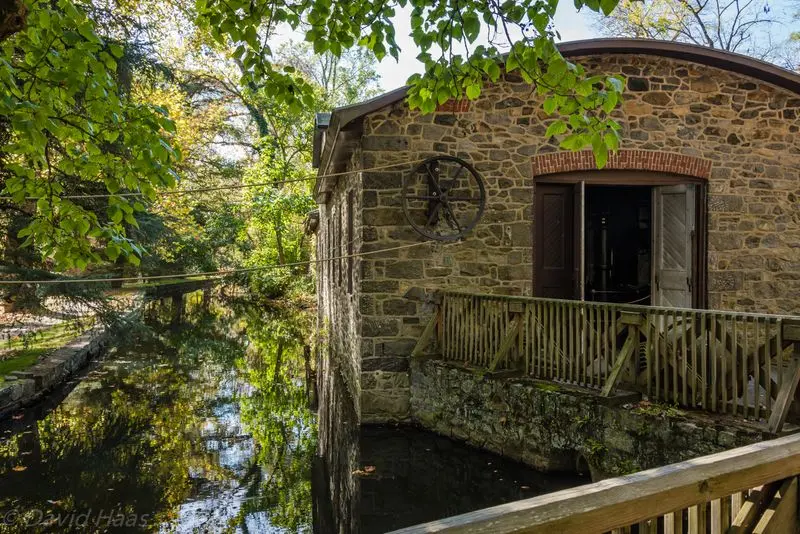
Gunpowder built this place, which makes it one of the few museums where a loud bang counts as education. In 1802, French immigrant E.I. du Pont set up black powder mills along the Brandywine Creek.
Those mills grew into the largest gunpowder operation of their kind in the world. They ran for 119 years before closing in 1921, when dynamite took over the job.
Today you can roam about 235 acres of stone mills, waterwheels, and heavy machinery from the 1800s. Live demonstrations show off a black powder roll mill and a coal-fired steam engine.
Up the hill sits Eleutherian Mills, the du Pont family home built in 1803. Guided tours take you through rooms filled with French antiques, American folk art, and family treasures.
Don’t skip Workers’ Hill, where a one-room schoolhouse shows how mill families lived and learned. The Nation of Inventors exhibit adds more than 120 patent models from the 1800s, and some of them are delightfully odd.
Hagley became Delaware’s first Smithsonian Affiliate in 2014, a pretty big badge for a creekside powder yard. Plan around Wednesdays, since the museum closes to general visitors that day.
Address: 200 Hagley Creek Rd, Wilmington, DE 19807
2. New Castle Court House Museum
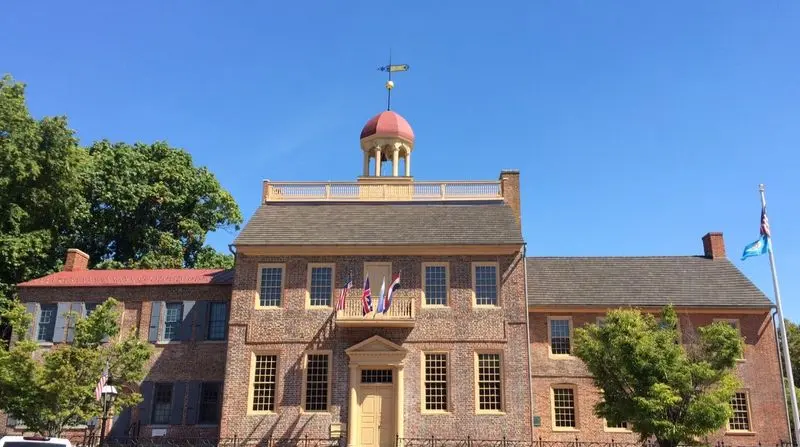
A whole state was born inside this brick building, and the paperwork still counts. On June 15, 1776, the colonial assembly voted here to break from both Pennsylvania and Great Britain.
That vote created the State of Delaware. A few months later, on September 20, 1776, the state’s first constitution was adopted in the same building.
The central section dates to 1732, which places it among the oldest surviving courthouses in the country. Its cupola even served as the center point for the 12-mile circle that shapes Delaware’s curved northern border.
Yes, a building helped draw a state line. Geography class just got a lot more interesting.
The story turns serious too. Abolitionists Thomas Garrett and John Hunn were tried and fined here for helping people escape slavery, and exhibits explore the Underground Railroad in depth.
Free guided tours run about 45 minutes, often led by a guide in period costume. You’ll also see portraits, furniture, and an exhibit on the Swedish, Dutch, and English forts that once stood nearby.
Afterward, stroll the cobblestone streets of this preserved colonial river town. The museum is closed Mondays and Tuesdays.
Address: 211 Delaware St, New Castle, DE 19720
3. Fort Delaware State Park
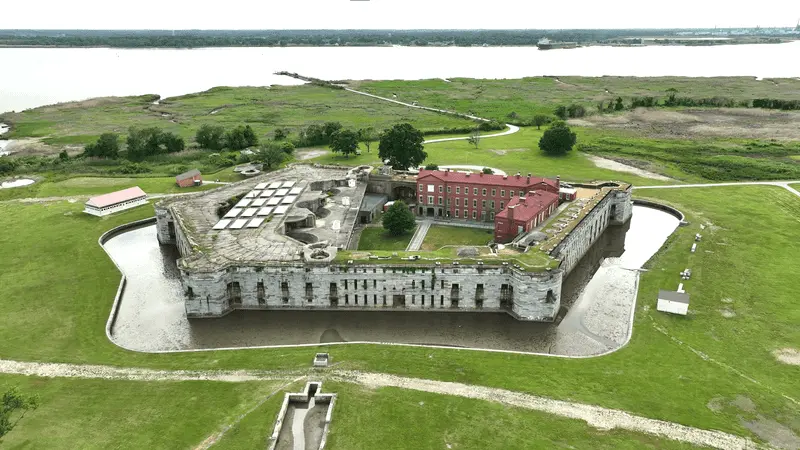
Your field trip starts with a boat ride, which already beats most history lessons. A half-mile ferry carries you from Delaware City out to Pea Patch Island, home to a hulking granite and brick fortress.
The current fort was substantially complete by 1860, just in time for the Civil War. It became a Union prison camp, holding thousands of Confederate prisoners, including men captured at Gettysburg.
Once you land, a jitney hauls you from the dock to the fort. Costumed interpreters then drop you into the summer of 1864.
You might help in the blacksmith shop or wander restored barracks and officers’ quarters. The showstopper is the 8-inch Columbiad cannon, fired with a live gunpowder charge.
Nature fans get a bonus. The island holds one of the largest Atlantic Coast nesting sites for herons, egrets, and ibises north of Florida.
Pack sunscreen, bug spray, and closed-toe shoes for the uneven stone paths. The ferry runs seasonally, generally late spring through early fall, so check the schedule first.
Fun detail: bats hibernate in the fort, so you’ll step on wet mats to protect them. Small price for sharing a castle.
Address: 55 Clinton St, Delaware City, DE 19706
4. Historic Odessa Foundation
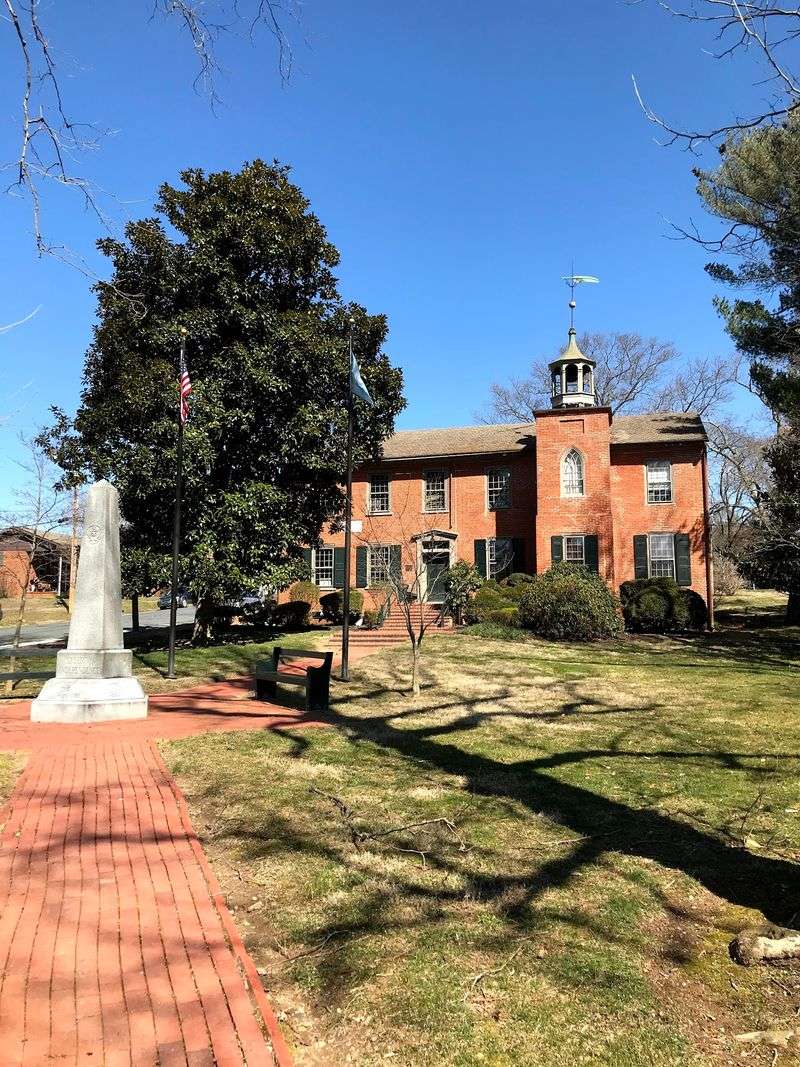
Fewer than 400 people live in this tiny town, yet its old houses carry stories big enough for a city. Odessa is known for its preserved colonial and Federal-era architecture, and this foundation helps keep that past open to visitors.
Head to the visitor center on Main Street to get your bearings. From there, the foundation’s collection includes historic homes, a museum, and an old bank building.
The biggest treat is stepping inside homes that date back to the 1700s. Plenty of historic towns let you admire old houses from the sidewalk.
Here, you get to see the rooms themselves. That makes a real difference when you’re trying to picture daily life over two centuries ago.
The town’s early story ties to its days as a busy grain shipping spot. Learning that a sleepy village once hummed with trade adds a fun twist to the quiet streets.
Teachers and parents, take note. The foundation offers field trip opportunities, and it’s a solid pick for curious kids who like seeing history up close.
Visit Tuesday through Saturday, or on Sunday afternoons. Mondays are closed, so save your Odessa day for later in the week.
Address: 201 Main St, Odessa, DE 19730
5. The Old State House
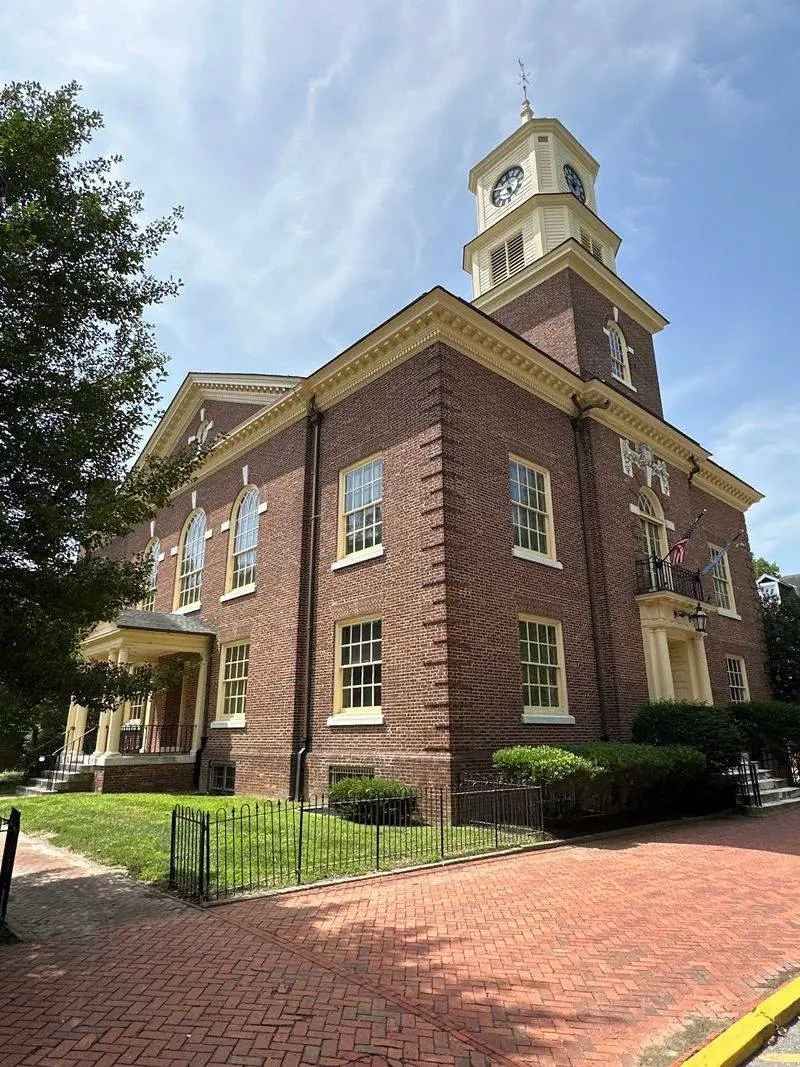
For about 140 years, Delaware’s big decisions happened inside one brick building on Dover’s Green. Construction wrapped up in 1791, and lawmakers met here starting in 1792 until the 1930s.
The Green itself goes back even further. William Penn designated this public square in 1683.
Inside, the first floor holds an 18th-century-style courtroom. Upstairs, you’ll find the old House and Senate chambers where the state’s lawmakers argued and voted.
Look up and around while you climb. A freestanding geometrical staircase curves gracefully, and a gilt sunflower ceiling sham adds some sparkle.
The Senate chamber displays an imposing 1802 portrait of George Washington by Denis A. Volozan.
In the House chamber, Thomas Sully portraits honor two War of 1812 naval heroes from Delaware.
One courtroom story stands out. Samuel D.
Burris, a free Black Underground Railroad conductor, was convicted here in 1847 and pardoned in the same room in 2015.
That kind of full-circle moment sticks with you. Free guided tours run Wednesday through Saturday, and the building is closed Sunday through Tuesday.
Address: 25 The Green, Dover, DE 19901
6. John Dickinson Plantation
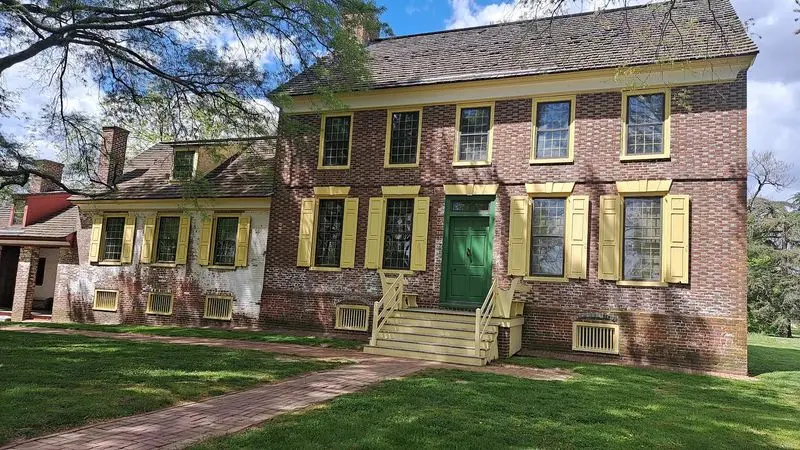
Long before blogs, one Delaware writer moved a nation with his pen. John Dickinson earned the nickname Penman of the Revolution and later signed the U.S.
Constitution.
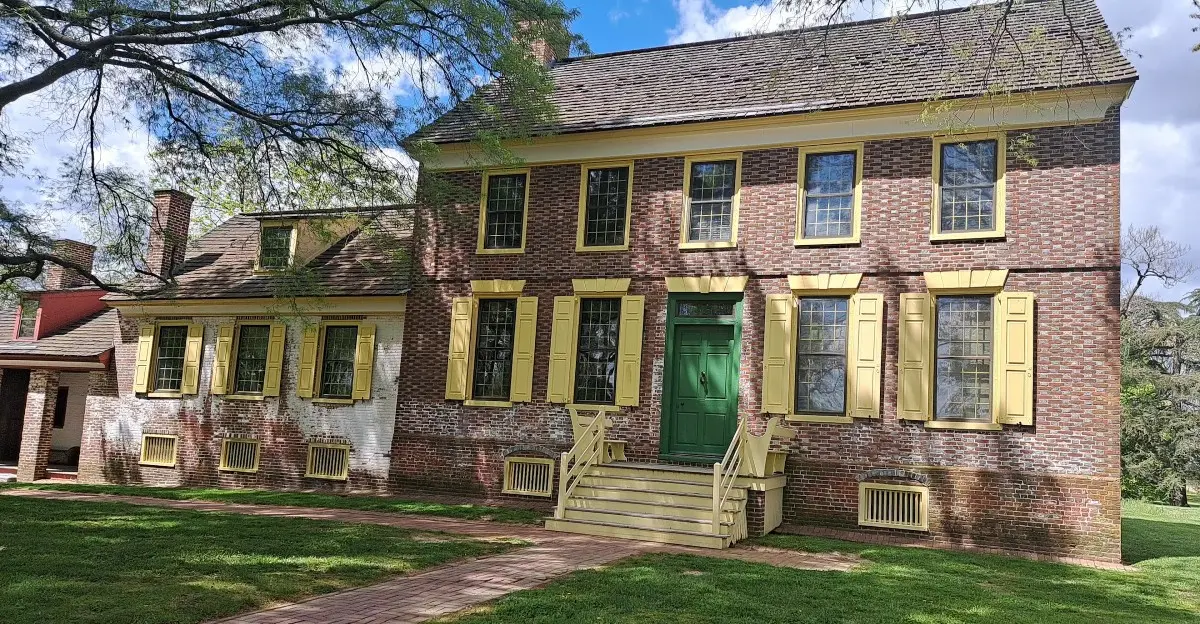
He spent part of his boyhood on this land in Kent County. His father, Samuel, built the brick home around 1740.
Fire destroyed the house in 1804, and Dickinson oversaw its rebuilding. Today, interpreters in 18th-century clothing guide you through the mansion and grounds.
The site doesn’t stop at the famous family. It also shares the stories of tenant farmers, indentured servants, free Black people, and enslaved people who lived and worked here.
A reconstructed log’d dwelling shows the kind of housing many of them called home. Dickinson freed the enslaved people on the property in stages, with the final freedom granted by 1786.
A new, larger visitor center opened in 2026 with an exhibit called One Land Many Voices. It covers Native American history, the Dickinson family, and the wider plantation community.
You’ll also spot a formal garden and working farm fields. Visit Wednesday through Saturday, and admission is free.
Address: 250 Kitts Hummock Rd, Dover, DE 19901
7. Air Mobility Command Museum
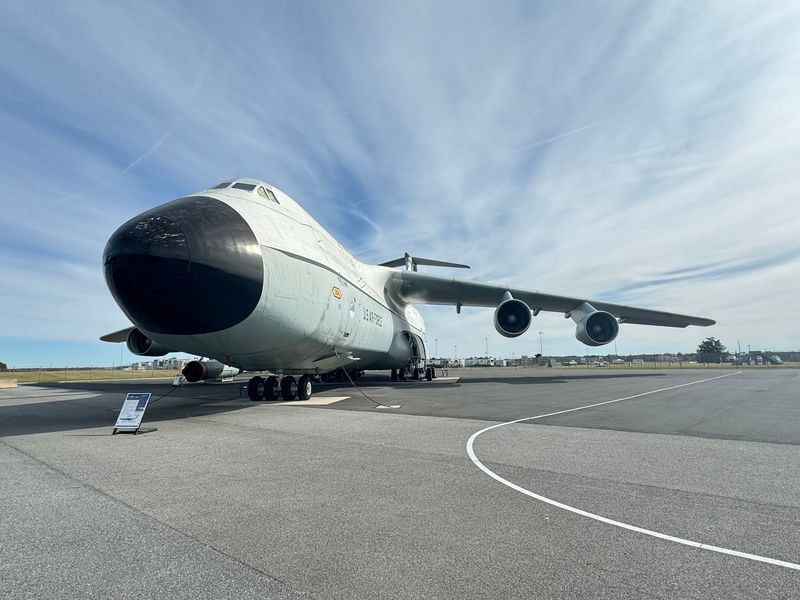
Fighter jets get the movie roles, but this museum celebrates the planes that actually got the troops and supplies there. Its focus is cargo and refueling aircraft, and the collection is huge.
The museum sits in a restored World War II hangar at Dover Air Force Base. Outside, giants like the C-141, C-5, and KC-10 line up for a close look.
The star of the show is a fully restored C-47. That very plane dropped paratroopers on D-Day.
Standing near it feels like meeting a celebrity who never wanted the spotlight. A B-17G adds even more World War II muscle to the lineup.
Here’s a bonus kids love. A C-5 is open for touring, so you can see just how much room fits inside one of the biggest cargo planes around.
Knowledgeable guides help explain airlift missions and how military transportation has changed over the decades. Displays and artifacts fill in the rest of the story.
Visit Wednesday through Sunday from 9 a.m. to 4 p.m. Free parking and a gift shop make the trip easy.
Address: 1301 Heritage Rd, Dover AFB, DE 19902
8. Fort Miles Historical Area
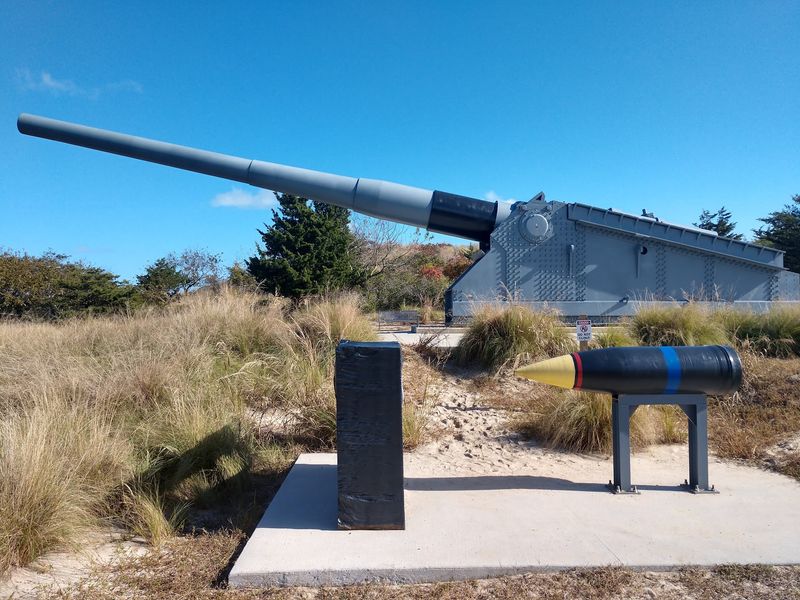
Some beach towns hide fudge shops in the dunes, but Cape Henlopen hid a fortress. Fort Miles was built during World War II to guard the ports of Philadelphia and Wilmington from German attack.
The fort was formally named on June 3, 1941. At its peak, nearly 2,500 soldiers and civilian staff worked here.
The heart of the site is Battery 519, a 15,000-square-foot underground bunker. Guided tours lead you inside to see exhibits on coastal defense and daily wartime life.
Two relics bookend the war in a clever way. A 650-pound piece of the USS Arizona sits near a 16-inch gun barrel from the USS Missouri.
Want a view? Climb Observation Tower 7 for sweeping looks at the park and the sea.
Surprise twist: the big guns never fired in actual combat. After the war, the area hosted a top-secret Navy listening post from 1962 to 1981.
The museum’s hours change by season, so check before you go. The surrounding grounds open daily from 8 a.m. until sunset.
Address: 15099 Cape Henlopen State Park, Lewes, DE 19958
9. Zwaanendael Museum
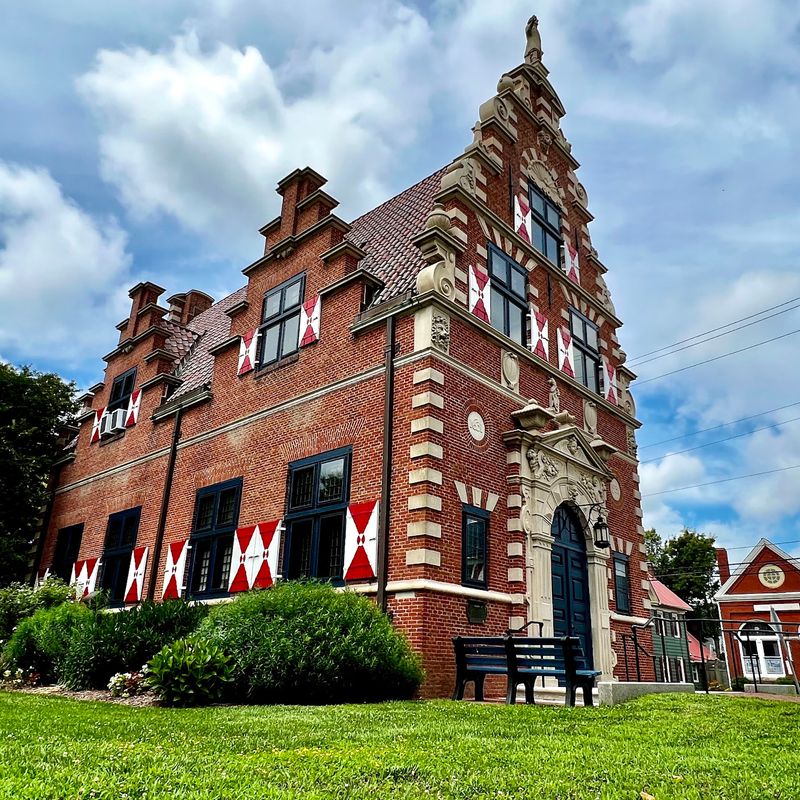
A slice of the Netherlands landed in Lewes, complete with a stone explorer standing on the roof. The building copies the old town hall in Hoorn, with a stepped gable, terra-cotta tiles, and painted shutters.
It was built in 1931 to mark 300 years since Swanendael, Delaware’s first European settlement. The name means Valley of the Swans.
Dutch settlers founded the colony in 1631 for whaling and farming. It lasted barely a year after a cultural misunderstanding with Native people.
Up top stands a sandstone statue of David Pietersen de Vries, the colony’s leader. Inside, exhibits cover local maritime, military, and social history.
One exhibit tells the story of HMS DeBraak, a British warship that sank off the coast in 1798. Another explores four important Delaware railroads.
Now for the weird part. The Zwaanendael Merman, a figure from Japanese folklore known as a ningyo, has been on permanent display since 1984.
Admission is free, and staff are happy to answer questions. Stop by Wednesday through Saturday, then take a stroll through the park out back.
Address: 102 Kings Hwy, Lewes, DE 19958
10. Lightship Overfalls LV-118
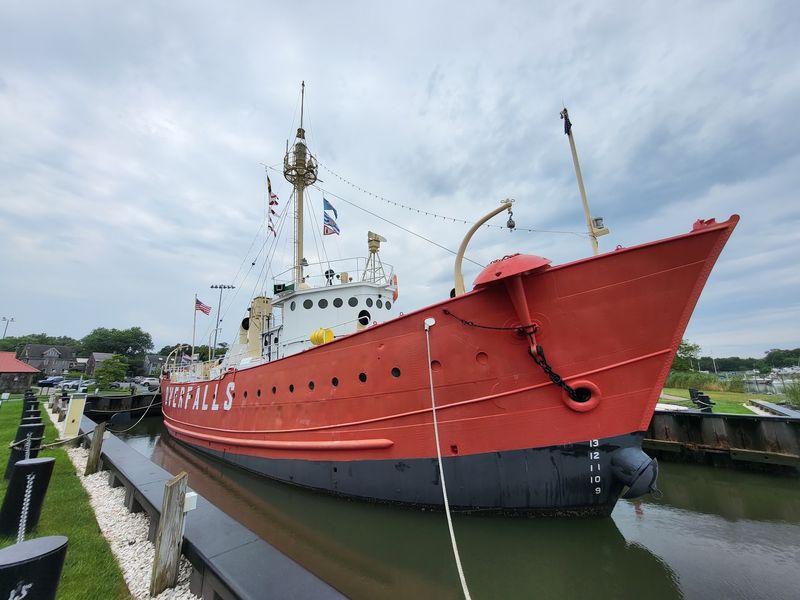
Here’s a ship with an identity twist worthy of a mystery novel. It’s named Overfalls, yet it never served at the Overfalls Shoals station off the coast.
The vessel was built in East Boothbay, Maine, in 1938. It was the last lightship built for the U.S.
Lighthouse Service.
Lightships worked like floating lighthouses, parked where towers couldn’t stand. This one served off Connecticut, Massachusetts, and Boston before retiring in 1972.
It got its current name in 1973, honoring the nearby station. In 2011, it became a National Historic Landmark, the first in Sussex County.
Only 17 lightships survive out of 179 built, so you’re looking at a rare breed. Guided tours take you above and below decks, through crew quarters, the mess, and the engine room.
Picture spending months aboard in rough seas. Suddenly your tiny bedroom at home feels roomy.
Near the ship, a large compass rose honors the Delaware Maritime Hall of Fame inductees. Tours run seasonally, roughly late May through mid-October, so check dates before heading over.
Address: 219 Pilottown Rd, Lewes, DE 19958