A herd of roughly 70 bison now roams land that was once bought for a nuclear power plant. That plant never got built.
Instead, the fields slowly turned back into tallgrass prairie, and the bison came home.
The first six arrived in 1996. Today they share about 800 fenced acres with a small elk herd.
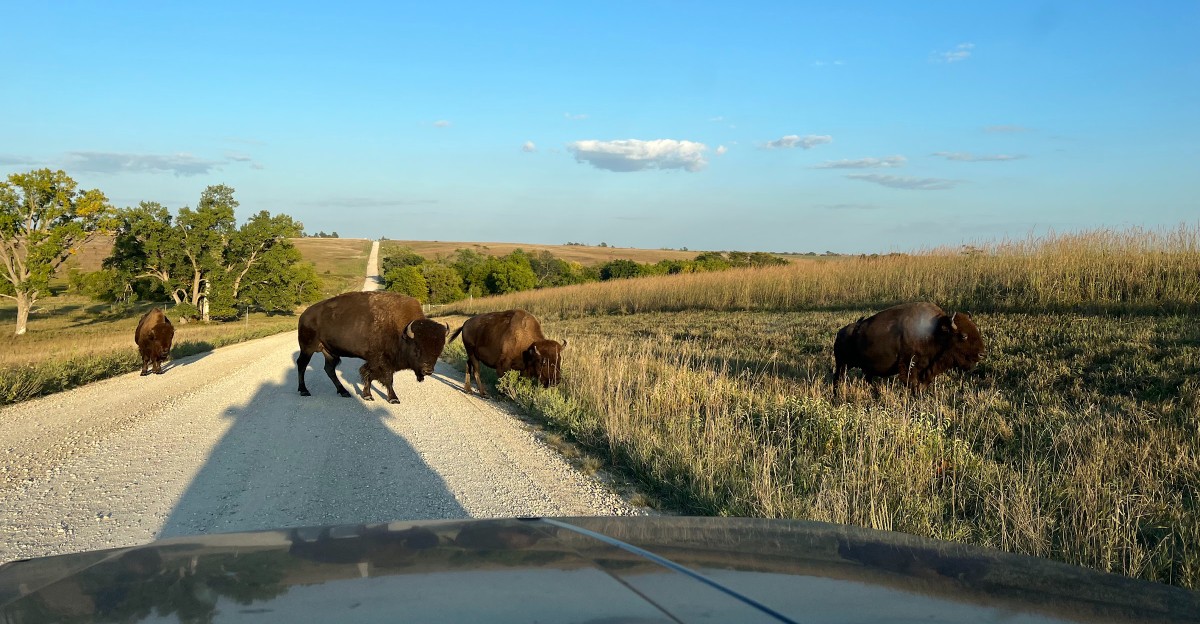
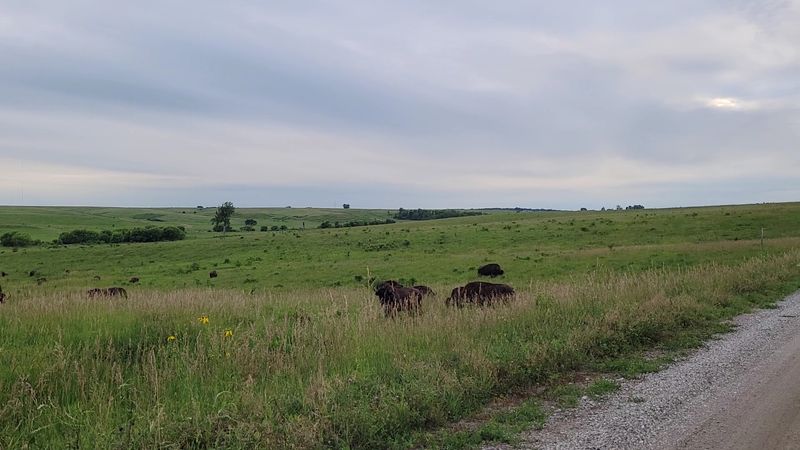
You can drive right through their neighborhood without leaving your car.
I love that this happened in Iowa, of all places. Prairie once covered most of the state.
Now less than one tenth of one percent of it remains.
I can’t imagine a better way to see what was nearly lost. The grass is tall, the animals are huge, and the road is gravel.
So how close will a bison wander to your windshield?
Roll Down the Gravel and Let the Bison Decide How Close to Get
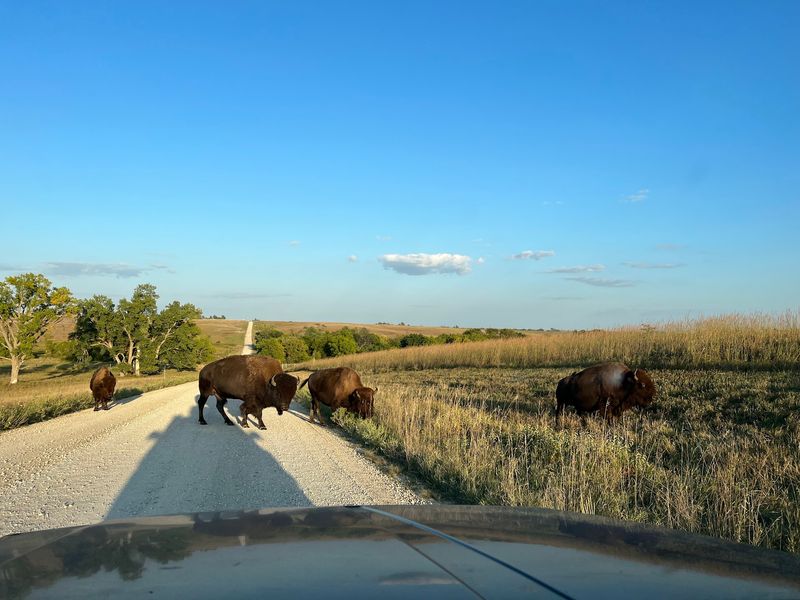
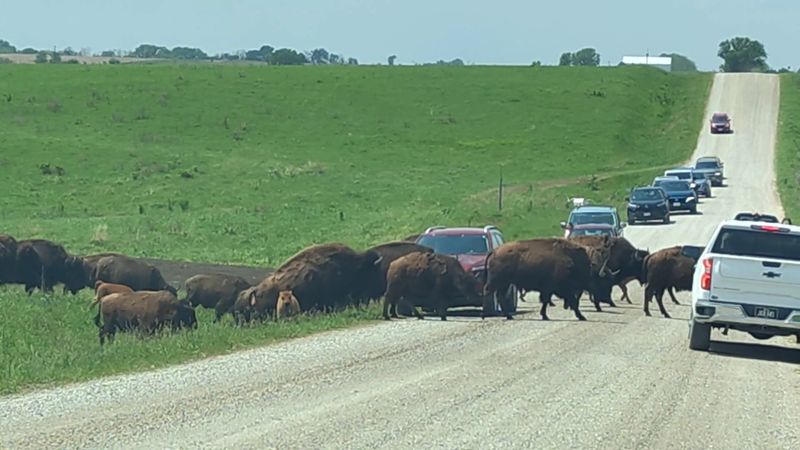
Big, shaggy, and totally unbothered by traffic, the bison here run the show. Neal Smith National Wildlife Refuge offers a 5-mile auto tour that loops right through their enclosure.
The drive is open from dawn to dusk every day of the year.
Inside the fenced area, you’ll share the road with roughly 62 to 70 bison. About 19 or 20 elk live there too.
Both herds roam freely across around 800 acres of prairie.
The rules are simple, and they matter. Stay on the road and stay inside your vehicle the whole time.
A bison can outweigh your car’s engine block, so this is not the moment for selfies.
Timing helps your odds. Bison and elk can show up at any hour, but dawn and dusk tend to be busy times for wildlife.
Early birds and evening drivers often get the best show.
Here’s a smart move. The herd keeps moving across the grass, so one empty pass doesn’t mean a wasted trip.
Loop around and try again, because the next lap might put a huge head right beside your window.
A Power Plant Was Supposed to Stand Where the Grass Now Grows
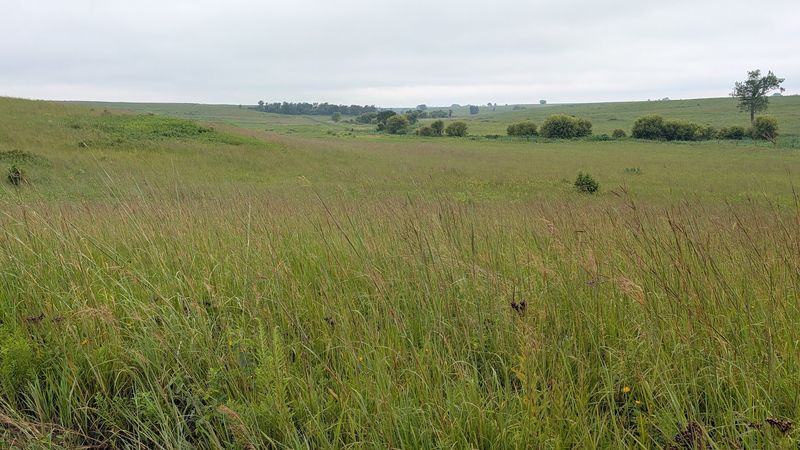
Back in the 1970s, Iowa Power and Light Company bought this land with plans for a nuclear power plant. The plant never happened.
That twist opened the door for something much wilder.
In 1990, Congress created a new refuge here. It was first called the Walnut Creek National Wildlife Refuge.
Around 1990 and 1991, the government bought a core parcel of about 3,600 acres from the power company.
The name changed in 1998. It honored Congressman Neal Smith, who pushed hard to create this sanctuary.
So when you say Neal Smith National Wildlife Refuge, you’re tipping your hat to a real champion of the prairie.
Restoration work kicked off in 1992. Crews started turning old cropland back into native prairie, using seeds from local sources.
That detail matters, since local seeds keep the plants true to the region.
Think about the scale of that comeback. Fields that grew rows of crops now wave with tall native grasses.
Not bad for a place that almost became a power station.
You’re Standing in the World’s Largest Prairie Do-Over
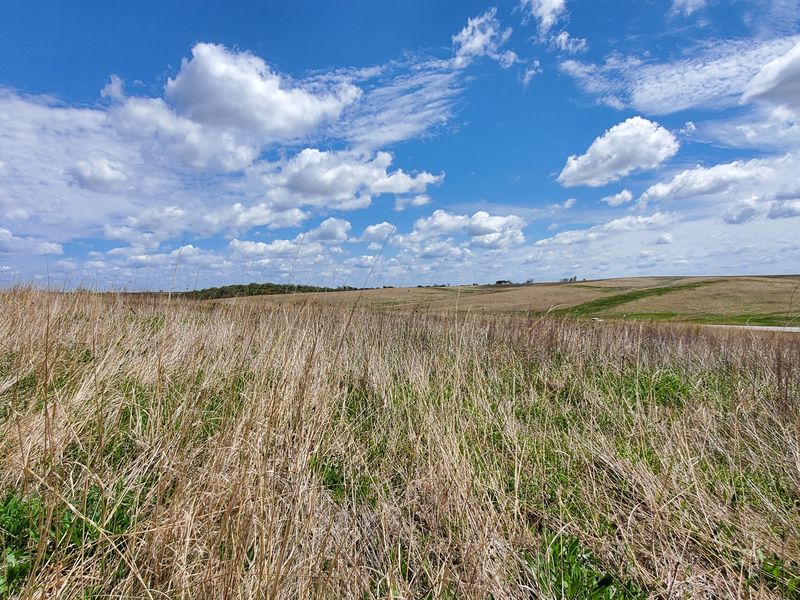
Here’s a number worth repeating at dinner. Tallgrass prairie once covered about 85 percent of Iowa.
Today, less than 0.1 percent of that original prairie is left.
That’s why this refuge is such a big deal. It’s known as the largest tallgrass prairie ecosystem reconstruction in the world.
Right now it protects about 6,000 acres of wildlife habitat.
And it could keep growing. The U.S.
Fish and Wildlife Service can expand the refuge to roughly 8,650 acres. That land comes only from willing sellers within the Walnut Creek watershed.
Prairie isn’t the only habitat here, either. The refuge also protects oak savanna and sedge meadow.
Each one supports different plants and animals, so the scenery shifts as you explore.
Why do the bison matter to all this? Their grazing helps manage the tallgrass naturally.
It boosts the variety of life on the land, so the herd basically works as a very hairy landscaping crew.
Walking through, you’re seeing a patch of old Iowa rebuilt from scratch. That’s rare, and a little humbling.
Lace Up for Trails That Range From Quick Strolls to Real Workouts
Five walking trails give you plenty of choices, from easy loops to longer hikes. Your legs get to pick the adventure.
The car can rest for a while.
Short on time? The Overlook Trail Loop runs about half a mile and is wheelchair accessible.
The Oak Savanna Trail Loop is also around half a mile, with a different look under the trees.
For something longer, the Tallgrass Prairie Loop stretches about 2 miles and is paved. It puts you right in the middle of all that grass.
Summer is a great time to look for blooming wildflowers.
Serious walkers can tackle the Volksport Trail. It offers mowed loops of 3.1 and 6.2 miles.
Those loops connect the Tallgrass and Oak Savanna trails.
Got a dog? Pups are welcome on the trails as long as they stay on a 6-foot leash.
Your four-legged buddy will love the smells.
Pack water before you go, since the main building is closed. Good shoes help too, because some stretches can feel rough or overgrown.
Bring the Bike Because Pacific Street Has Its Own Paved Path
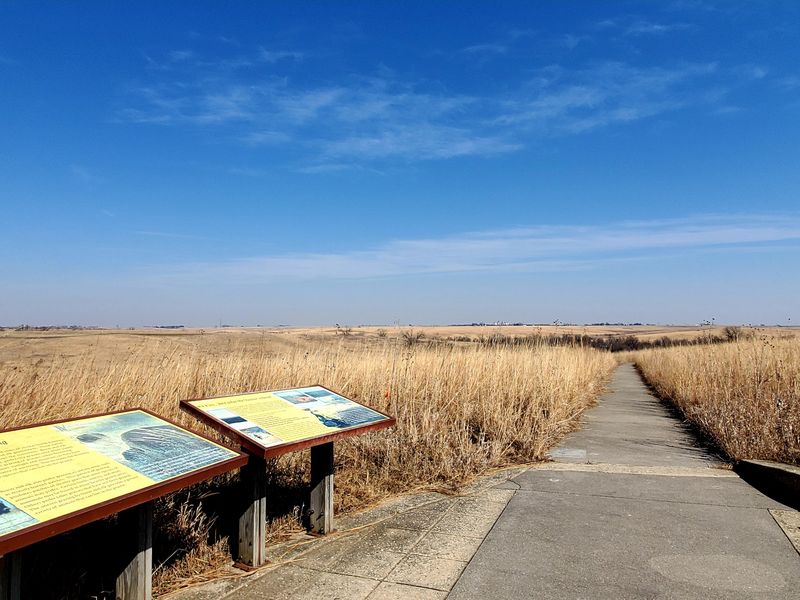
Two wheels might be the most fun way to arrive. A 4.5-mile paved bike trail runs along Pacific Street, the main road into the refuge.
It’s open all year long.
The official address is 9981 Pacific St, Prairie City, IA 50228. That same road carries you toward trailheads, parking, and the start of the wildlife drive.
So the bike path and the main entrance go hand in hand.
Riding gives you a slower, closer look at the prairie. You’ll notice grasses moving in the wind and birds darting across the fields.
A car window just can’t match that.
One thing to remember is the bison loop itself. Inside the enclosure, visitors must stay inside their vehicles.
Keep your bike adventures on the paved trail, and save the bison drive for the car.
Plan for a full outing if you want. Ride the path, lock up, and stroll a short loop.
Then grab a picnic table for a snack break before heading home.
Honestly, that sounds like a pretty perfect Saturday.
Keep Your Binoculars Handy for More Than 200 Kinds of Birds
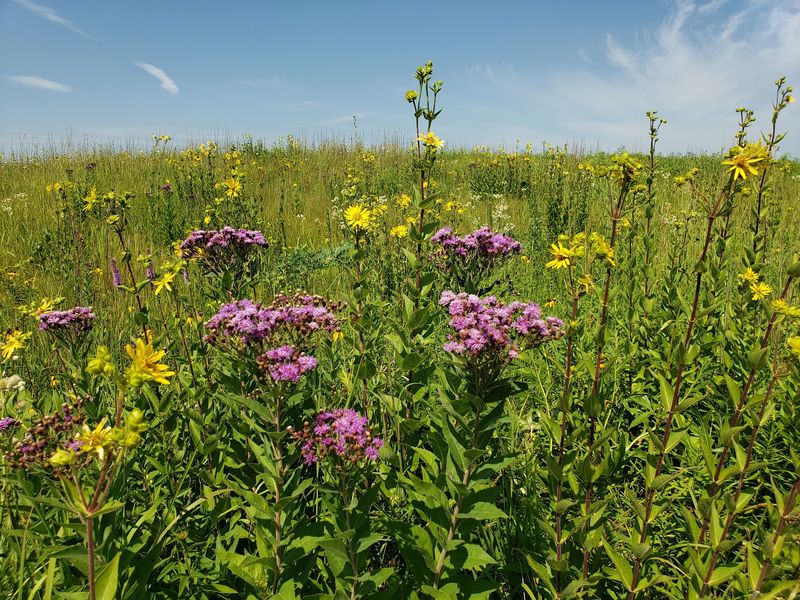
Bison get the headlines, but the bird list deserves a standing ovation. More than 200 species of birds use the refuge.
That’s a lot of feathers for one patch of Iowa.
The mix of habitats explains it. Prairie, oak savanna, and sedge meadow each offer different food and shelter.
Birds that love open grass can find their spot, and so can those that prefer trees.
Look down too, not just up. The refuge supports deer, snakes, and ground squirrels.
Reptiles, amphibians, insects, and native pollinators all play a part.
Pollinators are a quiet star here. Bees, butterflies, and other helpers move between prairie flowers.
Without them, many of those blooms wouldn’t make seeds.
A few tips can boost your sightings. Move slowly, keep your voice low, and give animals plenty of room.
Patience usually wins.
Remember the rules that protect this place. Spotlighting wildlife isn’t allowed, and neither is picking plants.
Take photos, not flowers, and the prairie stays healthy for the next visitor.
Know What’s Open Before You Pack the Snacks
Good news first. The trails and auto tour are open daily from sunrise to sunset, all year.
The prairie is waiting for you no matter the season.
Now the honest part. The visitor center, called the Prairie Learning Center, is closed to the public.
A storm damaged it in July 2024.
Some spaces inside work for scheduled groups only. That includes a conference room, indoor restrooms, and an indoor eating area.
Casual visitors won’t have access right now.
So plan like a pro. Restrooms are available at the Oak Savanna Trail parking lot.
Picnic tables sit out front of the visitor center, which makes lunch outdoors easy.
There’s no restaurant and no lodging on site. Bring your own food and water.
Hotels can be found in nearby towns like Altoona and Colfax.
A few things are off-limits to keep the land safe. Camping and open fires aren’t allowed.
Neither is entering posted closed areas or taking natural objects, so leave only footprints.
Snow Doesn’t Shut Down the Fun Here
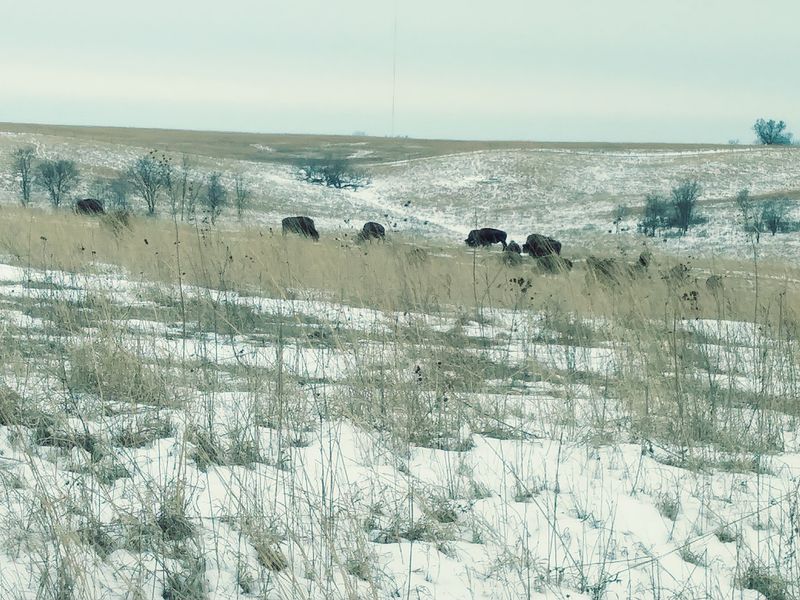
Bison wearing a coat of snow look like they just stepped out of a postcard. Winter visits can be chilly, but they come with real rewards.
The refuge stays open every day of the year.
Snowy prairie has its own magic. Tall grass bends under white drifts, and animals stand out against the plain background.
Tracks in the snow tell little stories about who passed by.
The snowshoe program is a fun bonus. When there’s at least four inches of snow, adult and kid-sized snowshoes can be borrowed for free.
They’re loaned from the visitor center during its open hours.
Since that building is currently closed, check ahead before counting on borrowed gear. Bringing your own snowshoes is the safer bet.
Either way, the trails make a lovely winter walk.
Dress in layers and keep the car warm for the bison drive. Gravel roads can get slick in cold weather.
Take it slow, and enjoy the quiet.
A frosty morning with a steaming herd nearby? Pretty hard to beat that.
Big Plans Are Brewing for the Prairie Learning Center
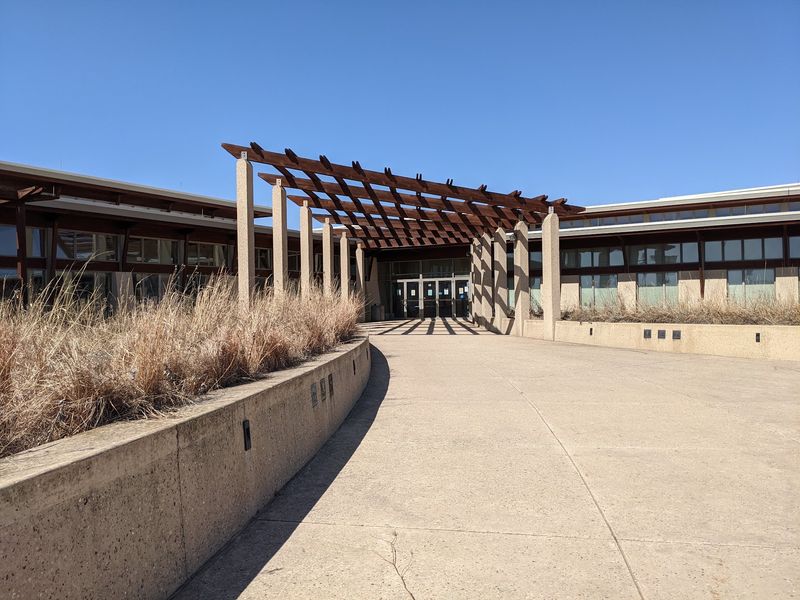
Construction on the new visitor center is expected to start in 2027. The project should wrap up around 2028.
That’s something to look forward to on future trips.
The redesigned Prairie Learning Center will be smaller than before. Inside, updated exhibits will use new technology.
It should make learning about the prairie more hands-on and fresh.
Outside, things get even better. Plans include a new outdoor pavilion for educational events.
A pollinator garden is on the list too.
That fits nicely with how Neal Smith National Wildlife Refuge teaches. Environmental education programs are offered for groups.
The future outdoor learning garden should mean more classes held right in the open air.
You don’t have to wait to get involved. The refuge offers scheduled programs, special events, and volunteer opportunities.
Helping out is a neat way to give back to Iowa’s prairie.
Until then, the bison carry on with their job. The grass keeps growing, and the trails stay open.
Honestly, that’s already a pretty great reason to visit.