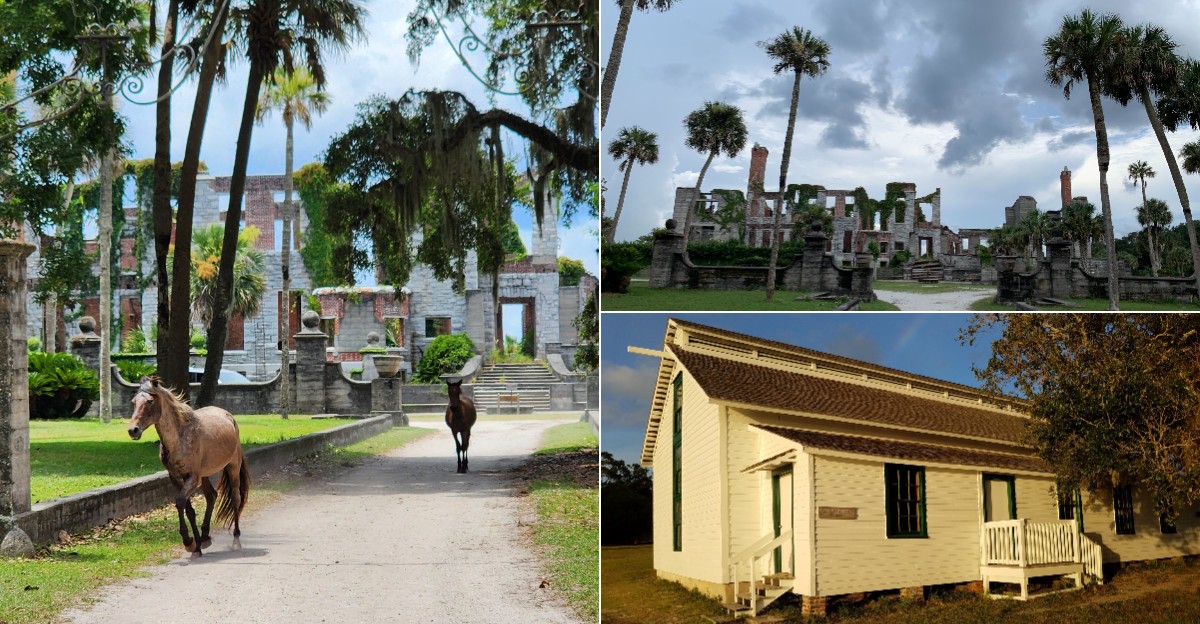
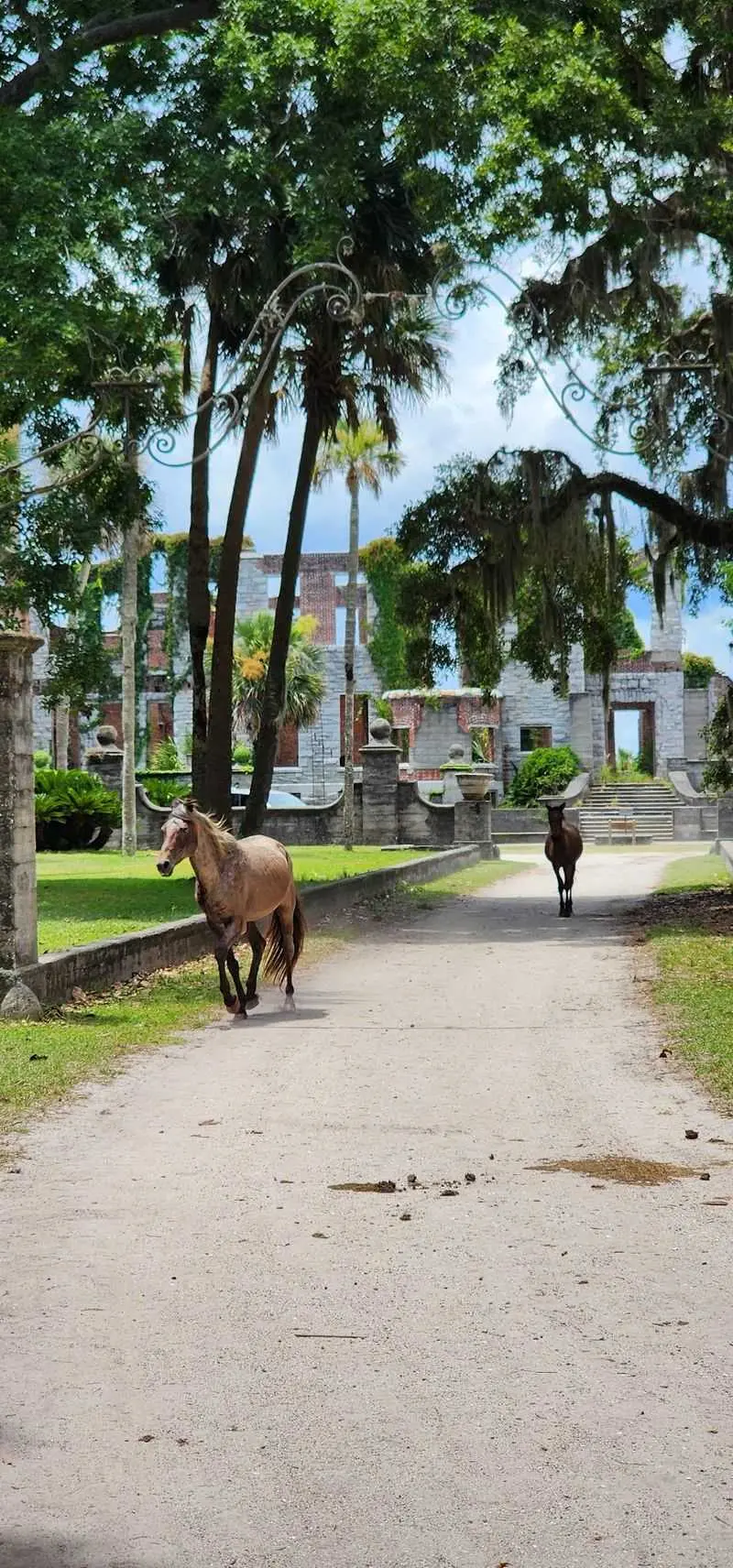
Wild horses graze beside the empty brick walls of a 59-room mansion. Ospreys have even nested on its chimneys.
That alone feels like a scene someone dreamed up for a spooky film.
The house belonged to the brother of Andrew Carnegie. A fire tore through it in 1959, and the walls never got their roof back.
Now the bones stand open to the sky on a quiet Georgia island.
I like how nature didn’t wait for permission. Moss, wind, and hoofprints now share the old estate with history buffs and photographers.
Nobody drives there, either, because the only way in is by boat.
I can’t imagine a better mix of grand and eerie. A mansion this fancy should feel stuffy.
So why does it feel more like a ghost story you get to walk through?
Those Skeleton Walls Steal The Show The Second You Arrive
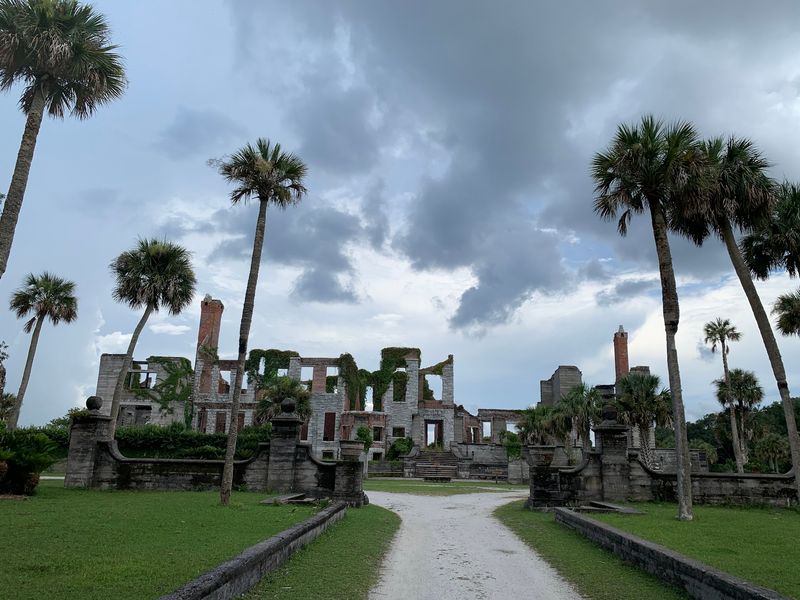
Empty windows stare out like hollow eyes. That first view of the Dungeness Ruins makes the gothic movie comparison feel almost too easy.
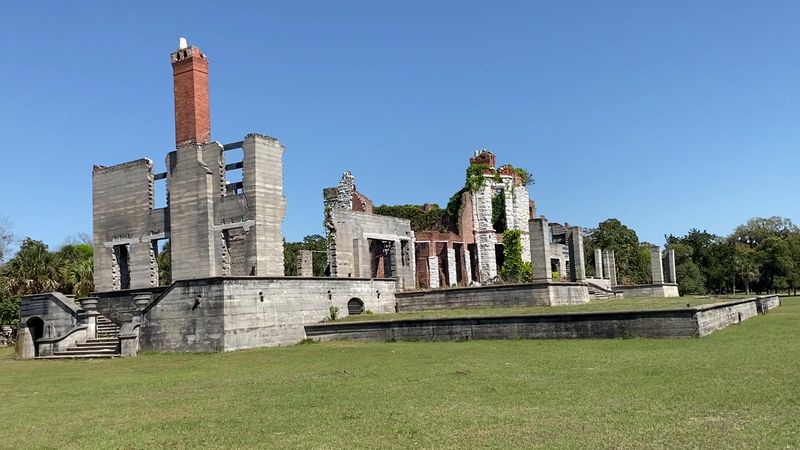
The mansion was a 59-room Queen Anne style home built by Thomas and Lucy Carnegie. Today only the brick and stone walls remain standing.
There is no roof, no floors to climb, and no furniture to admire.
Somehow that makes it more striking, not less. Sky fills the spaces where ceilings once hung.
Chimneys rise above the walls like tall stone sentries.
The ruins are managed by the National Park Service as part of Cumberland Island National Seashore. That means the site is protected, so treat it gently.
Admire the walls from the paths and resist any urge to climb.
Photographers will have a field day here. Shoot through the empty window frames to catch the trees beyond.
Overcast days add even more drama, so a gray sky is no reason to cancel your plans.
Give yourself time to walk all the way around the structure. Each side shows a different angle of the old house.
One lap is rarely enough to take it all in, and I believe that is part of the fun.
A Carnegie Fortune Built The Fanciest Winter Escape Around
Money talks, and in 1881 it said, “Buy an island property.” Thomas Carnegie, the brother of steel magnate Andrew Carnegie, purchased land on Cumberland Island with his wife, Lucy.
They began building their grand winter retreat in 1884. Sadly, Thomas died before the house was completed in 1886.
Lucy carried on with the project, and she had ambitious plans for the estate.
By the time of her death in 1916, the estate had grown to roughly 35,000 square feet. That’s a lot of hallways to sweep.
The Carnegie family stopped using Dungeness around 1925, and the mansion stood vacant soon afterward.
Here’s a fun twist for history fans. The Carnegie mansion was not the first Dungeness on this spot.
Its name and story stretch back much further than the Gilded Age.
Knowing the Carnegie backstory changes how the ruins feel. You aren’t just looking at old bricks.
You’re looking at the remains of a grand estate where the family once spent its winters in style.
Try picturing the lawns busy with guests and carriages. Then look back at the quiet walls.
The contrast is what gives this Georgia landmark its haunting, movie-like charm.
The Story Goes Back Way Further Than You’d Guess
Long before the Carnegies showed up, Georgia founder James Oglethorpe built a hunting lodge here in 1736. Yes, this spot has been popular for nearly three centuries.
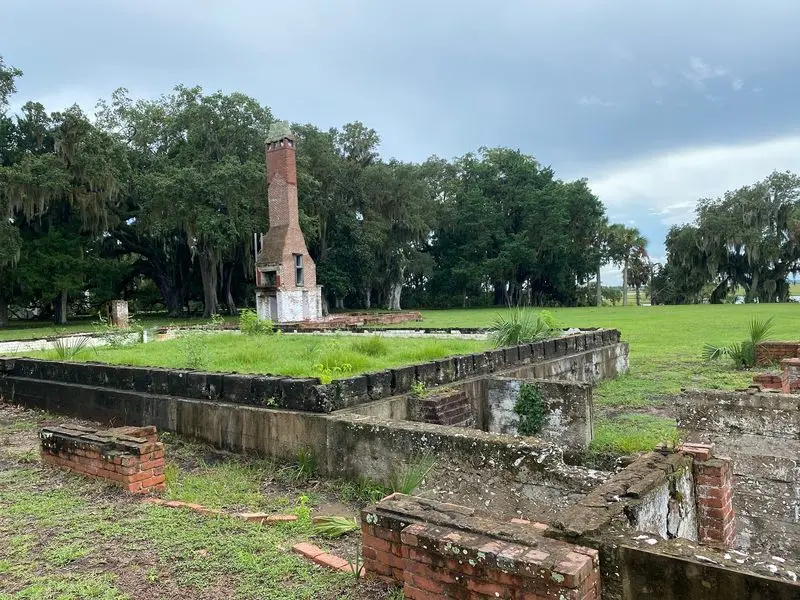
In 1783, Revolutionary War hero Nathanael Greene acquired land on the island. After his passing, his widow Catherine Greene Miller and her second husband built a four-story tabby mansion around 1800.
They called it Dungeness too.
That earlier mansion was abandoned during the Civil War era. It burned in 1866.
So the Carnegie house actually rose on a site that had already seen one grand home fall.
Tabby, by the way, is a building material made from shells, lime, and sand. It was common along the Southern coast.
Keep an eye out for the Tabby House, also called the Nathaniel Greene Cottage, on the grounds.
Two big mansions, two fires, one name. That’s quite a track record for a single piece of land.
A screenwriter couldn’t plot it better.
Brush up on these names before your trip. The grounds make far more sense once you know the layers.
Every crumbling corner suddenly has a bigger story to tell.
Wild Horses Have Claimed The Front Lawn
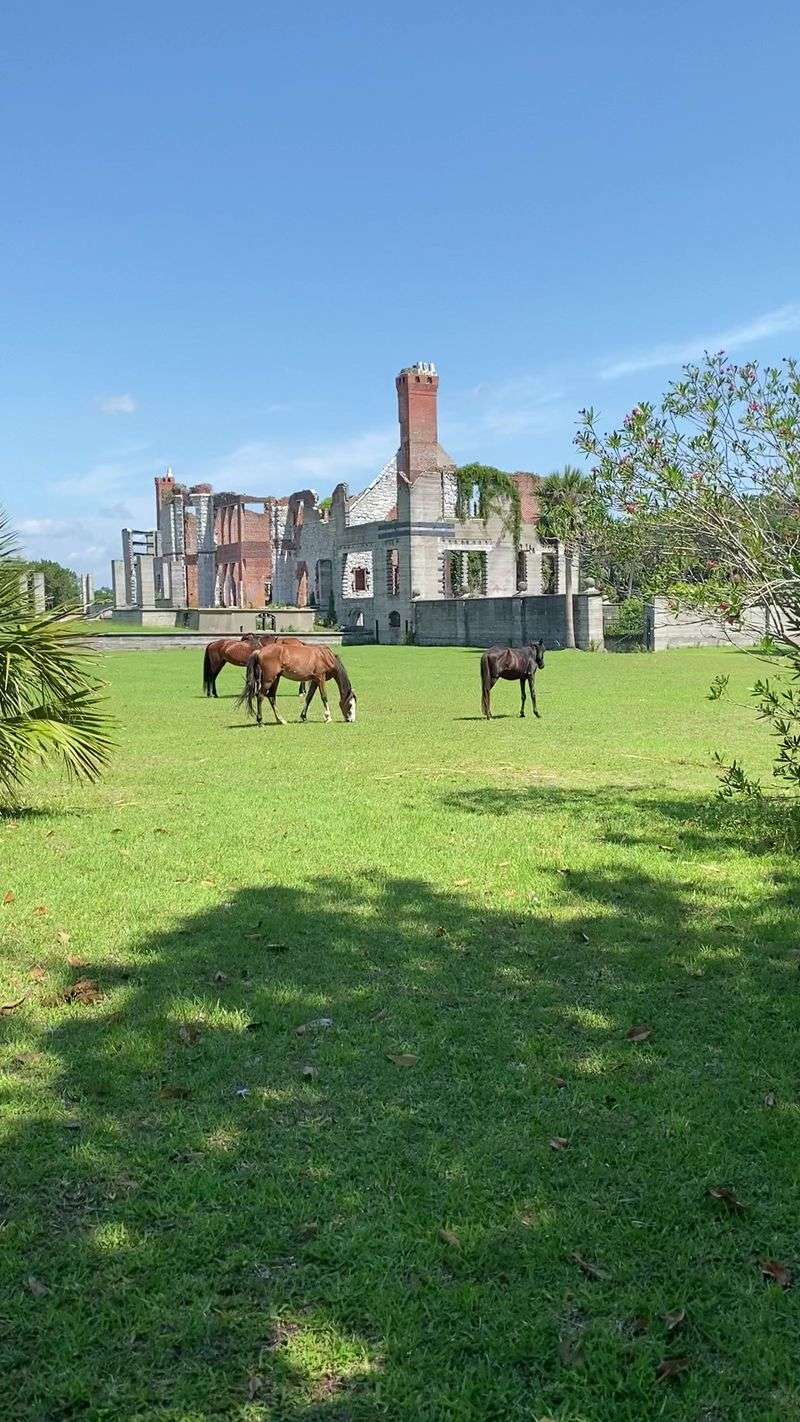
Forget velvet ropes and polite butlers. The current residents of the Dungeness grounds have manes, hooves, and zero interest in your schedule.
Wild horses roam freely across the open grass around the ruins. Spotting them grazing beside the old walls is one of the most famous sights on Cumberland Island.
It honestly looks staged, but it isn’t.
They aren’t the only locals, either. Deer and armadillos wander the area too.
Ospreys have nested on the mansion’s chimneys, which is a pretty fancy address for a bird.
Keep your distance from the horses, though. They’re wild animals, not petting-zoo ponies.
They can kick and bite if people crowd them, so let a camera zoom do the work.
Don’t feed them anything, even a snack that seems harmless. Their safety and yours depend on keeping things wild.
Respect is the price of admission for this view.
Bring a little patience for the best shot. A horse wandering past a tall brick chimney is a photo you’ll treasure.
It’s the moment where the gothic set suddenly feels like a fairy tale instead.
Getting There Means Catching A Boat First
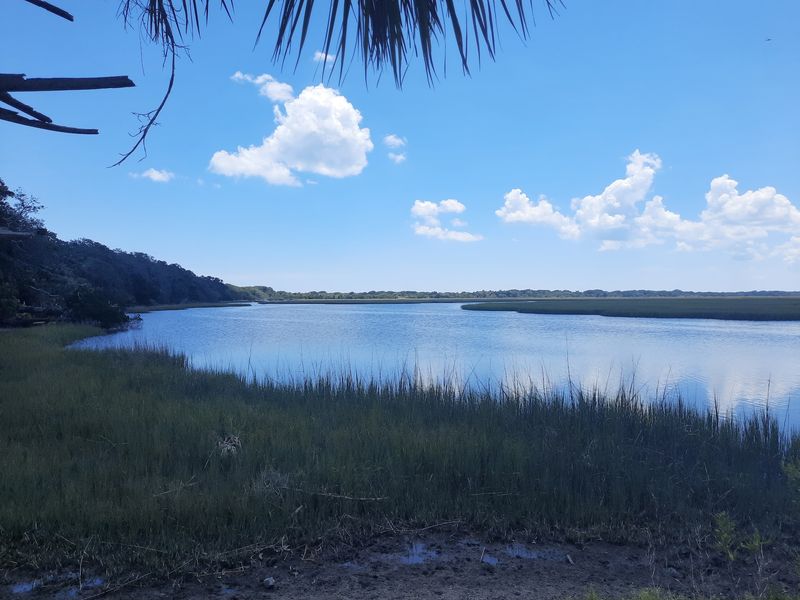
No bridge, no road, no shortcut. Cumberland Island is reachable only by passenger ferry or private boat from St. Marys, Georgia.
The ferry leaves from the mainland visitor center at 113 St. Marys Street, St. Marys, GA 31558. The ride takes about 45 minutes and passes through salt marshes.
It’s a scenic warm-up for the spooky main event.
Book early, especially in busy seasons. Reservations can be made up to six months ahead.
Waiting until the last minute is a gamble you probably won’t enjoy losing.
Here’s the key tip. The ferry stops at two docks, Dungeness and Sea Camp.
Hop off at the Dungeness dock if the ruins are your goal, since it puts you closest to the mansion.
Also keep an eye on the return schedule. Missing the last boat back would turn your day trip into an unplanned adventure.
Set an alarm on your phone so you don’t lose track while exploring.
Some visitors bring bikes over on the ferry for an added fee. The island is large, and sandy roads stretch far.
Comfortable shoes are a must either way.
Wander Past The Mansion To Find More Secrets
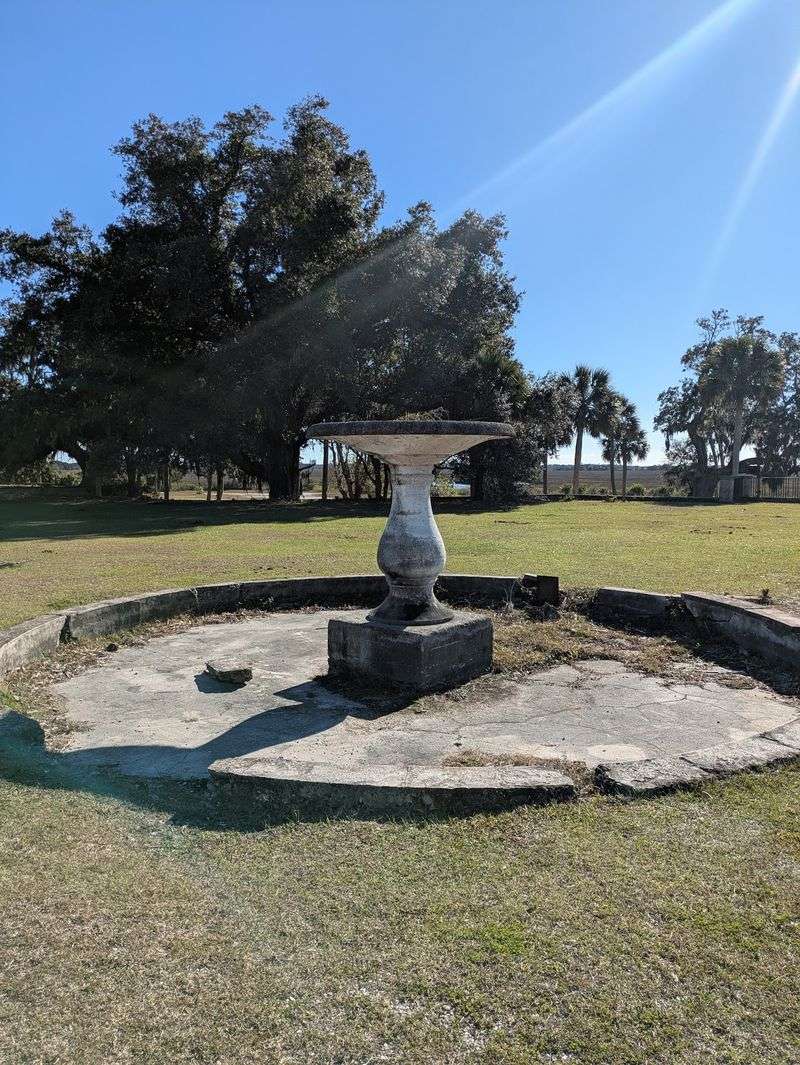
The main house gets the spotlight, but the supporting cast deserves applause too. Dungeness was a whole estate, not just one building.
Look for the ruins of a recreation building, a pergola, and a carriage house. Servant quarters and a cemetery are part of the historic district as well.
Each one hints at how big daily life here once was.
Behind the mansion, the backyard steps down in tiers. Two terraces lead the eye outward.
An old fountain built in 1896 still sits in the landscape, quietly adding to the storybook feel.
Not every structure is a ruin, either. Some buildings on the grounds still stand intact.
That mix of whole and broken makes the place feel layered and lived-in, even now.
Plan a loose loop so you don’t miss anything. It’s easy to stop at the big walls and wander off.
The smaller spots often make the most memorable photos.
Read a little before you go. Knowing what to look for turns random brick piles into real clues.
You’ll feel like a detective piecing together a Gilded Age mystery, minus the creepy butler.
Let A Guide Or Your Phone Do The Storytelling
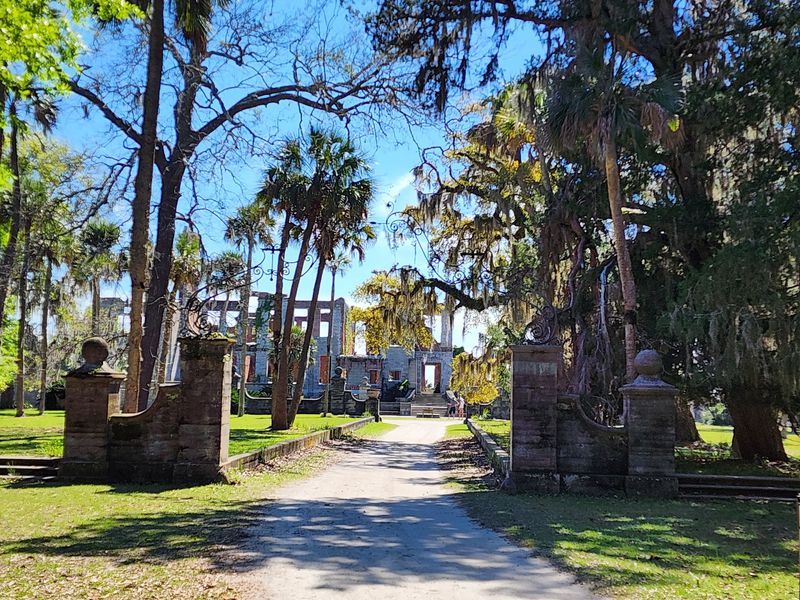
Ruins are cool on their own. Ruins with a good story attached?
That’s a whole different level.
The National Park Service offers a self-guided cell phone tour of the Dungeness grounds. You can stroll at your own speed and learn as you go.
It’s perfect for people who like to linger.
Rangers also lead Footsteps Tours of the Dungeness area when staffing allows. These walks bring the history into sharper focus.
Ask about them when you arrive, since they aren’t guaranteed every day.
Prefer a private option? Molly’s Old South Tours offers guided walking experiences that dig into the area’s past.
It’s a nice choice for anyone who enjoys asking lots of questions.
Downloading the NPS app before your trip is smart too. Cell signal can be spotty on a wild island.
Having maps ready ahead of time saves headaches later.
Whichever route you choose, a little guidance helps. The Dungeness Ruins have centuries of names, fires, and families tied to them.
A good storyteller makes those crumbling walls practically talk back.
Pack Lunch Like You’re Heading To A Deserted Island
Spoiler alert: there are no snack shops on Cumberland Island. Your lunch plans begin back on the mainland.
The Dungeness area has picnic tables for day-trippers. Restrooms are inside the old laundry building, which is a pretty historic place for a bathroom break.
Drinking water is available too.
Bring plenty of food and refillable water bottles. A day here involves lots of walking.
Hungry explorers get grumpy fast, and the ferry won’t make a lunch run for you.
Plan to pack out your trash as well. Leaving the island the way you found it keeps it wild.
A small bag tucked in your backpack solves that problem easily.
Dress for the weather, too. Summer can feel blazing hot, while breezy days can turn chilly.
Sunscreen, bug spray, and sturdy shoes earn their spot in your bag.
Eating lunch with a crumbling mansion as your view is a rare treat. It beats any food court in Georgia.
Just watch out for curious horses eyeing your sandwich from a distance.
Save Some Energy For The Rest Of The Island
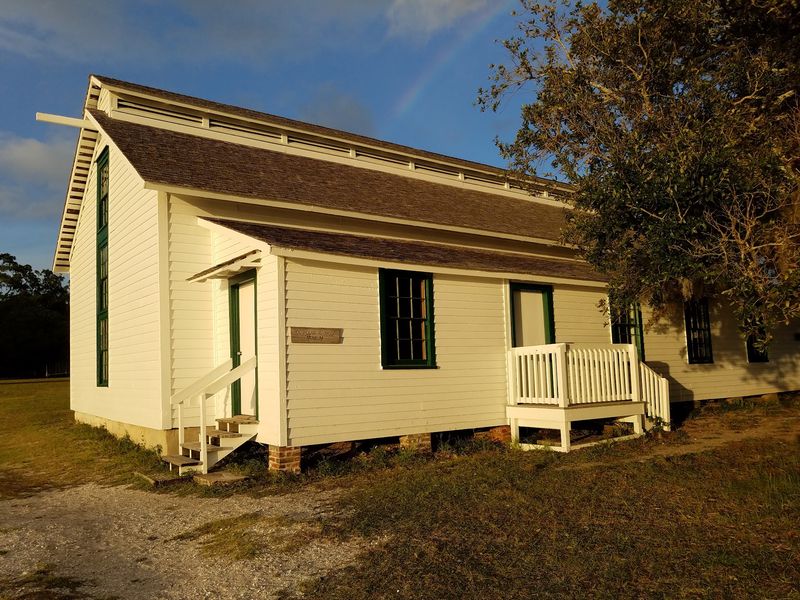
Once the ruins have worked their magic, the island still has more tricks up its sleeve. Cumberland Island is packed with history beyond Dungeness.
The Ice House Museum sits close to the Dungeness dock. It’s an easy stop before or after the ruins.
Think of it as the opening act for your day.
Plum Orchard Mansion is another Gilded Age estate on the island. Free tours are offered there.
You can reach it on a guided van tour or by a seven-mile bike ride.
Farther north, you’ll find the First African Baptist Church. It’s famous as the wedding spot of John F.
Kennedy Jr. and Carolyn Bessette. That’s some serious celebrity history for a tiny building.
The Atlantic beach is also within reach of the Dungeness area. Shell collectors and wave watchers will feel right at home.
Walking there takes some effort, so budget your time well.
Seeing everything in one day is tough. Pick your priorities before you board the boat.
Either way, the Dungeness Ruins will likely be the moment you talk about the whole ride home.