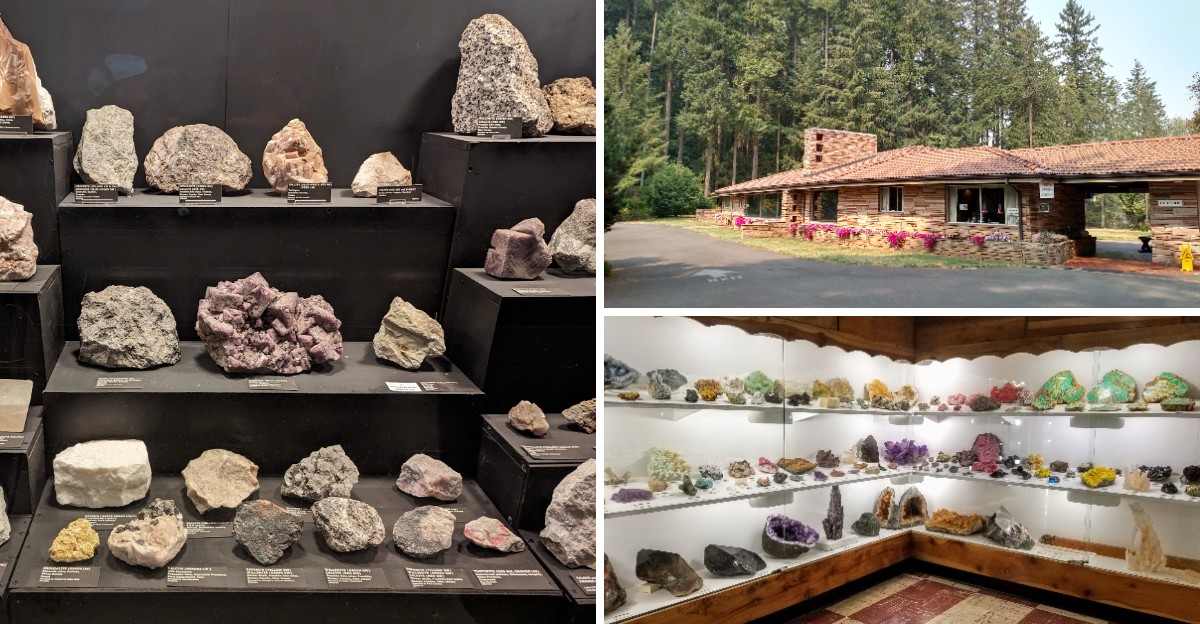
A family built their dream home around a rock collection, right down to a basement fireplace studded with petrified wood. Today that mid-century house is a museum, and it is packed with gems, geodes, meteorites, and fossils.
The doors are made of myrtlewood. Some of the rocks even glow.
Outside, kids can dig for fossils, and everyone can grab a free souvenir rock from a big pile before heading home.
I love that this spot sits an easy drive west of Portland, Oregon, perfect for a cheap weekend outing. I also like how hands-on it feels, since several specimens are meant to be touched instead of just admired.
So how does one family’s hobby turn into a rock lover’s dream stop? The story starts downstairs, right next to that fireplace.
A Rock Museum Lives Inside Somebody’s Former Dream House
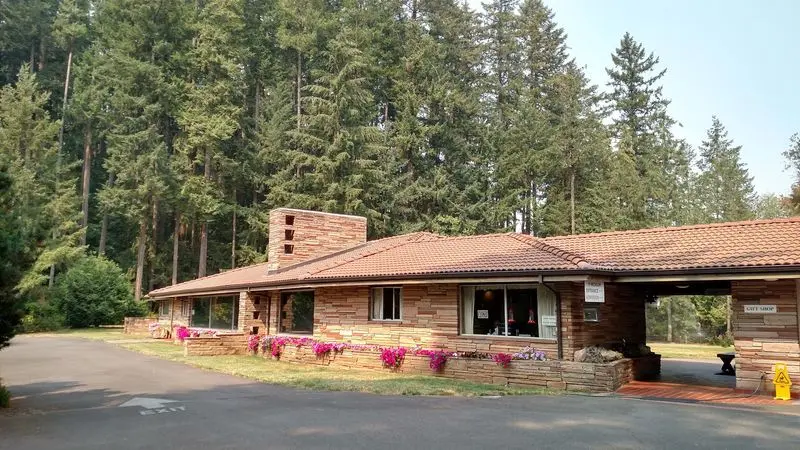
Most museums start with a big empty building. The Rice Northwest Museum of Rocks & Minerals started with a family home instead.
You’ll find it on the rural west side of the Portland metro area, outside Hillsboro, Oregon. It’s officially a natural history museum, but rock fans just call it a treasure chest.
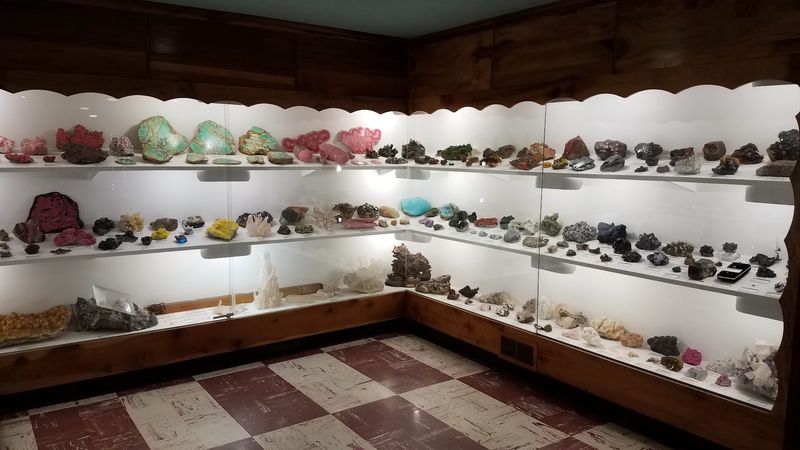
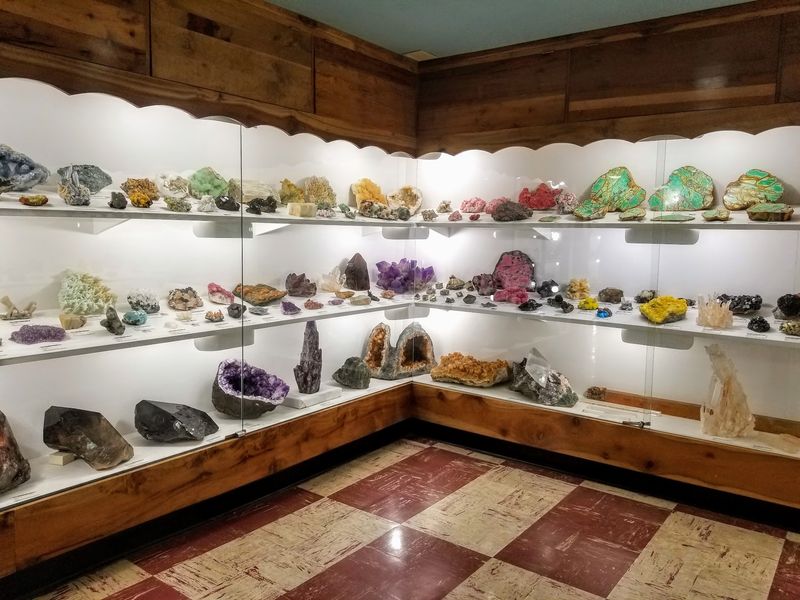
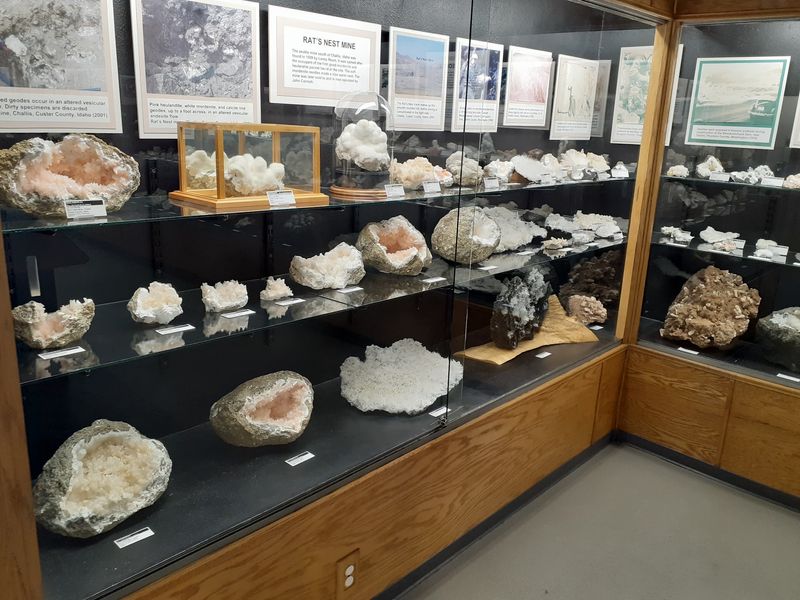
The galleries hold geodes, gems, minerals, petrified wood, fossils, and crystals. Meteorites are part of the lineup too, which means some pieces came from outer space.
From the outside, the place looks like a large, handsome house. That’s part of the fun, because the walls inside are crowded with sparkle.
The museum also stretches beyond the house. A second building focuses on Pacific Northwest geology, so the visit grows bigger than many first-timers expect.
It holds a 4.8-star rating across more than 1,500 Google reviews. That’s a lot of happy rock hounds, and plenty of them are families with young kids in tow.
The appeal is easy to understand. It’s a low-key, budget-friendly outing that feels old-school in the best way, with real specimens instead of screens.
So yes, it’s a house. It just happens to be a house where the decorations are millions of years old.
One Family Turned A Hobby Into A Whole Home
Some people collect stamps. The Rice family collected rocks, and they went all in.
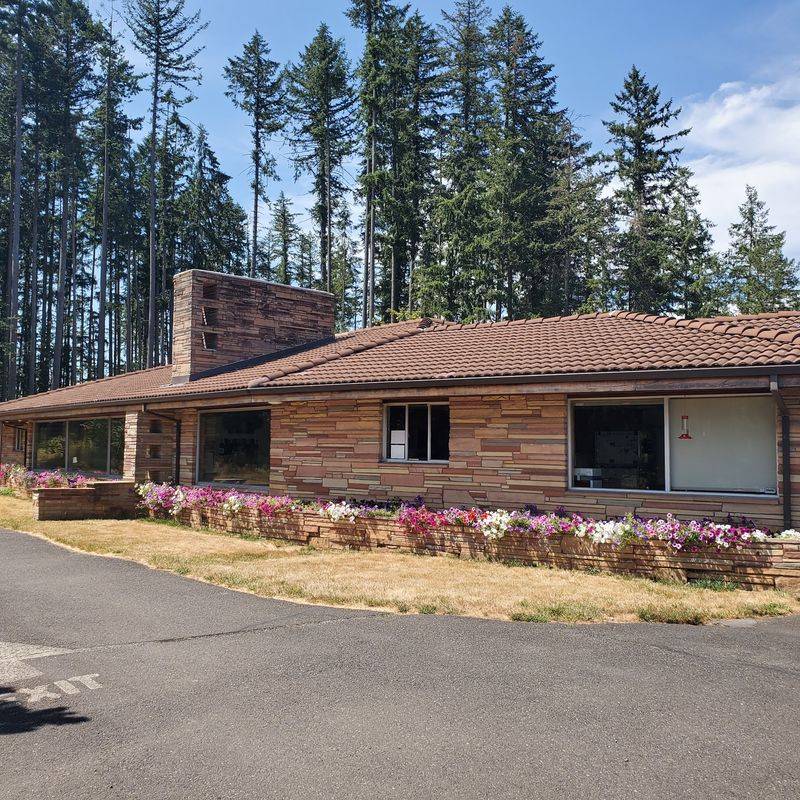
They built their house around that hobby. Rocks and minerals show up in the construction itself, not just on the shelves.
That detail changes how the whole visit feels. You’re not only looking at a collection, you’re standing inside one family’s big passion project.
The museum also shares stories from other collectors who donated pieces. Reading those histories adds a personal layer to every glittering case.
It’s easy to get attached to these little backstories. One case might hold a lifetime of weekend digs, careful labels, and proud discoveries.
That human side is what keeps the place from feeling stiff. The specimens are stunning, but the people who loved them are part of the exhibit too.
Kids may not care about collector biographies at first. Still, hearing that a regular family started all of this can spark big ideas about their own rock pile at home.
And honestly, who hasn’t brought home a cool rock from a road trip? This museum is what happens when that habit never stops, and the result is dazzling.
You’ll Want To Admire The House Almost As Much As The Rocks
Myrtlewood doors set the tone right away. The warm wood gives the home a polished, handcrafted look that feels very Oregon.
The house is a classic mid-century modern design. Some describe it as Prairie style with a hint of Frank Lloyd Wright and California ranch mixed in.
That blend makes for long, low lines and a relaxed feel. It’s the kind of home that makes you wonder what dinner parties looked like back then.
The architecture isn’t just a backdrop either. Since the family designed it around their collection, the building and the rocks feel like they belong together.
Plenty of people arrive for the minerals and leave talking about the house. That double payoff makes the trip feel even more worthwhile.
Design fans will enjoy slowing down between cases. Notice the materials, the woodwork, and how the rooms flow from one display to the next.
It’s also a rare chance to see a vintage home kept in such good shape. Many houses from this era got remodeled beyond recognition, so this one feels like a time capsule.
Bring your phone camera. The rocks sparkle, but the doors might steal a few photos too.
Head Downstairs For The Room That Steals The Show
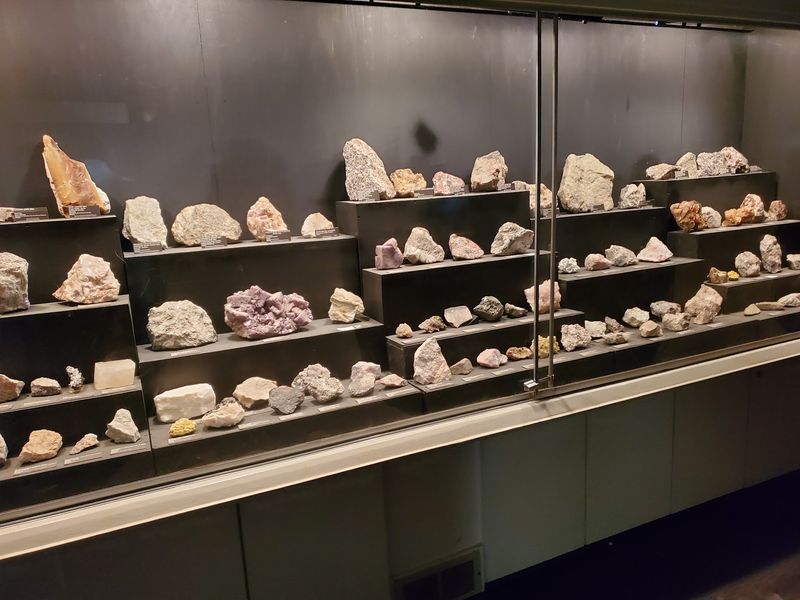
Basements usually hold old boxes and a forgotten treadmill. This one holds the collection that many people call the highlight of the whole museum.
The star feature is a wraparound fireplace embedded with rocks and petrified wood. It’s part art piece, part geology lesson, and fully impressive.
Around it, cases are filled with specimens from top to bottom. The sheer amount down here can stop you in your tracks.
Getting there is easy for everyone. An elevator connects to the basement, so strollers and wheelchairs aren’t left upstairs.
Take your time in this space. The details are tiny, and the colors shift as you move from case to case.
One fun approach is letting each family member pick a favorite piece. Then everyone has to explain their choice, which turns into a surprisingly lively debate.
The fireplace also makes a great reminder of the home’s history. Someone once sat beside it on chilly Oregon evenings, surrounded by the treasures they loved.
Picture that cozy scene, then look around at the cases. It’s hard not to feel a little jealous of that family room.
Petrified Wood Gets Its Own Big Moment Here
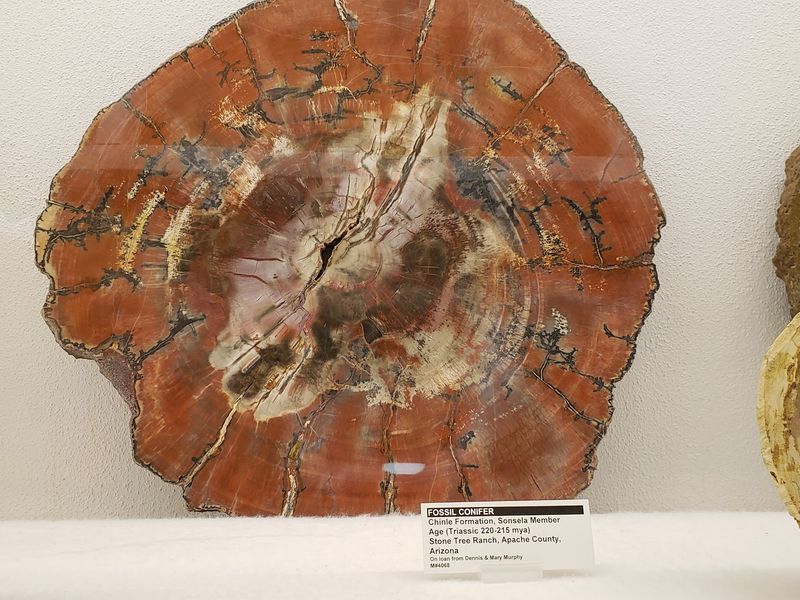
Wood that turned to stone sounds like something from a fairy tale. At the Rice Northwest Museum of Rocks & Minerals, it fills a whole big room.
Petrified wood is one of the most talked-about features here. It shows up in more Google reviews than almost anything else in the building.
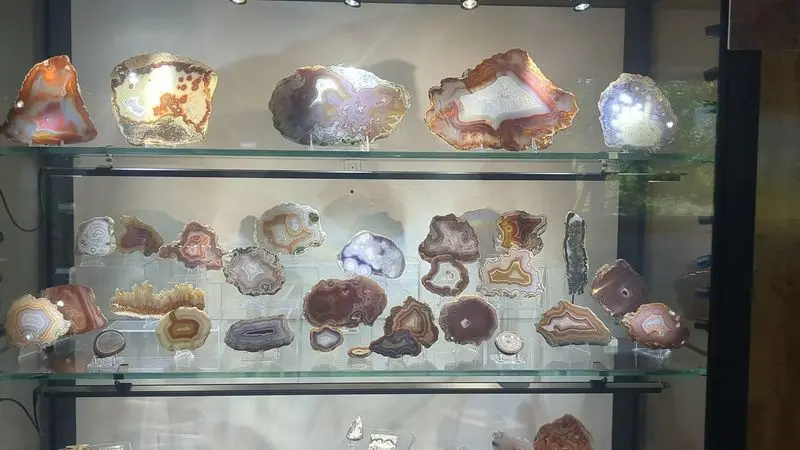
You’ll see polished slices and even full logs. Some pieces still show tree rings, now frozen in shimmering mineral color.
A rim of petrified wood is a personal favorite for many people. It’s one of those displays that looks almost too pretty to be real.
For plenty of folks, this is their first time seeing petrified wood up close. That first look tends to leave people a little speechless.
Kids usually love the idea of a tree becoming a rock. It’s a great moment to talk about time, minerals, and how slow nature can be.
Grown-ups might find themselves lingering here longest. The colors and patterns reward a slow stroll more than a quick glance.
Fair warning: you may leave wanting your own piece. Good thing the gift shop and the free rock pile are waiting later.
Gems, Crystals, And Rocks That Actually Glow
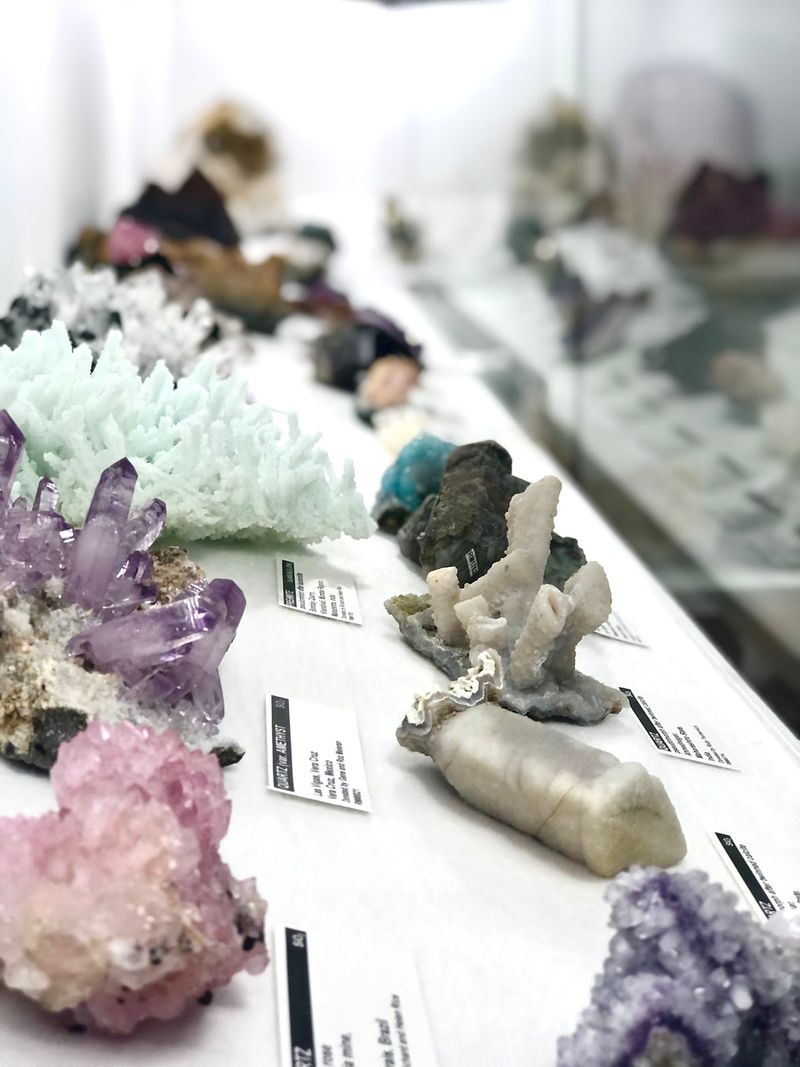
Glowing rocks. That alone might be enough to get the kids into the car.
Fluorescent minerals are among the crowd-pleasers here. Under the right light, ordinary-looking stones turn bright and almost electric.
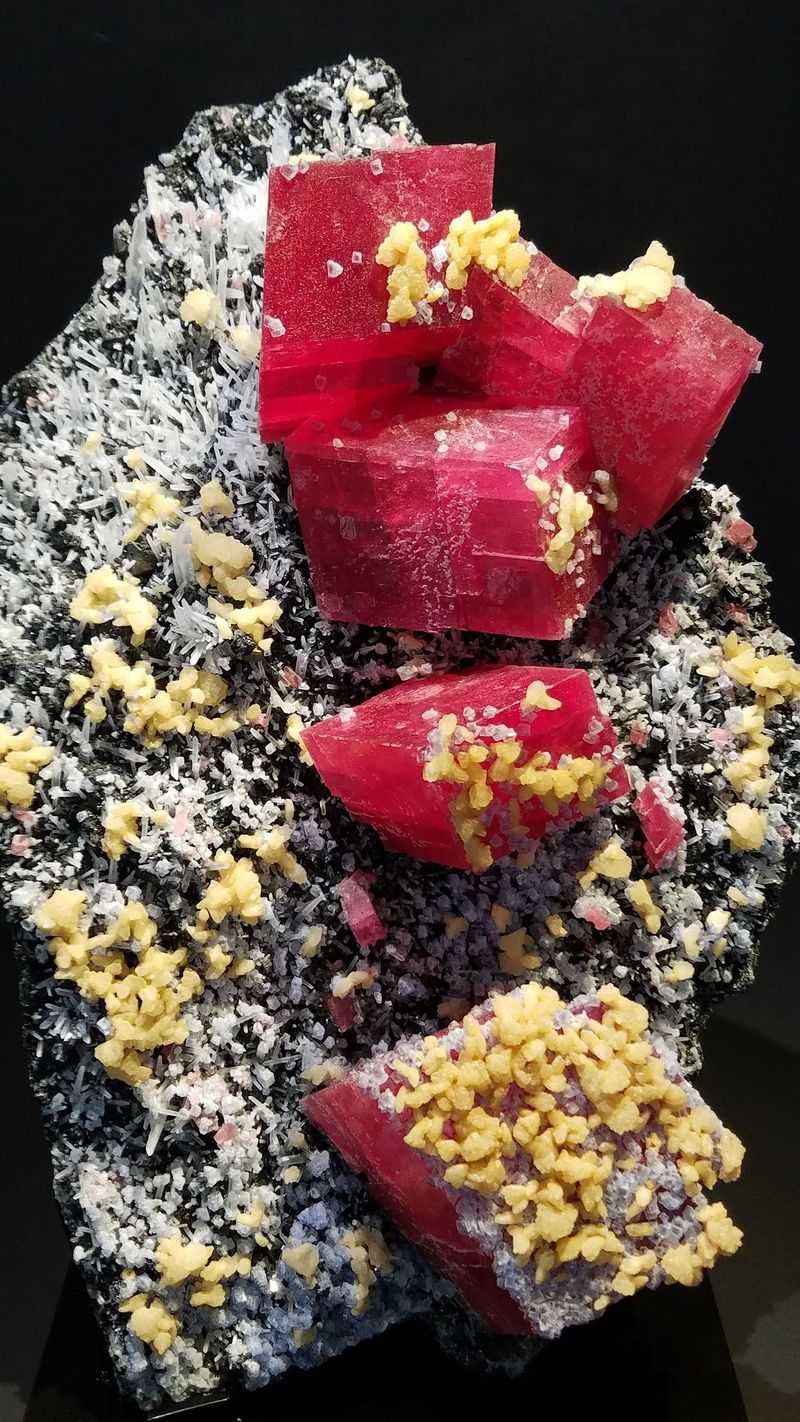
Gems are just as popular, with cut stones and raw ones on display. Seeing both side by side shows how much work goes into a polished jewel.
Crystals fill plenty of space too. Their sharp shapes and clear points look like they were designed by an architect, not formed underground.
Geodes add their own surprise factor. A plain lumpy outside hides a sparkling hollow inside, which never stops being cool.
Some specimens are clearly worth serious money. Most, though, are simply beautiful and interesting, and that’s what makes them fun to study.
The exhibits are nicely organized with a helpful amount of information. You learn what each piece is, how it formed, and where it came from without feeling buried in text.
It’s a good section for a little game. Have the kids guess which rocks will glow before they see them lit up, then watch who wins bragging rights.
Space Rocks And Ancient Poop Share The Spotlight
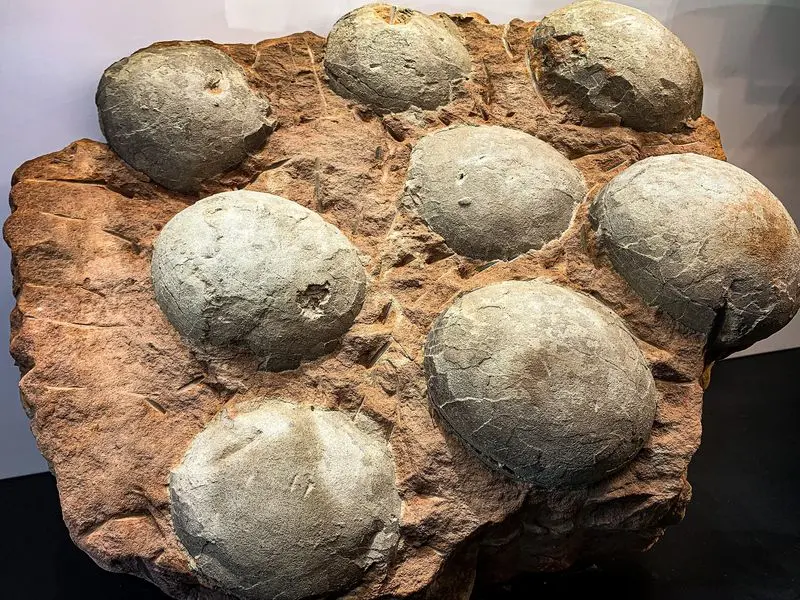
Few museums let you see a meteorite and fossilized poo on the same afternoon. This one does, and kids will absolutely remember it.
Meteorites are a big part of the collection. These are rocks that traveled through space and landed on Earth, which is a pretty wild résumé.
Fossils bring the ancient side of the story. They offer a peek at life from a very, very long time ago.
Yes, the fossilized poop is real. Scientists call it coprolite, and it reliably wins over giggling kids and secretly amused adults.
There’s also something called Meatball that some lucky folks get to hug. You’ll have to go meet it yourself to understand the fuss.
These exhibits help balance the sparkle with some science. Not every treasure here is pretty, but every one has a story.
The mix keeps the visit lively for all ages. Teens might like the space angle, while little ones fixate on the poop.
Either way, it’s a reminder that geology is more than shiny things. It’s the history of our planet, and occasionally its leftovers.
A Second Building Tells The Pacific Northwest Story
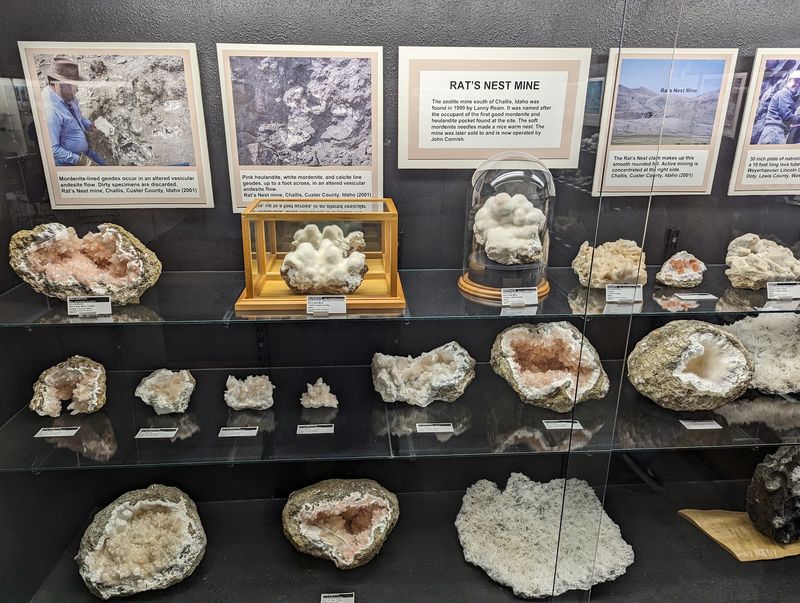
Just when you think the visit is wrapping up, there’s more. A second building is dedicated to Pacific Northwest geology.
This gallery connects the rocks to the landscape you drove through to get here. It’s a great way to understand the ground beneath Oregon.
The space features stunning specimens along with striking photos. Together they show how the region’s rocks look both in a case and out in the wild.
Videos add another layer. Some show how rocks were found and removed from the ground, which makes the specimens feel more like real discoveries.
Many people call the Northwest gallery a favorite stop. It’s a nice change of pace after the dense rooms in the house.
For road-tripping families, this section hits home. Suddenly the hills, rivers, and mountains outside the window have a backstory.
It can also inspire future trips. After seeing local specimens, you might plan your next drive around some Oregon geology spots.
Give yourself enough time for this building. Lots of people underestimate how much is here and end up rushing the best part.
Little Hands Are Actually Welcome Here
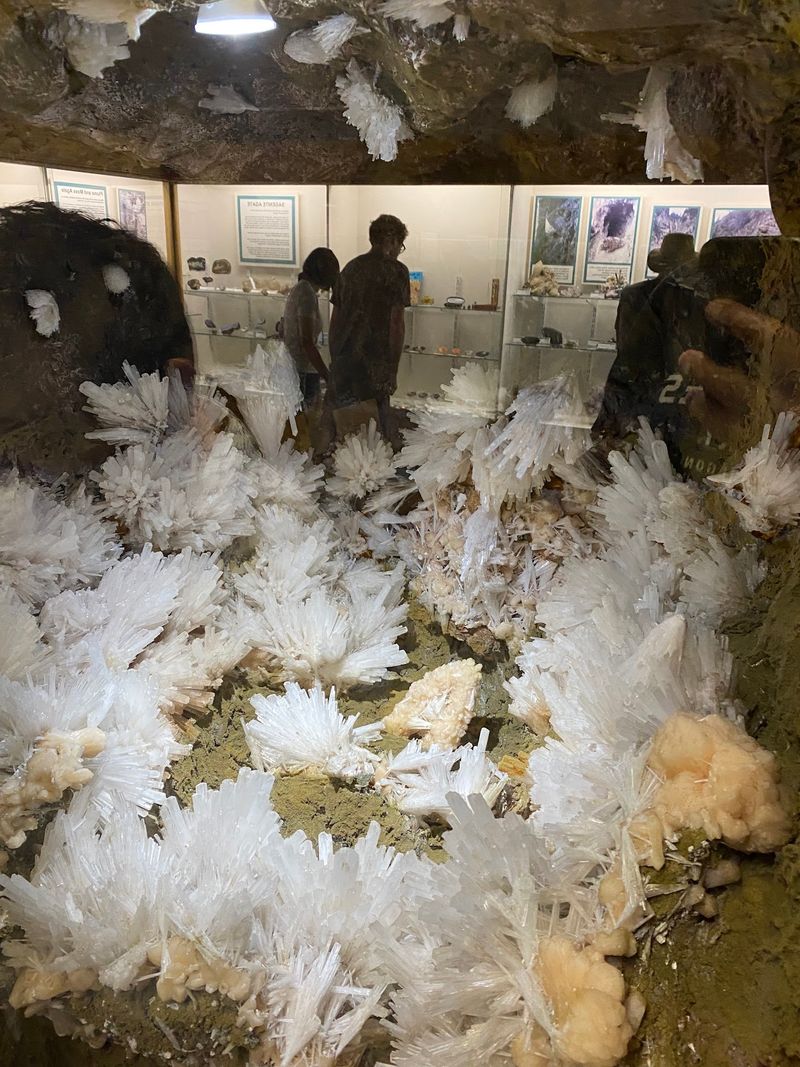
Please touch the rocks. That’s not a sentence you hear in many museums, but it fits here.
Most of the collection sits behind glass, which makes sense. Still, a number of specimens are set out on purpose for visitors to handle.
That hands-on element is a lifesaver for curious kids. Feeling a heavy chunk or a smooth polished surface makes the lesson stick.
Children get their own activities too. There are coloring sheets and activity worksheets to keep younger visitors busy and learning.
Small activity rooms offer even more space for little ones. There’s even an entire room where kids can learn and play.
Parents can appreciate the breather this provides. Little legs get a break, and grown-ups can catch up on reading a few labels.
The museum clearly puts effort into making the visit interactive. Helpful explanations come with the displays, so questions often answer themselves.
It all adds up to a museum that respects kids instead of just tolerating them. That’s a big win for any family trying to fill a rainy Oregon weekend.
Pack A Lunch Because The Grounds Deserve Some Time
The fun keeps going once you step outside. The grounds are built for lingering, especially with kids.
Outdoor play areas are filled with rock and fossil digs. Young explorers can get their hands dirty and feel like real paleontologists.
For families, this is a dream setup. Burn some energy outside, then head back in for another look at the shiny stuff.
Picnic grounds give you a spot to eat. There are tables and even barbecue grills on site.
A covered seating area helps when the weather turns, which happens in Oregon now and then. A restroom outside is a nice practical bonus too.
Bringing your own food keeps the day budget-friendly. It also stretches the outing into a relaxed half day instead of a quick stop.
Think of the lawn as intermission. It’s the perfect place to compare favorite specimens over sandwiches.
Kids may beg to dig again before leaving. Honestly, it’s hard to blame them when buried treasure is involved.
Leave With A Rock Without Spending A Dime
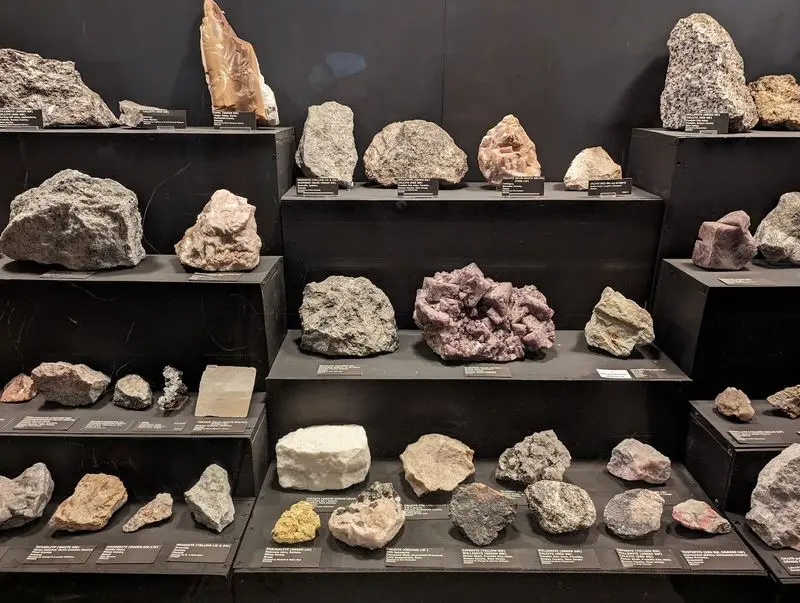
Free souvenirs are rare. Here, a big self-pick rock pile lets visitors choose a sample to take home.
Some people walk away with petrified wood from that pile. It’s a sweet little send-off and a cheap thrill for kids.
Then there’s the gift shop, which many people consider worth a stop. It offers unique gifts for a wide range of budgets.
Bulk obsidian and agate are sold by the pound. There are also museum-quality specimens for anyone starting a serious collection.
Plenty of shoppers appreciate the fair pricing. Many also like knowing the rocks are genuine, not plastic knockoffs.
The gift shop staff earns a lot of praise for knowledge and friendliness. One staffer has even been known to help local rock hounds identify their finds.
That’s a handy perk if your kids have a bucket of mystery rocks at home. Bring a few and you might get some answers.
It’s also an easy spot for gifts. A pretty geode makes a great present for the rock-loving mom or grandparent in your family.
Plan On More Time Than You Think
Forty-five minutes or two hours? It really depends on how deep you want to go.
A quick lap can be done in under an hour. Most people who want to see nearly everything end up spending around two hours.
Many first-timers are surprised by the size. The museum feels much bigger than its small, local reputation suggests.
Comfort is well covered. Chairs are placed throughout, so tired legs can rest between galleries.
The museum is wheelchair accessible, and the elevator reaches the basement. That makes it a solid pick for outings with grandparents or anyone using mobility aids.
Multi-generational trips work especially well here. Grandparents, parents, and kids can all find something to fuss over.
The atmosphere is relaxed rather than rushed. Staff are known for being friendly and helpful without hovering.
One tip is to pace the day around the outdoor areas. Alternate between indoor galleries and the grounds, and nobody hits a wall too soon.
Know The Hours Before You Hit The Road
Mondays and Tuesdays are off the table. The museum is closed both days, so plan around that.
It’s open Wednesday through Sunday from 10 a.m. to 5 p.m. Hours can change, so a quick check before leaving is smart.
The address is 26385 NW Groveland Dr, Hillsboro, OR 97124. The local road leading there is clearly marked, which helps on country routes.
Parking is on site. Weekends can bring a decent crowd, but the lot is generally manageable.
Admission is reasonable, and many people say it’s well worth the fee. Discount deals sometimes pop up, so it pays to look around.
Memberships are available for repeat visitors. They can pay for themselves after a couple of visits and often include free entry to events.
Zoo members may want to note one tip. Some families use a reciprocal membership for free entry during September, though details can change.
Since it sits west of Portland, it pairs easily with other Washington County errands or drives. That makes it a simple add-on to a weekend loop.
Worth Every Mile For Families Who Love A Good Find
A dream house, a glittering basement, and a free rock to take home. That’s a pretty great return on a short drive.
The Rice Northwest Museum of Rocks & Minerals blends nostalgia, science, and hands-on fun. It feels like the kind of family outing people remember for years.
I believe its real magic is the mix. You get stunning specimens, a historic home, and space for kids to dig and play.
It also suits a wide range of interests. Serious collectors and total beginners both seem to leave impressed.
The value is hard to ignore too. Reasonable admission, a picnic-ready yard, and free samples make it easy on the budget.
Many people say they passed by for years before finally stopping. Once they did, they wished they’d come sooner.
So add it to your Oregon road trip list. Pack lunch, charge the camera, and leave room in the car for new treasures.
Just don’t be shocked if the kids start a rock collection on the ride home. Honestly, the Rice family would probably approve.