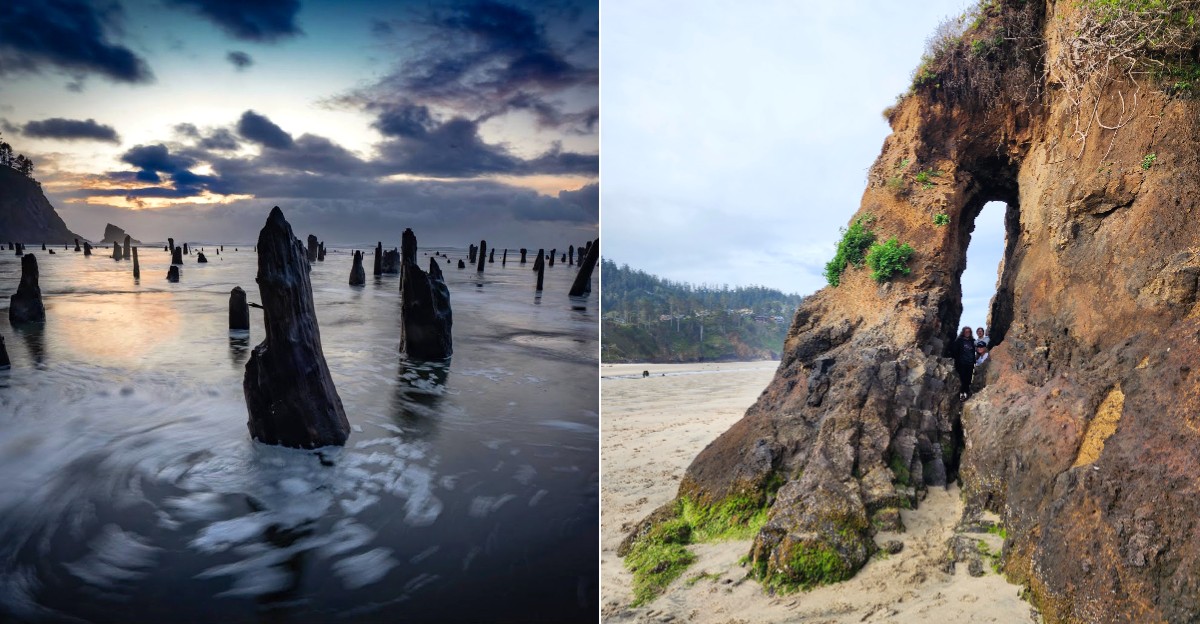
Some beaches hand out their best secret only when the ocean steps back far enough to let people see it. On a quiet stretch of the north Oregon coast, low tide uncovers rows of ancient tree stumps poking out of the sand like the leftovers of a forest that time forgot.
These stumps are roughly 2,000 years old, and they tell a story about earthquakes, shifting land, and a coastline that never sits still. Most travelers zip past on Highway 101 without knowing any of it exists.
The ones who stop find a small village, a famous rock with a romantic name, a creek crossing that turns grown adults into giggling kids, and a beach that seems to change its mind every season.
Keep reading for the history, the timing tricks, and the practical tips that make this trip worth every step.
A Tiny Village With A Giant Secret
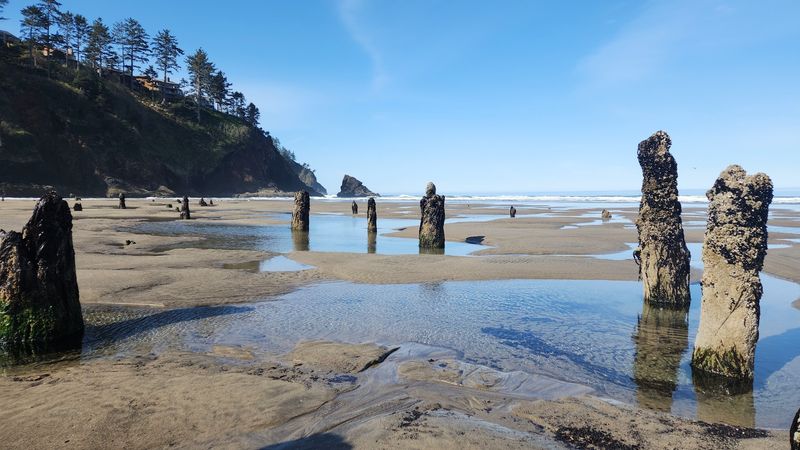
Neskowin is the kind of coastal village that most road trippers miss by blinking. It sits in Tillamook County along Highway 101, and the official spot to know is Neskowin Ghost Forest, Neskowin, OR 97149.
There is no grand gateway or flashy sign shouting about ancient trees. The village feels small, calm, and a little sleepy, which is part of its charm.
That quiet nature is exactly why the beach here stays far less crowded than busier towns farther north, such as Cannon Beach. People who come here tend to slow down and wander instead of rushing from one photo stop to the next.
The listed hours for the landmark run from 6 AM to 5 PM daily, though the real schedule is set by the tide. A quick check of a tide table before leaving home is the smartest move a traveler can make.
Small towns often hide big stories, and this one has a whopper buried right under its sand.
Stumps Older Than Most History Books
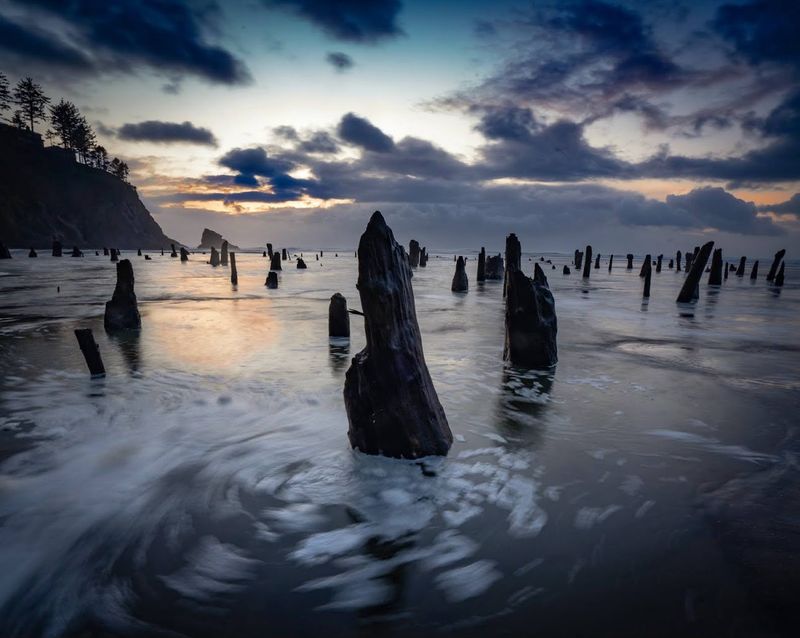
Two thousand years is a long time to stand in one place. The stumps scattered across this beach are the remains of Sitka spruce trees that grew here roughly two millennia ago.
Back then, the trees stood on solid ground, well above the waves. Scientists believe a sudden drop in the land, likely tied to a major earthquake along the coast, lowered the forest into the reach of the sea.
Sand and mud quickly covered the trunks. That blanket kept oxygen away and preserved the wood far better than open air ever could.
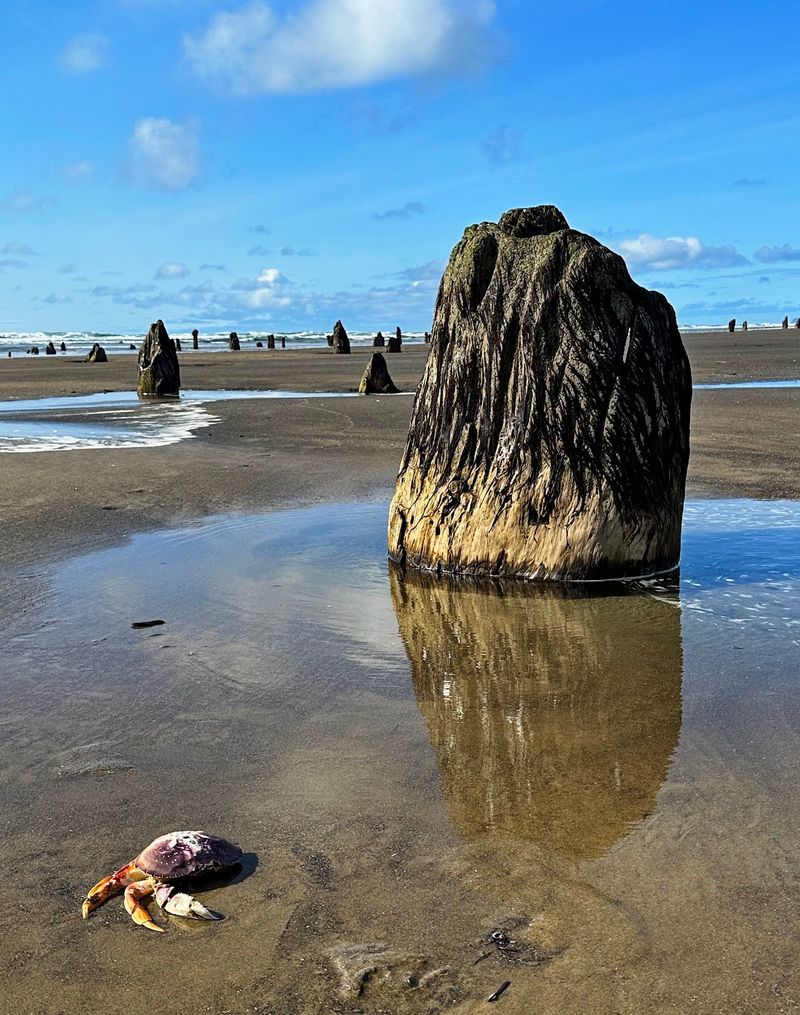
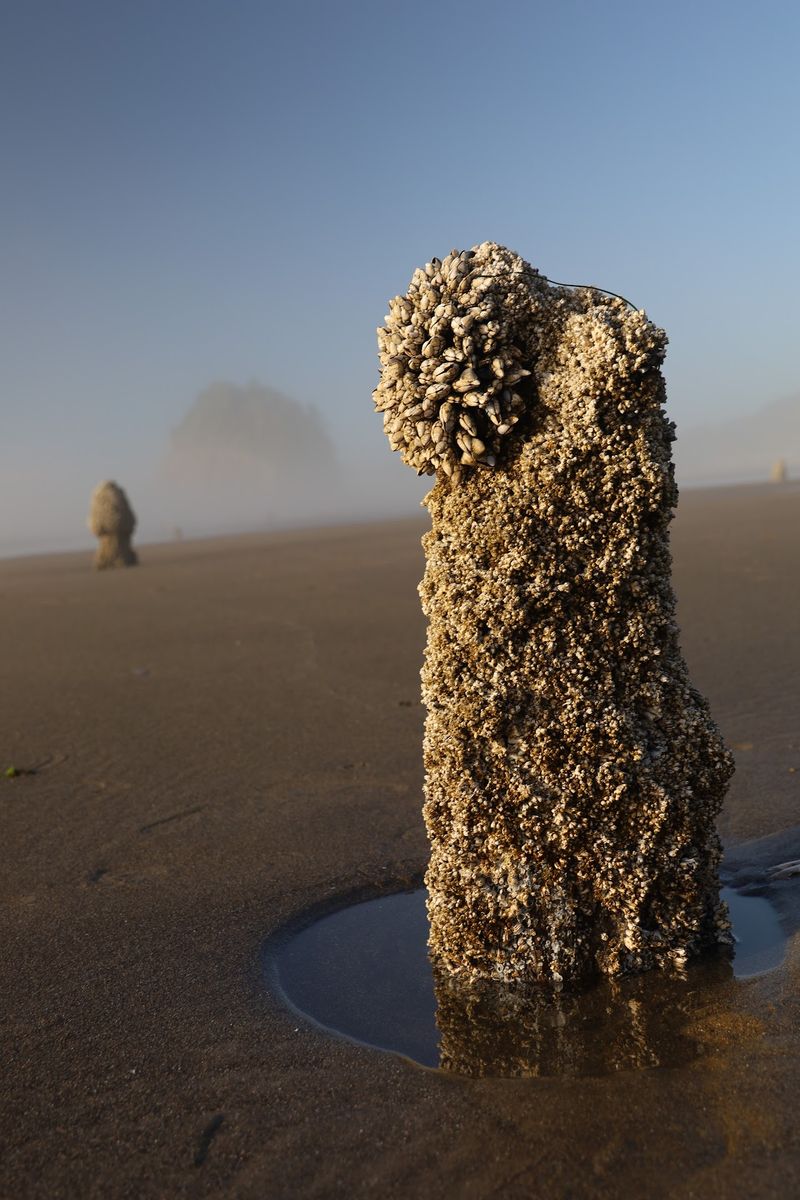
Today the stumps look worn and rugged, with barnacles and mussels clinging to their sides. Many are broken off a few feet above the sand, giving them a jagged, mysterious shape.
Calling it a forest may sound generous, since only stumps remain. Still, standing next to wood that was alive before many famous empires rose makes the word feel just right.
The Storm That Pulled Back The Curtain
For centuries, nobody living nearby had any clue these stumps existed. The sand kept the secret tucked away beneath the beach.
Then came the powerful winter storms of 1997 and 1998. Big waves stripped away huge amounts of sand, and suddenly the old stumps appeared along the shoreline.
Locals and scientists alike were curious. Research on the wood confirmed the trees were about 2,000 years old, and the beach earned its spooky nickname.
Since then, the forest has played a game of peekaboo. Some winters reveal dozens of stumps, while calmer years let the sand creep back and cover most of them.
Recent seasons have shown only a handful of stumps at times, and in some months they have been fully buried. People in the area often say a strong storm is needed to sweep the sand away again.
In other words, the weather that keeps travelers indoors is the same weather that sets the stage for the next big reveal.
Getting There Without Getting Lost
Map apps do not always get this one right. Some routes send drivers toward private roads and gated entrances, which leads to a lot of confused turnarounds.
The easy answer is the public parking area for Neskowin Beach, across from the Neskowin Provisions store. From there, signs point toward a path that leads to the shore.
The trail passes near the bridge by the Proposal Rock Inn and then opens onto the beach. Parking is generally simple, and the walk in is pleasant and short.
Once on the sand, the walk to the stumps takes roughly 15 to 20 minutes, depending on pace. The sand near the entrance can be thick and soft, so it asks a bit more from ankles and knees.
A few quick tips help:
Respect private property signs along the way. Bring a small bag for snacks, water, and a dry layer.
Follow the public path, and the journey stays relaxed instead of becoming a scavenger hunt.
Tiny Neighbors On Ancient Wood
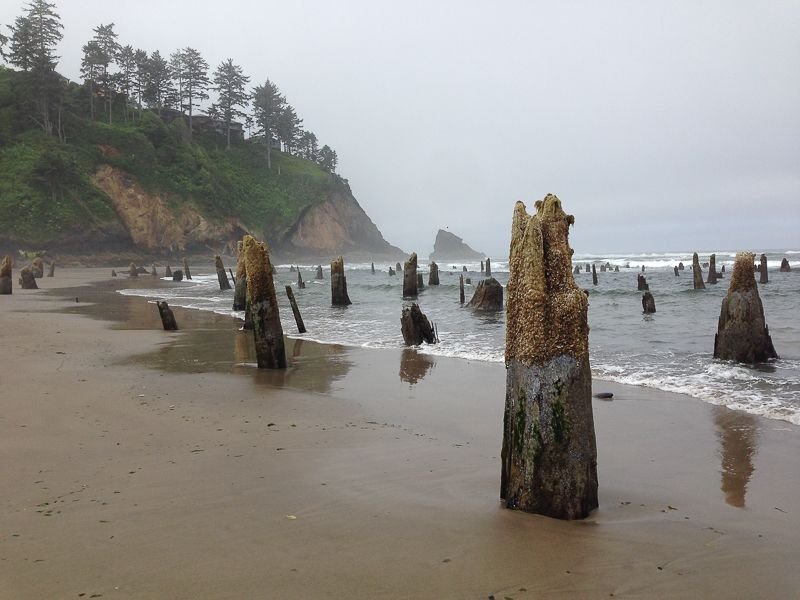
Old stumps make surprisingly good apartments. Barnacles and mussels have claimed many of them, turning the ancient wood into busy little homes.
Around Proposal Rock and the nearby rocks, low tide also reveals small pools of seawater. Little crabs, shells, and other critters hang out in these hollows, waiting for the ocean to return.
Kids can spend a long time crouched beside a single pool, spotting tiny movements. Adults often end up just as curious.
A few tide pool manners keep these creatures safe:
Look closely, but avoid poking or pulling animals off rocks. Step on bare sand or solid rock instead of on living things.
Leave shells and creatures where they are. Rules about harvesting shellfish in Oregon are specific, so checking official guidelines first is a must before taking anything.
Watch the waves at all times while exploring rocks. Slippery surfaces and sneaker waves are real hazards along this coast.
A gentle touch keeps this little world thriving long after the tide rolls back in.
Fog, Kites, And Room To Roam
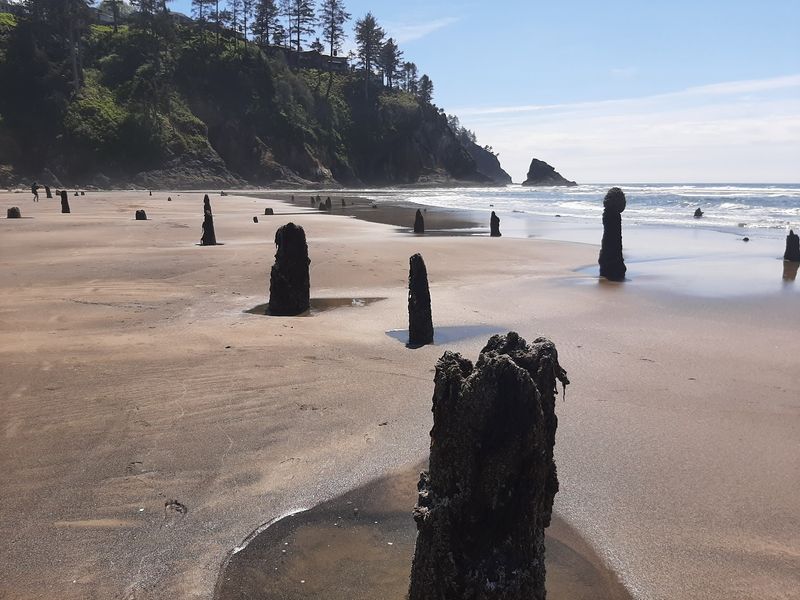
Fog rolls in often on this part of the coast, and it gives the stumps an extra dose of mystery. Photos taken on misty mornings tend to look like scenes from an old legend.
Sunny days have their own appeal. The sand is fine and flat in many spots, which makes it great for a long barefoot stroll near the water.
The beach is wide enough for plenty of activities:
Kite flying works well with steady coastal wind. Picnics on a blanket make a simple and relaxing afternoon.
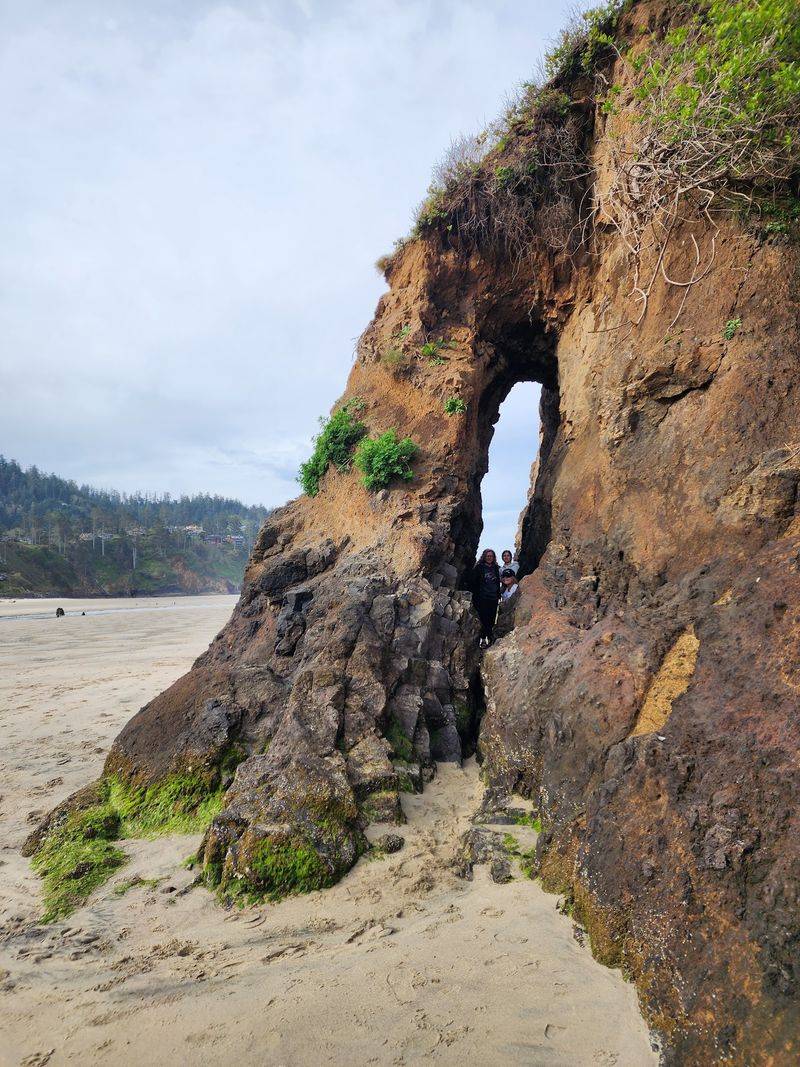
Long walks toward the far end of the beach reveal more rock formations and even a small cave area to explore at low tide. Always watch the water level when heading toward rocks.
Photographers love the mix of stumps, rocks, and open shoreline. The arch on the small island near the beach makes a popular frame for pictures.
Gray skies or blue, this shoreline seems determined to give everyone a reason to linger a little longer.
Best Seasons For Stump Spotting
Summer brings sunshine, but winter often brings the stumps. Storm season is when strong waves pull sand off the beach and expose more of the ancient forest.
Late fall through early spring usually offers the best chance to see a larger group of stumps. Extra low tides during these months help too.
Summer has its upsides. The weather is often calmer, the creek can be easier to cross, and long days leave plenty of time to explore.
The tradeoff is that sand tends to build up and bury much of the forest.
Expectations matter here. Some trips reveal dozens of stumps, while others show only four or five, or none at all.
Winter travel along Highway 101 can also bring delays from landslides and road work. Checking road conditions with the state transportation department before driving is a smart habit.
Patience pays off on this coast, and a second visit in a different season can feel like a whole new beach.
Small Town Stops Before Heading Home
Leaving the beach does not have to mean leaving the fun behind. The village center sits right beside the parking area, which makes a final stop easy.
Neskowin Provisions, across from the public lot, works as a handy general store. It carries snacks, supplies, and souvenirs, including ghost forest themed apparel that makes a fun keepsake.
In warmer months, a treat truck sometimes parks nearby, giving families a sweet reward after the long walk. Offerings and schedules can change, so it is best not to count on it.
A few final tips round out the day:
Pack out all trash to keep the beach clean. Change into dry clothes before getting back in the car.
Leave the stumps untouched and avoid carving or breaking the wood. The forest has survived for 2,000 years, and it deserves to stay for many more.
The beach may hide its trees under the sand, but this little village makes sure no one leaves feeling empty-handed.