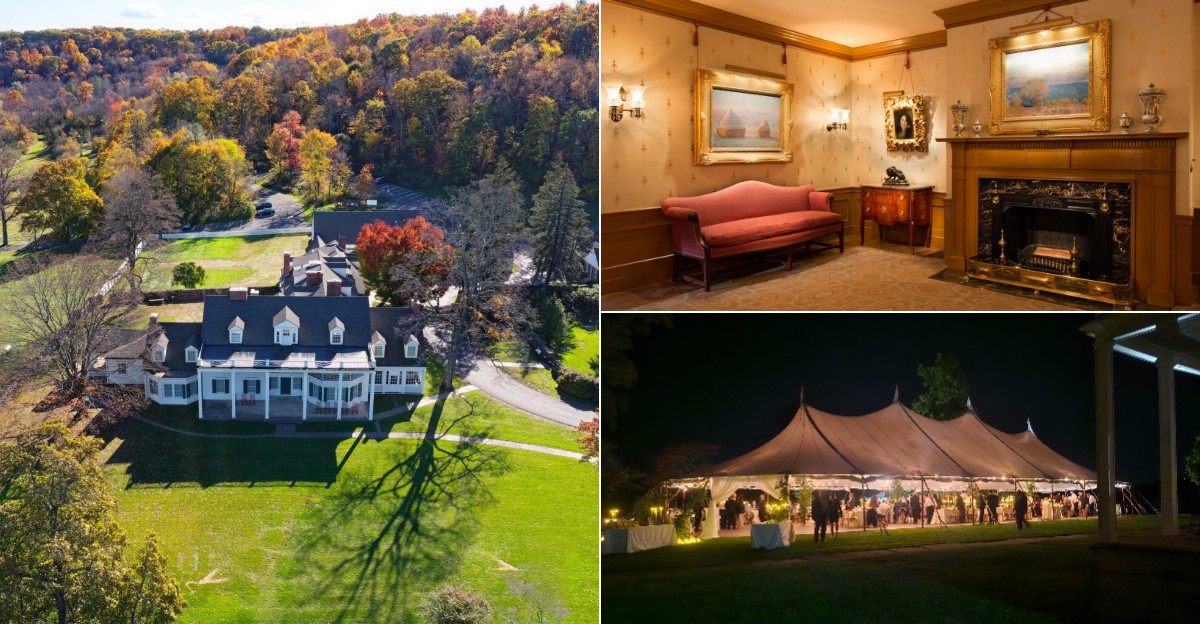
Some houses hang famous paintings in a guarded gallery. One house in Farmington, Connecticut, hangs a Monet right over the living room fireplace, as if it were a family photo.
That small detail says a lot about this place. A young woman designed it more than a century ago, back when almost no women worked as architects in America.
Her parents filled it with art by Monet, Degas, Manet, and Cassatt, and much of it still sits right where they left it. Outside, a sunken garden, walking trails, and open fields stretch across roughly 152 acres.
There is even a small farm with sheep. Keep reading to learn how to plan a full afternoon here, from the guided house tour to the quiet trails, plus a few smart tips that will save you time.
An Address With a Story Behind It

Hill-Stead Museum sits at 35 Mountain Rd, Farmington, CT 06032, in the rolling countryside of central Connecticut.
The estate started as a private home in 1901. It was built for Alfred and Ada Pope, a wealthy couple from Cleveland who decided to settle in Farmington for their retirement years.
Their daughter, Theodate, was the one who fell for this corner of New England. She convinced her family to move here, and she shaped the house to fit their lives and their growing art collection.
The result is a Colonial Revival mansion with 19 rooms and about 33,000 square feet of space. Today it works as an art museum and a historic home all at once.
Hours are simple to remember. The museum opens Wednesday through Sunday from 10 AM to 4 PM, and it stays closed on Monday and Tuesday.
Parking is free and plentiful, so there is no need to circle the block. That makes it an easy pick for a spur-of-the-moment day trip from Hartford or nearby towns.
The Woman Who Drew the Blueprints
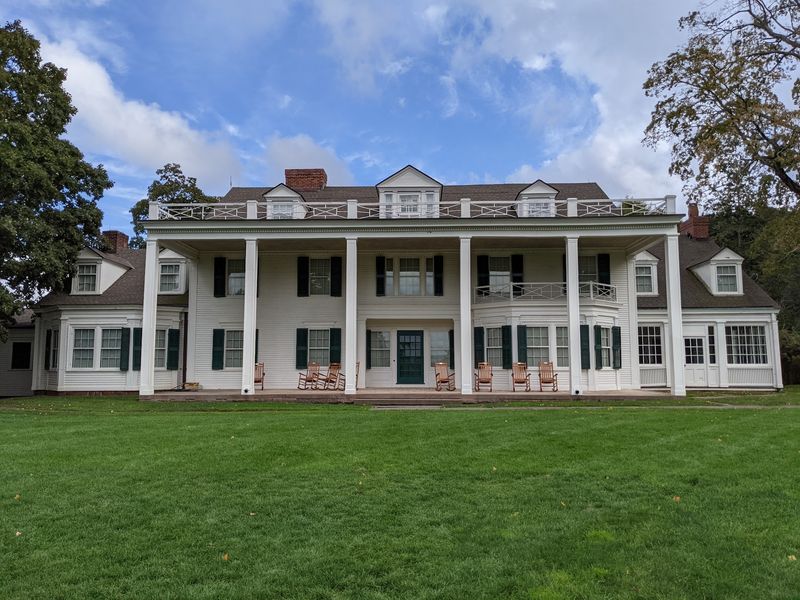
Theodate Pope Riddle was not your typical young lady of the early 1900s. She became one of the first female architects in the United States at a time when the field was almost entirely run by men.
Hill-Stead was one of her earliest big projects. She designed it as a retirement home for her parents and as a showcase for her father’s paintings.
Her life story reads like an adventure book. She also survived the sinking of the Lusitania in 1915, a major event in world history.
Later in her career, she founded a school and designed other buildings. Still, Hill-Stead remains the place where her vision feels most personal.
Guides on the house tour share plenty about her choices, from room layouts to small design touches. Paying attention to these details turns the visit into more than an art tour.
Knowing her story before arriving makes every hallway feel like a page from her sketchbook, and that is a pretty great way to start the afternoon.
Monet Above the Fireplace
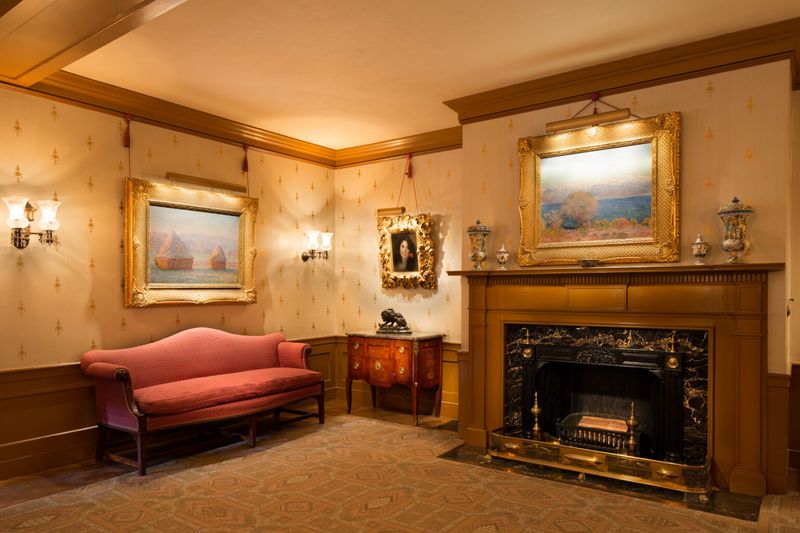
Most museums put their stars behind ropes in big white rooms. Here, two of Claude Monet’s Haystacks paintings hang in the original living room, inside gilded frames, surrounded by the family’s furniture.
That setting is what makes the collection feel so special. These works were bought to be lived with, not just admired from a distance.
The Popes collected boldly. Alongside Monet, the house holds works by Edgar Degas, Edouard Manet, Mary Cassatt, and James McNeill Whistler.
A favorite among art lovers is Manet’s painting of a guitar player. Degas pieces also draw plenty of attention throughout the tour.
The collection is modest in size, which works in its favor. Each painting gets real attention instead of blurring into a long gallery walk.
For anyone new to Impressionism, this is a friendly first step. Seeing world-famous art in a home setting helps it click in a way textbooks rarely manage, and the Haystacks alone are worth the ticket.
Japanese Prints and Hidden Treasures
French painters get most of the spotlight, but they are not the only artists in residence. Hill-Stead also holds a strong group of Japanese woodblock prints, known as ukiyo-e.
Works by Hokusai appear in the collection. He is the artist behind the famous Great Wave image that shows up on everything from posters to phone cases.
Alfred Pope, like many collectors of his time, admired Japanese art. Many Impressionist painters were inspired by these prints, so seeing them together tells a neat story about how art ideas traveled.
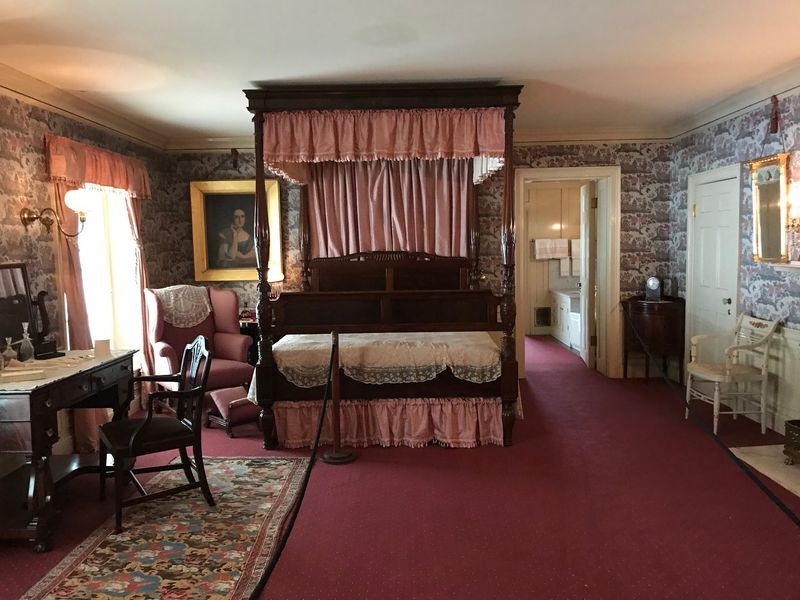
The house is also packed with decorative arts. Furniture, ceramics, rugs, and even original wallpaper remain part of the experience.
Fun fact: the family’s library books and household items are still in place. Some of the original linens survive too.
Guides can explain patterns on the rugs and walls in surprising detail. Ask a question about a teapot or a lamp, and expect a thoughtful answer that adds a fresh layer to the visit.
How the House Tour Works
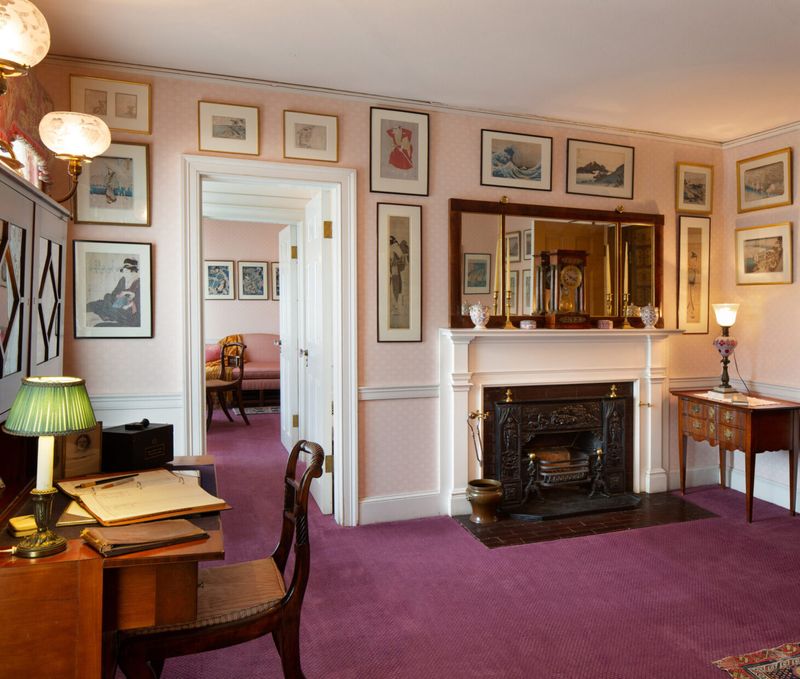
Here is the deal: the inside of the mansion is open by guided tour only. Tours run about once an hour and last roughly 60 minutes.
Groups stay small, often around 10 to 15 people. That size means everyone can actually hear the guide and see the art without bumping elbows.
The docents know their stuff. They cover the paintings, the family history, and design details down to the wallpaper.
Guides rotate, so each tour can feel a little different. Repeat trips may bring new stories and new favorite rooms.
There are house rules, and they matter. Photography is not allowed inside, and guests are asked to follow the guide closely to protect the rooms and art.
Curators sometimes rearrange items to reflect different periods when different family members lived there. That keeps the house feeling like a living record rather than a frozen display.
Plan for the hour and enjoy the pace. The tour is the heart of the day.
Book Ahead, Thank Yourself Later
Small tours are great until the next open slot is two hours away. A little planning solves that problem.
Checking the schedule on the official website before the trip is the smartest move. Tour times and ticket options can change, so the website is the best source for current details.
Arriving early in the day gives the most flexibility. A morning start leaves time for the tour, the gardens, and the trails without feeling rushed.
Remember the days. Wednesday through Sunday are open, from 10 AM to 4 PM, while Monday and Tuesday are closed.
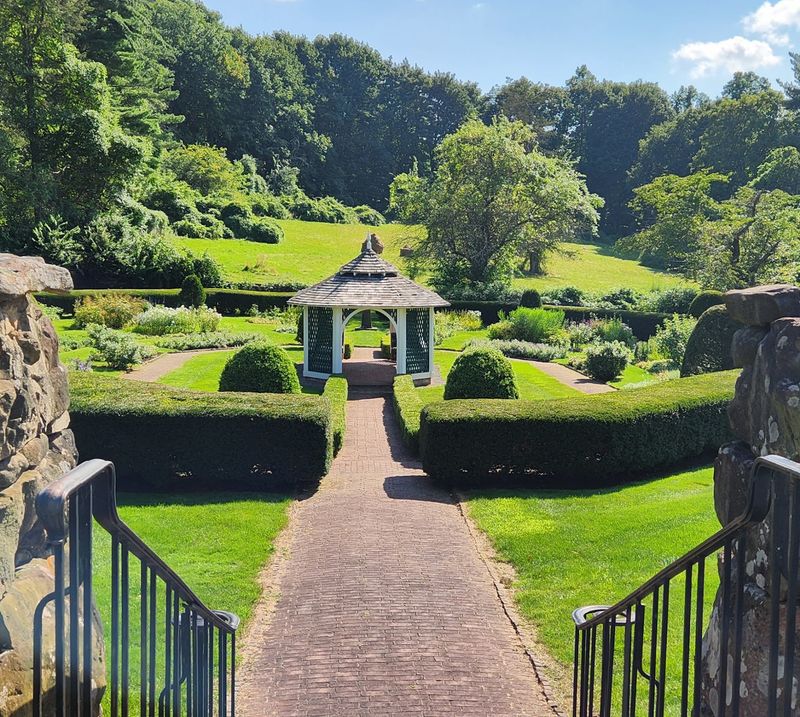
If there is a wait before a tour, it does not have to feel like a wait at all. The sunken garden sits close by and makes a lovely place to pass the time.
Wear comfortable shoes, too. Between the house, the lawns, and the trails, the afternoon involves plenty of walking, and happy feet make for a much better day.
The Sunken Garden Steals the Show
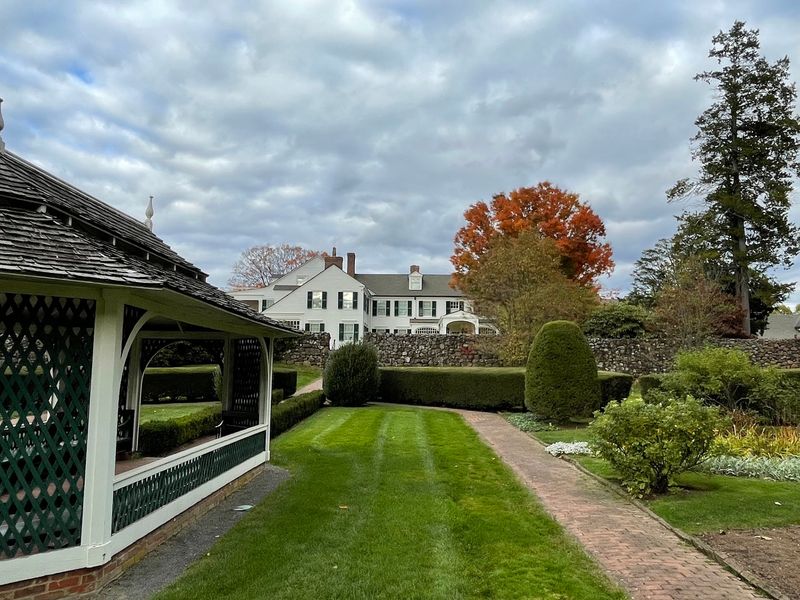
Gardens that sit below ground level have a way of feeling like a secret room. Hill-Stead’s sunken garden is exactly that kind of spot.
The garden was first designed by Beatrix Farrand, another pioneering woman in her field. She was a well-known landscape designer of the early 1900s.
Over time, the garden faded. It was later restored using Farrand’s original plans, bringing back its layout of flower beds and paths around a small summerhouse.
The space hosts poetry events in summer, a tradition the museum has kept for many years. Checking the events calendar is worthwhile for anyone who enjoys readings outdoors.
Wedding photographers love this garden, and it is easy to see why on a clear day. The setting looks great in every season, especially when fall color arrives.
Bring a camera here, since photos are welcome outdoors. Snap away, then find a bench and let the afternoon slow down for a few minutes.
Trails, Fields, and Fluffy Neighbors

Plenty of museums end at the gift shop. This one keeps going for about 152 acres.
Walking trails loop through meadows, woods, and fields around the estate. Most are not too long, so families with kids can handle them without a fuss.
The property was once much larger, with around 250 acres in the family’s time. Roughly half of that land is preserved today.
A small farm area adds a fun twist. Sheep live on the grounds, and spotting them is a highlight for younger guests and grown-ups alike.
When the museum is open, walking the grounds is free. That makes the trails a great option even for a quick visit without a house tour.
Picnics are a popular way to spend time on the lawns. Pack a blanket, pick a shady spot, and enjoy a relaxed break between activities.
Stone walls and old farm buildings add a dose of New England character along the way.
Exhibits, Events, and Seasonal Fun

Repeat trips pay off here, because the estate keeps adding new reasons to come back. A separate exhibition space hosts rotating shows throughout the year.
Past exhibits have spotlighted Japanese prints, including a show built around The Great Wave. Contemporary art has also appeared in the gallery space.
A gift shop sits on site for anyone hunting for a souvenir or an art book. It makes an easy final stop before heading home.
Seasonal events bring a festive spirit. Families have enjoyed trick-or-treating on the grounds in autumn, an outdoor activity that kids love.
The estate also serves as a venue for weddings and private events. Its mix of rustic charm and historic style suits celebrations of many kinds.
To catch something special, check the museum’s calendar before planning a date. Events fill up the year, and timing a visit around one adds extra flavor.
That way, a single afternoon can easily turn into a yearly tradition.