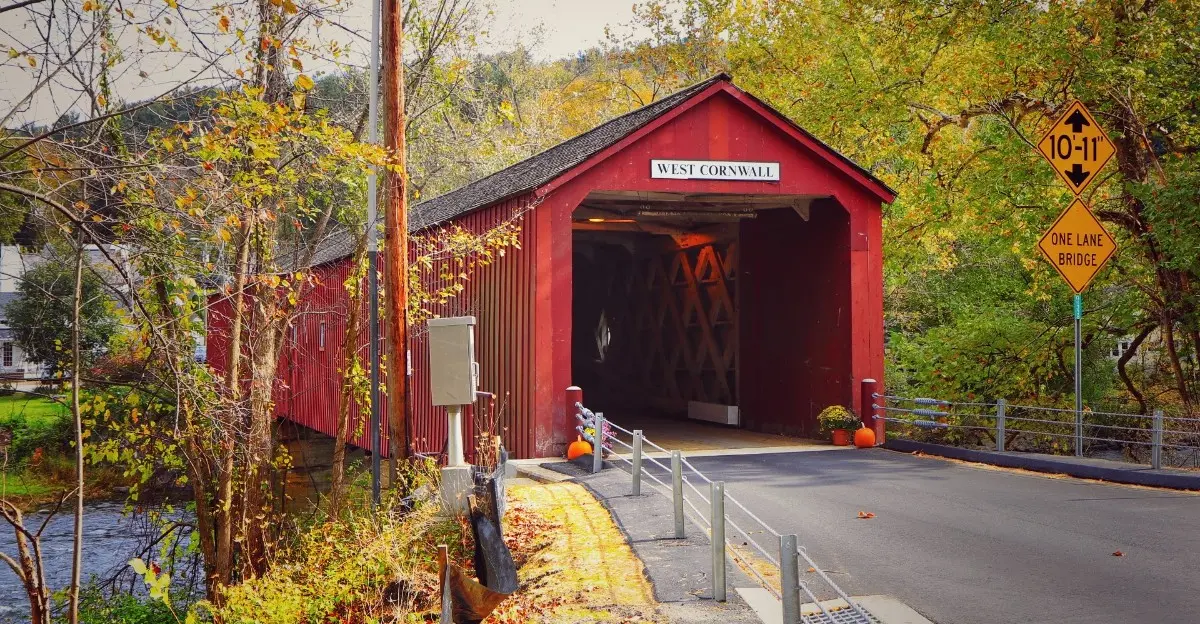
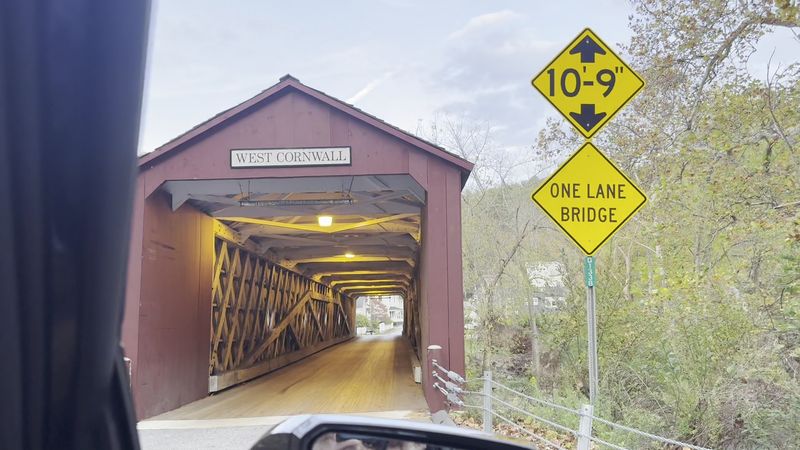
Some places in New England were built to last, and one of them still carries cars across a river after more than 160 years. Up in the northwest corner of Connecticut, a bright red wooden bridge has watched the seasons change since 1864.
Late fall is when it really shows off, with bare branches and the last copper leaves lining the riverbanks around it. People drive for hours just to stand on the bank and snap a photo.
The best part is that this is not a museum piece behind a rope. Drivers still roll through it one car at a time.
Keep reading to learn its story, where to park, the best spots for photos, and a few smart tips that make a visit to this small village much easier.
A Red Bridge With a Clear Address
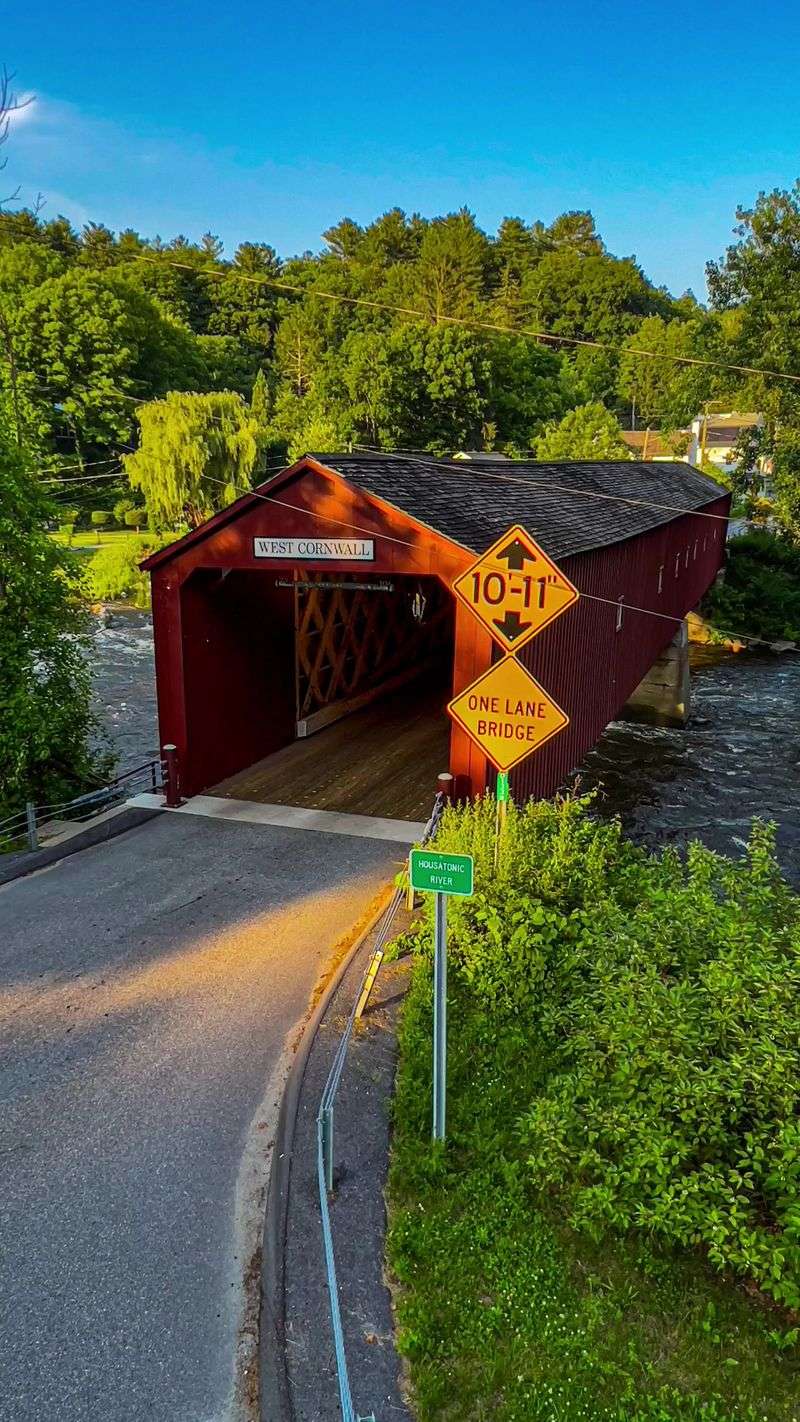
Finding this landmark is half the adventure, and it is easier than it sounds. The Historic West Cornwall Covered Bridge sits in West Cornwall, CT 06796, in the town of Cornwall in Connecticut.
It carries Route 128 across the Housatonic River. That makes it a short hop from Route 7, one of the most scenic drives in the western part of the state.
From Route 7, the bridge is hard to miss. Its bold red paint pops out from the trees like a flag waving hello.
The site is open 24 hours a day, every day of the week. There is no ticket booth and no gate to worry about.
That freedom means early birds can catch soft morning light, while late arrivals can still stop by on the way home. Just remember that it is a working road bridge, not a park path.
Plan your route ahead, since cell service can be spotty in rural Litchfield County. A saved map is a smart travel buddy here.
Built Back in 1864
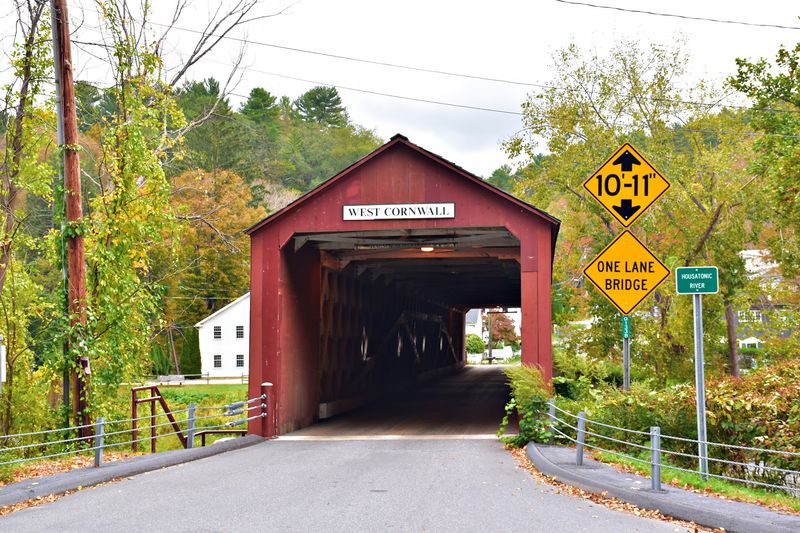
The year was 1864, and the country was in the middle of the Civil War. Up in quiet West Cornwall, builders were busy putting together a wooden bridge meant to last.
They did a good job. More than 160 years later, the bridge still stands over the Housatonic River and still handles daily traffic.
It is listed on the National Register of Historic Places. That honor helps protect it and marks it as a piece of history worth saving.
Connecticut once had many covered bridges, but only a few historic ones remain today. This one is among the best known in the whole state.
Why were bridges covered in the first place? A roof and walls kept rain and snow off the wooden frame, which helped the structure last much longer.
That simple idea is a big reason this bridge has survived so many winters. Sometimes the smartest solutions are also the plainest ones, and this roof proves it.
Clever Engineering Inside
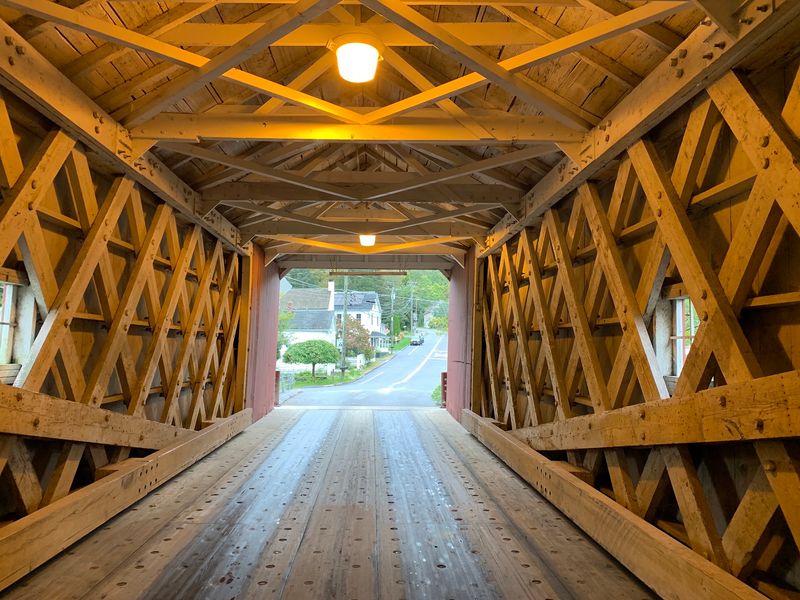
Engineers and history fans tend to slow down once they get inside. The bridge stretches 172 feet across the river, and the frame holding it up is worth a close look.
It uses two designs working together. One is a Town lattice truss, a crisscross pattern of wooden boards, and the other is a queen post truss.
The lattice pattern spreads weight across many pieces of wood. That kind of teamwork between boards is part of why the bridge can still carry cars.
Another detail sets it apart from many covered bridges. Windows line the sides, letting in daylight and giving peeks of the river below.
Not every covered bridge has windows like these, so take a moment to notice them. They frame small views of the water and trees that are easy to miss when rushing through.
Pedestrians should be careful inside, though. The passage is narrow, and there is not much room to stand beside a passing car.
One Lane, Lots of Patience
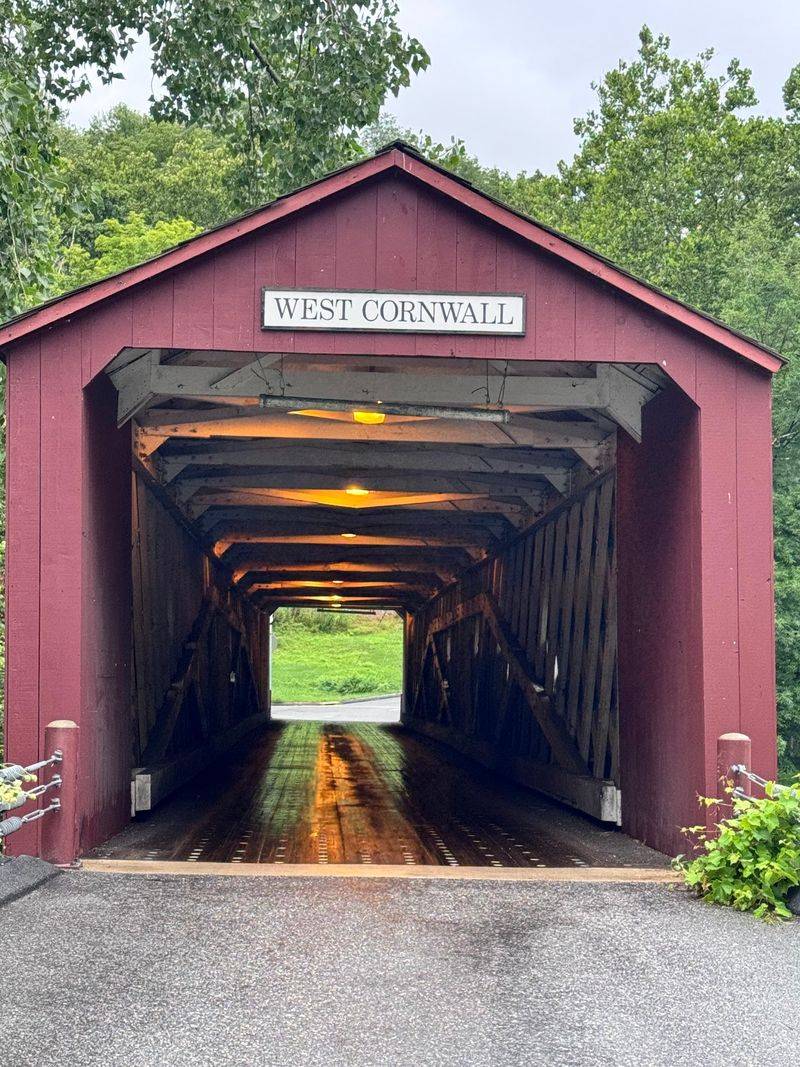
Here is a fun twist on a road trip. You can actually drive through this old bridge, but only one car fits at a time.
Drivers take turns crossing. There are no traffic lights, just stop signs at each end, so polite waiting is part of the deal.
That one-lane setup slows everyone down, and honestly, that is not a bad thing. It gives drivers a moment to enjoy the river and hills instead of zooming past.
Go slow and keep an eye out for people on foot. Many folks walk near the entrance to take photos, and the narrow space leaves little room for error.
Trucks should use extra care too. The bridge has been hit by a truck in the past and needed repairs before reopening.
Thankfully it was fixed and is as handsome as ever. A little caution from every driver helps keep this old timer rolling along for many more years.
Why Late Fall Wins
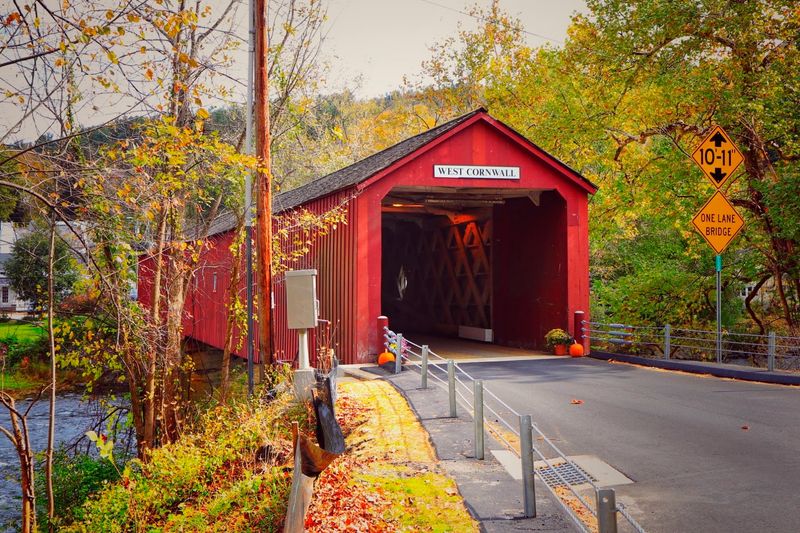
Peak foliage gets all the attention, but late fall has its own charm. Once many leaves drop, the red bridge stands out even more against the woods.
Mid to late October often brings the brightest colors here. After that, the trees thin out and the hills show more shape and texture.
Fewer leaves also means clearer views of the bridge from the riverbank. Photographers love the contrast between the red siding and the muted brown and gold hillsides.
Crowds usually shrink as the season winds down too. That can make parking a little less of a puzzle.
Even rainy days can work in your favor. The bridge has impressed plenty of people on wet, gray afternoons, and clouds can soften harsh shadows in photos.
Bring layers and good shoes, since the riverbank can be damp in November. A quick check of the forecast goes a long way in the hills of northwest Connecticut, where weather can change fast.
Best Angles for the Camera
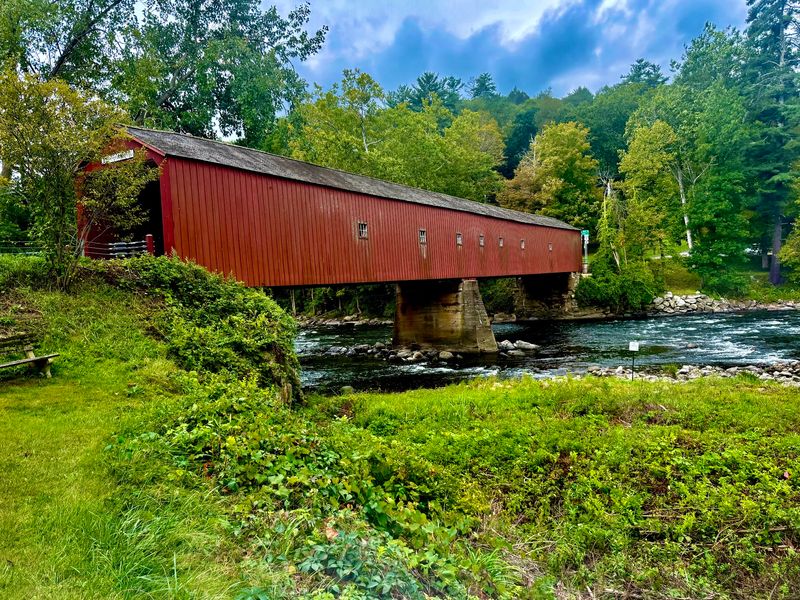
Photo opportunities are the number one reason many people come. The good news is that great shots are easy to get from several spots.
The riverbank offers the classic side view. From here, the full length of the red bridge shows up, along with the water flowing underneath.
On calm days, the gentle river can create reflections of the bridge. Those mirror shots are worth waiting a few extra minutes for.
There is also a small viewpoint near one end of the bridge. It gives a strong angle of both the bridge and the swift Housatonic below.
Shooting from the road toward the entrance is popular too. Just stay alert, because this is a working bridge with real traffic coming through.
Try visiting at different times of day for variety. Morning and late afternoon light tend to be kinder than harsh midday sun, and your photo album will thank you for the extra effort.
Benches by the River
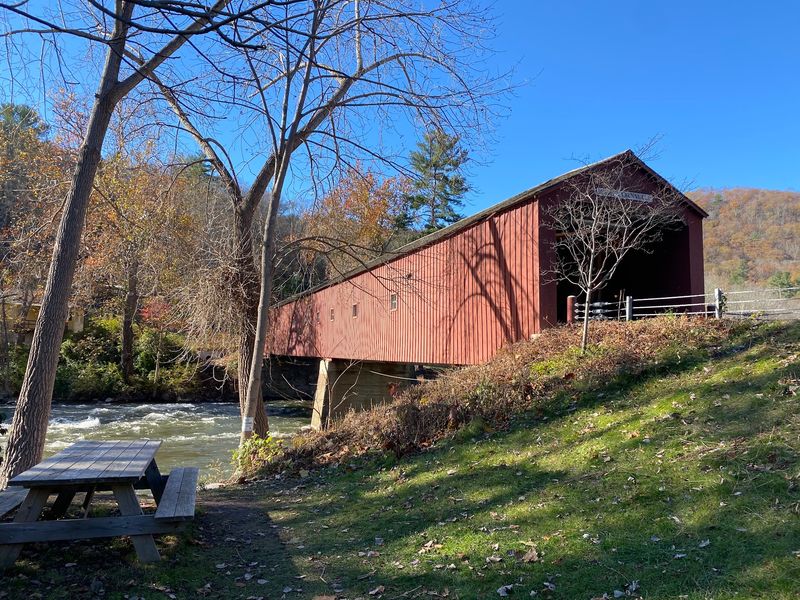
Not every stop needs a busy plan. Sometimes the best part is simply sitting down and watching the river go by.
A small park area sits near the bridge, with a grassy patch and public benches along the riverbank. It is a cozy corner for a short break after a long drive.
From the benches, people often spot kayakers paddling past. Anglers casting lines from the shore are a common sight as well.
The spot also works well for a simple picnic. Pack a lunch, grab a bench, and enjoy a calm view of the bridge.
Keep the area clean so others can enjoy it too. The grounds are well kept, and a little care from everyone helps it stay that way.
This quiet space suits families, couples, and solo travelers alike. For a slower pace on a busy road trip, few seats in Connecticut offer a better front row view of history.
Art, Fame, and the Old Toll House
Famous faces have found inspiration here. The artist Eric Sloane, known for painting rural American scenes, painted this very bridge.
That fits nicely, since the bridge is often called a symbol of New England. Its look shows up again and again in photos and artwork about the region.
The bridge also has a loose link to the film version of Valley of the Dolls. Movie buffs sometimes make the trip just for that connection.
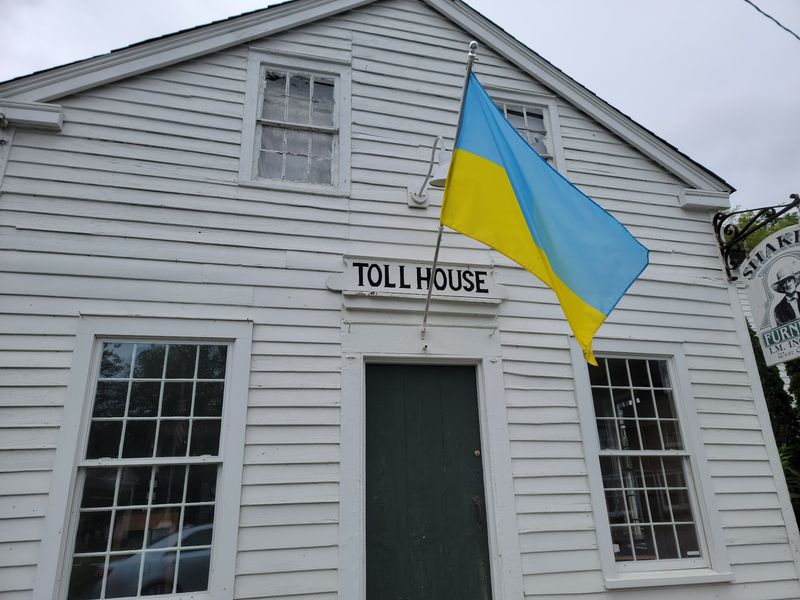
While you are here, look for the old toll house. It is a small reminder that crossing rivers once came with a fee.
Little details like that help tell the bigger story of how people traveled long ago. Roads and bridges shaped where towns grew and how neighbors stayed connected.
Take a minute to read about it before your visit. Knowing a few fun facts turns a quick photo stop into a richer trip for curious minds of every age.
Parking Puzzle Solved
Parking is the one small headache here, so a plan helps. Spots fill up fast, especially on fall weekends.
A smart move is to cross the bridge from Route 7. On the far side, there are some areas to park along Lower River Road.
That same side has the small visitors park and viewpoint. So parking there puts you right near the best views.
There is also a little parking area near one end of the bridge. It is limited, though, so arriving early makes a real difference.
Restrooms are another thing to know before you go. There are no public restrooms at the bridge site itself.
Nearby restaurants and businesses can help, but plan your stops ahead. Visitors with mobility issues should know that some paths and the narrow bridge can be tricky to get around.
A bit of preparation makes the whole outing smoother. Then you can spend your time enjoying the view instead of circling for a space.
A Village Worth a Wander
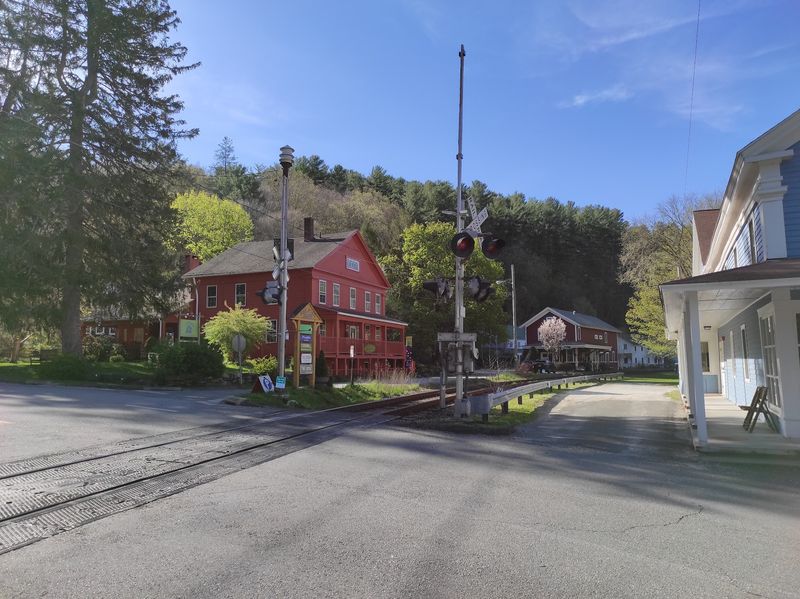
Right beside the bridge sits a small village that adds even more to the trip. It has a historic, rural feel with shops, eateries, and art spaces.
One nearby spot, The Pink House, is a popular choice for brunch. It makes an easy stop before or after your bridge photos.
Shop hours can vary, and some places keep limited schedules. Check ahead so you do not arrive to a closed door.
The roads leading here are a treat on their own. Many people love the drive through the hills just as much as the bridge itself.
Hiking and fishing are also popular around the area. Walking trails and picnic spots nearby help fill out a full afternoon.
So the bridge is more than a quick snapshot. Paired with the village, the river, and those winding country roads, it turns into a complete day trip that captures the best of small town Connecticut in late fall.