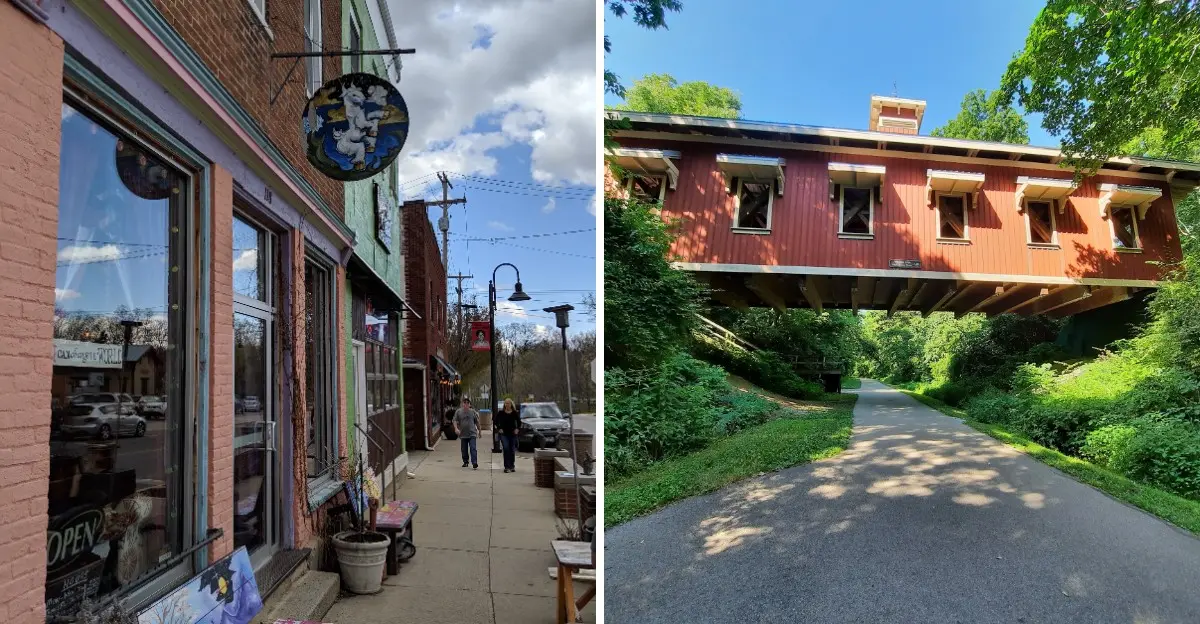
Some towns hide their personality behind chain stores and parking lots. This one paints it on the walls, hangs it in shop windows, and wears it in tie-dye.
Tucked into southwest Ohio, about twenty miles east of Dayton, sits a village of fewer than 4,000 people that has spent well over a century doing things its own way.
It has a famous college with a bold history, a nature preserve with a spring that stains the rocks orange, and a downtown where nearly every business is locally owned.
Folks come for an afternoon and end up planning a second trip before they leave.
Keep reading to learn where the town got its name, which trails are worth your time, and the small tips that make a visit here feel like you finally found your people.
Where the Free Spirit Lives
Some places earn a reputation slowly, and this one earned it loudly. Yellow Springs is a village in northern Greene County, in Miami Township, OH 45387, United States.
It sits inside the Dayton metropolitan area, yet it feels like its own little world. The 2020 census counted 3,697 residents, which makes it small enough to walk across in an afternoon.
Do not let the size fool you. The village packs in a college, a large nature preserve, a busy downtown, and a calendar full of community events.
Locals tend to describe it with words like quirky, open-minded, and creative. Peace signs, colorful murals, and handmade art pop up in spots you might not expect.
Getting there is simple. Most travelers arrive by car from Dayton, Springfield, or Columbus, and the drive mostly runs through quiet farm country.
The official visitor website, yso.com, is a handy place to check events and business hours before you go. Plan ahead a little, then leave room for surprises, because this town loves handing them out.
A Name Written in Iron
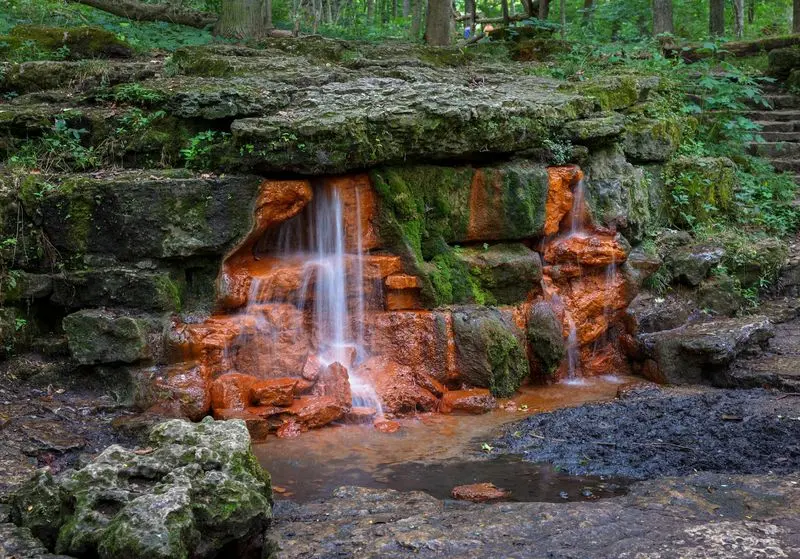
Here is a fun fact to share on the drive home. The village is named after an actual spring, and you can still go see it.
The Yellow Spring flows inside Glen Helen Nature Preserve. Its water carries a lot of iron, which leaves a rusty orange-yellow coating on the rocks around it.
Long before the town existed, people noticed this spring. In the 1800s, it drew guests who believed mineral water was good for health, and resorts sprang up nearby.
Those resort days are long gone, but the spring keeps doing its thing. It flows steadily all year, even when the weather turns cold.
A short trail leads right to it from the Glen Helen trailhead. The path has some slopes and steps, so sturdy shoes are a smart choice.
Please stay on marked trails and leave the rocks alone. The orange buildup forms slowly, and the preserve works hard to protect it.
Seeing the town’s namesake up close makes the whole trip feel like you finally got the inside joke.
A College That Broke the Mold
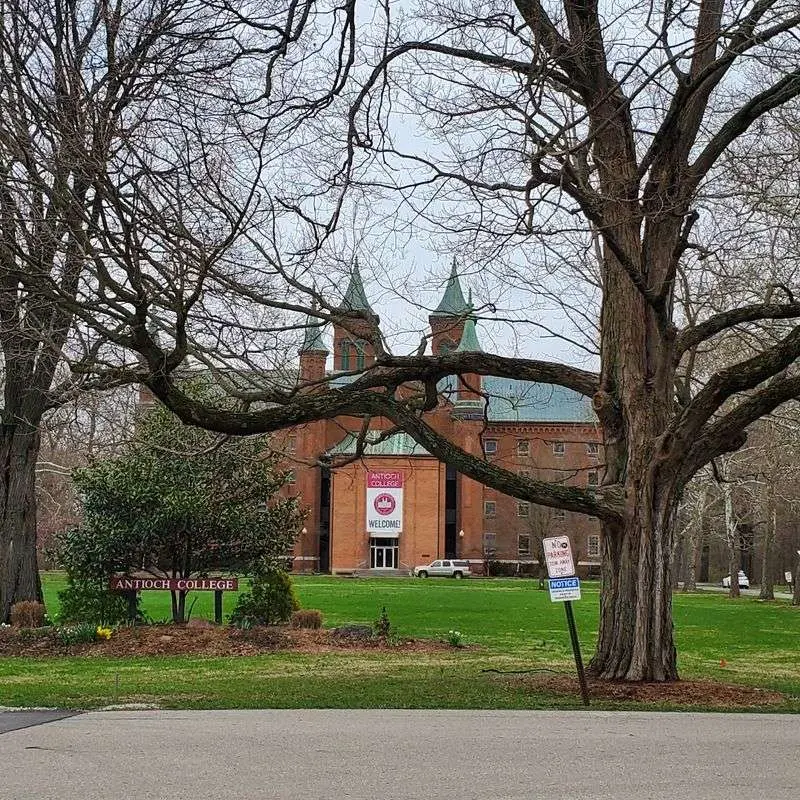
Antioch College opened its doors in 1853, and it has been stirring up big ideas ever since. Its first president was Horace Mann, a well-known education reformer.
Mann pushed for schooling that was open to more people. Antioch admitted women and men together, which was rare for that time.
He also gave a famous speech here in 1859. One line from it still gets quoted often: “Be ashamed to die until you have won some victory for humanity.”
The college later became known for its co-op program. Students spend part of their time working real jobs, then bring those lessons back to the classroom.
Antioch Hall, with its two tall towers, is the campus landmark most people recognize. It stands near the center of the village and is easy to spot.
The school went through a tough stretch and closed for a few years before reopening in 2011. Its comeback says a lot about how much the community cares.
Much of the town’s independent streak traces right back to this campus.
Trails Through Glen Helen
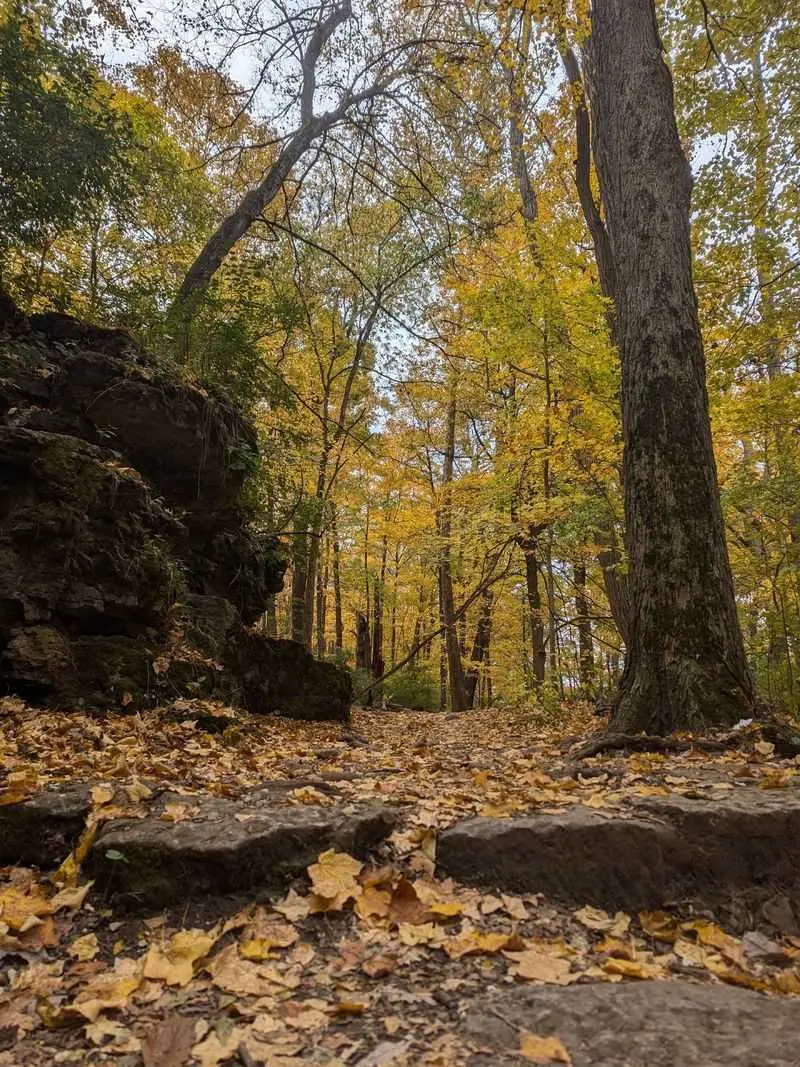
About 1,000 acres of woods sit right at the edge of downtown. That is Glen Helen Nature Preserve, and it is one of the best reasons to visit.
Hugh Taylor Birch gave the land to Antioch College in 1929. He named it after his daughter, Helen, as a lasting tribute.
Today the preserve has around 20 miles of trails. You will find gorges, limestone cliffs, footbridges, and a stretch of the Little Miami River.
The Cascades are a favorite stop, where water drops over layered rock. The Pompey’s Pillar rock formation is another spot people like to find.
Trails are free to use, but donations help keep them in good shape. Dogs are allowed on leashes, and staying on marked paths protects the plants.
Spring wildflowers and fall leaves make those seasons especially popular. Weekday mornings tend to be calmer than weekend afternoons.
Pack water and a light snack, since some loops take longer than expected. Your step counter will thank you, even if your legs file a small complaint.
Raptors With a Story
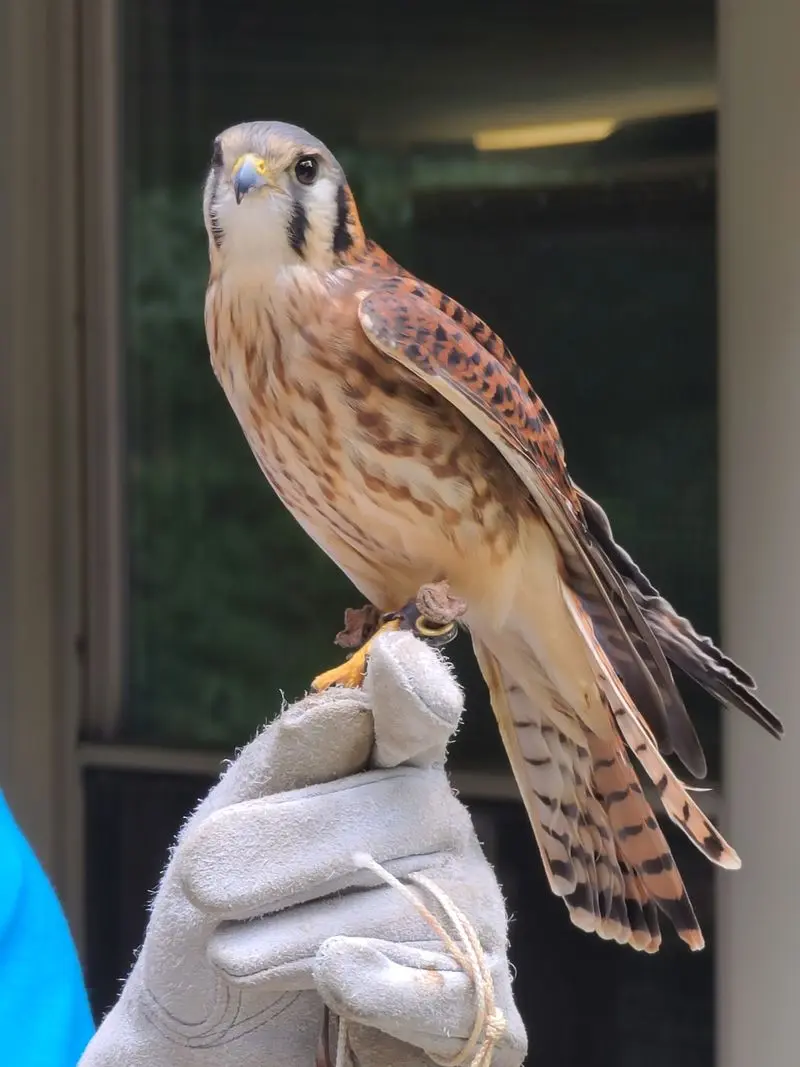
Not every resident of the woods walks on two feet. Some of them have feathers, sharp eyes, and a pretty interesting backstory.
The Glen Helen Raptor Center cares for injured birds of prey. Hawks, owls, and other raptors are brought in for treatment and rehab.
When possible, the goal is to heal them and send them back into the wild. Birds that cannot survive on their own may stay as permanent residents.
Those resident birds help teach people about wildlife. You can see them in outdoor enclosures along a trail in the preserve.
Each enclosure usually has a sign that explains the bird and what happened to it. Kids especially love matching the names to the faces.
The center depends heavily on donations and volunteers. Even a few dollars in the donation box helps pay for food and medical care.
Check the Glen Helen website for hours before heading over, since times can change with the season. A quick visit here is a solid hoot for all ages.
Downtown With No Chain Stores
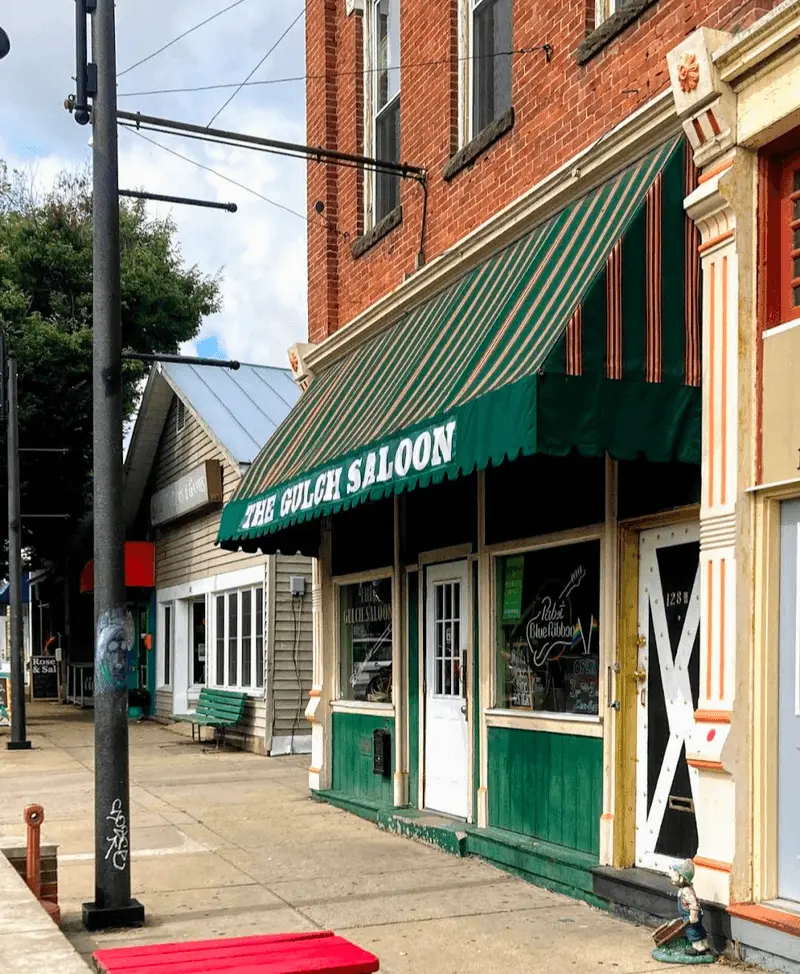
Try finding a big-box store downtown. You will be looking for a while, because nearly every shop here is locally owned.
Xenia Avenue and Dayton Street form the heart of the business district. Both are lined with small storefronts packed close together.
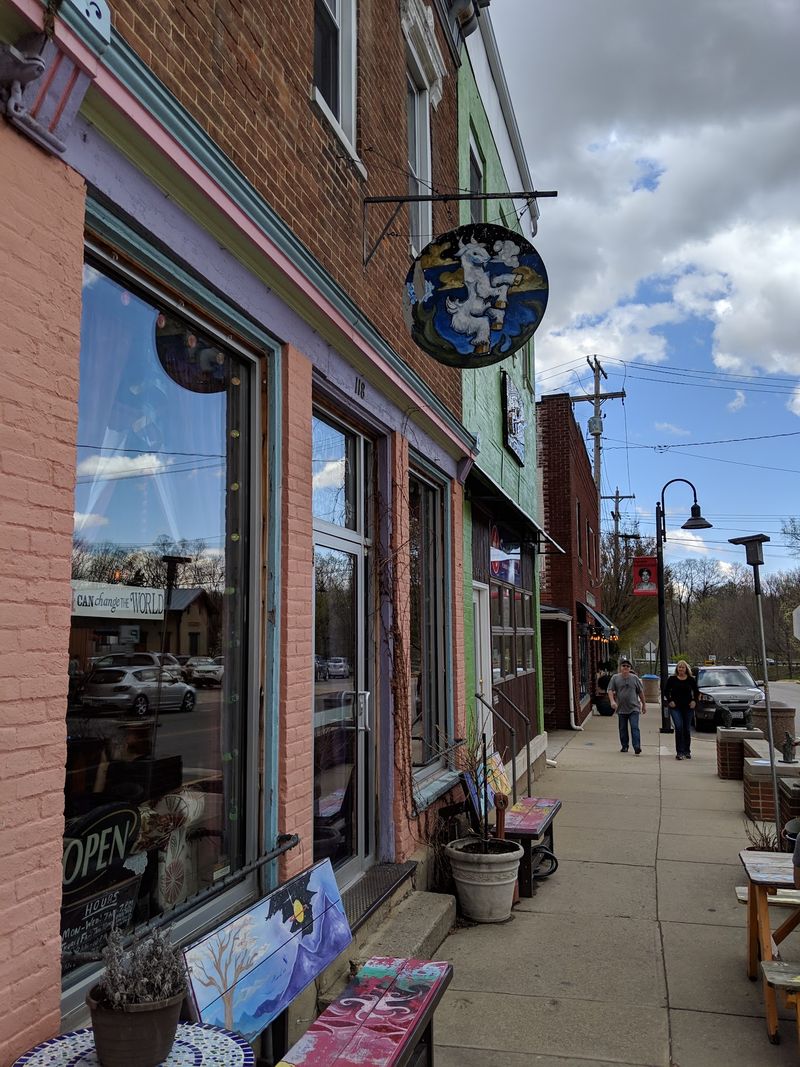
You will find bookstores, art galleries, clothing boutiques, toy shops, and stores selling handmade jewelry and crafts. Many owners live right in town.
The mix changes over time, which keeps repeat trips interesting. A shop you loved last year might share space with something brand new.
Parking can get tight on busy weekends. Downtown has public lots, and once you park, everything is close enough to explore on foot.
Plan for a slow pace. People here like to chat, and shop owners often share tips about events or trails.
Bring a reusable bag and a little patience. Some smaller stores keep shorter hours, especially early in the week.
Shopping local is not just a slogan in this town. It is basically the whole plan.
Art Around Every Corner
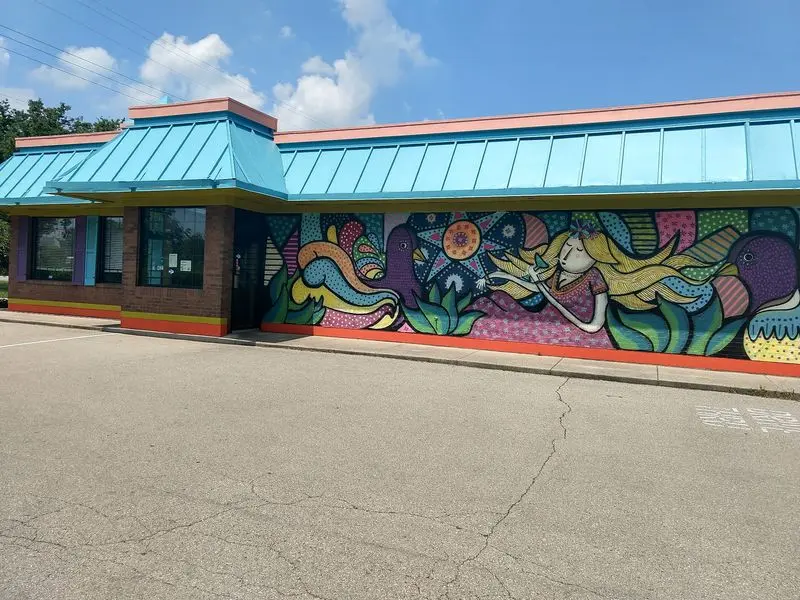
Walls in this village rarely stay plain for long. Murals, mosaics, and painted surfaces show up all over town.
Artists have called Yellow Springs home for generations. Many galleries feature work by local painters, potters, glassmakers, and photographers.
Walking the downtown blocks feels a bit like a free outdoor art show. Look down, too, since creative touches sometimes hide in sidewalks and benches.
Several galleries rotate exhibits, so there is often something new to see. Some hold opening events where you can meet the artists.
The Yellow Springs Arts Council supports local creators and hosts shows. Its gallery is a good first stop for learning who is making what.
Snapping photos of public art is welcome, but be respectful of private property. Ask before taking pictures inside small galleries.
If something catches your eye, buying directly helps local artists keep creating. Even a small print or postcard counts.
Art here is not tucked away behind velvet ropes. It is part of everyday life, right out in the open.
Gorge Views Next Door
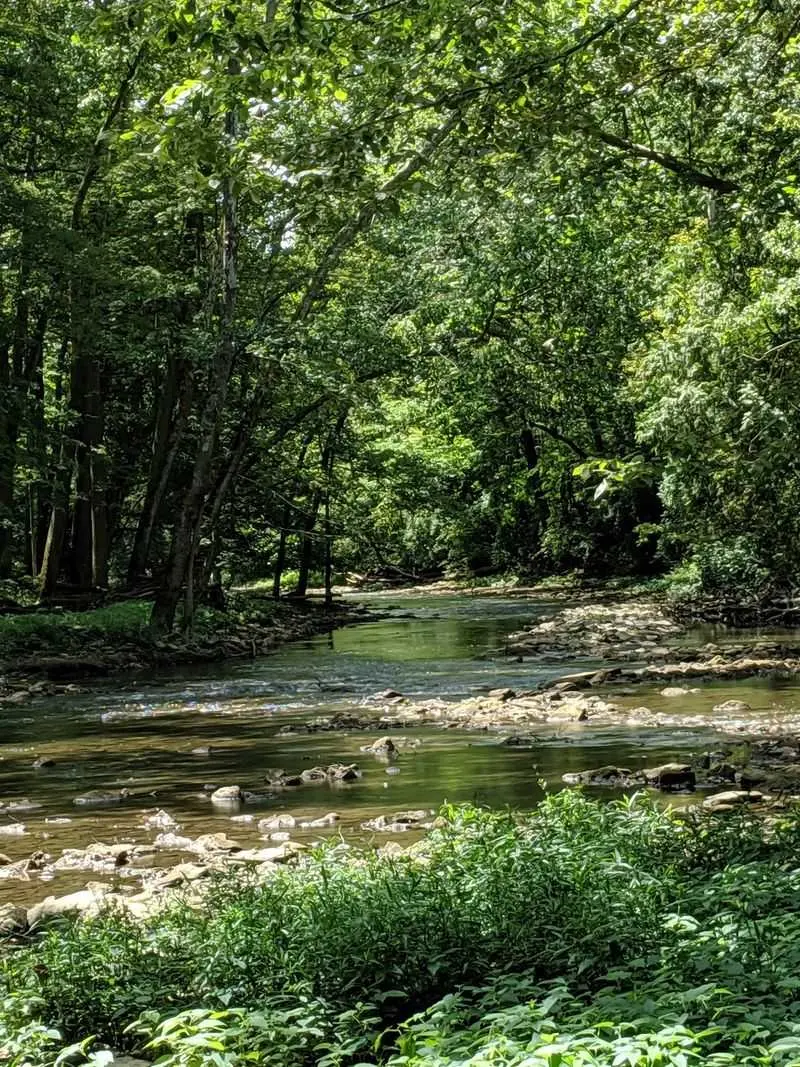
Just a short drive east, the land suddenly drops away into a dramatic limestone gorge. Nature lovers should not skip this neighbor.
John Bryan State Park borders the village area. It offers hiking, picnic spots, camping, and access to the Little Miami River.
Right next to it is Clifton Gorge State Nature Preserve. The Little Miami River cuts through tall rock walls there, creating narrow channels and small waterfalls.
Trails connect the two areas, so you can plan a longer hike. Some sections are rocky and steep, so watch your footing.
Clifton Gorge is a protected preserve with strict rules. Climbing and leaving the trail are not allowed, and pets are generally not permitted inside the preserve.
John Bryan State Park is more relaxed and great for groups. It has picnic shelters and wide open areas for kids to roam.
Check the Ohio Department of Natural Resources website for current rules. Then lace up and let the gorge do the rest of the convincing.
Pedal Power on the Bike Trail
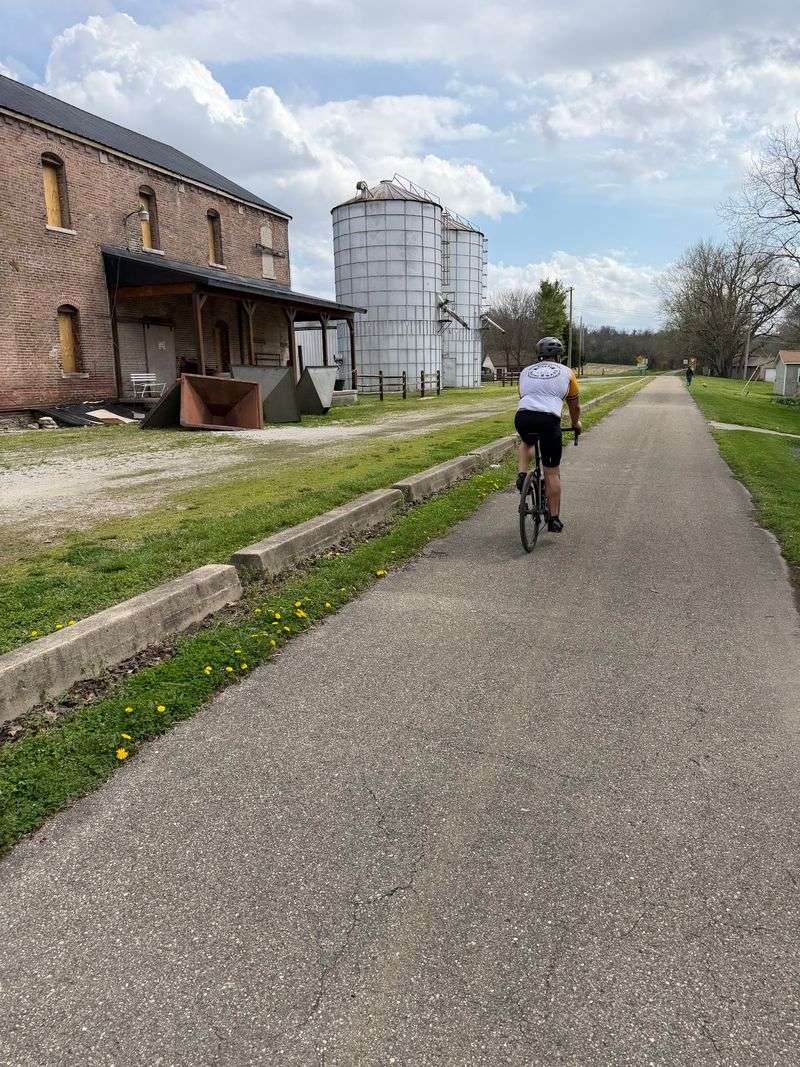
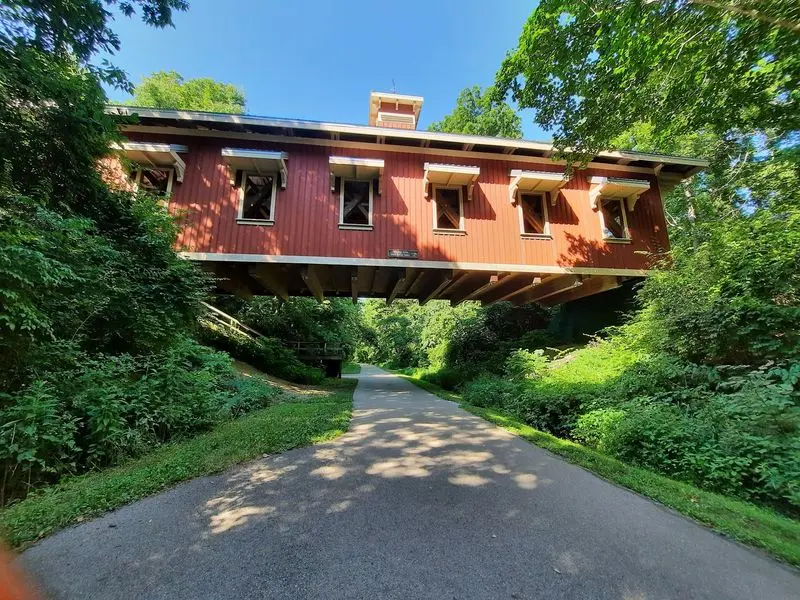
Bikes are a big deal in this town. The Little Miami Scenic Trail runs right through Yellow Springs, and it draws riders all year.
The paved trail follows an old railroad route. It is mostly flat, which makes it friendly for beginners and families.
From the village, you can head south toward Xenia or north toward Springfield. The larger trail network in Ohio stretches for many miles beyond that.
Walkers, runners, and skaters share the path too. Ring a bell or call out when passing so nobody gets startled.
The old train station area downtown makes a handy meeting point. Benches and nearby shops make it easy to take a break.
Bike rentals have been available in town, but options can change. Call ahead or check online before counting on one.
Wear a helmet and bring water on warm days. Shade is nice in spots, but long stretches can still feel open.
Hop on for an hour or a whole afternoon. This trail lets you set your own speed.
Cows, Cones, and Country Air
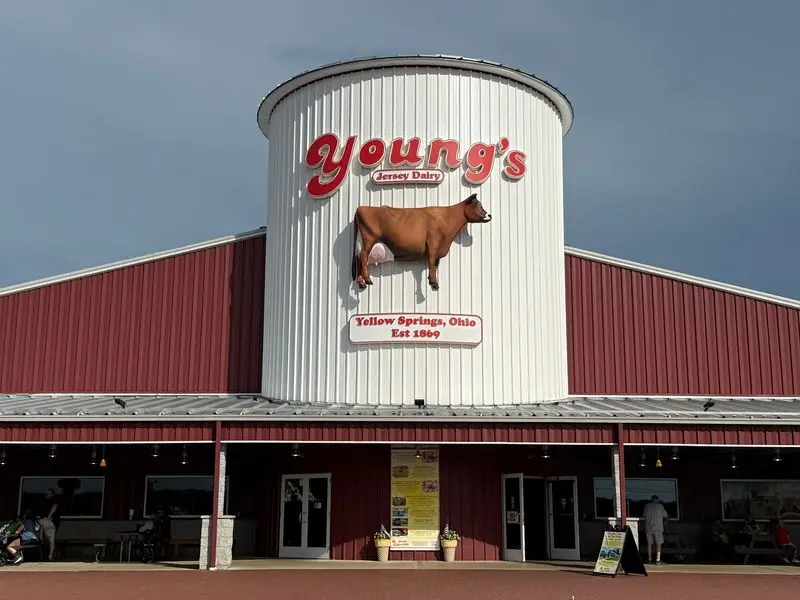
Just north of town, a working family dairy farm has become a local tradition. Young’s Jersey Dairy has welcomed families for decades.
The farm started with cows, and the cows are still there. Kids can see animals up close and learn a bit about how a dairy works.
Over the years, the farm added plenty of fun extras. Miniature golf, batting cages, and seasonal activities keep groups busy.
Fall is especially popular, with a corn maze and pumpkin events. Weekends in that season can get very crowded.
It is an easy stop before or after a hike. The short drive from downtown makes it simple to fit into a day trip.
Hours and activities change with the seasons. Checking the farm’s website first saves you from showing up to a closed mini golf course.
Families with young kids often call this the highlight of the trip. Grown-ups tend to enjoy it more than they admit, too.
A farm visit adds a nice down-to-earth touch to a creative town.
Smart Tips Before You Go
A little planning goes a long way in a small village. These simple tips can make your trip smoother.
Weekdays are calmer than weekends. If crowds are not your style, aim for a Tuesday or Wednesday visit.
Some shops keep shorter hours early in the week, though. Check business websites or the yso.com events page before you head out.
Spring and fall are favorite seasons for hiking. Summer brings longer days, while winter is quieter and great for a relaxed stroll.
Parking fills fast during events. Use public lots and walk, since the downtown area is compact.
Respect the town’s laid-back vibe. People here value kindness, conversation, and supporting each other.
Carry a little cash for donation boxes at nature spots. Those small gifts help protect trails and wildlife.
Finally, do not rush. The best moments often come from wandering into a shop or chatting with someone on a bench.
Leave a little room in your schedule. This free-spirited village has a way of rewarding people who slow down and stay curious.