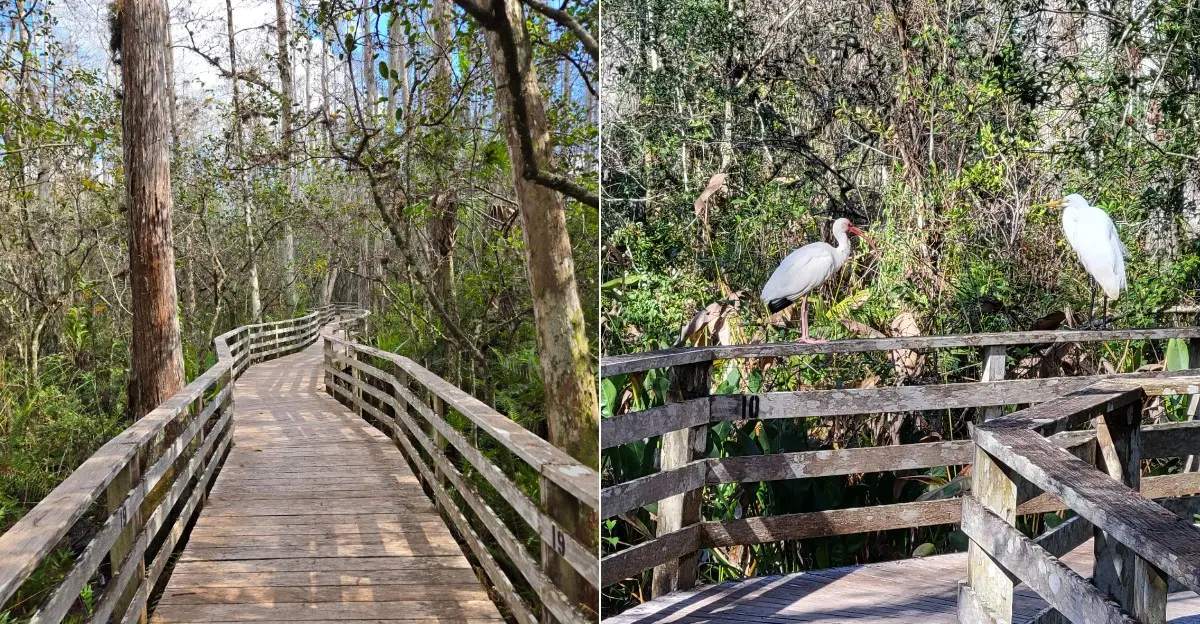
A small alligator rests near the edge of the water, and a group of kids freezes on the boardwalk to point at it.
Nobody needs a screen to stay busy here. Just east of Naples, Florida, a raised wooden trail winds through one of the oldest forests left in the state.
Some of the bald cypress trees along the path are hundreds of years old, and they tower over swamp water full of turtles, wading birds, and raccoons.
Families come for the alligators, but they often leave talking about herons, hawks, and giant trees.
The walk is flat, shaded in many spots, and easy enough for strollers.
Between the towering ancient cypress trees, peaceful boardwalk trails, and incredible opportunities to spot Florida wildlife, this remarkable sanctuary turns a simple family walk into an unforgettable nature adventure.
Where the Wild Boardwalk Begins
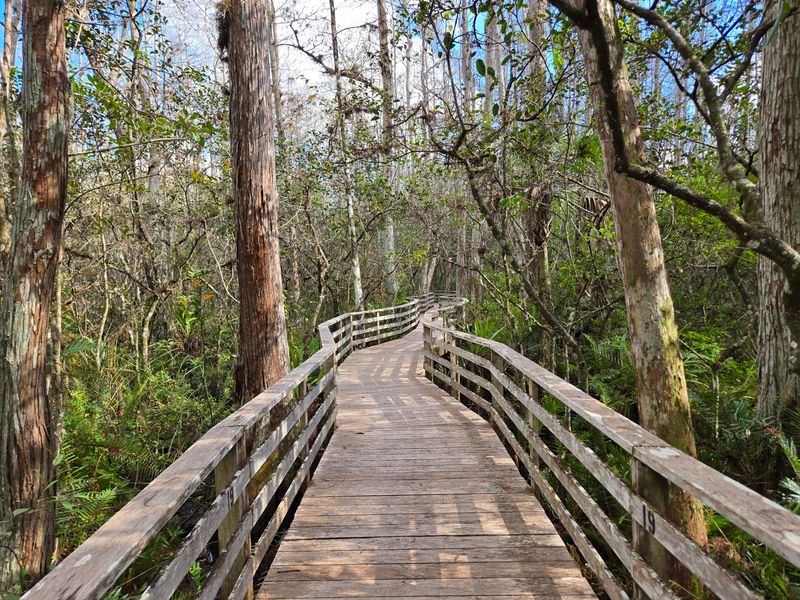
Tucked away northeast of Naples, the destination is Audubon Corkscrew Swamp Sanctuary. The address is 375 Sanctuary Rd W, Naples, FL 34120, in Collier County, Florida, United States.
Many families assume it is a state park. It is not.
The sanctuary is owned and managed by the National Audubon Society, and it covers about 13,000 acres.
That makes it one of the largest pieces of privately owned conservation land in Florida. The sanctuary was established in 1954, so it has been protecting this swamp for more than seventy years.
The drive out is part of the fun. Roads near the sanctuary pass through open, rural land, and deer, rabbits, or birds sometimes show up before the parking lot does.
Driving slowly gives everyone a chance to look around. Kids can start a wildlife count right from the back seat.
Parking is on site, and the visitor center sits right at the start of the trail. It is the doorway to a world that feels far from city traffic, even though Naples is not far away.
Gator Spotting 101
Alligators are the stars of the show, and they rarely ask for attention. Most of the time, they just lie still near the water, soaking up the sun.
That stillness is exactly why kids need sharp eyes. A gator can look like a floating log until it blinks.
Small baby gators sometimes rest close to the water’s edge. Larger ones may float in open pools or lie on muddy banks near the boardwalk.
Here is a smart game for young explorers. Have them scan the water slowly from left to right, looking for two bumps, which are usually the eyes and the nose.
The boardwalk is raised above the swamp, so families can watch these reptiles in their natural home without getting close. It is a calm way to meet one of Florida’s most famous animals.
Gator sightings depend on the season and the water level. Some days bring several, and other days bring just one.
Either way, every sighting counts as a win. Kids tend to remember that first gator for a very long time.
A Trail Built for Little Legs
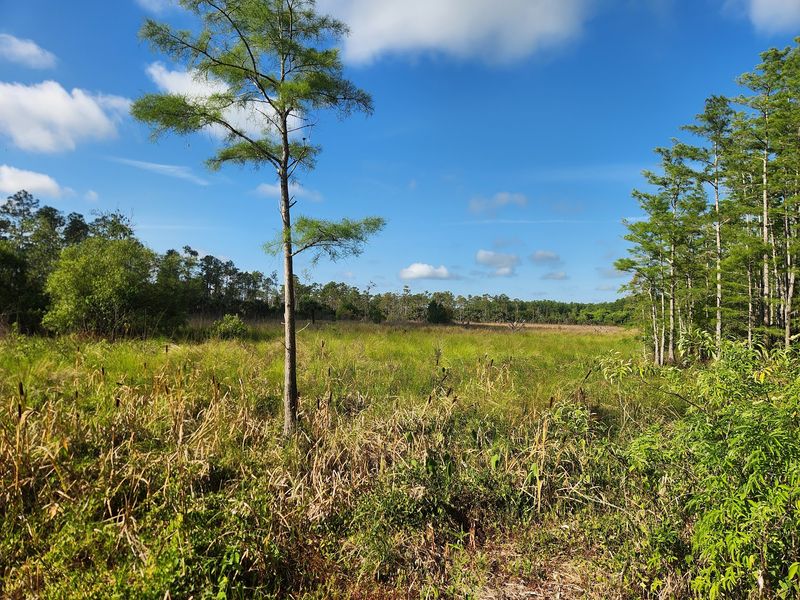
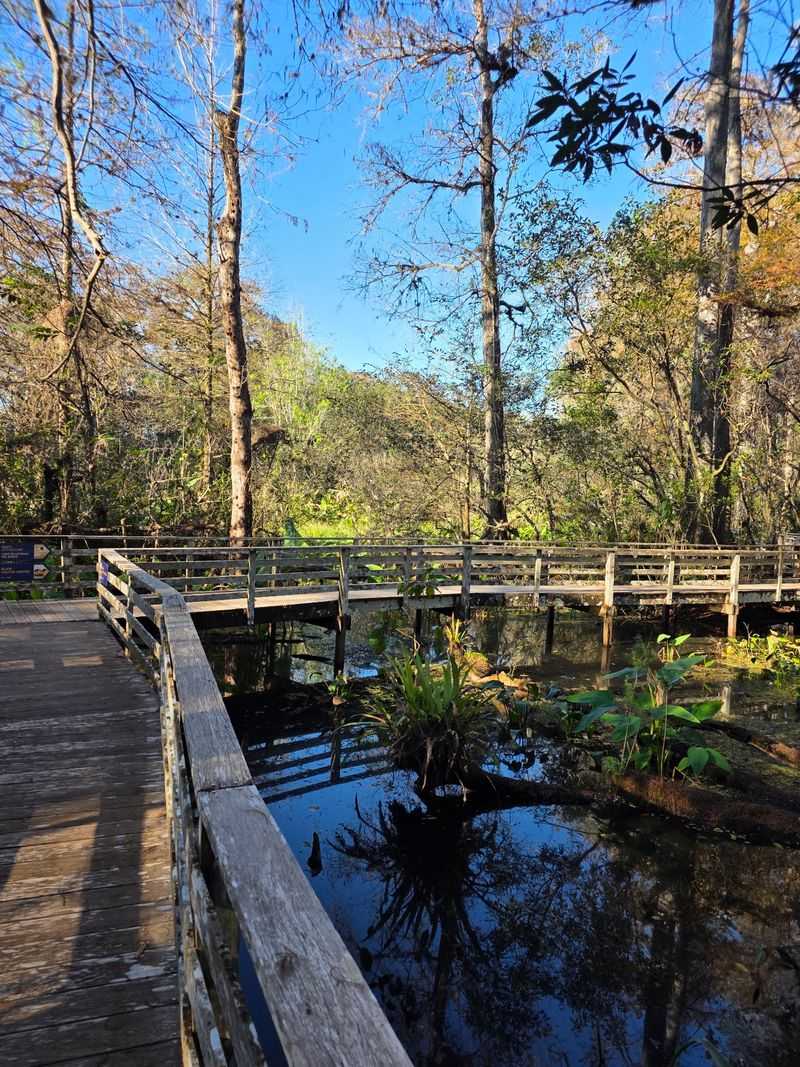
Good news for parents with tired walkers in tow. The full boardwalk loop is about 2.25 miles long, and it stays flat the whole way.
Almost all of it is made of wooden planks, with only a very short paved section. That means strollers and wheelchairs can roll along without trouble.
Families who want a shorter outing have options too. A shorter route reaches the swampy area, which happens to be a great place for bird sightings.
Plan on roughly 90 minutes to two hours for the full loop. Kids who stop at every turtle may need a bit longer, and that is perfectly fine.
Covered areas with benches appear along the way. They work well for snack breaks, quick rests, or waiting out a sudden Florida rain shower.
Many families say the miles seem to fly by. There is always something new around the next bend.
The boardwalk lets children feel like real swamp explorers while staying safely above the water. It turns a long walk into an adventure they can handle.
Giants That Were Here First
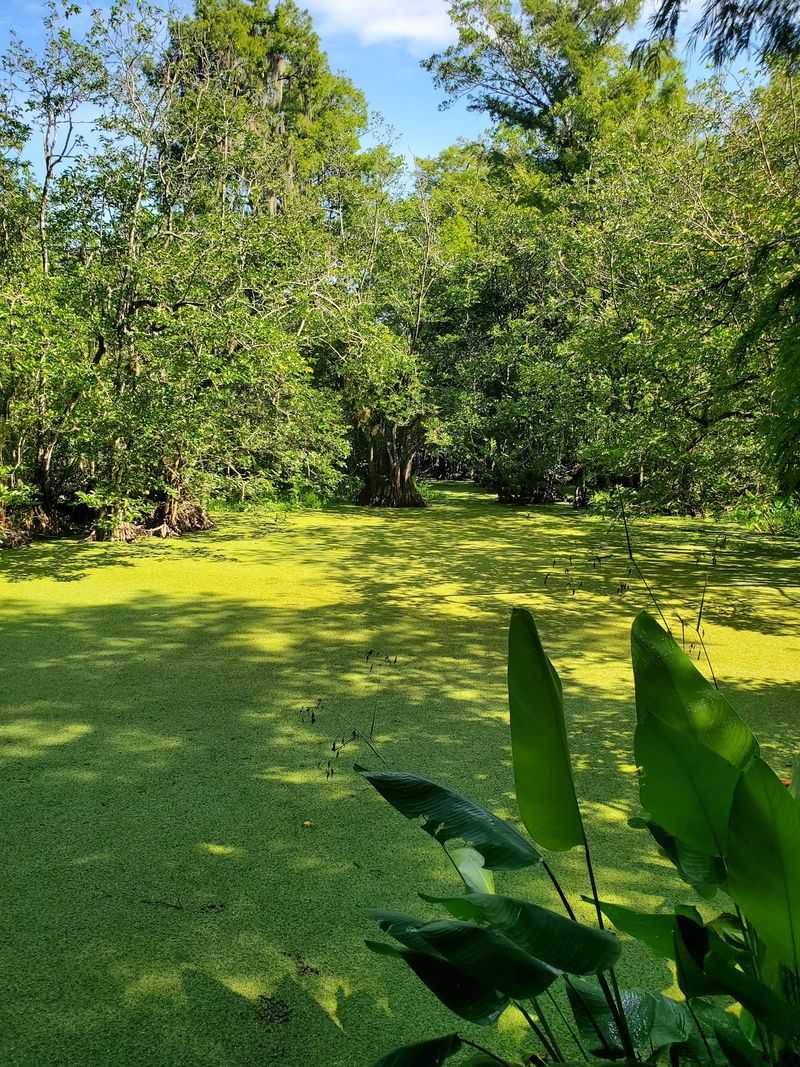
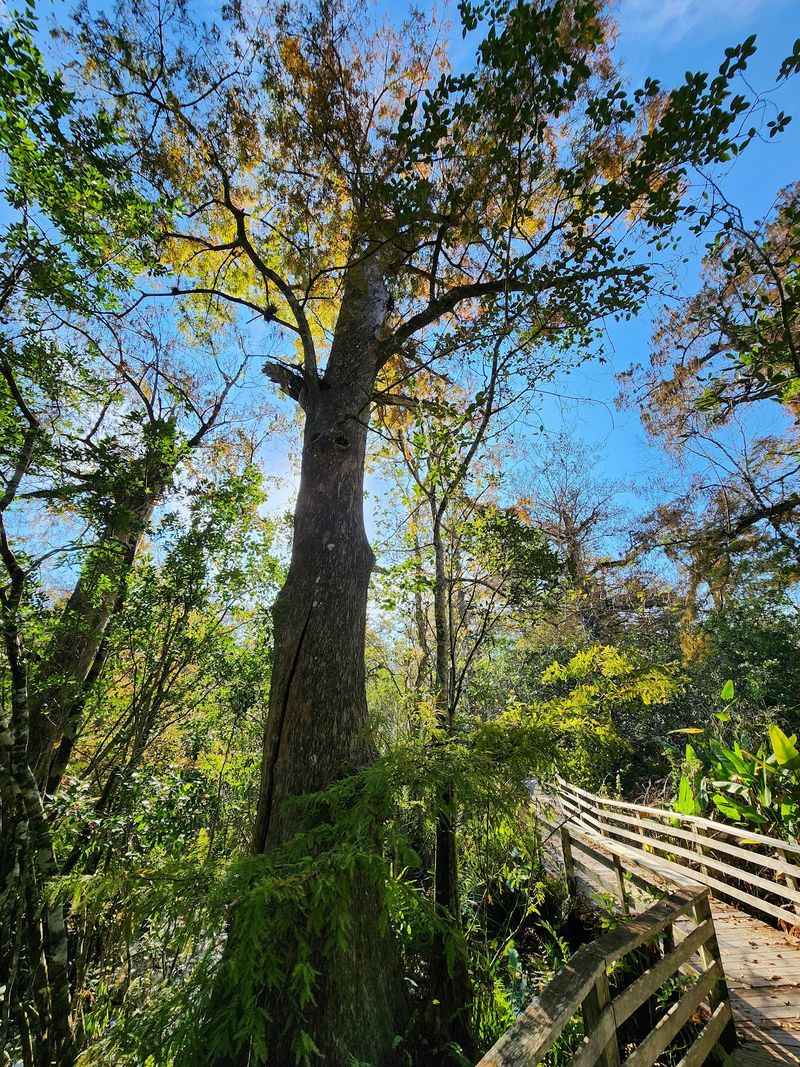
Some of the trees here were already old when the United States was young. The sanctuary protects a rare old growth bald cypress forest.
Many of these trees are hundreds of years old. They stand tall over the boardwalk, and kids often tilt their heads way back to find the tops.
Old growth forests like this one are hard to find in Florida today. Large amounts of cypress were cut down in the past, which makes this protected stand extra special.
Here is a fun fact for curious kids. Bald cypress trees grow knobby parts called knees that poke up from the ground and water around them.
Scientists still study exactly what those knees do. That makes them a great conversation starter on the trail.
Families can turn the forest into a learning game. Ask kids to find the widest trunk, the tallest tree, or the strangest knee they can spot.
These trees give the whole sanctuary its quiet, cathedral-like feel. They are a living history lesson growing right beside the path.
Feathered Friends Everywhere
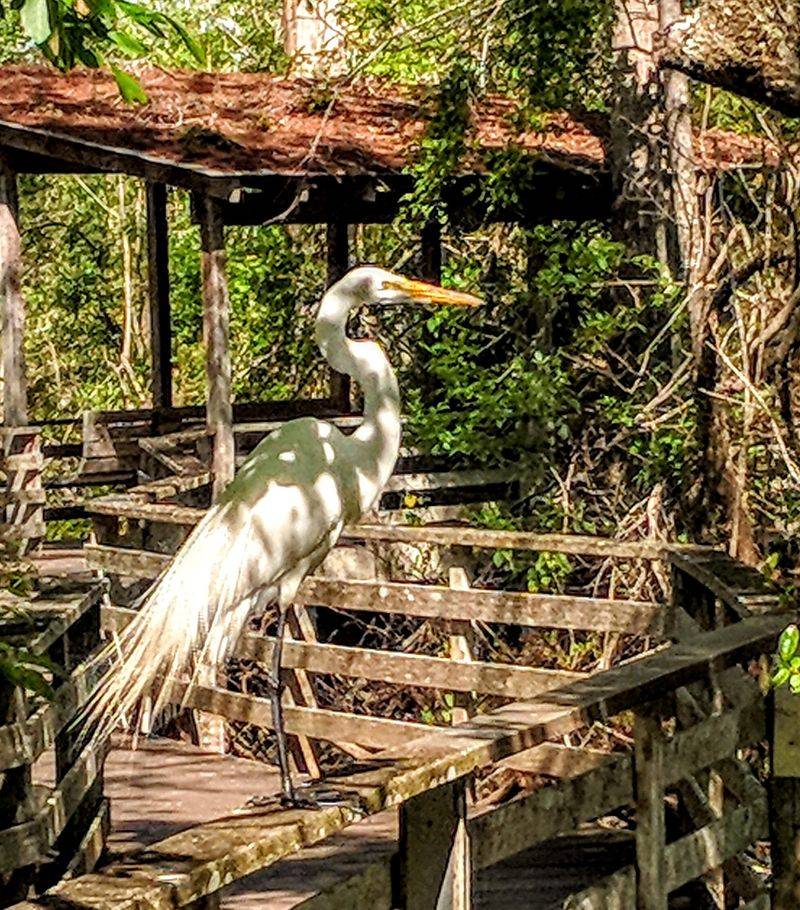
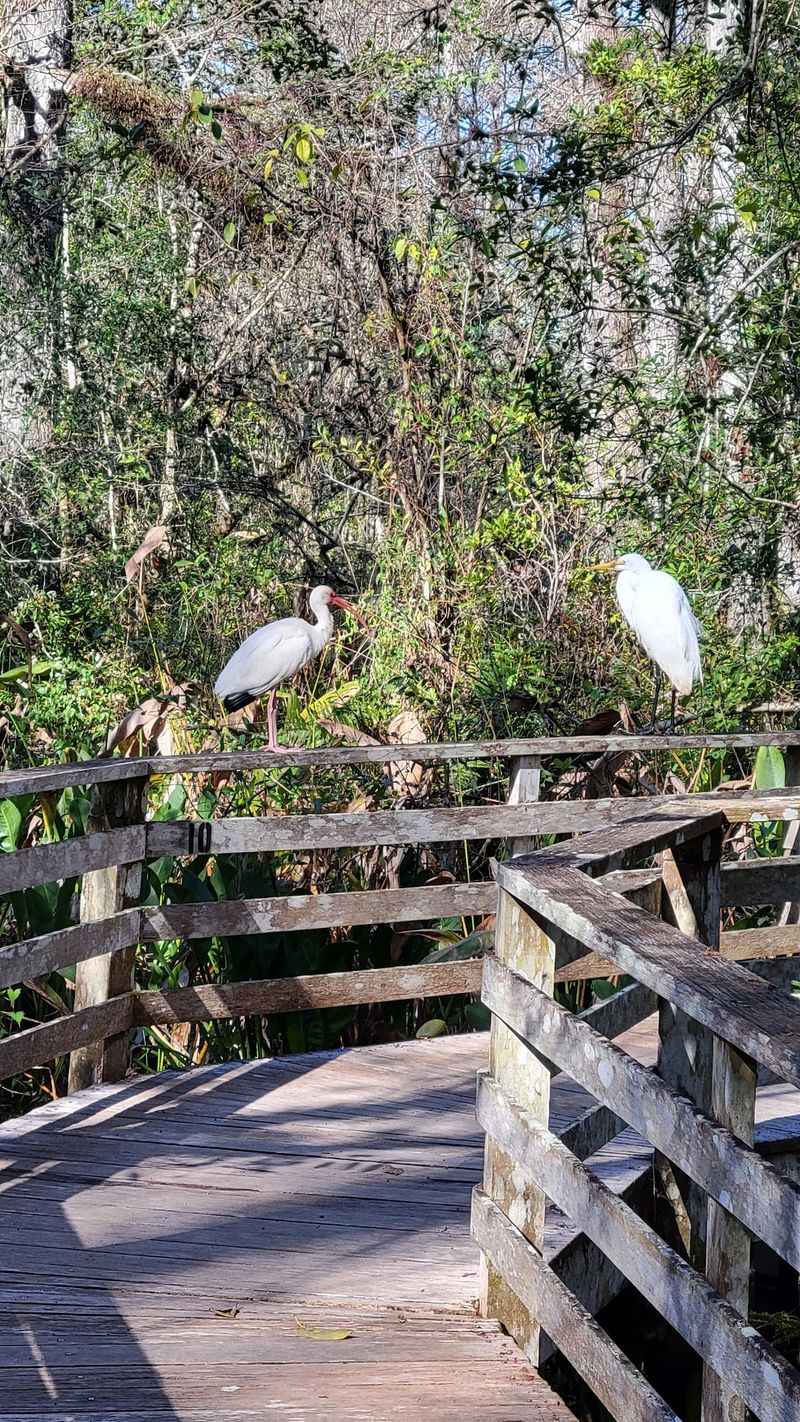
Birds might steal the show before any gator does. The sanctuary is a favorite spot for bird watching, and the list of possible sightings is long.
Red-shouldered hawks often perch on branches near the boardwalk. Little blue herons wade through shallow water, hunting for small meals.
Limpkins are another treat. These brown, speckled wading birds are not found in most parts of the country, so spotting one is a real bonus.
Kids can practice being quiet bird detectives. Moving slowly and speaking softly helps birds stay put instead of flying away.
A small pair of binoculars makes a big difference. Even children’s binoculars help young eyes see feathers and beaks up close.
The marsh areas near the start of the trail are especially good for birds. Open water and grasses give wading birds plenty of room to hunt.
Photographers love this place for the same reason. Bring a camera or phone, and kids can build their own bird gallery by the end of the walk.
Masked Bandits and Other Surprises
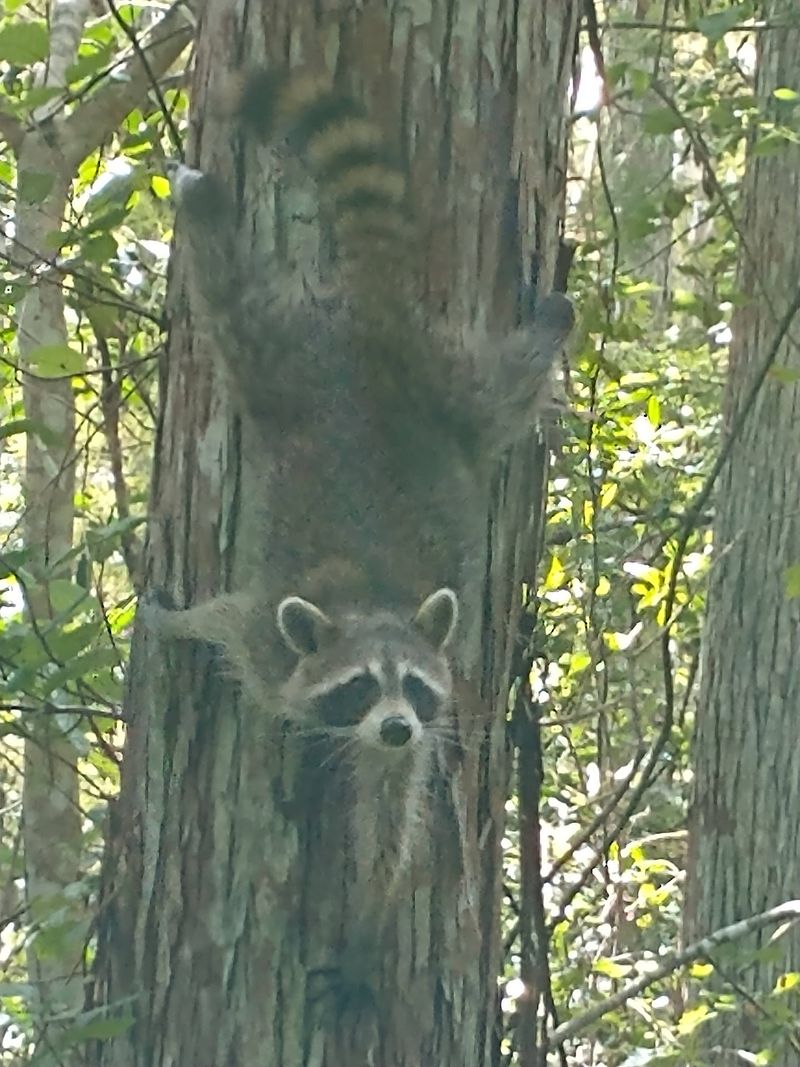
Raccoons have a way of showing up when nobody expects them. These masked mammals are a common sight along the boardwalk.
They climb trees, poke around the water, and sometimes wander surprisingly close to the path. Kids usually find them more exciting than they planned.
Turtles are another easy win. Look for them resting on logs or floating near the surface of the swamp.
Snakes live here too, though most stay out of the way. The raised boardwalk keeps everyone at a safe distance.
Deer and rabbits sometimes appear near the edges of the sanctuary or along the drive in. Every trip brings a slightly different cast of characters.
A simple rule keeps both animals and people safe. Never feed or try to touch wildlife, and teach kids to watch from the boardwalk only.
That respect is part of what keeps the sanctuary wild. Animals stay healthy, and families get the thrill of seeing them act naturally in their real home.
The Scavenger Hunt Secret
Here is a trick that keeps young hikers busy from start to finish. Kids can get a map and a pen to mark the things they find along the trail.
It works like a scavenger hunt. Every gator, bird, or turtle becomes a checkmark, and children suddenly pay close attention to everything around them.
Parents often notice fewer complaints about walking. When kids have a mission, the miles seem shorter.
Families can add their own challenges too. Try counting how many alligators the group sees, or racing to spot the first heron.
Another idea is a simple nature journal. Kids can sketch a cypress knee or write down the name of a new bird.
Back home, those notes become great memories. Some children even share what they learned with friends or classmates.
The hunt turns a pretty walk into an active learning game. It is one of the easiest ways to help kids connect with the swamp in a personal way.
Early Birds Win Big
Timing matters at this sanctuary. Opening hours can vary by season, with longer visiting hours typically offered during the cooler winter months.
Families should check the sanctuary’s current schedule and admission requirements before planning their visit.
Arriving right at opening is a smart move. Early hours often mean more wildlife activity and fewer people on the boardwalk.
Weekday mornings can still get busy, especially in the popular winter season. Getting there early helps families find a little more space and quiet.
Hours can change, so checking the official website at audubon.org/corkscrew before the trip is a good idea. Buying tickets ahead of time can also save a step.
After a rainstorm, the swamp looks especially lush. Some families plan visits for those days on purpose.
Season also changes what kids might see. Water levels rise and fall through the year, which affects where birds and alligators gather.
A little planning goes a long way here. Show up early, stay patient, and let the morning unfold one sighting at a time.
Dress Smart, Beat the Bugs
Swamps are wonderful, but bugs think so too. From April through June, biting yellow flies, sometimes called deer flies, can appear along the trail.
Regular bug spray may not stop them. The sanctuary itself recommends long sleeves and long pants during that stretch of the year.
Staying on the move also helps. These flies tend to bother people who stand still for a long time.
Light, breathable long clothing works best for Florida weather. Kids stay protected without getting too warm.
Comfortable walking shoes are another must. The boardwalk is flat, but two miles is still two miles for small feet.
Hats and sunscreen help on sunny stretches, even though much of the path has shade. A reusable water bottle for each child keeps everyone happy.
The bug season is temporary, and cooler months are usually much easier. Still, a well-dressed family spends more time spotting gators and less time swatting.
Inside the Discovery Center
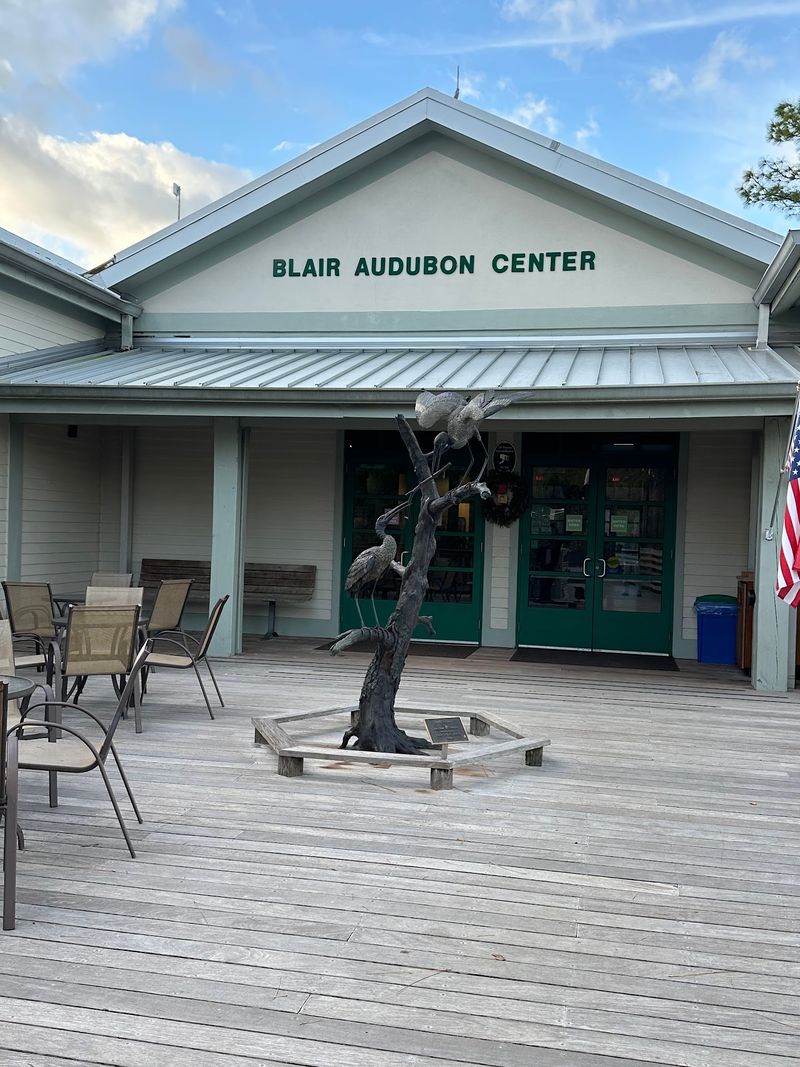
The adventure does not stop at the boardwalk. The Blair Audubon Visitor Center offers another opportunity to learn about the sanctuary’s remarkable wildlife and wetland habitats before or after exploring the boardwalk.
It gives kids another way to learn about Florida’s wetlands and the animals living in them. It is a great place to start before the walk or to wind down afterward.
Friendly staff and volunteers are a big part of the experience. They often share fun facts and ask families what they spotted on the trail.
Kids with lots of questions will find eager helpers here. A volunteer might explain why cypress trees love water or how alligators survive the dry season.
School field trips visit regularly, and the sanctuary also runs a summer camp program. Children build confidence and learn outdoor skills there.
Families who live nearby may want to look into an annual membership. Repeat visits let kids notice how the swamp changes with the seasons.
Learning feels natural in this setting. Curiosity grows fast when the classroom is a real swamp.
Rest Stops, Snacks and Souvenirs
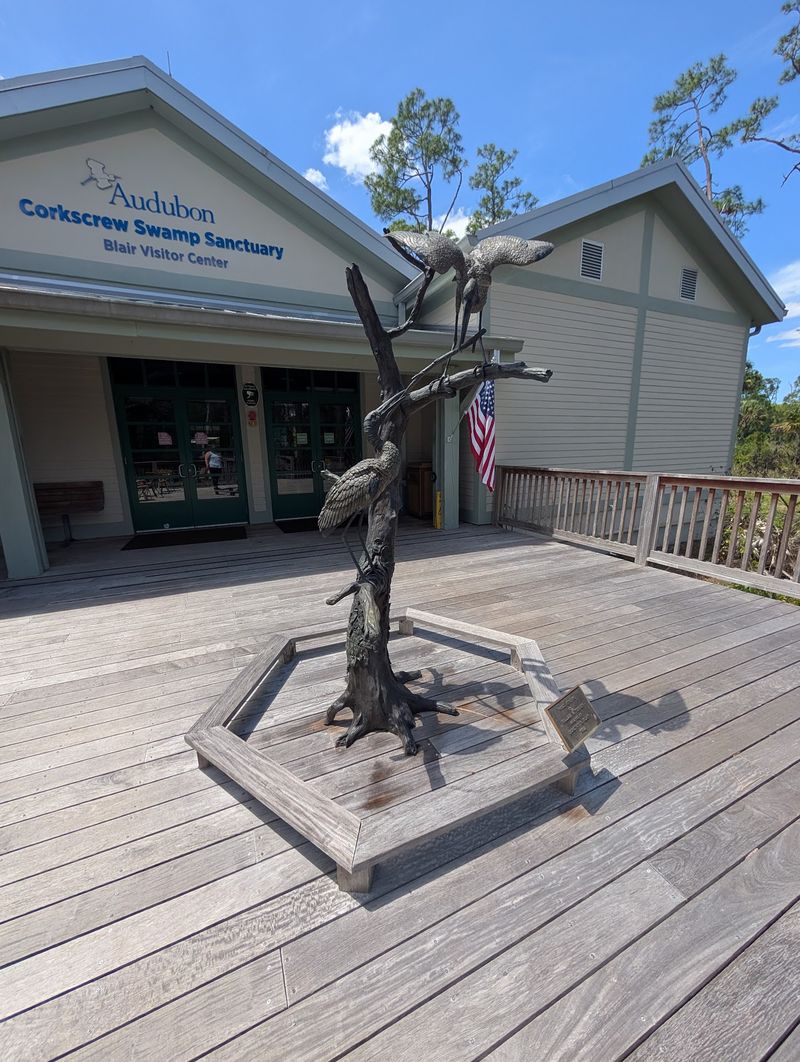
Practical stuff can make or break a family outing. Thankfully, this sanctuary covers the basics well.
Clean restrooms sit at the visitor center. Use them before heading out, because there are none once the trail begins.
A small cafe on site offers water and snacks. Families can also pack a lunch and use the picnic tables after the walk.
The gift shop is a hit with many guests. Kids can find nature-themed treats to remember the day, and every purchase supports the sanctuary.
Admission prices vary by age and membership status, so checking current ticket rates on the sanctuary’s official website before visiting is the best way to plan a family outing.
Nearby areas offer more family options, including a grocery store, a playground, and a public pool. That makes it easy to turn a morning hike into a full day out.
Little comforts help keep the mood upbeat. A well-fed, well-rested crew is much more likely to spot that sneaky gator.