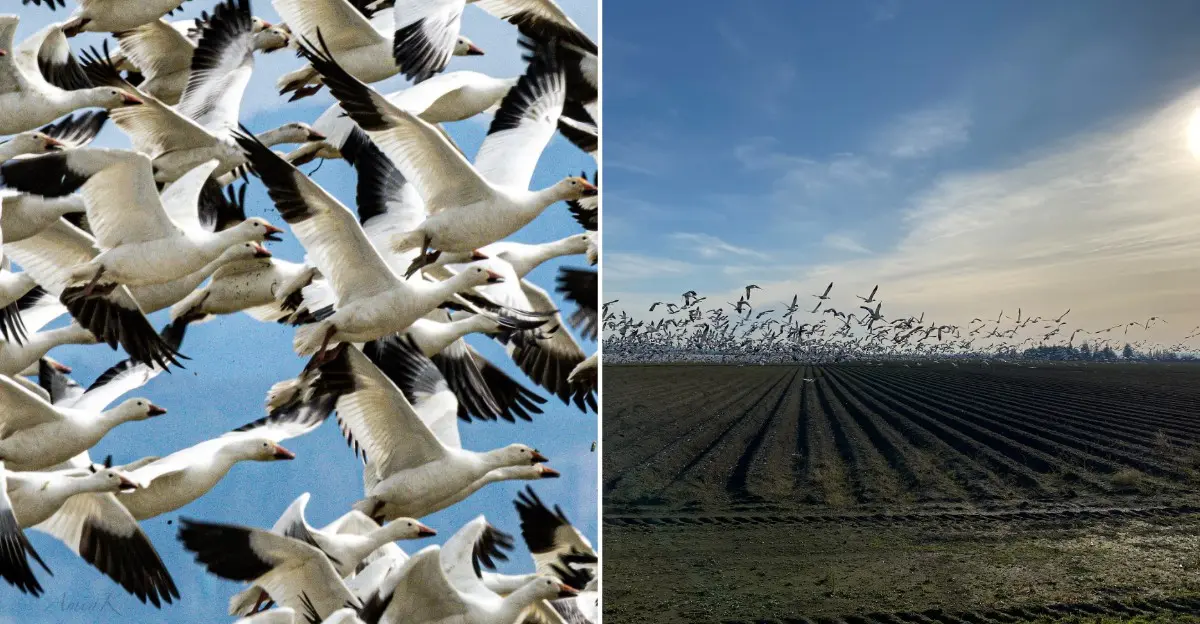
Every fall, a farm field in western Washington changes color almost overnight.
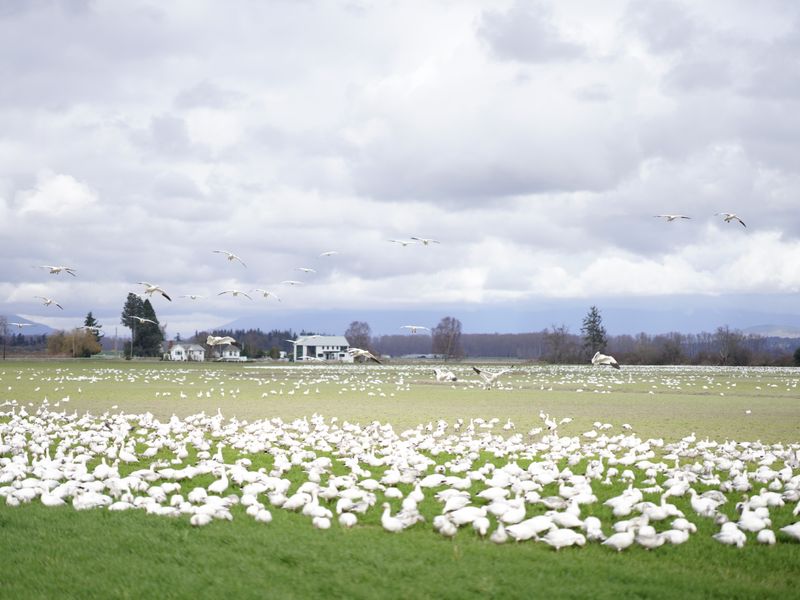
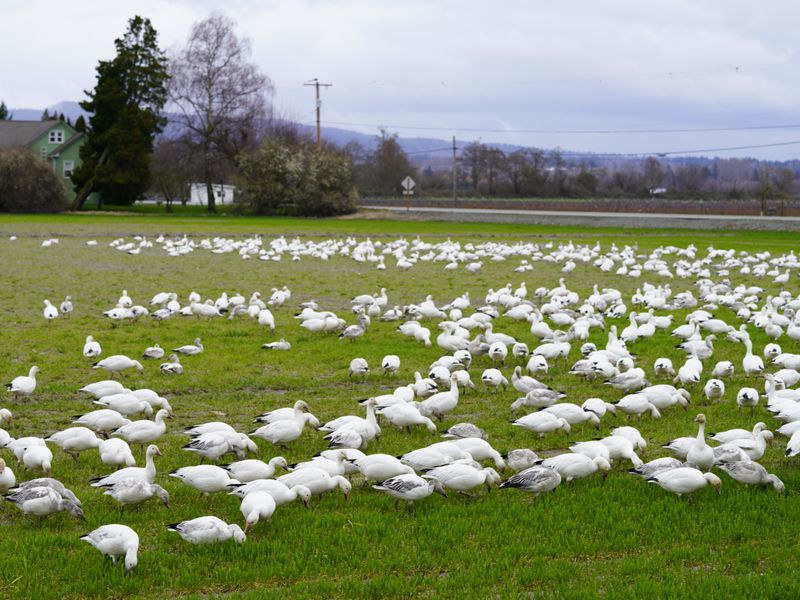
The crops are long gone, and the field turns white because thousands of snow geese have landed on it.
These birds fly all the way from Wrangel Island in the Russian Arctic to spend the winter in the Skagit Valley.
Watching these remarkable flocks can be an affordable family outing, especially when enjoying the views from public roads and designated viewing areas.
A small triangle of land near the town of Conway is one of the best places in the state to see this show up close.
It has a viewing field, a simple trail, wide open views, and even bald eagles.
From enormous flocks rising over the fields to bald eagles watching from nearby trees, this corner of Washington offers an unforgettable winter wildlife experience.
A Triangle of Land With a Big Secret
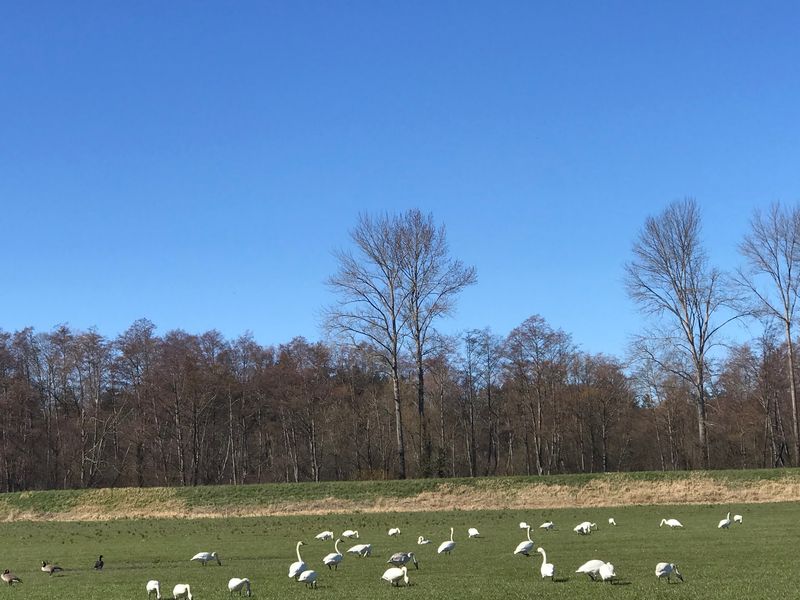
Most maps barely notice it, yet this flat patch of farmland draws bird lovers from all over the Pacific Northwest. The place is Fir Island, Washington 98273, USA, sitting in the Skagit River delta of Skagit County.
The island gets its triangle shape from the river itself. The Skagit splits into the North Fork and the South Fork before reaching Skagit Bay, and the land between those two branches forms Fir Island.
You can drive onto it without a ferry or a toll. Short bridges and roads near Conway connect it to Interstate 5, so the island feels more like a quiet farming area than a remote getaway.
Fields of crops, old barns, and dikes cover much of the land. Out along the edges, marshes and tidal flats stretch toward the water.
That mix of open farmland and wet estuary is exactly why birds love it. They find room to rest, plenty to eat, and space to stay away from people, which makes the island a winter hotel with endless vacancy.
Travelers From the Top of the World
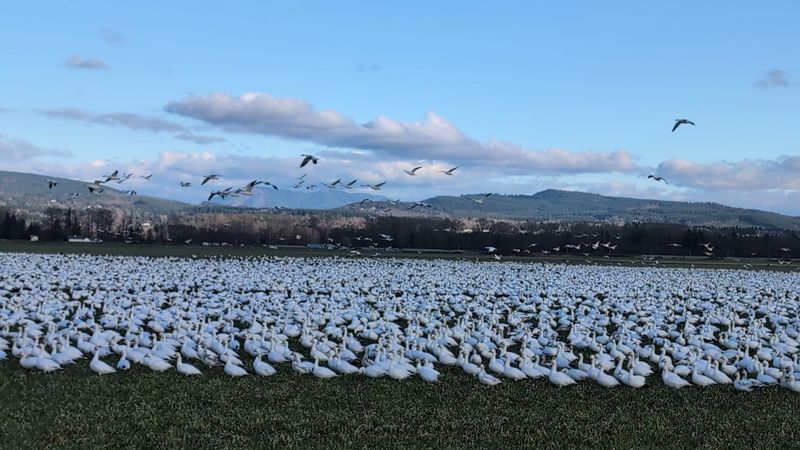
Here is a fun fact to share on the drive. Many of the snow geese wintering in the Skagit Valley spend their summers on Wrangel Island, a remote spot in the Russian Arctic.
Every year, they make a trip of thousands of miles to reach Washington. They usually start showing up in October and stay through the winter, often heading north again in spring.
The birds are easy to spot. Adults are mostly white with black tips on their wings, which show up clearly when they fly.
Young geese look a bit grayer during their first year. Watching families move together across a field gives you a peek into how these birds travel as groups.
The Skagit and nearby Fraser River delta in Canada host one of the largest snow goose groups on the Pacific coast. Counts often reach tens of thousands of birds in a single season.
So when that white blanket appears on a muddy field, it is not snow. It is a crowd that just finished one of the longest commutes around.
The Snow Goose Reserve Unit
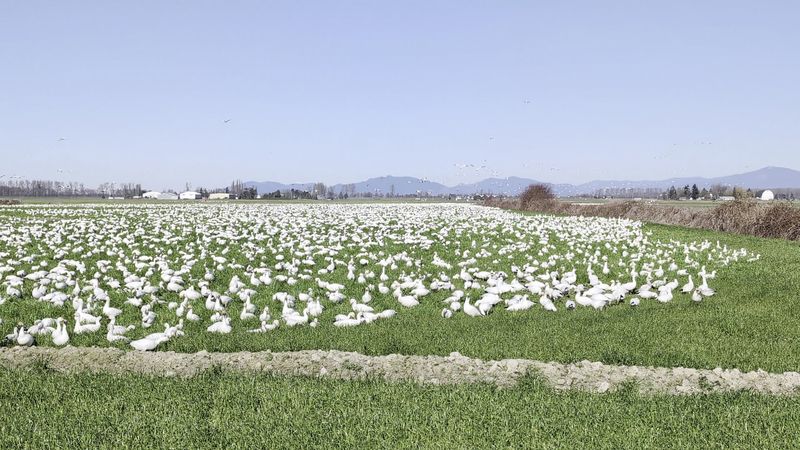
Plenty of farmland on the island is private, so knowing where to stop matters. The main public spot is the Fir Island Farm Reserve Unit, part of the Skagit Wildlife Area managed by the Washington Department of Fish and Wildlife.
Set along Fir Island Road, the reserve offers a parking area and a short trail. Many birders simply call it the snow goose reserve.
Fields here are managed with the geese in mind. That means birds often gather right in view of the parking lot during the winter months.
A Discover Pass is generally required to park at state wildlife areas in Washington. Buying one ahead of time saves a headache once you arrive.
The setup is simple, with no visitor center or gift shop. That plainness is part of the charm.
For a designated wildlife viewing spot, head to the Fir Island Farm Reserve at 15802 Fir Island Road, Mount Vernon, WA. Managed by the Washington Department of Fish and Wildlife, the reserve has a parking area and a short dike-top trail overlooking the surrounding habitat.
Timing the Big White Takeover
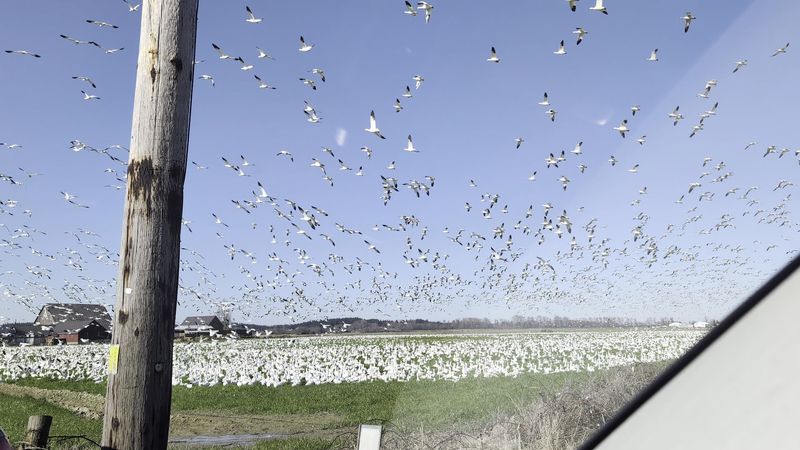
Show up in July and the island looks like any quiet farm area. Show up in November and the story changes completely.
Snow geese typically arrive in the Skagit Valley in October. Their numbers tend to peak from about November through February, and many leave by late April.
Morning is often a good time to go. The birds may lift off from resting areas near the bay and head inland to feed, and that movement can be exciting to watch.
Keep in mind that the geese go where the food is. One day they may be packed into the reserve field, and the next they may be a few miles away.
Checking local birding reports or social media groups before heading out can help. Skagit Valley birding pages often share where big flocks have been seen lately.
Flexibility is the secret ingredient. Bring a little patience, and a short drive around nearby roads may lead you straight to the crowd.
A Free Show With a Tiny Ticket Price
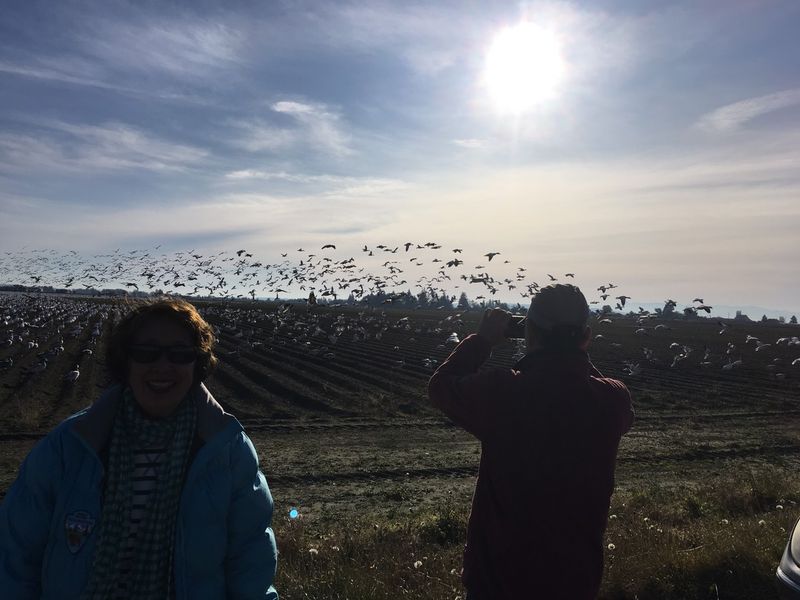
Good news for anyone on a budget. Watching the geese at Fir Island does not require a tour, a guide, or an entry fee at a gate.
There is no separate admission fee for wildlife viewing, but parking at the Fir Island Farm Reserve generally requires a Washington Discover Pass or a qualifying Vehicle Access Pass.
The island sits about an hour north of Seattle by car on Interstate 5. Exit near Conway, then follow the local roads west toward the delta.
That short trip makes it an easy half-day outing. Families can leave after breakfast and be home well before dinner.
Many people pair the stop with a drive around the wider Skagit Valley. Farm roads connect several good birding spots, and all of them can be enjoyed from public areas.
Pack snacks, a full water bottle, and a full tank. With those basics handled, the rest of the day is pretty much free entertainment with wings.
Bald Eagles in the Supporting Cast
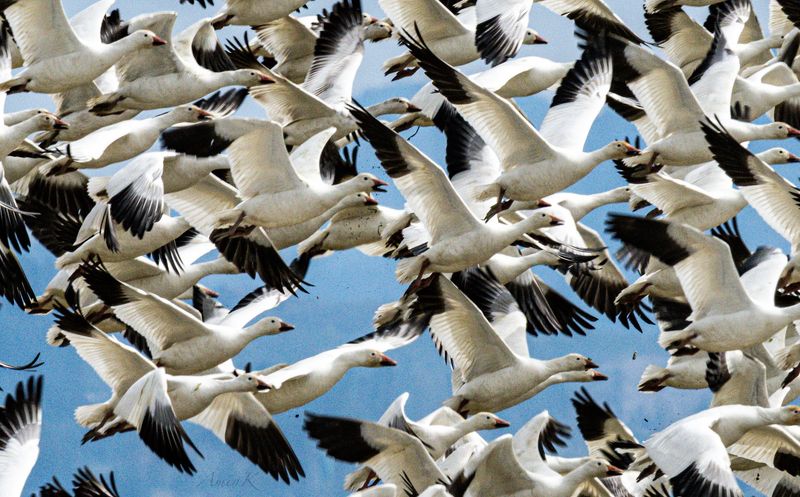
Snow geese may get top billing, but they are not the only stars. Bald eagles often show up on Fir Island, perching in trees near the marsh and estuary.
The Skagit River is well known for wintering bald eagles. Many of them gather upriver for salmon, and others spend time hunting across the delta.
Scan the tall trees along dikes and field edges. A white head sitting high on a branch is a good clue.
Sometimes an eagle flying low sends thousands of geese into the air at once. That sudden takeoff is one of the most memorable moments you can catch out here.
Hawks, ducks, swans, and shorebirds also use the area during the colder months. Trumpeter and tundra swans are common winter guests across the Skagit Valley.
A simple bird guide or free phone app can help you sort out who is who. Before long, you might find yourself counting species instead of just counting geese.
Walking the Dike Trail
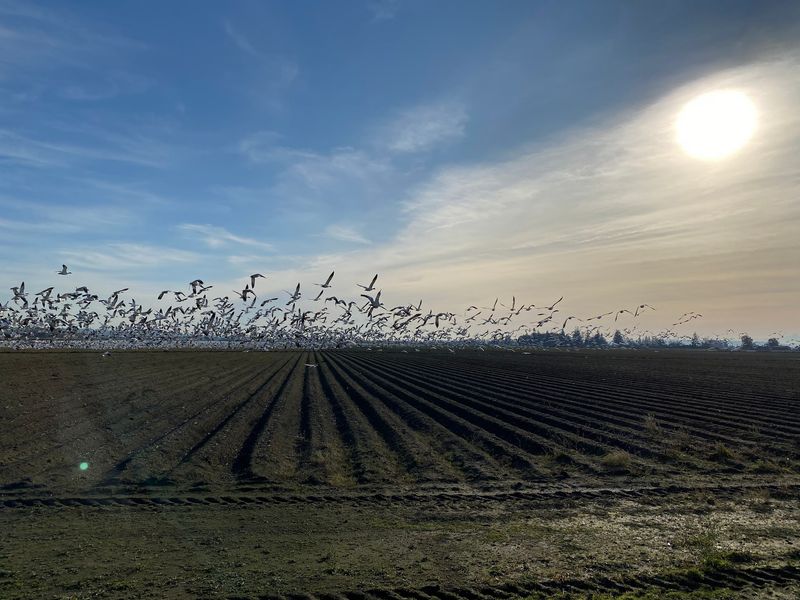
Stretching your legs is easy here. The reserve has a short trail that follows a dike out toward the marsh and Skagit Bay.
The path is mostly flat, which makes it friendly for kids and casual walkers. It is more of a stroll than a hike.
From the dike, you can look over farm fields on one side and tidal marsh on the other. The wide open spaces give you a clear view of birds coming and going.
Wet weather is common in western Washington during goose season. Waterproof boots and a rain jacket will keep the walk pleasant.
Muddy patches can appear after storms, so watch your step. Moving slowly also helps you notice small birds hiding in the grasses.
Restoration work in recent years reshaped part of the area to bring back tidal marsh for young salmon. That means the trail offers a look at both farming and habitat repair, all in one short loop of a walk.
Good Manners Around Big Flocks
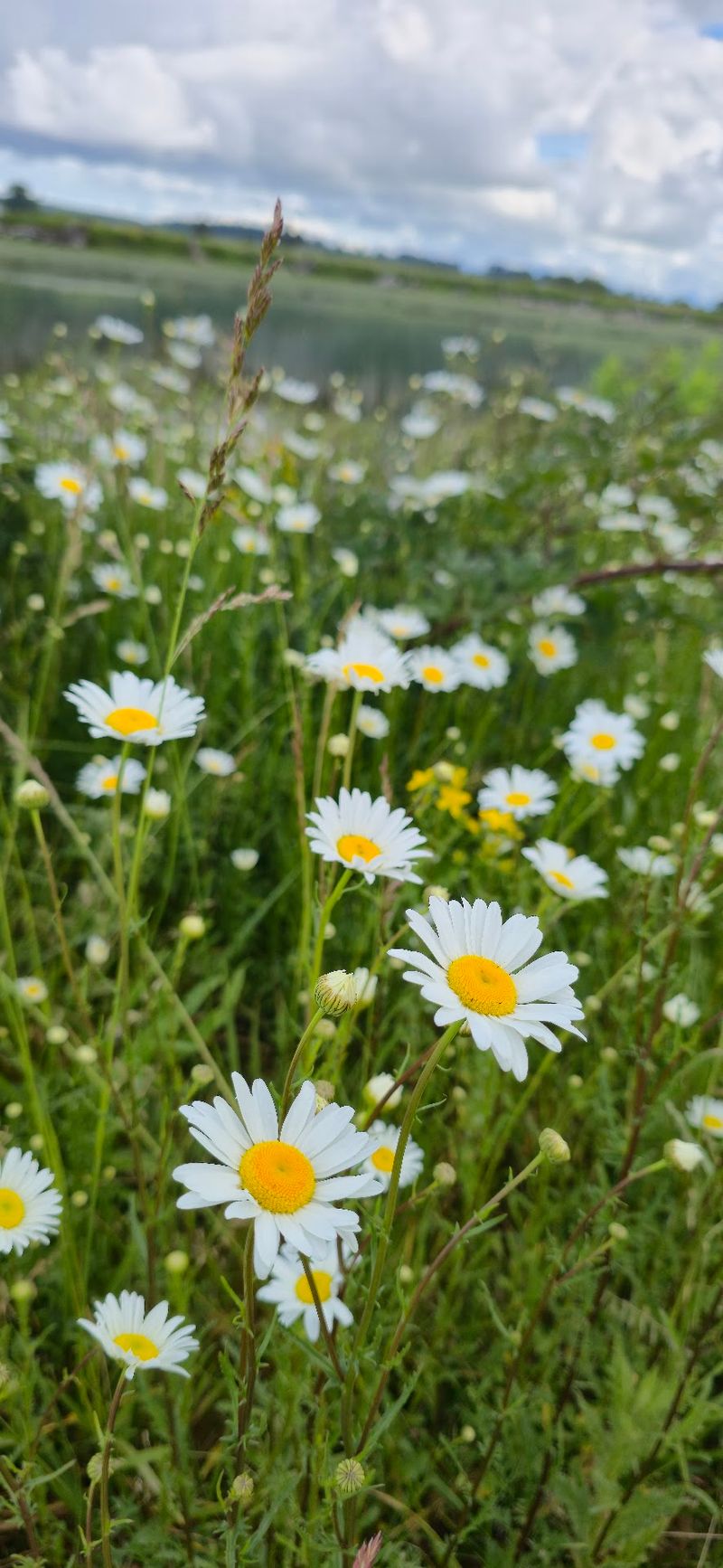
Thousands of birds might seem tough, yet they need their rest. Every time a flock gets spooked and flies off, the geese burn energy they need to survive the winter.
The kindest move is to watch from a distance. Stay in the parking area or on the trail rather than walking into fields.
Many fields on Fir Island belong to working farms. Crossing fences or pulling into private driveways is a quick way to upset neighbors.
When stopping along a road, pull fully off and stay alert. Farm trucks and local traffic still need to get through, and some shoulders are narrow.
Leave drones at home and keep dogs leashed or in the car. Both can send a flock into a panic.
Hunting also takes place in parts of the Skagit Wildlife Area during certain seasons. Checking state rules before your visit helps you know which areas to use and when, so everyone, birds included, has a calm day.
Gear That Makes the Trip Better
Bare eyes work fine for a giant white flock. Still, a few simple tools can turn a nice stop into a great one.
Binoculars are the top pick. They let you see individual geese, spot banded birds, and pick out eagles sitting in faraway trees.
A spotting scope on a tripod helps even more if you have one. Some birders set them up right in the parking area.
Cameras with zoom lenses are popular too. Flocks lifting off against gray skies make for striking photos.
Layers matter in the Skagit winter. Temperatures are often cool, and wind can sweep across the flat delta with nothing to block it.
Toss a warm hat, gloves, and a thermos of hot cocoa in the car. A folding chair is handy for anyone planning to wait a while.
Finally, bring a bag for trash. There are few services on the island, so packing out what you bring keeps the reserve clean.
Room to Breathe on the Delta
Some places are worth visiting just for the elbow room. Fir Island is one of them, with long views across fields, marsh, and water.
On clear days, mountains can appear on the horizon beyond the valley. Even on cloudy days, the open sky makes the landscape feel huge.
The area tends to be quiet and peaceful, especially on weekdays. It works well as a calm detour on a road trip along Interstate 5.
Nearby towns like La Conner and Mount Vernon offer places to eat and rest. That makes it easy to build a full day around a short bird stop.
Spring brings another reason to visit the region. The famous Skagit Valley Tulip Festival fills nearby fields with color each April.
Still, the white flocks of fall and winter remain the island’s signature moment. Come for the geese, stay for the space, and drive home with a camera roll full of feathered memories.
A free show this good is easy to make a yearly habit.