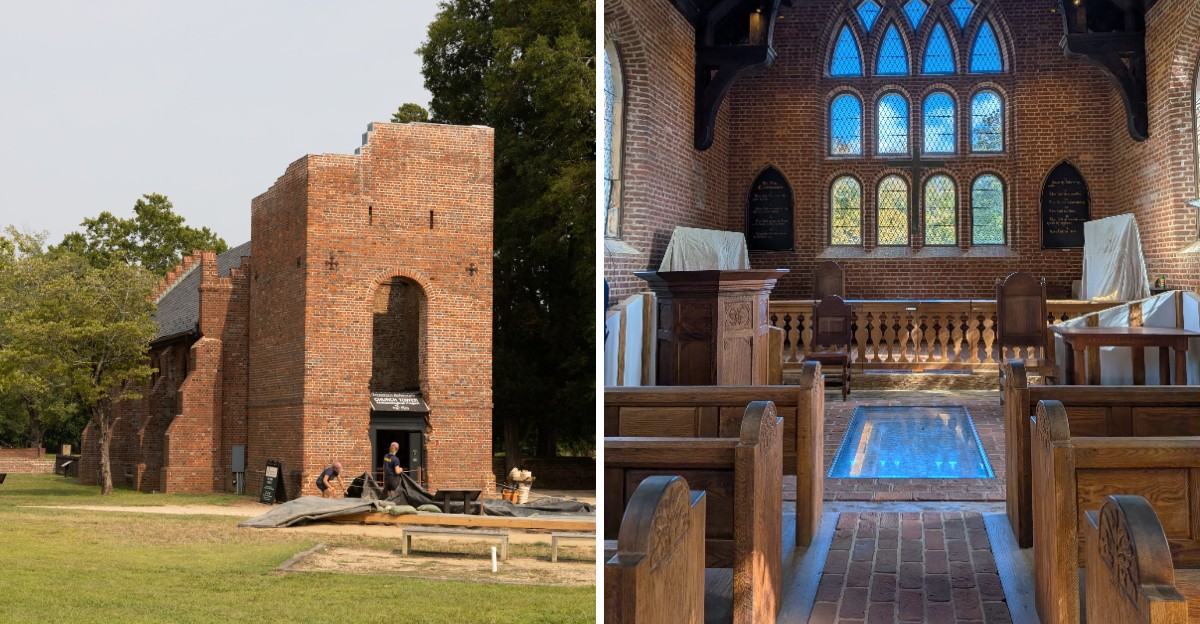
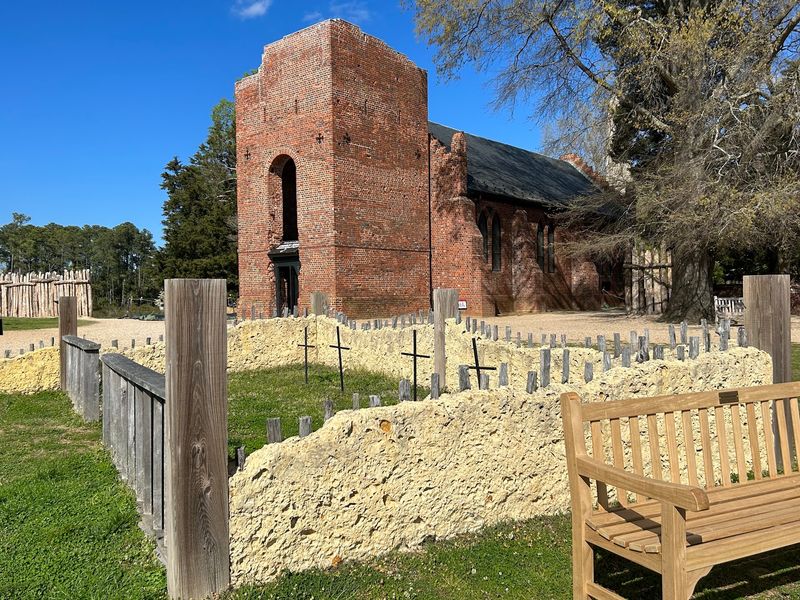
A brick church tower has stood on a quiet Virginia riverbank since around 1639. It has outlasted fires, wars, floods, and almost four centuries of change.
Today, it is the only standing structure left from the first permanent English settlement in America. People still walk through the church beside it, and archaeologists still dig in the dirt nearby, finding pieces of the past every single season.
Kids sift soil from old wells and pull out bits of iron and pottery that nobody has held in 400 years. Guides tell the real story, including parts many school books leave out.
Keep reading to learn where this place is, what makes the church so special, how the tickets work, and how to plan a day that turns history class into a real adventure along the James River.
Where the Story Starts
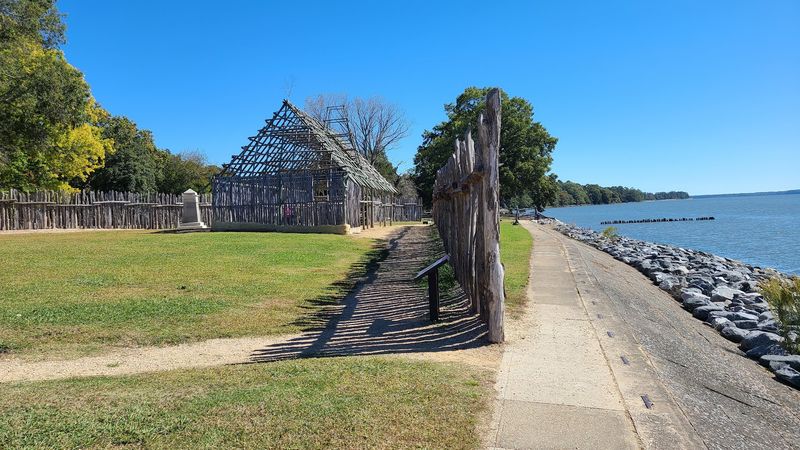
America’s first permanent English settlement sits on a small island along the James River. The site is called Historic Jamestowne, and you will find it at 1368 Colonial Pkwy, Jamestown, VA 23081.
English settlers landed here in 1607. They built a fort, planted crops, and struggled through hard years that almost ended the colony more than once.
The site is shared by two groups. The National Park Service runs part of it, and Jamestown Rediscovery, a nonprofit linked with Preservation Virginia, cares for the fort area and the active digs.
That team has looked after the old fort site since 1893. Their work keeps changing what we know about the early colony.
The grounds are open every day from 9 am to 5 pm. That gives plenty of room to explore, though a full visit can easily fill half a day or more.
The drive along Colonial Parkway is part of the fun too. It links Jamestown with Williamsburg and Yorktown, so the road itself feels like a trip back in time.
A Tower That Refused to Fall
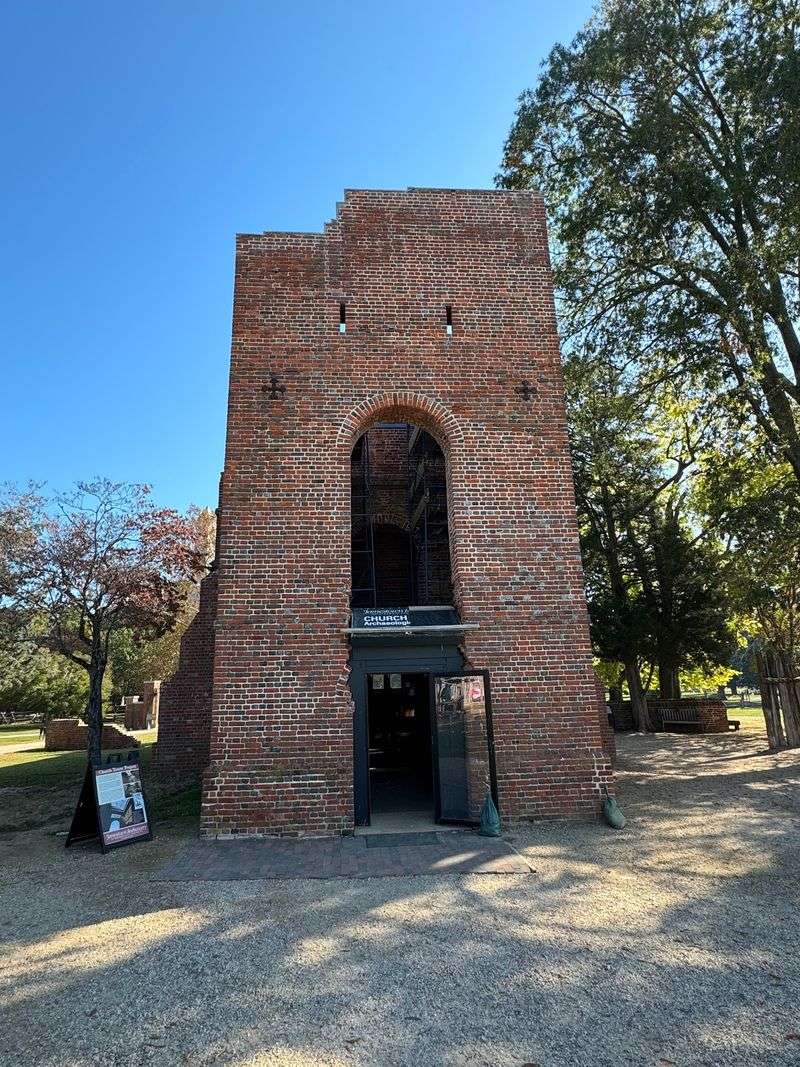
Some buildings get knocked down and replaced. The brick tower at Jamestown simply kept standing.
It dates back to about 1639, which makes it the only standing structure from the original settlement. Every other building from those early days is gone, leaving only marks in the ground.
Attached to the old tower is the Jamestown Memorial Church. It was built in the early 1900s on or near the spot of the colony’s earlier churches.
The builders were careful to include the old tower in the design. That choice links the new walls to the oldest piece of the town.
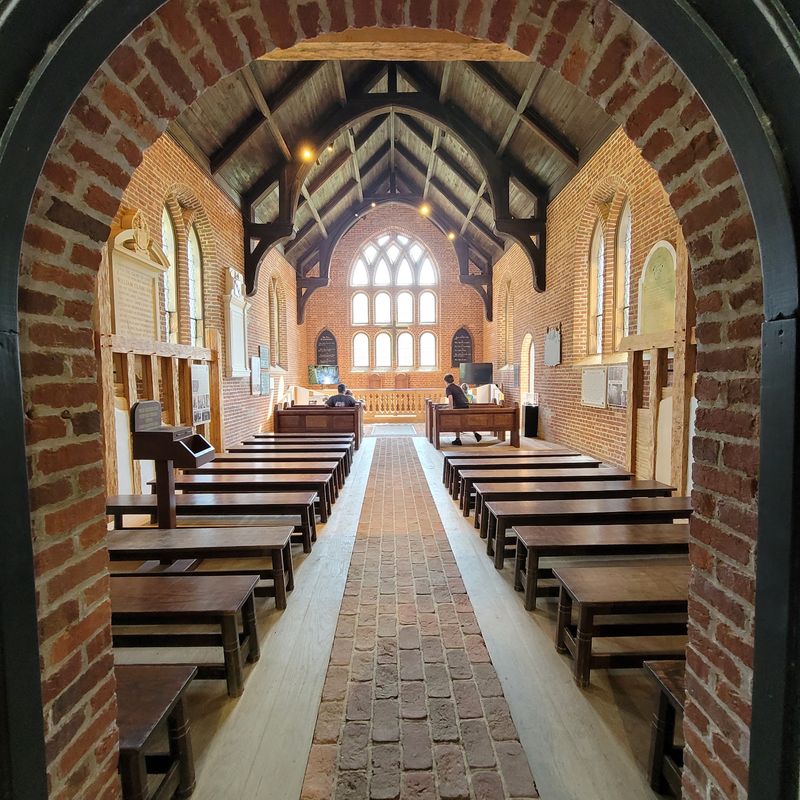
Inside, the church is simple and calm. Its brick floors and wooden pews give a clear idea of how small and plain worship spaces were back then.
Take a few minutes to look up at the tower before heading in. Those bricks were laid by hands working nearly 400 years ago, and they are still doing their job today.
Where Laws Got Their Start
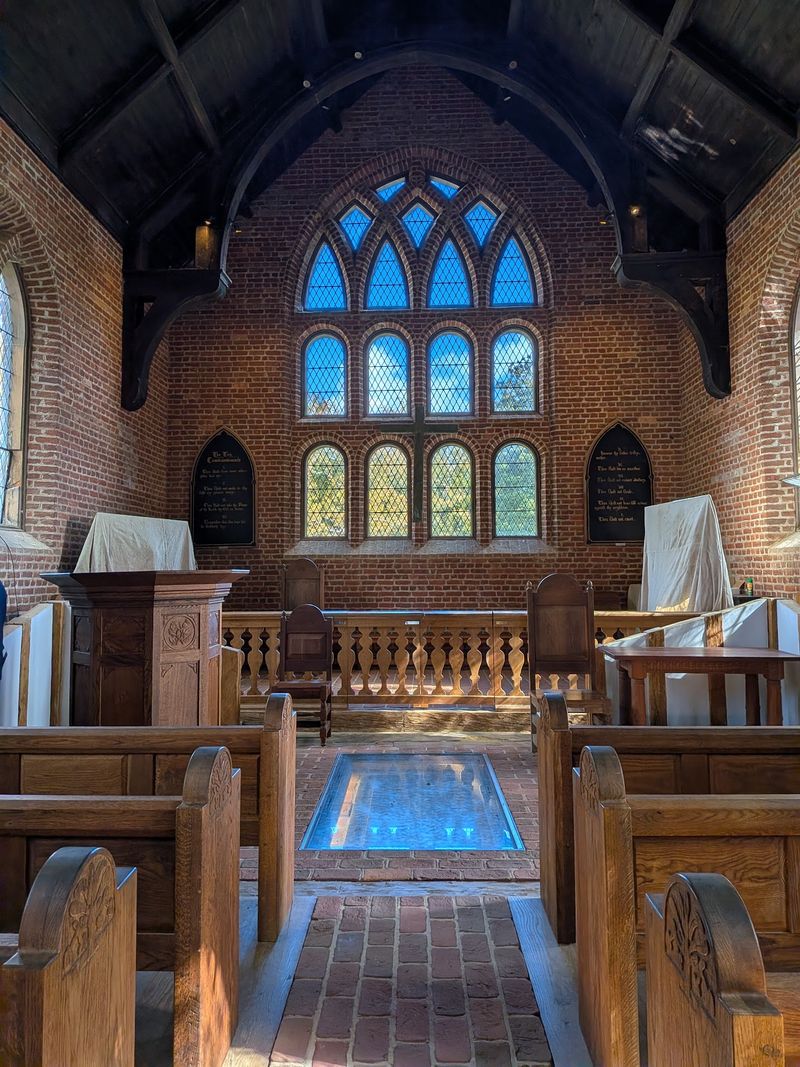
Here is a fun bit of trivia for your next quiz night. The first meeting of an elected lawmaking assembly in English America took place in a Jamestown church in 1619.
That group, called the General Assembly, met inside an earlier church that stood on this same ground. It was a big step toward the kind of government that came later in America.
Guides love talking about this part of the story. They explain how important the church was to daily life and to the way the colony made decisions.
The building was more than a place for Sunday services. It was a meeting hall, a center of town news, and a spot where rules took shape.
Inside the memorial church, you can see markers and displays that tell more of this tale. They help connect the quiet room to the bigger history of the country.
Not bad for a small brick church on a swampy island.
Digging Up Yesterday
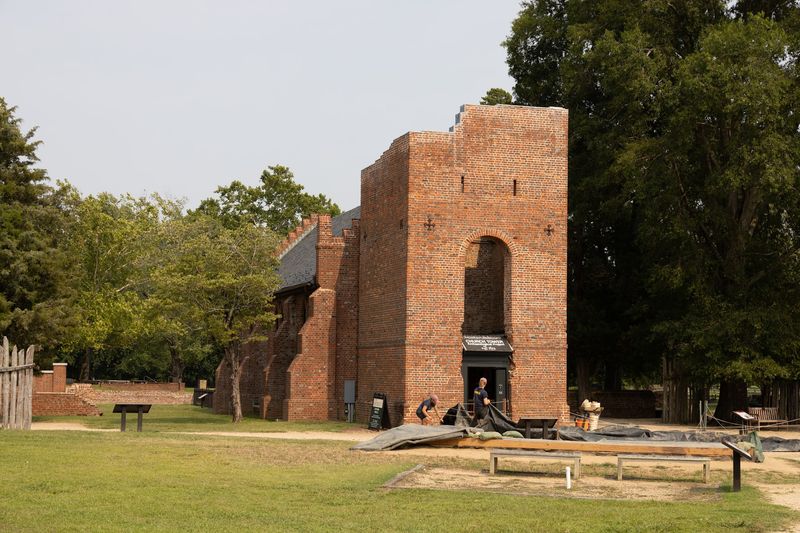
Archaeology at Jamestown is not a museum show. It is real work happening right in front of you.
Teams from Jamestown Rediscovery dig at the James Fort site most of the year. Some areas are roped off, so watch your step and follow the signs.
For a long time, many people believed the original fort had washed into the river. In 1994, archaeologists proved them wrong by finding its remains on land.
Since then, crews have uncovered close to two million artifacts. Coins, tools, armor, beads, and pottery have all come out of the ground here.
The best part is that the experts are happy to talk. Ask what they are working on, and they will often explain the process step by step.
They can even tell where buildings stood 400 years ago just from dark stains in the soil left by old posts. That kind of detective work makes every visit a little different from the last.
Treasures in the Archaearium
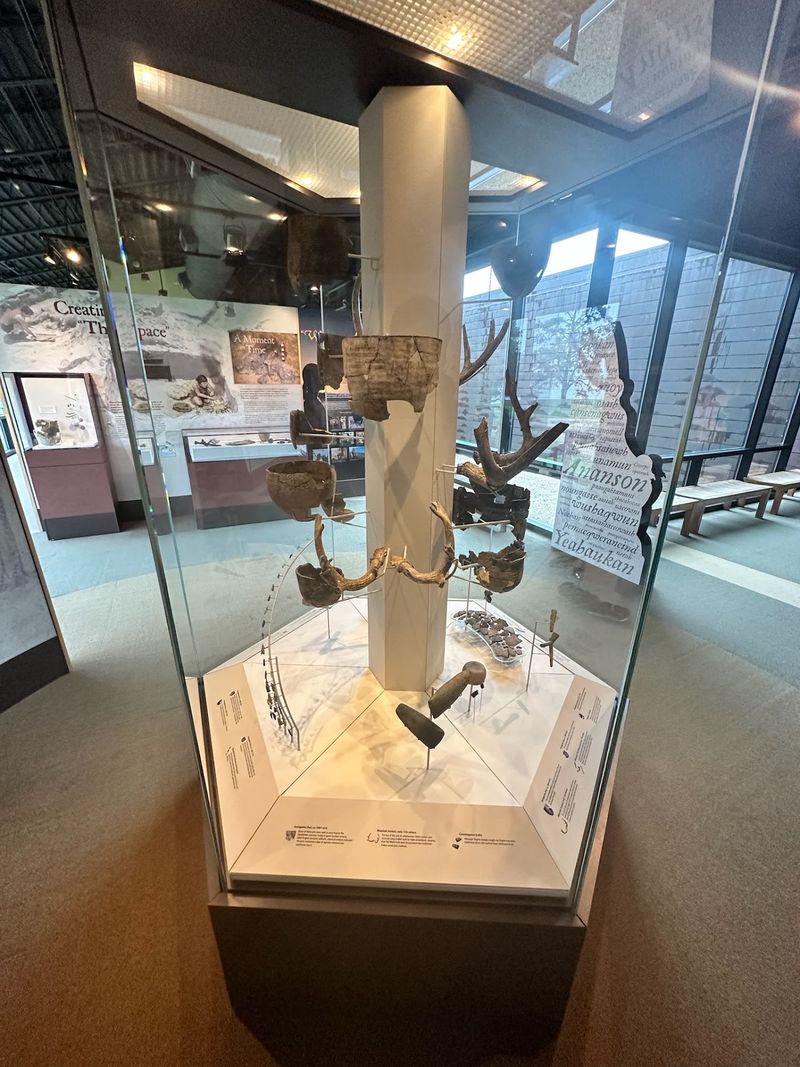
All those finds from the dig need a home. That home is the Voorhees Archaearium, a museum built right on the fort site.
Glass cases hold objects pulled from the ground just steps away. Old armor, tools, game pieces, and household items help show how settlers lived each day.
The amount of stuff is a little mind-boggling. Many guests are surprised at how much has been recovered from such a small patch of land.
The museum also explains how experts study each object. You learn what a broken pot or a rusty nail can reveal about trade, food, and work in the colony.
Plan at least an hour here if you enjoy reading displays. History fans may want even longer.
Pair this stop with the dig site outside for the full picture. Seeing a fresh hole in the ground and then the finished displays makes the whole process click.
Kids Become Mini Archaeologists
Got young explorers in the family? Jamestown might be the best history lesson they never saw coming.
At times, kids get the chance to sift through dirt from real excavations, including soil from old wells. They shake the screens and pick out small pieces of bone, iron, and other leftovers from the 1600s.
For a child, finding an object nobody has touched in four centuries is a huge thrill. It turns a long list of dates into something they can actually hold.
Staff members and college interns often stop to chat with families. They answer questions about the church, the old graves, and Pocahontas in ways younger guests can follow.
Bring water, snacks, and comfortable shoes for little legs. The site involves a lot of walking, and kids may not want to leave once the sifting starts.
Parents might find themselves just as hooked on the hunt.
Tours Worth Following
A good guide can change everything about a historic site. At Jamestown, the guided walks are a big part of the magic.
Many tours begin near the Pocahontas statue and last about 90 minutes. Guides lead groups to key spots around the fort and the dig sites.
Some tours are led by park rangers on the National Park Service side. Others are run by Jamestown Rediscovery staff, volunteers, and even archaeologists.
Topics go well beyond the basic settler story. Some walks focus on the Powhatan people and the English, while others look at the experience of the first Africans brought to Virginia in 1619.
These talks share a fuller and more honest version of events than many grade school lessons. They cover hard truths with care.
Check the schedule at the visitor center when you arrive. Catching a tour early helps everything else you see later make more sense.
Start With the Film
Smart planners begin their day indoors. The National Park Service visitor center is the gateway to the whole island.
Inside, a short introduction film sets the scene for the 1607 landing. It explains who arrived, who already lived here, and why the colony mattered.
Next to the theater is a museum collection with more exhibits about early Virginia. Together, the film and museum can take around two hours if you read closely.
From there, a boardwalk crosses marshy land toward the old townsite. After the boardwalk, paths turn to gravel, so older guests should plan for uneven footing.
Rangers can also be booked for tours of the park side. They add helpful details that the outdoor signs do not always cover.
Treat the visitor center as your launch pad. A little background first makes the ruins, the church, and the fort far more meaningful once you head outside.
Tickets and Timing Tips
Jamestown can confuse first-timers, so a quick game plan helps. There are actually three separate attractions with similar names in the area.
Historic Jamestowne is the real original site. Two groups share it, the National Park Service and Jamestown Rediscovery, and each one charges its own entrance fee at the visitor center.
Buying both is the way to go. One covers the park side and museum, while the other opens the fort and archaeology areas past the church.
Holders of an America the Beautiful pass can save some money. Combo tickets also exist for touring Williamsburg, Yorktown, and the nearby recreated Jamestown Settlement.
Give yourself at least half a day here. Some history lovers spend a full day and save the other sites for another trip.
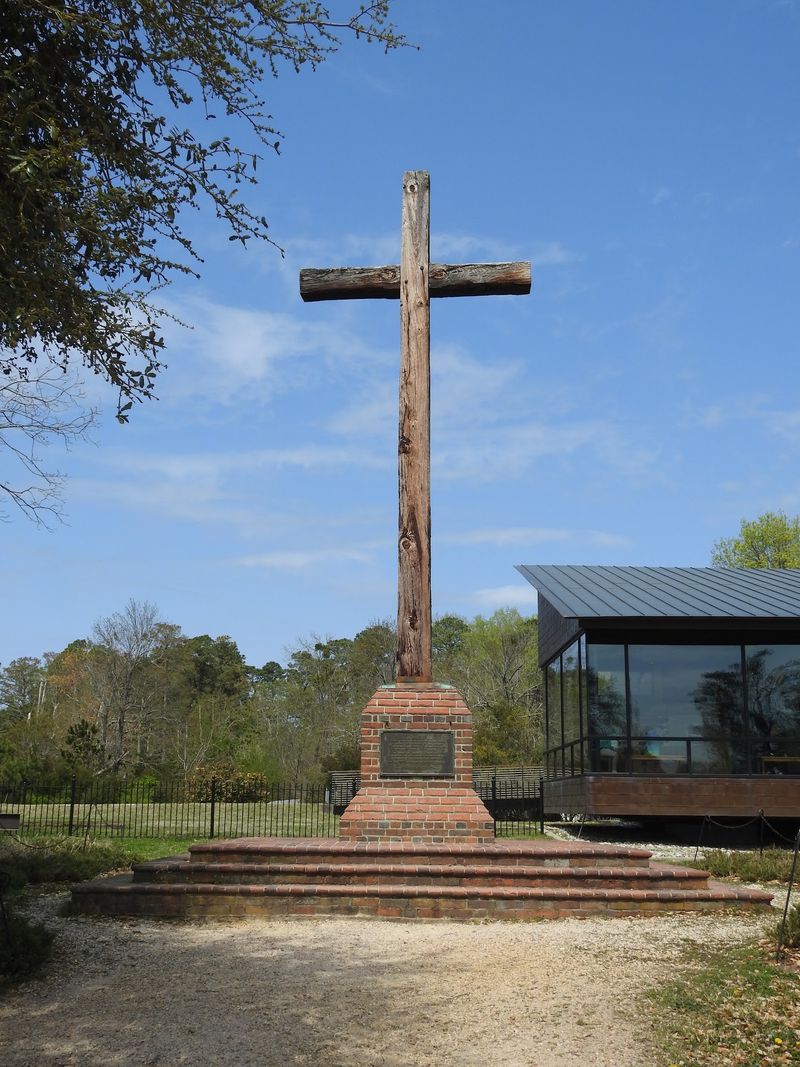
Food options on site can change, so pack a snack just in case. A tall stone monument marks the island, and it makes a handy meeting point if your group splits up.