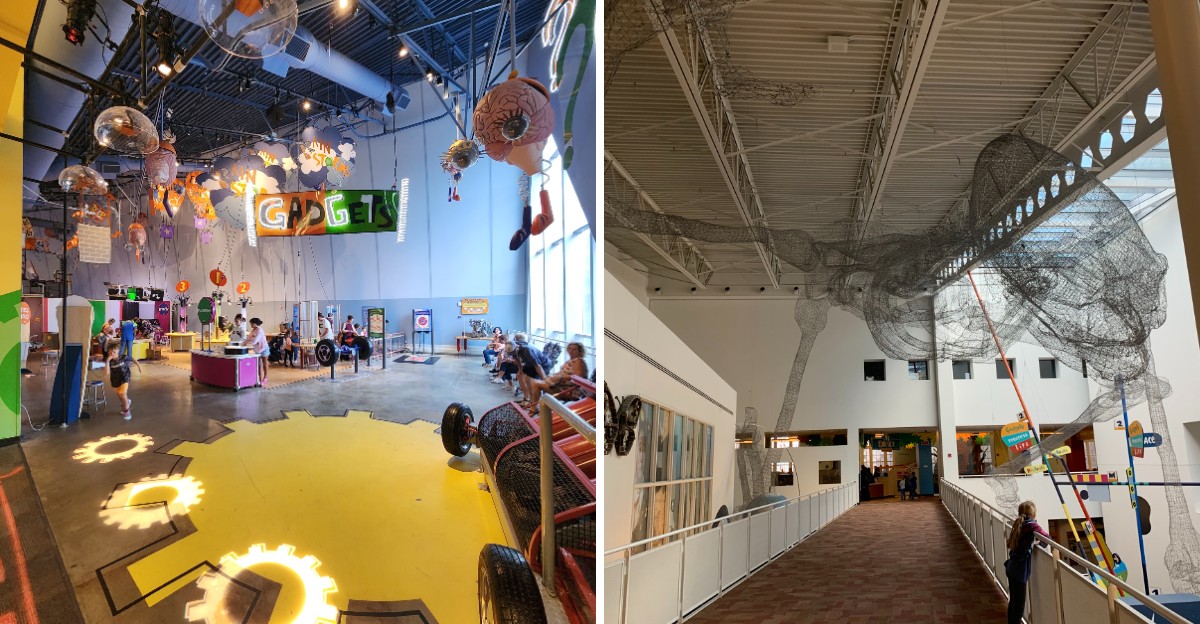
Some museums ask kids to keep their hands in their pockets. This one in Columbus, Ohio, hands them a submarine, a town from the past, and a bike that rides on a wire high above the floor.
Families who plan a quick two-hour stop often look up and realize the doors are about to close at five. The building is huge, the exhibits are hands-on, and there is even a team of rats that plays basketball.
Kids crawl, climb, push buttons, and splash their way through science without noticing they are learning.
Parents get a full day of fun under one roof, plus an outdoor park when energy needs a new outlet.
Keep reading for the best exhibits, smart parking moves, money-saving tricks, and the timing tips that help a visit go smoothly from start to finish.
Meet the Science Giant on Broad Street
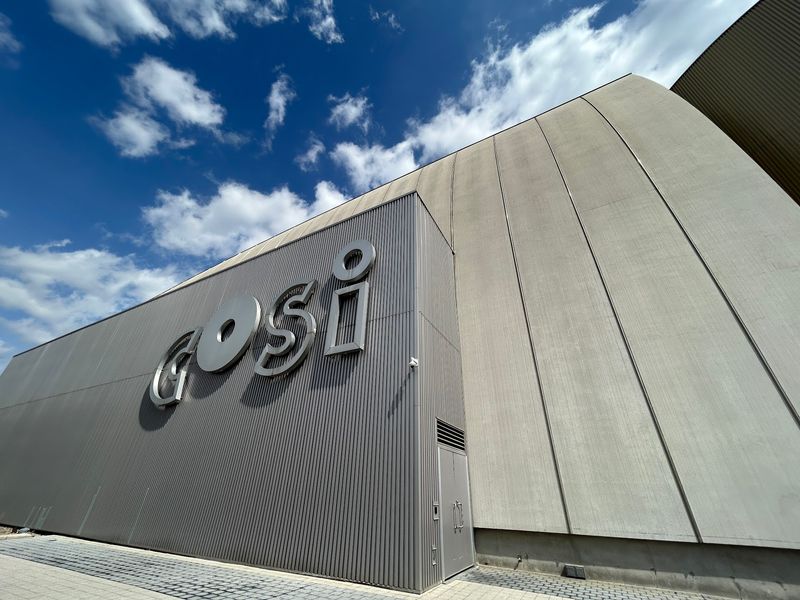
The secret is out. The Center of Science and Industry, better known as COSI, sits at 333 W Broad St, Columbus, OH 43215, right across the Scioto River from downtown Columbus, Ohio.
The museum moved into this home in 1999, after years at an older building that many grown-ups still remember from childhood. Part of the structure was once Central High School, so the place has been a spot for learning for a very long time.
Today the building holds two full floors of exhibits, working labs, a planetarium, and a giant-screen theater. A big outdoor science park waits right outside too.
Plan around the schedule before heading out. The museum usually opens Wednesday, Friday, Saturday, and Sunday from 10 am to 5 pm, and it closes on Monday, Tuesday, and Thursday.
Hours can shift during school breaks and holidays, so a quick look at the official website saves a wasted trip. That small step also shows any special events, like the grown-ups-only evening program called COSI After Dark, which gives adults a turn to play.
A Swinging Welcome at the Front Door
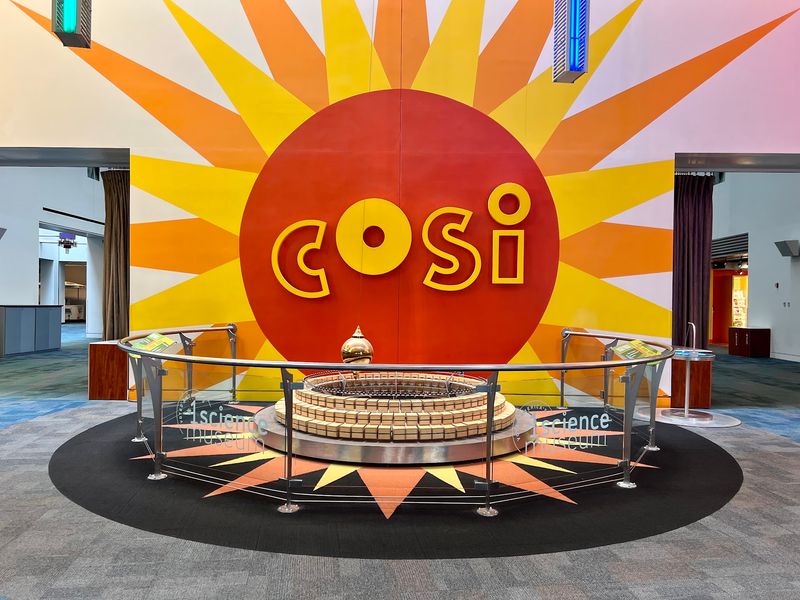
Science starts working before anyone even buys a ticket. A tall Foucault pendulum swings near the entrance, and it quietly proves that Earth is spinning.
Here is the trick. The pendulum keeps swinging back and forth in the same line, but the floor underneath slowly turns with the planet, so the swing seems to drift as the hours pass.
Kids often stand and stare, waiting to see the change. It is a good moment to explain the idea in simple words before the bigger adventure begins.
Museum fans compare this pendulum to the famous one at Griffith Observatory in Los Angeles. That puts Columbus in pretty good company for a science welcome mat.
Use the lobby as a planning stop too. Grab a map, check the planetarium show times, and decide which floor to tackle first.
Lockers nearby cost about one dollar and need cash, so tuck a few bills in a pocket. Stashing coats and bags here frees up hands for climbing, building, and pushing every button in sight.
Splash Zone Meets Deep Sea
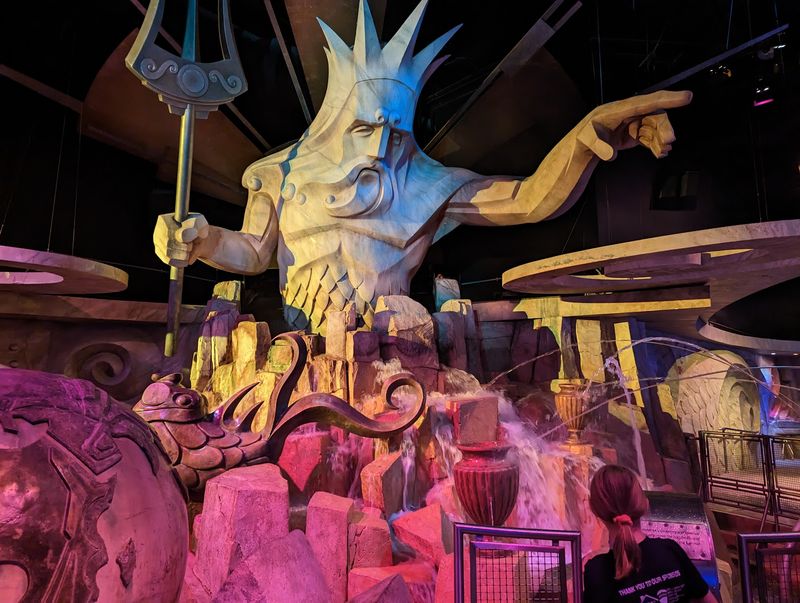
Ask a family which room they love most, and the Ocean area comes up again and again. It mixes water play with a deep-sea adventure theme.
One side is the Poseidon zone, where kids move water through channels, test how it flows, and launch little experiments of their own. Bring a spare shirt for the smallest scientists, since sleeves tend to get wet.
The other side has a submarine to explore and drawing stations that let kids design ocean creatures. Older kids can try a virtual reality experience nearby, which works as a fun bonus for curious eight-year-olds and up.
Fair warning for planners. Some fountains and gadgets in the water area can be out of order on certain days, so it helps to set expectations before kids rush in.
Even with a few pieces taking a break, this room tends to hold attention longer than almost anywhere else. Many families circle back to it before leaving, which says plenty about its staying power.
Time Travel Down an Old-Fashioned Street
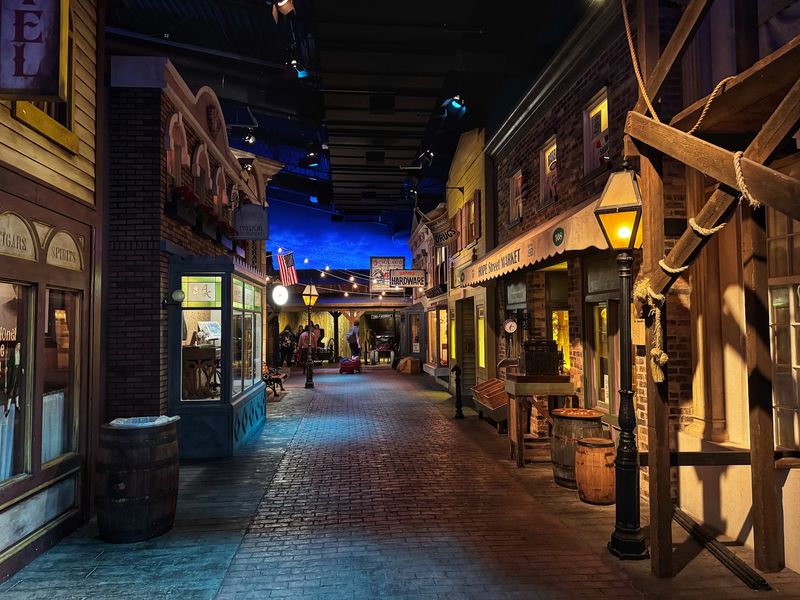
Few exhibits feel as surprising as Progress. Families walk through a small town and watch it change through the years, one block at a time.
The early section shows life in the late 1800s, with old-style shops and homes. Keep walking, and the same town jumps ahead to the 1960s, showing how technology changed daily life.
Kids get to see tools, gadgets, and storefronts that grandparents might actually remember. That makes it a great spot for three generations to swap stories.
Even guests without children call this one of their favorite stops. The details are thorough, and the walk-through layout makes it easy to explore at any pace.
Try a simple game while strolling. Ask kids to spot one thing they still use today and one thing that has completely disappeared, like a certain kind of phone.
The answers can be pretty funny. A town frozen in time turns out to be a smart way to show that science and inventions shape how people live.
Dinosaurs That Steal the Show
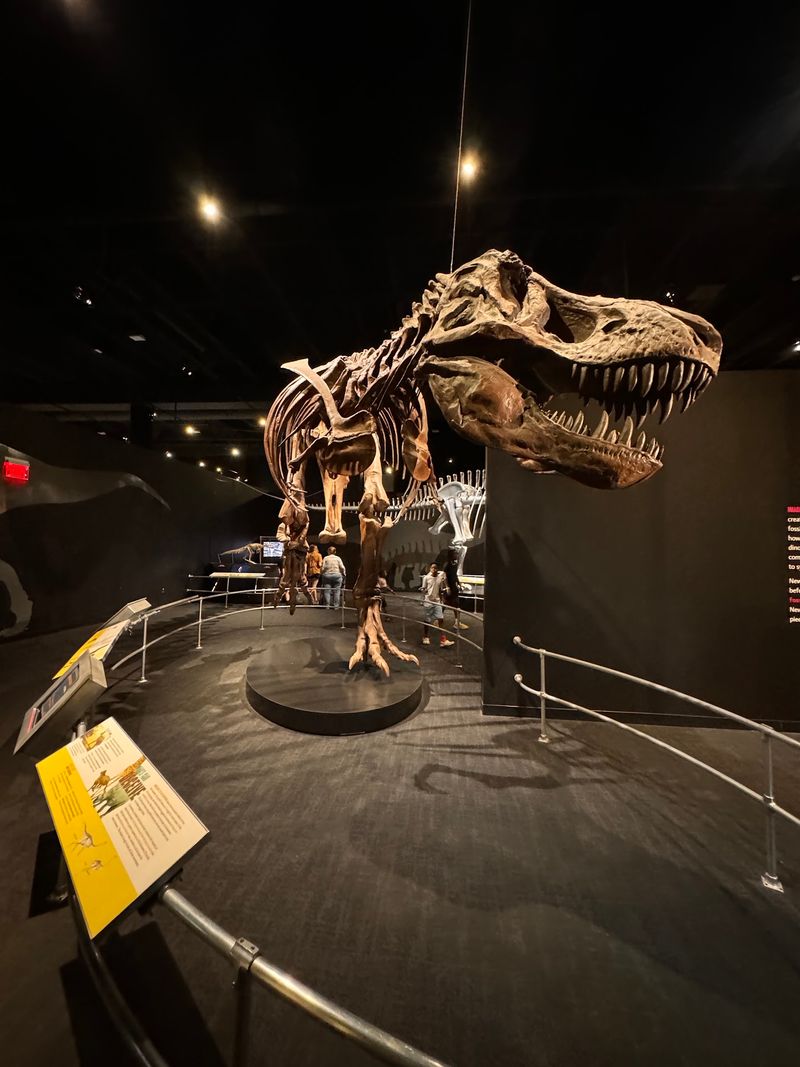
Big bones draw big crowds. The Dinosaur Gallery is one of the most talked-about spaces in the whole building.
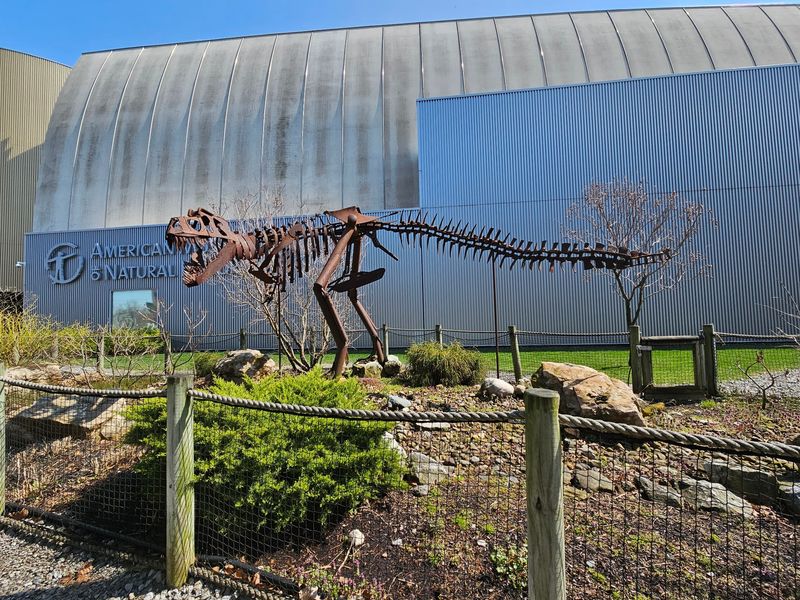
COSI created this gallery with the American Museum of Natural History in New York. That partnership brings in full-size dinosaur casts and real science about how experts study ancient life.
Kids can stand under towering skeletons and compare their own size to these giants. It is a quick way to make a textbook fact feel real.
Plenty of grown-up fans name the dinosaurs as a top pick, right next to the Ocean room. That makes this a smart stop for families with a mix of ages.
Try to visit earlier in the day, since the gallery can get busy after lunch. A calmer room means more time to read signs and spot the details on each skeleton.
Small paleontologists often leave asking big questions. Good luck answering which dinosaur would win a race, because that debate may continue all the way home.
Riding a Bike on a Wire
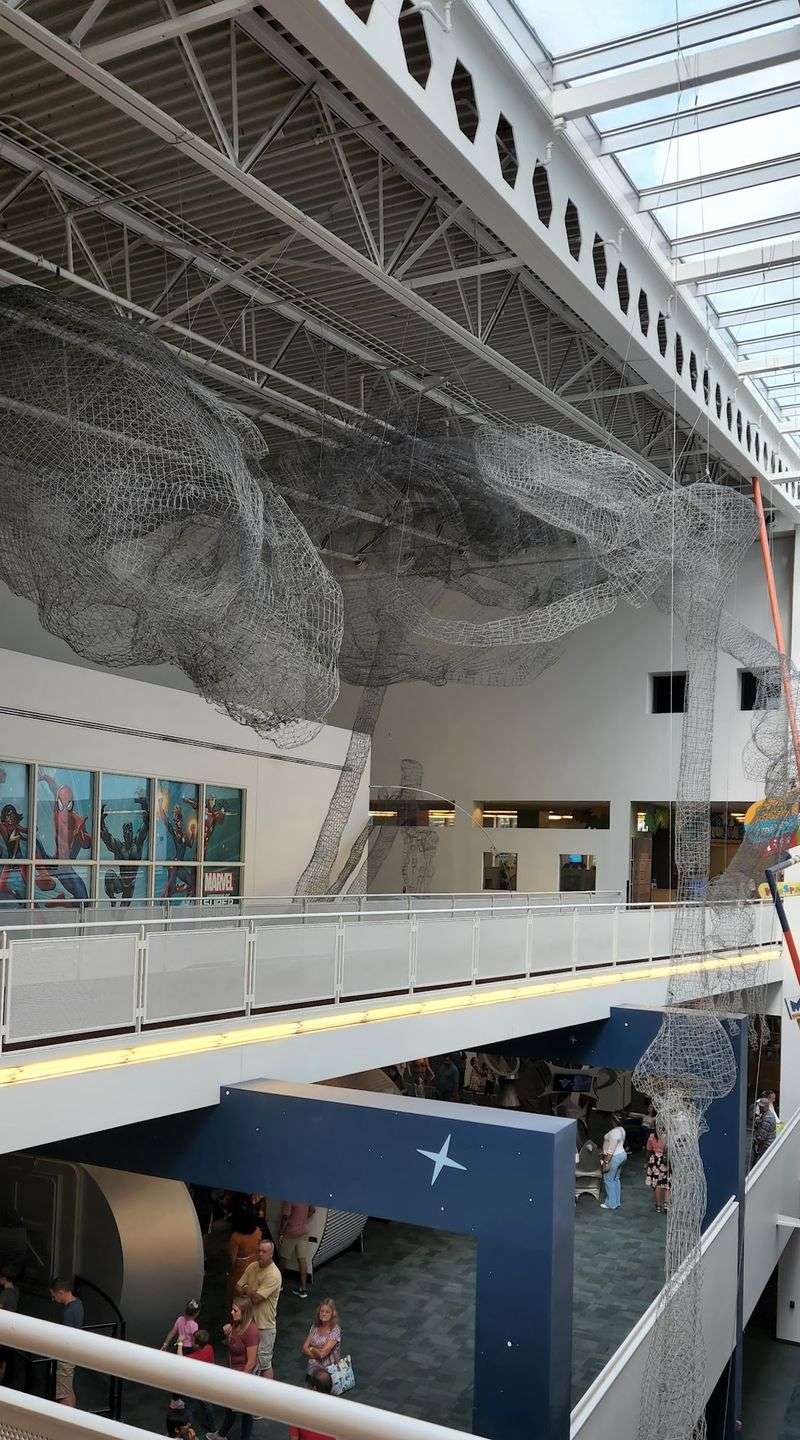
Yes, it really happens. COSI has a bike that rides on a high wire, and it might be the most daring science lesson in Ohio.
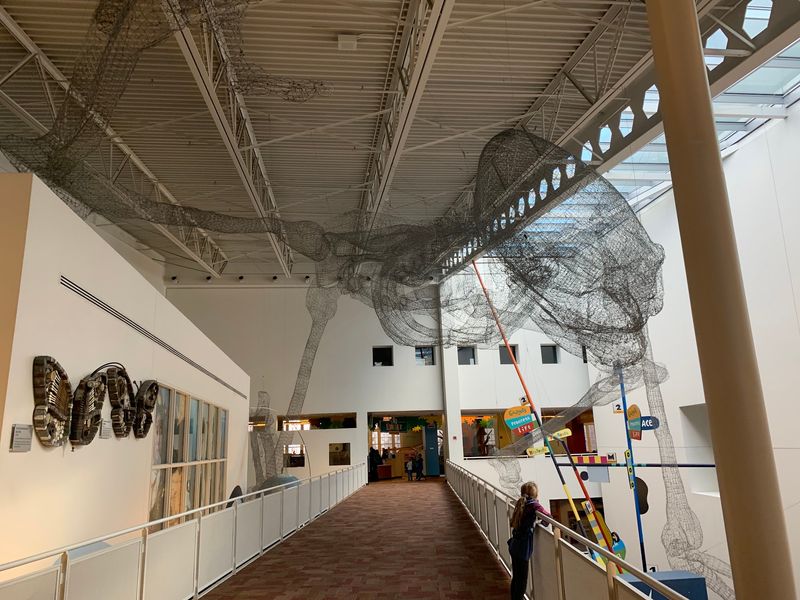
Riders pedal across a cable above the floor while a heavy weight hangs below the bike. That weight keeps the center of gravity low, which keeps the rider steady and safe.
Kids learn about balance without a single worksheet. Parents watching from below often learn just as much, mostly about trusting physics.
The line can grow long, since safety checks take time and nearly everyone wants a turn. Families who have done it agree the wait is worth it.
Head over early if this ride tops the wish list. Check age and height rules with staff, since those can change.
Snap a photo from the floor while the rider crosses. That picture tends to become the favorite memory of the trip, and it doubles as proof for friends who will not believe the story.
Climbing Space for the Littlest Explorers
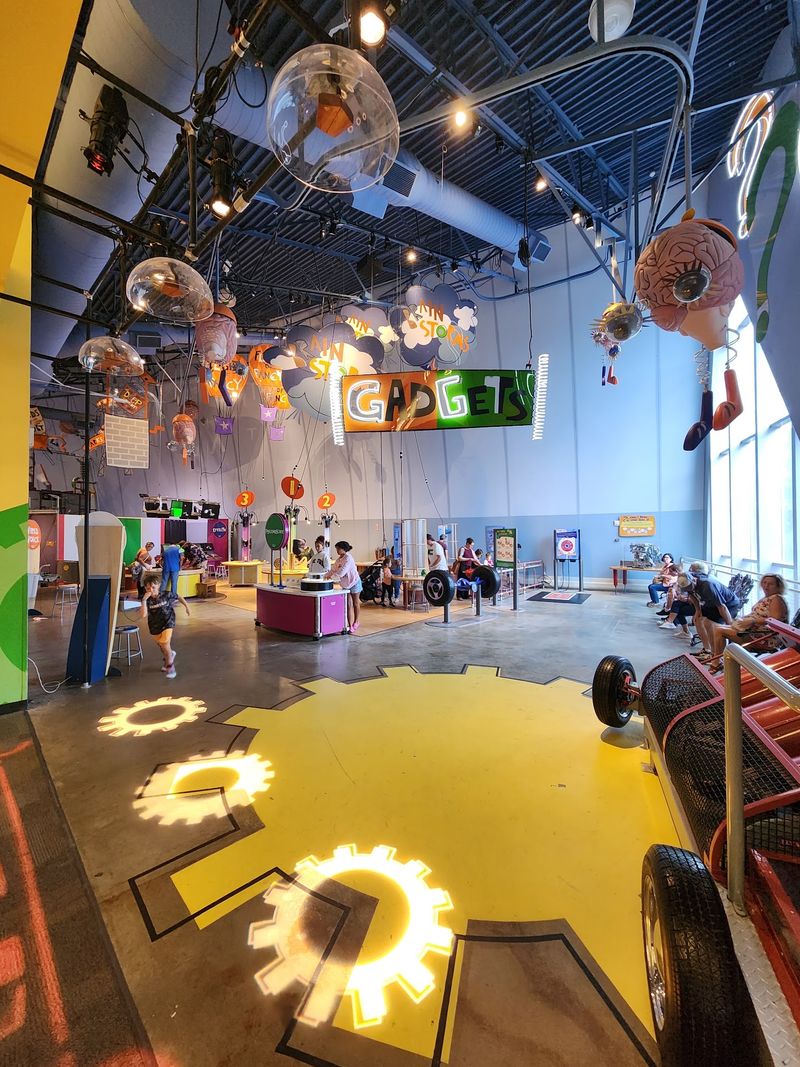
Tiny legs need their own territory. Little Kidspace gives the youngest guests a place to crawl, climb, build, and pretend.
The area is designed for early learners, with play structures and hands-on stations that build early science and problem-solving skills. Kids can tunnel, stack, and explore at their own speed without bigger kids zooming past.
Parents of toddlers often spend a large part of the day here. It is a safe home base when little ones need a break from the busy main floors.
A few practical tips help. The space can get loud, so quiet corners come in handy when a child needs to calm down.
Doors and gates are worth watching too, since small fingers find every gap. Packing hand wipes and sanitizer is also a good move with so many kids sharing toys.
With a little planning, this area turns into a favorite. Young explorers often refuse to leave, which may be the best sign of a successful visit.
Outdoor Play With Giant Physics
When indoor energy runs high, the outdoor science park saves the day. It turns a regular playground break into a hands-on physics session.
One crowd favorite is a heavy granite ball floating on a thin layer of water. Even small kids can spin it with their hands, which feels a bit like a superpower.
Nearby, a pulley system lets families lift a real car. It shows how simple machines can make heavy work much easier.
There is also a playground area, so kids can run and climb after hours of exhibits. Some families plan a quick stop out here and end up staying much longer.
Check the weather before heading outside. Sunscreen in warm months and jackets in cooler months make the break more comfortable.
The park also works well as a reset button between floors. A little fresh air and some giant-sized science can recharge tired kids for the second half of the day.
Smart Moves for a Smoother Day
A great visit starts with a little homework. Parking near the museum can be tricky, so the garage next to the building is usually the easiest choice, with street parking as a backup.
Expect to pay for parking, and budget for extras. General admission covers the main floors, while the planetarium, giant-screen films, and traveling exhibits often cost more.
Money-saving help exists. COSI takes part in Museums for All, which offers lower admission for families with EBT cards, and some memberships at other museums may include free general admission.
Some local libraries even lend museum passes. That trick is worth checking when the budget feels tight.
Weekdays tend to be calmer than weekends and school breaks. Shorter lines mean kids can stay longer at each station.
Bring snacks or a packed lunch, since outside food is allowed, though a cafe is on site. Comfy shoes matter too, because tired feet are the most common complaint at closing time, right after not wanting to leave.